
Two Tone Hair means one cut carrying two distinct colors, whether that is a half-and-half split down the middle or a lighter face-framing piece against a dark base. In 2027 the direction is deliberate contrast: bold split dye and two tone bobs are the shapes stylists are cutting most.
Here are 20 ideas that run from a low-upkeep bob to a full split dye, with short crops and long layers in between. This collection is for anyone weighing a bold change against a grow-out schedule, including fine hair that falls flat and a fringe that refuses to sit. Two Tone Hair gives you a shape and color plan to bring to the salon.
Black And Blonde Half And Half Bob
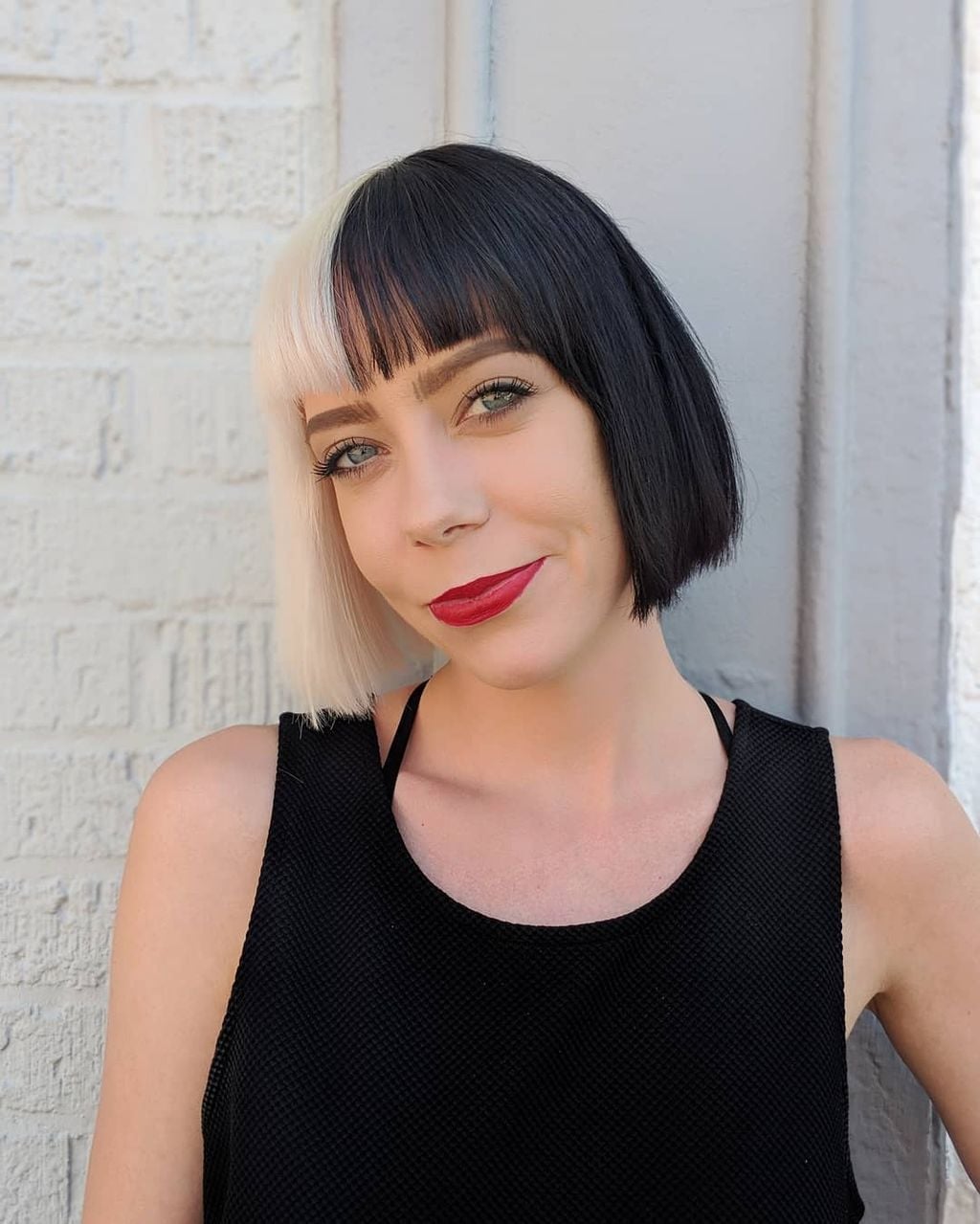
Wondering if a half black, half blonde bob will look bold or like a warning label? On fine, straight hair cut to the chin, the split is deliberate geometry: the blunt baseline and blunt bangs give the split a hard edge, and the middle parting keeps both colors in plain view. Oval and long faces carry that bluntness well. Ask your stylist for: chin length blunt bob, half black half blonde, blunt bangs. Fine hair needs a flat iron to stay sleek, and six-week trims keep the baseline sharp. Thick hair would turn the same cut into a helmet.
Mid-Back Orange And Purple Split Dye
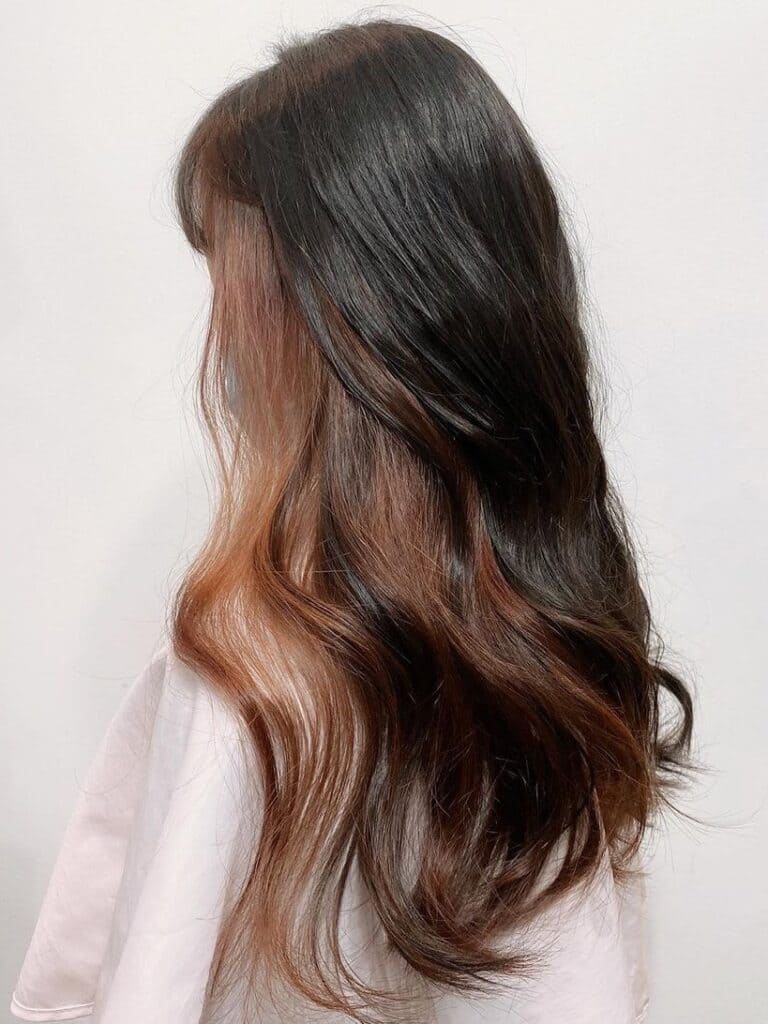
The design is a single vertical line: orange on one side, purple on the other, the parting acting as the seam. On thick, straight hair falling to mid-back, that line stays crisp because the weight of the length pulls everything flat, so both colors read at full saturation instead of blending at the crown. Layers through the mid-lengths keep the panel from hanging like a curtain.
Ask your colorist for: vertical orange and purple split dye. No bangs here, which keeps the split uninterrupted from the parting down. Thick hair holds this shape for months, but the color needs a refresh every six to eight weeks to stay vibrant rather than faded. Dry shampoo stretches the time between washes, and a monthly trim keeps the ends from blurring the line.
Teal And Orange Braided Buns
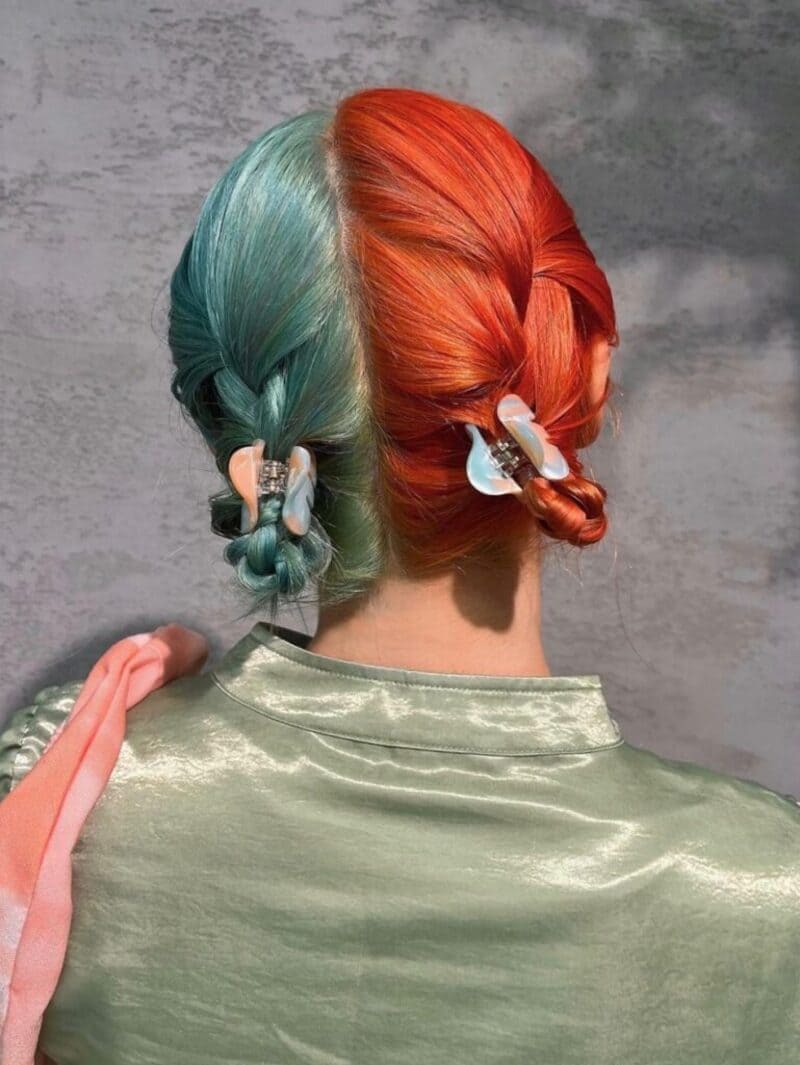
A sleek split worn loose makes the color do all the work; braided buns put the color to work as structure. Two braids, one teal and one orange, wrap into buns at the nape, and the sharp middle parting keeps the halves from muddying into each other. On thick, wavy hair at mid-back, the waves give the braids grip and volume, so the buns sit full instead of collapsing.
Ask your stylist for: teal and orange split dye, braided buns. The style suits all face shapes because the hair is pulled back, and it earns its keep in summer: off the neck, no bangs to wilt in the heat, and the color stays visible from behind. Strong-hold product keeps the braids tidy through a long day, and a color-depositing conditioner once a week holds the teal and orange against fading.
Platinum Blonde And Purple Bob With Blunt Bangs
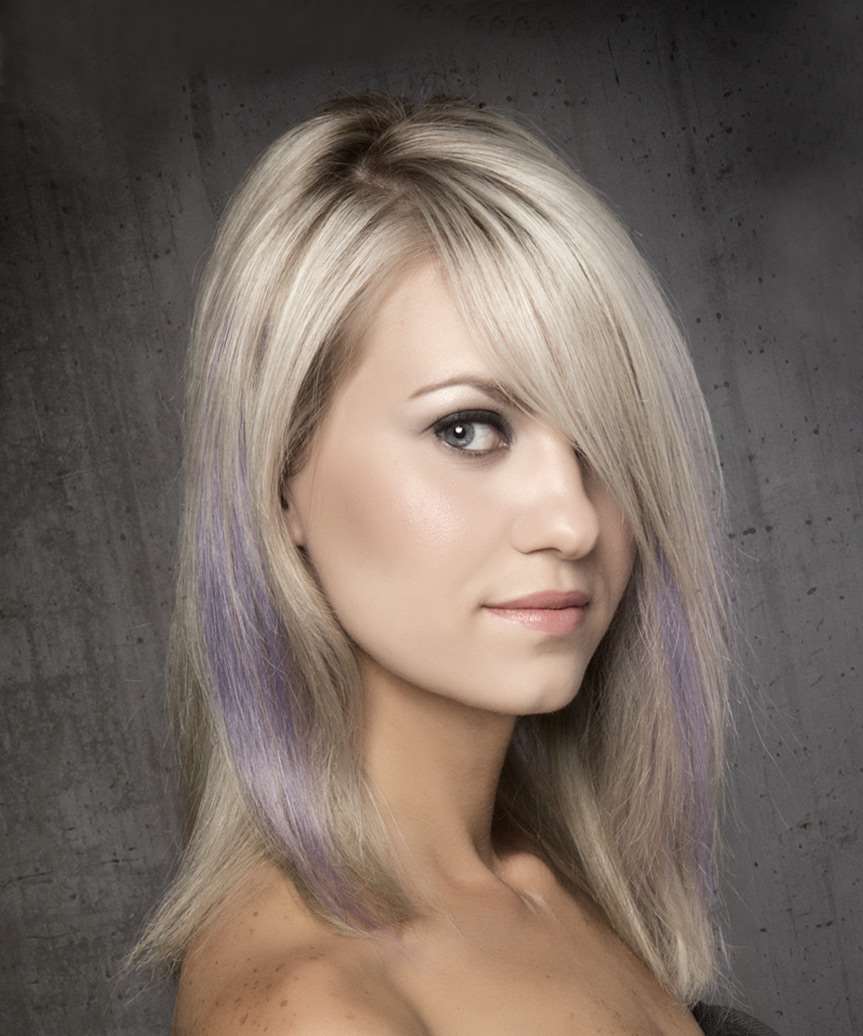
What do you actually say at the salon to get a platinum blonde purple bob instead of a muddy guess? Be exact about where each color lands. The cut is a chin-length bob with blunt bangs and a middle parting, styled straight, and the color splits platinum blonde against purple. Fine, straight hair holds that line best, and blunt bangs with a bob suit oval and heart faces. Ask your stylist for: chin length bob, platinum blonde and purple color, blunt bangs.
Pink And Orange Shoulder Length Curls
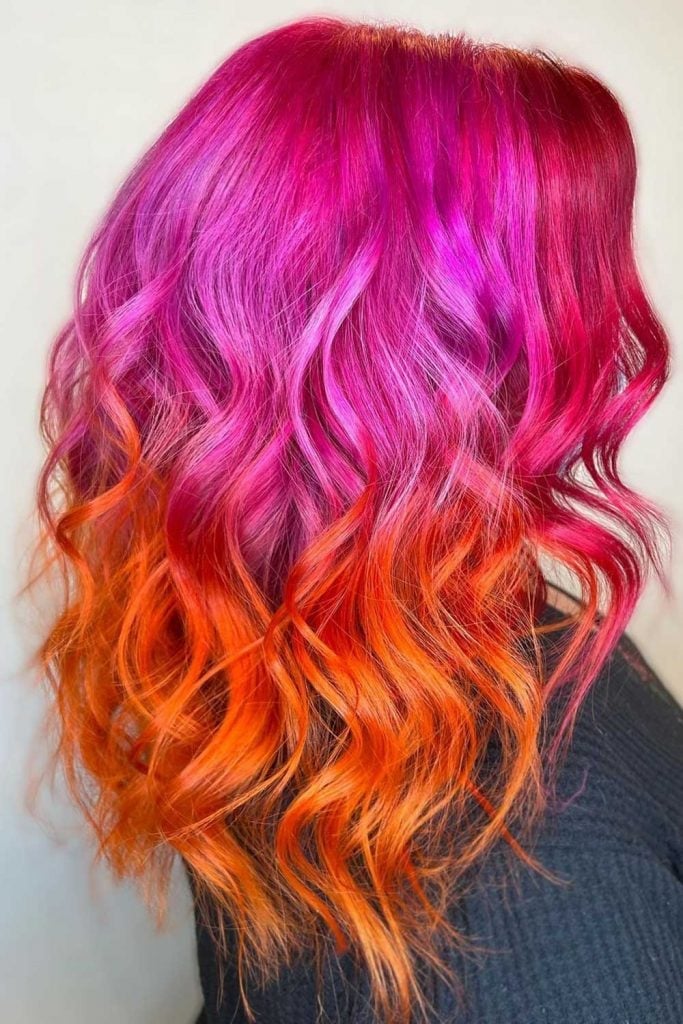
Ask your stylist for: shoulder length wavy hair, pink and orange split dye. No bangs means the middle parting stays clean and the color runs unbroken from root to end. A curl cream scrunched through damp hair defines the waves without weighing them down. These shades fade faster than most, so a color-depositing conditioner every week and a trim every eight weeks keep the finish from going soft.
Grey And Black Face Framing Layers
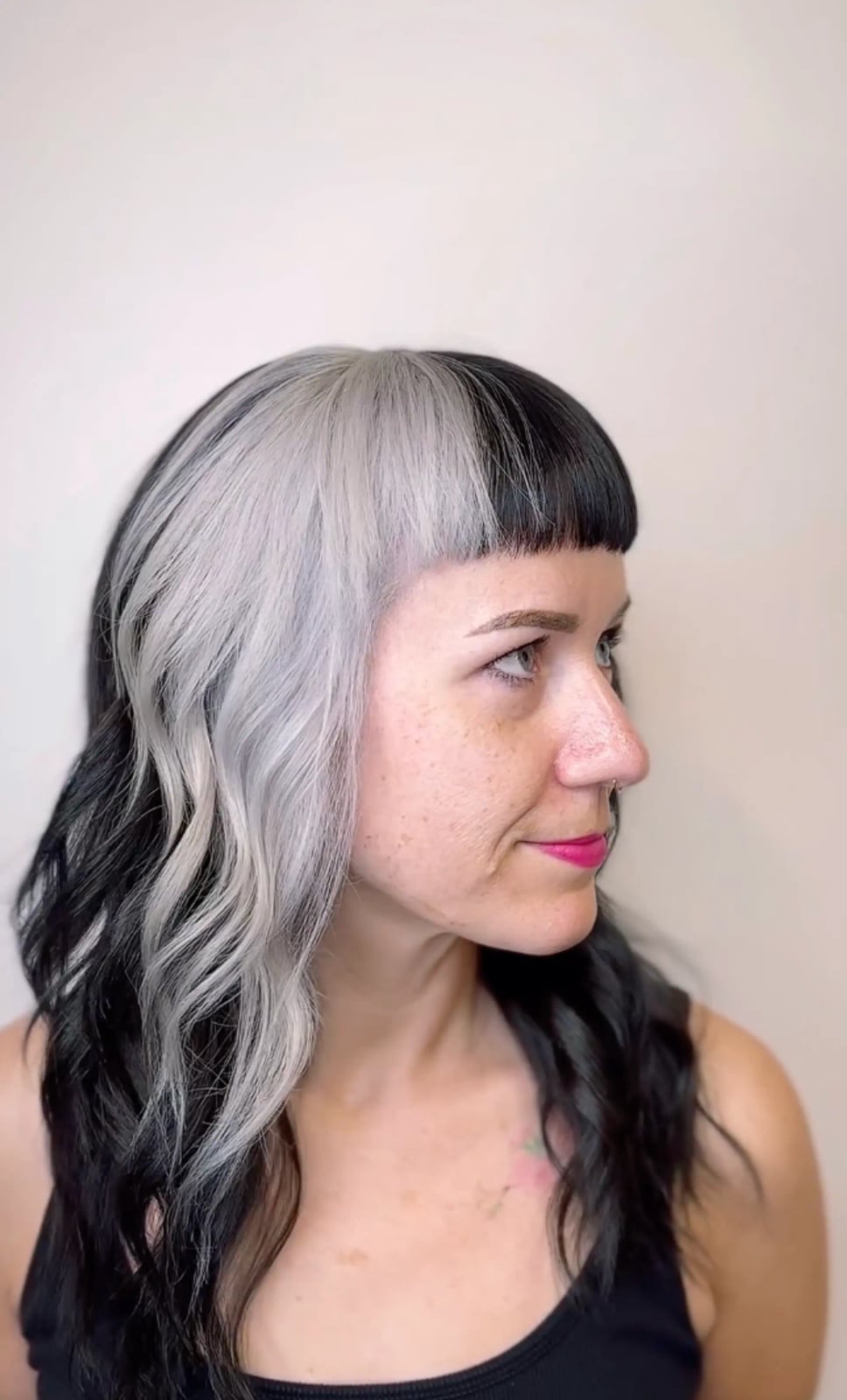
The grey sits on the top layers, so it shows first. At mid-back length with a side part and wavy texture, the two-tone effect is clearly defined without being loud. Face-framing bangs in grey and black soften the contrast around the jaw, which makes this a solid option for square and round face shapes. Ask your stylist for: mid-back wavy hair, grey and black face framing, side swept bangs. Medium density and natural wave are ideal starting points; the layers blend the two tones.
Keeping the silver side bright matters most with grey and black. A purple shampoo used once a week prevents the grey from pulling yellow or muddy. Because the bangs are face-framing, they sit between a full fringe and no fringe at all, but they do need a trim every four to six weeks to hold their shape. The rest of the length can go eight weeks between cuts.
Dark Brown With Blonde Highlights
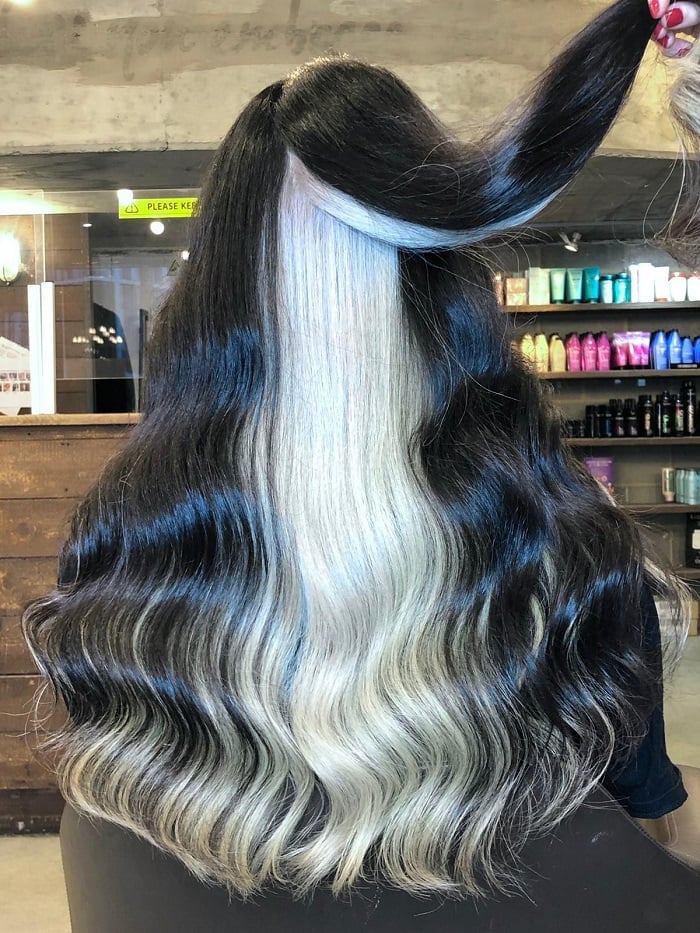
How do you make blonde highlights look current? Start with a dark brown base and keep the blonde pieces fine and woven through long layers. Mid-back length with a middle part and loose waves lets the blonde sit where hair naturally lightens in the sun, which is why this color works for fall and spring alike. The fine woven pieces create dimension, not a streak. Ask your colorist for: mid-back long layers, dark brown with blonde highlights. The middle part and length suit oval faces best, but the long layers also soften a square jaw.
Seasonally, this is a transitional color. In cooler months, the dark brown base feels rich; in spring, the blonde pieces brighten up without a full commitment to all-over lightness. A toning shampoo every four to six weeks keeps the blonde from warming into brass. The layers mean the grow-out is soft, so salon visits can stretch to eight weeks before the roots feel obvious.
Long Dark Brown With Face Framing Blonde
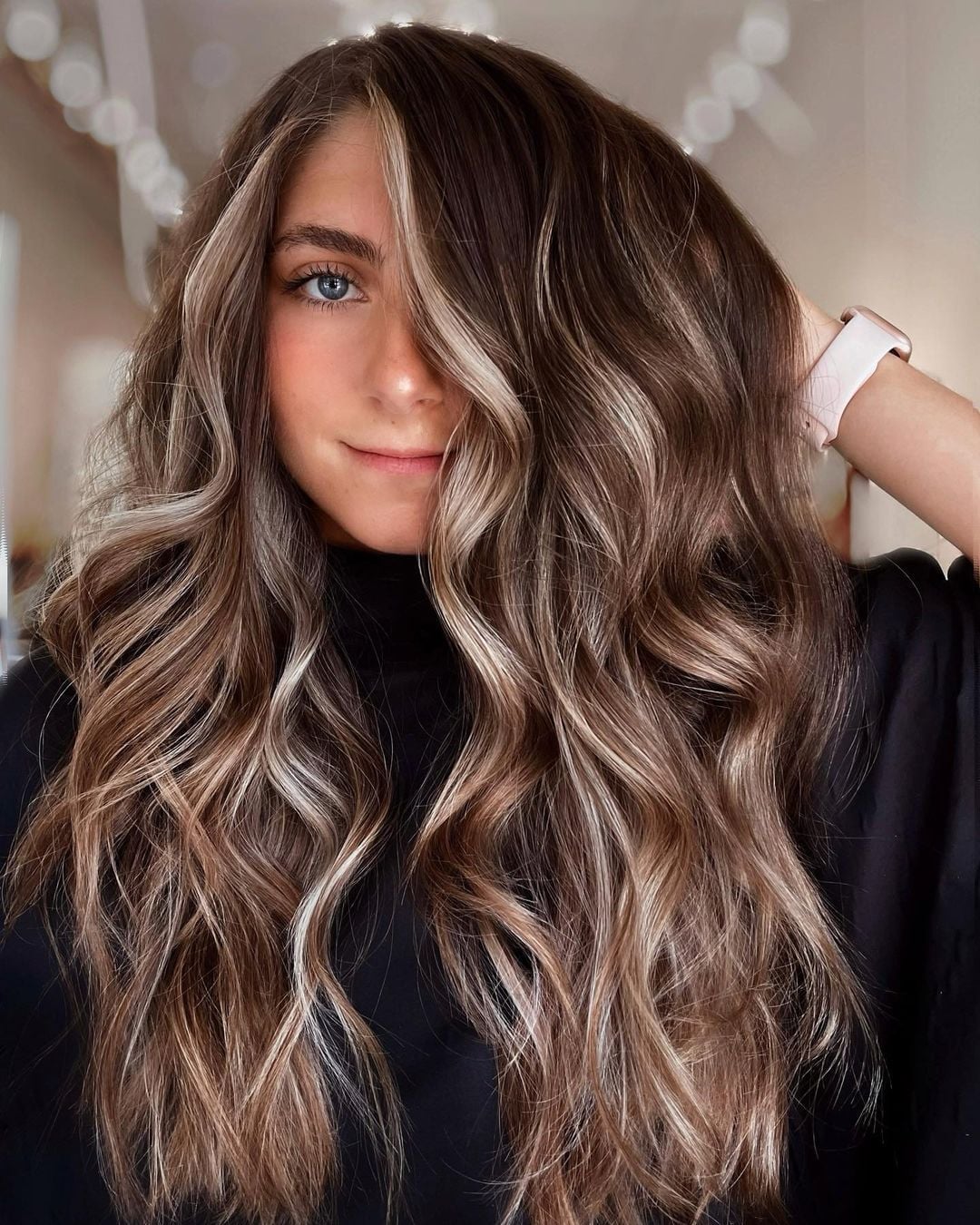
The blonde stops at the front pieces, so the contrast lands where you see it most. Long, wavy hair with curtain bangs means the dark brown base stays dominant through the length, while the face-framing highlights pull attention toward the center of the face. That placement suits round and square face shapes especially well, because the lighter pieces create the illusion of length at the sides. Ask your stylist for: long wavy hair, dark brown with blonde face framing highlights, curtain bangs. Medium density hair holds the waves and the shape of the curtain bangs without falling flat.
Upkeep here is straightforward. The curtain bangs need a trim about every six weeks to keep them clearing the eyes and blending into the layers. A lightweight serum applied to damp hair controls frizz and adds shine to the waves, which helps the blonde pieces reflect light evenly. Because the color work is concentrated at the front, the hair grows out without a harsh root line, so full-color touch-ups can wait eight to ten weeks.
Long Layers With Two Tone Curtain Bangs
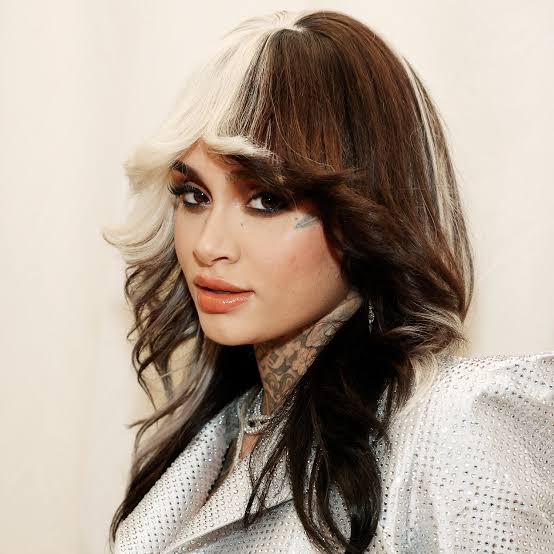
Two-tone curtain bangs are a detail that looks simple until you try it. The dark brown base frames the face, and the blonde pieces sit inside the bangs and the front sections, so the contrast shifts every time the hair moves. Thick, wavy hair at mid-back length keeps the two colors from blending into one muddy tone. The middle parting and long layers give the bangs enough weight to sweep to the sides. Ask your stylist for: long layers, two tone curtain bangs. Heart and round faces get the most from the soft, angled framing.
The bangs need a trim every four weeks, and the blonde pieces in the front will show regrowth faster than the rest of the length. If you are not prepared for a salon visit every month, this is not the low-maintenance version. The payoff is that the two-tone effect is concentrated in one small area, so the rest of the hair can grow out with minimal attention.
Mid-Back Ponytail With Face Framing
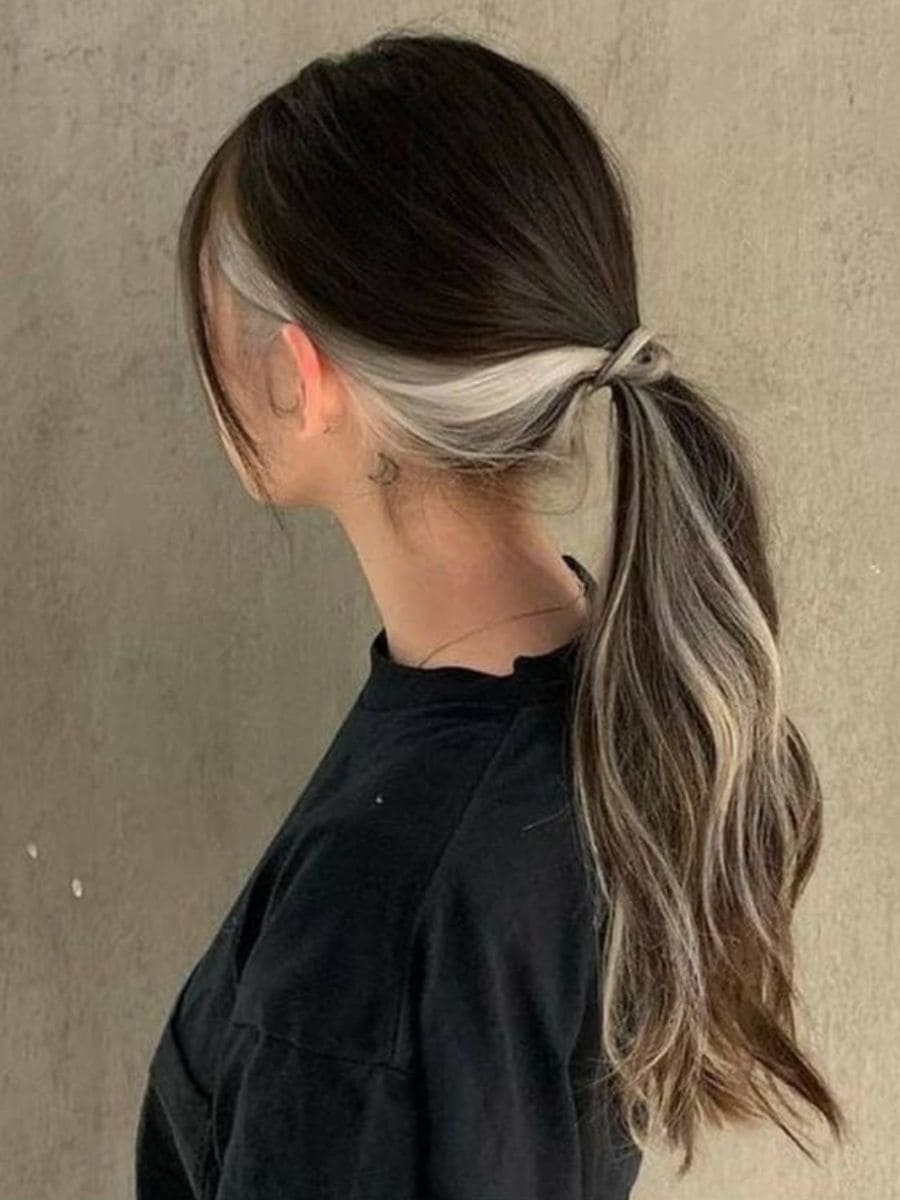
A ponytail with face-framing pieces keeps the front of the style defined. Here, the dark brown base is pulled back into loose waves at mid-back, while the blonde highlights are concentrated at the front and woven through the length. The side parting and curtain bangs mean the blonde pieces fall forward, so the contrast stays visible even in a ponytail. This is a salon color: the highlights need to be painted precisely so they land in the right places when the hair is pulled up. Ask your colorist for: mid-back ponytail, blonde face framing highlights, curtain bangs. Thick, wavy hair holds the ponytail shape and the wave pattern best.
At home, the approach is simple. Blow-dry the curtain bangs with a round brush so they curve toward the face, then gather the rest into a ponytail at the crown. A light mist of texturizing spray keeps the waves from collapsing by midday. The blonde pieces will need a toning shampoo every four to six weeks, but the ponytail itself hides any slight unevenness in the length, so trims can stretch to eight weeks.
Mid-Back Straight With Brown And Blonde
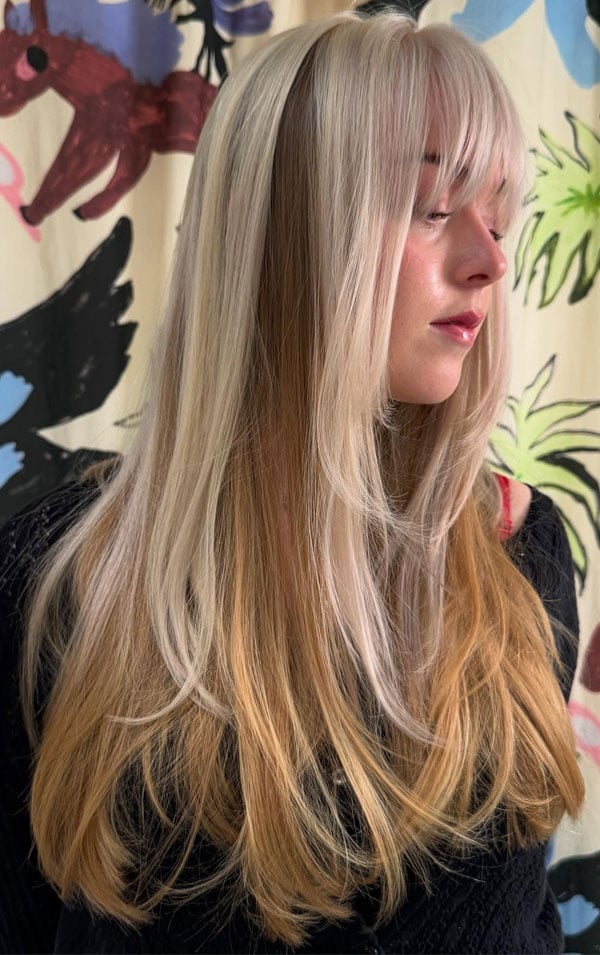
Mid-back length straight hair with a side part and curtain bangs gets a two-tone upgrade from layered sections of brown and golden blonde against a blonde base. The fine texture and air-dried finish keep the focus on the color placement rather than volume. Curtain bangs suit oval and heart faces by softening the forehead. Ask your colorist for: mid-back straight layered hair, blonde with brown and golden blonde highlights, curtain bangs. Apply a smoothing serum for a polished look and trim layers and bangs every six to eight weeks to keep the shape clean.
Collarbone Bob Blonde And Dark Brown
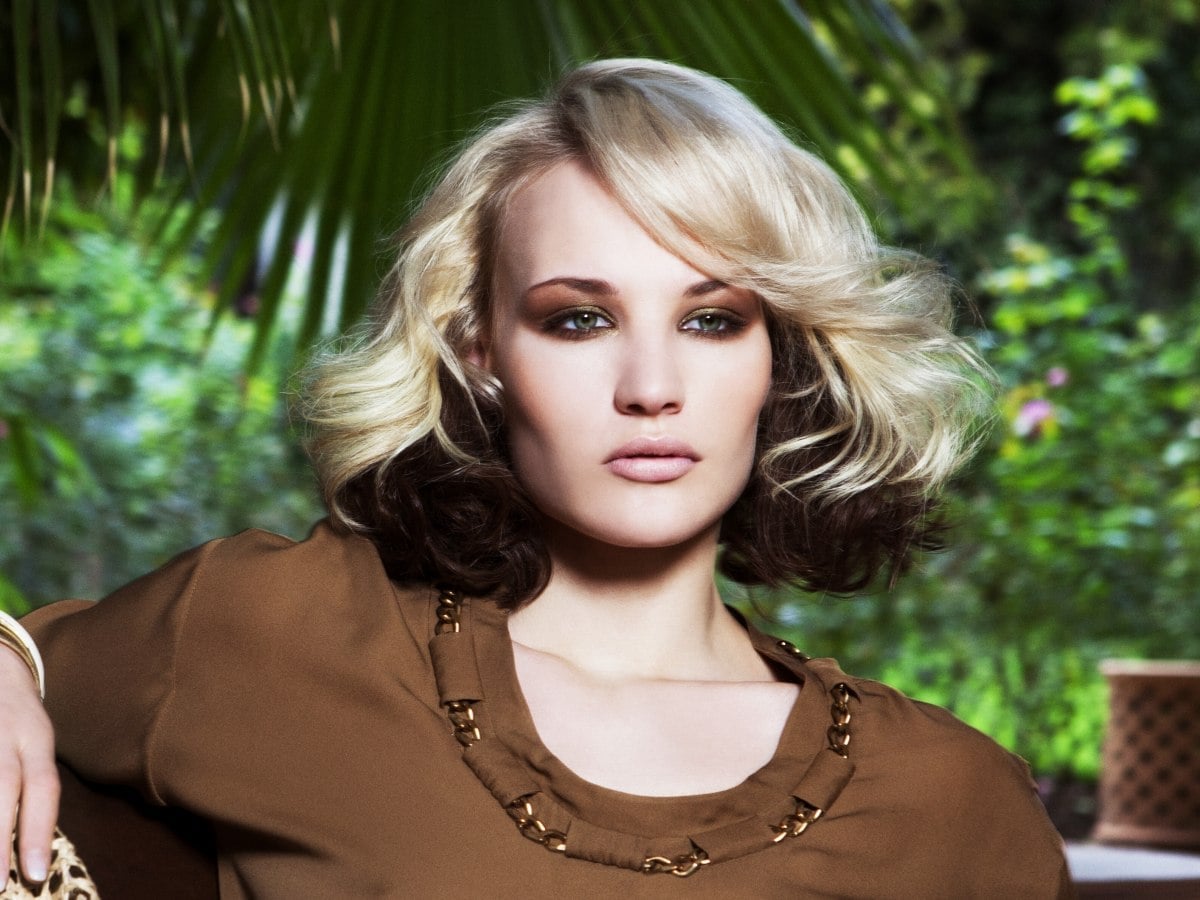
It is not a subtle highlight job, it is a deliberate split: a collarbone-length wavy bob with a side parting, blonde on top and dark brown underneath. The medium-density wavy texture gives the blowout enough body to hold the separation between the two tones. This works for all face shapes, since the length below the jaw and the side part balance most proportions. Ask your colorist for: collarbone wavy bob, blonde on top dark brown underneath. Use a diffuser to enhance the waves and trim the bob every six to eight weeks to keep the contrast sharp.
Collarbone Bob With Blonde Highlights
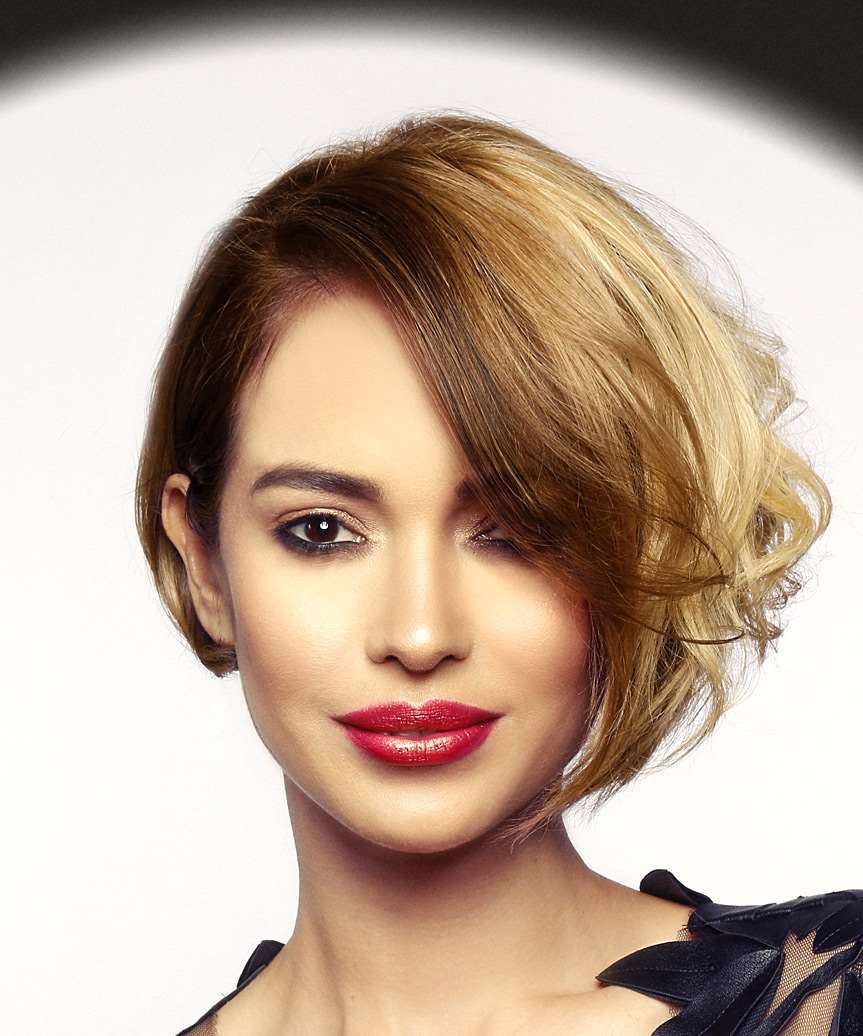
Does a collarbone bob with highlights work for fine hair? Yes, when the dark brown base stays solid and the blonde pieces are placed through the mid-lengths and ends rather than the root. The side-swept bangs and wavy blowout add movement without losing density. Medium-density wavy hair starting at collarbone length is the sweet spot. The side-swept bangs soften square and round faces. Ask your colorist for: collarbone bob, dark brown base with blonde highlights, side swept bangs. Apply a texturizing spray for hold and trim the bob every six to eight weeks.
Chin Length Bob With Pink Ends
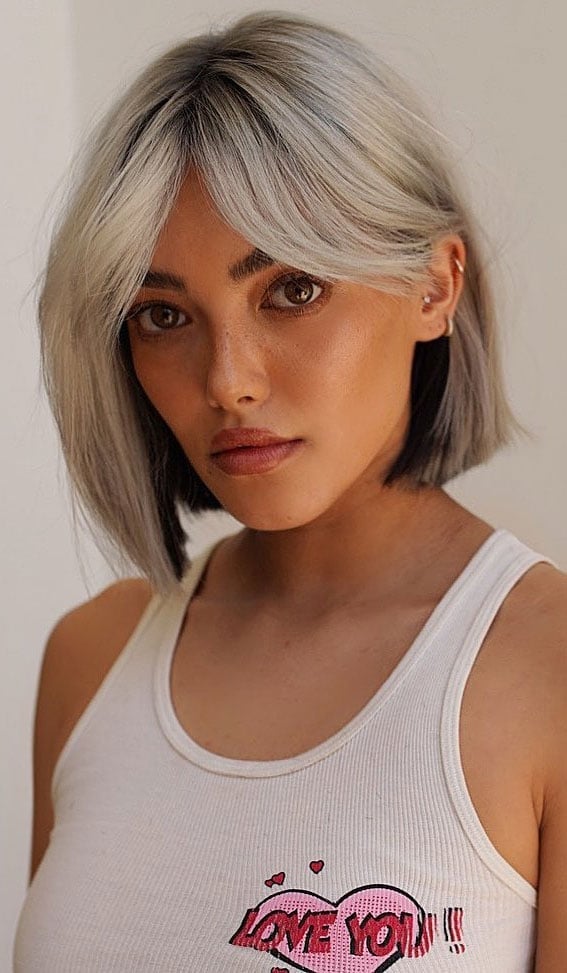
The two-tone effect is clean and graphic. This bob suits oval and long faces, and the curtain bangs soften the forehead. Ask your colorist for: chin length bob, ash blonde with dark roots and black underneath, curtain bangs. One drawback: the black section shows every line of regrowth, so plan for a touch-up every four weeks if you want the contrast to stay crisp.
Chin Length Bob With Pink Ends, Close-Up Take
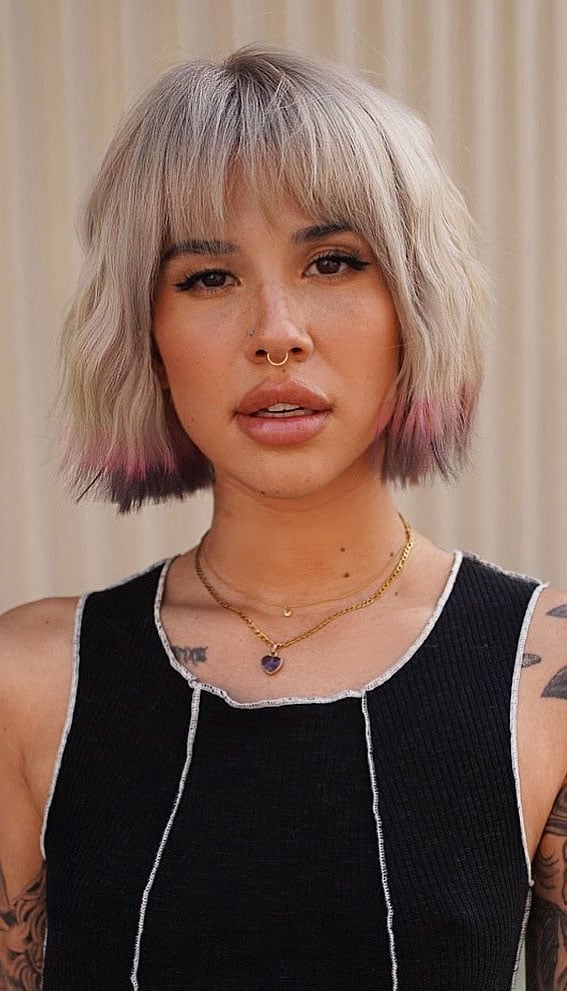
Compare this chin-length bob with pink ends to a dip dye: the pink is concentrated at the very ends, not faded up the shaft. Blunt bangs and a center part give the wavy fine hair a structured frame. This bob suits oval and long faces, and the center part elongates round faces. Ask your colorist for: chin length bob, ash blonde with pink ends, blunt bangs. Use a heat protectant spray before styling and refresh the pink with a color-depositing conditioner about once a week to prevent fading to a peachy tone.
Chin Length Wavy Bob With Coral Dip Dye
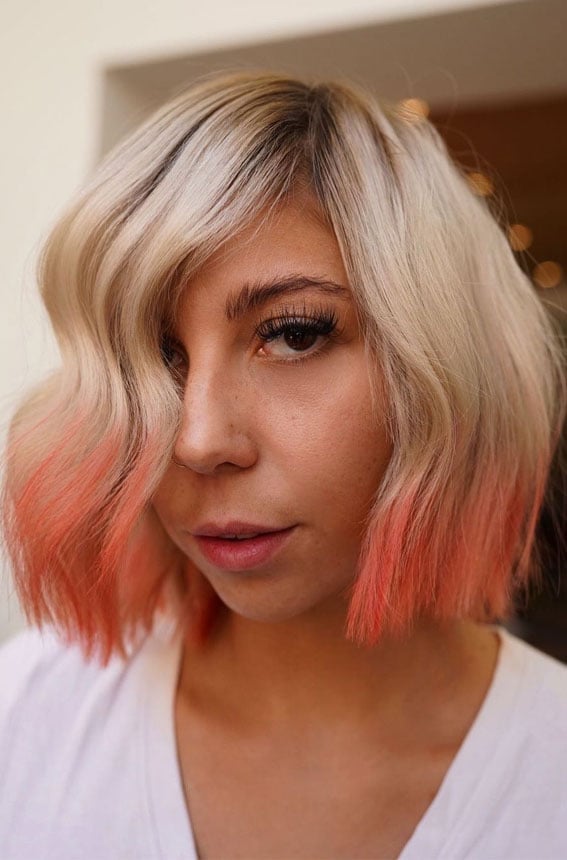
What do you actually say to get coral ends instead of a vague gesture toward the color swatch? Be specific about placement. The cut is a chin-length wavy bob with blunt bangs, parted on the side, and the color is blonde with coral dip dye starting at the tips. Fine, wavy hair holds this shape well, and blunt bangs plus a chin-length line suit oval and long faces. Ask your stylist for: chin length wavy bob, blonde with coral dip dye ends, blunt bangs. Then confirm the coral starts at the ends, not mid-shaft.
Textured Pixie Dark Brown And Blonde
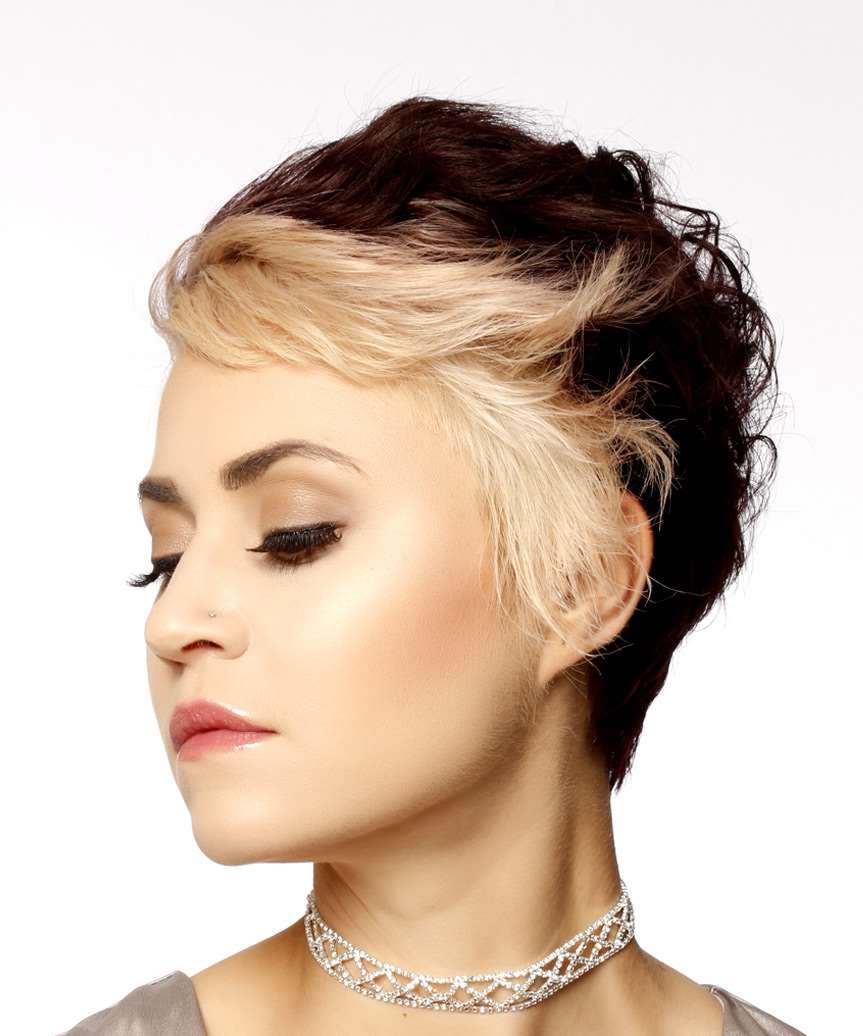
The texture here comes from piecey separation, not from a round brush. On a fine, wavy pixie that ends at the ear, a side-swept fringe and a side parting do most of the work: the fringe sweeps across the forehead while the rest is pushed up and back for lift. Dark brown and blonde sit in distinct sections, so the eye reads movement before it reads color. Ask your stylist for: textured pixie, dark brown and blonde two-tone, side swept fringe. The cut needs a trim every four to six weeks to keep that shape from collapsing.
Textured Platinum Pixie With Brown Roots
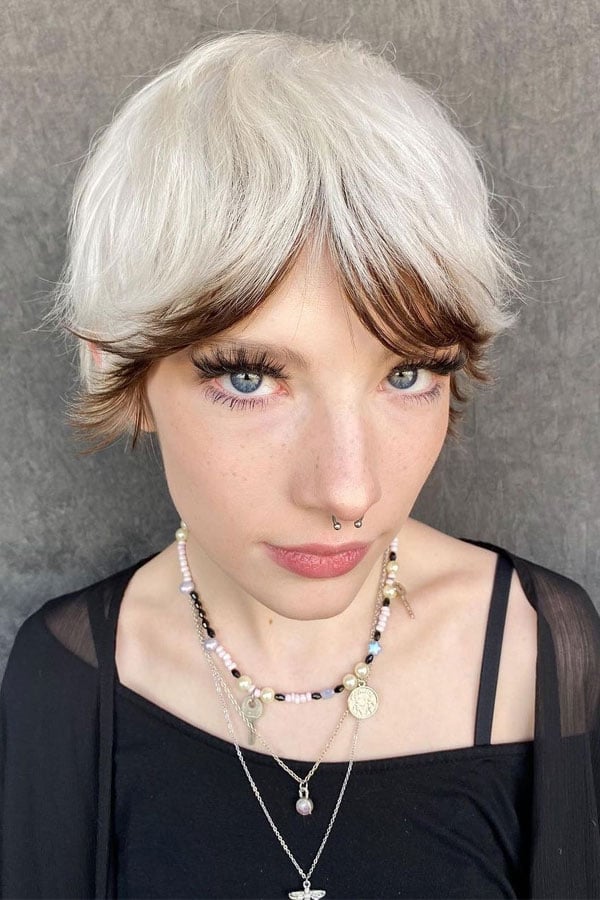
Visible dark brown roots against platinum blonde is the whole design, and it only works because the cut is short enough to keep both tones in view. This pixie ends at the ear, with textured layers and short bangs, parted to the side. Fine, straight hair lets the contrast sit cleanly instead of blurring. Ask your stylist for: textured pixie, platinum blonde with brown roots, short bangs. Roots this dark need a touch-up every four to six weeks if you want the line sharp; leave them longer and the effect softens into a shadow.
Collarbone Bob Platinum With Ash Streaks
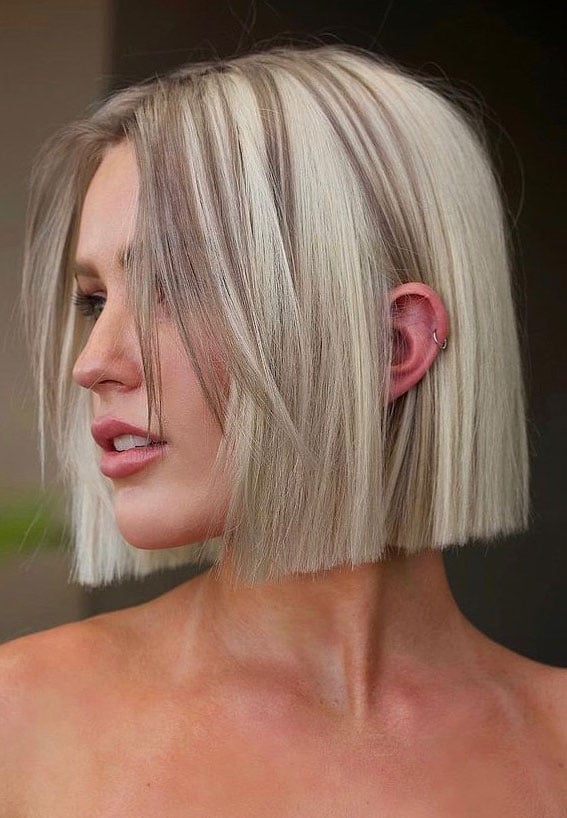
How much time does a platinum collarbone bob actually take in the morning? More than the cut suggests. Fine, straight hair blown out smooth shows every streak, so the finish depends on a round brush and a volumizing spray for lift at the root. The cut is a collarbone-length bob, side parted, with no bangs. Ask your colorist for: collarbone bob, platinum blonde with ash blonde streaks.
Upkeep splits into two rhythms. The bob needs a trim every six to eight weeks to hold its line. The platinum needs toning every four to six weeks to keep ash streaks from drifting warm, and a purple shampoo in between stretches that window. Straight blowouts on fine hair also mean heat protectant every wash day, not just on special occasions.
Collarbone Angled Bob Lilac Ends
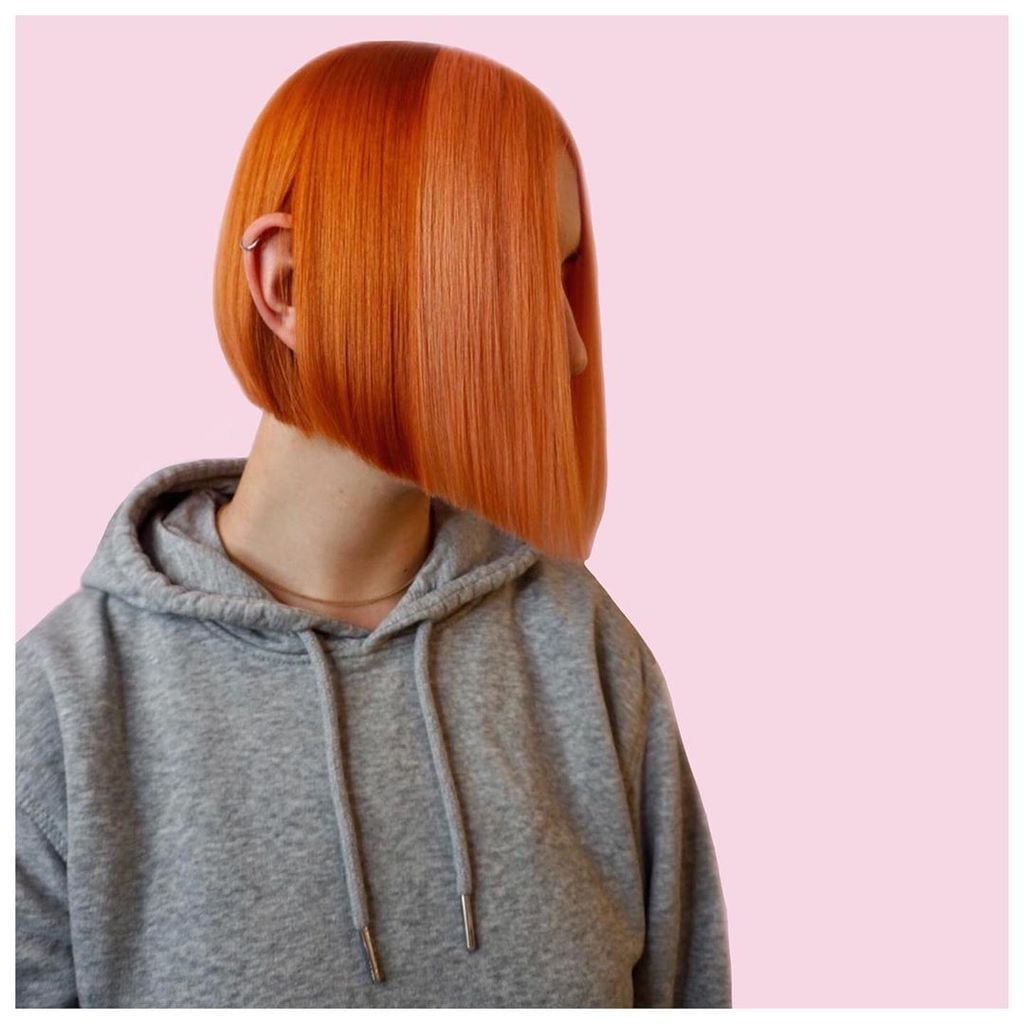
Here the color does the seasonal work. Platinum blonde runs through the length, darker roots anchor the top, and lilac sits on the ends, subtle enough to look like a tint, not a full dye job. Fine, straight hair keeps that gradient crisp. Ask your colorist for: collarbone angled bob, platinum blonde with lilac ends. It suits spring and summer events where a full pastel head is too much, and the angled line adds structure. Refresh the lilac monthly with a color-depositing conditioner.
Final Thoughts
For a low-maintenance two-tone look, stick to face-framing highlights or a subtle dip-dye on the ends, which grow out softly and need a touch-up every ten weeks. If you want maximum impact, commit to a bold split dye or half-and-half color, and plan for a salon visit every six weeks to keep the line crisp. Match the commitment to your routine, not the other way around.
- Schedule color touch-ups every 6 to 10 weeks.
- Use color-safe shampoo and conditioner.
- Deep condition weekly to keep color vibrant.
- Limit heat styling to prevent fading.
Embrace the duality and make your hair your statement.

