
Dark brown hair with blonde highlights has always been a reliable classic, but this season the blend is softer and more strategic. Face-framing balayage and lived-in color replace chunky stripes, and curtain bangs or soft layers add movement without losing the rich base.
These 18 ideas for Trendy Dark Brown Hair with Blonde range from short collarbone cuts to long wavy lengths, with upkeep levels to match any schedule. Whether your hair is fine and falls flat or you are tired of a harsh grow-out line, there is a combination here that works. Blonde placement and tone shift depending on your goal: low-maintenance balayage or more defined highlights that need regular toning.
Collarbone Layers With Face-Framing Blonde Balayage
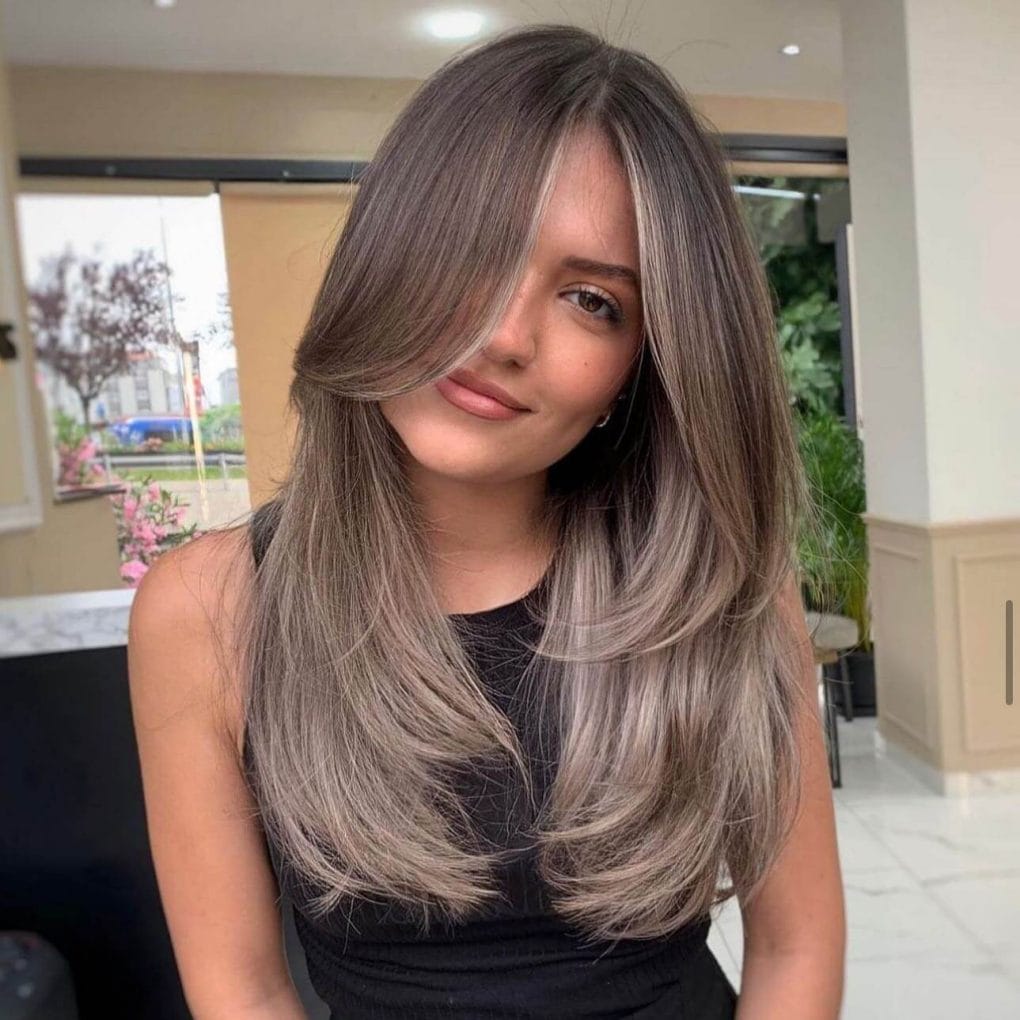
What if you want the blonde where it counts most, around your face, without committing to all-over lightness? This collarbone-length cut uses a dark brown base with subtle blonde balayage, concentrating the lighter pieces on the front sections so they catch the eye first. Thick, straight hair holds the shape best, and the curtain bangs and soft layers soften a round or heart-shaped face without losing weight. Ask your colorist for: collarbone length layers, curtain bangs, subtle blonde balayage. The fringe needs a round brush and a blow dryer for that polished curve; the baseline length needs a trim every six to eight weeks to keep the layers sharp.
Chin Length Lob With Ash Blonde Highlights
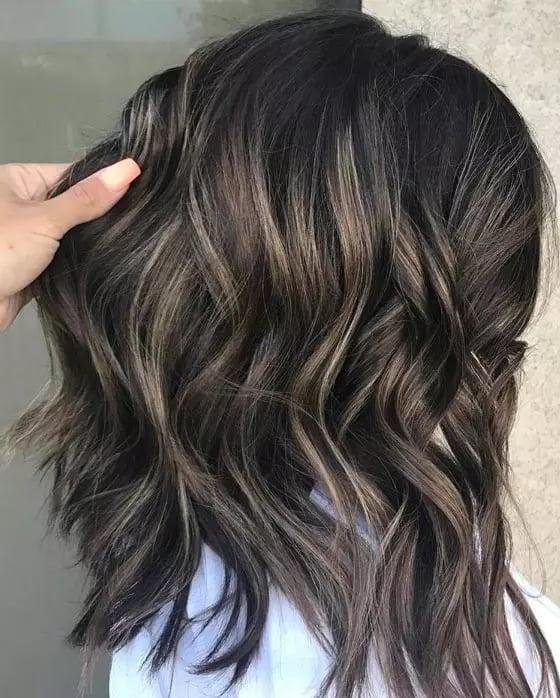
Think of this as the cooler, slightly edgier cousin of a warm-toned lob. The dark brown base gets interrupted by ash blonde highlights, which land on the cooler end of the spectrum and read more silver-gold than butter. A chin length lob with a side part and soft waves works best on medium-textured hair; the blunt line can make a square jawline look less angular. Ask your colorist for: chin length wavy lob, dark brown with ash blonde highlights. Ash blonde is prone to grabbing warm minerals from water, so a purple shampoo every third wash keeps the tone honest. Expect a trim every six to eight weeks to keep the line blunt.
Collarbone Lob Dark Brown With Blonde Balayage
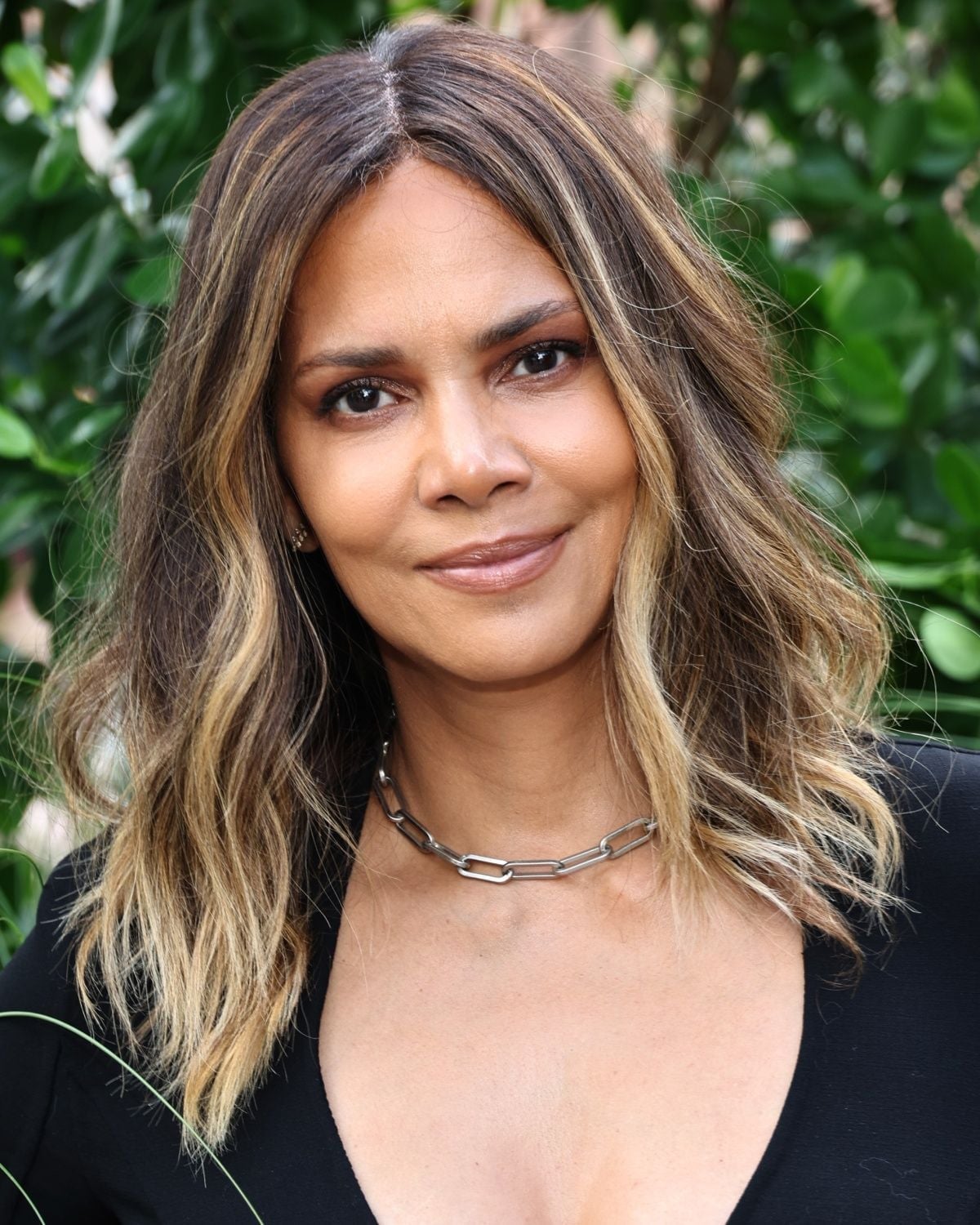
A lob at collarbone length is the rare cut that looks intentional even when you do nothing to it. The dark brown base stays rich at the roots while the blonde balayage drifts down the mid-lengths, so the grow-out line never screams for a touch-up. Medium density hair with a natural wave carries the side part and soft waves without falling flat. Ask your colorist for: collarbone dark brown lob, blonde balayage, side part. One smoothing serum patted through the ends is enough for a polished finish; a trim every six to eight weeks stops the ends from splitting.
Collarbone Cool Brown With Subtle Blonde Highlights
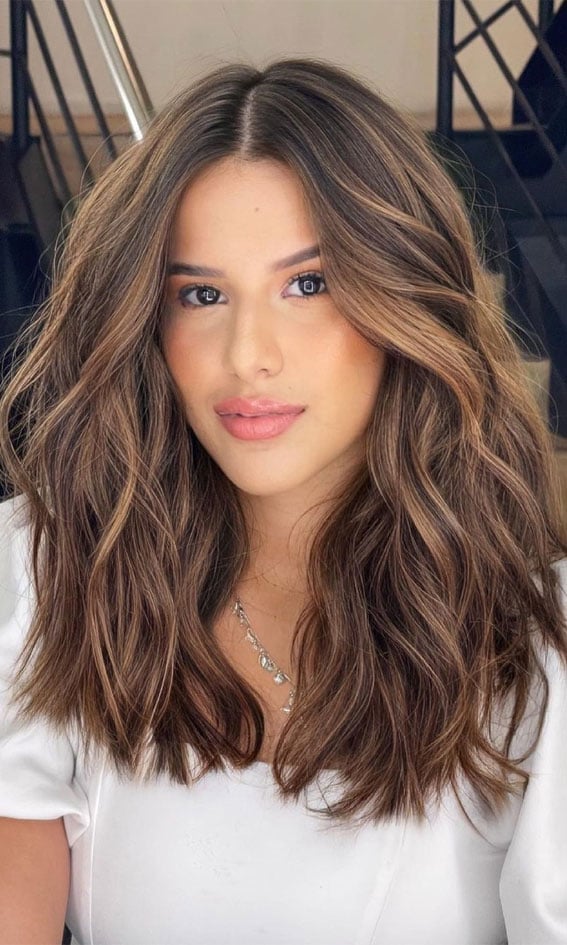
The cool brown base here is what makes the blonde highlights read as deliberate rather than sun-bleached. Thick, wavy hair at collarbone length gives the middle part enough weight to hang properly, and the subtle blonde pieces add contrast without overwhelming the base. This is a good option if your natural level is already a cool brown and you want a softer lift than traditional highlights provide. Ask your colorist for: collarbone cool brown, subtle blonde highlights. A sea salt spray worked into damp hair enhances the wave pattern with zero heat. The baseline needs a trim every six to eight weeks.
Collarbone Dark Brown With Blonde Dimension
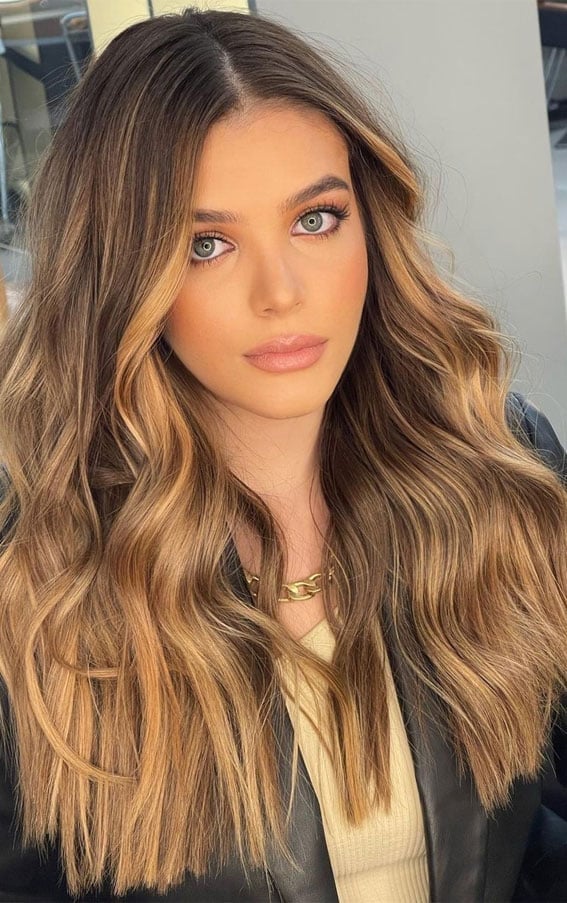
Dimension, in hair color terms, means the difference between a flat block of pigment and something that looks layered and alive. This collarbone-length cut uses blonde highlights on a dark brown base to create that exact effect: the lighter pieces sit on the surface while the dark base stays deep underneath. Thick, wavy texture with a middle part shows off the contrast best, and the subtle layers keep the shape from looking heavy. Ask your colorist for: collarbone dark brown, blonde highlights for dimension. A shine serum on dry hair pulls the two tones together visually. Plan for a trim every six to eight weeks to maintain the collarbone line.
Voluminous Collarbone Waves With Sun-Kissed Blonde
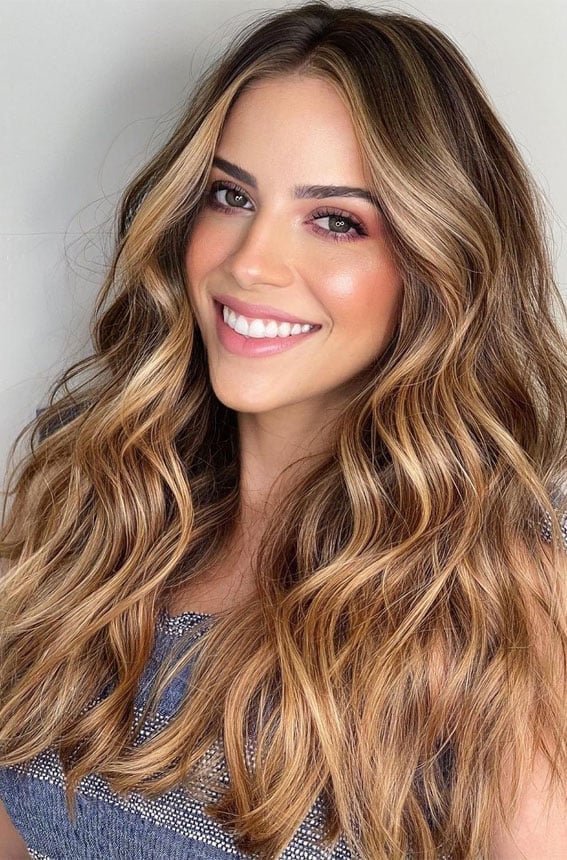
Summer has a new default wave pattern: collarbone length, a dark brown base, and enough blonde highlights and balayage to look like you spent the weekend at the beach without the effort of actually going. The middle part and voluminous, wavy blowout keep the sun-kissed effect front and center rather than buried in the back. Thick hair holds this shape best, fine hair may need a volumizing mousse and a diffuser to keep the lift. Ask your colorist for: collarbone waves, dark brown with sun-kissed blonde highlights. The cut needs a trim every six to eight weeks to keep the collarbone line clean.
Collarbone Waves With Face-Framing Layers And Blonde and Curtain Bangs
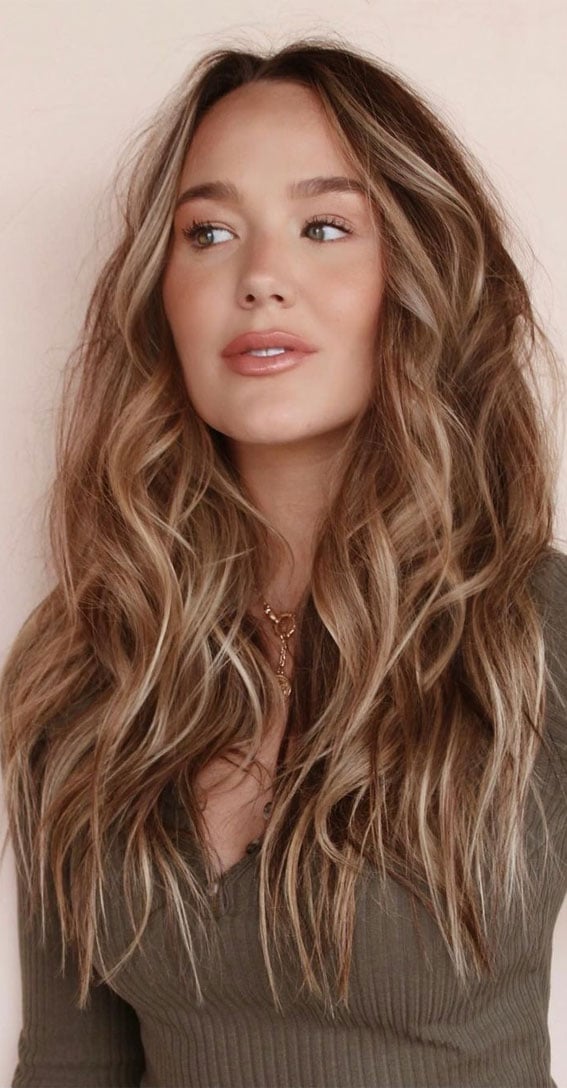
Soft dimension comes from face-framing layers and curtain bangs that taper into the rest of the length. The dark brown base stays dark at the root, while blonde balayage and highlights concentrate around the face and through the mid-lengths. Thick, wavy hair at collarbone length gives the layers enough weight to move without falling flat. Ask your stylist for: collarbone wavy layers, curtain bangs, dark brown with a blonde blend. The curtain bangs need a round brush and a quick blow-dry every morning, and the collarbone line holds its shape with a trim every six to eight weeks.
Mid-Back Waves With Prominent Blonde Highlights
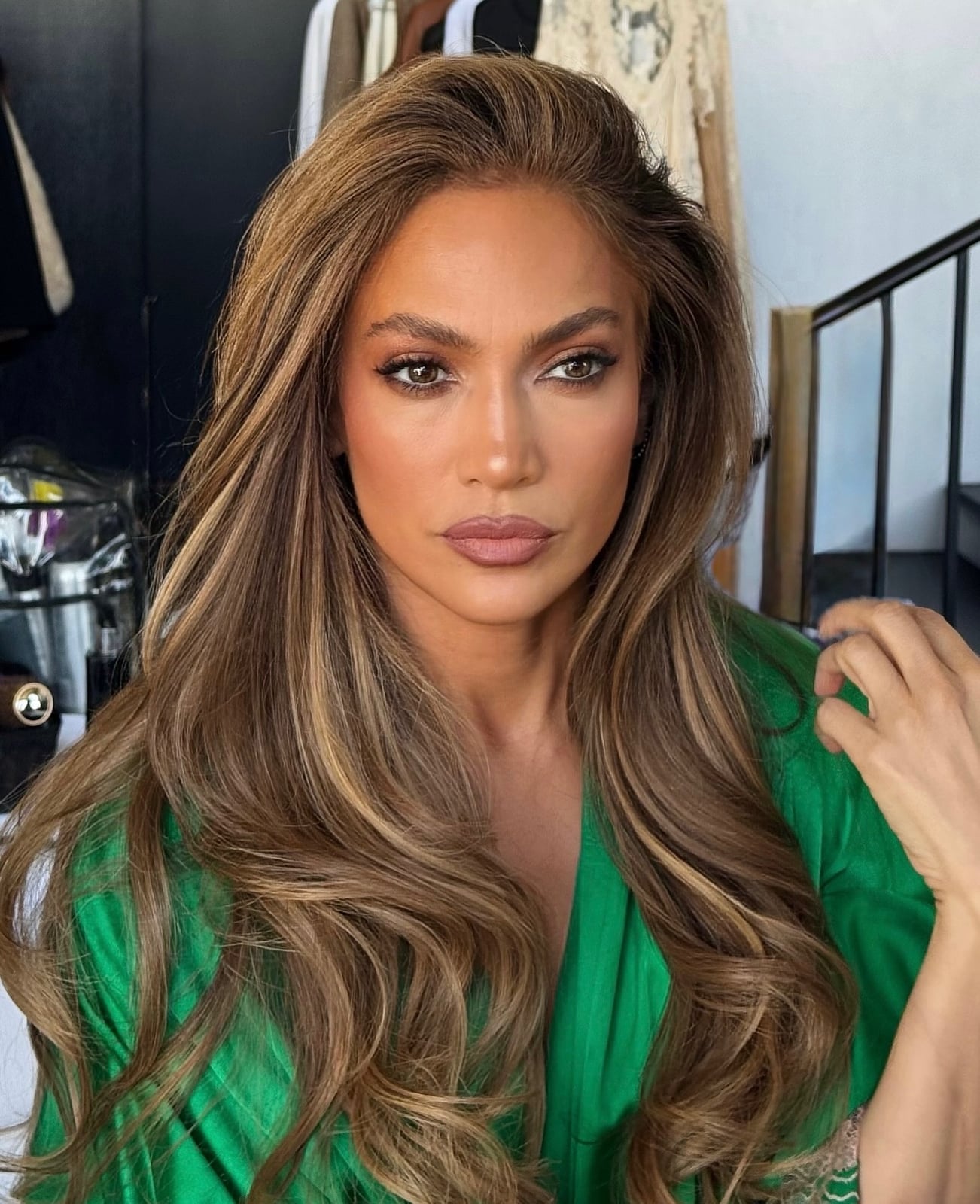
The blonde here is not shy. A medium brown base gets streaks of prominent blonde highlights that run from the mid-lengths to the ends, set against loose waves and a middle part. The glossy finish and thick texture keep the contrast from looking stripey, the waves break up the color line so it reads as movement. Fine hair at this length may need a large barrel curling iron to replicate the wave pattern without heat damage. Ask your colorist for: mid-back length waves, medium brown with prominent blonde highlights. A trim every eight to ten weeks keeps the ends healthy and the wave pattern defined.
Mid-Back Dark Brown With Blended Blonde Highlights
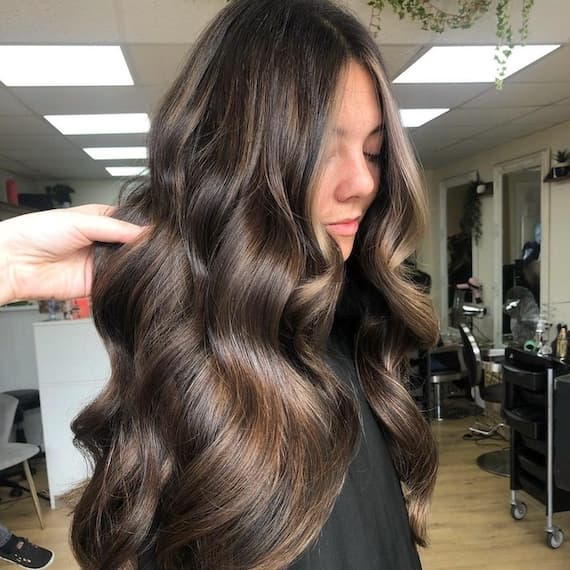
Blended blonde highlights on a dark brown base do not happen in one session. This is a two-visit color: the base, then the highlights, then a toner to soften the transition between the two. The result is dimensional mid-back length hair that looks rich from every angle, with a side part that adds volume on top. Thick, wavy hair hides the grow-out line better than straight textures, which is the main reason to choose this over a full balayage. Plan on about three hours in the chair for the initial application. Ask your colorist for: mid-back length layers, dark brown with blended blonde highlights, side part. A gloss or toner refresh every six weeks prevents the blonde from pulling brassy against the dark base.
Mid-Back Dark Brown With Dimensional Blonde Colour
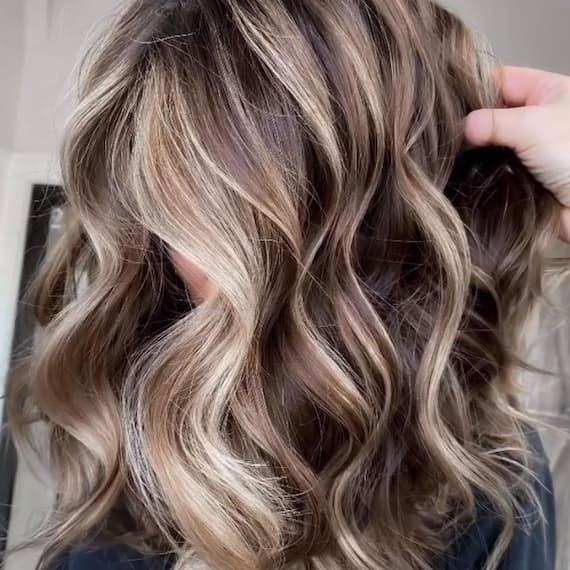
Dimensional blonde color on a dark brown base works because the highlights sit close to the root and stop short of the ends. A middle part and soft wavy blowout place the lighter pieces at different points along the length. Thick hair at mid-back length carries the weight of the layers without collapsing the wave. Ask your colorist for: mid-back layers, dark brown with dimensional blonde highlights. A trim every eight to ten weeks keeps the ends from thinning out, and a purple shampoo once a week keeps the blonde cool against the dark brown.
Mid-Back Waves With Face-Framing Blonde Highlights
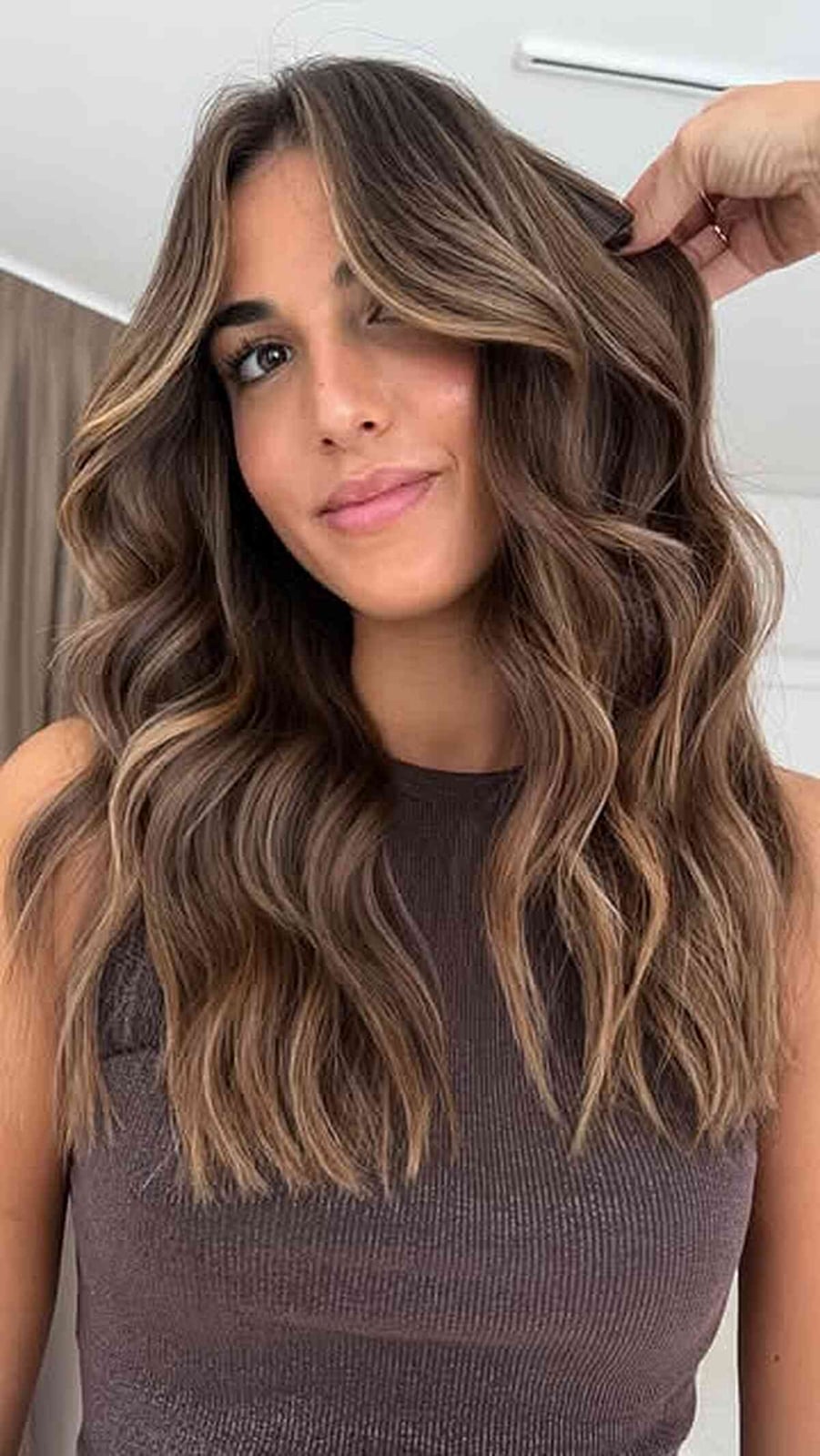
Ever wondered why some hair looks brighter without looking dyed? The secret is face-framing highlights on a dark brown base, like these mid-back waves. The blonde pieces start around the cheekbones, pulling light toward the eyes while the rest of the hair stays rich and deep, which is why this wavy style suits most face shapes. Thick, wavy textures hold the blend best, letting the darker strands ground the lighter ones.
Ask your colorist for: mid-back wavy hair, face-framing layers, dark brown with blonde highlights. The layers should be cut so they graze the cheekbones, not the chin, to keep the focus upward. Air dry with a texturizing cream to encourage the natural wave, and plan on a trim every eight to ten weeks to keep the ends from fraying.
Mid-Back Straight Dark Brown With Blonde Balayage
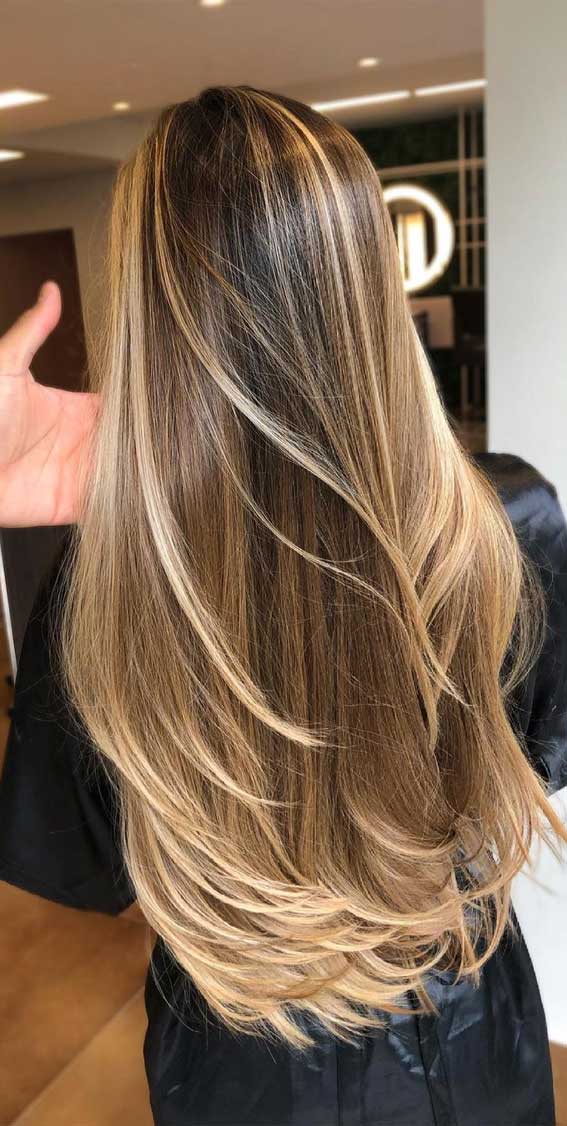
A straight blowout with a middle part shows off a balayage better than any curl could. The dark brown base runs from the roots to about the ears, then melts into blonde through the mid-back lengths, and the seamless transition creates a grown, not grown out, look. On thick, straight hair, that gradient lands evenly, so the color moves with the hair instead of sitting on top of it.
Ask your colorist for: mid-back straight hair, dark brown with blonde balayage. This is a salon-only job, since freehand painting on straight hair needs a steady hand to avoid a stripe effect. Between visits, a flat iron keeps the sleek texture that lets the balayage show its range, and a trim every eight to ten weeks maintains the blunt ends.
Mid-Back Waves With Blonde And Dark Brown Dimension
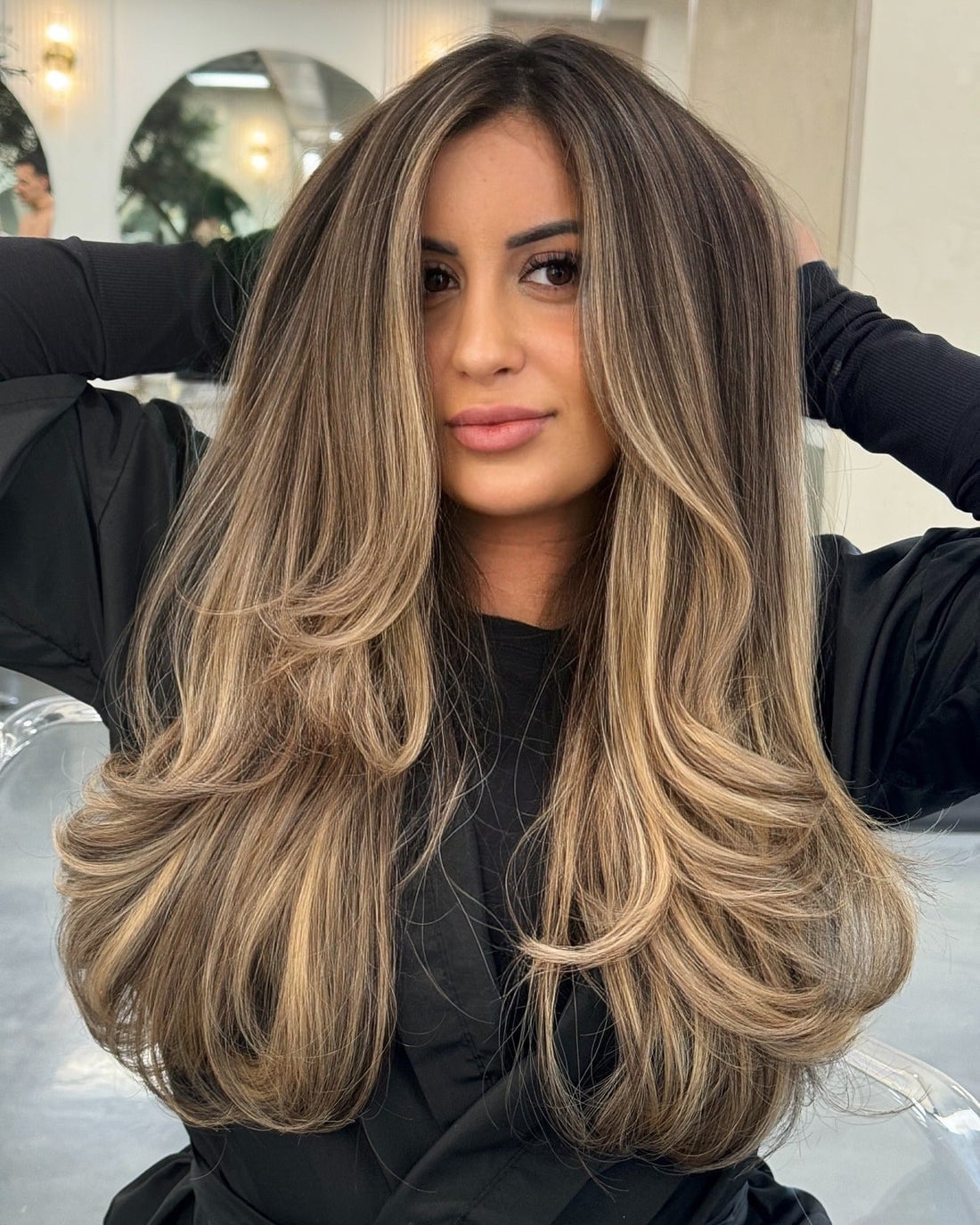
The smartest dimension comes from playing two directions at once. This mid-back style pairs a light brown base with dark brown lowlights woven under blonde highlights, so the waves read as deep and bright in the same pass. The front view shows the payoff: the close crop framing the face catches both tones, which keeps the color from flattening into one shade.
Ask your colorist for: mid-back waves, light brown with dark brown and blonde dimension. A thick, wavy texture is the ideal canvas here because the lowlights need enough body to peek through the movement. Fine hair can still wear it, but the contrast will read softer, so ask for thinner slices of dark brown.
Mid-Back Dark Chocolate With Cool Blonde Highlights
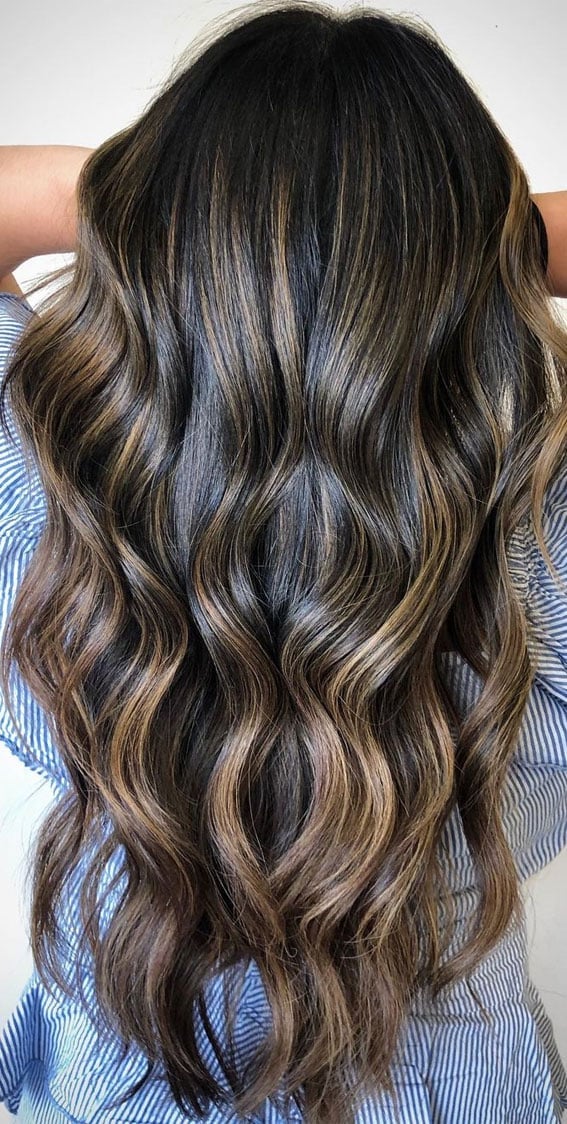
If you are torn between warm caramel and icy blonde, this one settles it. The dark chocolate brown base stays rich and warm, while cool blonde highlights cut through in loose waves, creating a striking contrast. This back view makes that clear.
Ask your colorist for: mid-back dark chocolate, striking cool blonde highlights. The cool tone suits fair complexions especially well, though the real requirement is a thick texture that can carry the alternating strands without looking sparse. To keep the blonde from turning brassy, use a purple shampoo once a week and book a toning visit every six to eight weeks.
Mid-Back Dark Brown To Blonde Ombre
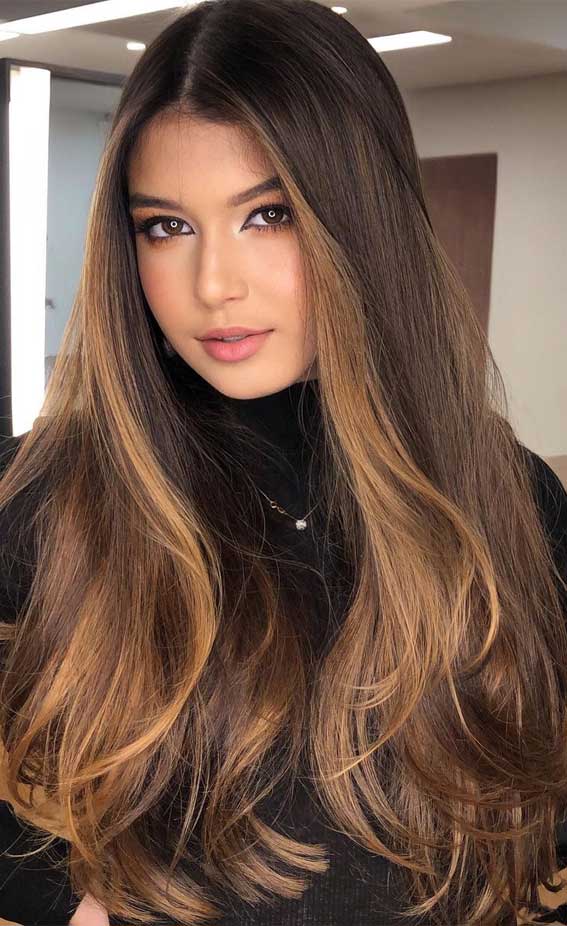
The ombre transition is having a moment, and this version does it with a clean middle parting. Dark brown melts into blonde through the ends of thick, wavy mid-back hair, and the gradient starts low enough that the roots never feel heavy or over-processed. The key is the blend: it should be gradual, not a hard line, which is why this technique is best left to a colorist who can feather the lightener through the mid-lengths.
Ask your colorist for: mid-back wavy hair, dark brown to blonde ombre. On wavy texture, the color shifts with every bend, so the transition looks natural from every angle. A texturizing spray will boost the wave pattern and help the lighter ends catch the light, and a trim every eight to ten weeks keeps the shape from getting straggly.
Mid-Back Straight With Blonde Ends, Layers
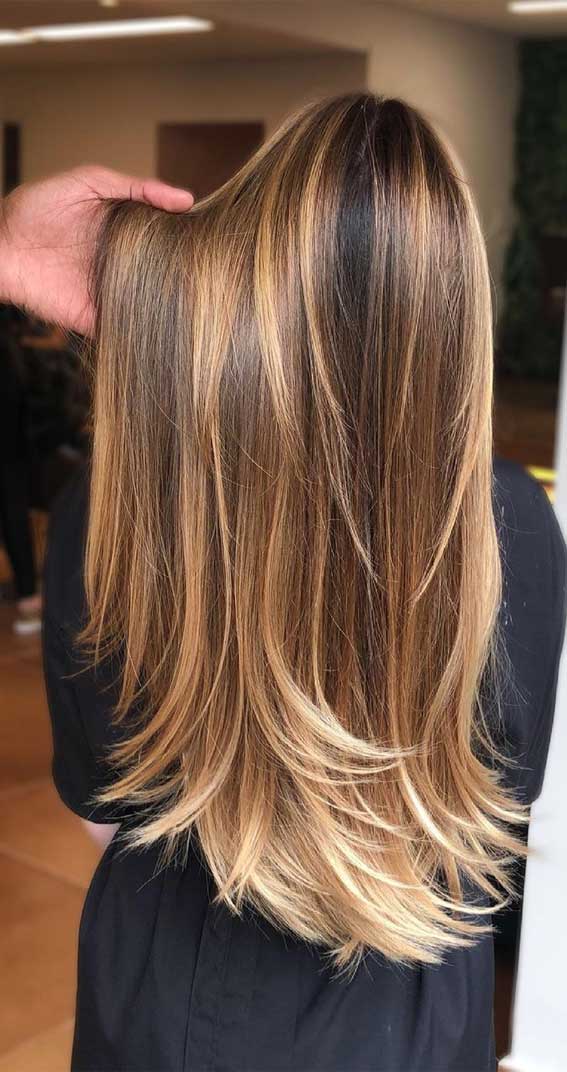
Thick, straight texture carries the look best, since fine hair can let the darker top and lighter bottom separate instead of blend. Ask your colorist for: mid-back straight hair, dark brown with blonde ends. A flat iron keeps the blowout sleek, but the real upkeep is the trim: those blonde ends need a cut every eight to ten weeks, or split ends will blur the sharp line that makes this work.
Mid-Back Wavy Layers With Curtain Bangs And Balayage
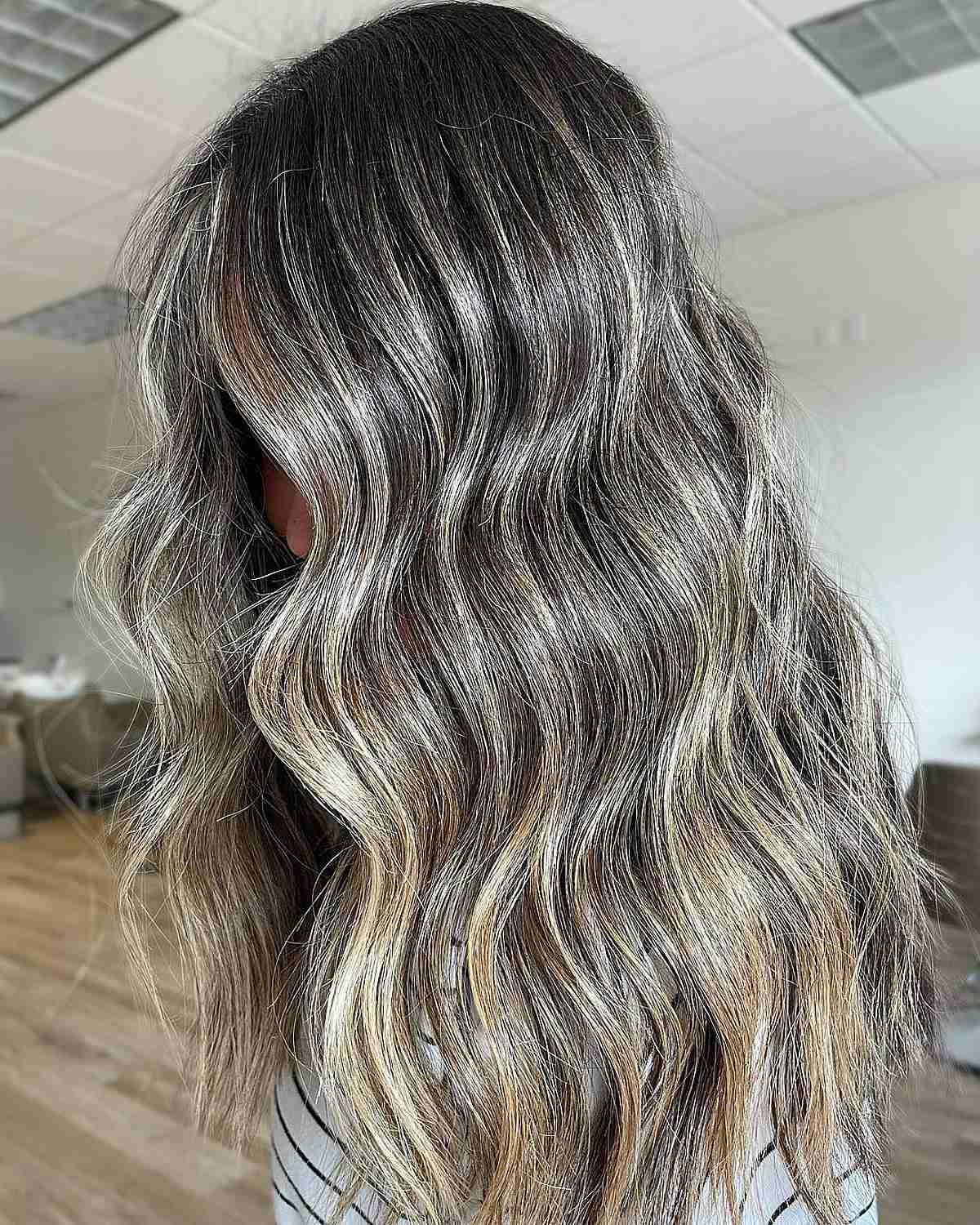
This mid-back wavy style pairs a dark brown base with blonde balayage that runs through the layers, so the highlights move instead of sitting still. Thick, wavy texture gives the color room to show, and the curtain bangs soften the front without a full fringe. Ask your stylist for: mid-back wavy layers, curtain bangs, dark brown with blonde balayage. For the blowout, wrap the fringe around a round brush and hit the rest with a light hold product to keep the waves loose. The bangs frame the face while the balayage adds dimension through the lengths.
Long Wavy Dark Brown With Blonde Balayage Ends
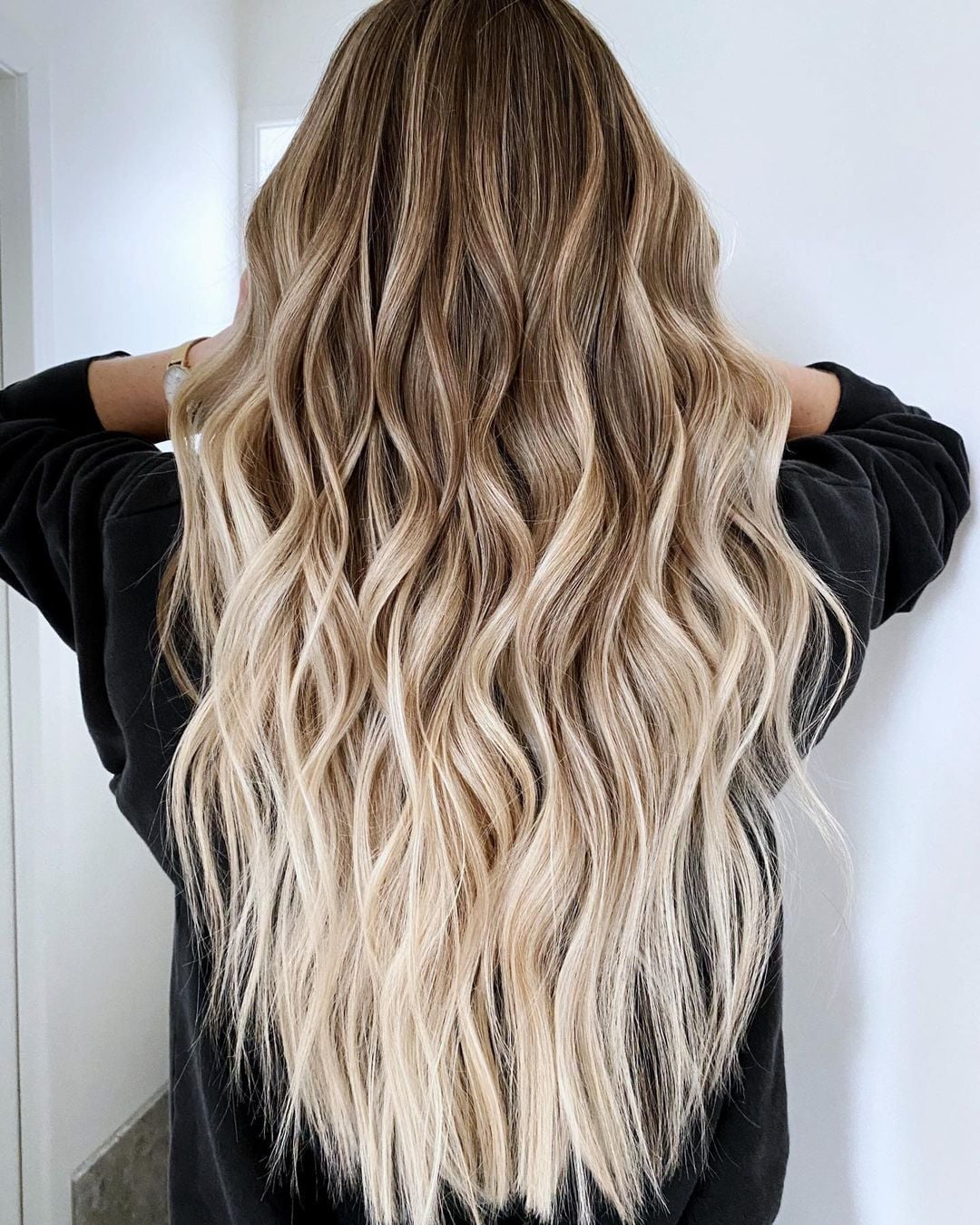
Long, wavy hair with a dark brown base and blonde balayage concentrated at the ends is the lower-maintenance cousin of full highlights. The color does the work: the waves catch the lighter pieces and the dark base stays rich at the roots, so you skip the every-four-weeks root touch-up. Thick, wavy texture is ideal, since the volume keeps the blend from looking flat. Ask your colorist for: long wavy hair, dark brown with blonde balayage ends. The honest trade-off is that the blonde ends fade faster than a root shadow, and on long hair the color needs more product to stay bright. A curl cream and diffuser will define the waves, but plan on a trim every eight to ten weeks to keep the ends healthy enough to hold the color.
Final Thoughts
For a low-maintenance look, opt for balayage techniques that grow out softly. If you prefer more contrast, ask for distinctly placed highlights, understanding they will require more frequent toning or touch-ups.
- Tone blonde highlights every 6-8 weeks to maintain the desired shade.
- Deep condition weekly for color-treated hair.
- Trim blunt cuts every 6-8 weeks; layered cuts every 8-10 weeks.
- Use color-safe shampoo and conditioner to preserve vibrancy.
- Apply a heat protectant spray before styling to prevent damage.
Find the blonde blend that speaks to your style.

