
A bob is any cut that falls between the ear and the collarbone, and the 2027 version trades the flat-ironed finish of past years for soft face-framing layers, curtain bangs, and glossy natural texture. Lived-in color keeps the grow-out line quiet between appointments.
Here are 20 Trendy Cut Bob ideas, from a sharp dark brown micro bob to a silver gray bob with softly waved ends. Some need a diffuser and ten minutes; others ask only for a round brush. Fine hair gets blunt lines that hold density, thicker hair gets layers that move, and anyone fighting a fringe that will not sit will find a version that behaves.
Dark Brown Micro Bob With Sharp Lines
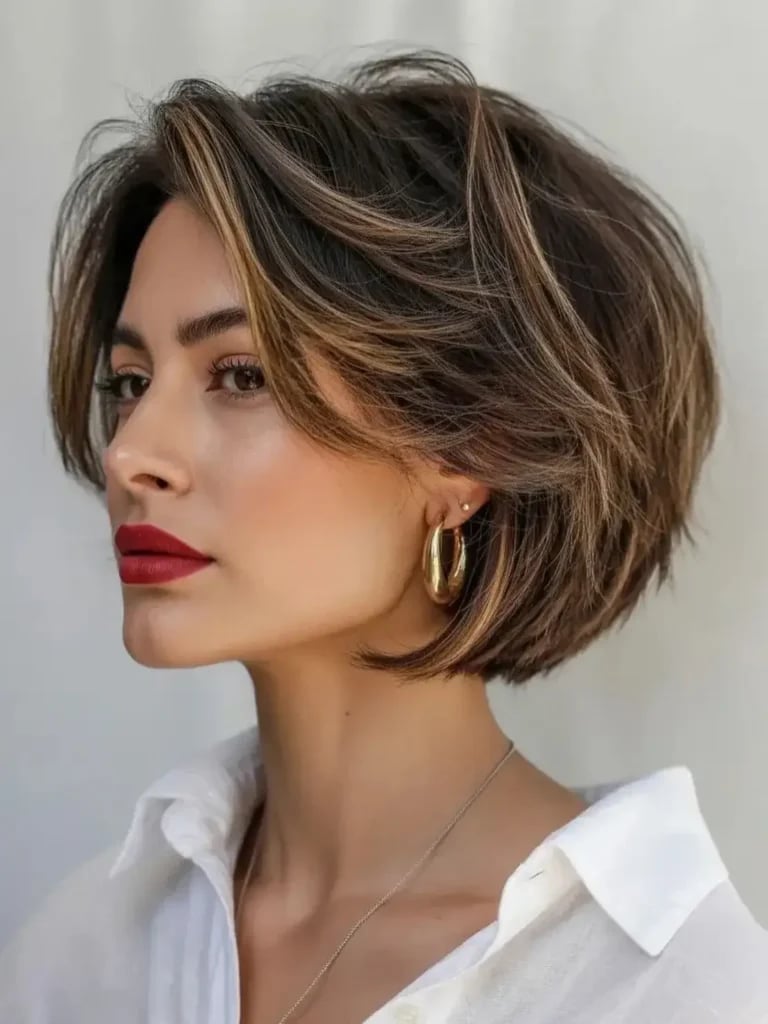
Fine, straight hair holds that line best, since it lies flat without fighting the shape. It elongates an oval face and gives a long neck room to work. Ask your stylist for: ear-length micro bob, sharp and clean lines. Then budget for trims every four to six weeks, because an ear-length cut shows every millimeter of grow-out.
Short Black Bob With Subtle Layers
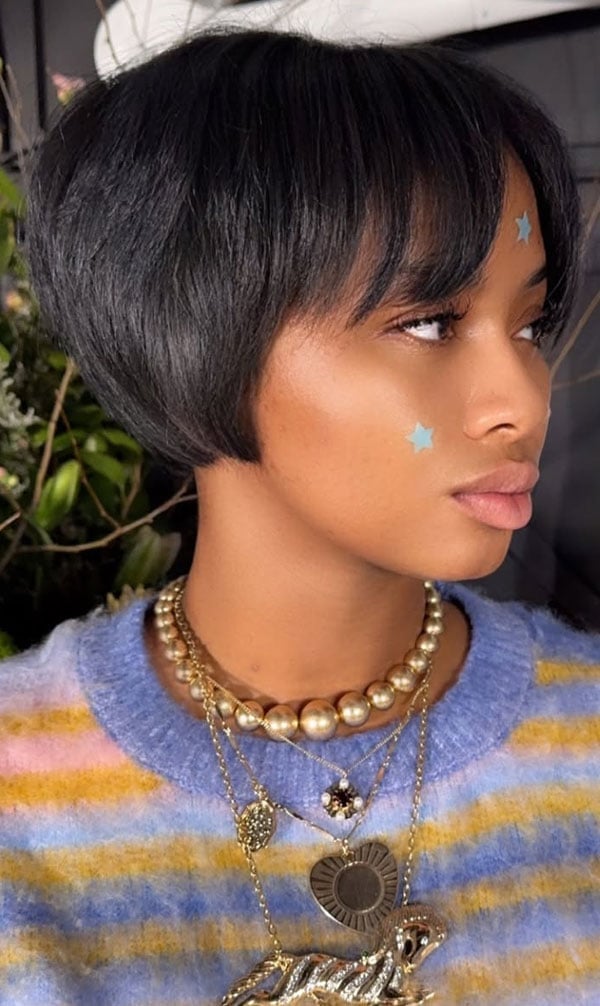
Wondering how to get volume out of fine hair without losing the line? Subtle layers, placed quietly, do more than a round brush ever will. This short black bob stops at the ear, cut blunt with gentle layering that lifts the shape and a smooth blowout to finish. Short bangs keep the front crisp. It suits fine hair that needs a little height, and most face shapes can wear it. Ask your stylist for: ear-length bob, subtle layers for volume, smooth finish. Keep a light smoothing serum on hand for shine, and plan on a trim every six weeks to keep the layers from collapsing.
Jawline Textured Bob With Highlights
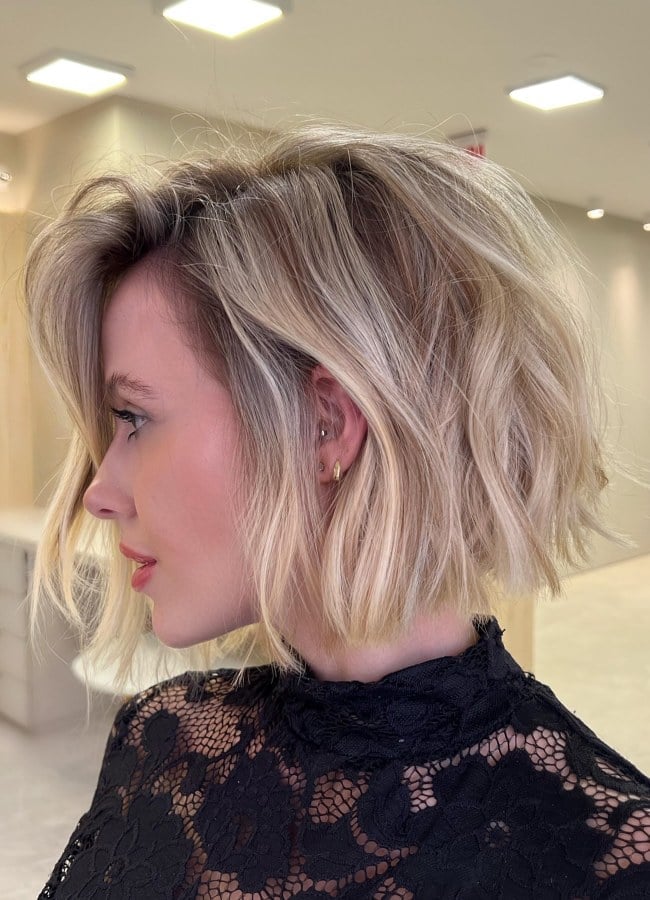
Texture in a bob is built, not wished for. This jawline textured bob relies on wavy, fine hair cut with textured layers, then a soft blowout that leaves the movement visible instead of ironed out. Blonde with highlights gives those layers something to catch, so the shape reads even from across a room. No bangs means the jawline stays the focus. Fine, wavy hair handles this level of layering well; hair with more weight can end up looking bulky at the ends.
Ask your stylist for: jawline textured bob, soft layers, wavy finish. Be specific about where the layers start, since a jaw-length cut has little room to hide a misplaced one. A texturizing spray boosts the lived-in feel on day two. Trims every eight weeks keep the layers from growing out into a heavy line, and highlights need a refresh at roughly the same interval.
Sleek Chin Bob With Blunt Bangs
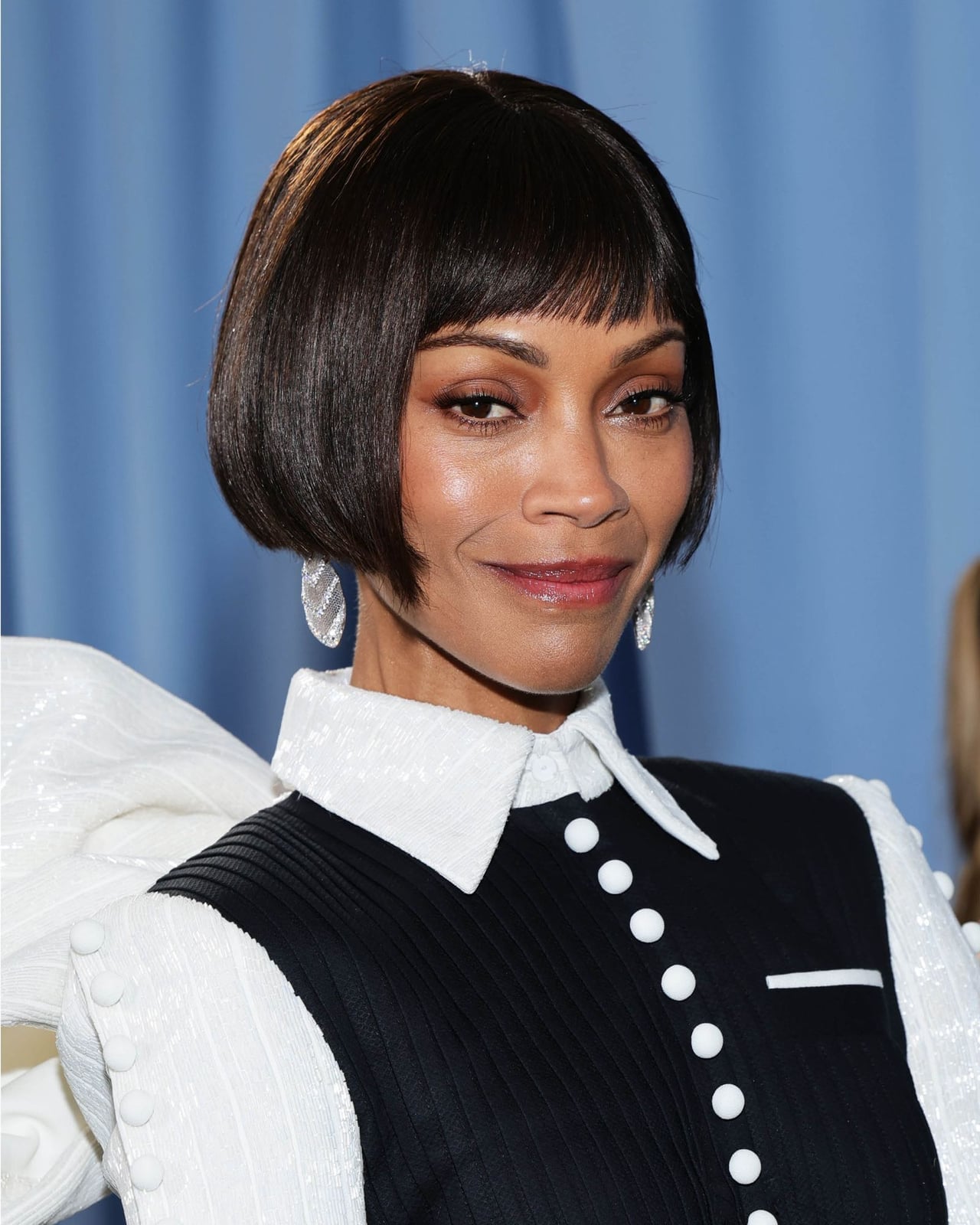
A chin bob with blunt bangs creates a severe, geometric look. The bangs cut a hard horizontal line across the forehead, while the chin-length bob keeps the perimeter smooth and straight. In solid black with fine, straight hair, the effect is deliberate. It suits oval and long faces, where the horizontal fringe balances length. If a soft, layered look is the goal, this is not that cut. Ask your stylist for: chin-length bob, sharp blunt bangs, sleek straight finish. Plan on bangs trims every four to six weeks and a baseline trim every six to eight, because a blunt fringe loses its edge fast.
Dark Brown Blunt Bob With Blunt Bangs

A blunt bob lives or dies by its baseline. Here the ends fall in an even line just below the chin, the middle parting splits a blunt fringe down the center, and the dark brown color stays glossy through a straight blowout. Fine, straight hair is the right starting point, since it holds a hard line without coaxing. This chin length keeps the shape from reading as severe. Ask your stylist for: chin-length blunt bob, blunt bangs, straight finish.
Upkeep is where this cut asks for patience. The baseline grows visibly uneven within weeks, so a trim every six to eight weeks is standard, and the bangs need attention closer to every four. Styling takes a smoothing cream and a flat iron on most mornings; a paddle brush and a blow dryer get you a softer version of the same line. The dark brown shows a clean edge, which is helpful, because a blunt cut forgives nothing. Skip the trim and the shape goes from precise to merely grown out.
Silver Bob With Blunt Bangs
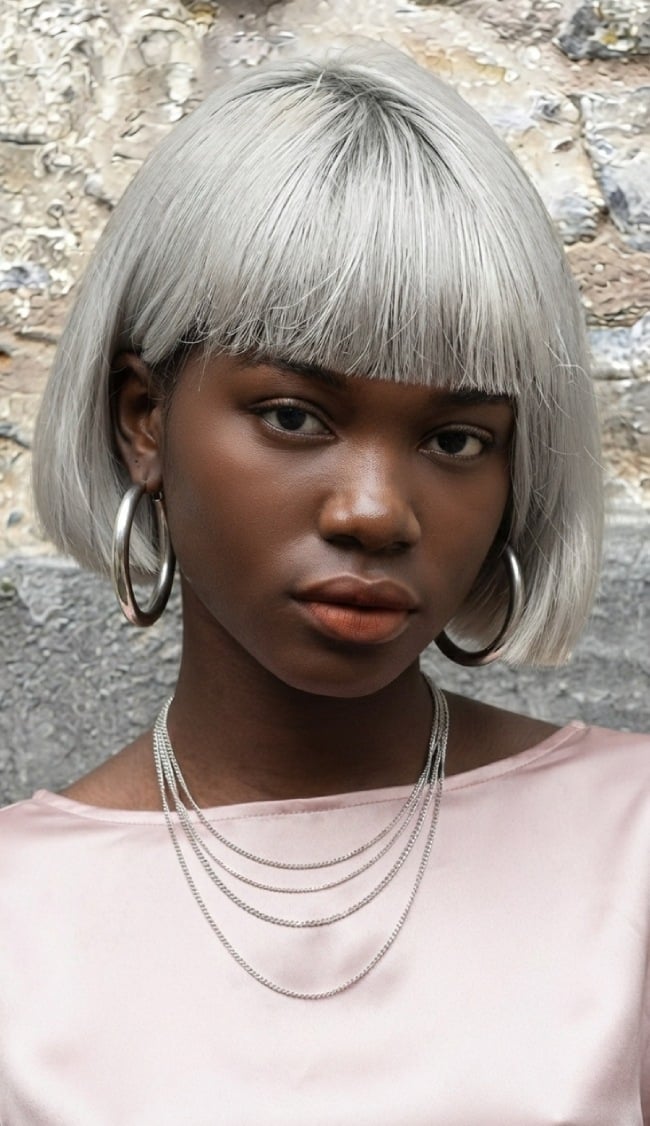
Wondering if silver is a spring statement or a year-round commitment? It is both, and the upkeep is where that story gets real. A chin-length bob with blunt bangs, straightened to a fine, smooth finish, makes the silver read as a deliberate color choice instead of a grow-out stage. Fine, straight hair holds those sharp lines best, and you need to start at chin length so the bangs sit heavy and even. Ask your stylist for: chin-length bob, blunt bangs, silver color, straight finish. Silver fades fast, so schedule a toning appointment every four to six weeks and a bang trim every three to four. Book this before a wedding or a holiday party, not the week of.
Ash Blonde Bob With Smooth Blowout
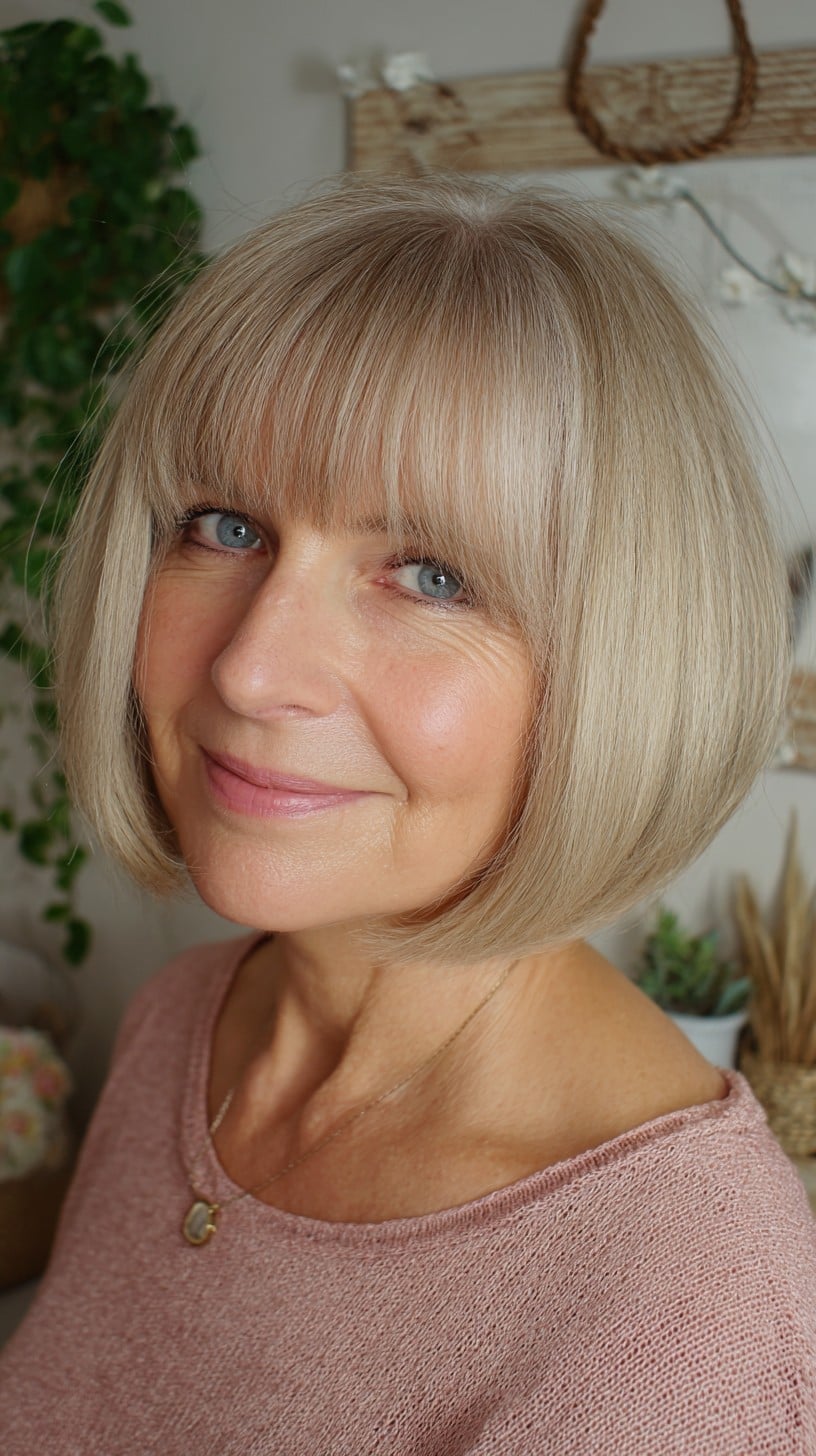
A blunt line only looks expensive when the hair underneath can hold it, so check your density before you commit. This chin-length bob with blunt bangs and a middle parting is styled straight with a smooth blowout in ash blonde, and the fine, straight texture is what keeps the edges clean. Ask your stylist for: chin-length bob, blunt bangs, ash blonde, smooth blowout. Ash blonde is a salon color, not a box one: lightening to that cool tone takes about three hours and a follow-up gloss, and at home you are looking at a heat protectant, a round brush, and a blow-dryer on medium heat to get the finish flat. Trim every six to eight weeks to keep the blunt edge from going soft. Fine hair that frizzes easily should pass.
Thick Dark Brown Bob With Curtain Bangs

Ask your stylist for: chin-length bob, voluminous blowout, curtain bangs. Thick, straight hair is the right starting point, because fine hair drops flat under the same weight. This cut softens a square jaw and adds width at the sides for a long face, which is the opposite of what a round face needs. Round faces should ask for a longer length below the chin instead. Use a large round brush through the blowout for volume, and get the bangs trimmed every four to six weeks so they keep their sweep.
Textured Ash Blonde Bob With Wispy Bangs
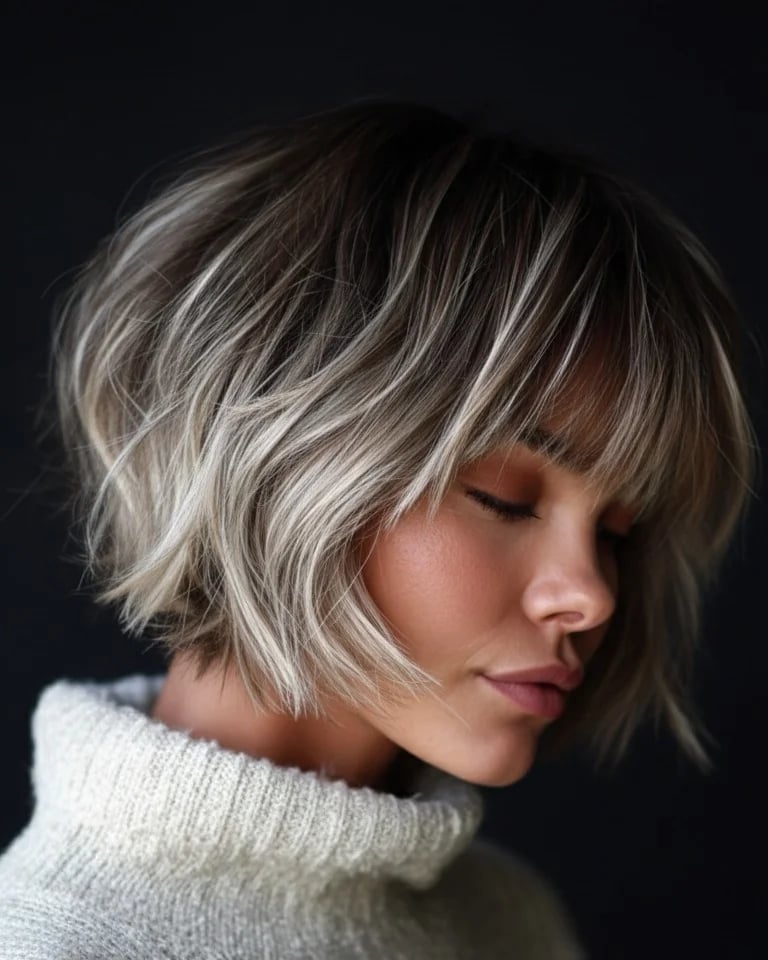
The movement comes from the layering, not the color: a chin-length bob cut with textured layers and styled in waves gives thick hair somewhere to go. Ash blonde highlights sit on top of that shape and catch the bends in the wave, while wispy bangs keep the front light. Ask your stylist for: chin-length textured bob, wispy bangs, ash blonde highlights. Thick, wavy hair is the raw material this cut needs, since fine hair loses the wave by mid-afternoon without help. Ask for the layers to start around the jaw so the ends still look full. A sea salt spray through damp hair, scrunched and left to air dry, builds the lived-in texture; a diffuser works if you want more definition. Trim every eight to ten weeks to keep the layer shape from growing out into a solid block.
Ash Blonde Bob With Wavy Curtain Bangs, Office-Safe Version
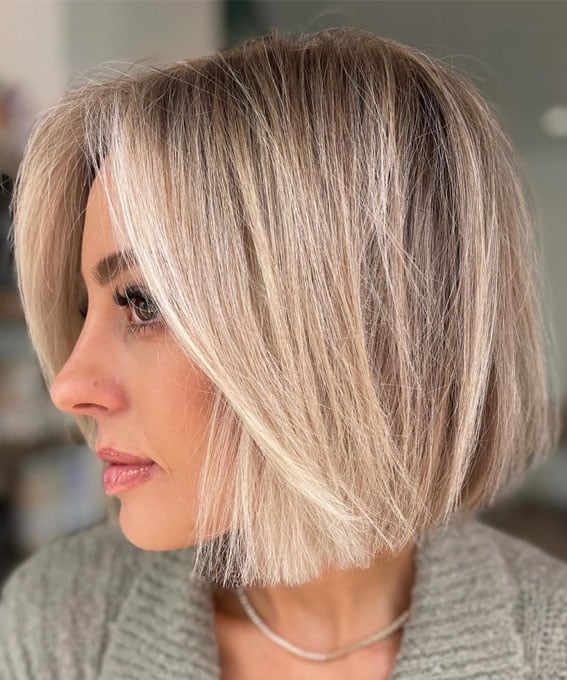
A chin-length bob with curtain bangs gets its polish from the blowout, not from the cut alone. The ash blonde color keeps the wave pattern visible, and the fine, wavy texture holds a loose bend without much coaxing. This is the ash blonde bob wavy blowout that looks best on fine, wavy hair with a chin-length starting point, and it softens a round or square face along the jaw. Ask your stylist for: chin-length bob, soft curtain bangs, wavy blowout. The upkeep is the real story: bangs need a trim every four to six weeks to stay clear of the eyes, and fine hair loses its wave fast at the crown. Diffuse on low heat to keep the bend, then leave the ends alone.
Chestnut Bob With Face-Framing Curtain Bangs
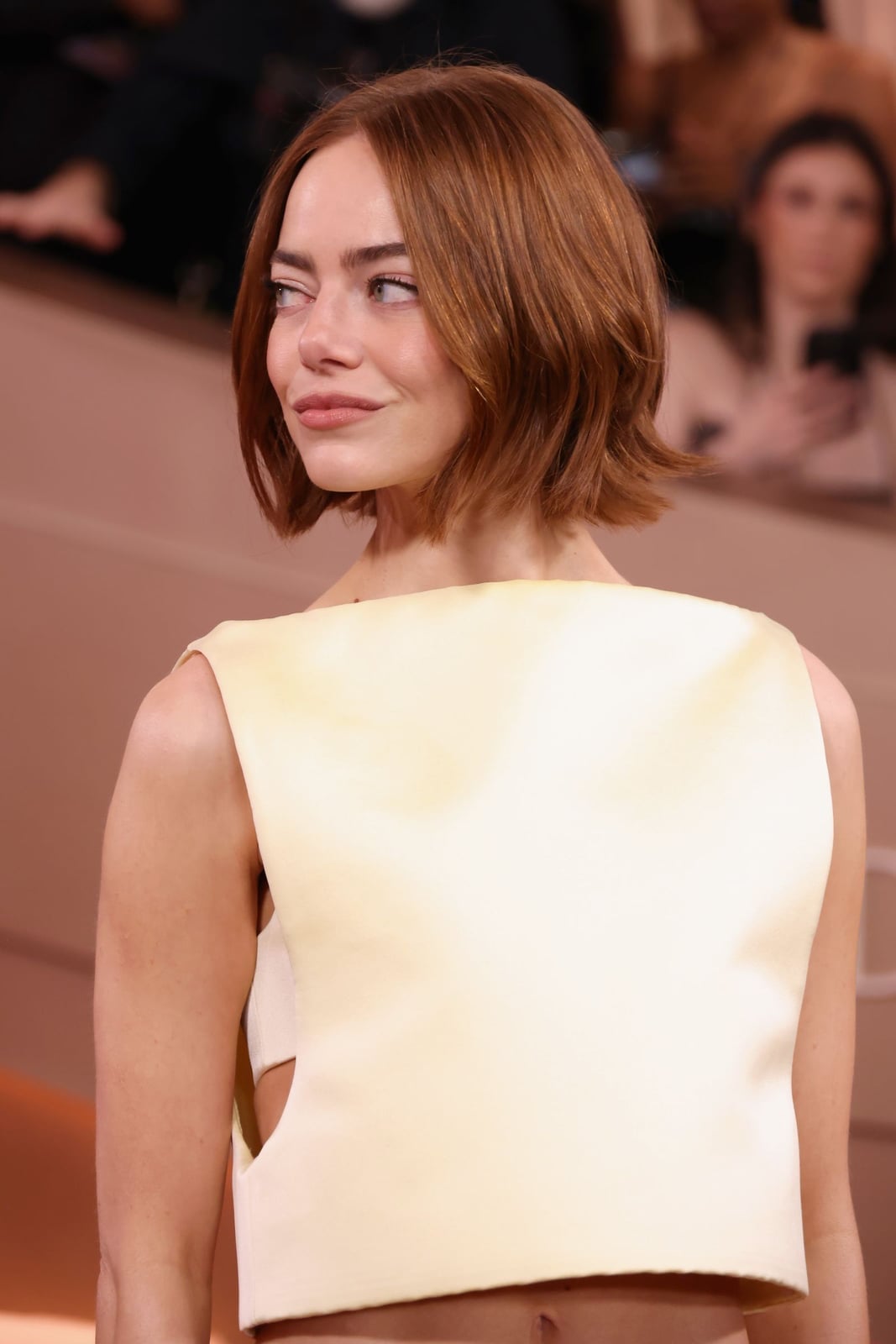
How do you get a chin-length bob with curtain bangs to look like one cohesive cut instead of two separate haircuts meeting awkwardly? The trick is in how the layers connect. This version uses a chestnut brown base with subtle lighter highlights woven through, and the curtain bangs blend directly into the wavy blowout. The side parting adds lift at the root, which keeps medium density hair from falling flat around the jaw.
Ask your stylist for: chin-length bob, curtain bangs, chestnut brown with highlights. Request that the bangs be cut dry and connected to the shortest layer around the temples. That seam is what makes the difference between a bob with bangs and a bob that reads as one shape.
Ash Blonde Bob With Wavy Curtain Bangs, Close-Up Take
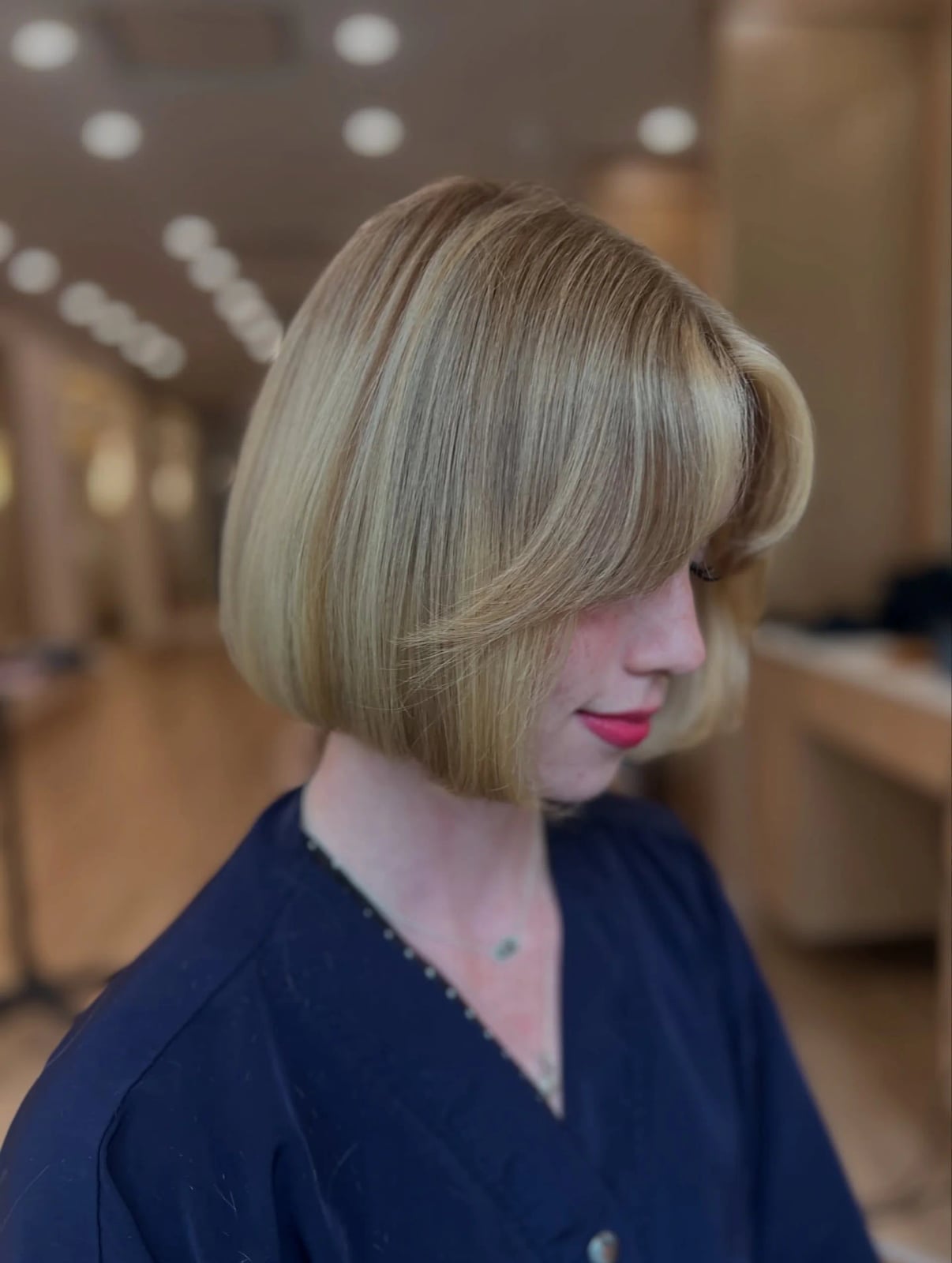
The most common misstep with curtain bangs on a bob is cutting them too short. On a chin-length shape with fine, straight ash blonde hair, bangs that end above the cheekbone can look disconnected and make the bob feel heavier. This version keeps them long enough to sweep forward and blend with the side part, which preserves the illusion of density. The subtle highlights add dimension without drawing attention to any single line. Ask your stylist for: chin-length bob, curtain bangs, ash blonde. Grow-out is less forgiving on fine texture, so bangs need trimming every four weeks.
Ash Blonde Bob With Outward Flick
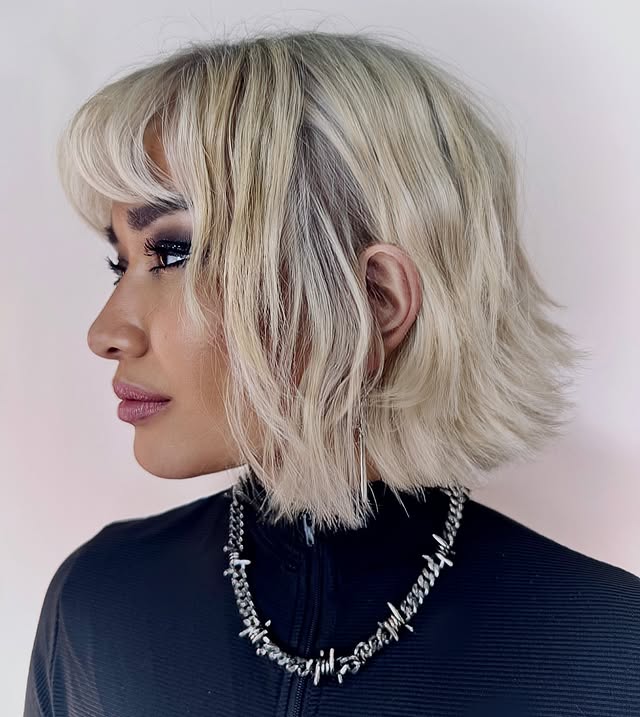
The outward flick at the ends turns a standard chin-length bob into something that moves, which is useful during warmer months when a stiff blowout feels like too much effort. This ash blonde version with subtle highlights uses a side part and curtain bangs to frame the face, while the soft wavy texture keeps the flick from looking set or rigid. It lands as an everyday work style because it reads polished in the morning and still has shape by late afternoon. Ask your stylist for: chin-length bob, curtain bangs, ash blonde, outward flick ends. The flick alone changes the silhouette without adding length.
Rounded Bob With Soft Curtain Bangs
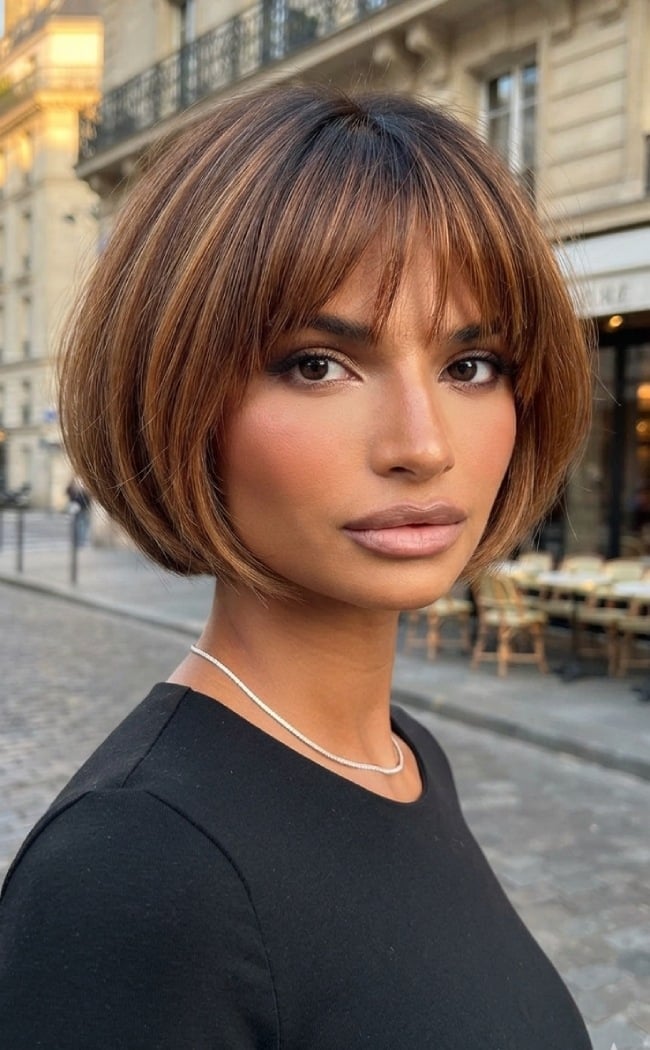
The rounded bob is essentially a blunt cut that curves slightly under at the ends, which works best on collarbone-length hair with medium density. The warm brown base with subtle highlights keeps the shape from looking solid, and the soft wavy texture adds the airiness that a true blunt bob sometimes lacks. The middle part and soft curtain bangs frame the face without pulling weight from the perimeter, so this cut suits oval, round and heart shapes equally well.
Ask your stylist for: collarbone length rounded bob, soft curtain bangs, warm brown with highlights. The rounded shape relies on the perimeter being cut in one clean line, with the layers concentrated only in the bangs. Anyone with very fine or low-density hair may find the curve collapses without a round brush and a dryer.
Layered Bob With Wavy Curtain Bangs
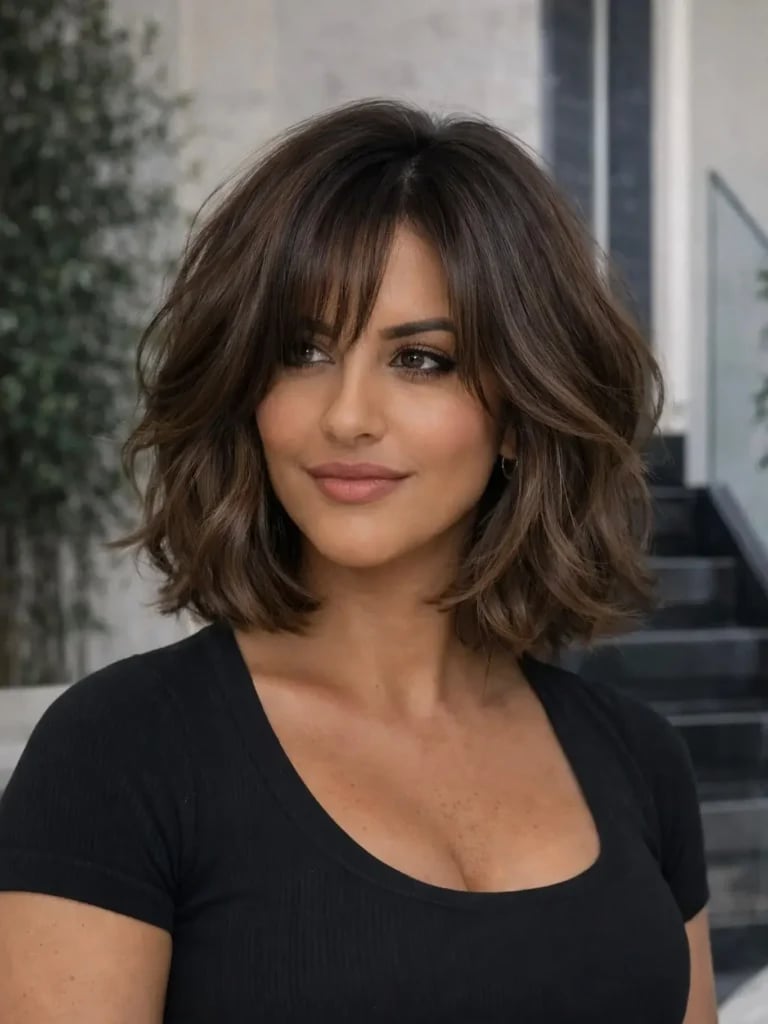
This collarbone-length bob is built on internal layering, meaning the shortest pieces are tucked underneath instead of stacked on top. The dark brown base with subtle highlights gains movement from the layers, while the curtain bangs blend into the side part and the wavy blowout softens every edge. The technique gives medium density hair more volume without making the ends feel thin.
Ask your stylist for: collarbone length layered bob, curtain bangs, dark brown with highlights. Request that the layering stay below the occipital bone so the silhouette holds its weight. The benefit of this construction is grow-out: because the layers are not aggressive, the shape still looks deliberate after ten weeks.
Blonde Layered Bob With Voluminous Blowout
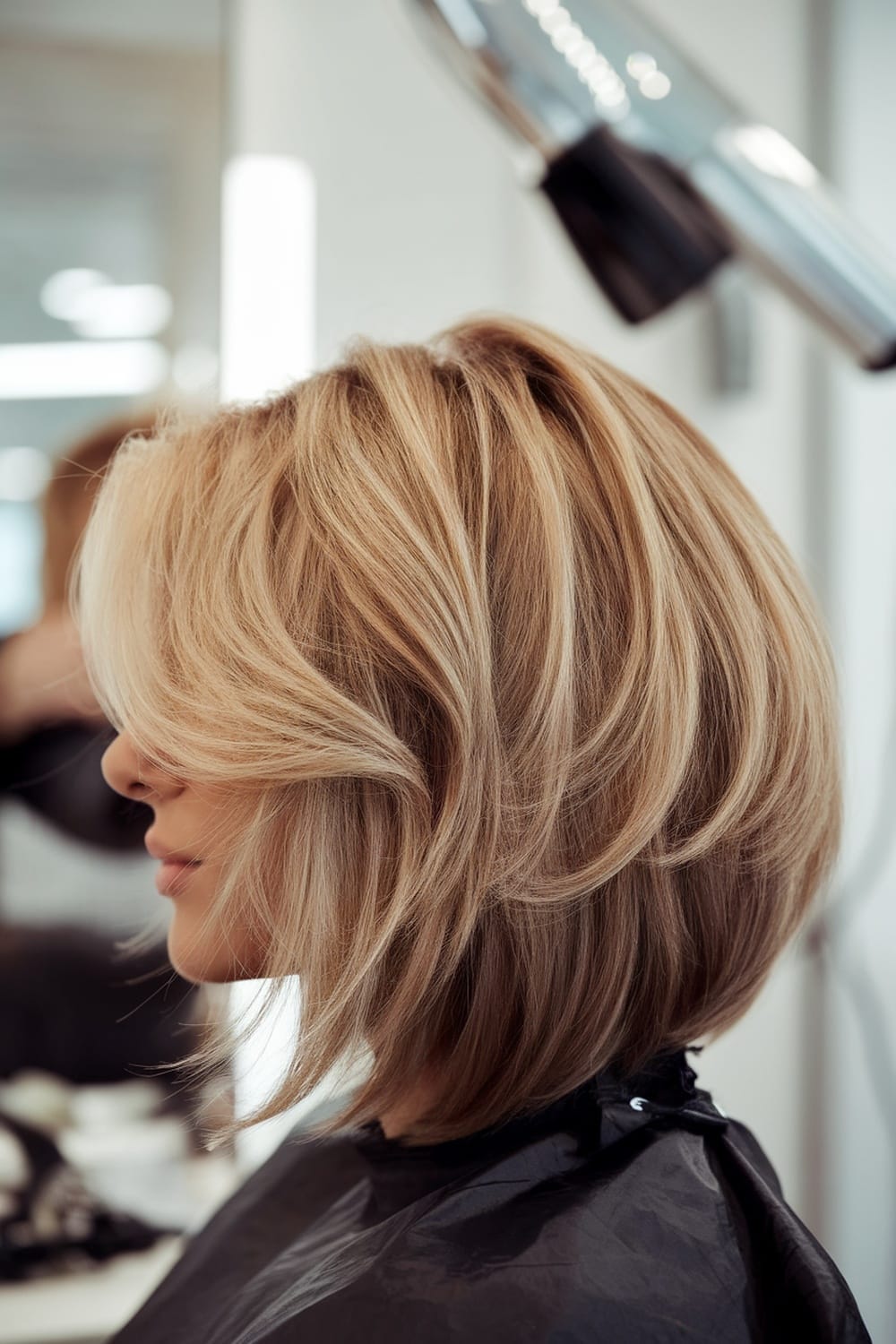
Can a collarbone-length cut really hold this much volume without collapsing by lunch? On medium density wavy hair, yes, provided the layers are cut to support the shape. The blonde with lighter highlights here runs through visible layers that create movement, and the middle parting keeps the style balanced.
Ask your stylist for: collarbone length layered bob, voluminous blowout, blonde with highlights. This is a salon finish, not a wash-and-go: expect to spend real time with a round brush, lifting at the roots for maximum volume, and a heat protectant is not optional. Trim every eight to ten weeks to keep the layers from growing out into a solid block.
Ash Blonde Bob With Face-Framing Layers
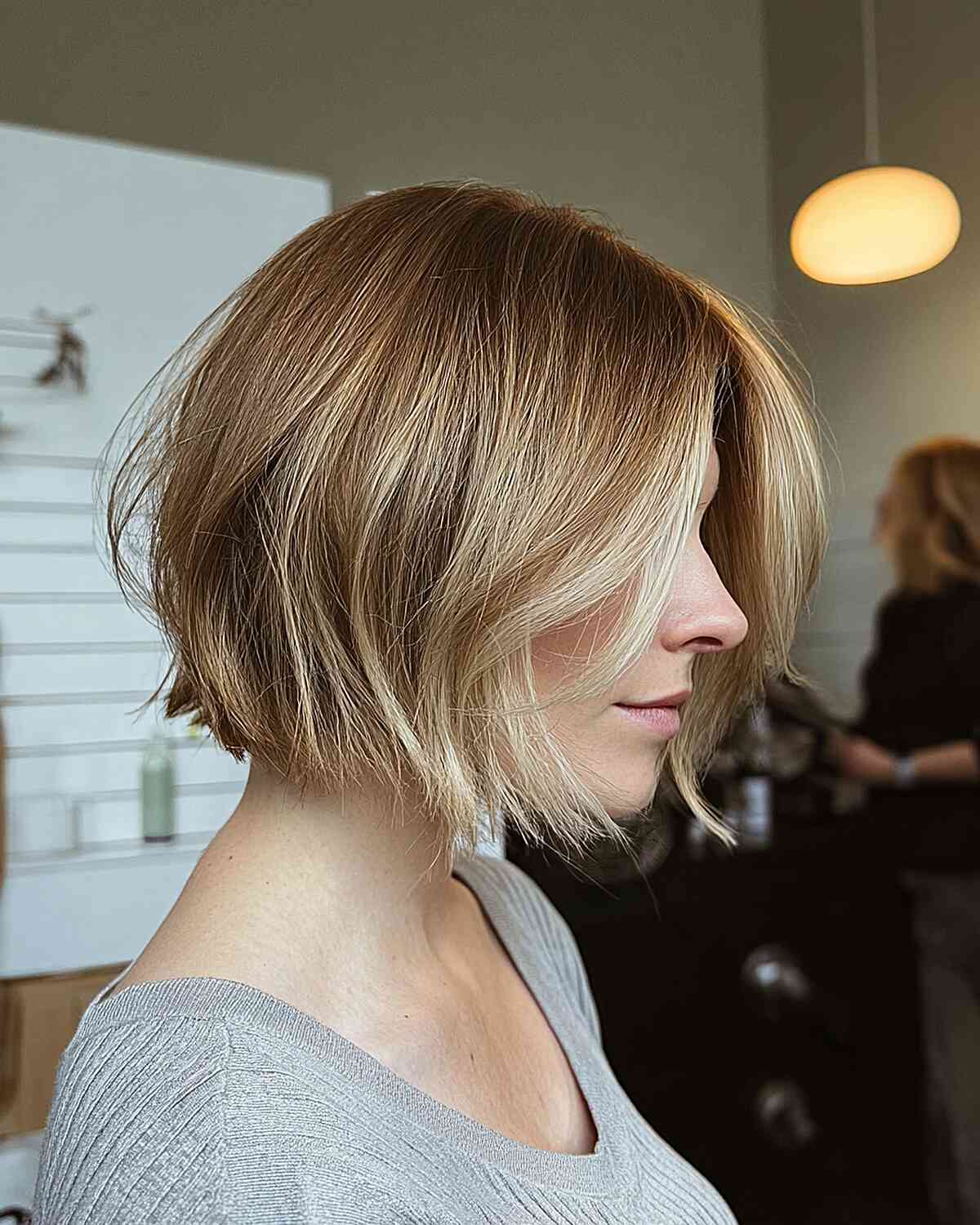
Face-framing layers work best when they are cut to blend into the cut itself. This collarbone-length bob gets its shape from soft layers that start around the cheekbone and merge into the length. A side part and a slightly wavy finish keep the ash blonde highlights from looking flat.
Ask your stylist for: collarbone length bob, face-framing layers, ash blonde with highlights. The wording matters. Say you want the layers integrated, so the shortest piece sits at the cheekbone and the rest taper into the perimeter, and mention that you wear the hair wavy so the stylist can account for shrinkage. Medium density wavy hair holds this shape well, and the layers soften a square face without adding width at the jaw.
Styling steps that keep the layers visible:
- Rough-dry to about eighty percent, then section the front.
- Use a large round brush on the face-framing pieces, rolling them back toward the crown.
- Let the rest dry with a diffuser so the waves stay loose.
Honey Blonde Blunt Bob With Loose Waves
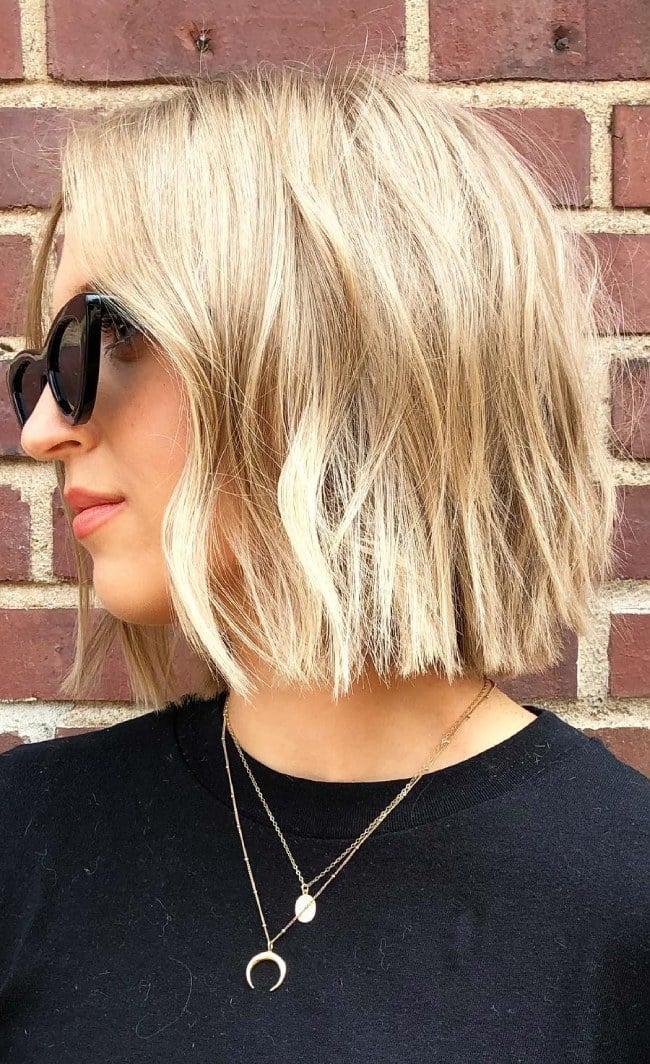
A blunt line at the collarbone and loose waves are an odd couple on paper, and that is exactly why the pairing works. The blunt cut gives the honey blonde with lighter highlights a clean edge, while the soft waves keep it from looking like a geometry project. No bangs, a side parting, and enough texture to show the color moving through the length.
Set it against a layered bob and the difference is clear. Layers remove weight and let wavy hair spring up; a blunt perimeter keeps the length honest and makes fine or medium density hair read thicker at the ends. If your hair tends to collapse without layers, go layered. If it holds a wave on its own, the blunt version gives you more shape for less styling.
The drawback: a blunt line shows every uneven grow-out, so book a trim every eight weeks, and honey blonde highlights need toning to keep the warmth from drifting. Ask your stylist for: collarbone length blunt bob, loose waves, honey blonde with highlights.
Dark Brown Bob With Loose Waves
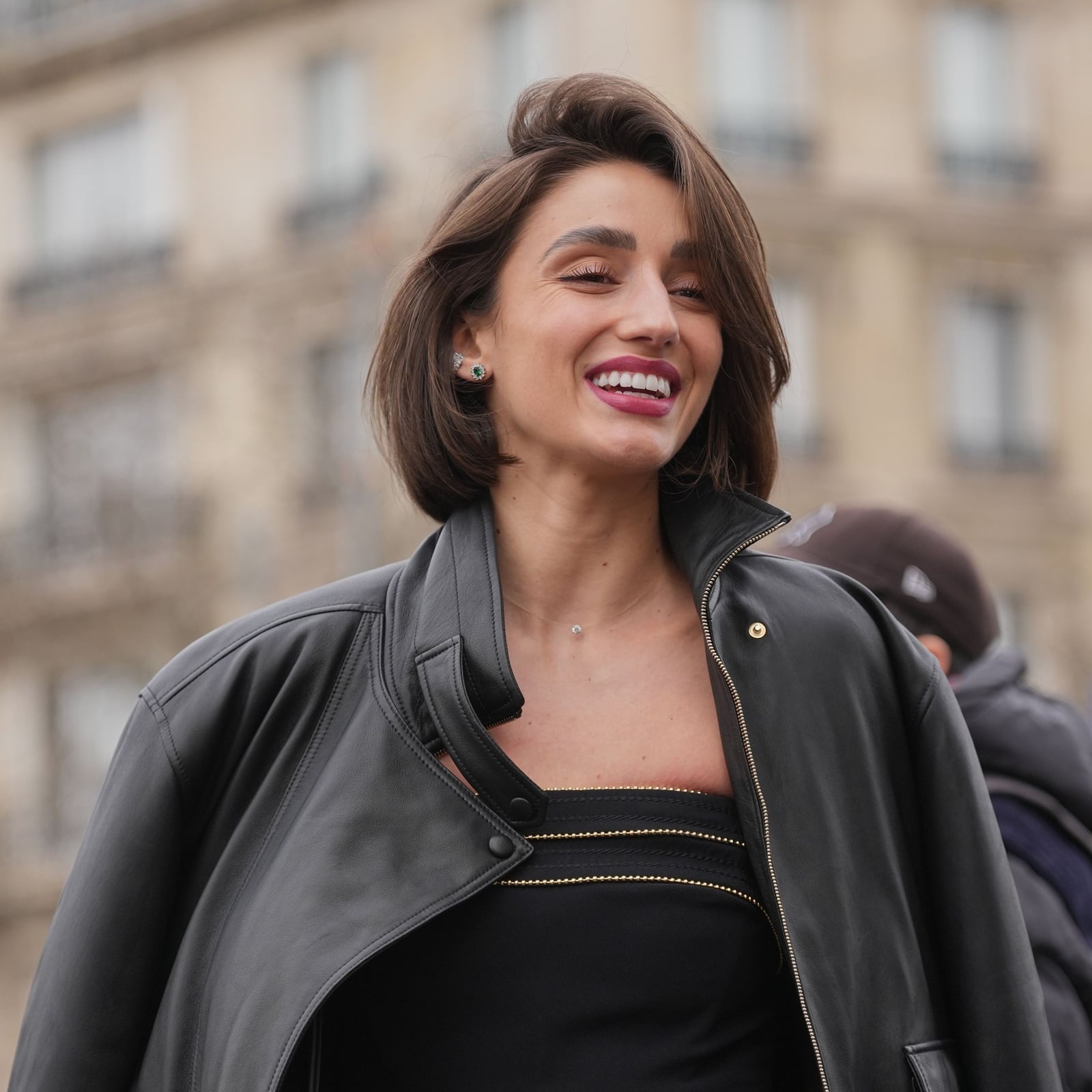
Do not treat a curling iron as the only route to loose waves, especially on solid dark brown hair. Over-processing is the usual mistake here: hot tools applied daily to a collarbone-length bob leave the ends fried and the wave pattern uneven, and dark brown shows that damage faster than lighter shades. Heatless rollers or a large barrel iron used two or three times a week give the same relaxed result with less stress on the fiber.
Ask your stylist for: collarbone length bob, loose waves, solid dark brown. Medium density wavy hair does most of this work on its own, so a salon cut that respects the natural pattern beats forcing a shape at home. Trim every eight to ten weeks.
Silver Gray Bob With Softly Waved Ends
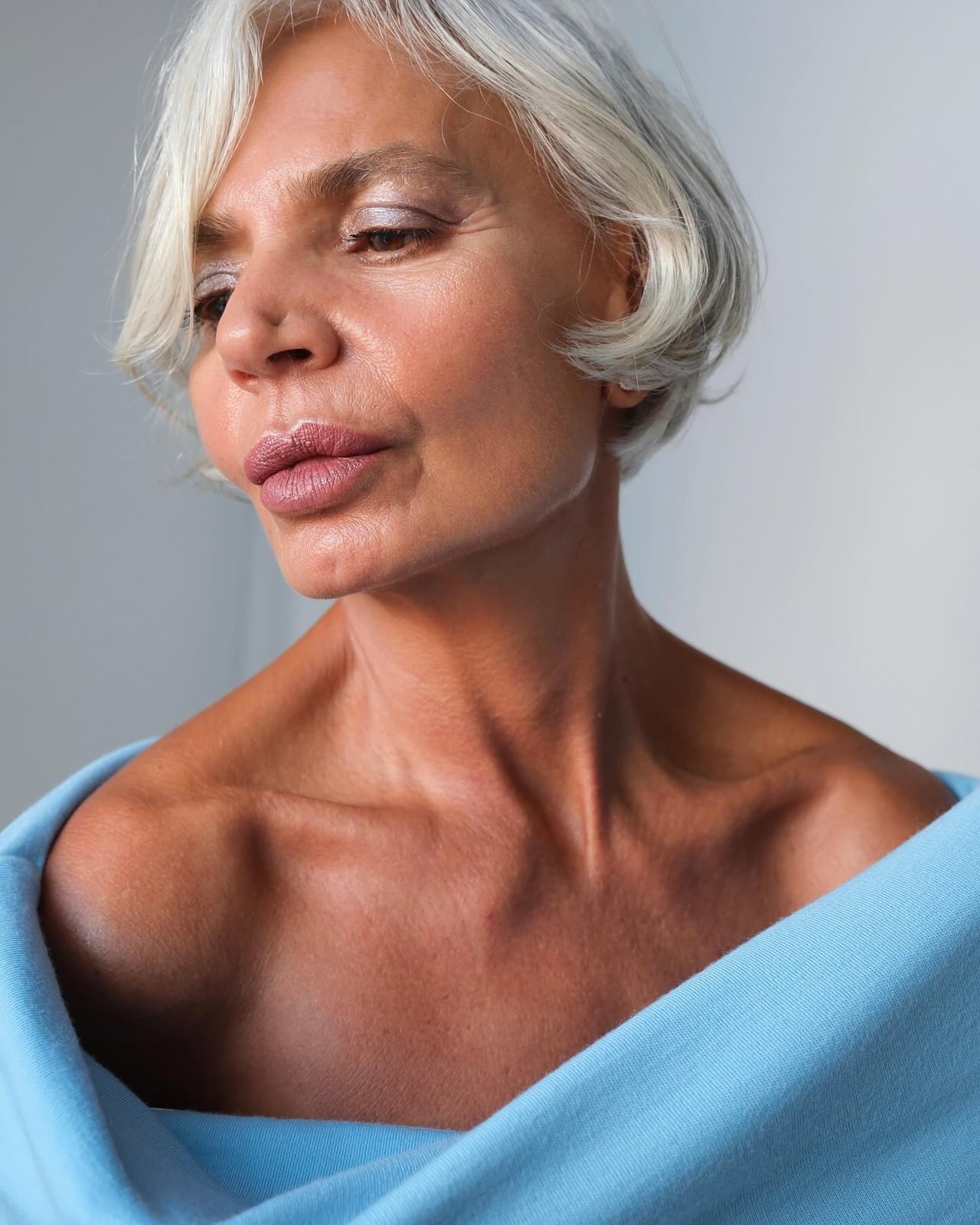
A chin-length bob in silver gray with softly waved ends is a specific commitment, and fine wavy hair is the texture that struggles most with it. The color is striking, but silver gray demands regular toning to keep brassiness out, and a chin-length cut on fine hair loses its shape quickly once the wave drops. Soft waves need a smoothing serum and a round brush to look deliberate, and even then the volume at the crown can fall flat by mid-afternoon.
Ask your stylist for: chin-length bob, softly waved ends, silver gray color. If your hair is fine and you want low upkeep, skip this one: the toning schedule alone runs every four to six weeks, and the cut needs a trim just as often to stay at the chin. For oval and heart faces with medium density, it is a sharp choice.
Final Thoughts
Fine hair: keep one blunt baseline and skip heavy layers, since a solid perimeter reads fuller than a choppy one. Thick hair can carry layers for movement and softness. Match the cut to your weekday styling time before you match it to a photo.
- Trim blunt bobs every six to eight weeks to hold the line.
- Layered bobs stretch to eight or ten weeks between trims.
- Tone blonde or highlighted bobs every four to six weeks.
- Apply heat protectant before any hot tool.
- Air-dry wavy bobs with a texturizing spray or a diffuser.
The right bob is a statement of personal style.

