
Side bangs are a diagonal fringe that sweeps across the forehead, cut to blend into the rest of the haircut rather than sit as a separate block. The current version leans soft and face-framing, with lived-in color and glossy natural texture replacing the heavy, flat-ironed sweep of earlier years.
This collection of 20 Side Bangs ideas runs from cropped pixies to mid-back layers, with blunt and blended options for fine, thick, wavy and straight hair. If your fringe refuses to sit or your fine hair collapses by noon, the right cut and a four-week trim rhythm fix most of it.
Platinum Blonde Collarbone Lob With Curtain Bangs

A collarbone lob with long layers and curtain bangs gives fine, wavy hair the volume it usually has to fake. The platinum blonde with highlights reads bright but not flat, and the side parting lets the fringe sweep away from the face instead of hanging in it. Curtain bangs soften a round or square face by breaking up the jawline without hiding it. Ask your stylist for: collarbone length lob, long layers, curtain bangs. Fine hair holds this shape best when the layers start below the chin, so the cut keeps density at the ends. Expect to blow-dry the fringe with a round brush to keep the sweep, and book a bang trim every four to six weeks.
Blonde Bob With Side Swept Bangs

How do you ask for side-swept bangs that actually blend into a bob instead of sitting on top of it like a separate haircut? Start with the length: a collarbone bob gives the fringe somewhere to land. The blonde highlights add dimension to fine hair, and the soft waves keep the whole shape from looking pressed. Ask your stylist for: collarbone bob, side swept bangs, subtle waves. The key word is blend. Request that the bangs be cut to meet the side parting and taper into the cheekbone, not chopped as a straight block. A texturizing spray gives the fringe hold without stiffness, and the bob line needs a trim every six to eight weeks to stay sharp.
Dark Brown Chin Length Bob Side Swept Bangs

A chin-length bob in dark brown with side-swept bangs earns its shine from a blowout, not from luck. Fine, straight hair shows every cut line, so the baseline has to be precise. Ask your stylist for: chin length bob, straight, with side swept bangs. Smoothing serum goes on before the dryer, and a round brush turns the ends under just enough to keep the shape from looking severe. The bangs need a light pass with the brush to hold their sweep. Book a trim every six weeks, because fine hair loses the blunt edge fast.
Ash Blonde Bob With Blended Side Bangs
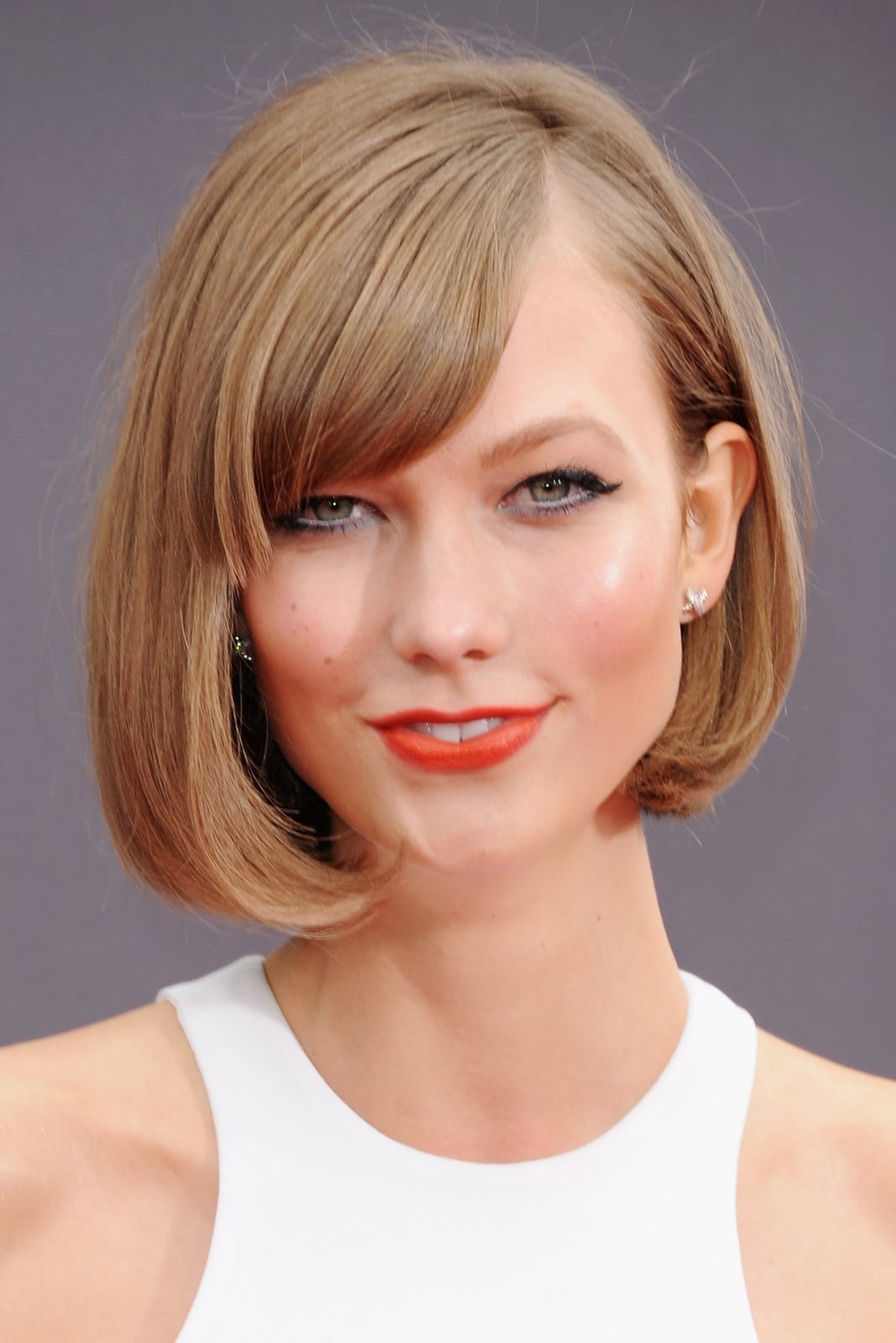
Blended side bangs on a chin-length bob do less work than a full fringe and more than no bangs at all, which is the whole point. On fine, straight hair, the ash blonde bob keeps the shape clean while the bangs taper into the cut instead of stopping at the temple. A blunt fringe suits dense hair that can carry weight; this version suits finer hair that needs movement. Ask your stylist for: chin length bob, blended side swept bangs. Texturizing spray on the fringe keeps the sweep from collapsing, and the bob line wants a trim every six to eight weeks. Round faces get a longer line here, since the length sits below the jaw.
Dark Brown Bob With Balayage And Side Bangs
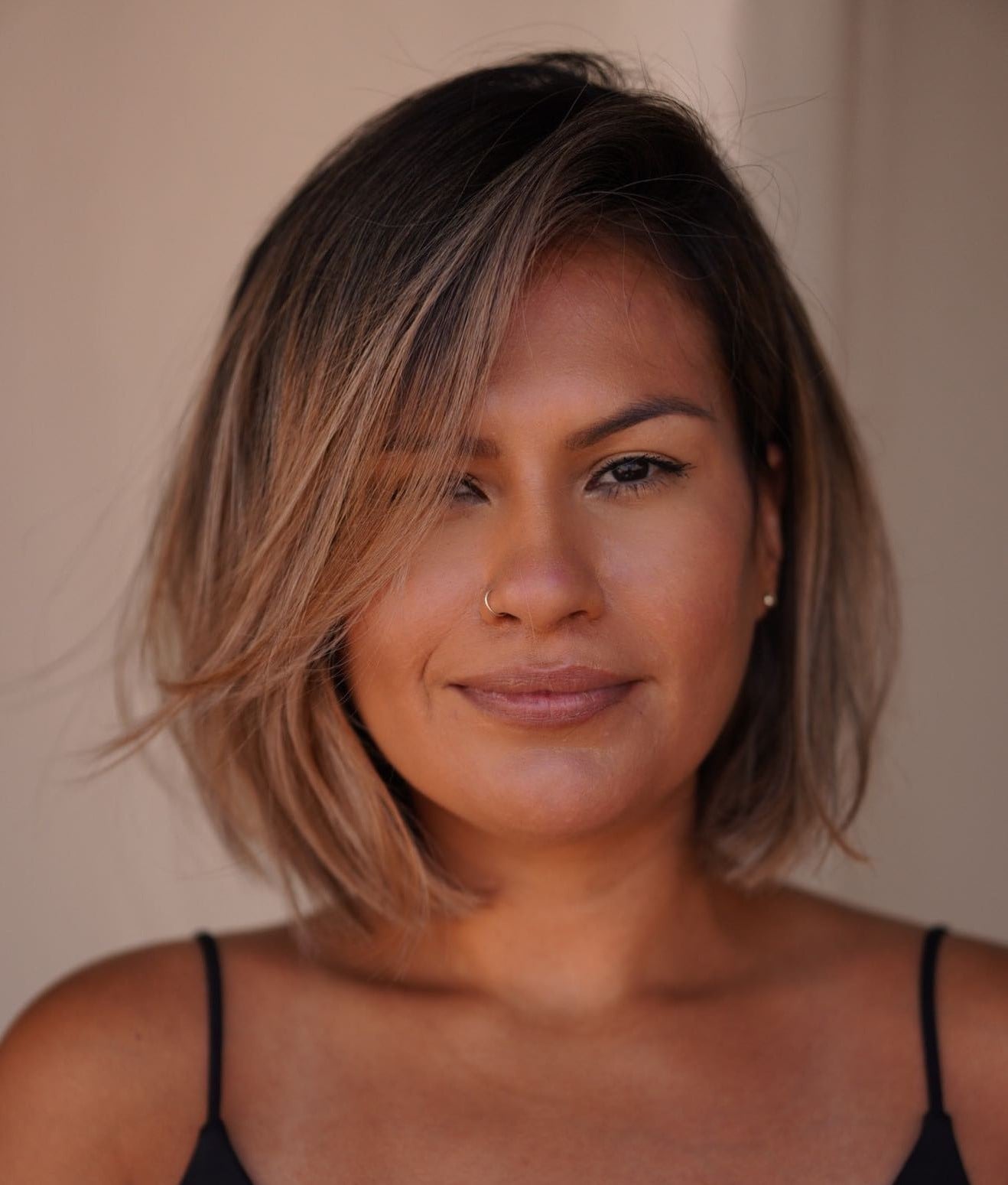
A chin-length bob in dark brown with balayage and side-swept bangs is built in two stages: the cut sets the frame, then the color adds depth where the light would otherwise flatten. The balayage highlights are painted freehand through the lengths and ends, which keeps the root line dark and the grow-out soft. On medium wavy hair, the air-dried finish lets the texture do the styling. Ask your stylist for: chin length bob, dark brown balayage, soft side swept bangs. The bangs should be cut after the color is applied, so the fringe matches the final shade.
- Ask for the balayage to start below the ear, not at the root.
- Request a soft sweep on the bangs that clears the brow.
- Confirm the bob line hits at the jaw, not above it.
Sea salt spray on damp hair encourages the wave, and the bob line needs a trim every six to eight weeks to hold its shape.
Textured Light Brown Pixie Cut With Side Bangs

Ask your stylist for: ear length pixie cut, textured side swept bangs. Fine hair of any density handles this shape, and most face shapes can carry it. The bangs do the work of a fringe without the upkeep of a full one. Use a matte paste to define texture, and plan on trims every four to six weeks to keep the shape from growing out.
Fine Light Brown Pixie With Swept Bangs

Fine, straight hair has a well-known habit of lying flat the moment it is left alone, and a light brown pixie at ear length with textured styling is no exception. The cut relies on a side parting and soft, side-swept bangs to create the lived-in look, but fine strands do not hold that shape without help. Ask your stylist for: ear length pixie, natural texture, side swept bangs. Finer hair tends to lose definition between washes, so a texturizing spray becomes part of the routine rather than an extra. The trade-off is real: this cut looks best on day one and needs a trim every four to six weeks to stay sharp.
Shoulder Length Layers With Thick Side Bangs
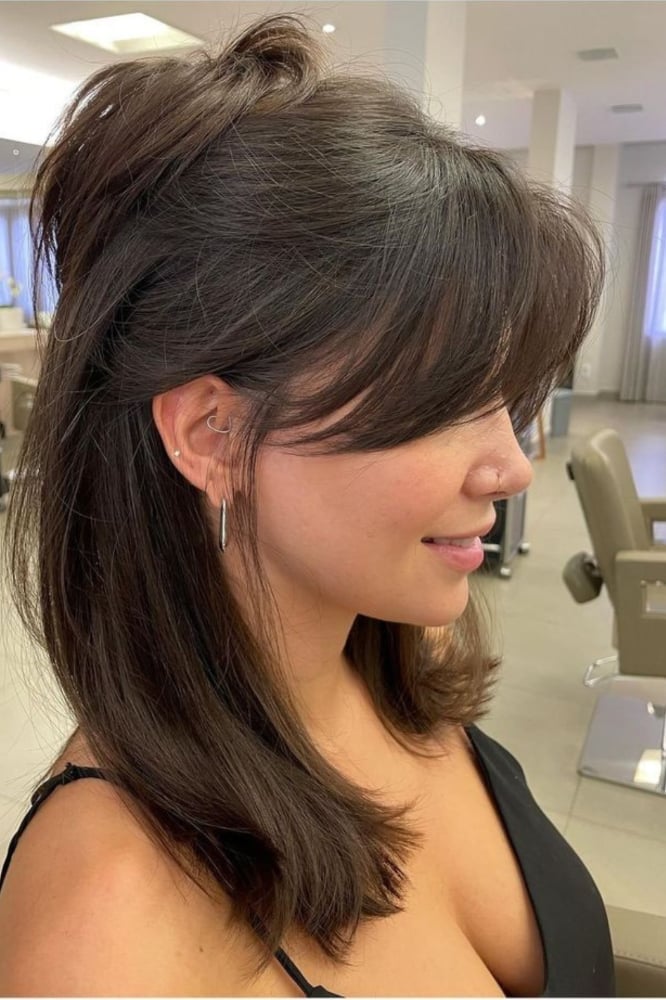
The bangs are side-swept and distinct, not wispy, and they sit against a smooth blowout. Ask your stylist for: shoulder length layered cut, thick hair, side swept bangs. Bring a photo if you can, because thick hair holds a side-swept line differently than fine hair does. The layers should start around the collarbone to keep weight in the ends. Thick, straight hair at shoulder length balances a round face well, and the side sweep keeps the fringe from blocking the forehead. A flat iron keeps the finish straight, and trims every eight to ten weeks maintain both the layers and the bangs.
Blonde Shoulder Length With Side Bangs
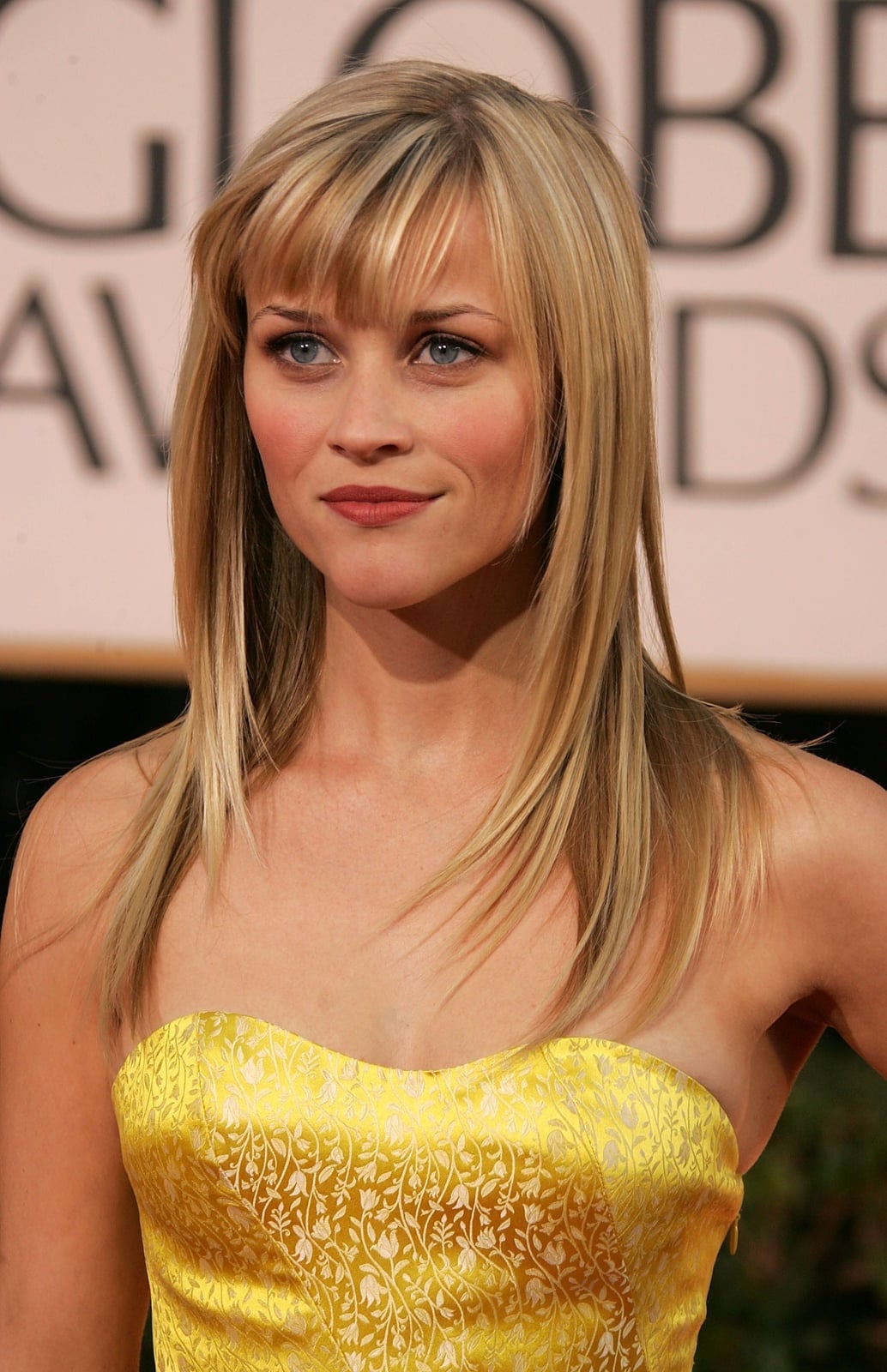
Fine, straight blonde hair cut to the shoulder with long layers and soft, side-swept bangs wears differently than a darker version of the same cut. The highlights show every bit of texture, or the lack of it, so the blowout matters. Ask your stylist for: shoulder length long layers, blonde, side swept bangs. Fine hair at this length tends to lose volume by the second day, and the bangs are the first thing to go limp. Apply a heat protectant before blow-drying, and keep a round brush on hand for the ends. The bangs need a trim every four to six weeks to stay out of the eyes, while the layers can stretch to eight. Soft layers around the jaw soften an angular face, and the side sweep keeps the fringe from looking heavy.
Ash Blonde Collarbone Shag With Textured Bangs
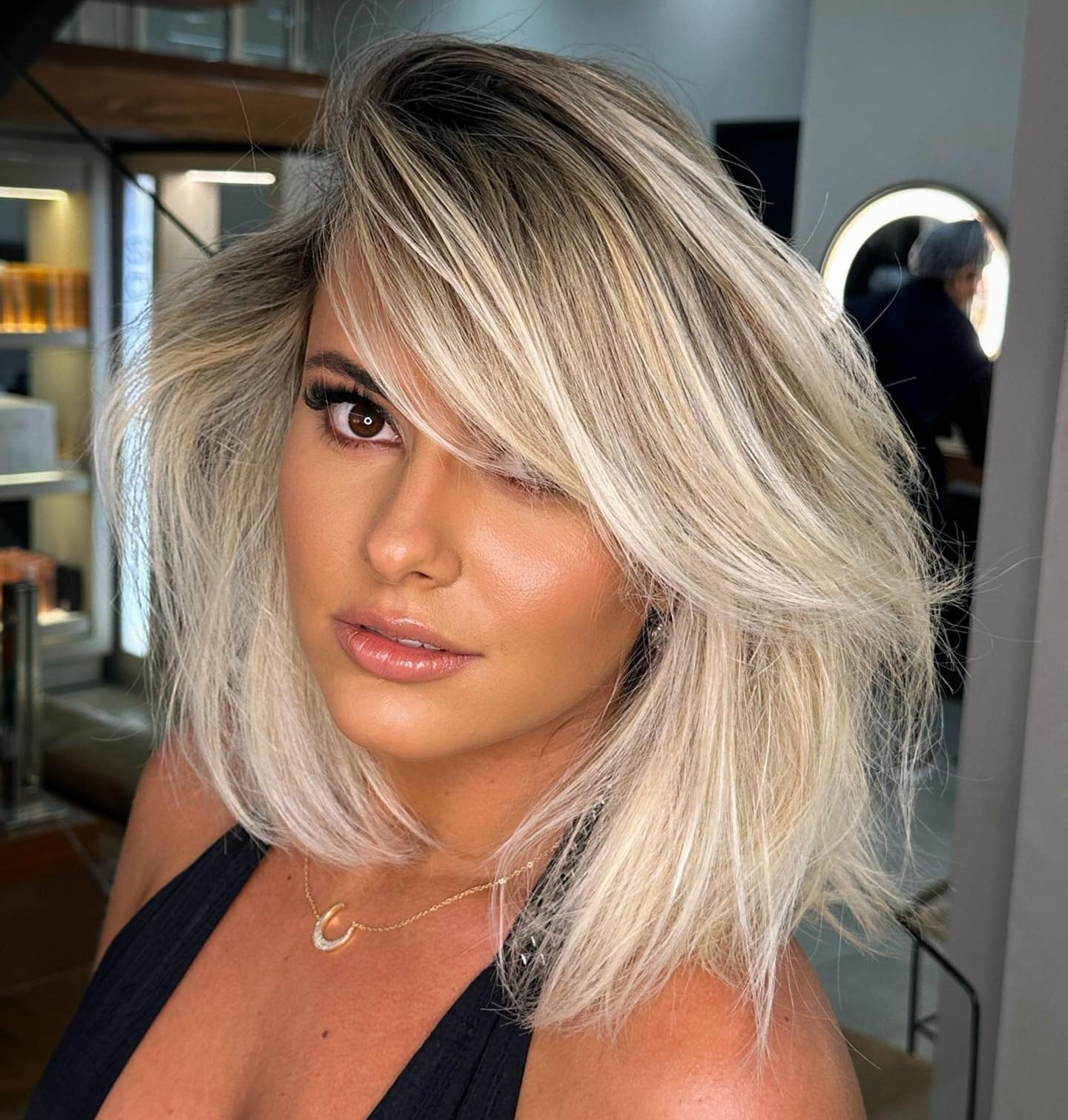
A collarbone-length shag in ash blonde with highlights is built from layers that do not blend quietly into the ends. The cut leaves separation between them, and the side-swept bangs are textured to match, so the fringe reads as part of the shape rather than an addition. Fine, wavy hair takes to this structure because the layers create movement where there was none.
Ask your stylist for: collarbone length shag, textured layers, side swept bangs. The technique is in the point cutting: the ends are sliced rather than blunted, which is what gives the bangs their piecey finish. Wavy hair starting at collarbone length holds that texture without much styling, though a sea salt spray or texture paste helps on day two. Trims every six to eight weeks keep the layers from collapsing into a single length.
Ash Blonde Collarbone Lob With Curtain Bangs, Wavy
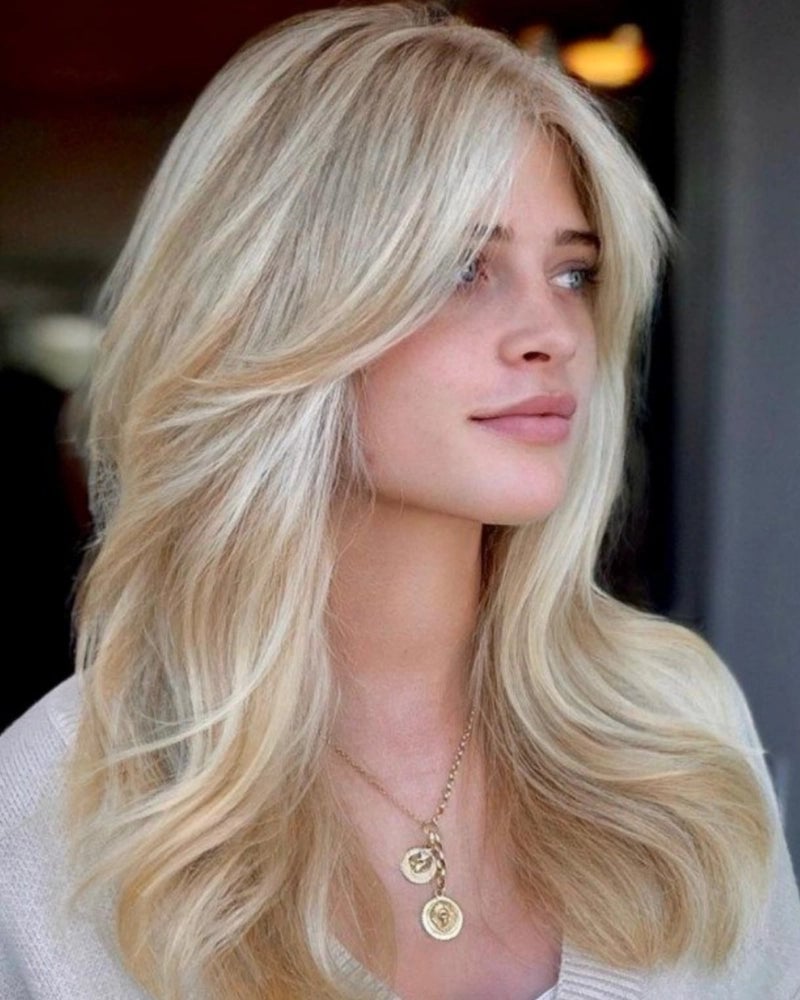
A side-swept fringe and a curtain bang both break up a collarbone lob, but they part ways at the forehead. Curtain bangs split down the middle and sweep outward, which keeps a round face from reading wide. A single side sweep pushes all the weight one direction and suits a longer face that can take the asymmetry. The ash blonde lob runs fine and wavy, with long layers that give the blowout somewhere to bend.
Ask your stylist for: collarbone length lob, long layers, ash blonde, curtain bangs. The lighter highlights sit close to the base shade, so grow-out stays quiet for months. Fine hair holds the shape best when the fringe gets a round-brush blow-dry, and bangs need a trim every four to six weeks before they start poking at the brow. Skip the curtain version if your hair is very straight and heavy: it will hang flat instead of sweeping.
Dark Brown Collarbone Shag With Side Bangs
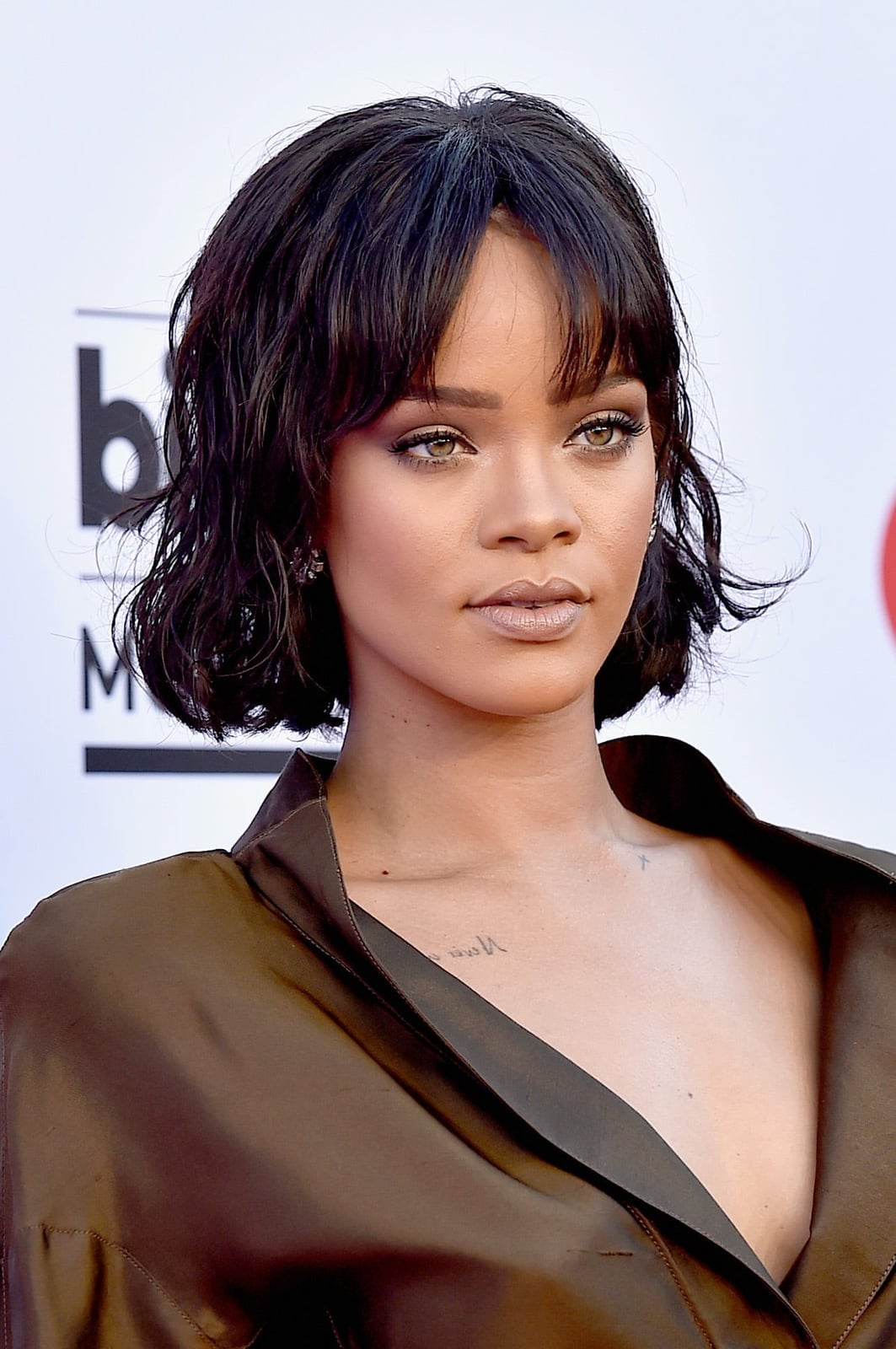
A shag earns its keep through layers that start high and keep going, and this collarbone version in dark brown puts the shortest ones right at the cheekbone. That placement is what makes side swept bangs blend into the face-framing pieces instead of sitting on top of them like a separate unit. Medium density wavy hair is the sweet spot: enough weight to hold the shape, enough movement to keep it from collapsing into a helmet. Fine hair loses the shag’s ragged edge fast, and very thick hair can turn the layers into a triangle without a stylist who knows how to thin them. Ask your stylist for: collarbone length shag, dark brown, side swept bangs. A wavy blowout keeps the pieces separated between washes.
Dark Blonde Collarbone Shag With Curtain Bangs

The middle parting splits the curtain bangs into two even sweeps and lets the face-framing layers fall on both sides. That symmetry makes this shag read softer than a side-swept version. Dark blonde with lighter brown highlights keeps the grow-out line forgiving, and the loose blowout shows how the layers move once dry. Wavy, medium density hair holds this shape with a volumizing spray at the roots and a rough dry, then a brush through the bangs only. Curtain bangs grow out faster than the cut, so book a fringe trim every four to six weeks and a full shape-up every eight to ten. Skip the blowout and the curtain bangs will part wherever they feel like it.
Platinum Blonde Collarbone Cut Long Layers

How do you ask for bangs that sweep like curtain bangs? You describe the sweep, not the name. On fine, wavy hair, a long layer cut to the collarbone gives the fringe something to move against, and the platinum blonde with highlights makes every bend visible. Ask your stylist for: collarbone length, long layers, platinum blonde, side swept bangs. Say you want the shortest piece to hit the cheekbone and the rest to blend into the layers, so the fringe reads as part of the cut.
Platinum needs a purple shampoo once a week to keep the tone from drifting warm, and a trim every eight to ten weeks keeps the ends from looking stringy against the light shade. Fine hair benefits from a round brush at the root; thick hair needs the layers thinned so the sweep does not turn into a curtain. If your hair is very straight, ask for a slight bend through the fringe, or the side sweep will lie flat against the forehead.
Mid-Back Brown With Blonde Highlights And Side Bangs

The bangs on this mid-back cut are built in two stages: a short piece that sweeps across the forehead, then a longer piece that connects to the cheekbone layer. That second piece is what keeps side bangs from looking like an add-on, because it travels into the face-framing layers instead of stopping at the temple. Brown with blonde highlights gives the layers a visible edge, and thick, wavy hair holds the shape through a blowout. Ask your stylist for: mid-back length with layers, brown blonde highlights, side swept bangs. The highlights should sit a shade or two above the base, not contrast hard, so the grow-out stays soft.
On thick hair, the stylist thins the bang section before cutting so the sweep lies flat instead of bunching at the brow. Wavy texture needs a smoothing balm through the lengths to keep the layers from frizzing, and the fringe gets a trim every four to six weeks. If your hair is fine, ask for fewer layers through the crown: too many will collapse the volume the bangs need to sit forward.
Mid-Back Dark Brown Layers With Side Bangs
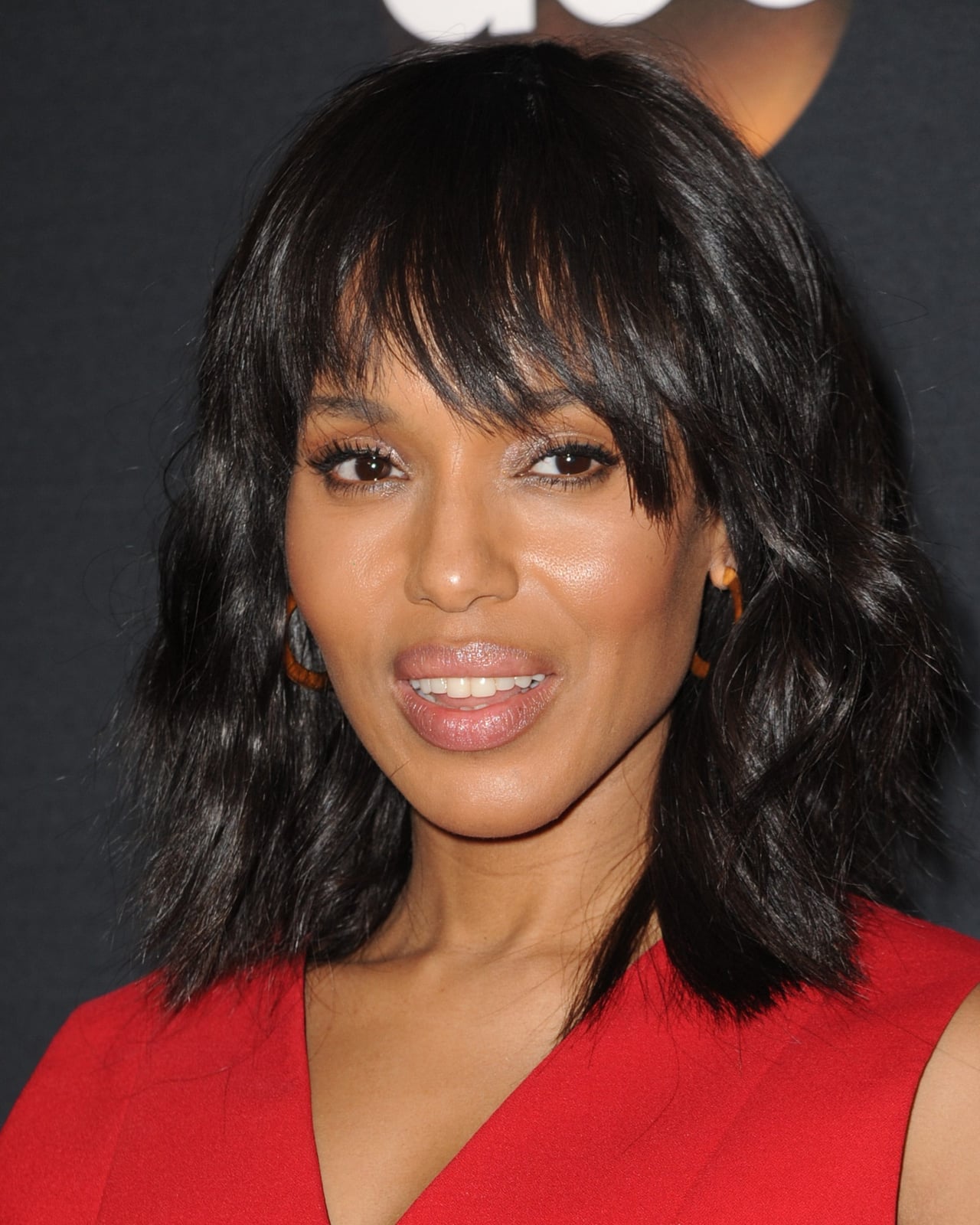
A thick, straight fringe demands precision. The cut here is a layered mid-back length in dark brown, but the bangs are the main event: dense, blunt, and cut straight across. Medium to thick wavy texture provides the weight needed to keep a heavy fringe from splitting. Ask your stylist for a blunt fringe with a layered mid-back cut. This is a salon-only project. Trimming a straight fringe straight at home usually ends in regret. The angle of the cut, the amount of weight removed, and the way it falls over the forehead are best left to someone who can see the whole shape at once. Plan on a trim every three to four weeks to keep the line clean.
Mid-Back Dark Brown With Highlights And Side Bangs and середина спины
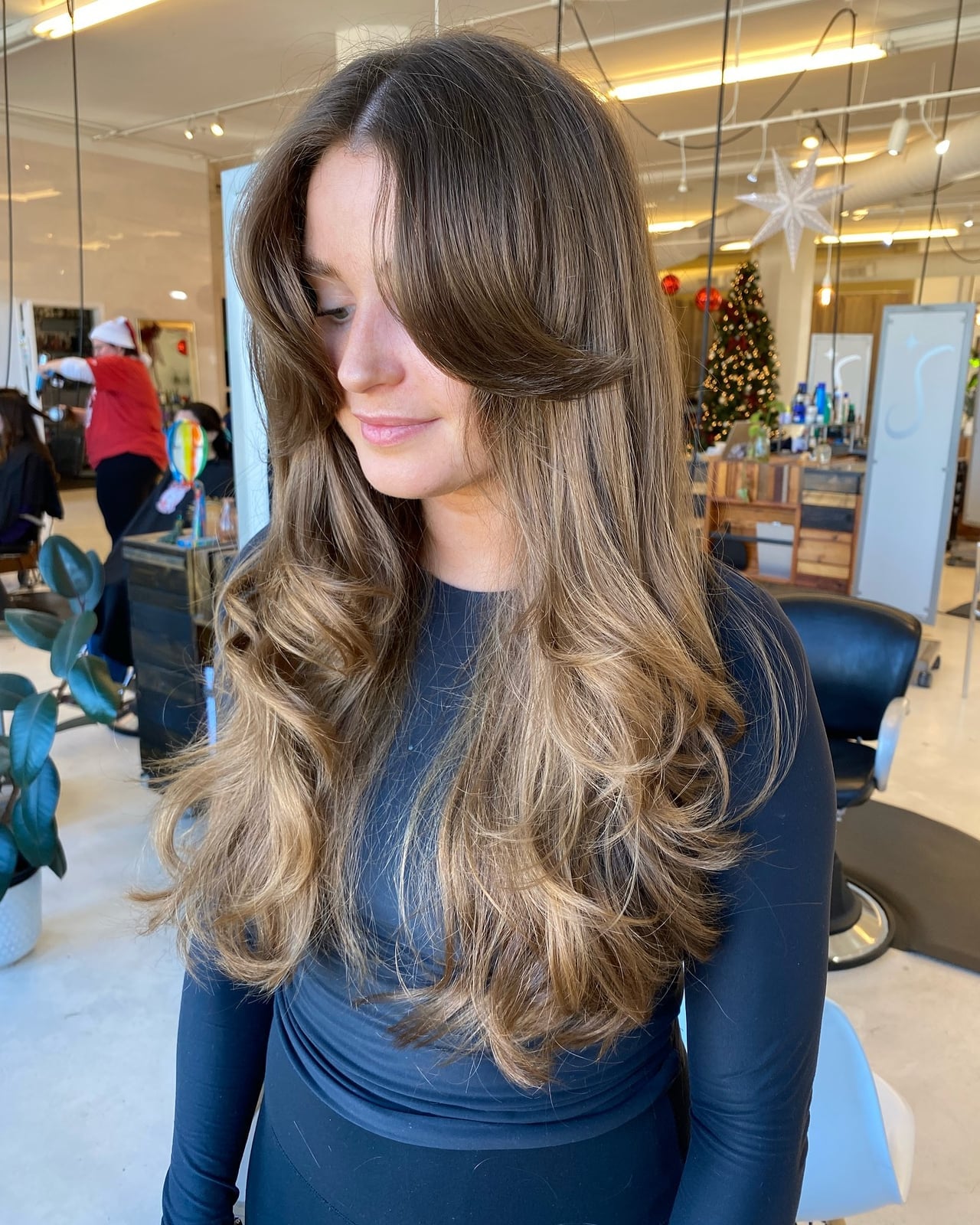
Side-swept bangs on mid-back length hair hit a sweet spot between long and short. The dark brown base with lighter highlights adds dimension to the layered cut, and the bangs sweep across the forehead in a soft curve. Medium wavy texture holds the shape without needing heat every day. Ask your colorist for dark brown with subtle highlights. Oval and heart-shaped faces get the most from this balance of length and softness around the eyes.
This style works for nearly any occasion. The loose waves read as polished enough for an evening event but relaxed enough for a coffee run. The highlights keep the dark base from looking flat under artificial light, which matters when you are moving between day and evening plans.
Light Brown Mid-Back Layers With Side Bangs and боковые челки

How do long side bangs behave as they grow? The answer depends on your starting point. This light brown mid-back layered cut uses soft, side-swept bangs that blend into the face-framing layers, so when they start to lengthen, the transition stays smooth. Medium wavy texture works with the shape: the wave bends the bangs to the side, preventing them from falling straight into your eyes. Ask your stylist for a layered mid-back cut with long side bangs.
Upkeep is straightforward. A trim every four to six weeks keeps the bangs at the right length for that soft sweep. Between cuts, a smoothing serum on the lengths controls any frizz the waves throw up. The bangs will eventually grow past the cheekbone, at which point they either tuck behind the ear or become curtain bangs.
Polished Long Dark Brown With Side Swept Bangs

The long dark brown length carries layers that start around the collarbone, and the side-swept bangs connect to the face-framing pieces so the fringe sits as part of the cut. Ask your stylist for: long hair, thick, dark brown, classic side swept bangs. At home, rough-dry to about eighty percent, then work in two-inch sections with a boar bristle brush, directing the bangs across the forehead and slightly forward. A full blowout on thick hair takes twenty-five to thirty-five minutes, and the bangs need a trim every six to eight weeks to keep their shape.
Natural Mid-Back Dark Brown With Side Bangs, Wavy

This cut is low intervention. Mid-back length dark brown hair with side-swept bangs, styled by air drying. Medium wavy texture does the work: no round brush, no nozzle, no blow-dry. The layers give the waves direction, and the bangs sweep to the side as they dry. Ask your stylist for a layered mid-back cut with side-swept bangs.
This is a genuine DIY style. Apply a texturizing spray or curl cream to damp hair, comb the bangs into place, and let everything dry. The finish is soft and shaped. Air-dried waves vary with humidity, and the bangs may fall differently each time. If you need a consistent silhouette, this is not the cut. For everyday wear, it delivers a lot without demanding much.
Final Thoughts
Treat the cut as the decision and the styling as maintenance. Fine hair keeps a blunt baseline with minimal layers to hold fullness; thick hair takes layers to shed weight and move. A round face wants length falling below the chin, a square jaw wants soft layers around it.
- Trim the fringe every four to six weeks.
- Blow-dry bangs first with a small round brush.
- Use dry shampoo or texture spray between washes.
- Deep condition weekly if hair is fine or dry.
Side bangs are a versatile choice for a reason. Find the right blend of cut, color, and styling for you.

