
The short wolf cut is a layered haircut that lands somewhere between a shag and a mullet, with choppy layers throughout and softer bangs at the front. This season, the cut is leaning toward more face-framing fringe and lived-in texture rather than razor-sharp ends.
These 20 looks range from ear-length versions that need almost no styling to collarbone-length options with more weight. The collection works for fine hair that falls flat, for wavy and curly textures, and for anyone who wants a fringe that actually sits without constant fuss. Every idea here keeps the Short Wolf Cut recognizable but tweaks the length, bangs, or layering to fit a specific hair type or daily routine.
Chin Length Wolf Cut With Curtain Bangs

A chin-length wolf cut with curtain bangs places the shortest layers at the jaw, where a bit of wave can do the shaping for you. Medium density wavy hair is the sweet spot here, because the texture holds the choppy layers without collapsing into a helmet. Soft curtain bangs angle away from the face, which is why this length works on oval and heart shapes and gives round and square faces a softer edge than a blunt bob would. Ask your stylist for: chin length wolf cut with soft curtain bangs. Blow-dry the bangs away from the face with a round brush, mist with a texturizing spray, and book a trim every six to eight weeks to keep the shape defined.
Collarbone Shag Wolf Cut Piecey Bangs
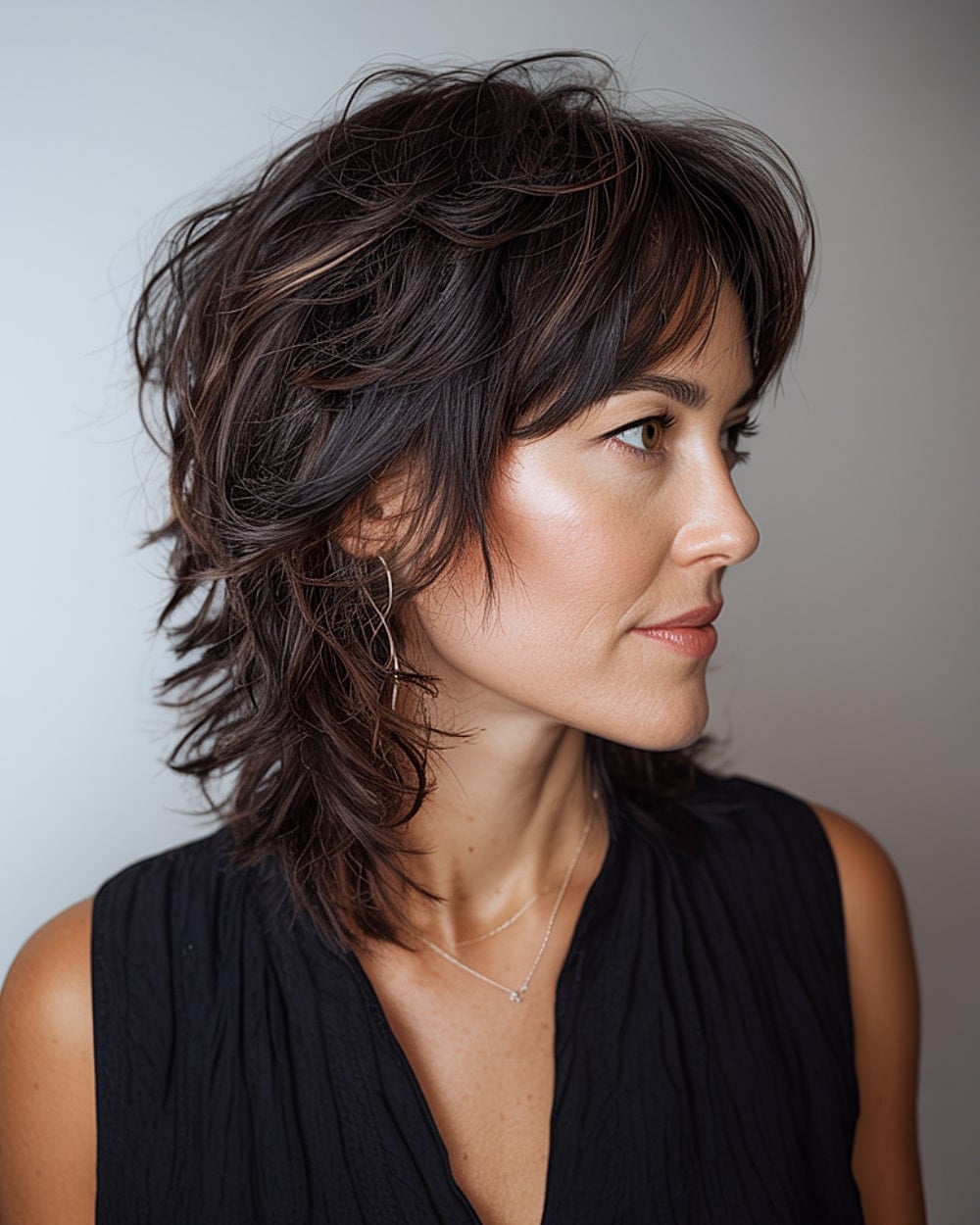
What do you actually say at the salon so you don’t walk out with a plain shag? Start with length: collarbone, not shoulder, so the choppy layers have room to move without dragging the shape down. Thick wavy hair carries this cut well because the piecey curtain bangs need density behind them to look deliberate instead of sparse. Ask your stylist for: collarbone shag wolf cut with piecey curtain bangs. Then get specific about the details that matter:
- Choppy layers throughout, not just at the ends
- Piecey curtain bangs that separate cleanly
- A textured blowout finish, so the cut reads as lived-in
- Subtle lighter strands through the dark brown base for dimension
Bring a side-view reference too. The back of a shag wolf cut is half the cut, and it is the half most people forget to discuss.
Chin Length Wolf Cut Blunt Bangs, Wavy

Swap the soft fringe for blunt bangs and the same chin-length wolf cut turns graphic: a straight line at the brows against all that choppy, wavy layering. The contrast is the point. Blunt bangs on medium density wavy hair can balance a longer face shape, while a softer fringe hides more forehead and forgives a cowlick. This version is medium blonde with lighter highlights, which makes the blunt line read even sharper. Ask your stylist for: chin length wolf cut with blunt bangs. Blunt bangs grow out fast, so plan on a two to three week bang trim to keep the line clean.
Wavy Chin Length Wolf Cut Soft Fringe
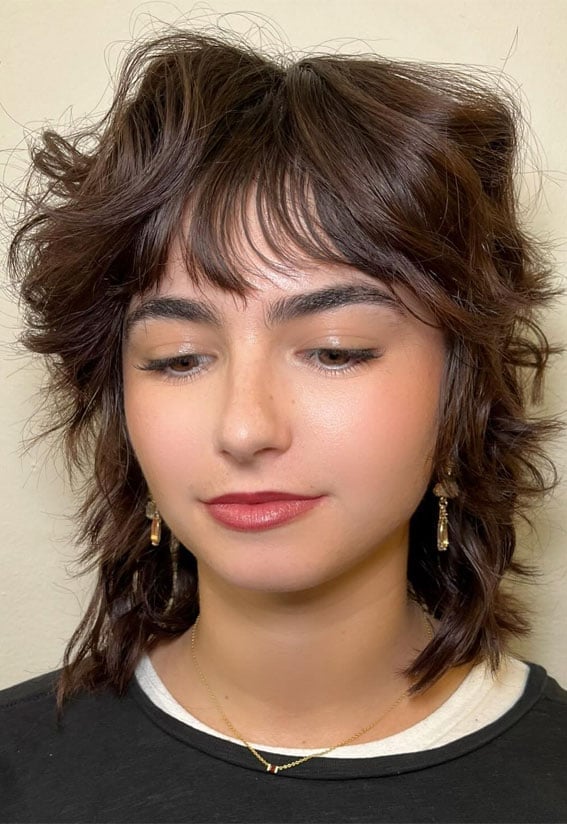
A soft fringe is the low-commitment entry point to a chin-length wolf cut, and it is the version that survives a busy morning. The cut lives on a textured blowout: rough-dry the roots, then use a round brush on the ends so the choppy layers separate instead of clumping. Medium density wavy hair holds that shape for a full day; fine hair will need a texturizing paste at the ends to fake the separation. Ask your stylist for: chin length wolf cut with a soft fringe. The fringe needs a light trim every three to four weeks, and the overall shape holds for about six to eight.
Collarbone Wolf Cut Face Framing Layers

Face-framing layers are the load-bearing wall of a collarbone wolf cut, and where they start decides everything. Here they begin around the cheekbones, then blend downward into the choppy lengths so there is no hard step between fringe and body. The stylist cuts the perimeter first, then works the face-framing pieces on a slight forward diagonal, over-directing each section so the layers sit soft when the hair falls back into place. Straight, medium density hair shows that blending clearly, which is why this version is styled with a subtle blowout rather than a wave. A side parting adds a little asymmetry to break up the symmetry. Ask your stylist for: collarbone wolf cut with face framing layers. Oval and long faces get the most from this placement; a round face may want the shortest layer to start lower, near the jaw. Expect a trim every six to eight weeks to keep the outline from growing into a lob.
Collarbone Wolf Cut Asymmetrical Side Part

A side part does more structural work on a wolf cut than most people expect. Swapping it onto this collarbone-length cut pushes the face-framing layers to one side, so the choppy texture reads uneven on purpose and the shorter pieces sit near the cheekbone on the heavier side. On straight, medium density hair the effect is crisp: a blowout keeps the layers separated instead of letting them collapse into one flat sheet. Ask your stylist for: collarbone wolf cut with asymmetrical side part. Round faces get the most from the diagonal line, since the longer side pulls the eye downward and the length sits below the chin. Long faces do better with a middle part, where the symmetry keeps things from stretching further. A trim every eight to ten weeks holds the shape.
Collarbone Wolf Cut Defined Curls

Defined curls change how a wolf cut behaves: the choppy layers stop being a styling trick and become the actual architecture of the cut. At collarbone length, medium density curls get a rounded shape with volume at the sides, and the soft bangs sit forward without pulling the pattern flat. That makes it a strong summer option, since the whole thing can air dry. Ask your stylist for: collarbone wolf cut with defined curls and soft bangs. A curl cream worked through damp hair and a low-heat diffuse is the entire routine. Curly hair grows out unevenly, so plan a trim every eight to ten weeks to keep the layers from stacking into a pyramid.
Collarbone Wolf Cut Shaggy Layers Blonde Roots

Compare this with a uniform blonde collarbone cut and the difference is the root. Leaving the roots dark gives shaggy layers a shadow to sit against, so every choppy piece shows its edge instead of blending into one bright mass. The short bangs follow the same logic. Ask your stylist for: collarbone wolf cut with shaggy layers and short bangs. On wavy, medium density hair, a texture spray and a quick tousle with fingers is the whole styling routine, no round brush required.
Then comes the maintenance. Blonde with visible darker roots is a look that depends on the contrast staying deliberate, and roots grow about half an inch a month. Let them run four months and the effect stops reading as lived-in and starts reading as skipped. A root touch-up every six to eight weeks keeps the line crisp, and the cut itself needs a trim on a similar schedule to stop the shaggy layers from growing into a solid collarbone bob. Anyone who wants a low-key color routine should pass on this one: the upkeep is the point, not a side effect.
Ear Length Curly Wolf Cut Caramel Balayage

How do you add caramel to curly hair without flattening the pattern? Balayage, painted freehand through the ends over a dark brown base, leaves the root area untouched and lets the lighter pieces land where the curls already catch light. On an ear-length cut with choppy layers and wispy bangs, that reads as natural dimension rather than a color job. Ask your colorist for: dark brown base with caramel balayage. Fine curls at this length air dry fast, so the tone stays visible without heat. Book a gloss every six to eight weeks to keep the caramel from going brassy.
Ear Length Wolf Cut Fine Straight Texture

Fine, straight hair is where a short wolf cut gets genuinely easy, because ear length removes the weight that drags limp strands down. The short wispy bangs and textured layers do the rest, but the piecey finish is on you. Ask your stylist for: ear length wolf cut with wispy bangs. The at-home routine is short:
- Work a small amount of texturizing spray or pomade through dry ends.
- Pinch individual pieces between two fingers to separate them.
- Keep the middle parting clean so the bangs stay lifted.
Skip the round brush. A salon shapes the cut, but this one lives or dies on five minutes of finger styling.
Ear Length Wavy Wolf Cut Tousled Layers

The side view is where this cut earns its keep: short textured bangs and tousled layers stack at ear length, with enough wavy volume to keep the shape from looking flat. Medium density hair holds the choppy layers best, and the side parting lets the bangs sweep without sitting as a solid block. Ask your stylist for: ear length wavy wolf cut with short textured bangs. A dab of styling wax worked through the ends keeps the definition in place without weighing the waves down.
Dark brown hair gives the cut a grounded feel, so the texture does the talking. The bangs are short enough to show forehead but not so short they need daily trimming. This is a salon build, not something to attempt at home with kitchen shears.
Ear Length Wavy DIY Wolf Cut Choppy Bangs

Can you achieve this look without a stylist? Possibly, if you have fine wavy hair and a steady hand. The choppy bangs and messy texture hide small mistakes, which makes the cut forgiving to trim at home. Ask your stylist for: ear length wolf cut with choppy bangs, DIY friendly. After washing, twist sections and let them air dry; the natural wave does the rest. A trim every four to six weeks keeps the bangs from sliding into your eyes, but the layers can go longer between cuts.
Chin Length Wavy Fine Wolf Cut Wispy Bangs
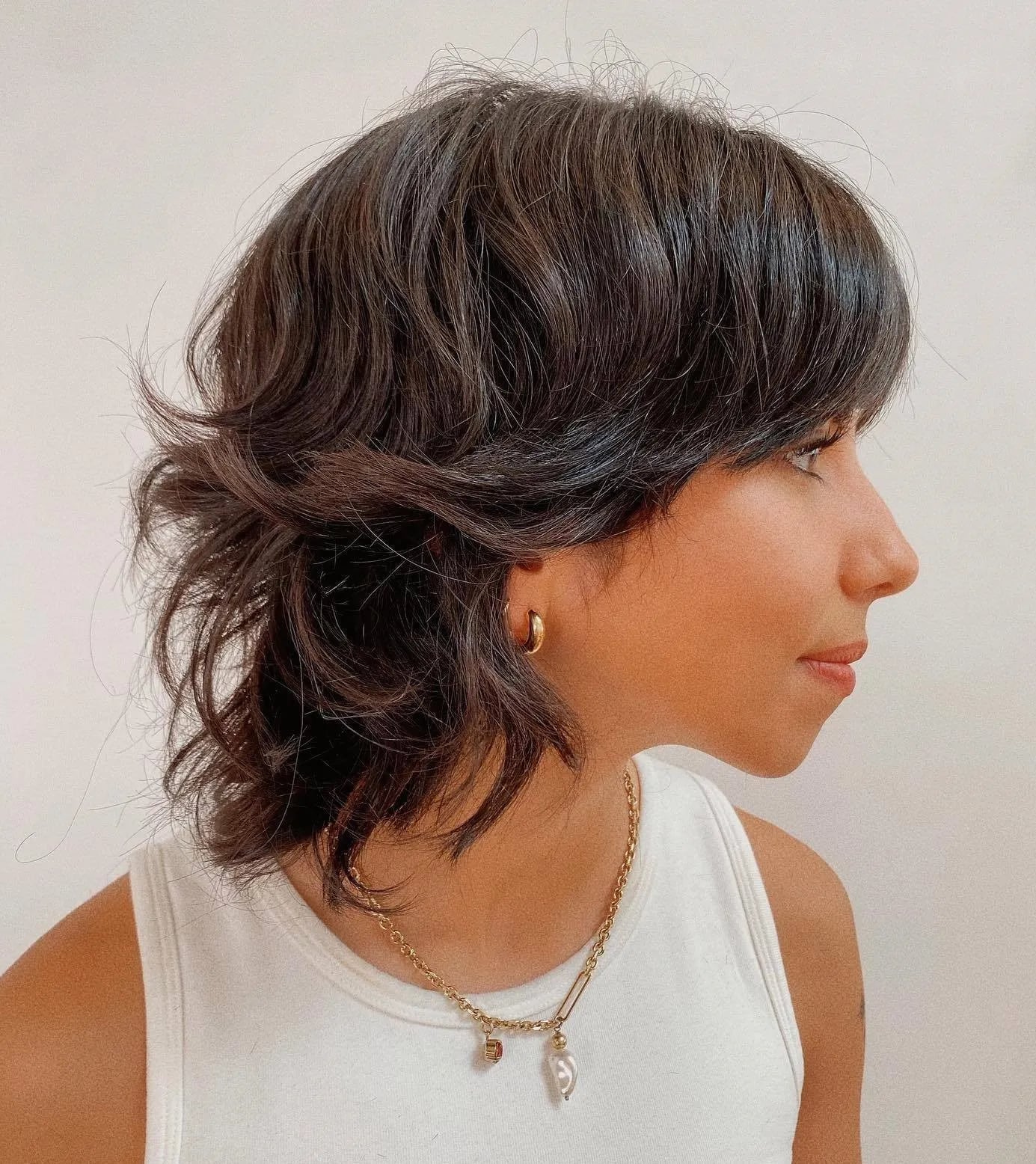
Fine, wavy hair at chin length often falls flat, but choppy layers add the volume that texture alone cannot deliver. Wispy bangs soften the front without demanding constant styling, and a side parting breaks up the line across the forehead. Ask your stylist for: chin length fine wavy wolf cut with wispy bangs. An air-dried finish with a sea salt spray gives the waves grip and movement, and the cut holds its shape for about eight weeks before the layers need a refresh.
Chin Length Wavy Fine Wolf Cut Shaggy Bangs, Dark Brown

Shaggy bangs carry more weight and attitude than wispy bangs. On a chin-length wolf cut with fine, wavy hair, the shaggy version adds density and shape. The piecey styling and side parting keep the front looking finished. Ask your stylist for: chin length wolf cut with shaggy bangs. A texturizing paste defines the shaggy effect without making the hair greasy. This cut works best on hair that has some natural bend, and the dark brown color lets the layering do the visual work.
The difference between this and a wispy bang is in the density: shaggy bangs are cut with more weight at the ends, so they sit heavier against the forehead. Fine hair can handle the weight because the layers remove bulk from the body. A trim every six weeks keeps the bang shape intact.
Chin Length Wavy Fine Wolf Cut Wispy Bangs, Close-Up Take

Short, wispy bangs on a chin-length wolf cut are cut with a point technique that feathers the ends, so they land softly instead of bluntly. Piecey styling emphasizes the airiness. Ask your stylist for: chin length wolf cut with short wispy bangs. A texturizing spray and a quick finger-tousle are all the styling this needs; the cut does the rest. Fine, wavy hair benefits from the reduced weight at the front, and the bangs blend into the choppy layers without a hard line.
Chin Length Straight Fine Wolf Cut Platinum Blonde

That much platinum on fine, straight hair is a statement that demands maintenance. The chin-length wolf cut uses blunt bangs and piecey layers to add visual weight, preventing the light color from washing out the shape entirely. Ask your stylist for: chin length straight wolf cut with blunt bangs, platinum blonde. A purple shampoo is required here, and you will need a toner appointment every four weeks. The payoff is a sharp, modern silhouette that lands best in the warmer months when a lighter shade feels right.
Chin Length Wavy Wolf Cut Ash Blonde Lowlights
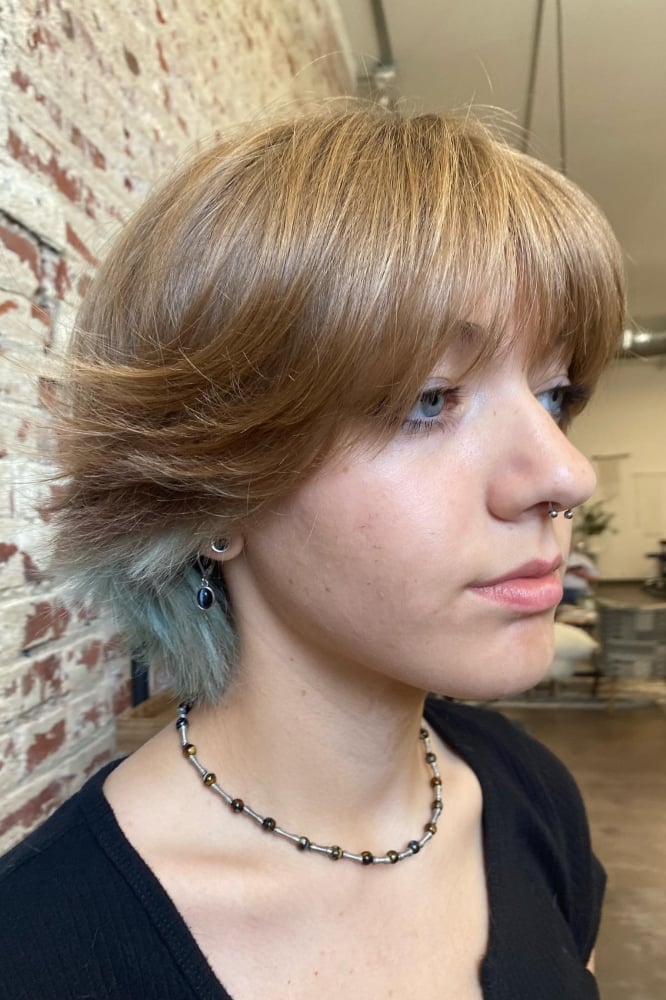
A more lived-in alternative to all-over platinum, this chin-length wolf cut on wavy, medium-density hair gains dimension from ash blonde with subtle lowlights, while soft face-framing bangs keep the layers connected. Ask your stylist for: chin length wolf cut with soft face framing bangs, ash blonde. Ash tones can pull green or muddy between appointments, so a toning visit every six weeks is standard. A wave-enhancing spray and a quick scrunch are all the styling it needs most days.
Chin Length Wavy Wolf Cut Micro Bangs, Middle
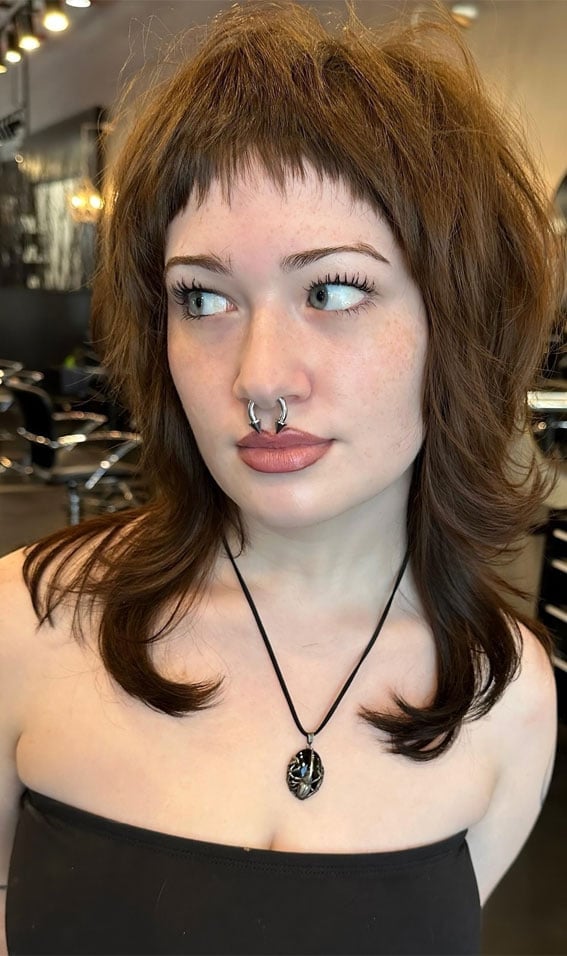
How short is too short for bangs on a wolf cut? Micro bangs answer that question directly. On a chin-length cut with artistic layers and a middle parting, the fringe sits well above the brow, leaving the textured, piecey finish to carry the shape. Ask your stylist for: chin length wolf cut with micro bangs. This is not a grow-out-friendly option, so be certain before you commit. A strong-hold wax helps define both the micro bangs and the individual layers without weighing down wavy, medium-density hair.
Shoulder Length Jet Black Wolf Cut Micro Fringe

Jet black hair paired with a micro fringe creates a graphic silhouette that thick, straight hair handles best. The shoulder length wolf cut relies on heavily textured, choppy layers to keep the density balanced, while the fringe adds a sharp edge. Ask your stylist for: shoulder length jet black wolf cut with micro fringe. A flat iron and a shine serum deliver the sleek finish this look demands. It is a dramatic choice that suits a strong brow and a willingness to keep the fringe trimmed every three weeks.
Mid-Back Wavy Thick Wolf Cut Choppy Layers

The wolf cut does not have to be short. At mid-back length on thick, wavy hair, choppy layers and a choppy fringe keep the shape from feeling heavy or bottom-heavy. The air-dried, textured finish leans bohemian, but the underlying cut is precise enough to hold its shape between washes. Ask your stylist for: mid-back wolf cut with choppy layers and choppy fringe. A curl-enhancing product worked into damp hair is usually enough, though a diffuser adds volume without heat damage. A trim every eight weeks prevents the layers from losing their definition.
Final Thoughts
For fine hair, keep a blunt baseline on the ends and let the choppy layers start higher, near the crown, so the cut holds shape without going wispy. Dense or curly hair benefits from heavier layering through the interior to remove bulk while keeping the perimeter full. In both cases, the bangs should match the density: fuller bangs for fine hair, lighter piecey fringe for thick textures.
- Trim choppy layers and bangs every 4-6 weeks to maintain shape.
- Use texturizing sprays or sea salt sprays on dry hair for enhanced definition.
- Air dry or use a diffuser on a low heat setting to preserve natural texture.
- Consider a color gloss or toner every 6-8 weeks for blonde or highlighted variations.
Embrace the texture and edge of the short wolf cut.

