
Senegalese twists are two-strand twists worked with added hair from the root to the tip, giving a smooth, defined rope that holds its shape for weeks. Lived-in color and glossy natural texture are the direction right now, and twists fit both without a flat iron.
Here are 19 ways to wear Senegalese Twists, from jumbo shoulder-grazing sets to fine mid-back ropes and a purple-to-blue gradient. Some take ten minutes to style, others an afternoon in the chair. Fine, dense, coily and straight textures all have a version here, and so does the reader whose twist-out goes fuzzy at the root by day four.
Jumbo Senegalese Twists Past Shoulders
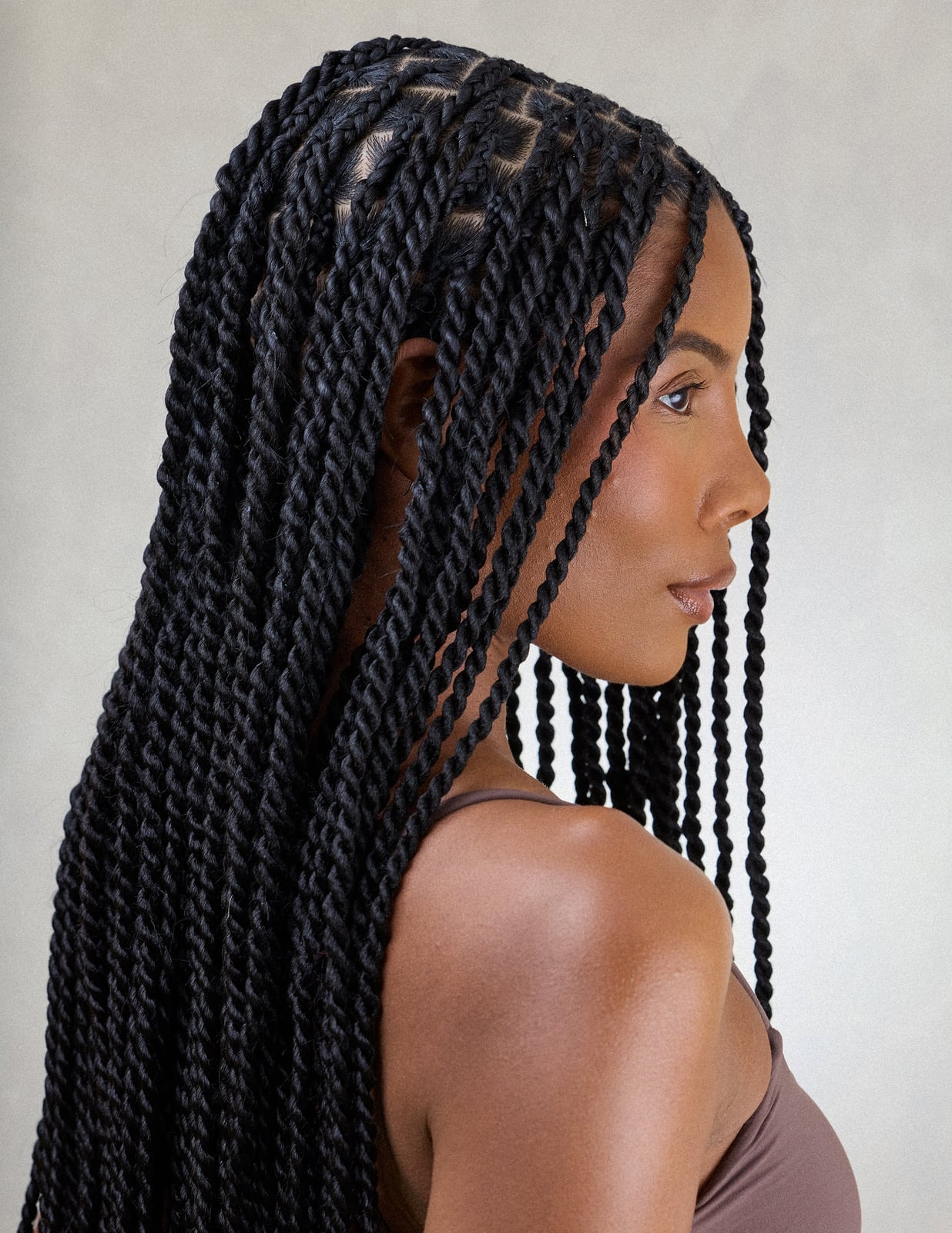
Jumbo twists earn their name: each one is thick enough to register as a statement rather than a detail, which is exactly the point. The width creates visual weight that balances a rounder face shape better than a finer twist ever could. The mid-back length and middle part keep the silhouette symmetrical, while the smooth, straight texture looks neat without extra effort. Ask your stylist for jumbo Senegalese twists, past shoulder length, loose style. A light serum patted down each twist after installation keeps the shine even and tames any flyaways between washes.
Elegant Updo With Dark Brown Twists
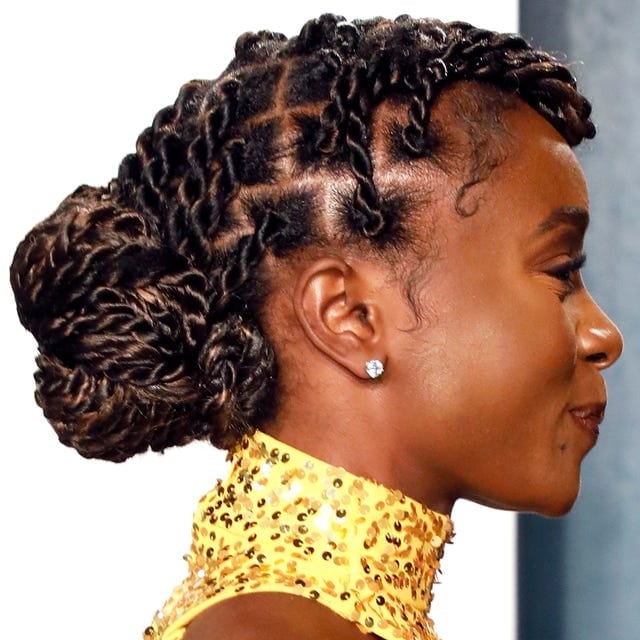
An updo built from twists has a structural advantage: each twist acts like a pre-formed coil, so the bun holds its shape without constant pinning. Here the dark brown base is broken by subtle lighter brown highlights that catch light differently, adding depth that a solid shade would miss. The middle part leads into an intricate braided pattern at the crown, which requires a stylist who can work the twists into the design rather than just gathering them.
Ask your stylist for Senegalese twists updo with bun and intricate crown detail. Secure the bun with bobby pins and a strong-hold hairspray for all-day security. The style lasts a full event without sagging, but the crown pattern will need a touch-up if you plan to sleep in it.
Long Black Twists With Sharp Definition
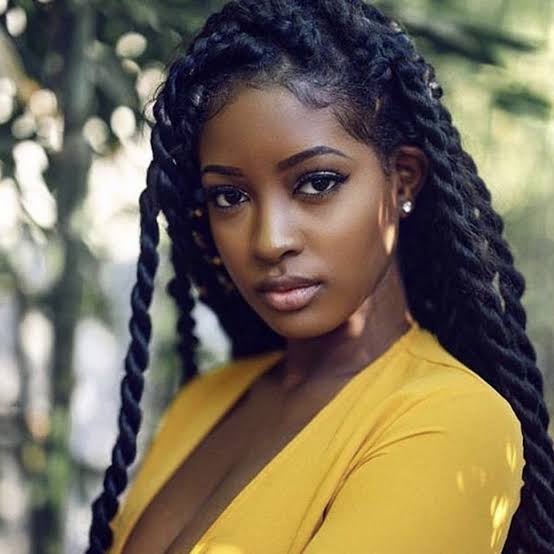
Start with a clean middle part, then ask your stylist for long, sharply defined Senegalese twists with a middle part. The precision lives in the tension: consistent pull from root to tip gives each twist that crisp, uniform line. The black color and straight texture let the definition do the work. At mid-back length, the weight of the twists helps them hang straight without extra smoothing. Use a satin scarf at night to preserve the shape and prevent the edges from softening.
Black Twists With Wavy Texture and Gold Cuffs
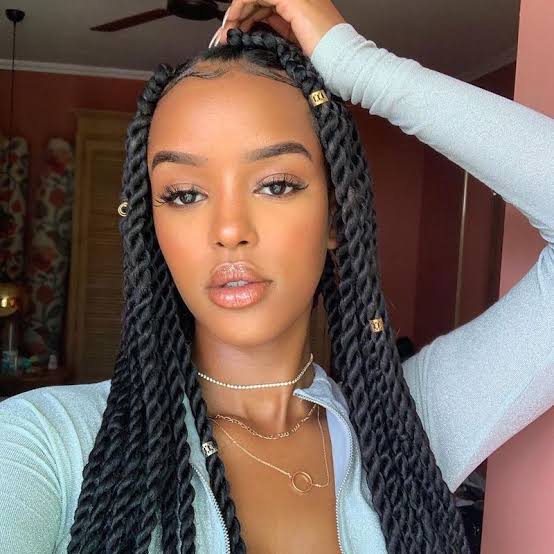
Gold cuffs change how the hair moves, so plan them as a commitment, not a whim. The wavy texture here softens the twist structure, which gives the metal a bohemian look instead of a formal one. The middle part and mid-back length keep the silhouette grounded. Ask your stylist for wavy Senegalese twists with gold cuffs and a middle part. Add the cuffs after the twists are finished, sliding them onto individual twists by hand. Remove them gently before washing so the metal does not catch on the hair fiber. This is a festival or outdoor party style that reads best in natural light.
Dark Brown Twists in a High Bun
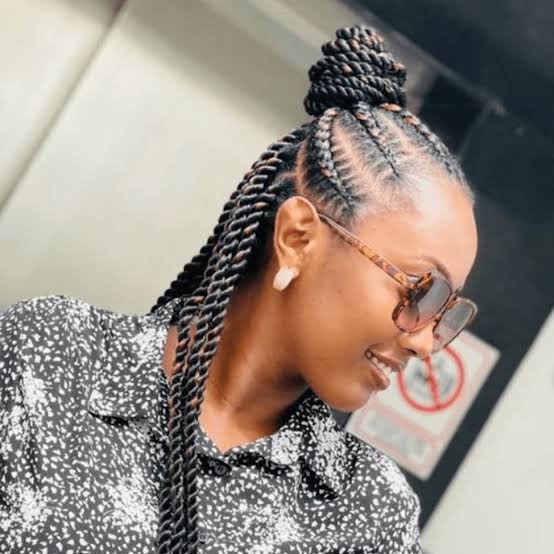
A high bun is the most practical way to wear mid-back twists when the temperature climbs or the occasion demands a clean neckline. The dark brown color keeps the look office-ready, while the middle part keeps the crown neat. Loose twists at the back break up what could otherwise read as severe.
Ask your stylist for dark brown Senegalese twists in a high bun, loose ends. Strong-hold hairspray and bobby pins are essential here: the weight of mid-back twists will pull the bun down if it is not anchored properly. A trim every eight to ten weeks keeps the ends even and the bun smooth. The style holds well through a workday but will loosen after a long night out.
Neatly Done Shoulder-Length Twists
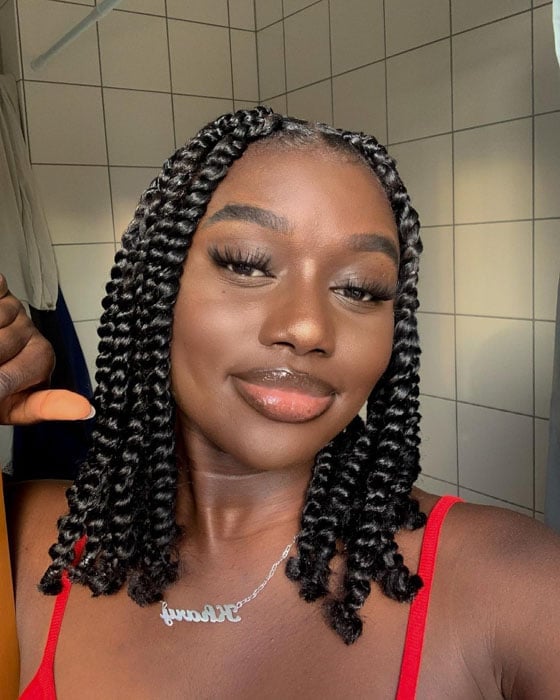
Ask your stylist for: shoulder-length thick Senegalese twists, middle part. It suits anyone who wants a manageable length with less tangling than a long set, though the application is salon work, not a kitchen-table job. A lightweight oil on the scalp handles dryness between appointments.
Half Updo With Black and Brown Twists
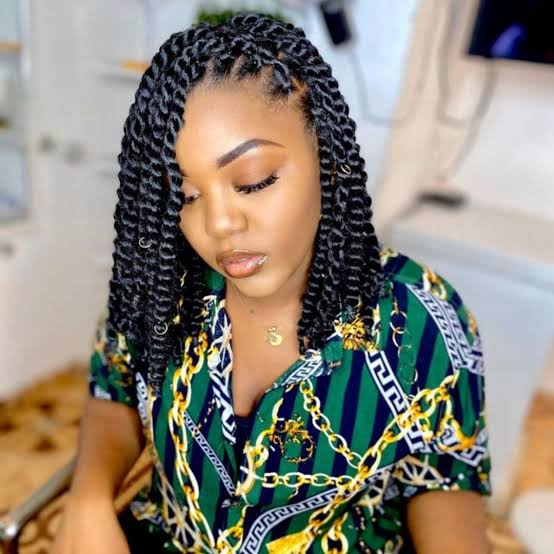
The half-up version leaves the back down and pulls only the top section away, which keeps the black-and-brown mix visible on both sides of the middle part. Ask your stylist for: shoulder-length twists, half updo, middle part. Do the pull-back yourself with a clip or elastic; the twists are already set, so the DIY part costs minutes, not a chair appointment. For hair fully off your neck, book the full updo instead.
Thick Wavy Twists With Side Part
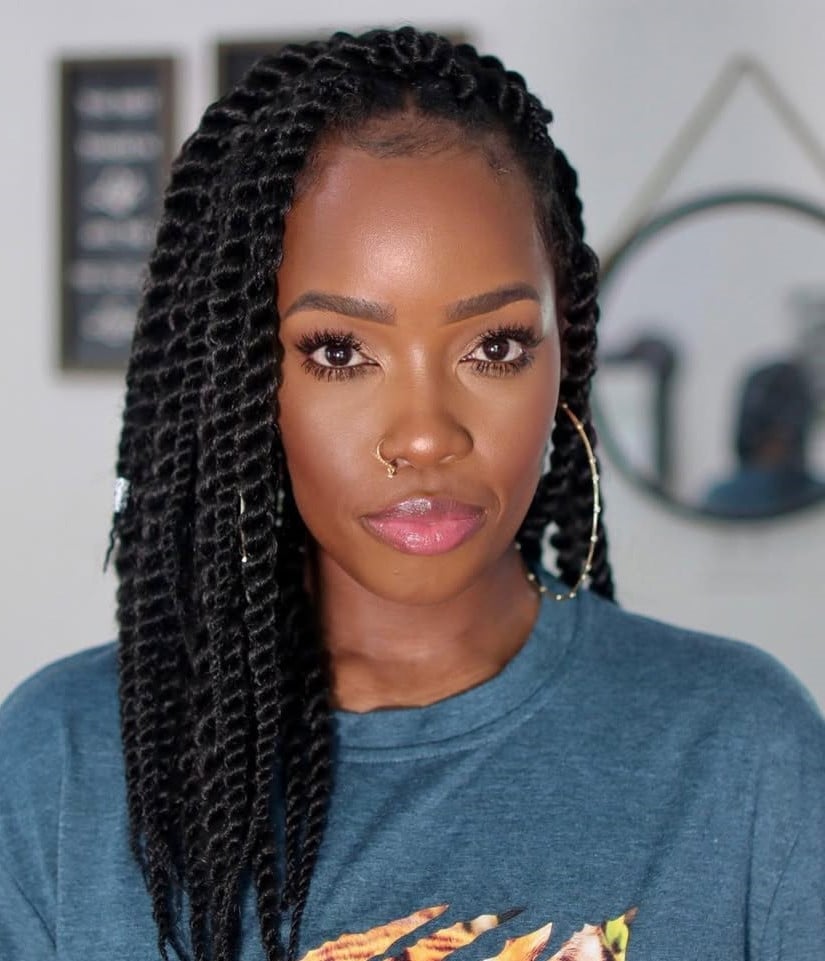
Thick twists carry a wave better than fine ones, because there is more fiber to bend. Here the black twists fall to the shoulder in a loose wave, and the side part pushes bulk to one side so the volume becomes shape instead of weight. Ask your stylist for: thick wavy Senegalese twists, side part. The wave is worked in during the set, which is why a professional hand matters. Keep it going by tousling the twists with your fingers, not a brush. Shoulder length keeps the wave from dragging flat.
Mid-Back Twists With Neat Square Parting
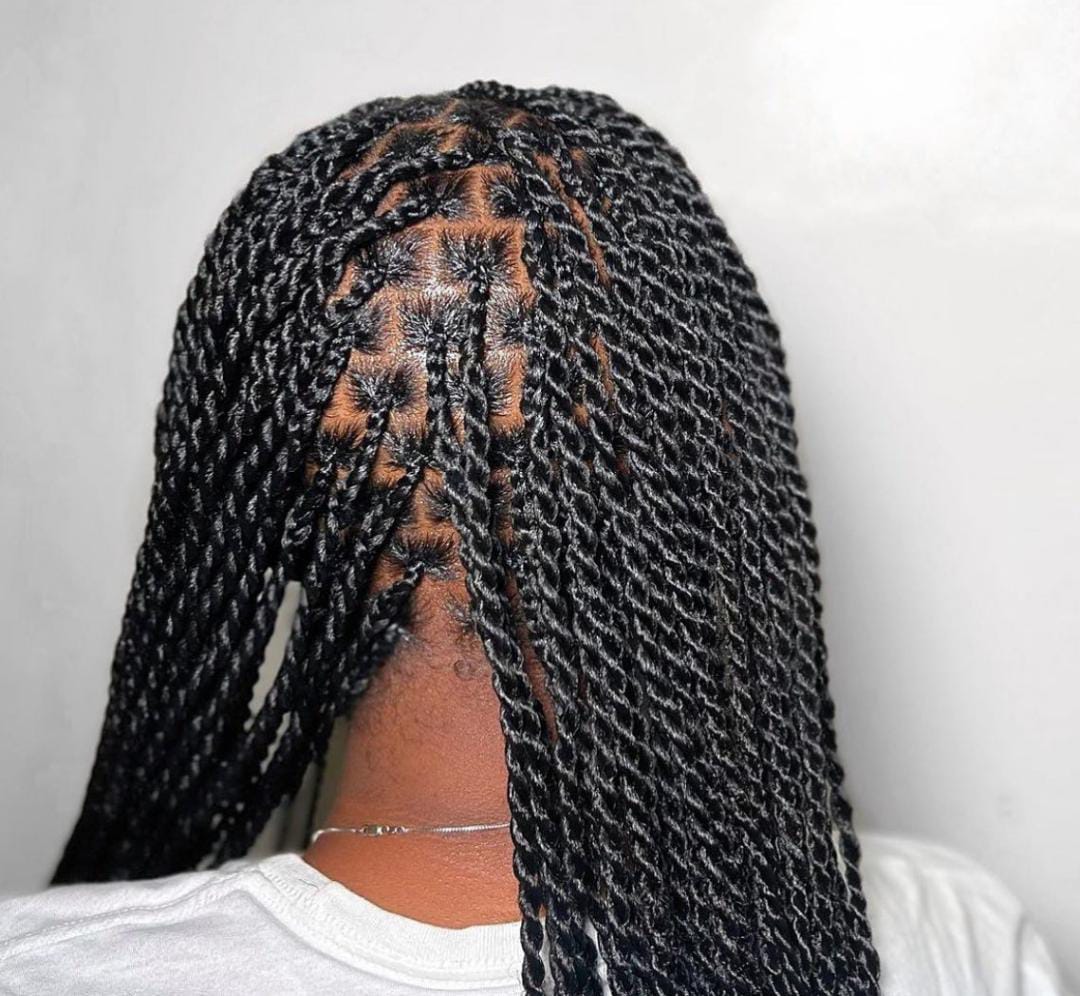
Square sections at the scalp are the whole point here, and they demand a precise middle part before a single twist goes in. The black twists run to mid-back with a consistent wave, so the back view stays orderly from the part to the ends. Ask your stylist for: mid-back twists, neat square sections. That precision is salon work, and it is also the catch: scalp growth blurs the squares within a few weeks, and fuzz along the part shows up long before the twists themselves wear out. Refresh the parting with a small amount of gel, and go in for a redo when the grid stops reading clean. Skip this one if you want a set-and-forget style.
Dark Brown Twists in a Top Knot Bun
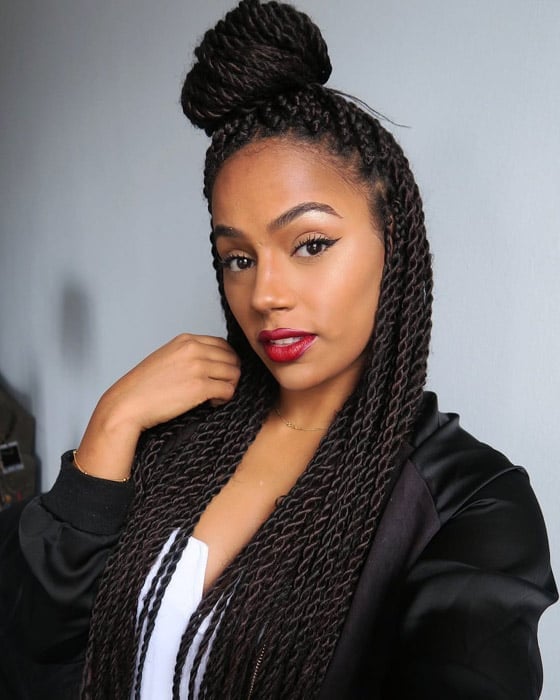
What happens to mid-back twists when you need them out of the way? They go up, and the top knot is the version that still looks finished. Dark brown twists gather into a high bun at the crown while loose twists fall down the back to mid-back length, with the middle part intact at the front. Ask your stylist for: dark brown twists, top knot bun. The bun holds through a long day if you anchor it with sturdy pins and a light mist of hairspray, not a single elastic.
Upkeep is where this style asks for attention. Rebuilding the bun daily loosens the twists at the base, so vary the anchor point and let the hair down between wears. The rest of the set still needs the usual scalp oil and a loose night wrap to keep the mid-back length from fraying at the ends.
Small Long Twists Flowing Naturally
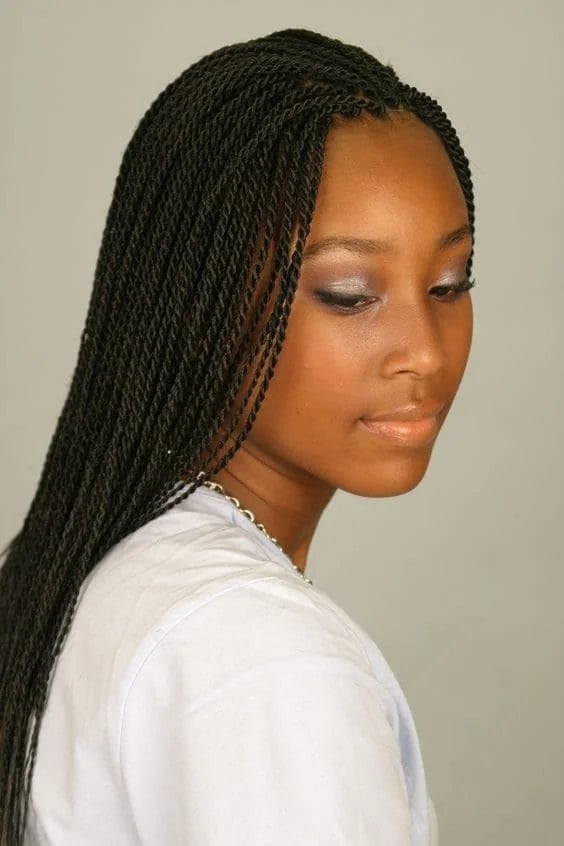
Uniformity is the key here. These small Senegalese twists cascade to mid-back in a solid black, parted down the middle and left to fall loose. The even thickness and consistent twist pattern give the style a refined, deliberate finish. A middle part and length below the chin elongate a round face, while the vertical lines of the twists add length to shorter face shapes. Ask your stylist for: small, long Senegalese twists, mid-back length, natural flow. The key is in the prep: a lightweight leave-in conditioner applied during installation keeps the hair supple and reduces the frizz that can accumulate over a few weeks.
This is a salon-only investment in terms of time, typically taking several hours depending on density. The payoff is a low-maintenance protective style that holds its shape for four to six weeks with minimal daily effort. Just fluff and go.
Large Defined Twists Framing the Face
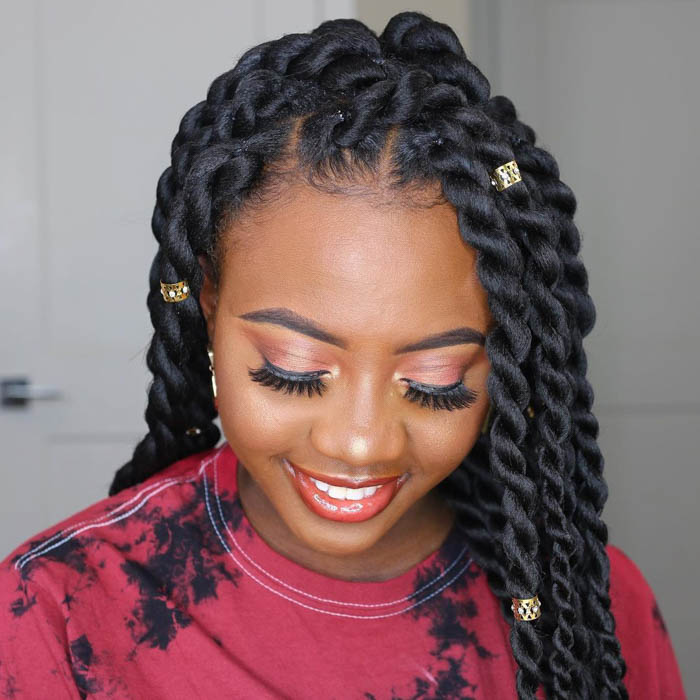
Small twists whisper; large ones announce themselves. These thick, black Senegalese twists reach mid-back with a middle part that lets the hair fall forward, framing the face in a deliberate way. The bolder twist size creates more visual weight, which suits round and heart-shaped faces by adding structure at the jawline. Ask your stylist for: large, defined Senegalese twists, mid-back length, face framing. This is a full salon day, not an afternoon, because the thicker strands require precise sectioning to keep the definition consistent. A wide-tooth comb or fingers will separate any strands that merge over time.
Long Thin Twists With Dense Texture
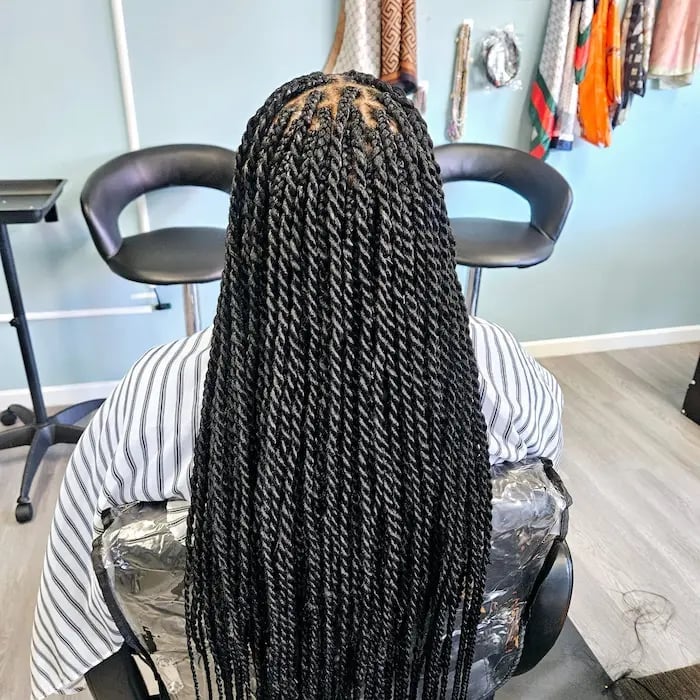
Technically, density is the difference between a few long twists and a lot of them. Here, the hair is parted in the middle at the crown and sectioned into numerous thin Senegalese twists that fall straight down the back, hitting a significant length. The high strand count creates a full, weighty texture that moves as one unit. Ask your stylist for: long, thin Senegalese twists, maximum length, dense texture. The parting work is exacting: each square must be the same size to keep the twist diameter consistent from root to tip. A nourishing oil applied along the length once a week prevents the strands from drying out over the wear period.
This style suits those with thick, long hair who want to show off both length and volume. The installation time is longer than average, but the hold is excellent for six to eight weeks.
Mid-Back Twists With Black and Gray Blend
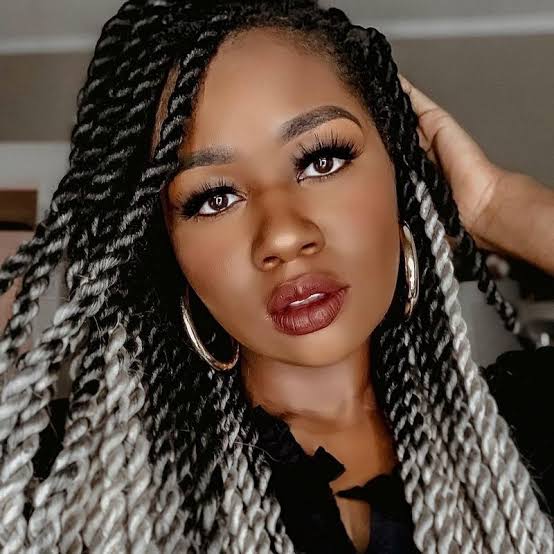
Solid black has its place, but a two-tone blend lands differently. These mid-back Senegalese twists mix black and gray in a loose, shoulder-grazing fall with a middle part. The gray strands break up the darkness without going full silver, which keeps the style modern. Ask your stylist for: black and gray blended Senegalese twists, mid-back. The gray tones have a cooler undertone that works well for autumn and winter, when deeper, moodier colors dominate. A color-safe shampoo and conditioner help keep the gray from warming up or yellowing over the wear period.
Black and White Twists With Curly Ends
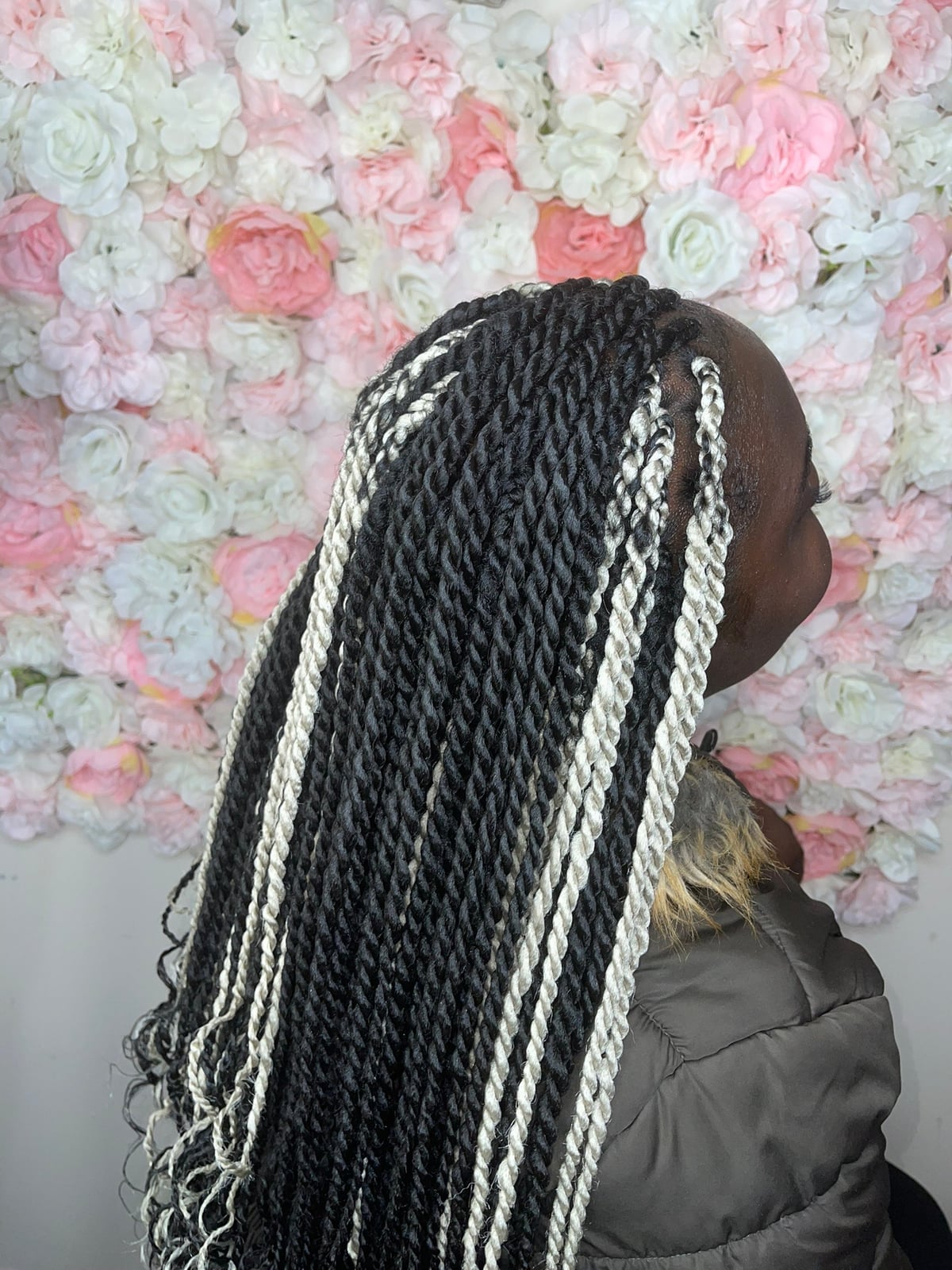
Want a two-tone twist that does not look like a typo? Ask for black and white Senegalese twists, and specifically request that some ends be curled. The high contrast between the two colors gives the style graphic impact, while the coiled ends add movement and texture variation that a straight twist cannot offer. Ask your stylist for: black and white Senegalese twists with some curly ends. The black and white combination looks polished when the parting stays clean and the distribution of each color is balanced from front to back. A curl-defining cream on the ends will keep those coils intact without stiffness.
Long Twists With Sharp Side Parting
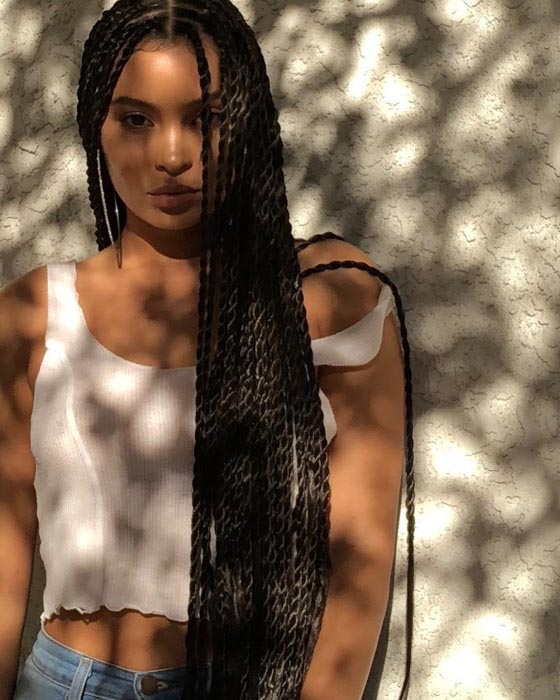
A sharp side parting changes the whole silhouette of long Senegalese twists, shifting the weight to one side for a more angular frame. This works best when the twists reach at least mid-back; any shorter and the asymmetry can look accidental. Ask your stylist for: long Senegalese twists with a sharp side part. Use a rat-tail comb to reinforce the parting each morning, and a light spritz of water to settle any twists that drift overnight.
The black color keeps attention on the geometry of the part. Because the twist pattern itself is uniform, the only movement comes from how the hair falls over one shoulder. A trim every eight to ten weeks keeps the ends clean and the parting crisp.
Collarbone Twists Pulled Into Pigtails
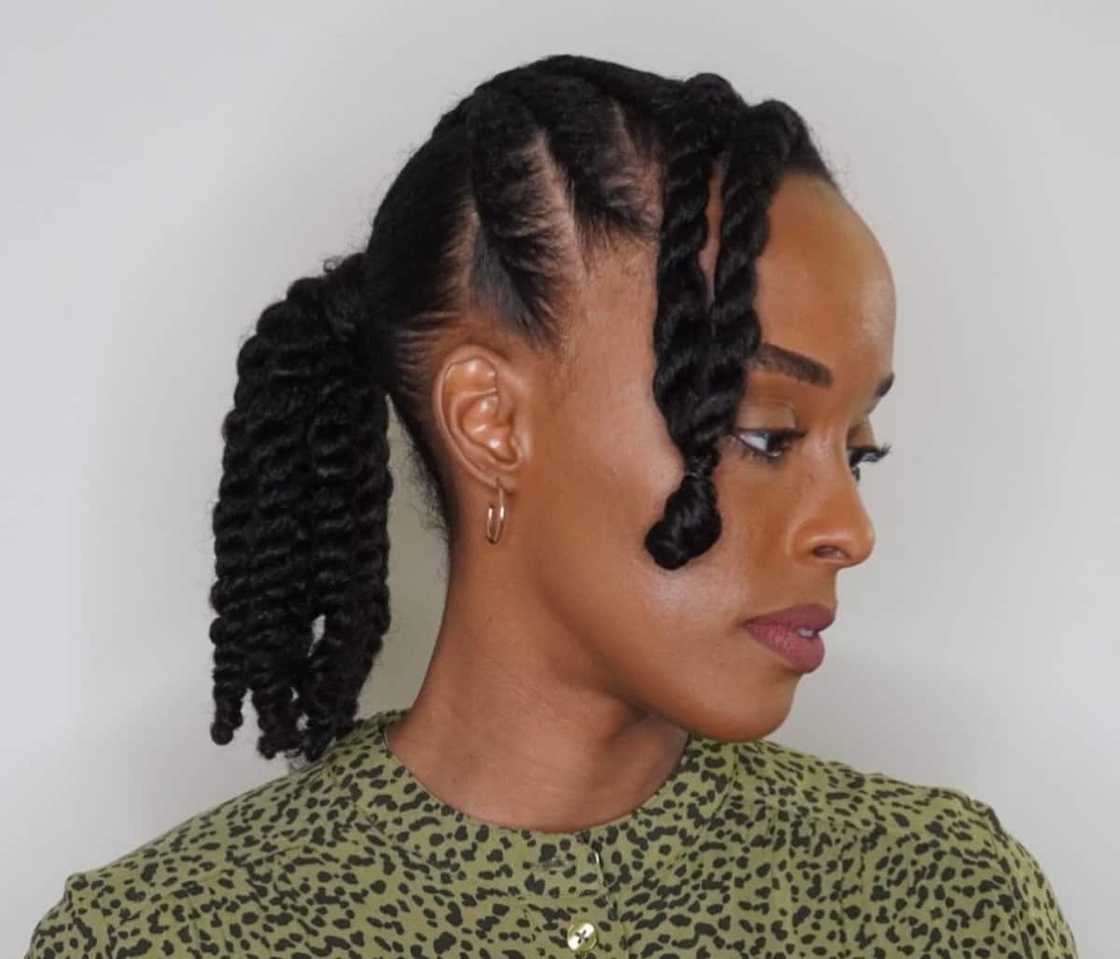
Two neat pigtails at collarbone length keep thick, coily hair sectioned and contained, which cuts down on the tangling that two-strand twists can develop over time. The drawback is that the coily texture can cause the base of each twist to puff up faster than straighter hair types, so a re-tightening appointment every three to four weeks is realistic. Ask your stylist for: collarbone length Senegalese twists in two pigtails. The middle part keeps the look symmetrical, and snag-free elastics at the base prevent breakage where the elastic meets the twist.
Vibrant Purple to Blue Gradient Twists
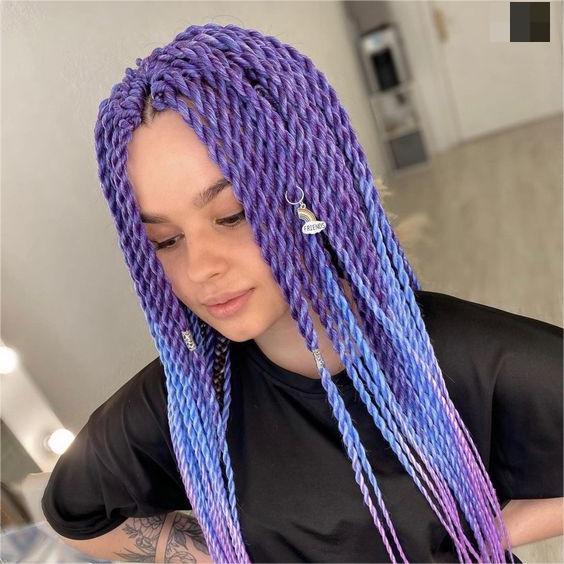
A purple to blue gradient on Senegalese twists is a color melt applied to the extension hair before wrapping, so the shade transitions smoothly from root to tip without a hard line. The mid-back length gives the gradient enough canvas to read clearly, and the smooth twists let the color do the work. Ask your colorist for: long, purple to blue gradient Senegalese twists with charms. A color-depositing conditioner used once a week keeps the purple from fading toward gray and the blue from turning muddy. The small charms add weight at the ends, so expect a slight pull at the scalp for the first day or two.
Jumbo Twists With Consistent Thickness
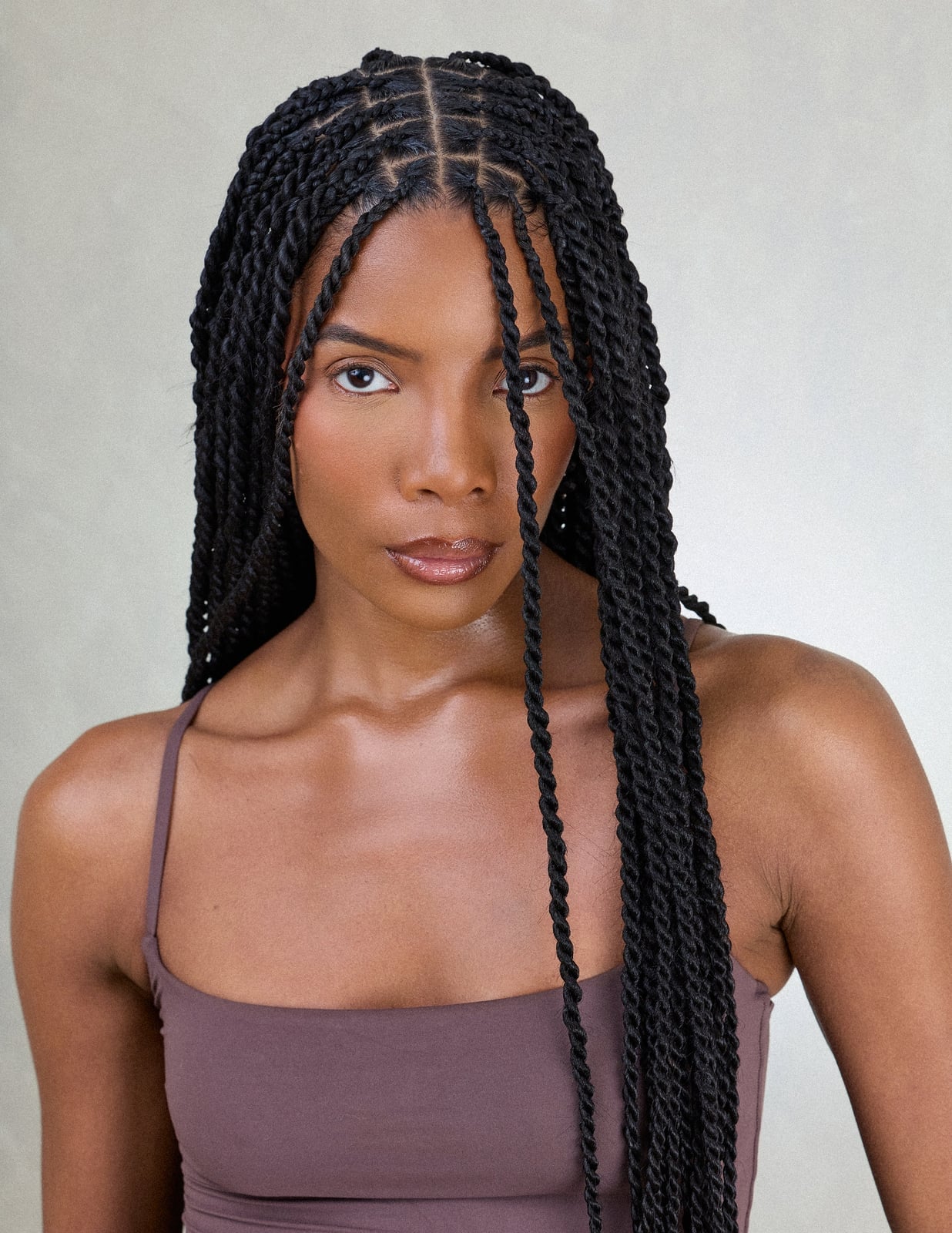
Are jumbo twists the fastest route to length? Yes, because fewer twists mean less installation time. This set falls past the shoulders with a middle part and a smooth, straight texture that stays neat without daily fuss. The consistent thickness across every twist is the detail that keeps the style from looking sloppy. Ask your stylist for: jumbo Senegalese twists, past shoulder length, loose style, consistent thickness. A lightweight serum patted over the twists once a week maintains the sheen, and a quick trim of any loose ends every few weeks prevents the larger twists from splaying at the tips.
Final Thoughts
For maximum hold and the cleanest root line, book salon-applied twists with precise square or side parting, and add cuffs or charms only after the install settles.
- Oil the scalp and twists lightly once a week.
- Sleep in a silk or satin bonnet or scarf.
- Keep manipulation low to limit frizz at the roots.
- Deep condition before the install, not after.
- Retwist or touch up every four to eight weeks.
Senegalese twists offer a world of styling possibilities.

