
Ombre hair creates a gradient from a darker root to lighter ends, adding dimension without a harsh regrowth line. The technique has shifted toward softer transitions and lived-in color, making it a practical choice for anyone who wants low-upkeep dimension.
This collection of 17 ombre ideas covers everything from subtle ash blends to vivid fashion shades. Expect a mix of lengths, textures, and contrast levels, so there is something for fine hair that needs volume, a blunt cut that shows every line, or wavy hair that benefits from soft face-framing layers. Ombre Hair works because it grows out gracefully, which solves the grow-out line struggle for good.
Long Layered Hair With Fiery Red Ombre
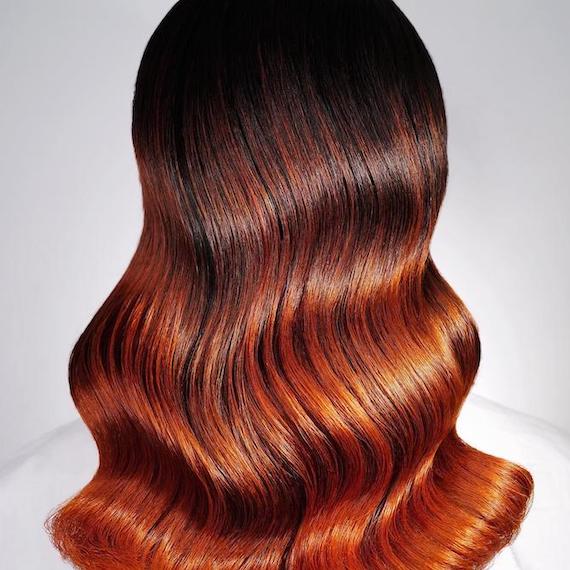
The gradient here follows a clear logic: dark brown at the roots, then a smooth climb into fiery red that lands with full saturation at the ends. No harsh line, no muddy middle zone. The mid-back length and long layers give the color room to breathe, and the wavy texture shows the transition at every level. Thick hair handles the lift best, since the red needs enough density to read as vibrant rather than sheer.
Ask your colorist for: long layered cut with dark brown to fiery red ombre. A heat protectant spray before waving keeps the gloss intact. Trim every 10 to 12 weeks to preserve the shape, and expect about three hours in the chair for the initial application.
Mid-Back Wavy Hair With Curtain Bangs
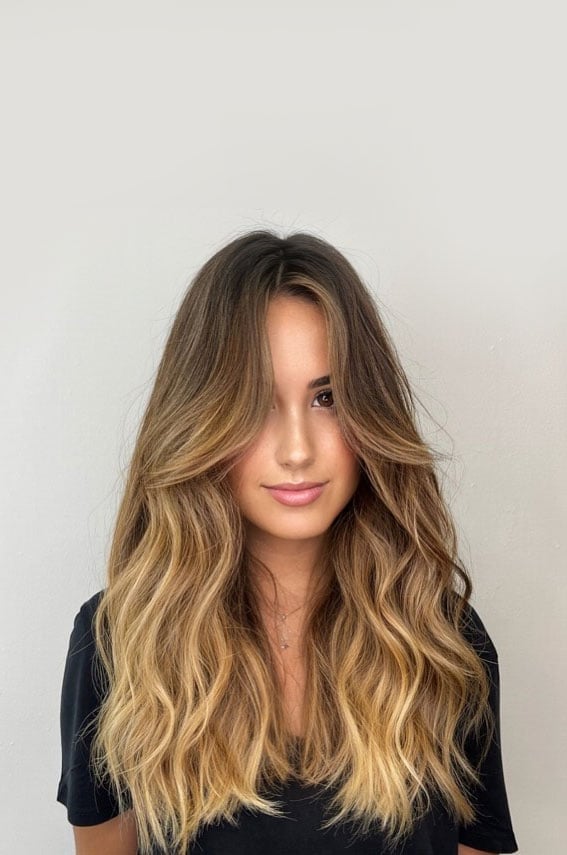
Wondering if curtain bangs work with a dark brown to blonde ombre? They do, provided the hair is thick enough to hold the shape. The middle part and soft face-framing pieces soften a round or oval face without fighting the gradient. The ombre starts dark at the roots and lightens gradually, so the bangs blend into the overall style.
Ask your colorist for: dark brown to blonde ombre with curtain bangs. Style the fringe with a round brush for a polished curve, and book a trim every 6 to 8 weeks. The wavy texture gives the bangs natural movement, which means less heat styling day to day.
Collarbone Lob With Black To Dark Blonde Ombre
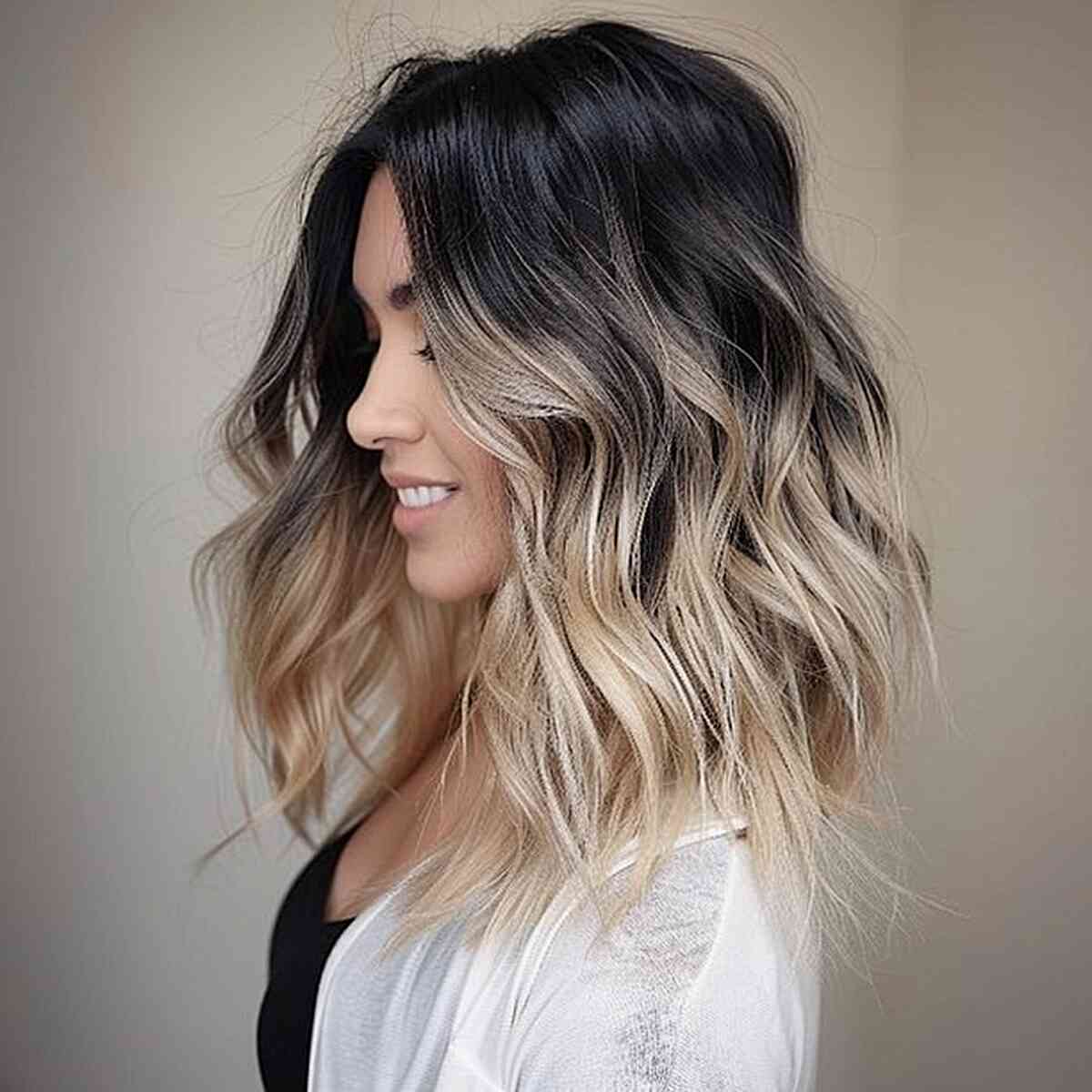
This is not the soft, blended ombre that whispers. The black base hits the dark blonde ends with a stark contrast that lands somewhere between graphic and intentional. On a collarbone lob with a side part and loose waves, the blunt transition looks like a design choice. It suits thick hair best, since fine strands would lose the black density at the root.
Ask your colorist for: black to dark blonde ombre lob. A texturizing spray helps the waves hold the shape. The side part keeps the darker side grounded while the lighter ends peek out with movement.
Collarbone Lob With Dark Blonde To Light Blonde Ombre, Wavy
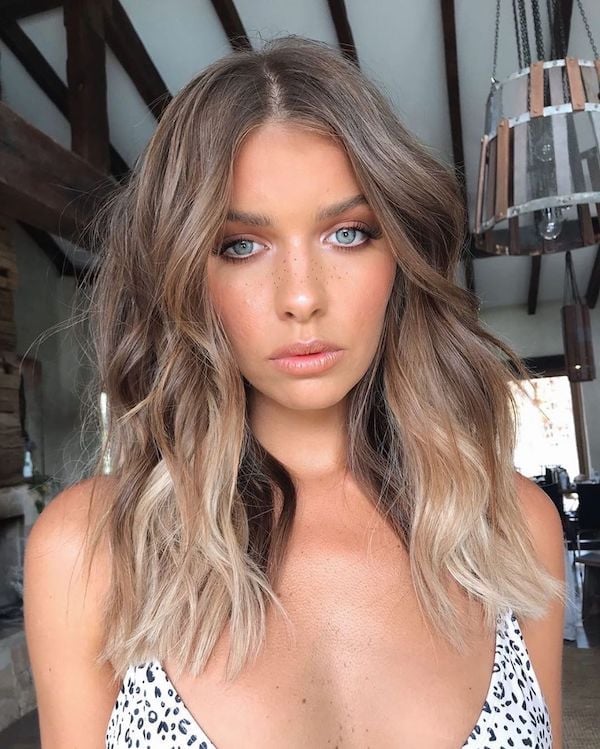
The shift from dark blonde to light blonde is subtle enough that the grow-out barely registers. On a collarbone lob with curtain bangs and a middle part, the soft ombre looks like a lived-in blonde, not a deliberate two-tone. Medium density hair works well here: the light ends catch movement without looking see-through, and the curtain bangs frame the face without competing with the gradient.
Ask your colorist for: dark blonde to light blonde ombre lob with curtain bangs. Blow-dry the fringe with a round brush, spritz a texturizing spray through the waves, and trim every 6 to 8 weeks. A purple shampoo every other wash keeps the light blonde from warming up.
Mid-Back Wavy Hair With Platinum Blonde Ombre
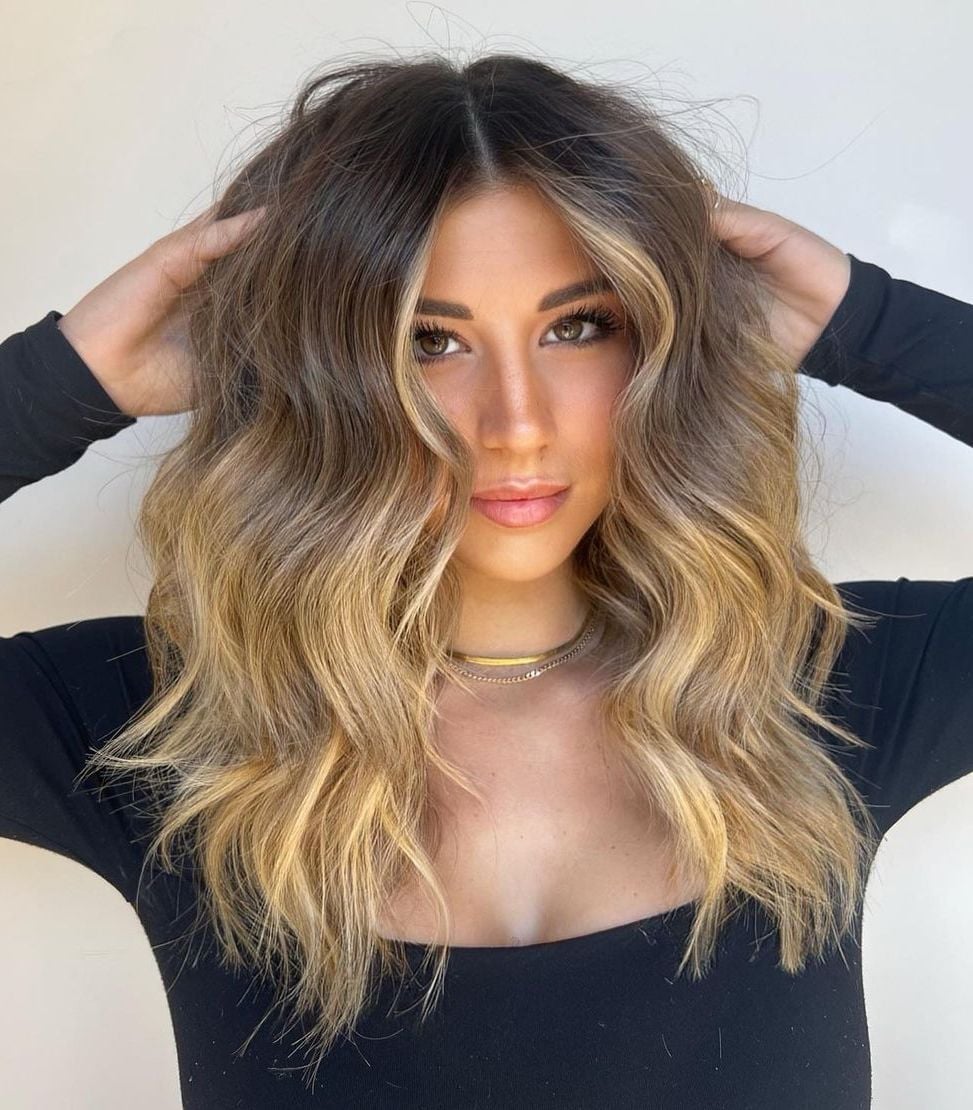
Platinum ends against an ash blonde base create a cool, deliberate contrast, like a winter landscape worn on the head. The mid-back length lets the icy tone travel far enough to make an impact, and the thick, wavy texture gives the platinum something to grip. This color works best when the world is in sweaters and low sun.
Ask your colorist for: ash blonde to platinum blonde ombre. A middle part and loose waves show off the full gradient. A purple shampoo used weekly keeps the platinum from veering yellow, and the tone holds its cool edge for about 8 to 10 weeks before a gloss refresh.
Collarbone Layered Bob With Ashy Gray Ends
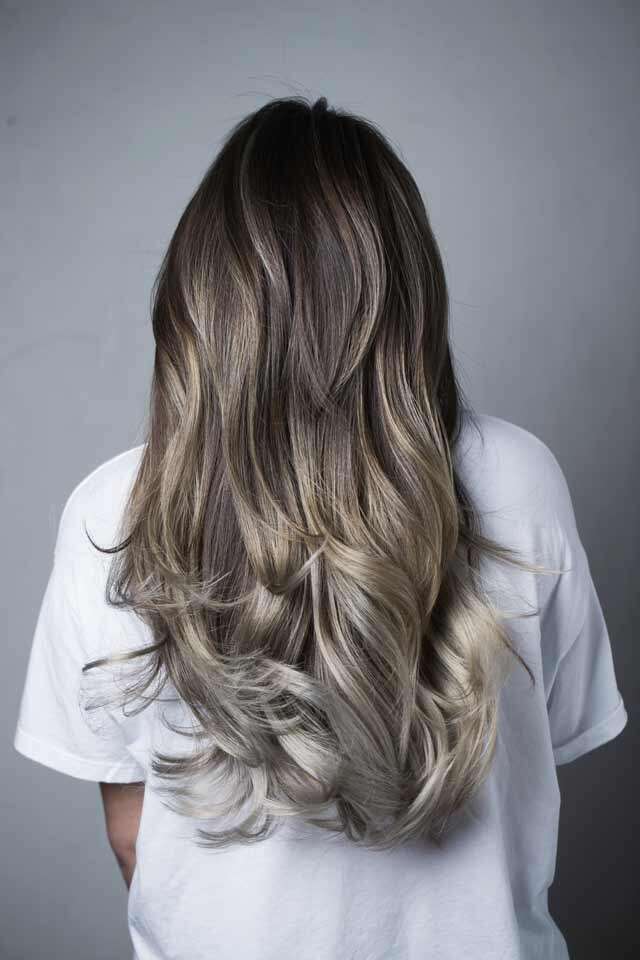
Here is the honest truth about gray ends: they look fantastic for about three weeks, then they need a refresh. This collarbone layered bob goes dark brown to ash blonde and settles into a grayish tone at the tips, styled in loose waves that show off the back-view gradient. The ash tones fight warmth, which means any brassiness reads immediately. Medium density hair of collarbone length works best here; thinner textures lose the layered movement. Ask your colorist for: dark brown to ash blonde and gray ombre bob. A color-depositing conditioner keeps the gray from turning muddy, and a trim every 6 to 8 weeks stops the bob from losing its shape. This is a salon-only project, three to four hours in the chair, and the grow-out demands commitment.
Long Layered Hair With Electric Blue Ombre, Mid-Back
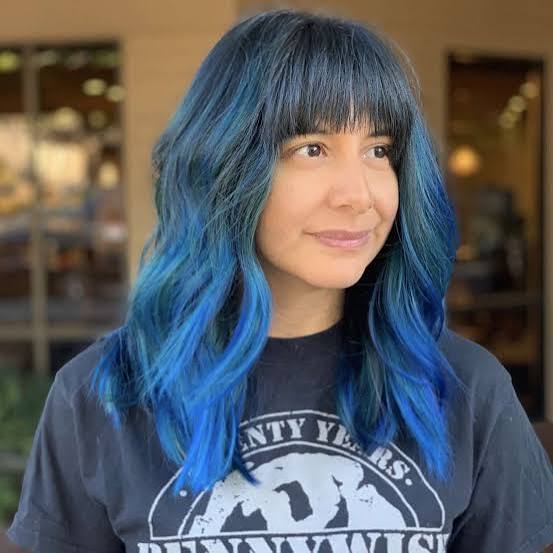
Can a full fringe and a middle parting coexist without looking like two different haircuts squished together? Yes, when the hair is long enough and the bangs are cut to blend into the layers. This mid-back length with full bangs and a middle parting works best on longer face shapes, where the horizontal line of the fringe balances the vertical length. The dark blue base transitions into a bright electric blue at the ends, and the wavy texture gives the color movement so it does not sit flat. Ask your colorist for: dark blue to electric blue ombre with full bangs.
Medium density, wavy hair holds the shape of this cut without collapsing, and the long layers prevent the ends from looking heavy. The full bangs require a dry styling routine with a small round brush and a blow-dryer to keep them from splitting. A trim every eight to ten weeks keeps the ends healthy and the fringe at the right length. This is a salon-only color: the lift from dark blue to bright blue needs a precise pre-lighten and a direct dye application that is difficult to control at home.
Collarbone Layers With Ash Brown To Ash Blonde Ombre
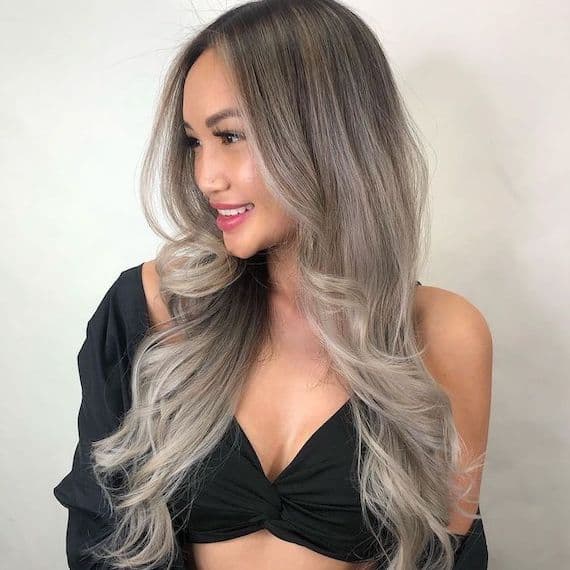
The colorist paints the ash brown base lower than usual, then blends the ash blonde upward in soft sections so the transition becomes a smooth gradient. Collarbone-length layers carry the ash brown to ash blonde ombre, styled in a wavy blowout that shows the cool-toned shift. Thick hair holds the layers and the tonal range better than fine hair, which can look flat with all that ash. Ask your colorist for: ash brown to ash blonde ombre with layers. The front view confirms the neutrality, no warm undertones, no golden reflections, just silver and beige. A silver shampoo once a week keeps the ash from drifting yellow, and a trim every 6 to 8 weeks preserves the collarbone line.
Collarbone Bob With Dark Brown To Red Ombre
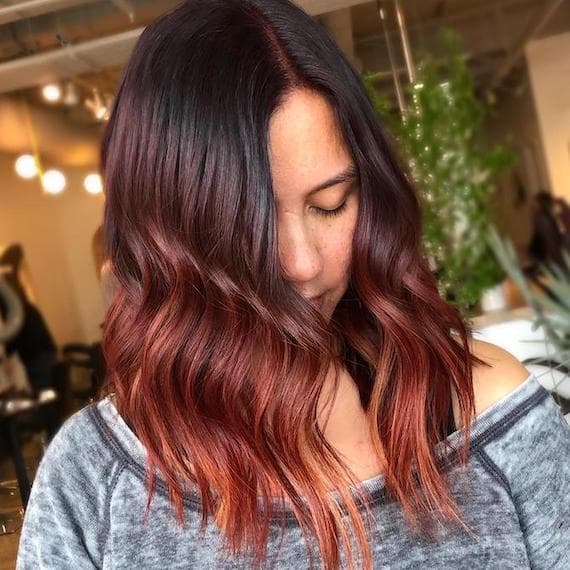
Want a warm color shift without going full copper? The question to ask yourself is how intense you want that red to read. This collarbone bob starts dark brown and transitions into red at the ends, styled in loose, wavy layers. The front view shows the red as a rich, vibrant pop. It announces itself. Medium density, wavy hair of collarbone length carries the gradient clearly. Ask your colorist for: dark brown to red ombre bob. Be specific about the red tone: auburn reads deeper, cherry reads brighter. The bob cut means the color is concentrated, so the payoff is immediate. A color-safe shampoo keeps the red from fading into orange, and a trim every 6 to 8 weeks maintains the bob’s clean line.
Long Layered Hair With Purple To Lavender Ombre
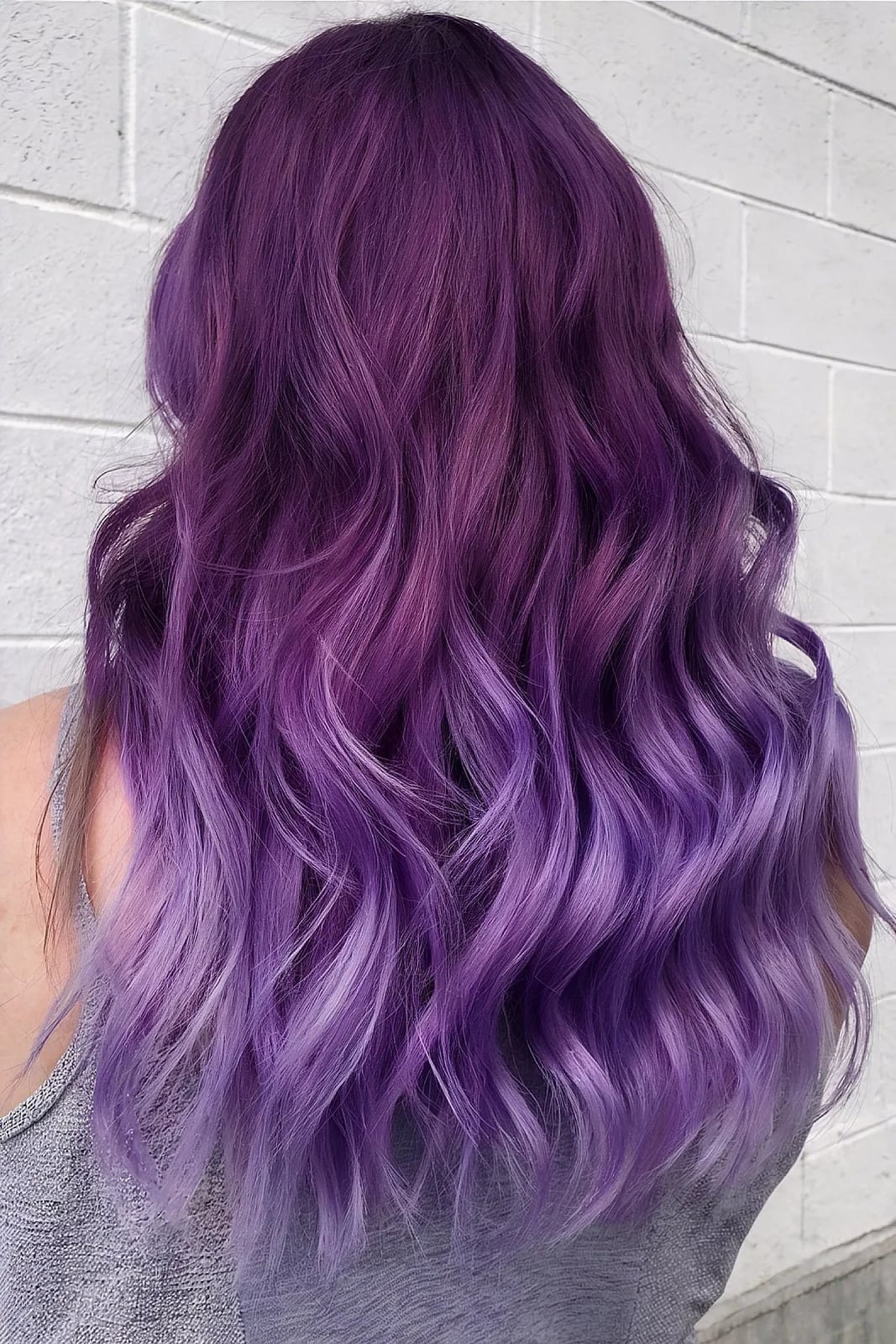
The gradient from deep purple to lighter lavender is the kind of color that looks best in motion, which is why loose waves are the styling choice here. Long, layered hair with a middle parting shows the back-view transition clearly, starting dark at the roots and softening to pastel at the ends. Thick, wavy hair of mid-back length gives the color depth, fine hair tends to make lavender look washed out.
The grow-out phase on long layers is forgiving because the color sits at the ends, not the roots. Those purple roots grow in as dark brown, which blends naturally for about 10 weeks before the contrast becomes obvious. A color-depositing mask every second wash keeps the lavender from fading to a flat beige. Ask your colorist for: purple to lavender ombre. A trim every 8 to 10 weeks keeps the layers from tangling at the lighter, more porous ends.
Shoulder Length Blunt Cut With Platinum Ombre
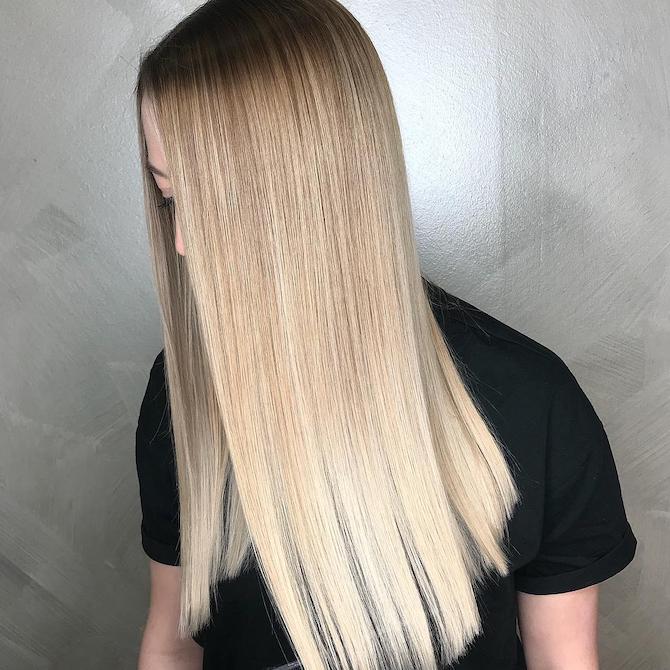
The precision of a blunt cut at shoulder length promises a crisp line, but on fine, straight hair the dark brown to platinum blonde ombre gradient can read as two separate colors instead of a smooth transition. The trick is asking for a diffused blend at the demarcation line, so the sharpness stays in the cut, not the color. Ask your colorist for: dark brown to platinum blonde ombre blunt cut. A smoothing serum keeps the glossy finish, and a trim every six to eight weeks preserves that blunt edge. The drawback: fine hair shows every gap in the blend, so this is not a low-maintenance choice.
Long Layered Hair With High Contrast Ombre
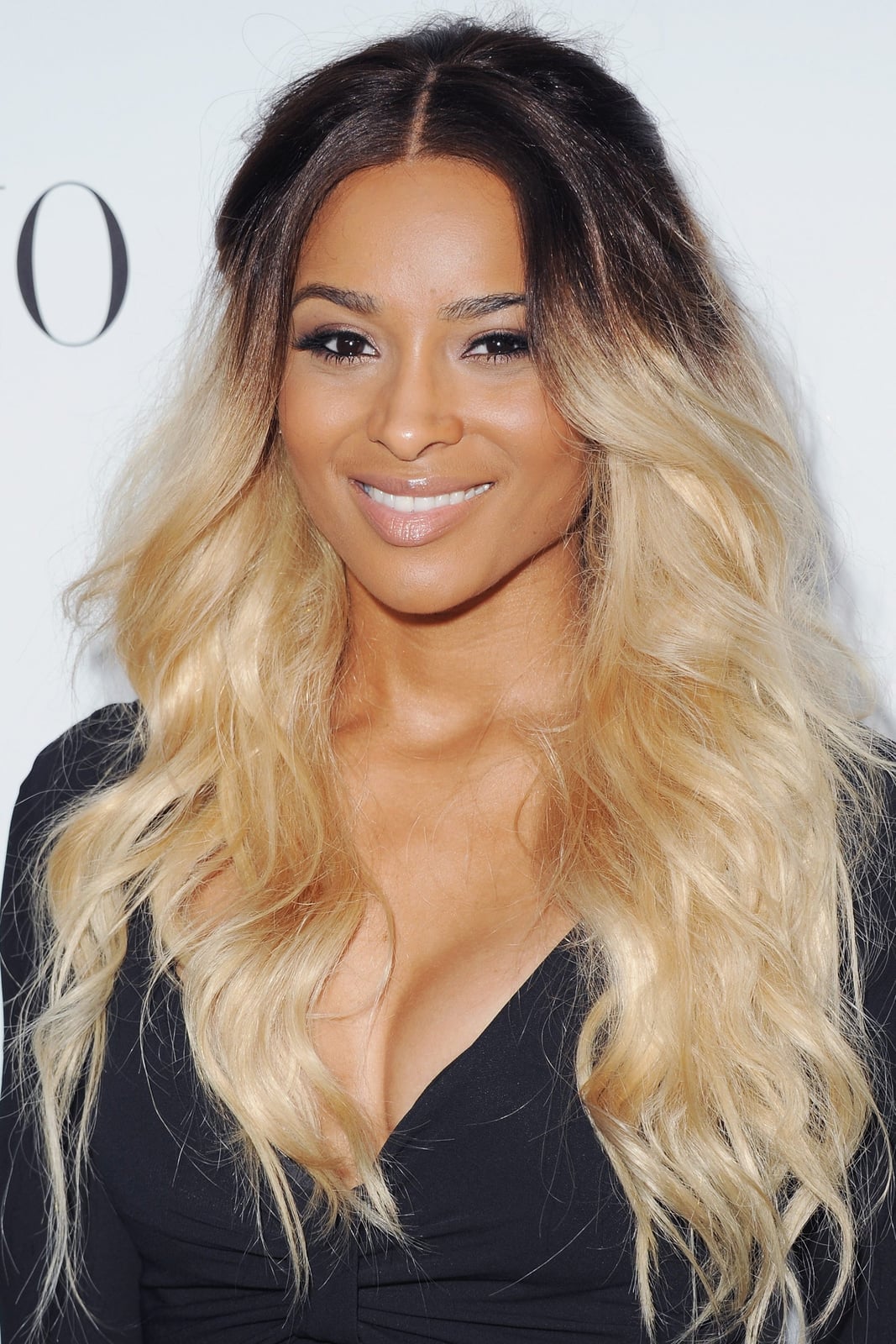
A high-contrast ombre from dark brown to very light blonde is the bold sibling of a softer, lived-in blend. The dramatic difference between root and ends makes a statement, but it also means the lightened sections need more attention than a subtle gradient would. Thick, wavy hair at mid-back length carries the contrast well, as the texture helps hide any slight unevenness in the transition. Ask your colorist for: dark brown to very light blonde high contrast ombre. A hydrating mask becomes your friend, since lightening strips moisture, and a trim every eight to ten weeks keeps the layers moving. If you prefer a low-key grow-out, the softer blend suits better.
Collarbone Long Bob With Sharp Blonde Ombre
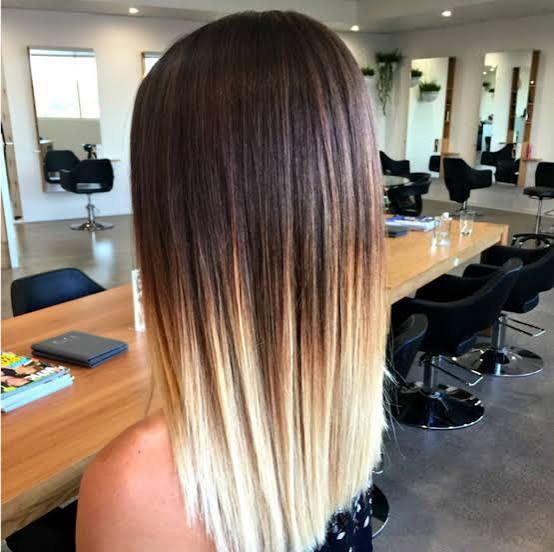
This collarbone long bob with a sharp dark brown to blonde ombre line is a graphic, polished choice, but it demands respect. The stark contrast means every regrowth is visible, so expect salon visits more often than with a blended ombre. Medium density, straight hair shows the sharp line best, and the sleek finish requires a flat iron for that mirror shine. Ask your colorist for: dark brown to bright blonde ombre long bob. A trim every six to eight weeks keeps the bob’s shape intact. The trade-off: the line will soften on its own as it grows, and you will be tempted to book the next appointment before you actually need it.
Lob With Curtain Bangs And Dark Brown To Blonde Ombre
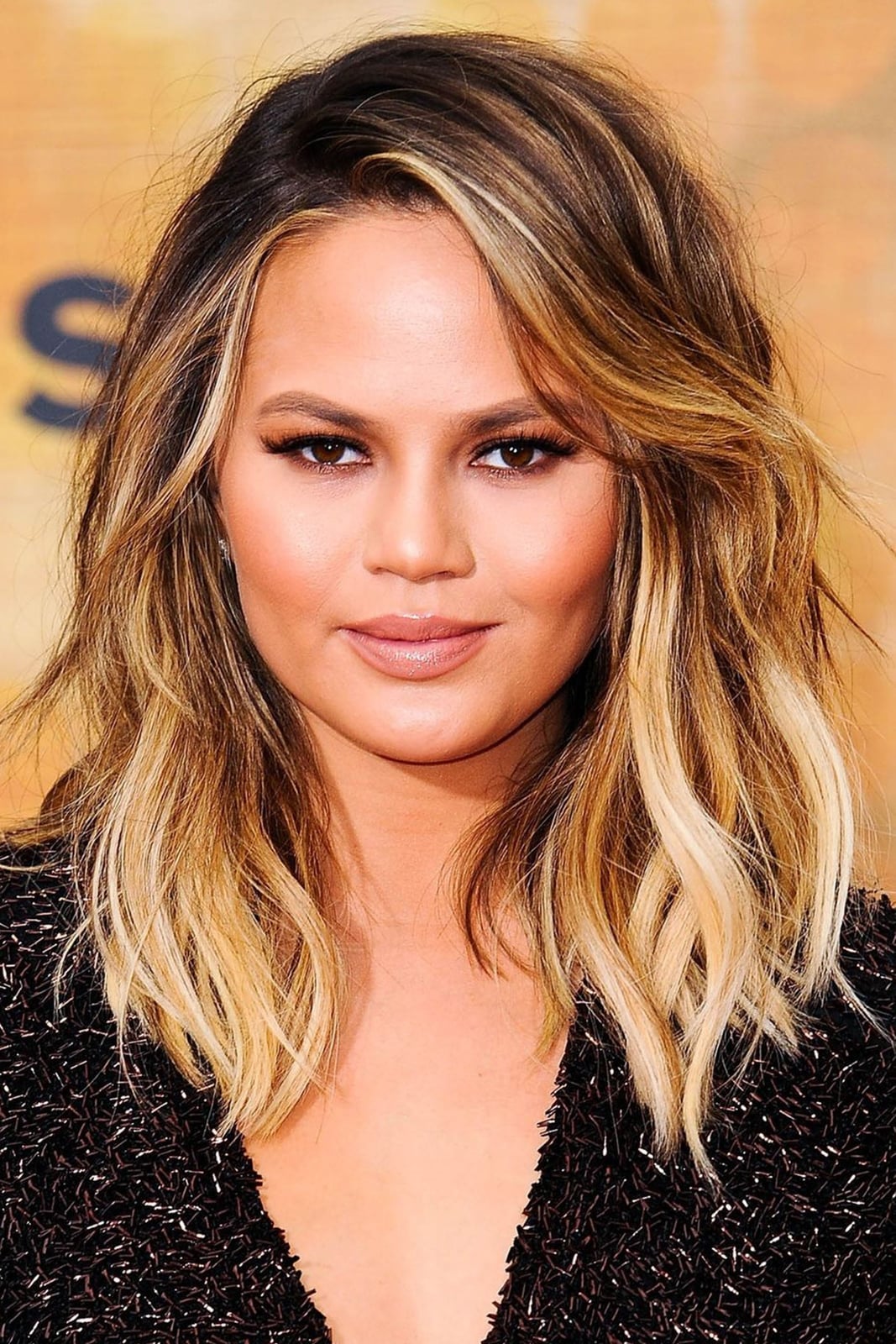
A lob with curtain bangs and a dark brown to blonde ombre transition is a practical everyday style, but the wavy blowout needs daily effort to look this put-together. Thick, wavy hair at collarbone length holds the waves well, and the curtain bangs soften a square or oval face. Ask your colorist for: dark brown to bright blonde ombre lob with curtain bangs. Style the fringe with a round brush while blow-drying, then add a texturizing spray to the lengths for that lived-in wave. A trim every six to eight weeks keeps the bangs from turning into a shag. The ombre helps the grow-out, but the bangs will not wait for you.
Long Layered Hair With Pink To Purple Ombre, Mid-Back
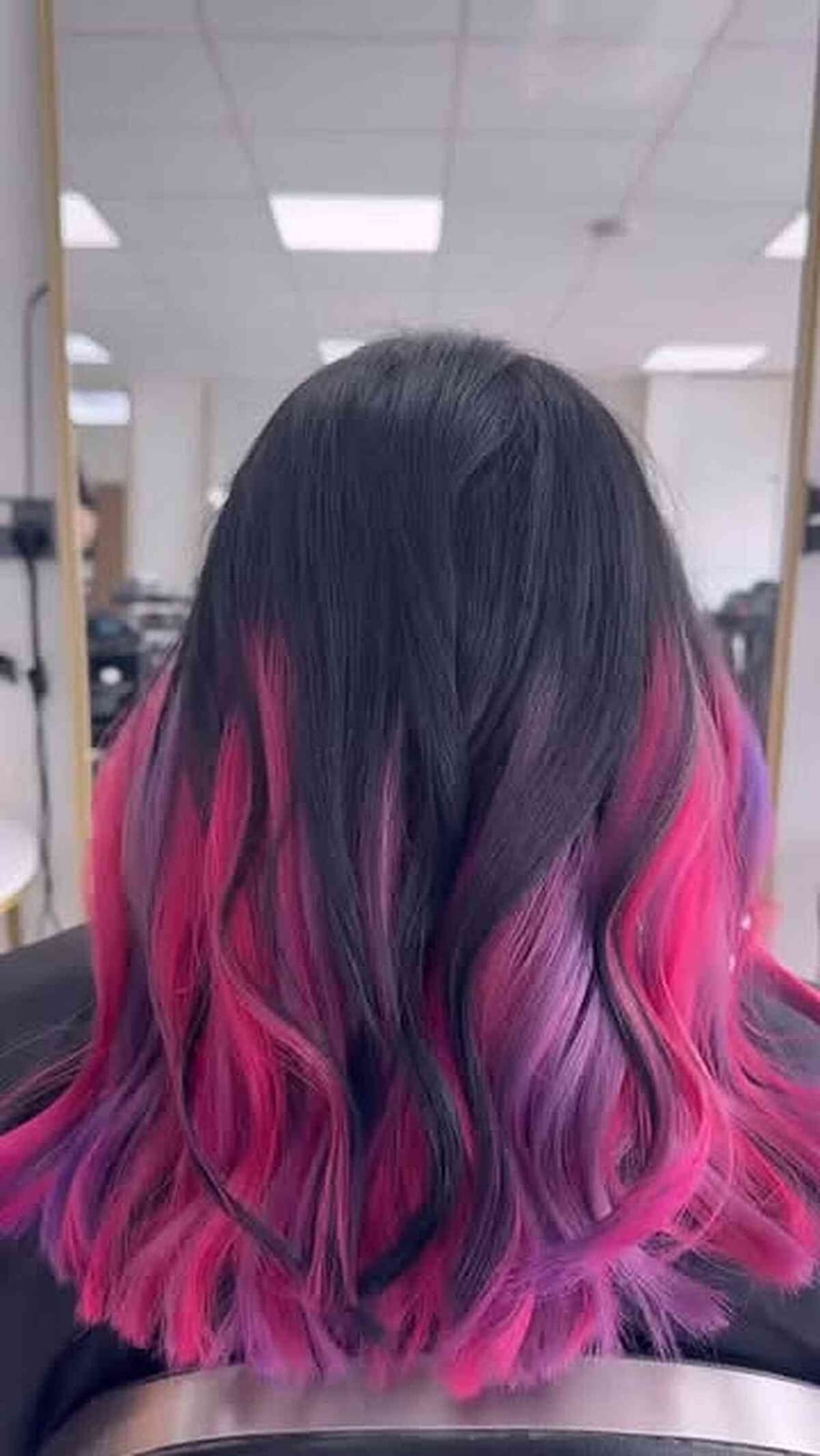
Pink to purple ombre is the hair equivalent of a festival wristband: it signals you are here for the fun. The bright pink at the mid-lengths melting into rich purple at the ends creates a vibrant gradient that suits thick, wavy hair at mid-back length. This color is a commitment, so it lands best in a season when you are ready for attention, like summer or a long vacation. Ask your colorist for: bright pink to rich purple ombre. Use color-safe products and a color-depositing mask to keep the shades from fading into a muddy pastel. A trim every eight to ten weeks keeps the layers fresh. It is not a subtle choice, and it should not be.
Mid-Back Wavy Hair With Dark Gray To Silver Ombre
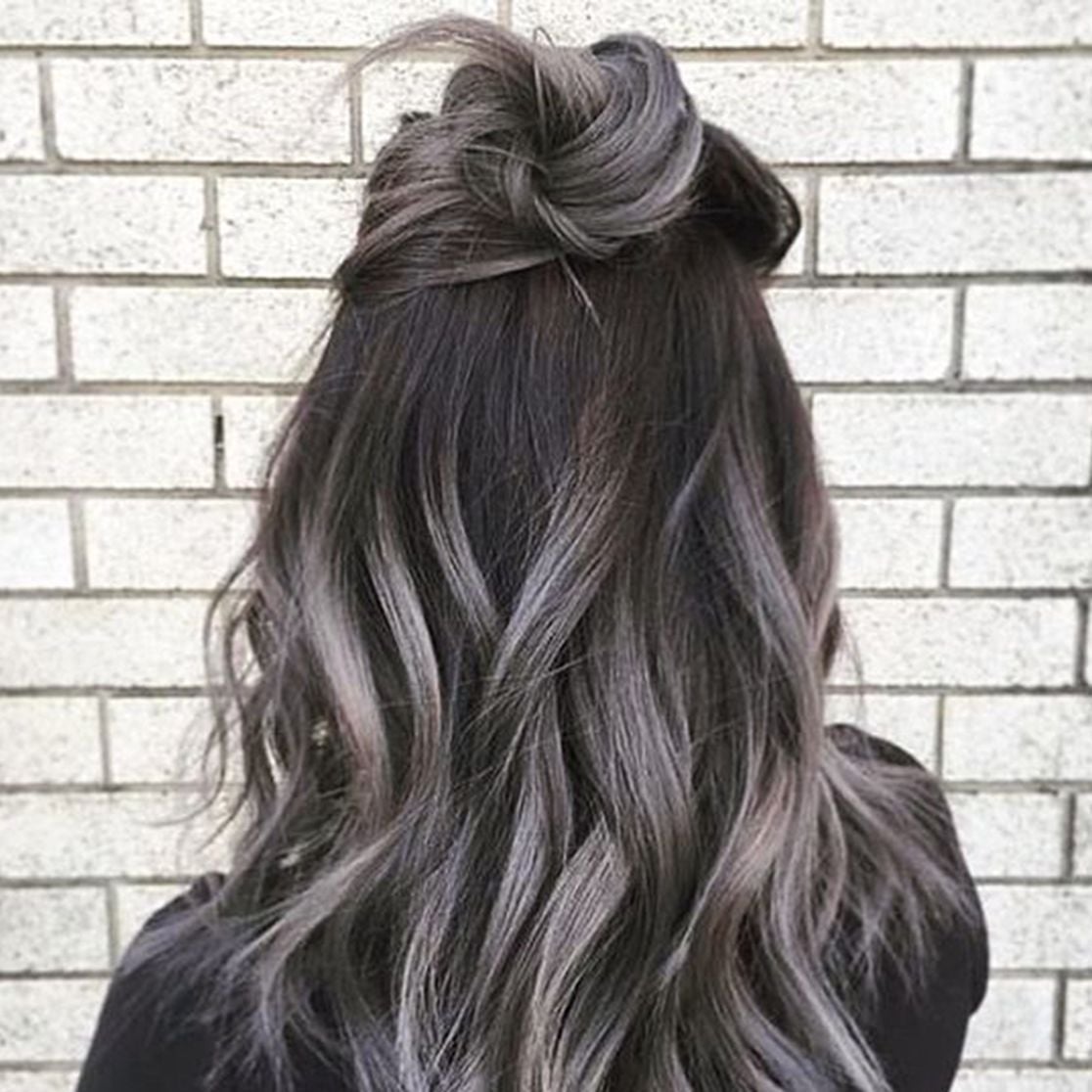
Getting gray tones that look metallic depends entirely on how the color is lifted and toned. For this dark gray to silver ombre, the base is a deep charcoal, and the ends are lifted to a pale silver that reflects light like tarnished jewelry. The gradient sits on thick, wavy mid-back hair, and the half-updo with a top knot shows the transition in full, from shadowy roots to bright ends.
This is a two-step salon process. The colorist first lifts the lower half of the hair to a very pale blonde, then applies a purple-based toner to neutralize warmth and deposit the silver tone. The dark base stays untouched. Ask your colorist for: dark gray to silver ombre. Wavy texture helps the metallic effect look dimensional. Expect to use a silver shampoo once a week to keep the ends from tipping into brass. A trim every eight weeks keeps the ends looking sharp.
Mid-Back Wavy Hair With Smooth Dark Brown To Blonde Ombre
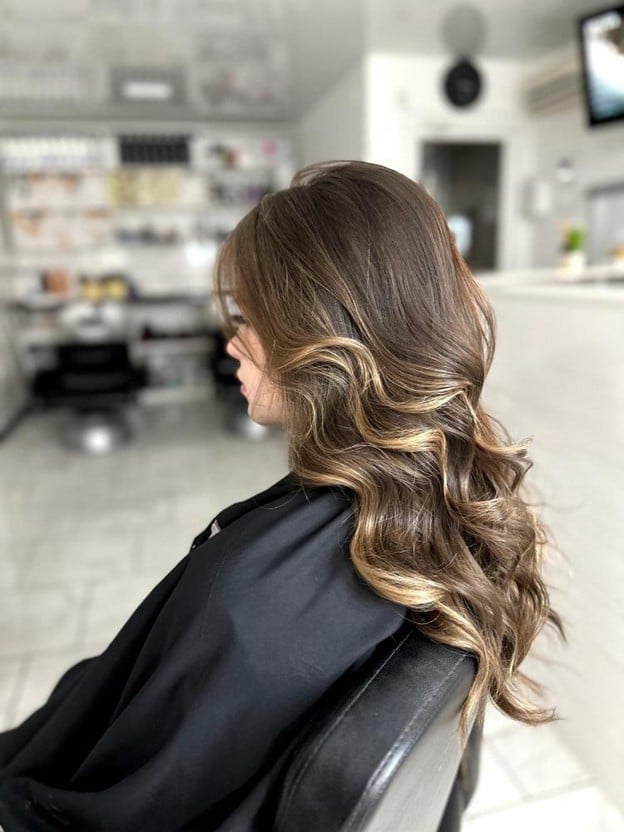
The design of a smooth ombre relies on a seamless gradient with no visible line where the color shifts. For this dark brown to blonde ombre on mid-back wavy hair, the transition begins several inches from the root and graduates evenly through the mid-lengths to a light blonde at the ends. The result looks naturally sun-lightened, not painted on.
Achieving that smooth transition requires a salon visit. The colorist uses a balayage technique, painting the lightener freehand onto the mid-lengths and ends, then blending it upward with a brush to soften the line. The risk at home is a harsh band where the dark brown meets the blonde. Ask your colorist for: smooth dark brown to blonde ombre with soft layers. The soft layers in the cut support the gradient by preventing the blonde ends from sitting in a solid block. The middle part and side view in this photo show the color flowing evenly from root to tip, which is the goal.
Final Thoughts
For a low-maintenance ombre, opt for a natural shade transition that is only a few levels lighter than your base. For a bolder statement, embrace fashion colors or high-contrast blends.
- Schedule ombre touch-ups every 8-12 weeks, focusing on the root blend.
- Use color-safe shampoos and conditioners to preserve vibrancy.
- Incorporate a weekly deep conditioning treatment to maintain hair health.
- Protect hair from heat styling with a thermal protectant spray.
Ombre offers a versatile canvas for creative color.

