
Knotless braids skip the bulky knot at the root, so the braid starts flat against the scalp and tension stays low. The trend has moved toward lived-in color and glossy natural texture, with lengths running from a chin-skimming bob to mid-back.
Here are 20 knotless hairstyles, from low-upkeep shoulder lengths to detailed geometric partings and curled ends. Find one for your density, texture and routine, whether you want a sleek everyday set or something with dimension. Knotless Hairstyles solve the usual complaints: fine hair that falls flat, a visible grow-out line, ends that frizz by week two.
Classic Mid-Back Knotless Box Braids
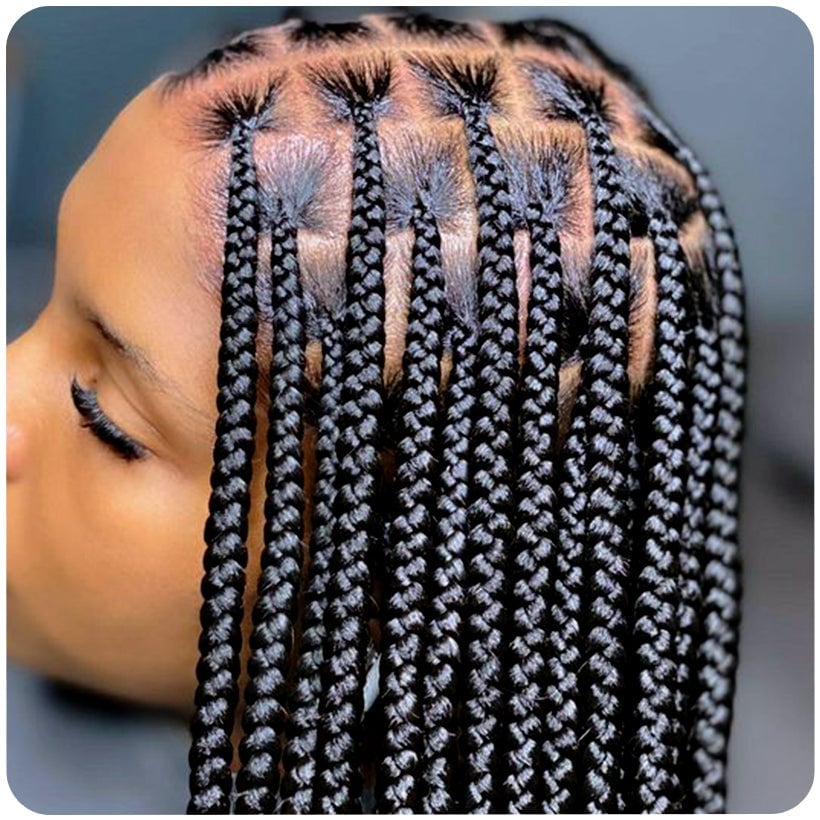
A knotless root shows no knot at the scalp, and that is the whole design: the braid starts as a flat, smooth feed of hair instead of a bumped anchor. These run to the mid-back in black, straight and even, with a clean square parting at the middle. Ask your stylist for: mid-back knotless box braids with clean parts.
The length is what makes this one a workhorse. Mid-back braids pull into a low bun or a ponytail for a meeting and hang loose on a Saturday without a redo in between. Density matters here: fine hair gets a fuller silhouette from the braiding hair added at the root, while very thick hair needs slimmer sections or the parting disappears. Styling is a light serum run down the length to keep shine, and a trim of the ends every 10 to 12 weeks keeps the finish sharp. Hold is the reason people come back: a smooth root sits flatter for longer than a knotted one, and there is nothing to catch on a comb.
Wavy Chin Length Knotless Braid Bob
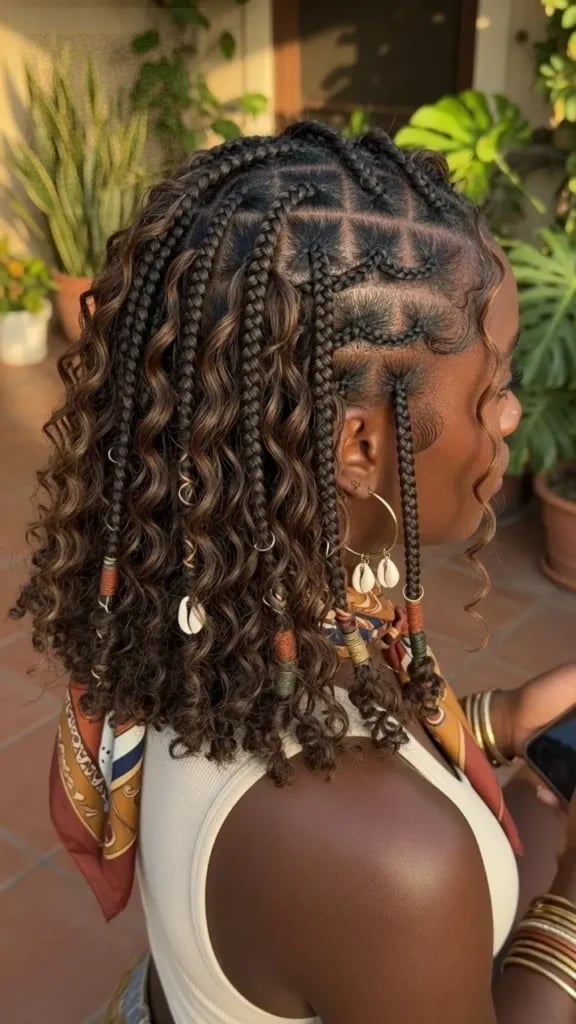
A mid-back braid gives you length to style; a bob gives you a shape, and the bob wins on speed. This one stops at the chin in dark brown with subtle blonde highlights, wavy through the ends and parted down the middle. Ask your stylist for: chin length knotless braid bob with subtle highlights. It suits most face shapes, and the chin line keeps the profile tidy where long braids can drag it down. The wave is the part that needs a hand: a texture spray scrunched through the ends holds the bend, and the cut wants a trim every 6 to 8 weeks to stay a bob and not a grown-out almost-bob.
Shoulder Length Straight Knotless Braids
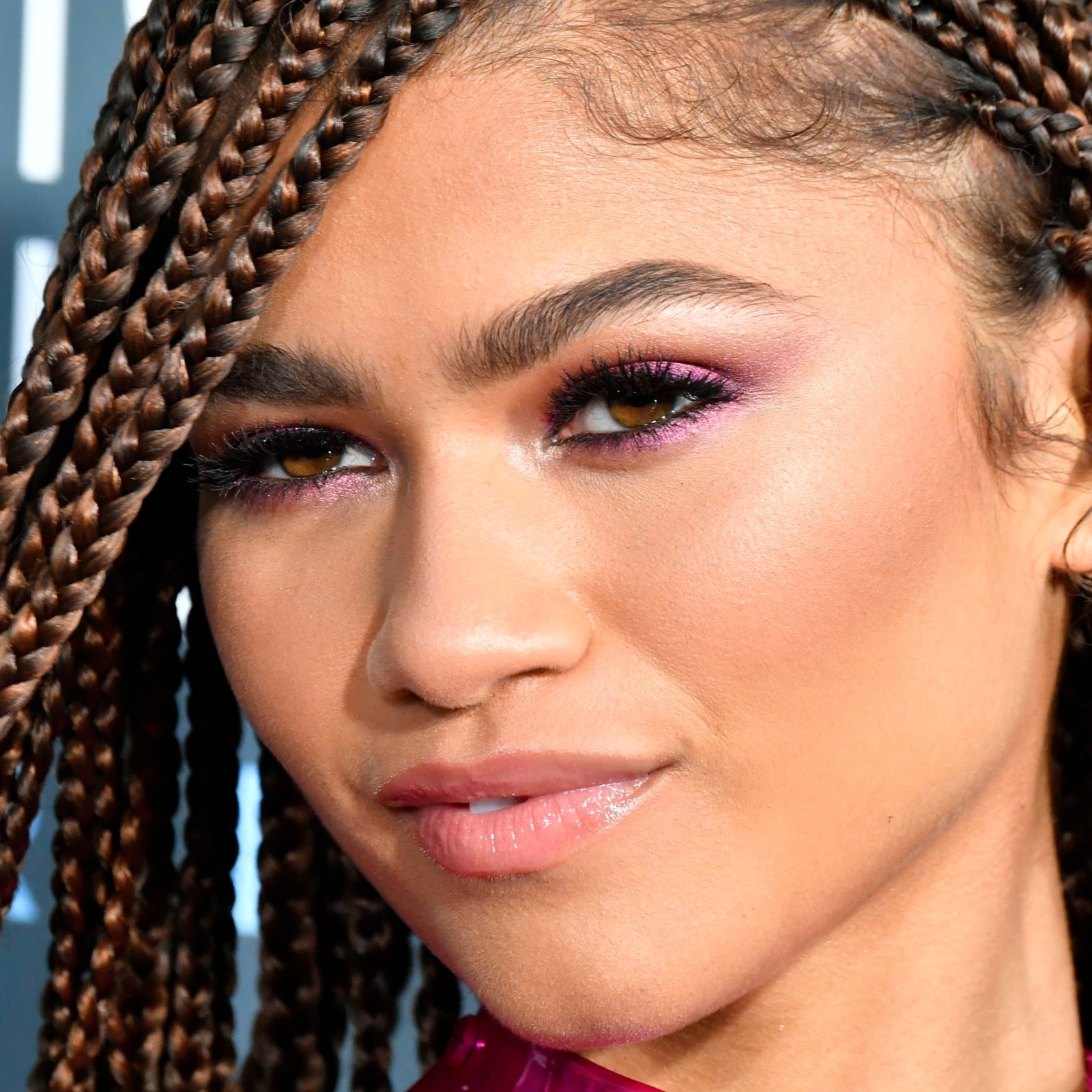
Neat braiding is a technique before it is a look: each section is fed smooth from the scalp so the braid lies flat and the parting stays a clean line from front to back. These sit at the shoulder in a warm brown, straight through the length, with a middle part and braids that frame the face on both sides. Ask your stylist for: shoulder length straight knotless braids. The shoulder is the length that behaves, short enough to stay off a collar and long enough to tie back, which is why it reads polished for work without much styling. Medium density hair starting at shoulder length takes the braiding hair evenly, so the braids stay uniform instead of bunching. Hold comes down to the wrap: a silk scarf at night keeps the straight texture smooth, and a trim every 8 to 10 weeks keeps the ends from thinning out.
Fine Micro Braids Mid-Back Length
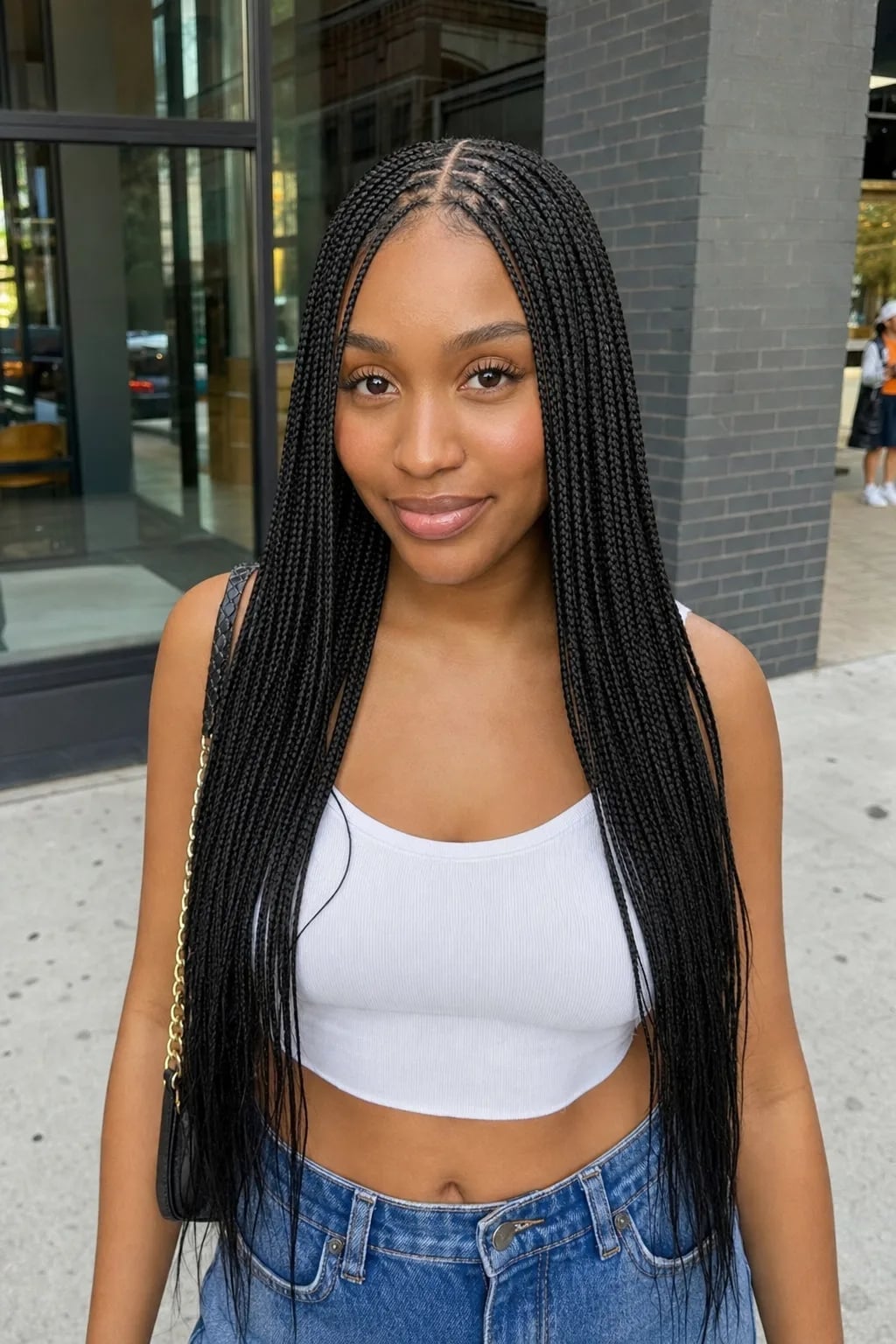
Micro braids are measured in patience: dozens of fine, straight sections, parted meticulously down the middle and carried to mid-back in a uniform black. The uniformity is the point. Every braid is the same width, so the parting reads as a sharp line instead of a suggestion. Ask your stylist for: mid-back fine micro braids.
Fine or low-density hair gets the most from this scale. Small sections build volume where the hair alone would sit flat, and the braids cover the scalp evenly. The trade-off is time and hands: this is a salon job, several hours in the chair, and not a style to attempt solo on a first go. Upkeep is a daily scalp serum to keep the roots comfortable and a touch-up every 6 to 8 weeks, since fine braids loosen at the root faster than thick ones. Anyone who wants a quick install should pass; anyone who wants density that lasts should book the appointment and clear the afternoon.
Thick Mid-Back Knotless Braids Geometric Parting
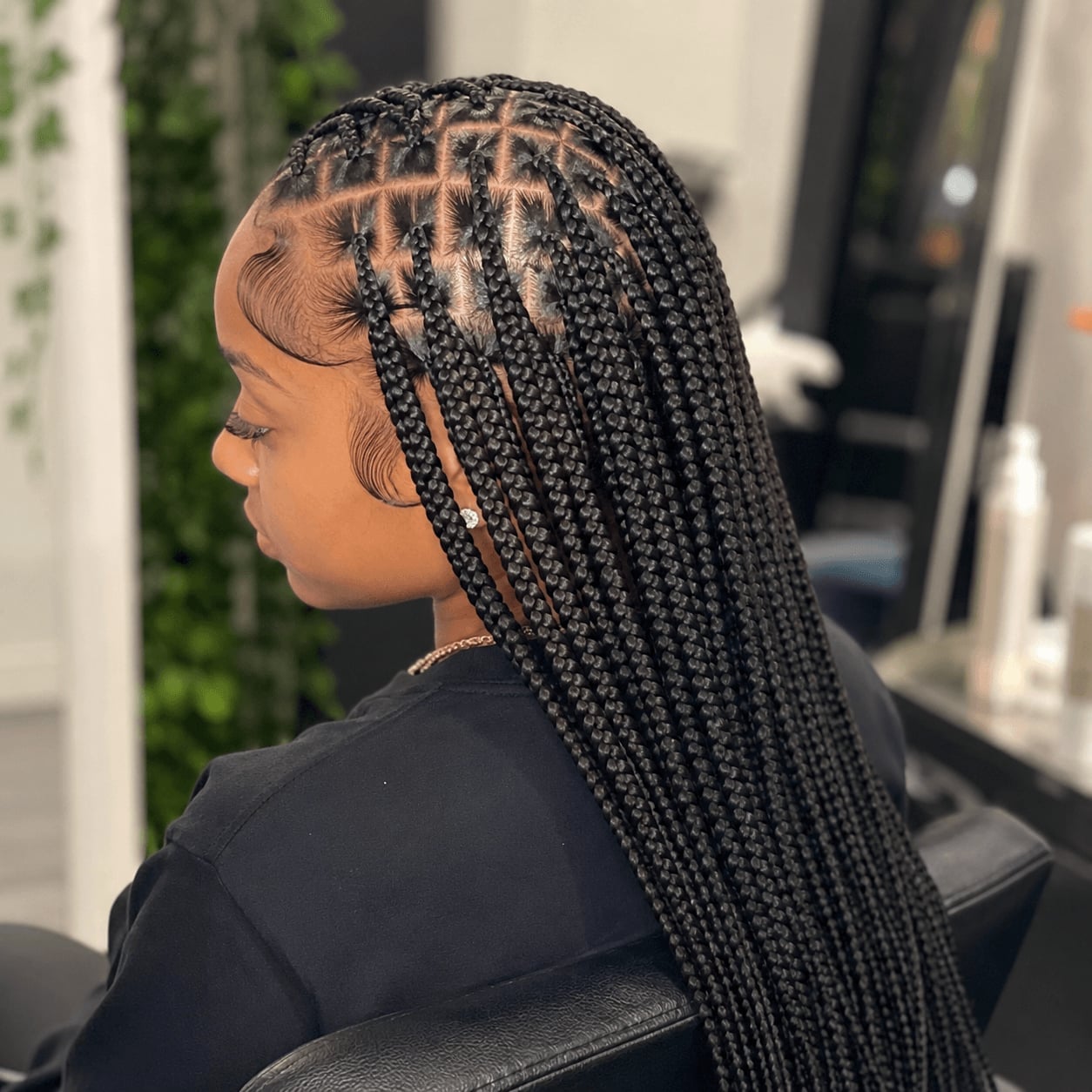
What does a geometric parting actually do for thick hair? It gives the eye a grid to follow, and thick braids need that structure or the scalp turns into a solid block. These are black, straight, and substantial, with a precise middle part and a square pattern worked into the scalp. Ask your stylist for: mid-back thick knotless braids with geometric parting.
The style suits dense, thick hair that can carry a wider braid without gaps showing between sections. It also suits anyone who wants the parting to be the feature, not a secondary detail. A skilled stylist is not optional here: the squares have to line up from the crown to the nape, and a rushed grid shows from the first day. Fine hair should pass, since thick sections on a light density leave scalp visible at the corners. A root refresher spray keeps the scalp comfortable between appointments, and touch-ups every 8 to 10 weeks keep the pattern crisp.
Voluminous Micro Braid Updo
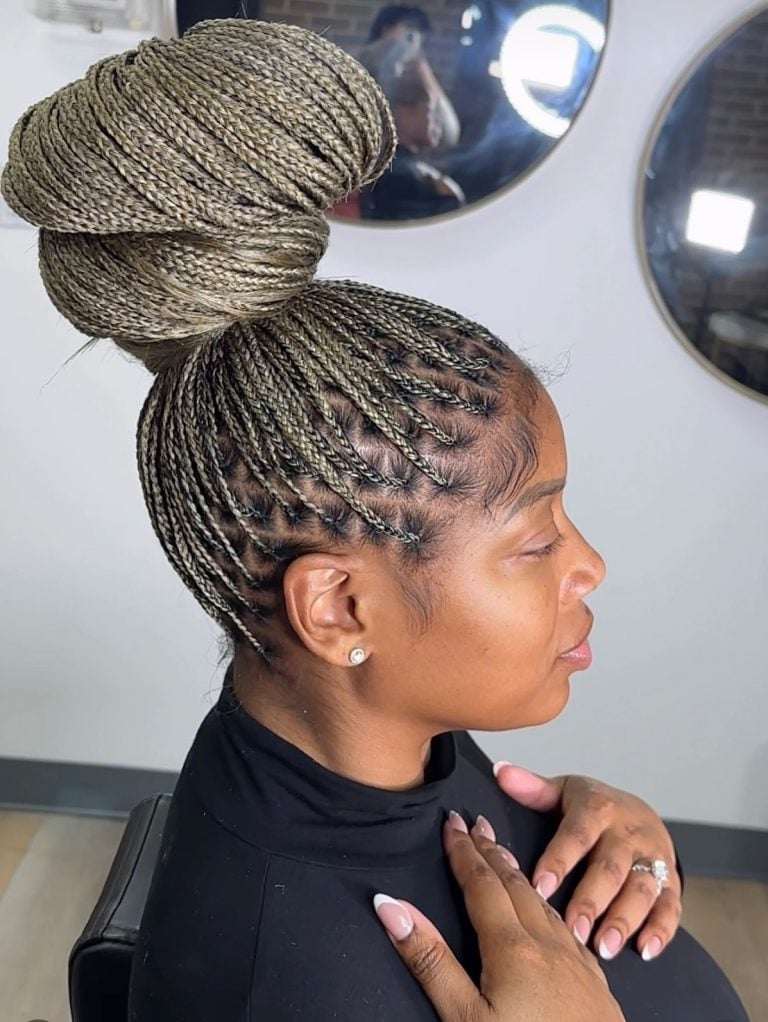
A large, intricately braided bun sits high on the head, built from micro braids in blended blonde and brown tones that give the whole shape depth. The middle part keeps the front neat while the bun does the heavy work. Ask your stylist for a voluminous micro braid updo. The process takes braids that already exist and gathers them upward, pinning the length into the bun and letting a few ends soften the silhouette. This works for formal occasions or a day when you want the hair off your neck entirely. A salon visit is required, about two to three hours depending on braid density.
Wavy Mid-Back Box Braids Blonde Highlights
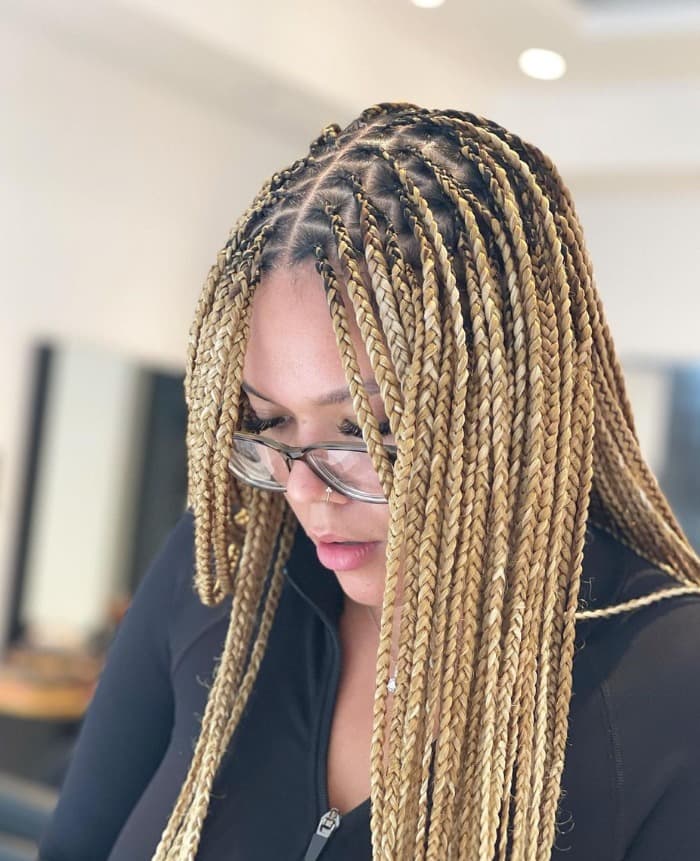
Mid-back box braids with a middle part and a soft, wavy texture gain their visual weight from blonde and brown highlights woven through the darker base. The lighter strands catch more light as the braids move, which is the point in summer months when the sun hits the hair all day. Ask your colorist for mid-back wavy box braids with blonde highlights. The technique places the lighter pieces sparingly so the contrast reads as natural rather than stripey. Medium to thick hair that starts at shoulder length holds the wave pattern best, since the braids need enough weight.
Loose Wavy Braids Mid-Back Blonde Highlights, Close-Up Take
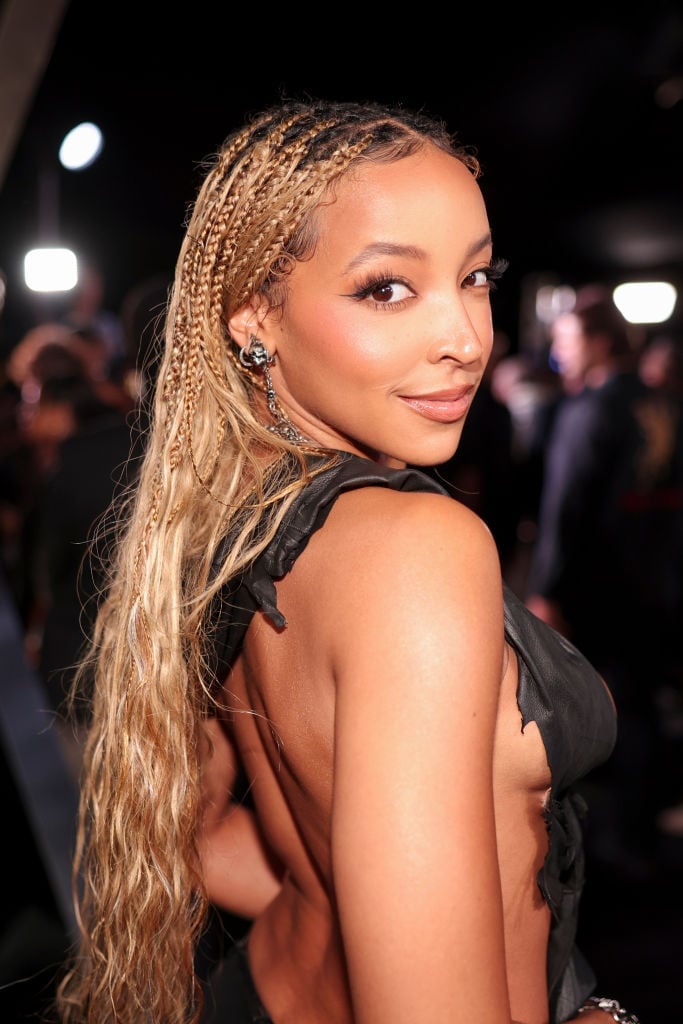
How loose is loose? This style answers that question with braids that sit at mid-back, woven with a side part and a deliberate wave that keeps the blonde highlights visible rather than buried. The strands have space between them, which is what you want when the goal is movement, not a solid mass. Ask your stylist for mid-back loose wavy braids with blonde highlights. Specify a side part and a wave pattern that starts a few inches from the root. To get the exact looseness, ask the braider to leave a little slack as each section is finished, and request that the blonde pieces be placed on top layers only.
Knotless Braids Honey Blonde Highlights Curly Ends
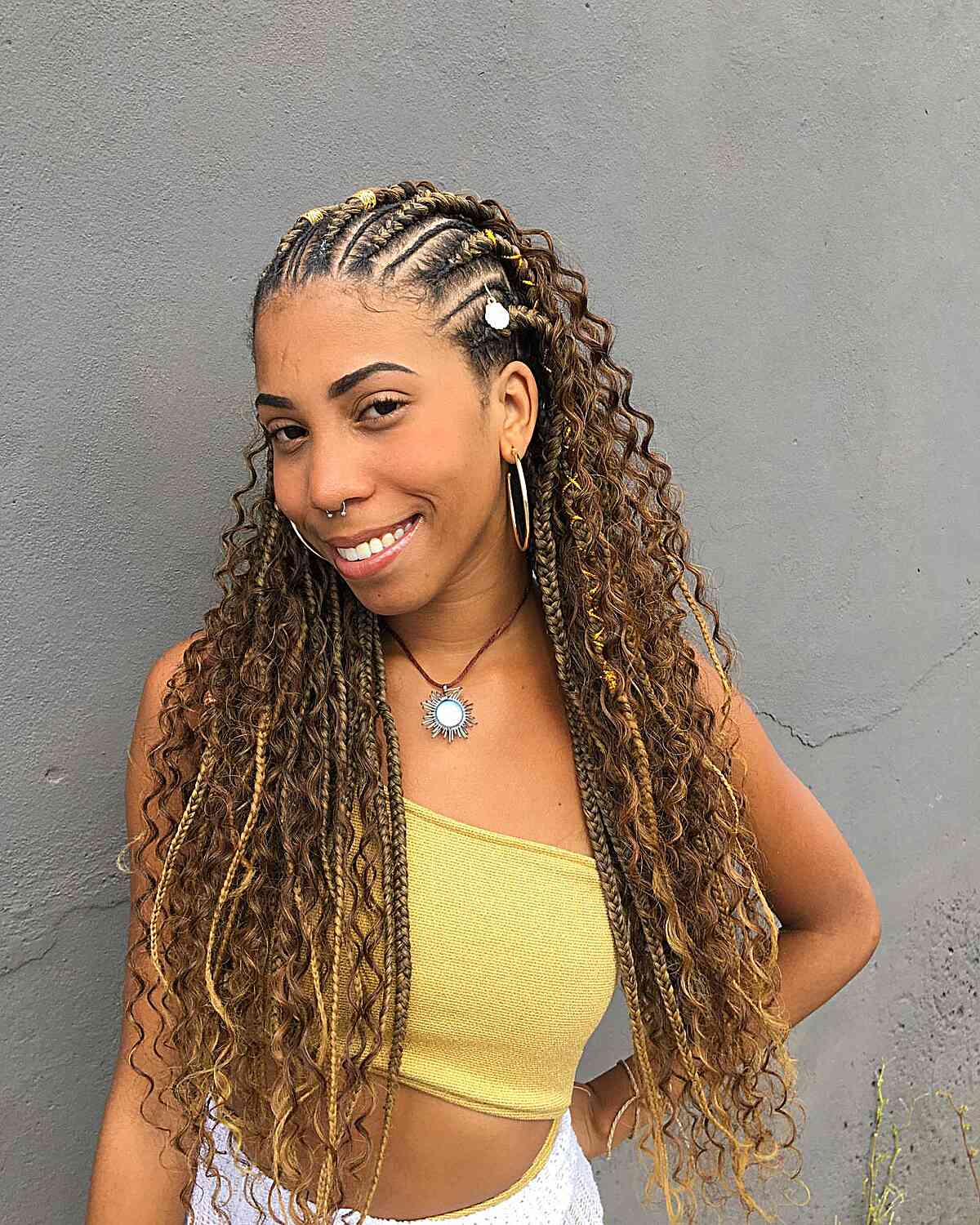
The dark brown base meets honey blonde highlights at the mid-back, with the ends left loose and curly instead of braided to the tip. Curtain bangs frame the face and break up the braid line, which keeps the style from looking too uniform.
Ask your stylist for knotless braids with honey blonde highlights and curtain bangs. The technique leaves a few strands at the front unbraided to create the bangs, and the ends are dipped in hot water or stretched to encourage the curl pattern. This is a salon-only style that takes three to four hours. At home, a curl-defining cream on the ends prevents frizz, and the bangs need a trim every four to six weeks to stay at the right length. The honey tone will fade gradually; a gloss treatment around week six refreshes it without a full recoloring session.
Long Black Box Braids Wavy Texture
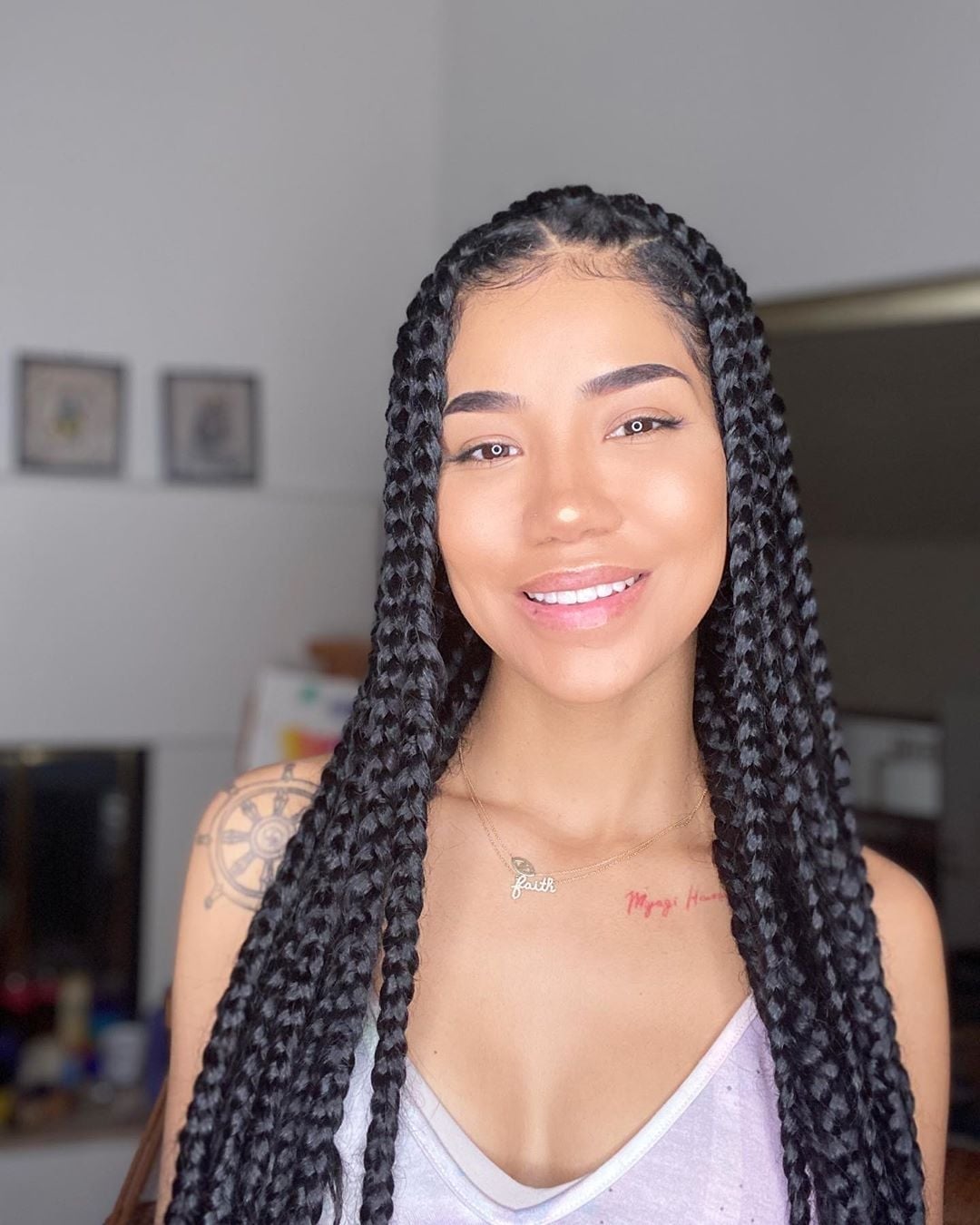
Straight braids lie flat against the head; wavy braids sit differently. These long black box braids use a neat middle part and a subtle wave that lifts the braids off the scalp, giving the style more body than a straight version ever could. The black color keeps it low-maintenance, since there is no tone to refresh and no root line to chase. Ask your stylist for long wavy black box braids. The wave is set during installation, usually with a light mousse or foam applied before braiding, and it holds until the braids are removed. This suits nearly any hair density because the wave fills out the shape without needing a high count of braids.
Flowing Dark Brown Wavy Knotless Braids
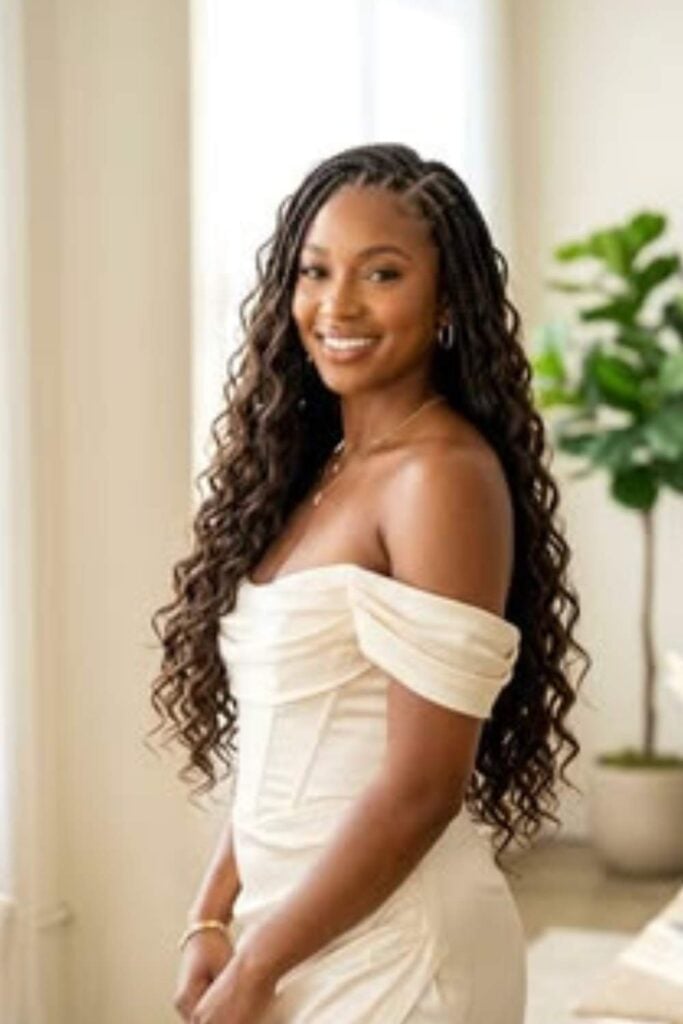
A middle part and a loose wave through mid-back length give these braids their movement, and the dark brown base carries subtle lighter highlights that show up best in daylight. The wave is set into the braid itself, so the flow is built in and does not need restyling each morning.
Medium to thick hair holds this shape well; finer density can still wear it, though the wave may sit closer to the head. Ask your stylist for: long wavy dark brown knotless braids. Upkeep is where the style asks for patience. Long, wavy braids tangle and the ends dry out faster than the roots, so conditioning the last few inches and using a loose night wrap do most of the work. Expect a refresh every 8 to 10 weeks, and budget for frizz along the length between appointments: wavy texture and friction are not on speaking terms.
Neatly Parted Straight Mid-Back Knotless Braids
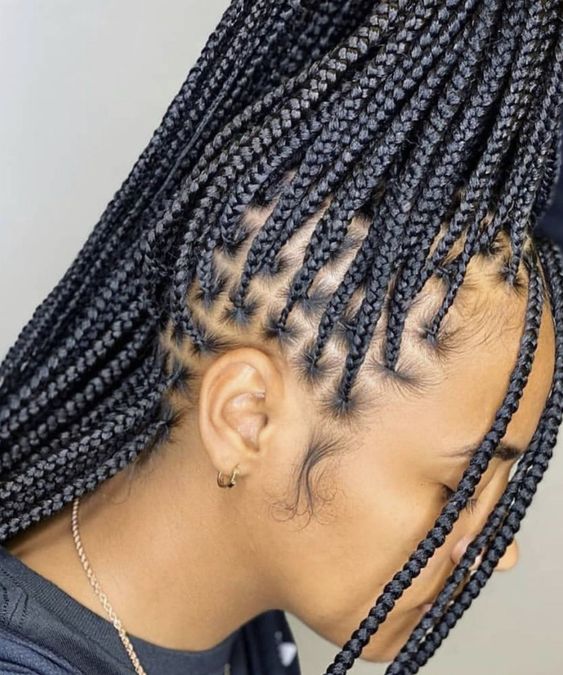
A clean middle part running straight back defines the look here, and the black braids fall smooth to mid-back with no wave to break the line. Straight-textured hair takes this finish most easily, since the braid lies flat without fighting a curl pattern. Ask your stylist for: mid-back straight knotless braids with neat parts. Say the word neat twice if you have to. Part size and part line are the two details that decide whether the finished set looks salon-crisp or improvised, so point to where you want the middle part to sit and confirm the braids stay uniform from root to tip. A silk wrap at night keeps the smoothness intact, and the set typically needs re-braiding or touch-ups every 10 to 12 weeks.
Dense Straight Black Micro Braids
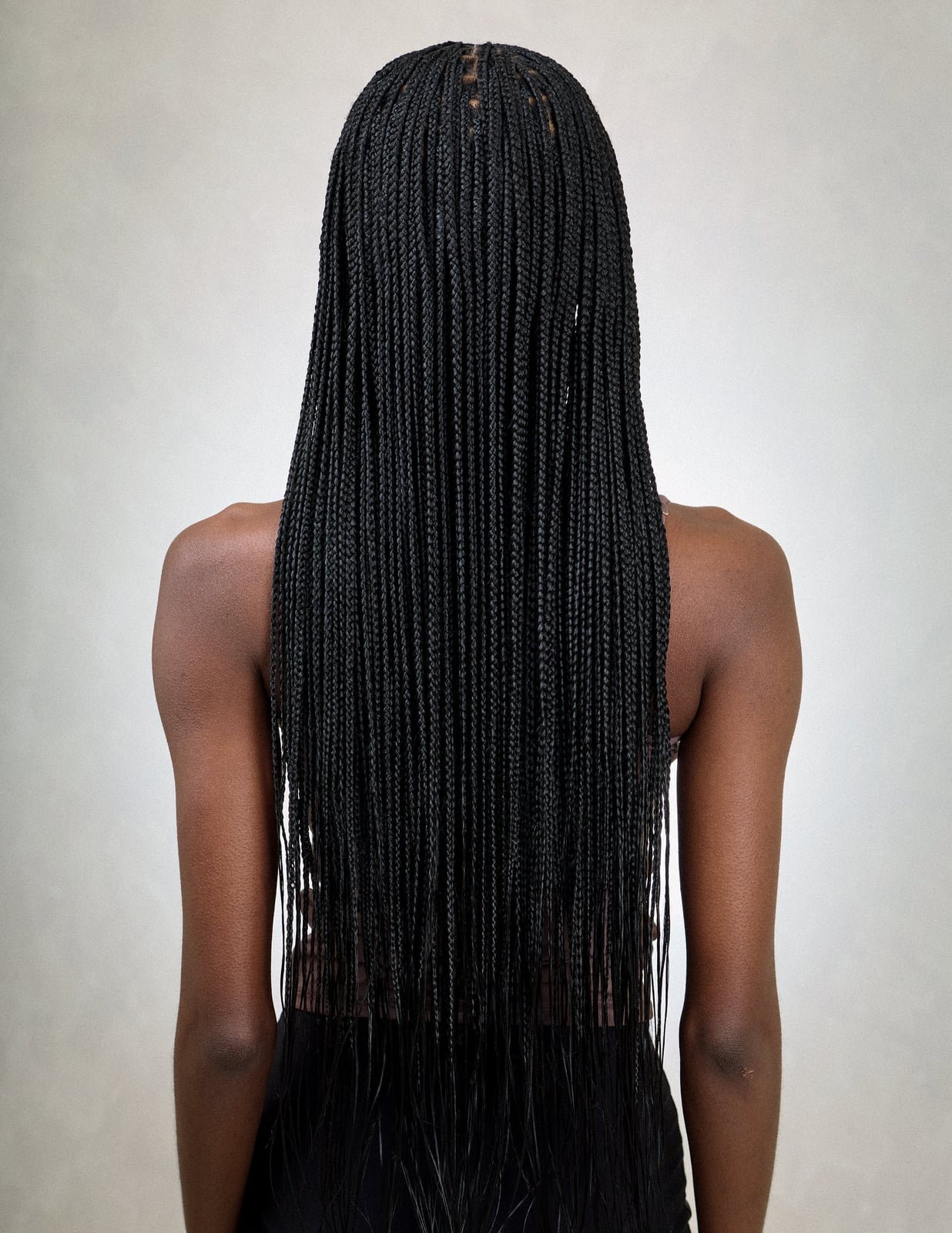
Fine braids packed this densely look like a full head of hair from across the room, and the uniform black keeps the pattern clean from the back. Straight, fine texture is what makes micro braids lie this flat; coarser hair can wear them, but the braids tend to sit wider and the density changes.
Ask your stylist for: mid-back dense straight black micro braids. The trade-off is time, and it is not small. Micro braids take hours in the chair, more than a standard knotless set, and the fine sections demand a steady hand. This is not a style to attempt at home unless you already braid confidently; a patchy micro section is very hard to disguise. Once installed, they hold for 6 to 8 weeks with a light oil worked into the scalp and a gentle wash rhythm. Skip them for a quick appointment or if you change your hair often: the install is long and the takedown is longer.
Thick Black Knotless Braids Square Grid Parting
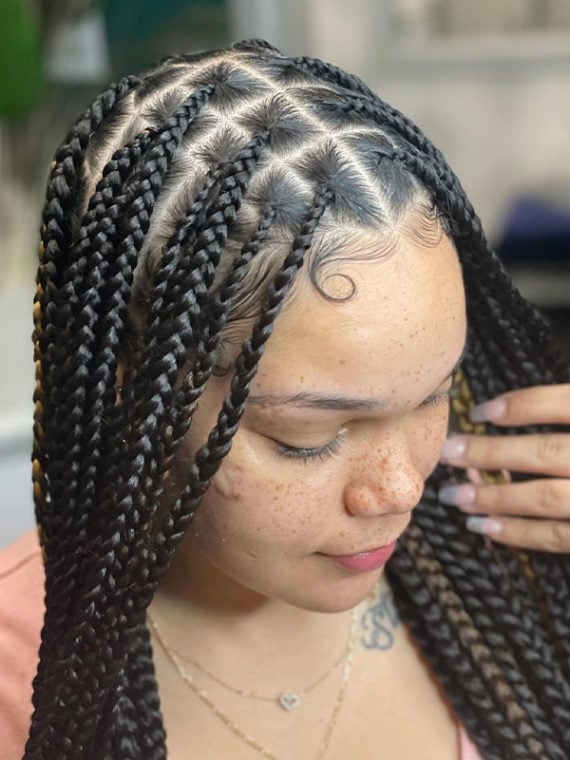
Wondering whether a square grid parting is worth requesting? It is the detail that separates this set from a standard middle part, and it shows most clearly at the hairline. The braids themselves are thick, black and uniform to mid-back, so the scalp pattern does the visual work.
Medium to thick hair suits this best: the braids need enough weight to sit flat against a defined grid, and finer density can leave the parts looking sparse. Ask your stylist for: mid-back thick knotless braids with square grid parting. The structure is the appeal and also the commitment. Square parts expose more scalp than a zigzag or curved pattern, so the hairline needs edge control to stay laid, and washing takes care: work around the parts instead of through them or the grid blurs within a week. A set that looks deliberate from every angle, this delivers. For a softer, less architectural finish, pass.
Knotless Braids Red Highlights Curly Ends
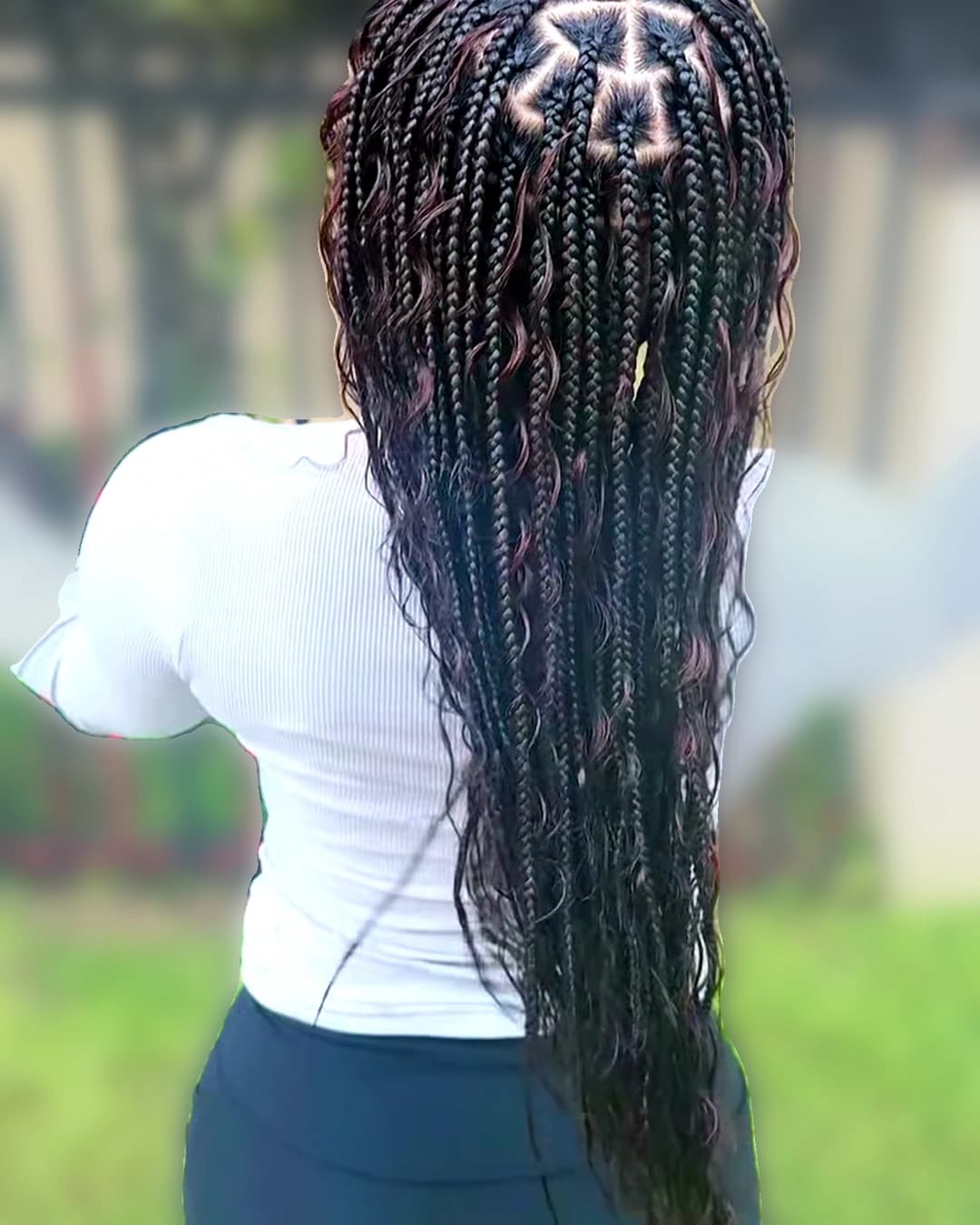
Subtle red highlights threaded through black braids give this long set its warmth, and the loose curly ends add volume below a tidy grid parting. It lands hardest in autumn, when red looks seasonal instead of random, and the curly ends suit anyone who wants texture without a full wave through the length. Ask your stylist for: long knotless braids with red highlights and curly ends. A curl-defining serum on the ends keeps them from clumping, and the set wants a trim every 10 to 12 weeks.
Two-Tone Knotless Braids Wavy Curly Ends
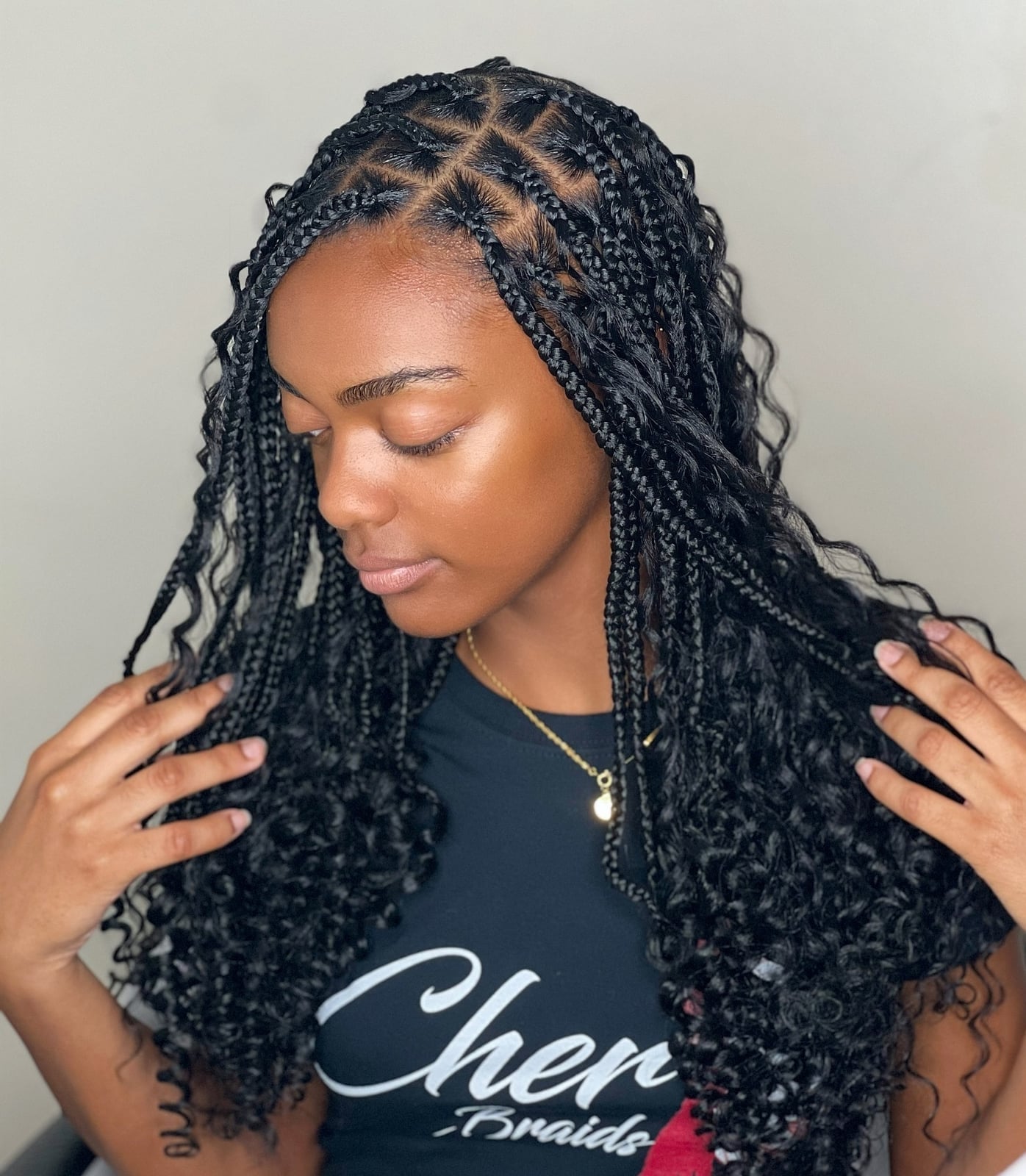
The two-tone effect works because the dark brown base and honey blonde highlights are placed as separate blocks of color, not blended into a single streaky shade. Ask your stylist for: mid-back knotless braids with two-tone color and wavy ends. The technique involves feeding each color through alternating sections so the contrast stays crisp from the root down, and the middle parting keeps the split symmetrical on both sides. Wavy, curly ends soften the transition and give the braids movement below mid-back length. Hold depends on how tightly the braider feeds the hair at the root: a firm feed keeps the style neat for six to eight weeks, while a looser hand means earlier touch-ups. Fine or coily textures both handle the color shift well, provided the braider matches density across each section.
Wavy Black Shoulder Length Box Braids
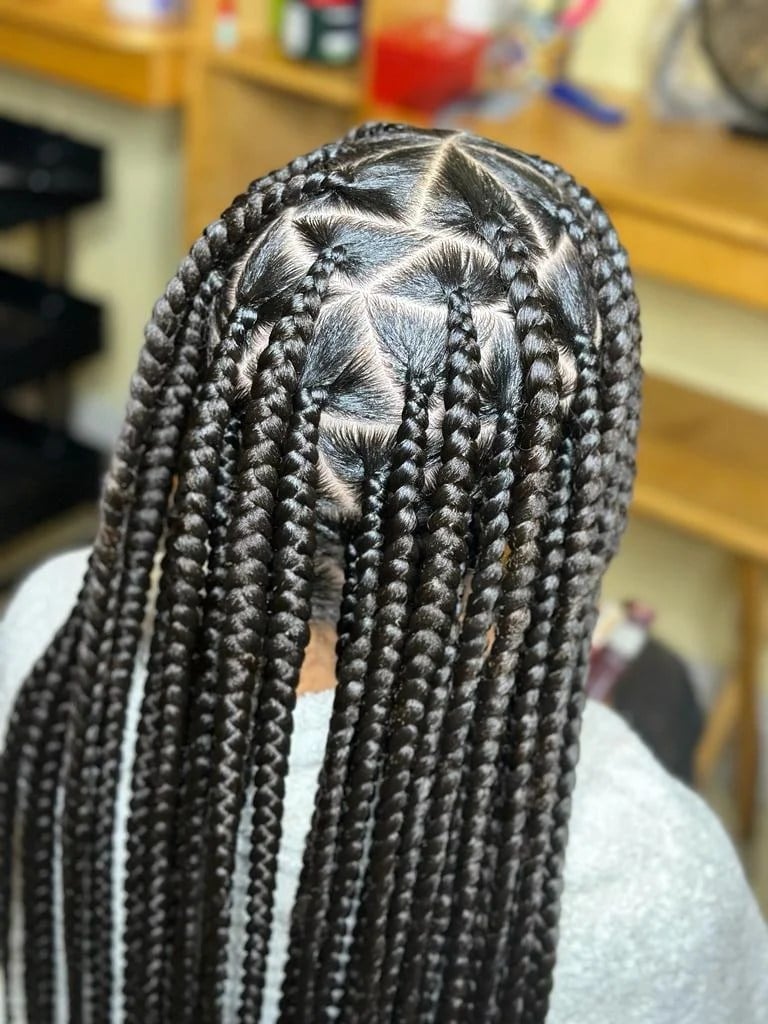
Square sections give these shoulder-length black box braids a grid that stays readable from above, and the wavy texture changes how the style falls. Waves add bulk, so shoulder length reads slightly fuller than the same cut in a straight finish, and the ends bend inward rather than hanging flat. Ask your stylist for: shoulder length wavy black box braids with square parts. The wave pattern needs a lightweight braid mist to keep its shape between washes, and ends stay tidy with a trim every six to eight weeks. Medium density hair holds the wave best; very fine hair may need a tighter braid to stop the sections from collapsing.
Long Flowing Straight Black Knotless Braids
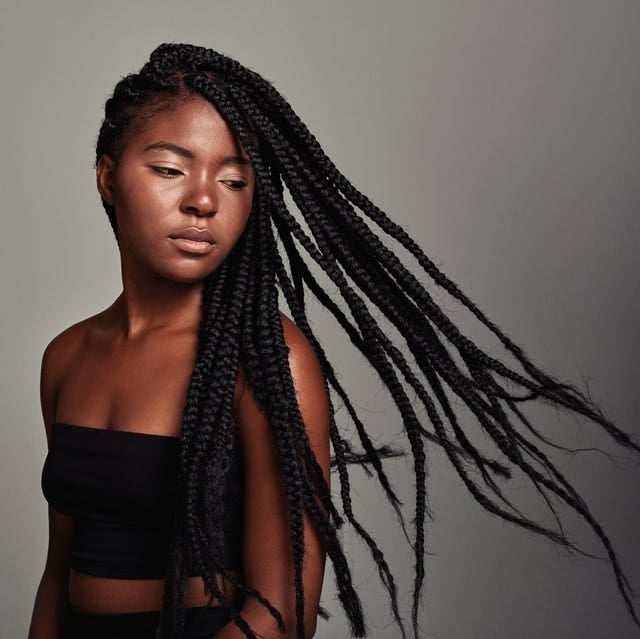
What do you actually say to get braids that hang straight and move instead of sitting stiff? Start with the finish, not just the length. Ask your stylist for: long flowing straight black knotless braids. Say you want a smooth, straight texture with a middle part and length that falls well past the shoulders, and mention that movement matters, because a braider who knows you want flow will feed the hair evenly and avoid pulling each section tight to the scalp. The knotless start keeps the root flat, which is what lets long braids hang clean instead of lifting at the crown.
This is salon work, not a kitchen-table job. Sectioning and feeding long straight braids takes hours and a steady hand, and a home attempt usually shows in uneven tension and a lumpy root line. Straight texture in black shows every inconsistency, so the neatness of the part and the smoothness of each braid are the whole point. Expect a long appointment and plan a touch-up every ten to twelve weeks to keep the root line clean.
Wavy Black Shoulder Length Box Braids Square Parts, Middle
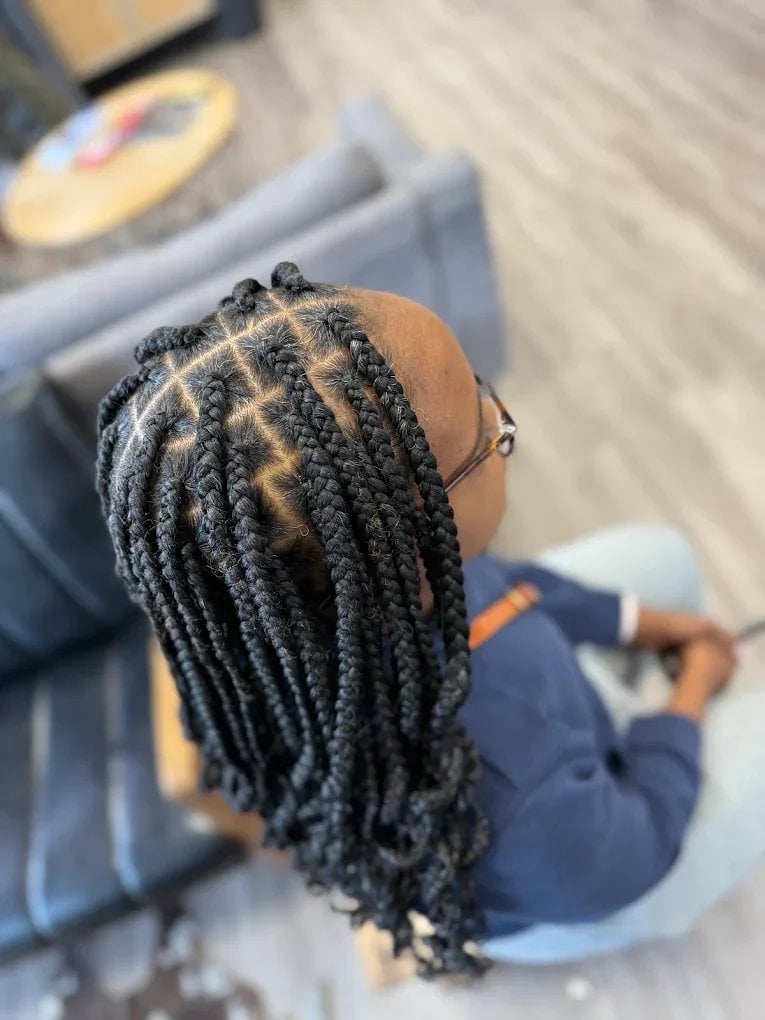
Square sections give more uniform braid size and a sharper geometric line, which reads well on dense hair where the parts stay visible. A plain middle parting is more forgiving on finer hair because it hides uneven density. Ask your stylist for: shoulder length wavy black box braids with neat square parts. The wavy texture keeps the shoulder-length cut from looking rigid, and the black base holds its depth without toning. Trim the ends every six to eight weeks to keep the waves from fraying.
Knotless Braids Space Buns Curly Ends
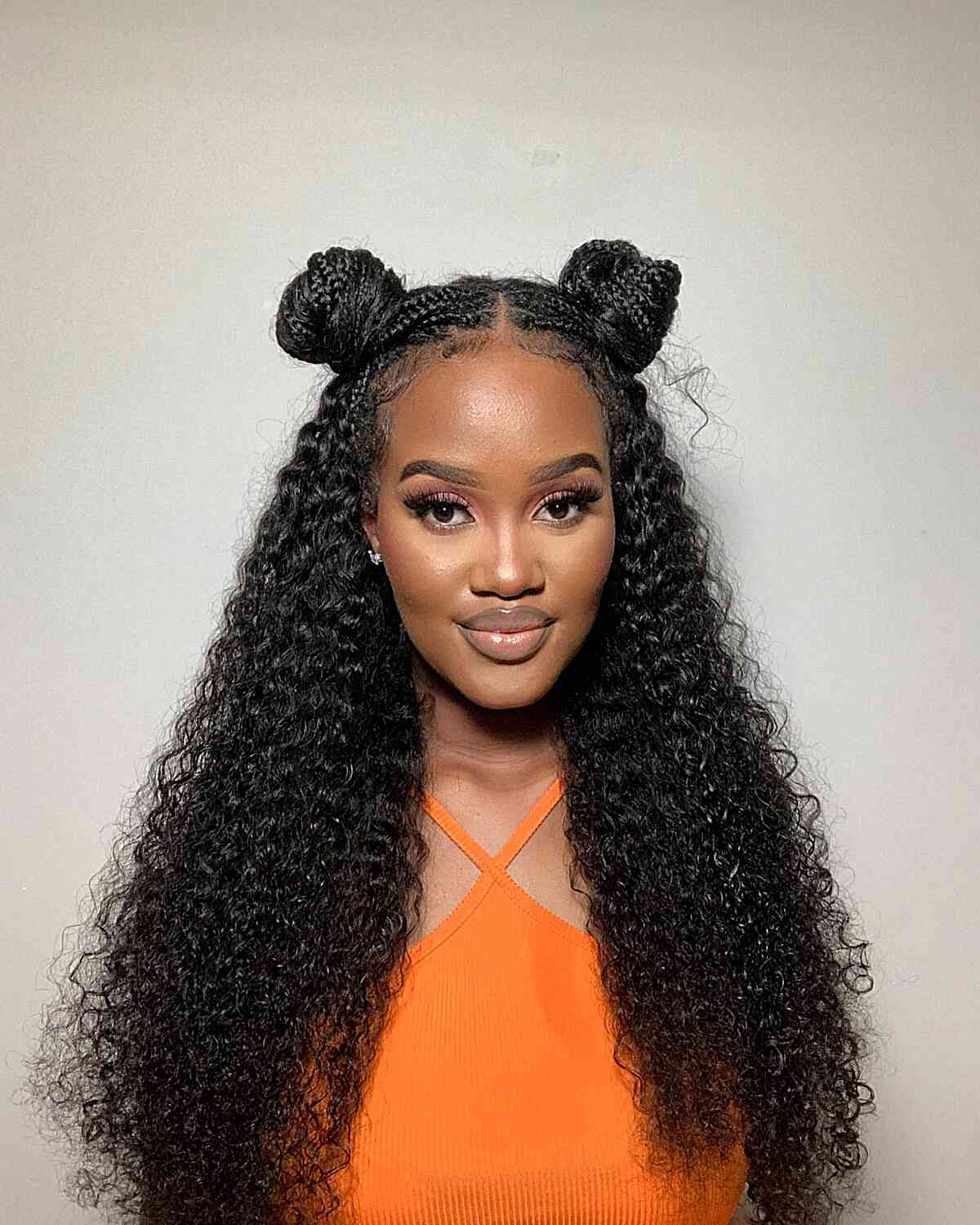
Two high buns on the crown, with black mid-back braids left loose below and curls taking over at the ends: the contrast between the tight buns and the falling length is what makes the style work. Ask your stylist for: knotless braids styled into space buns with curly ends. You can rebuild the buns at home in about ten minutes:
- Split the braids into two even sections along the middle parting.
- Coil each section into a bun high on the crown and pin the base flat.
- Mist with a strong-hold spray and smooth flyaways with your palms.
Keep the mid-back length loose so the curls cascade instead of tucking in. Medium to thick hair holds the bun shape best, and the style suits festivals or any day that calls for more than a ponytail. Unravel the buns afterward and the braids fall back into a simple loose style.
Final Thoughts
For a polished everyday look, choose uniform length and smooth texture. For dimension, add subtle highlights or a two-tone weave. Fine hair does better with fewer, smaller sections than with heavy density. Round faces get more from length that falls below the chin than from volume at the sides.
- Moisturize the scalp and braids with a lightweight oil every few days.
- Sleep in a silk or satin bonnet to keep texture and cut frizz.
- Keep the hairline free of tight tension to prevent breakage.
- Trim fuzzy pieces between appointments for a clean line.
- Space out washes to hold the braid structure longer.
Knotless braids offer endless styling possibilities.

