
Curtain bangs are a soft, center-parted fringe that sweeps away from the face, and they now show up on everything from blunt chin bobs to mid-back layers. The shift toward lived-in color and glossy natural texture has made them the default request at the salon.
You get 20 ways to wear and style them, from low-upkeep air-dried versions to polished blowouts, for fine, thick, and curly hair. How to Style Curtain Bangs starts with the cut, length, and layers, then covers the styling that keeps a fringe from collapsing by lunch.
Chin Length Blunt Bob With Soft Curtain Bangs
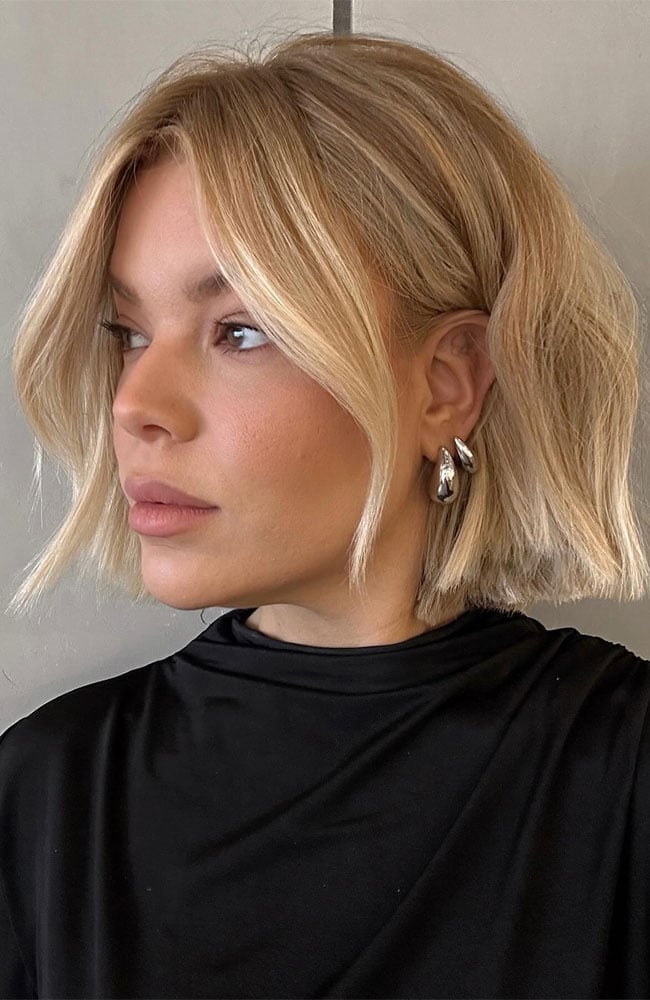
A blunt cut line at the chin leaves nowhere for weak ends to hide, which is exactly why soft curtain bangs work so well against it. The bangs break up all that straight weight and sweep from a side part. Fine to medium density hair with a natural wave gets the most from this shape, since the wave supplies body the blunt line would otherwise flatten. Ask your stylist for: chin length blunt bob, soft curtain bangs, side part. It softens round and square face shapes. Blow-dry the bangs first with a small round brush, directing them outward, and book a trim every six to eight weeks.
Collarbone Layers With Sweeping Curtain Bangs
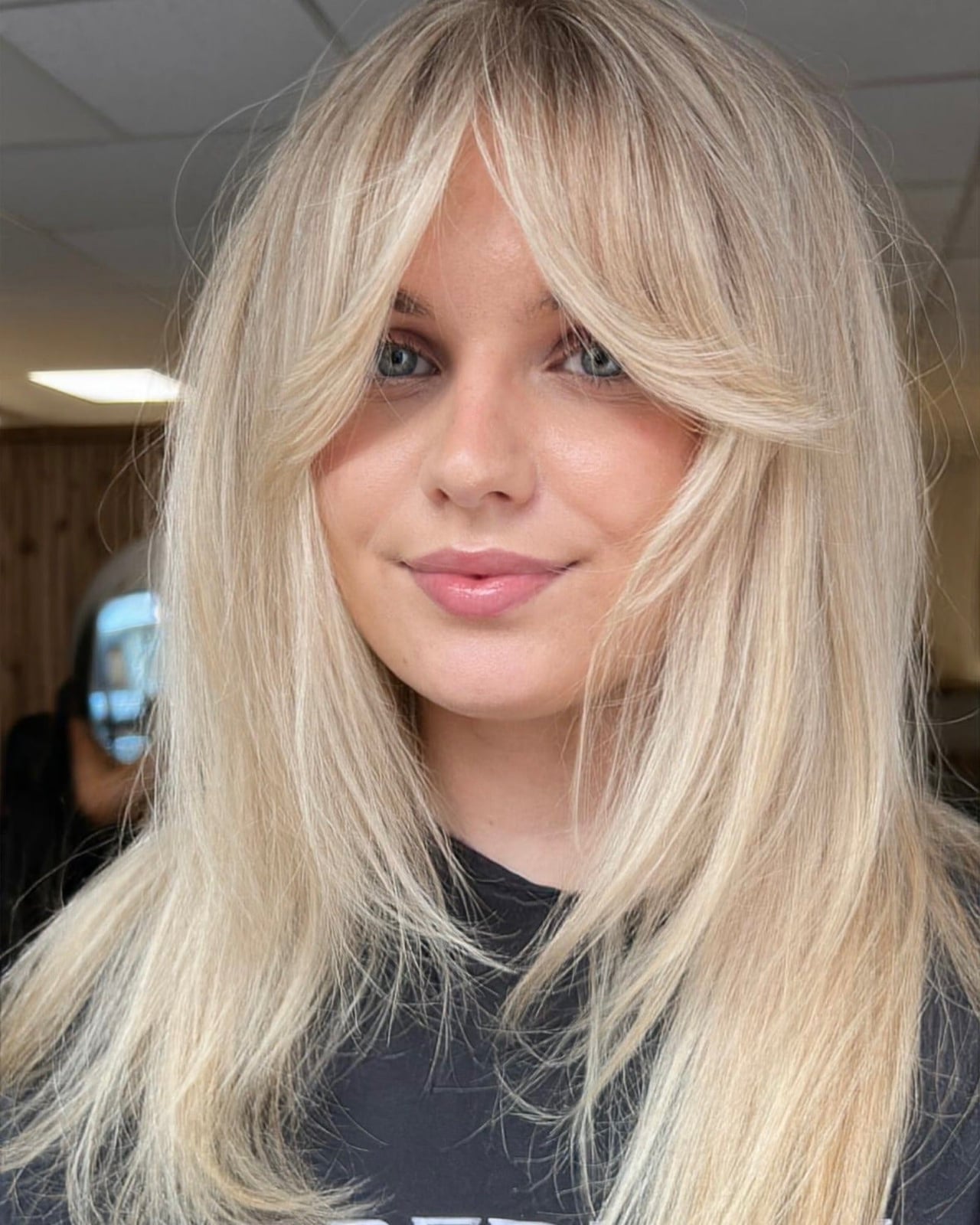
The layering does the work here: sections are over-directed to the collarbone so the perimeter stays full while the interior lifts, which is how fine, straight hair gets movement without losing density at the ends. The bangs are cut longer at the outer corners and shorter at the center, then swept to one side so they blend into the first layer instead of sitting on top of it. Ash blonde with subtle highlights keeps that movement visible, since dimension shows the bend where a single flat tone would swallow it. Ask your stylist for: collarbone length layers, sweeping curtain bangs, side part. Run a flat iron over the bangs on low and tuck the longer side behind one ear. Trim every eight to ten weeks.
Copper Red Chin Bob With Curtain Fringe

A copper red chin bob throws the blunt line and the soft curtain fringe into relief, while a cooler blonde blurs them into one soft mass. Fine, wavy hair carries the shade well because the wave catches light along each bend. Ask your stylist for: chin length bob, soft curtain bangs, copper red. Round and square faces get softness from the fringe. Apply a heat protectant before blow-drying and use a round brush at the roots for volume. Trim every six to eight weeks, and plan on a toner refresh in between.
Collarbone Layers With Soft Side Part Curtain Bangs

What should you ask for at the salon to get bangs that sweep instead of hang? Start with the part. A side part decides the direction the fringe travels, so the cut has to follow it. Bring the request in these terms:
- Collarbone length layers, with the shortest piece starting at the cheekbone
- Soft curtain bangs, cut dry so the sweep is visible
- A side part, with the long side blended into the face-framing layer
On fine, straight medium brown hair, the layers need to stay sparse near the ends or the perimeter thins out. Ask your stylist for: collarbone length layers, soft curtain bangs, side part. Blow dry the bangs outward so they curve to each side, and trim the baseline every eight to ten weeks.
Light Brown Collarbone Lob With Curtain Bangs

A layered lob that stops at the collarbone sits in the zone where the cut looks after itself on day one and asks for company on day three. The soft curtain bangs parted in the middle are the first thing to lose their bend, so they set the schedule: a quick pass with a round brush in the morning, or they start splitting. Light brown with blonde highlights shows a soft blowout well, since the lighter pieces catch the bend along each wave and the darker base keeps the root from looking thin.
Medium density wavy hair holds the shape longest and softens an angular jawline along the way. Ask your stylist for: collarbone length layered lob, soft curtain bangs, middle part. A smooth blowout with a round brush keeps the glossy finish, and the baseline needs a trim every eight to ten weeks to stop the ends from dragging the layers flat.
Layered Bob With Voluminous Curtain Bangs
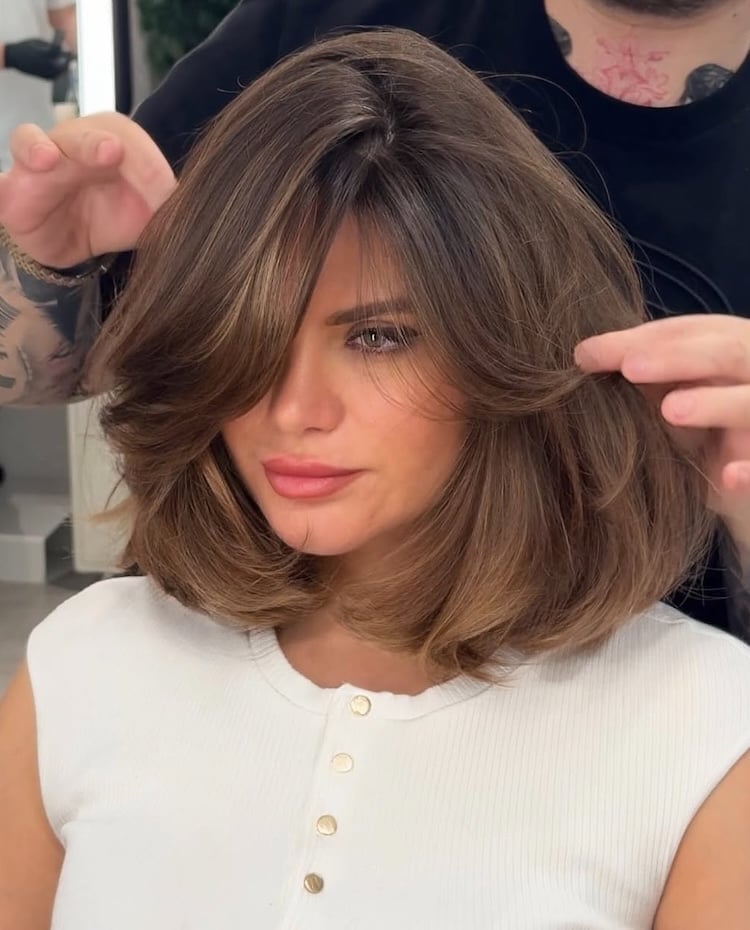
A collarbone-length layered bob with a middle part uses a voluminous blowout and soft waves to make curtain bangs the focal point. The medium brown base gets dimension from subtle balayage, so the layers don’t blend into one flat shape. This cut suits thick wavy hair that already has body to work with. Ask your stylist for: collarbone length layered bob, voluminous curtain bangs, middle part. The honest trade-off is the styling time: getting that lift requires a round brush and a heat protectant, and the volume drops fast in humidity.
Shoulder Length Layers With Air-Dried Curtain Bangs
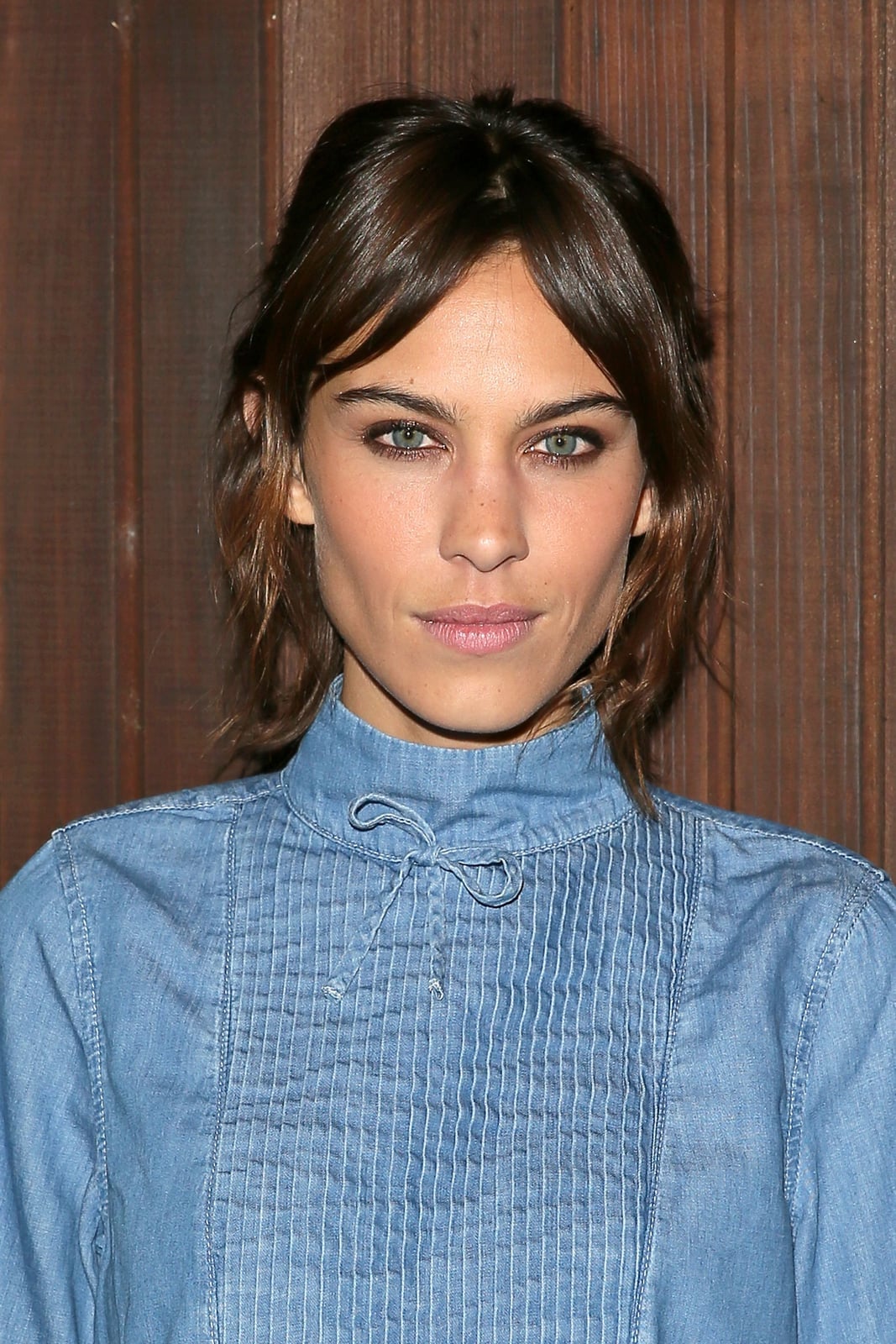
Shoulder-length layers with a side part let curtain bangs air-dry into a soft wave without any heat. The dark brown base with subtle highlights adds a lived-in effect that grows out gracefully. This look suits medium-density wavy hair that air-dries without frizz. Ask your stylist for: shoulder length layers, air-dried curtain bangs, side part. Apply a wave-enhancing spray to damp hair, comb the bangs forward, then let everything dry naturally. A trim every eight to ten weeks keeps the layers from losing their shape.
Shoulder Length Curly Cut With Curtain Bangs
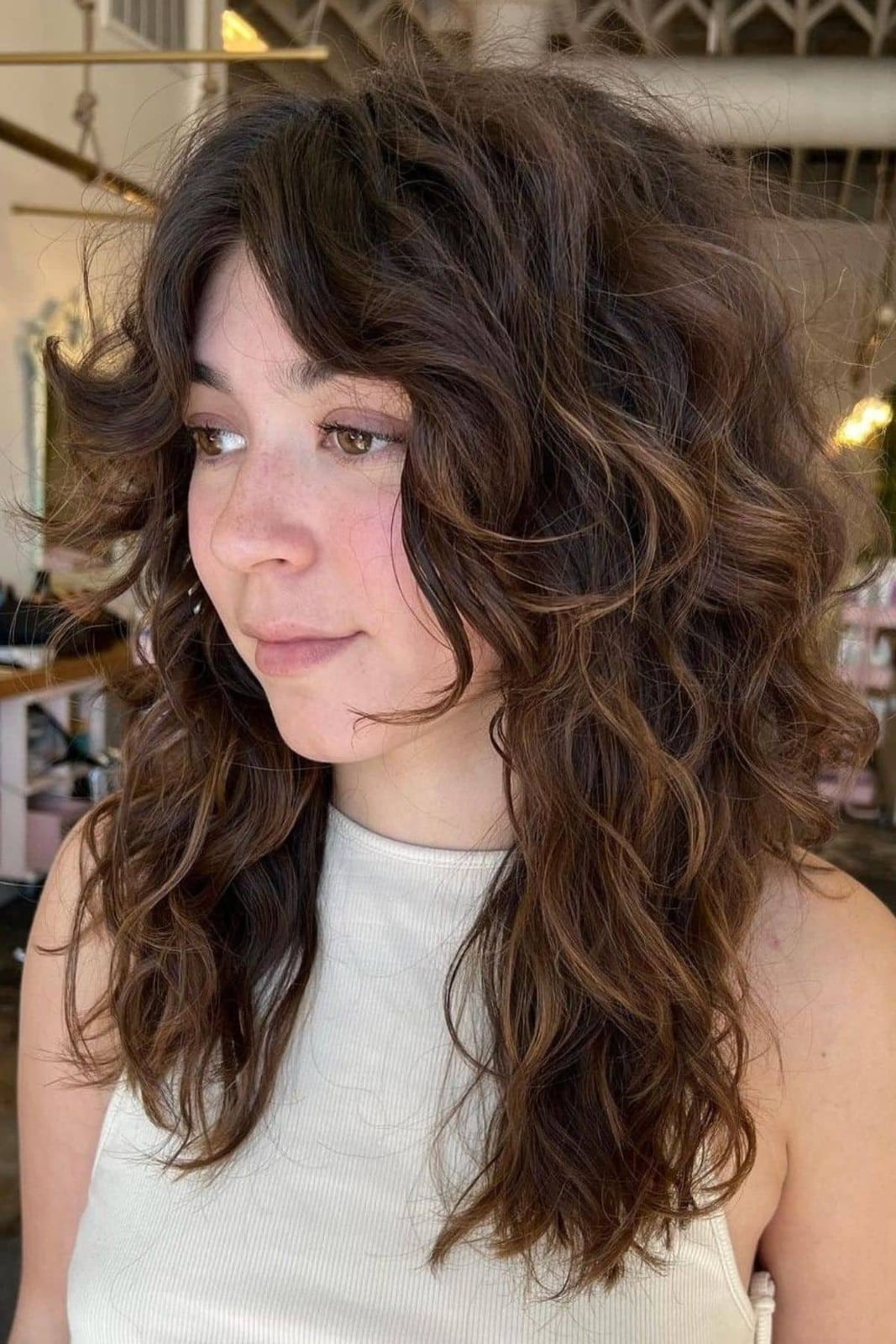
Does a curtain fringe work on curly hair? Yes, but only with the right cut. This shoulder-length style uses layers throughout so the curtain bangs keep their shape instead of merging into one heavy triangle. The dark brown base with subtle highlights keeps the texture from looking flat. Thick curly hair starting at shoulder length is the ideal candidate; fine or loose curls may not hold the curtain shape. Ask your stylist for: shoulder length curly cut, curtain bangs, middle part. A curl cream scrunched into damp hair defines the bangs without crunch.
Long Dark Brown Hair With Wavy Curtain Bangs
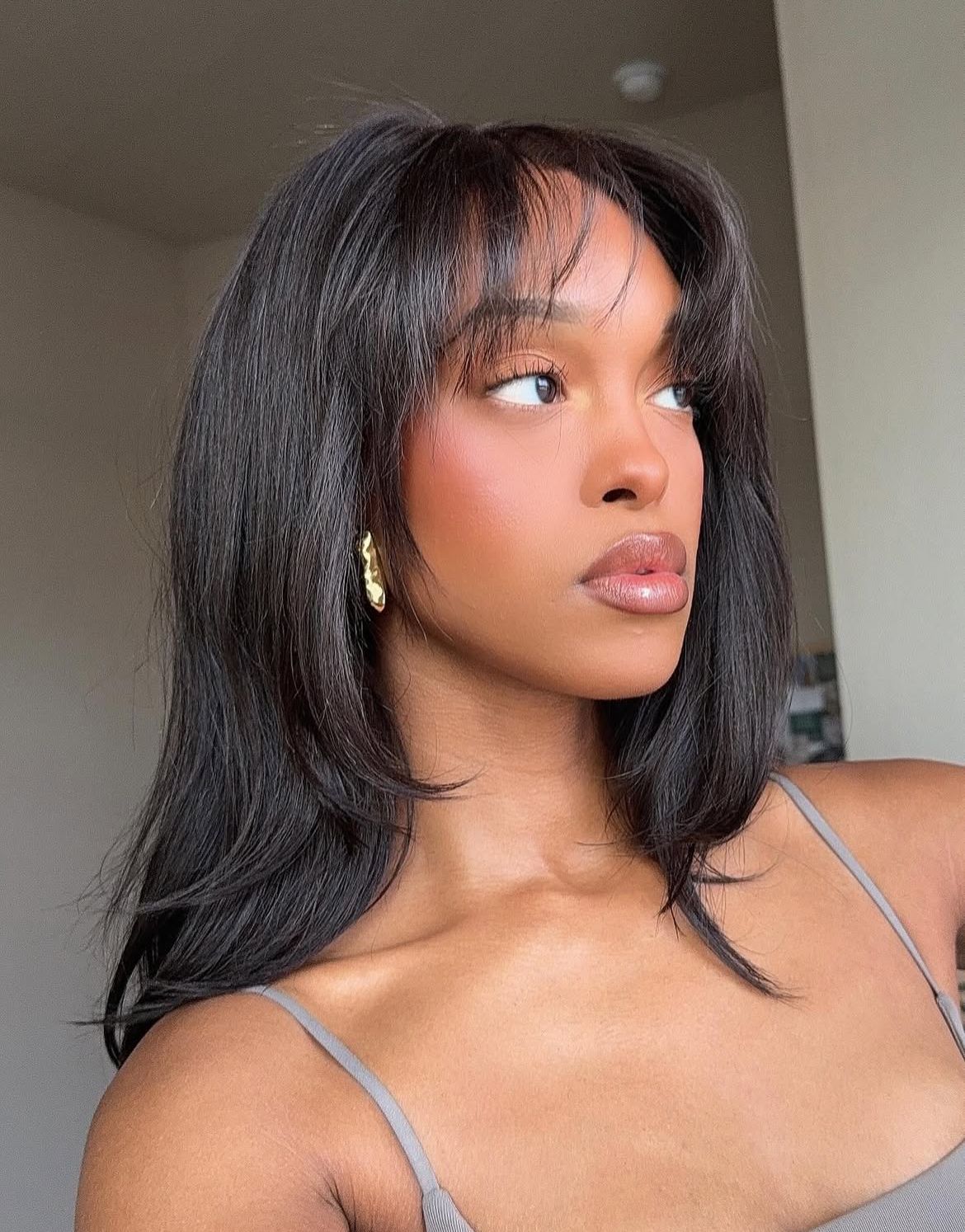
Long, thick wavy hair at mid-back length gains movement from face-framing layers that blend into soft curtain bangs. The dark brown base with subtle highlights stops the length from looking heavy. A middle part lets the bangs sweep outward, softening a square jawline. Ask your stylist for: long layered hair, soft wavy curtain bangs, middle part. After blow-drying, a texturizing spray separates the waves and keeps the bangs from falling flat. Trim every ten to twelve weeks to maintain the face-framing effect.
Long Ash Blonde Hair With Smooth Curtain Bangs
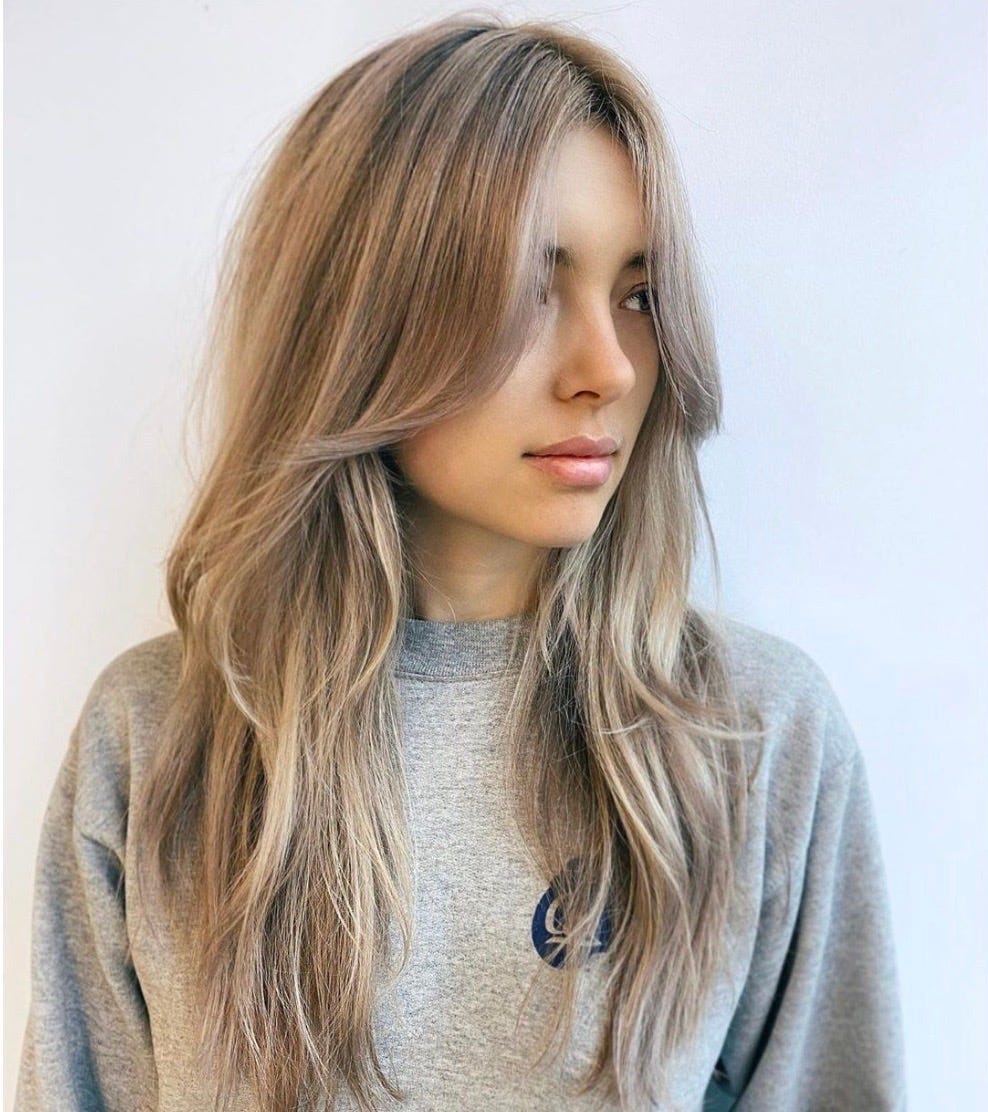
Ash blonde is cooler than beige blonde and more grown-up than platinum, but it needs upkeep. This mid-back length cut uses soft layers and a smooth blowout to keep curtain bangs looking glossy rather than brassy. Wavy hair with medium density carries the style without weighing it down. Ask your stylist for: long layered hair, smooth curtain bangs, middle part. A purple shampoo every other wash stops the ash tone from turning yellow, and a trim every ten to twelve weeks keeps the ends from fraying.
Long Blonde Layers With Sweeping Curtain Bangs
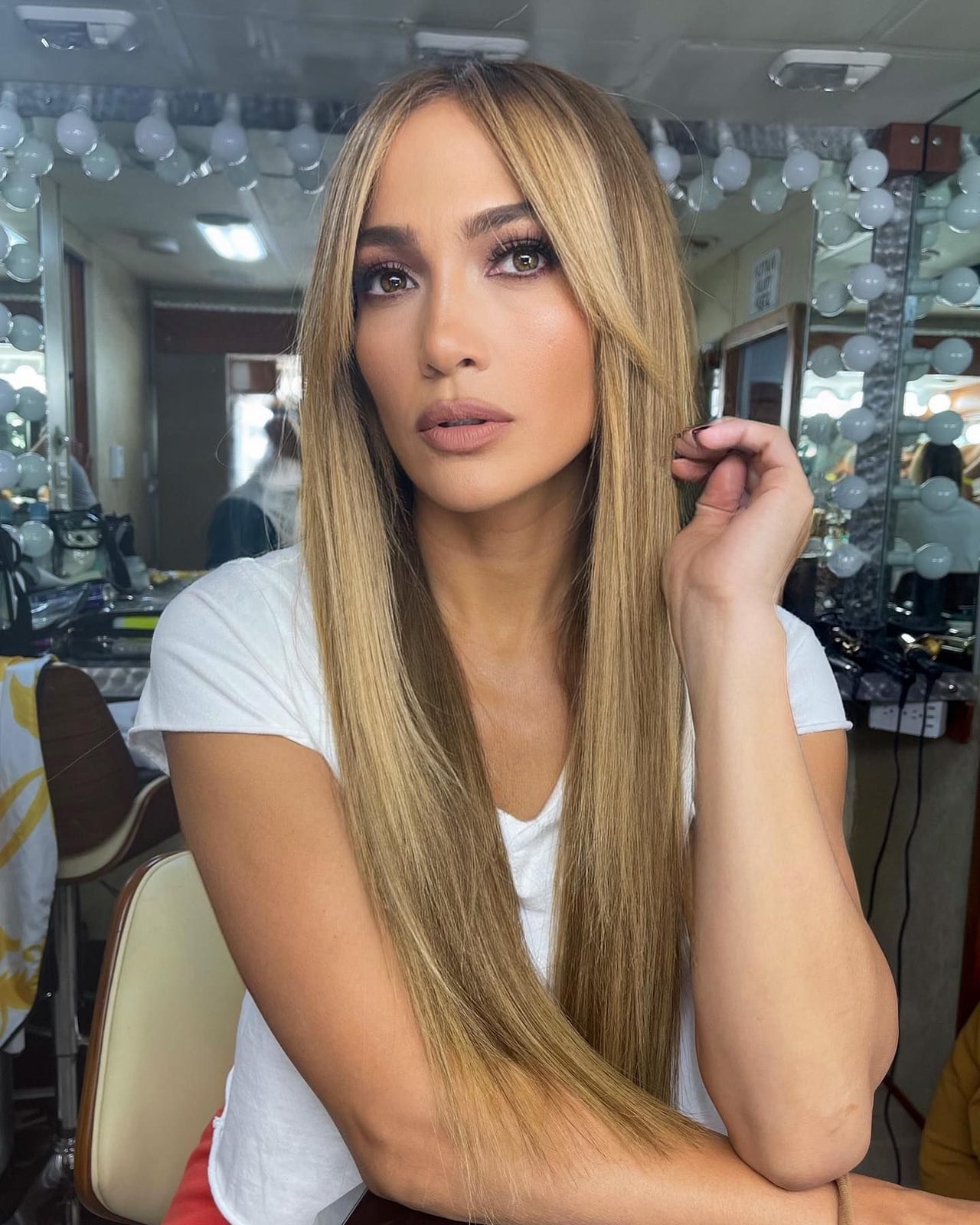
Fine hair shows every cut line, so ask for point-cut ends on the bangs and a soft blend into the layers. A straight blowout with a large round brush gives the polish; a paddle brush is faster but leaves the bangs limp. Blonde with highlights needs a trim every ten to twelve weeks to keep the layers from growing into a solid curtain. Long faces get softness at the cheekbone from the sweep, which is the whole point of asking for it by name.
Long Brown Hair With Side-Swept Curtain Bangs
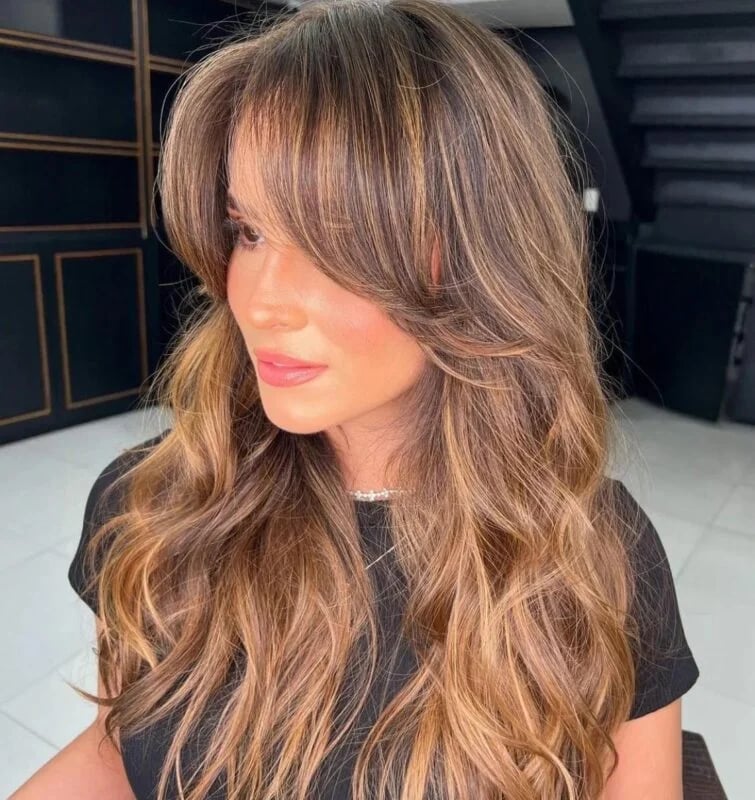
Wavy hair holds a side sweep longer than straight hair does, but the root is where it collapses first. A volumizing spray at the roots and a round brush through the bangs buys you a full day before the part drifts back to center. Layers starting around the collarbone keep the length from pulling the wave out. Trim every ten to twelve weeks; past that, the sweep turns into a heavy side fringe. Angular jawlines get a soft diagonal from the side part, which is the practical argument for keeping the asymmetry.
Shag Cut With Voluminous Curtain Bangs

A shag on mid-back hair is a commitment to layers, and the curtain bangs are the loudest of them. Ask your stylist for: shag cut, voluminous curtain bangs, middle part. Medium-density waves make the shape work; the volume in the bangs comes from the cut, not from a can. A shag wants styling. Air-dry it and the layers separate into strings, and the bangs sit flat against the brow. A texturizing paste through dry hair fixes it in under two minutes, but that is two minutes you did not have to spend on a blunt cut. If you will not touch your hair after washing it, skip this one. Trim every ten to twelve weeks keeps the shag from growing into a mullet.
Layered Shag With Wavy Curtain Bangs

At home, skip the round brush and let the wave do the shaping. Sea salt spray on damp bangs, rough dry with your fingers, then a cool shot to set the bend. Thick wavy hair holds that bend without help; finer hair needs a light texture spray at the root. The salon visit is the cut, roughly every ten to twelve weeks. Everything between visits is drying technique, and it takes about five minutes once you stop overworking the bangs with a brush.
Shaggy Ash Blonde With Messy Curtain Bangs

Who actually benefits from a messy shag? Fine wavy hair, mostly. Mid-back length, shaggy layers, curtain bangs parted in the middle, ash blonde with lowlights: the cut adds the volume fine hair does not have on its own. Ask your stylist for: shaggy haircut, messy curtain bangs, middle part.
The air-dried finish is the point, so this is a poor match for anyone who wants a polished edge. Fine hair left to dry on its own separates into piece-y layers, which is exactly the texture the cut is built for. Lowlights give the ash blonde depth without a solid block of color. A texturizing spray or paste on dry hair keeps the shag from collapsing by afternoon. Trim every ten to twelve weeks. Medium-density waves can wear it too, though the layers will read softer and less piece-y.
Long Wavy Copper Hair With Curtain Bangs
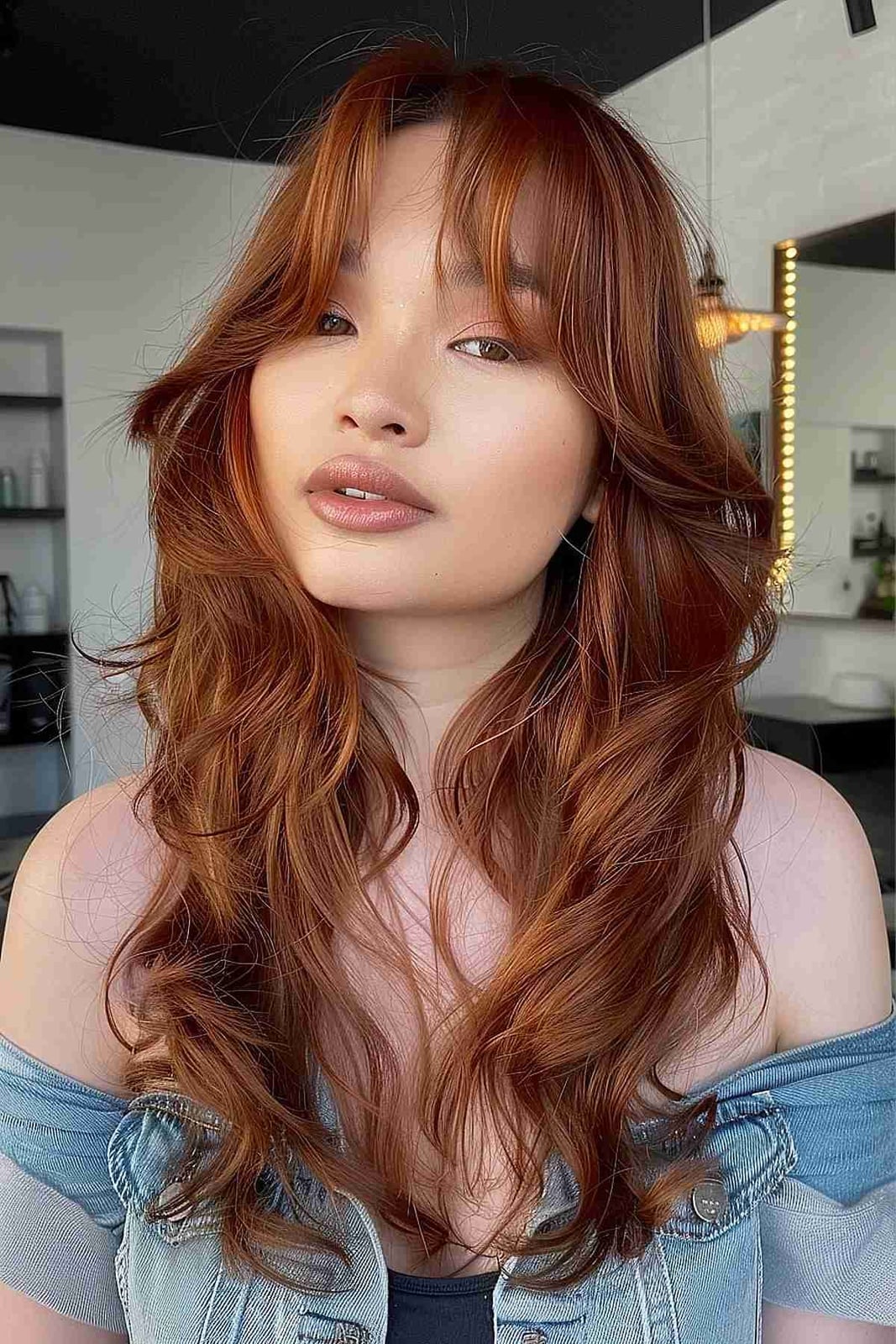
Designing curtain bangs for long, thick wavy hair starts with the layers: they need to graduate evenly so the fringe doesn’t disappear into the density. The copper shade with lighter highlights adds dimension without a heavy color commitment. Ask your stylist for: long layered hair, prominent curtain bangs, middle part. A volumizing mousse and a round brush give the blowout lift at the roots, then the waves can fall naturally. A trim every 10 to 12 weeks keeps the bangs at their intended weight and the layers from growing heavy.
Collarbone Layers With Vibrant Copper Curtain Bangs

Vibrant copper curtain bangs on a collarbone cut read differently depending on the occasion. For daytime, the softer wavy blowout keeps the shade from feeling theatrical. For an event, the same cut works because the color carries the impact while the layers keep the shape wearable.
Ask your stylist for: collarbone length layers, vibrant copper curtain bangs, middle part. The copper red demands a gloss treatment every four weeks to maintain its saturation, but the payoff is a fringe that draws attention without needing much styling effort.
Mid-Back Copper Hair With Feathered Curtain Bangs

Wondering how to get that soft, airy curtain fringe without it looking blunt? The answer is feathered layers through the bangs and cut. On mid-back length copper hair with lighter copper highlights, the feathering prevents the fringe from sitting too heavy on the face.
Ask your stylist for: mid-back length hair, feathered curtain bangs, middle part. The lighter copper highlights add a subtle brightness that the feathered texture catches. The cut works for medium density wavy hair starting at mid-back, as the layers reduce bulk while keeping length. A root shadow every six weeks extends time between appointments.
Mid-Back Copper With Blonde Ends And Loose Waves
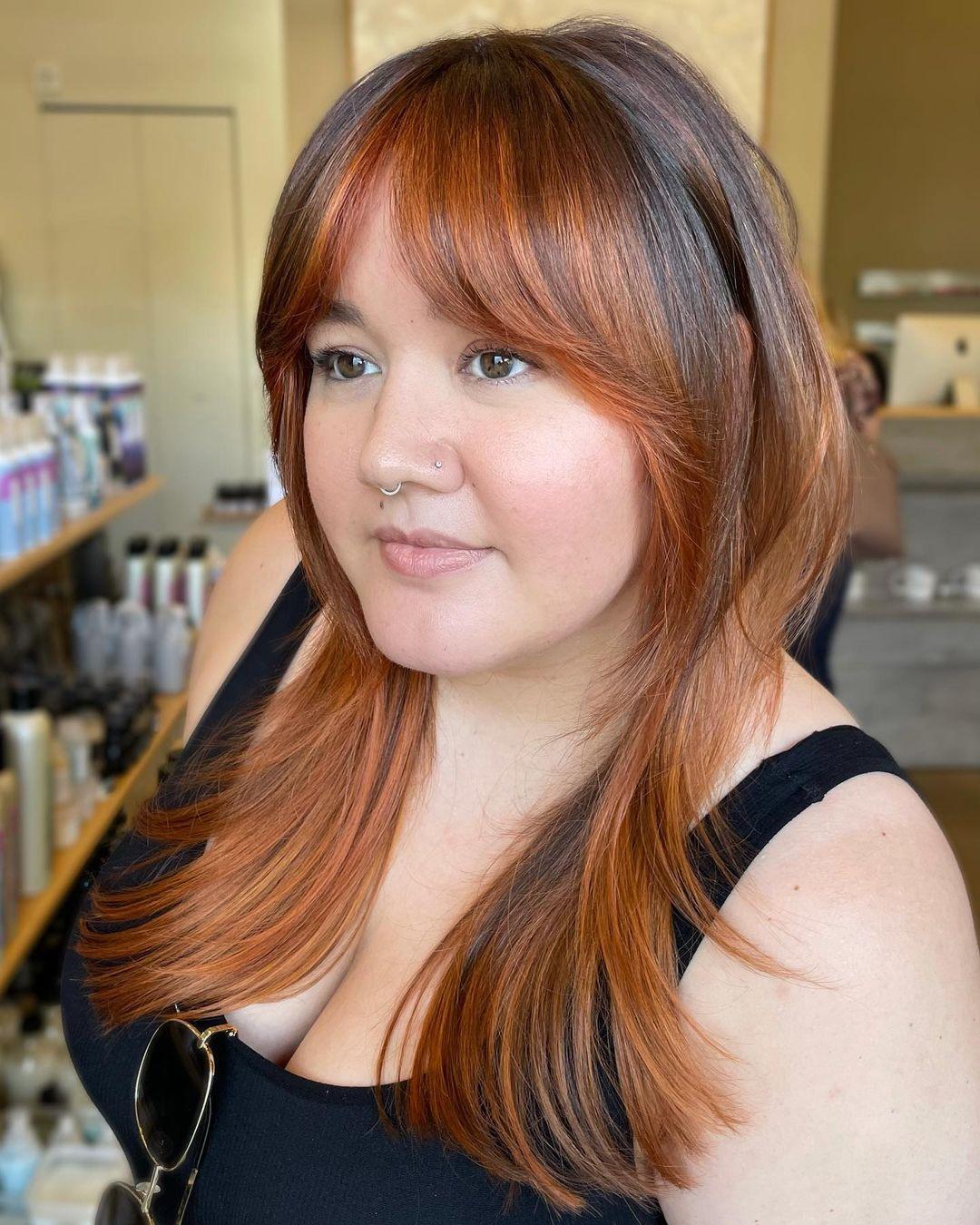
A copper base that fades to blonde ends creates a gradient that loosens the visual weight of the length. The loose waves and soft curtain bangs keep the color transition from looking stark. This is a cut that wears well between trims because the long layers disguise some growth.
Ask your stylist for: mid-back length hair, loose waves, soft curtain bangs, middle part. The real upkeep is the blonde ends: they need a toner every four to six weeks to stay bright against the copper. A curl cream and diffuser set the waves without heat damage, and a trim every 10 to 12 weeks preserves the shape.
Mid-Back Layers With Side-Parted Curtain Bangs

Side-parted curtain bangs offer a softer alternative to a center part, but they come with a catch: the fringe needs more frequent re-drying and repositioning throughout the day. The long layers and medium brown with subtle highlights make the blend more forgiving if the bangs shift.
Ask your stylist for: mid-back length long layers, side-parted curtain bangs. The side part means one side of the bangs sits longer, so the cut has to account for the asymmetry. A texturizing spray gives grip so the bangs stay swept. This look suits medium density wavy hair that wants a fringe without a blunt commitment. The honest trade-off is that side-parted curtain bangs require a two-minute restyle after the afternoon slump.
Final Thoughts
Use density as your filter: fine hair does best with a blunt baseline and long, minimal layers, while thick or curly textures can carry internal layers that remove weight without losing the shape.
- Trim the bangs every four to six weeks to keep the parting clean.
- Blow-dry with a round brush on moderate heat, directing hair away from the face.
- Refresh roots with dry shampoo between washes to control oil at the fringe.
- Mist in a texturizing spray to bring back movement on day two.
Curtain bangs are a fringe that adapts to your length, your texture and your morning routine.

