
Highlights are the quickest way to add dimension to hair, lifting a flat base into something with movement and depth. This season, the shift is toward lived-in placement and warmer, richer tones, with copper penny and oat milk blonde leading the pack.
Here are 20 Highlights Hair ideas, from low-maintenance babylights to high-contrast face-framing pieces. Whether your hair is fine or thick, short or long, there is a version that fits your routine and your grow-out tolerance. If your current color fades fast or your part looks harsh by week three, these options solve that without a full redo.
Mid-Back Length Waves With Copper Penny Highlights
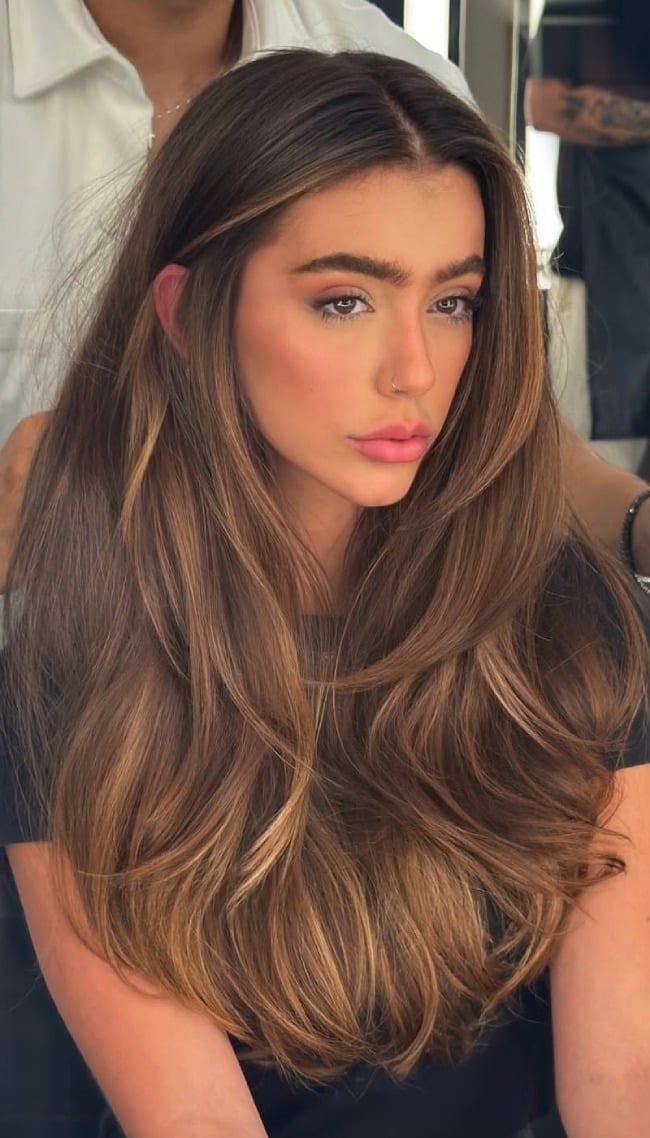
The design here is a study in contrast: a mocha brown base that reads deeply neutral, with copper penny highlights pulled through the mid-lengths and ends. The warmth doesn’t hit uniformly. It lands in soft waves, which breaks up the copper into something that looks woven rather than painted on. Thick, wavy texture is the ideal canvas; finer hair might need a root clip or volumizing mousse to hold the shape. Ask your colorist for: mocha brown base with copper penny highlights, mid-back waves. Apply a heat protectant before curling, and expect a trim every six to eight weeks to keep the ends clean.
The warmth stays grounded because the base remains dark, so regrowth blends for about four weeks before you notice the line. A purple shampoo won’t help here, copper needs a color-depositing conditioner if the tone starts pulling brassy, usually around week six.
Collarbone Waves With Copper and Caramel Highlights
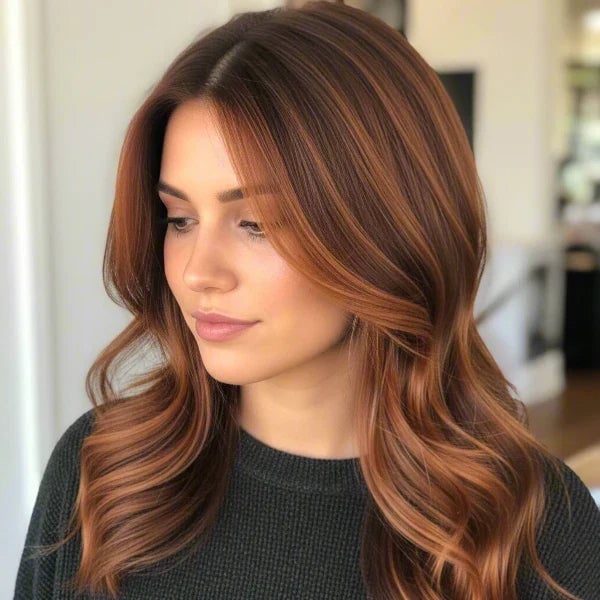
Wondering if copper-toned highlights work on a shorter length? A medium brown base with copper and caramel highlights keeps the dimension intact without overwhelming collarbone-length waves. The curtain bangs do the heavy lifting here: they pull the lighter pieces forward, so the warmth frames the face even when the rest is tucked behind a shoulder. Medium density, wavy hair holds the shape best; if yours is fine, ask for a few face-framing layers to keep the highlights visible. Ask your colorist for: medium brown with copper and caramel highlights, collarbone length waves, curtain bangs. This is a solid fall and spring choice, warm enough for cooler months, not so dark that it feels heavy in April.
Copper Penny Base With Golden Blonde Highlights
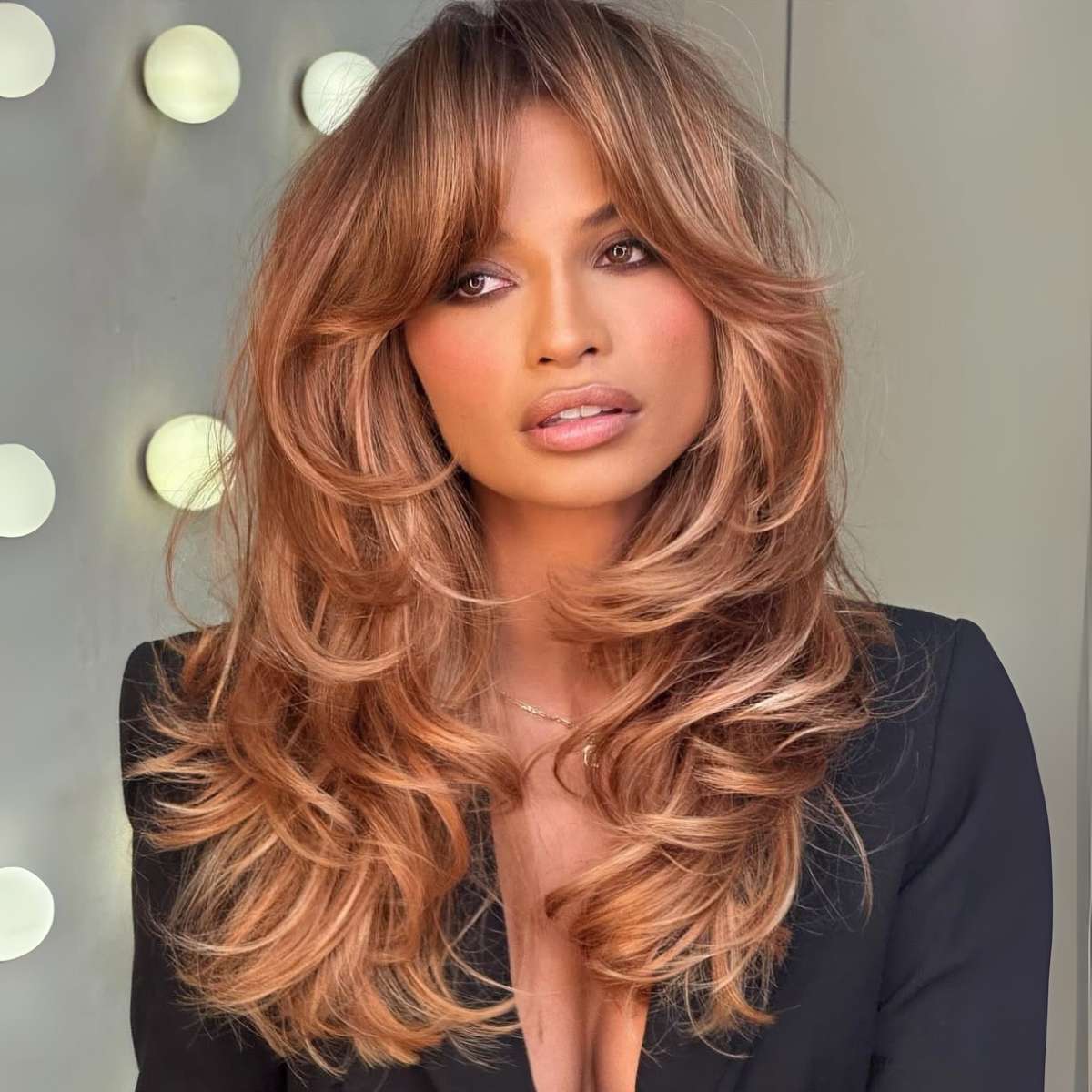
Where a full copper penny base can feel like a solid block of color, golden blonde highlights cut through it with a lighter, warmer strand. Think of it as the difference between a single coat of paint and a wash with light raking through it. The copper base stays the dominant note; the blonde reads as a soft reflection on top. This combination works best on thick, wavy hair at collarbone length, where the layering in the shag cut gives the highlights room to land on different surfaces. Ask your colorist for: copper penny base with golden blonde highlights, collarbone shag, curtain bangs. If your hair is fine, skip the heavy layering and keep the length more uniform to avoid the highlights looking sparse.
Mid-Back Loose Waves With Ash Blonde Highlights
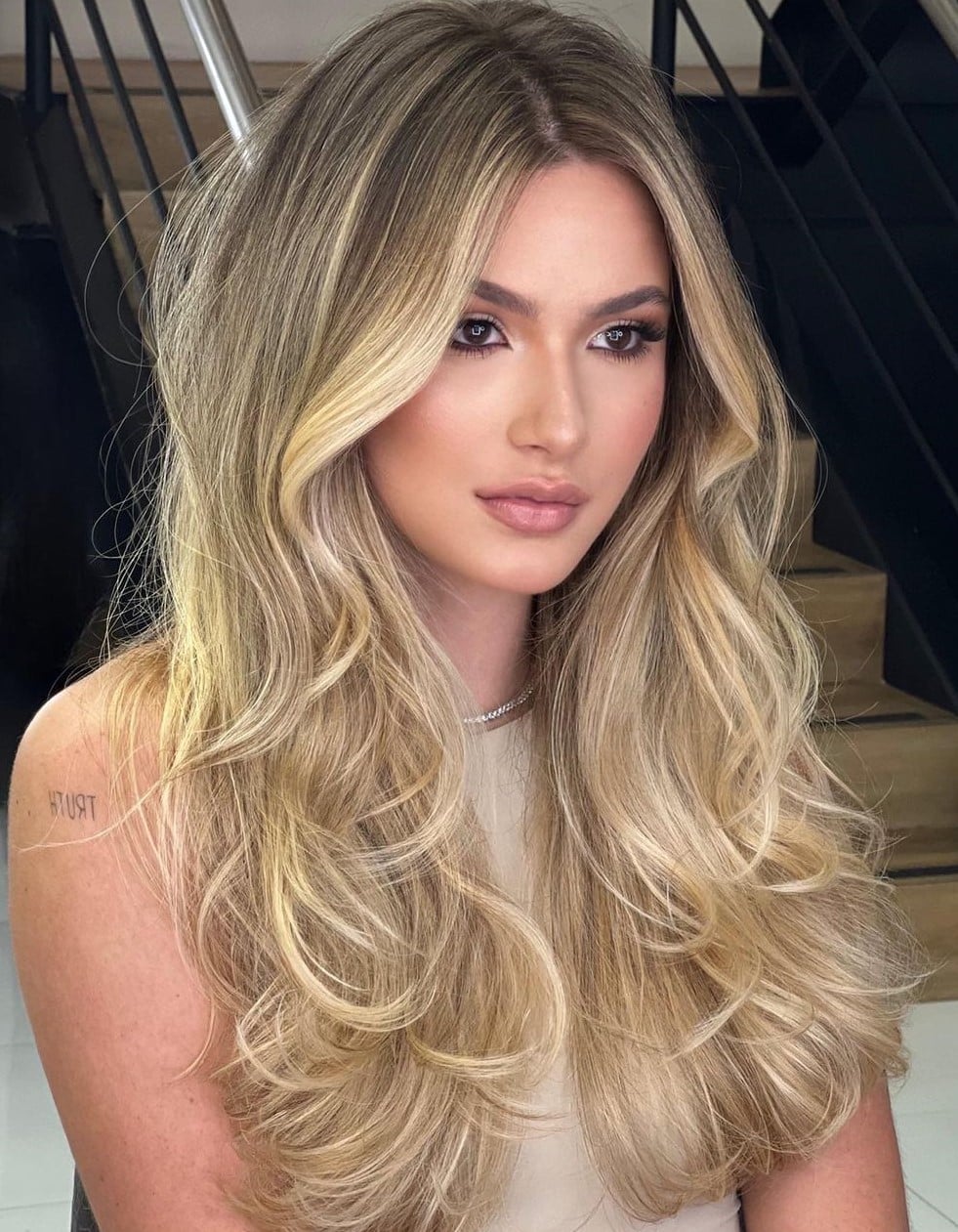
A dark blonde base with ash blonde highlights is a low-contrast design that relies on texture for impact. The ash tone sits close to the base shade, so the difference shows up as depth, not streaks, exactly the lived-in effect that grows out gracefully. Thick, wavy hair at mid-back length is the natural partner: the waves catch the lighter pieces at different angles, creating movement without a blowout. Curtain bangs frame the face without shortening the overall length.
Ask your colorist for: dark blonde base with ash blonde highlights, mid-back loose waves, curtain bangs. The upkeep is forgiving: a toning gloss every eight to ten weeks keeps the ash from warming up, and you can stretch trims to ten weeks if the ends stay healthy. A purple shampoo used once a week is enough to maintain the cool tone between appointments.
Collarbone Waves With Side-Swept Bangs
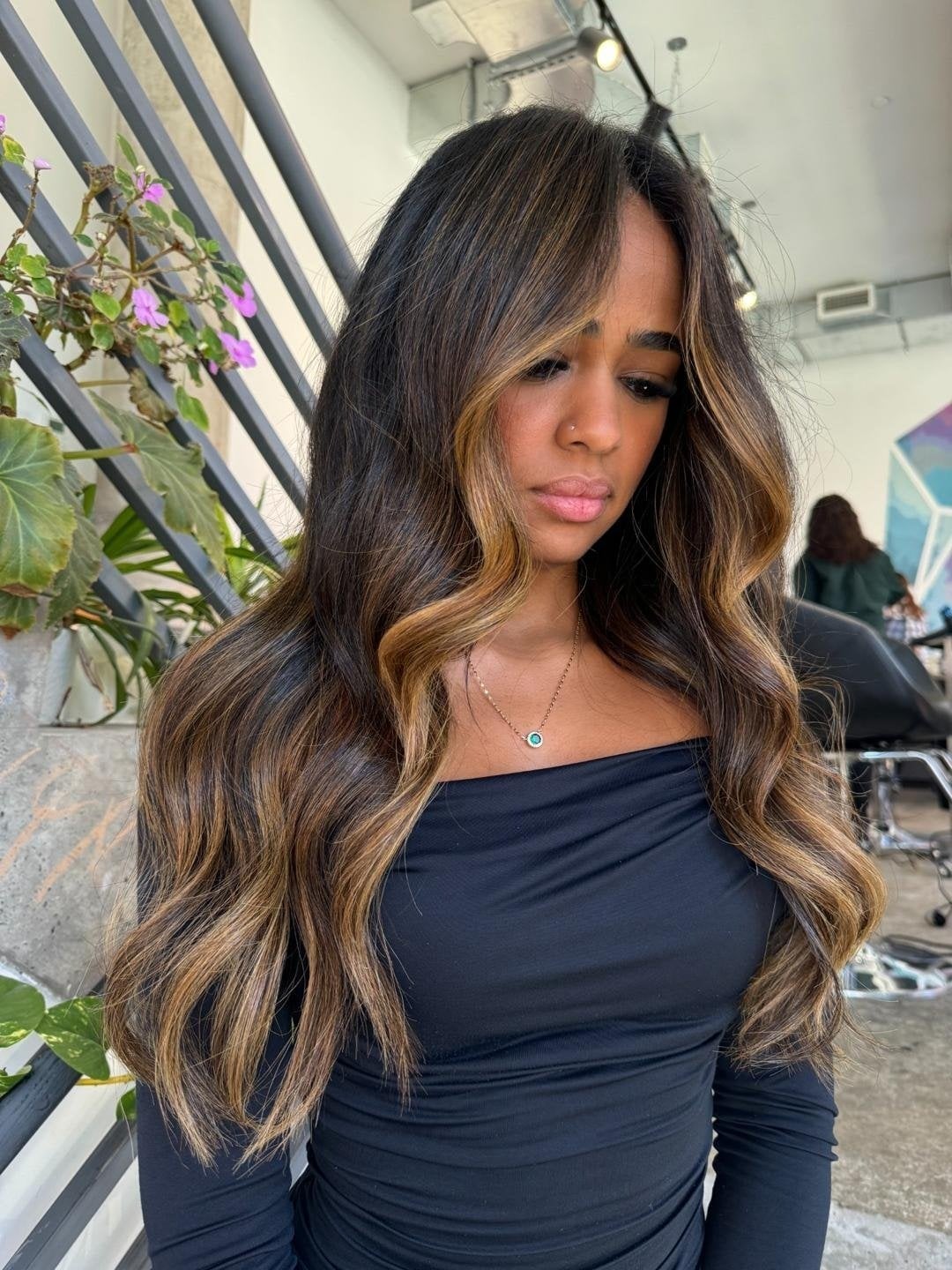
How do you ask for warm blonde highlights without ending up with a brassy stripe? Start with the base: dark brown, which keeps the warmth grounded, then request the highlights concentrated around the face. The side-swept bangs pull those lighter pieces forward, so the contrast shows where it counts, the sides and front, while the rest stays darker and low-maintenance. Thick, wavy hair at collarbone length holds the shape with minimal effort. Ask your colorist for: dark brown base with warm blonde highlights, collarbone length, side-swept bangs. This is a solid salon-only project; the placement around the bangs requires a steady hand, and a DIY kit will likely land the blonde too high or too evenly.
Mid-Back Waves With Dark Brown and Blonde Highlights
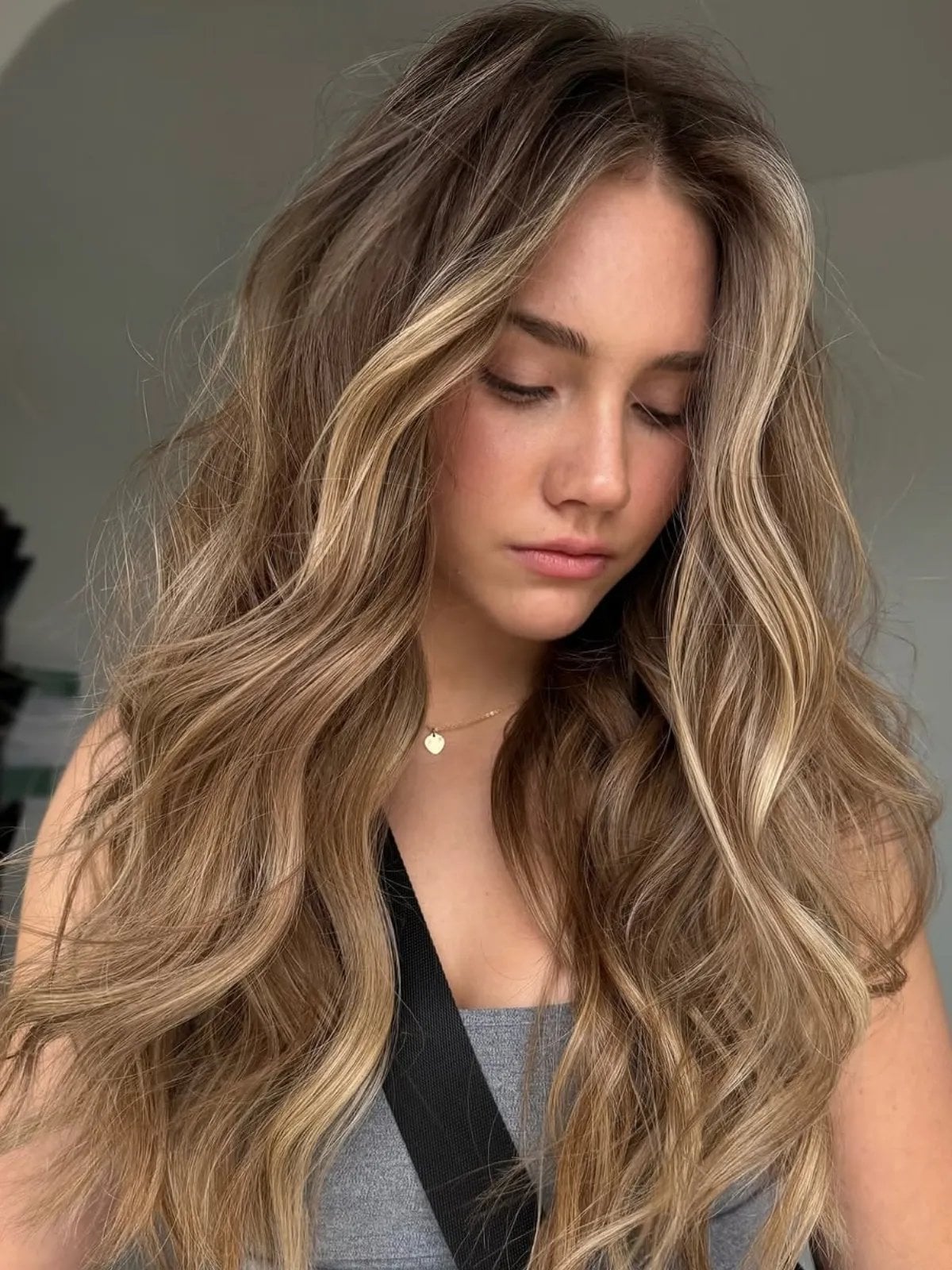
The design is straightforward: a dark brown base with blonde highlights running through mid-back layers. The mistake people make is letting the contrast turn harsh, which makes the highlights look like separate stripes instead of dimension. A middle part and loose waves help soften that transition, but the real trick lives in the foil spacing.
Ask your colorist for: dark brown base with blended blonde highlights. Thick, wavy hair at this length handles the weight of both colors well. The drawback is that too-fine highlights on a dark base can look dated within a few weeks as regrowth shows. A root shadow at the bowl buys you another month before the next appointment.
Shoulder-Length Blowout With Subtle Blonde Highlights
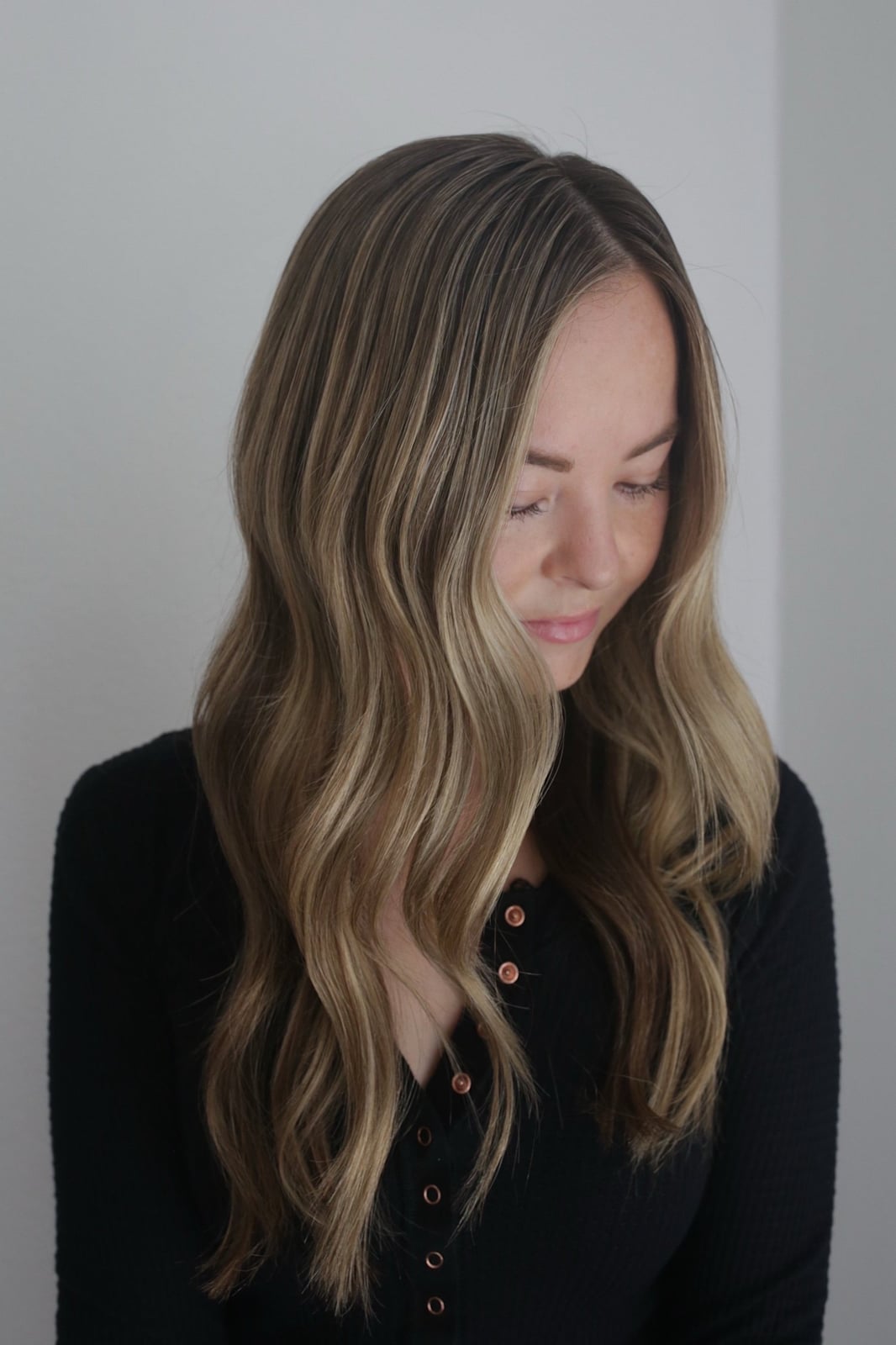
A rich brown base with subtle blonde highlights lands in the expensive brunette zone, which means the payoff is in the blend, not the pop. Thick, shoulder-length hair carries a polished blowout well, and the middle part plus soft waves add dimension since the highlights stay understated. If you prefer a visible, high-contrast result, skip this one and ask for a brighter lift instead. Ask your colorist for: brown base with subtle blonde highlights, shoulder-length blowout.
Mid-Back Wavy Hair With Ash Blonde Face-Framing
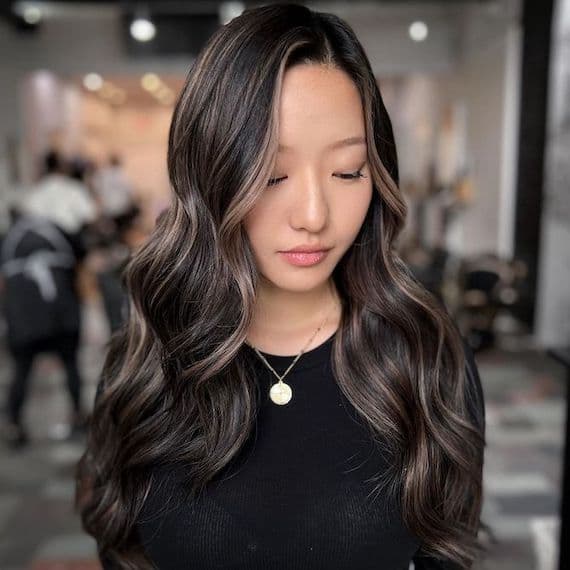
Ash blonde face-framing highlights on a dark brown base do one thing well: they lighten the area around the face without committing to an all-over lift. This placement suits wavy, mid-back hair because the cooler tone creates a natural shadow effect. A middle part lets the highlights fall evenly on both sides, which softens the transition from dark base to lighter pieces. Those with very fair or platinum color elsewhere may find ash tones too muted for their existing brightness. Ask your colorist for: dark brown base with ash blonde face-framing highlights, mid-back waves. Thick texture holds the wave pattern long enough that a texturizing spray is the only styling tool you need.
Collarbone Blowout With Caramel Highlights
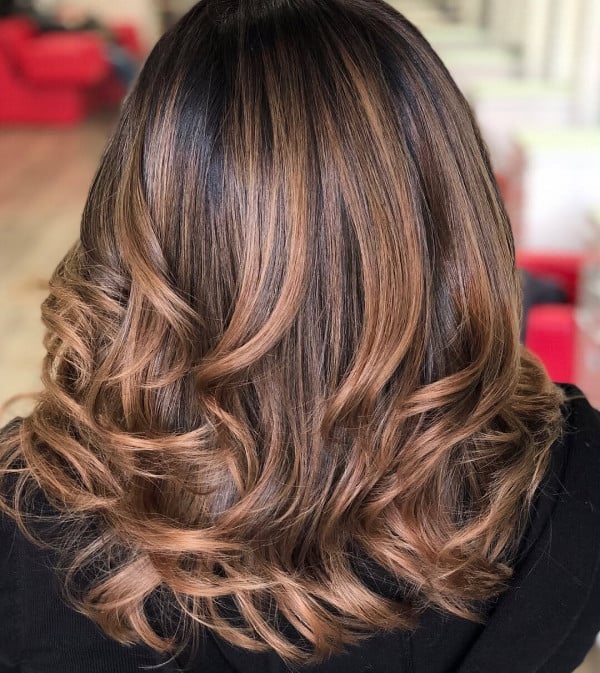
How do caramel highlights on a chocolate brown base behave between salon visits? They grow out softly because the highlight shade sits close enough to the base that the root line blurs rather than announces itself. That is the main appeal of this combination for collarbone-length, thick wavy hair.
Ask your colorist for: chocolate brown base with caramel highlights, collarbone length blowout. The upkeep is moderate: a trim every six to eight weeks keeps the shape clean, and a toner at the same interval stops the caramel from warming into brass. A smoothing cream before blow-drying cuts down flyaways and preserves the polished finish for two to three days.
Mid-Back Wavy Hair With Golden Honey Highlights
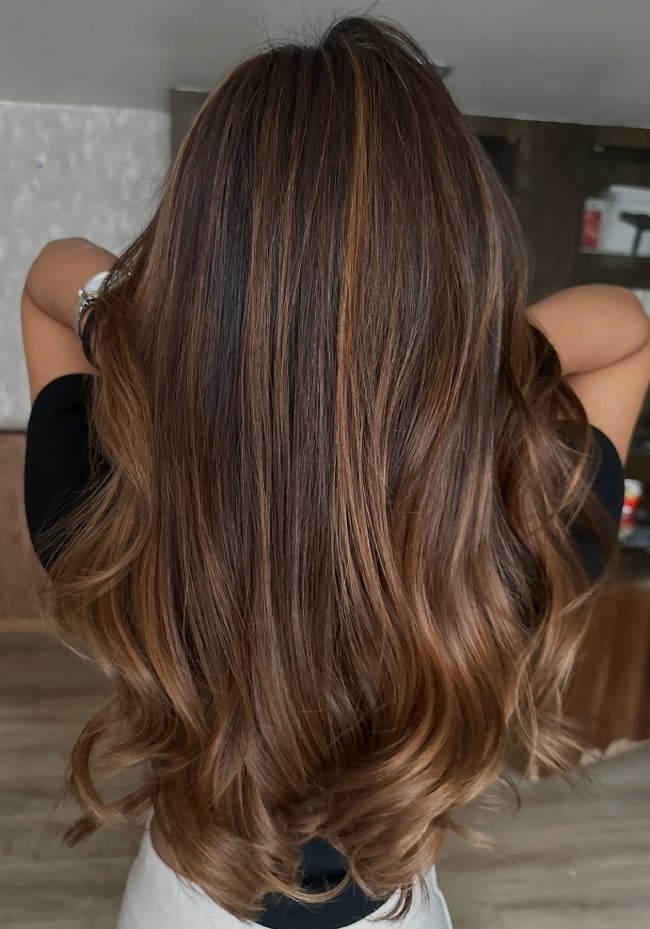
Golden honey highlights on a warm caramel brown base are built by painting the lighter pieces through the mid-lengths and ends, leaving the root area darker for a lived-in grow-out. The technique avoids a solid band of color near the scalp, which is what keeps the final look blended rather than striped. On thick, wavy mid-back hair, the loose wave pattern helps the honey tones catch light at different angles, creating the dimension without needing dense foils.
Ask your colorist for: caramel brown base with golden honey highlights, mid-back loose waves. A sea salt spray applied to damp hair enhances the wave and separates the highlighted sections. A toner every eight weeks maintains the golden hue without tipping into orange.
Mid-Back Light Brown With Blended Blonde Highlights
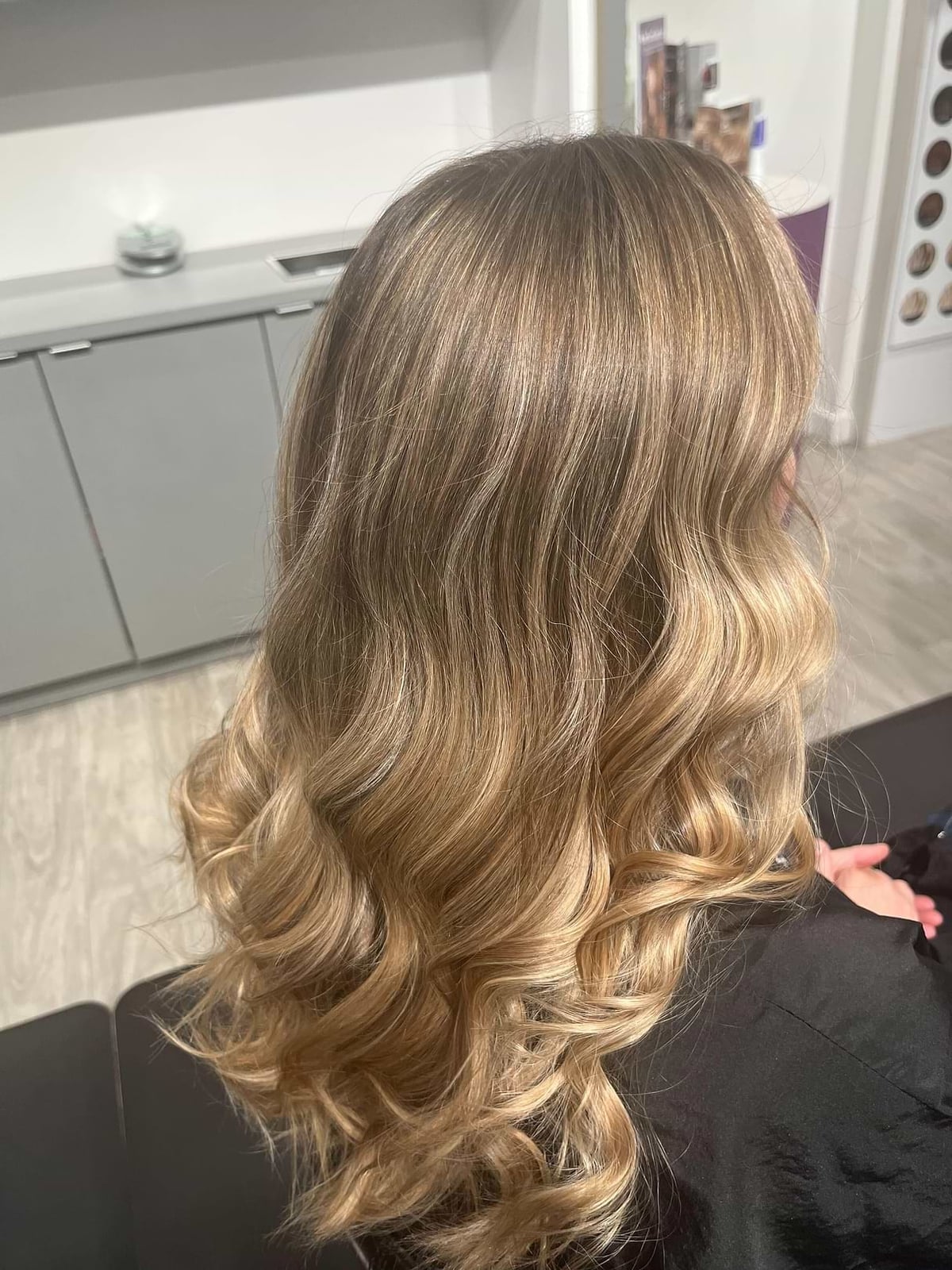
Blended blonde highlights create a softer look than chunkier ones. The light brown base stays the dominant color here, with the blonde woven finely enough to add dimension. This approach works best on thick, wavy hair at mid-back length, where the layers catch the lighter pieces and the middle parting keeps everything balanced. Ask your colorist for: light brown base with blended blonde highlights, mid-back waves. A smoothing serum tames flyaways and keeps the waves defined. The highlights need toning every eight to ten weeks to maintain that subtle contrast and prevent brassiness. The salon visit takes about three hours for the weave and bleach. This is the version for someone who wants lighter hair but does not want a new haircut to go with it.
Mid-Back Light Brown With Prominent Blonde Highlights, Close-Up Take
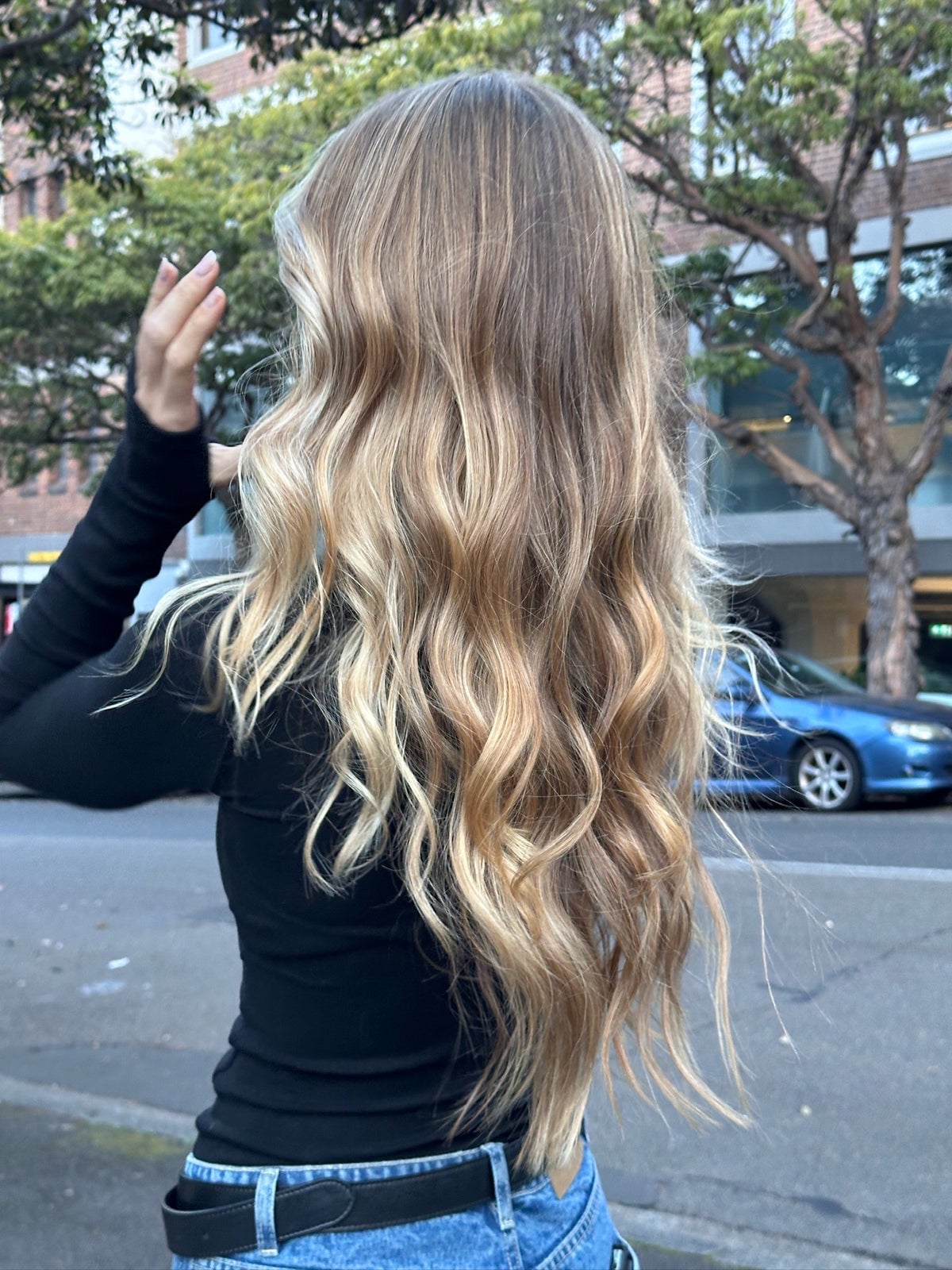
How do you get those bright, deliberate bands of blonde on a light brown base without them looking like stripes? The trick is in the sectioning: the colorist takes thicker subsections and places the lightener closer to the root than a babylight, then feathers the ends so the contrast softens. Thick, wavy hair at mid-back length holds this placement well because the texture breaks up the line. Ask your colorist for: light brown base with prominent blonde highlights, mid-back waves. A texturizing spray on damp hair, then scrunching and air-drying, gives the waves enough grip to show off the contrast. A flat iron on low heat works for a smoother finish.
Mid-Back Waves With Caramel Highlights
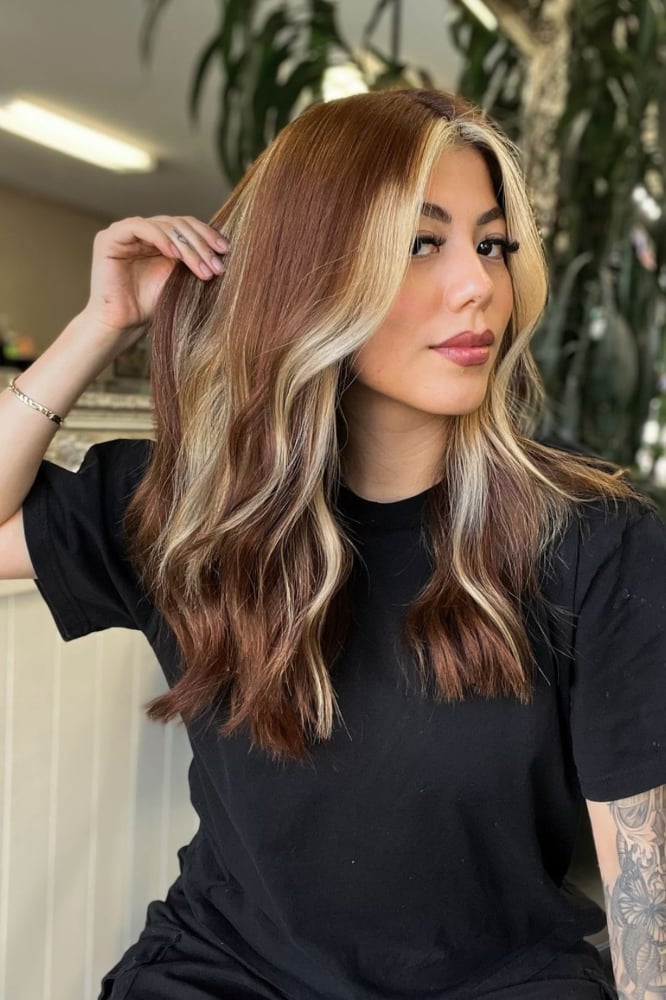
Caramel highlights on a dark brown base look warm and rich right after the salon. The mistake people make is assuming that warmth stays put. Dark brown hair lifts to a reddish undertone, and if the colorist does not tone the caramel properly, it pulls orange within four weeks. Thick, wavy hair at mid-back length with a middle parting shows every tonal shift, so uneven placement becomes obvious fast. Ask your colorist for: dark brown base with caramel highlights, mid-back waves. The honest drawback is that this combo needs a toning gloss every five to six weeks to keep the caramel from turning brassy. A smoothing serum helps, but it cannot fix a color that has already shifted. Skip this one if you are not ready for regular toning appointments.
Mid-Back Layered Hair With Caramel Highlights, Wavy
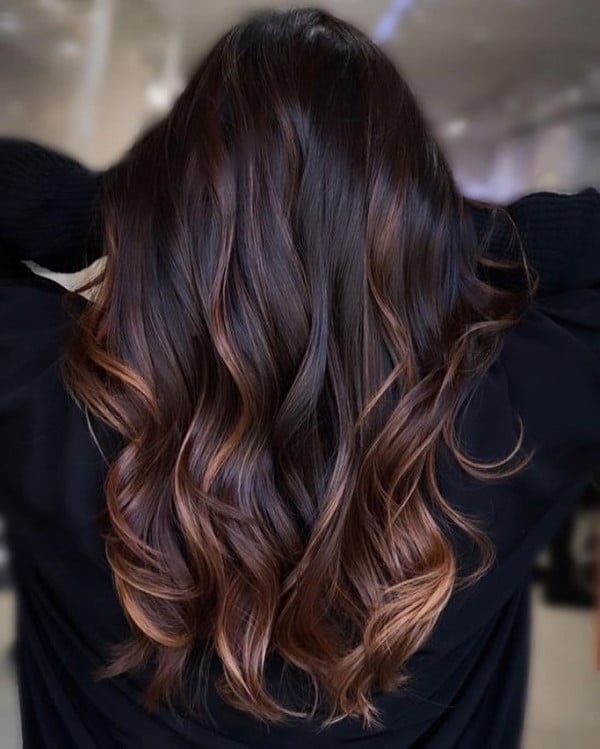
A layered cut with caramel highlights on a dark brown base wears differently than a one-length version. The layers let the caramel pieces peek through at different heights, which adds movement but also means the grow-out is less forgiving. Thick, wavy hair at mid-back length with no bangs gives the colorist a long canvas, and the loose waves hide the root line for the first few weeks. Ask your colorist for: dark brown base with caramel highlights, mid-back layers, loose waves. A texturizing spray on dry hair reawakens the waves and lifts the roots. The trim schedule runs every six to eight weeks to keep the layers defined. Toning every eight weeks keeps the caramel from warming up unevenly.
Mid-Back Straight Hair With Natural Blonde Highlights
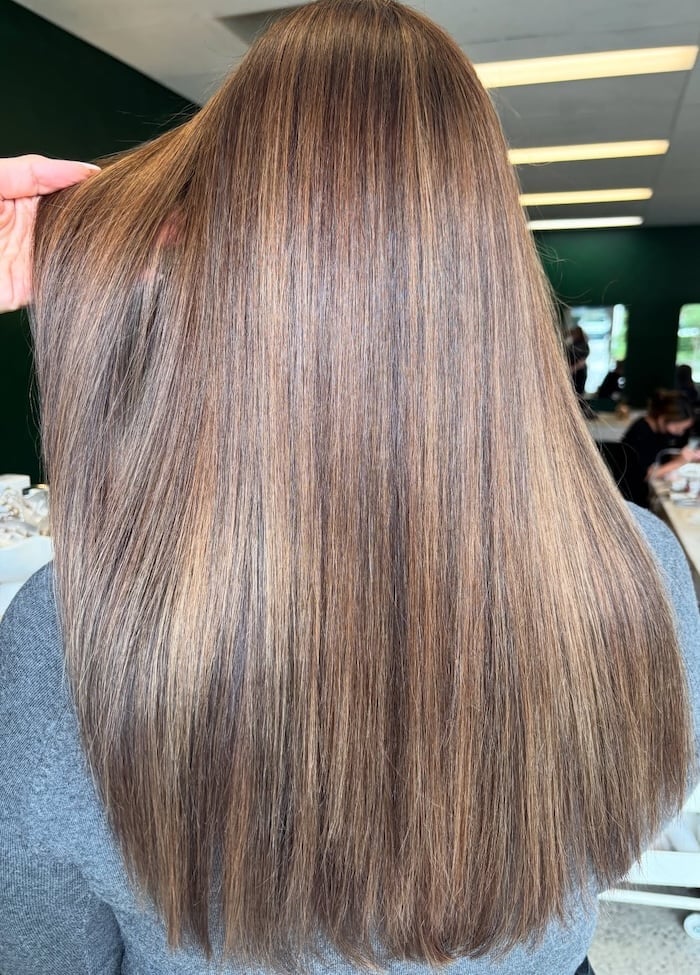
Natural blonde highlights on a light brown base sound low-maintenance, and they are, but only after the first application. Thick, straight hair at mid-back length shows every highlight distinctly, so the initial salon session needs precision to avoid patchiness. Ask your colorist for: light brown base with natural blonde highlights, mid-back straight hair. The honest downside is that the highlights barely show on air-dried hair unless the light hits it directly. This is a salon-leaning process: the colorist hand-paints fine sections for a subtle lift that takes about two and a half hours. Skip this one if you want a noticeable change from the front.
Mid-Back Blowout With Ash Blonde Highlights
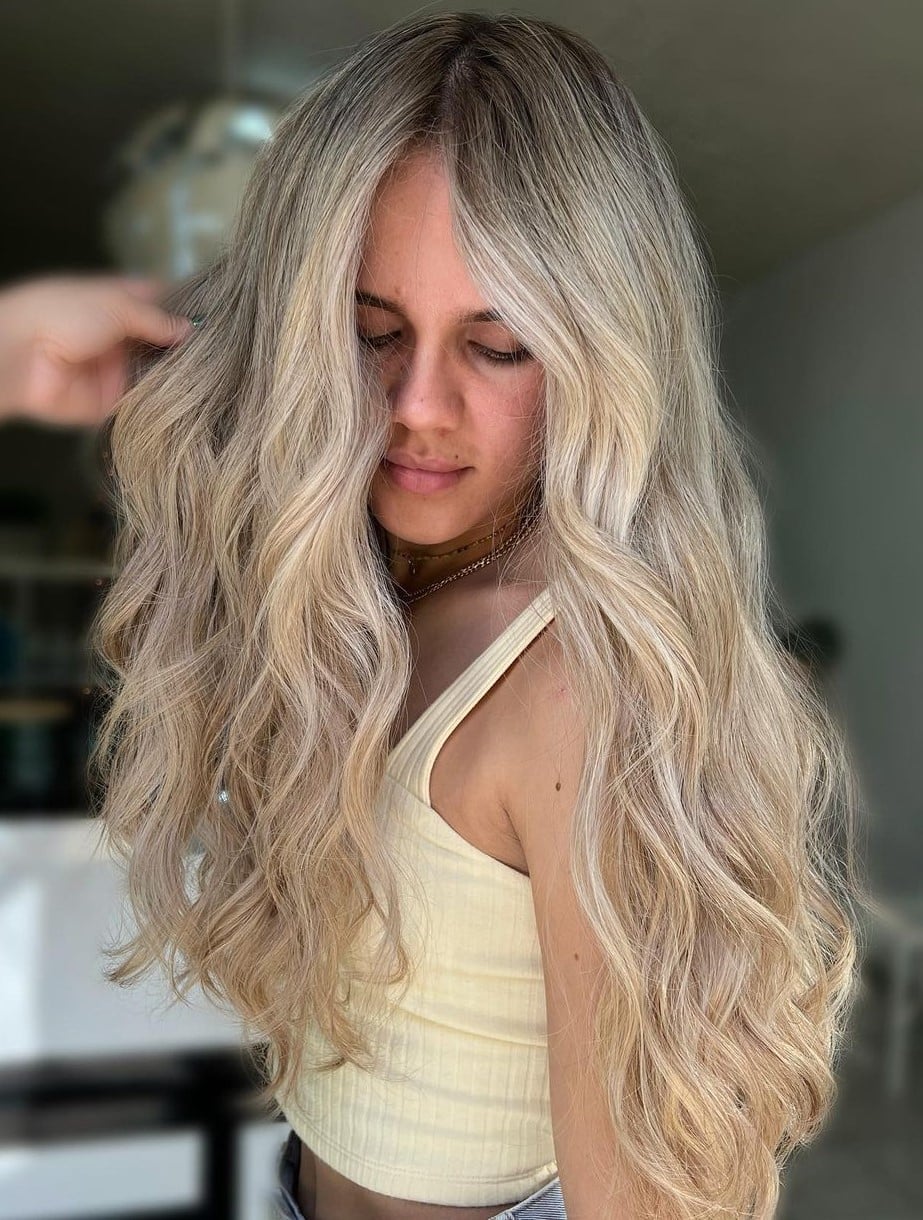
Ash blonde highlights on a dark blonde base look cool and polished, not washed out, because the darkness underneath keeps the contrast honest. The middle part and blowout styling give thick, wavy hair a smooth, voluminous shape that lands at the mid-back, a combination that suits most face shapes since the length and the soft movement do the balancing work. Ask your colorist for: dark blonde base with ash blonde highlights, mid-back blowout.
For the office or daily wear, this is the color equivalent of a tailored blazer, dependable and sharp. A round brush and a blow dryer get you the smooth, bouncy finish, and the highlights stay cool and dimensional for about eight weeks before they need a toner refresh. If your base is much darker or warmer, the ash will pull differently, so let the colorist adjust the tone to match your natural color.
Collarbone Waves With Subtle Caramel Highlights, Wavy
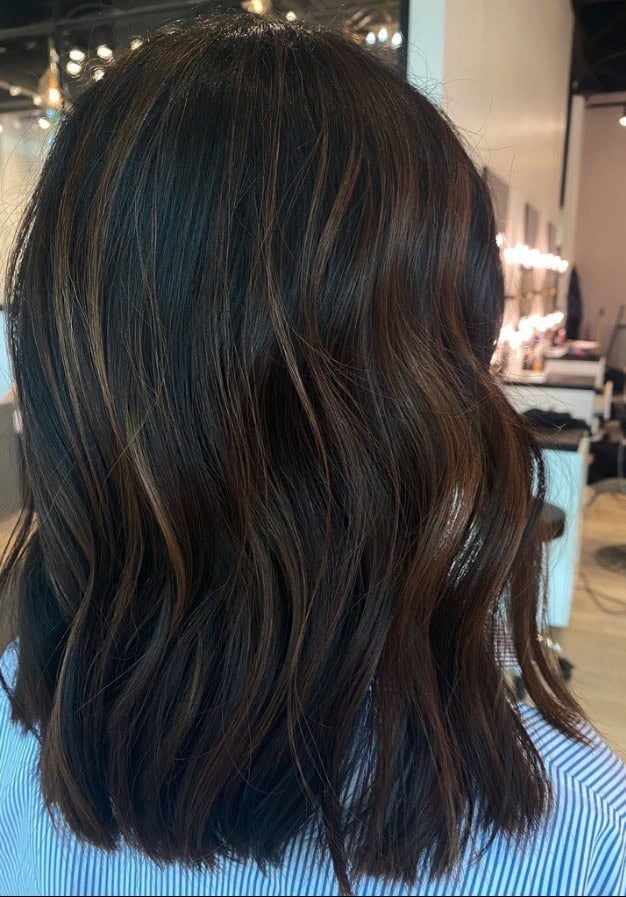
Unlike the bold, chunky streaks that read as costume, these subtle caramel highlights on a dark brown base are woven finely enough to look like the sun did the work. The collarbone length with loose waves and a medium density texture lets the caramel peek through at the ends and around the movement, creating a natural blend that works for most face shapes because the waves soften the jawline. Ask your colorist for: dark brown base with subtle caramel highlights, collarbone length waves. A texturizing spray enhances the wave pattern, and a trim every six to eight weeks keeps the ends from fraying.
Mid-Back Wavy Hair With Dimensional Blonde Highlights
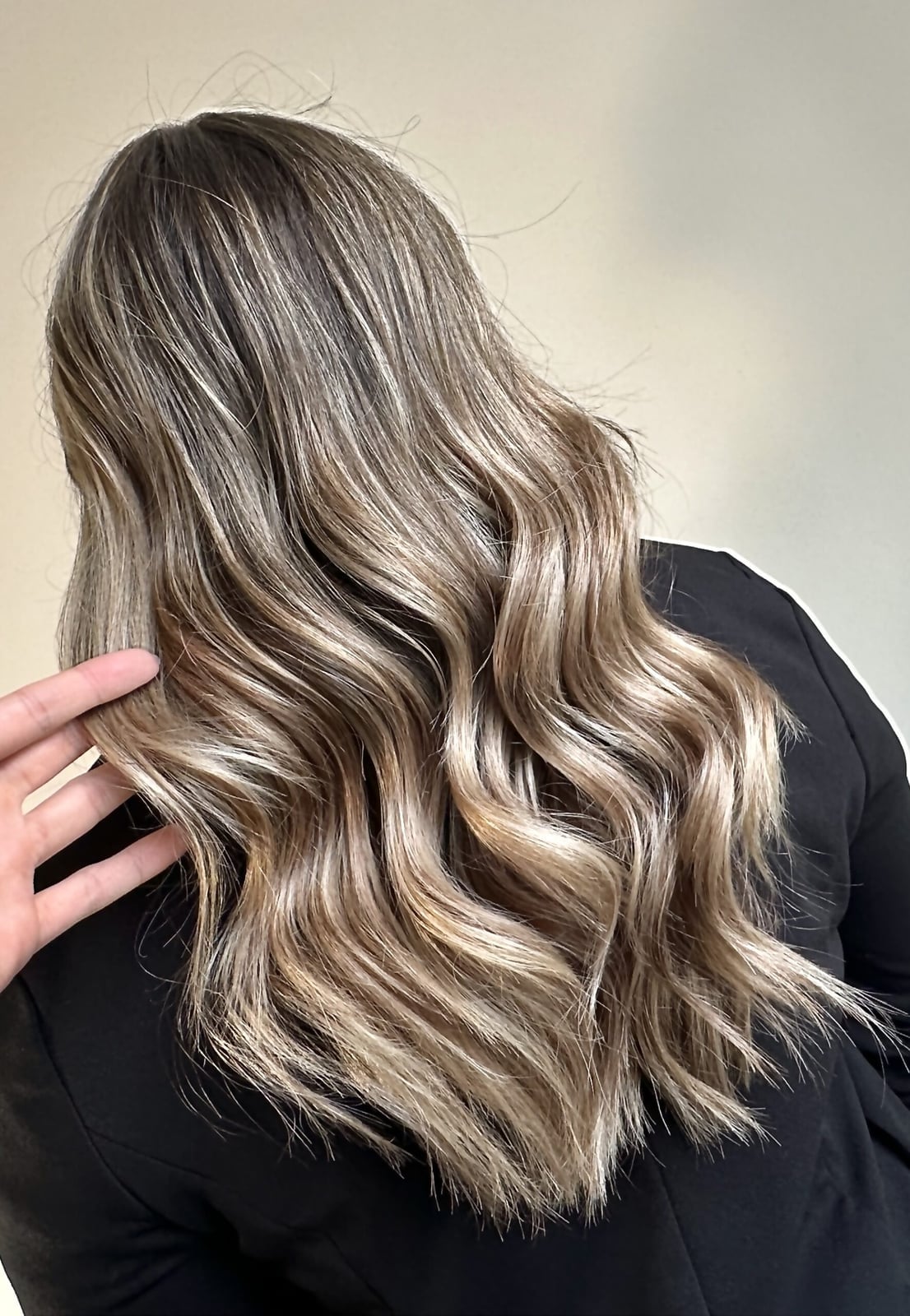
Dimensional blonde highlights on a dark brown base are a commitment: each foil needs to be placed precisely to create that layered, multi-tonal effect, and that kind of accuracy is hard to replicate at home. The result is a mid-back length of thick, wavy hair that reflects light in different ways as it moves, giving the color real depth instead of a flat, single-tone wash. Ask your colorist for: dark brown base with dimensional blonde highlights, mid-back waves.
Attempting this with a box kit often results in banding and uneven placement, so the salon is the better choice. Between visits, a smoothing serum keeps the waves glossy, and a toner every eight weeks keeps the blonde from turning brassy. If you want the dimension without the upkeep, ask for fewer, thicker sections instead of a full head of fine highlights.
Mid-Back Wavy Hair With White Blonde Highlights, Layers
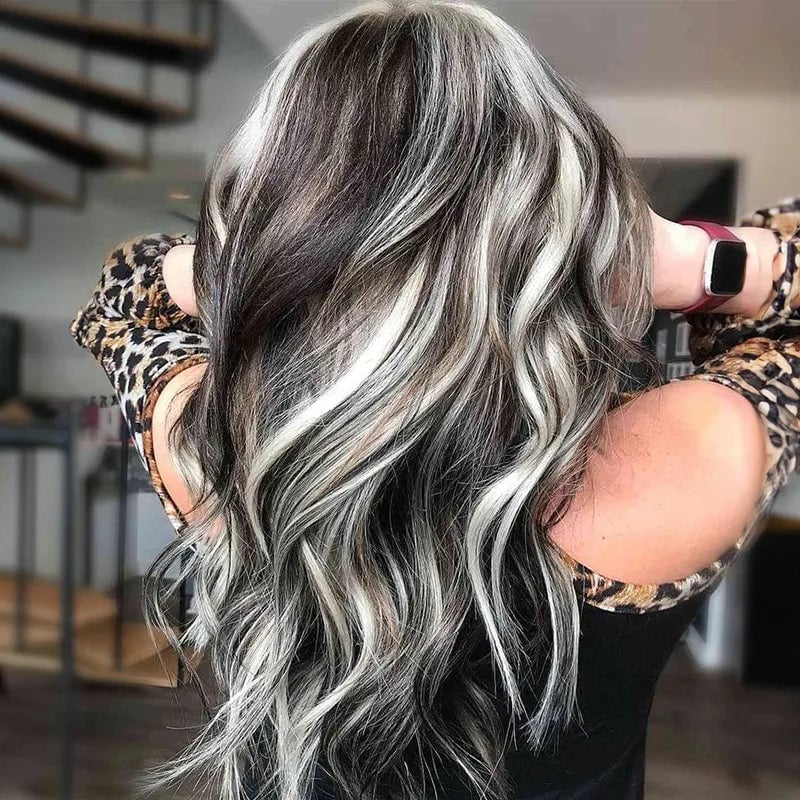
Bright white blonde highlights on a dark brown base is the high-contrast alternative to softer caramel or honey tones, and it asks for a certain boldness. The dramatic difference between the dark base and the white pieces creates a graphic, deliberate effect that suits those who want their hair to make the first statement. On thick, wavy hair at mid-back length, the loose waves carry the contrast well, and the layers help the highlights look defined. Ask your colorist for: dark brown base with bright white blonde highlights, mid-back waves.
This look demands upkeep, since the white tones will pick up brassiness quickly. A purple shampoo in your weekly rotation keeps the coolness, and a toner every six to eight weeks is required to avoid a yellow cast. If you prefer a lower-maintenance version, ask for the white pieces to be placed closer to the ends, where the grow-out is less obvious.
Mid-Back Defined Curls With Honey Blonde Highlights
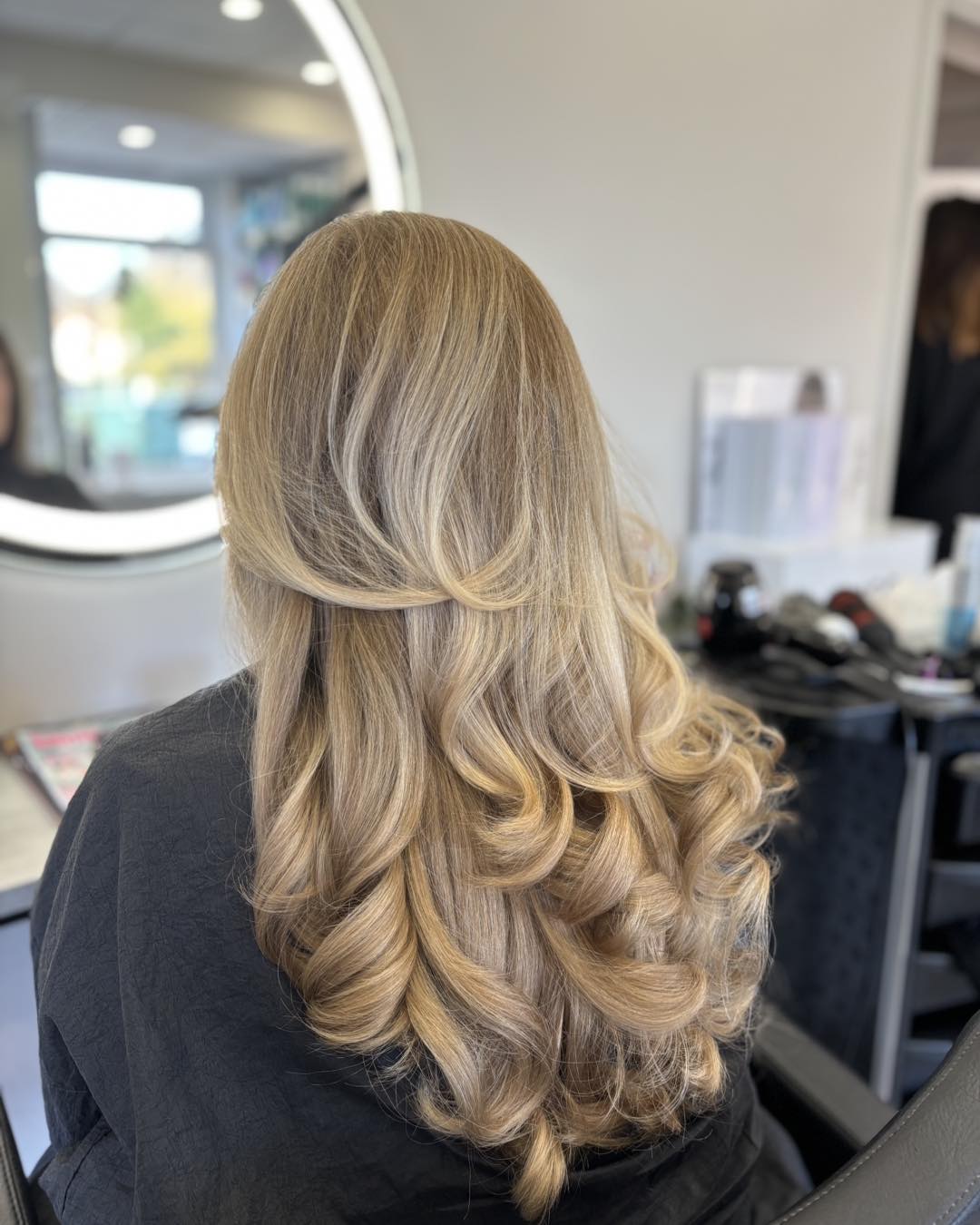
Honey blonde highlights on a golden blonde base create a warm, sunlit version of blonde, and they hold up well because the base is already light enough to blend the grow-out. Defined curls at mid-back length with a middle parting show off the layers and let the honey tones catch light from every angle, giving thick, wavy hair a dimensional warmth that most face shapes can carry. Ask your colorist for: golden blonde base with honey blonde highlights, mid-back defined curls.
The upkeep is modest for blonde: a curl-defining cream and a diffuser keep the curls sharp, and a toner every eight weeks keeps the honey from fading to a flat yellow. Because the base is golden rather than ashy, the highlights fade more gracefully, so you can stretch the time between salon visits. This color works for everyday wear and transitions easily to evening events without a refresh.
Final Thoughts
For a low-maintenance look, ask for babylights or balayage with tones only a few shades lighter than your base. For high impact, choose bolder contrast and face-framing placement, and plan on a salon visit every six to eight weeks to keep the line clean.
- Schedule toning every 6-10 weeks to keep highlights bright.
- Use color-safe shampoo and conditioner to slow fading.
- Deep condition weekly to fight dryness from lightening.
- Limit heat styling to protect highlighted strands.
Find the highlight style that speaks to you and consult your stylist.

