
Thick hair is a blessing that often comes with a stubborn refusal to do what you want. The right haircut turns that volume into an asset, and the 2024 shift toward lived-in layers and soft curtain bangs means there are more good options than ever.
This collection of 20 Hairstyles for Thick Hair covers cuts from a blunt bob to mid-back layers, with every fringe, texture, and length in between. Whether your struggle is a triangle shape from too much interior weight or bangs that push forward instead of lying flat, you will find a cut that works with your density, not against it.
Blunt Bob With Blunt Bangs

A blunt bob lives or dies by its baseline, and this one is cut dead straight across at chin length. The same blunt logic carries into the bangs: a solid fringe with no softening, which is exactly why thick, straight hair handles it so well. Density gives the line weight, so it holds its shape instead of collapsing. Blunt bangs suit oval and square faces, where a straight horizontal line balances a stronger jaw. Ask your stylist for: chin-length blunt bob, blunt bangs. Straight, thick hair needs a trim every four to six weeks to keep those edges sharp.
Sharp Bob With Balayage
The baseline of this bob is cut with almost no give, a single clean line at chin length that only works when the hair is dense enough to support it. Straight, thick hair is the ideal canvas: no wave to fight the edge, plenty of body to keep it from looking limp. A side parting and a smooth blowout show off the geometry, while blonde balayage against a dark brown base breaks up the solid mass. Ask your stylist for: chin-length sharp bob, blonde balayage. A trim every six weeks protects the line, and a smoothing serum helps the finish stay polished.
Wavy Bob With Full Bangs

Worried a bob will turn your thick waves into a triangle? The fix is in the request. A chin-length cut keeps the weight high enough that waves fall instead of flaring, and full bangs give the front a soft, textured edge. On thick, wavy hair, ask for a shape that follows your natural bend, not one that fights it. Ask your stylist for: chin-length wavy bob, full textured bangs. Full bangs soften square and round faces, and an air-dried finish keeps the whole thing looking unhurried.
Textured Pixie With Side Bangs
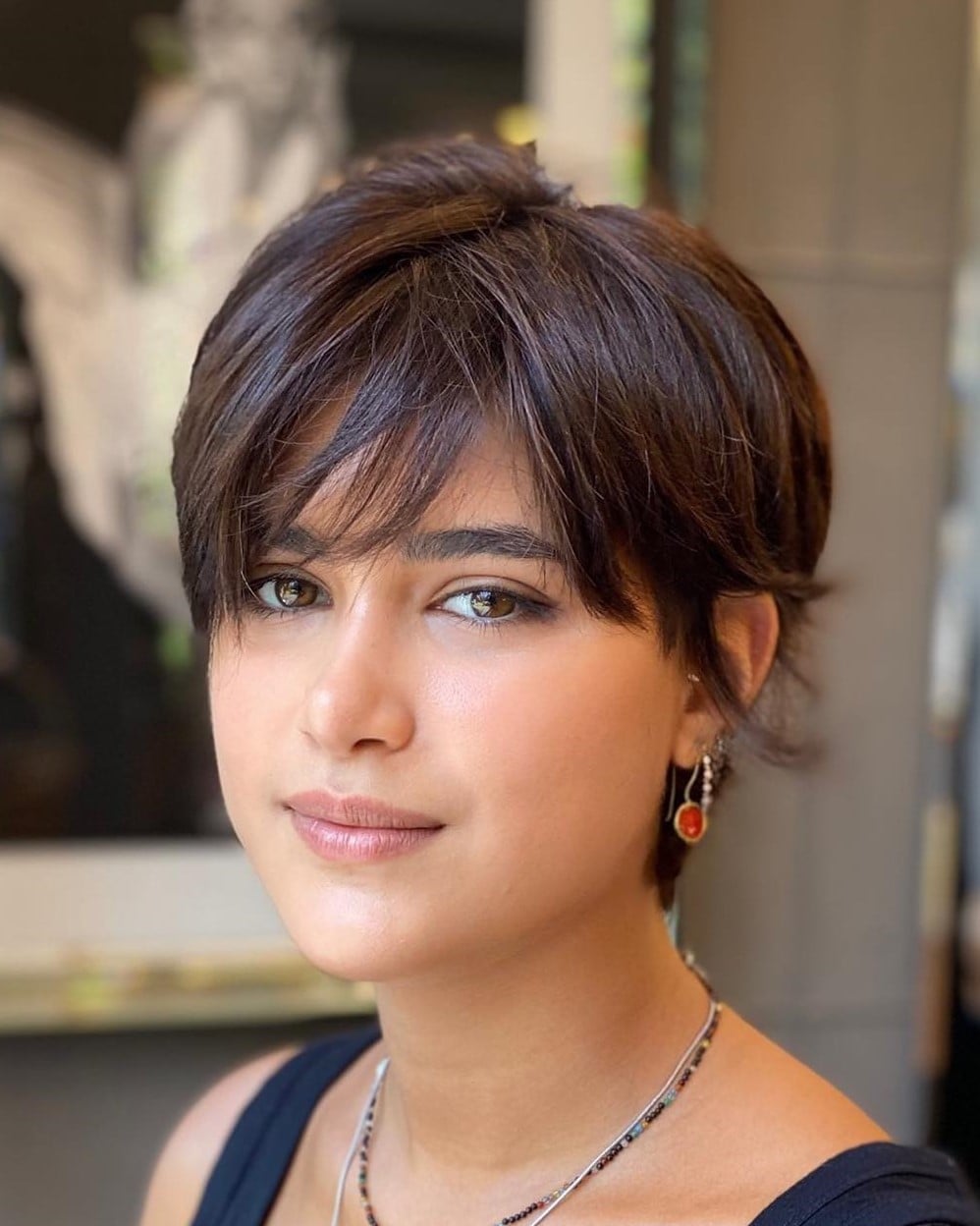
Thick hair takes the chop well, since the density supplies the volume a finer texture has to fake. The catch is the bangs. Short side-swept bangs on straight, thick hair want to sit as a solid block, so the stylist has to thin and point-cut them or they will hang heavy across the forehead. Plan on styling with a texturizing paste most mornings, and on trims every four to six weeks to keep the shape from growing out into a helmet. Side-swept bangs balance a strong jawline. Skip it if you want to wash and go with zero product.
Layered Pixie With Dark Roots
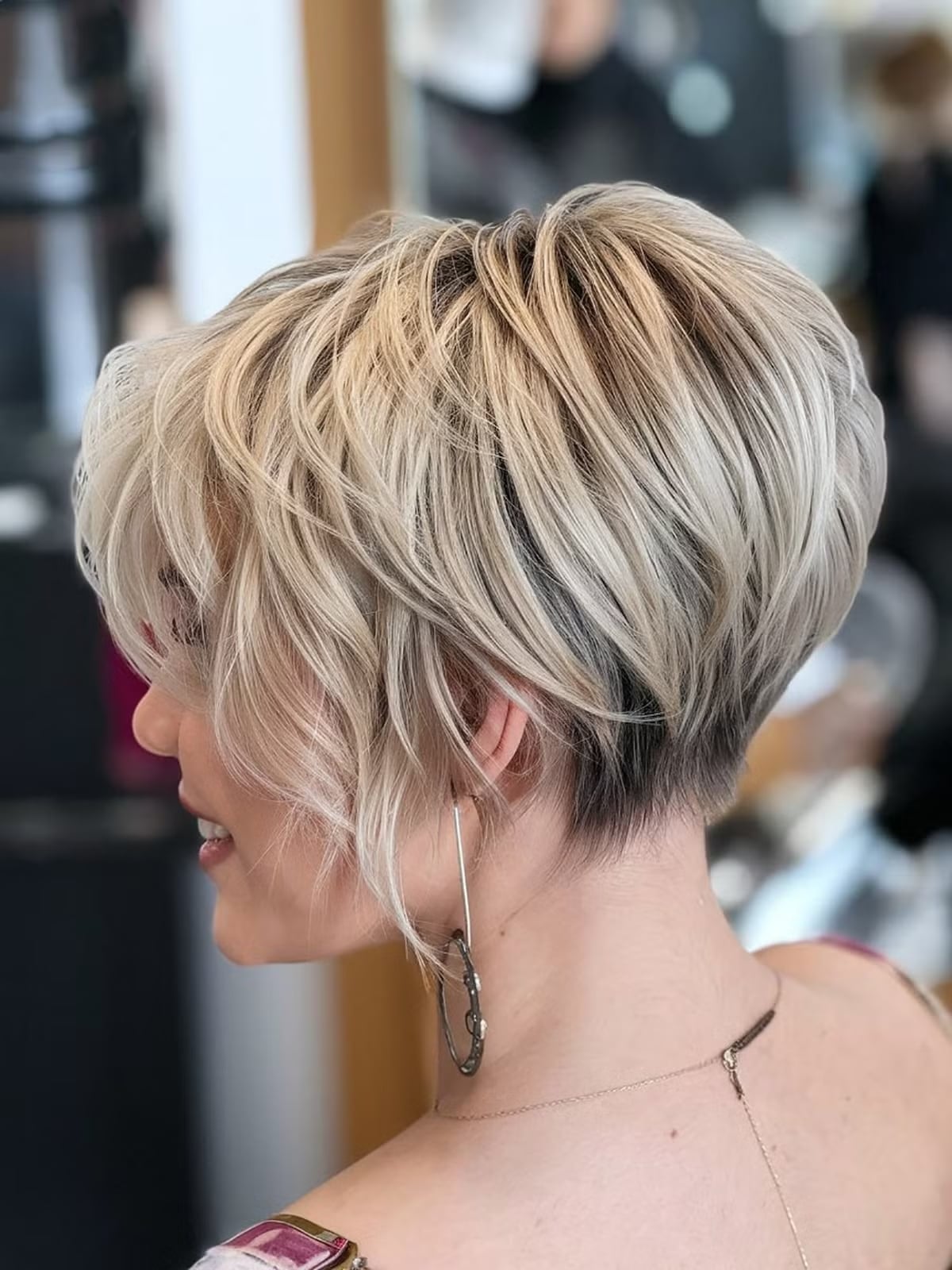
Stacked layers at the crown do the quiet work here, building a rounded shape at ear length without adding bulk where thick hair does not need it. The short bangs are swept to the side, and the ash blonde runs into darker roots, which means the grow-out line stays soft for weeks instead of announcing itself. Ask your stylist for: short layered pixie, volume at crown, side-swept bangs. A small amount of pomade defines the layers, and a trim every four to six weeks keeps the stacked shape from collapsing into a bowl.
Textured Dark Brown Pixie
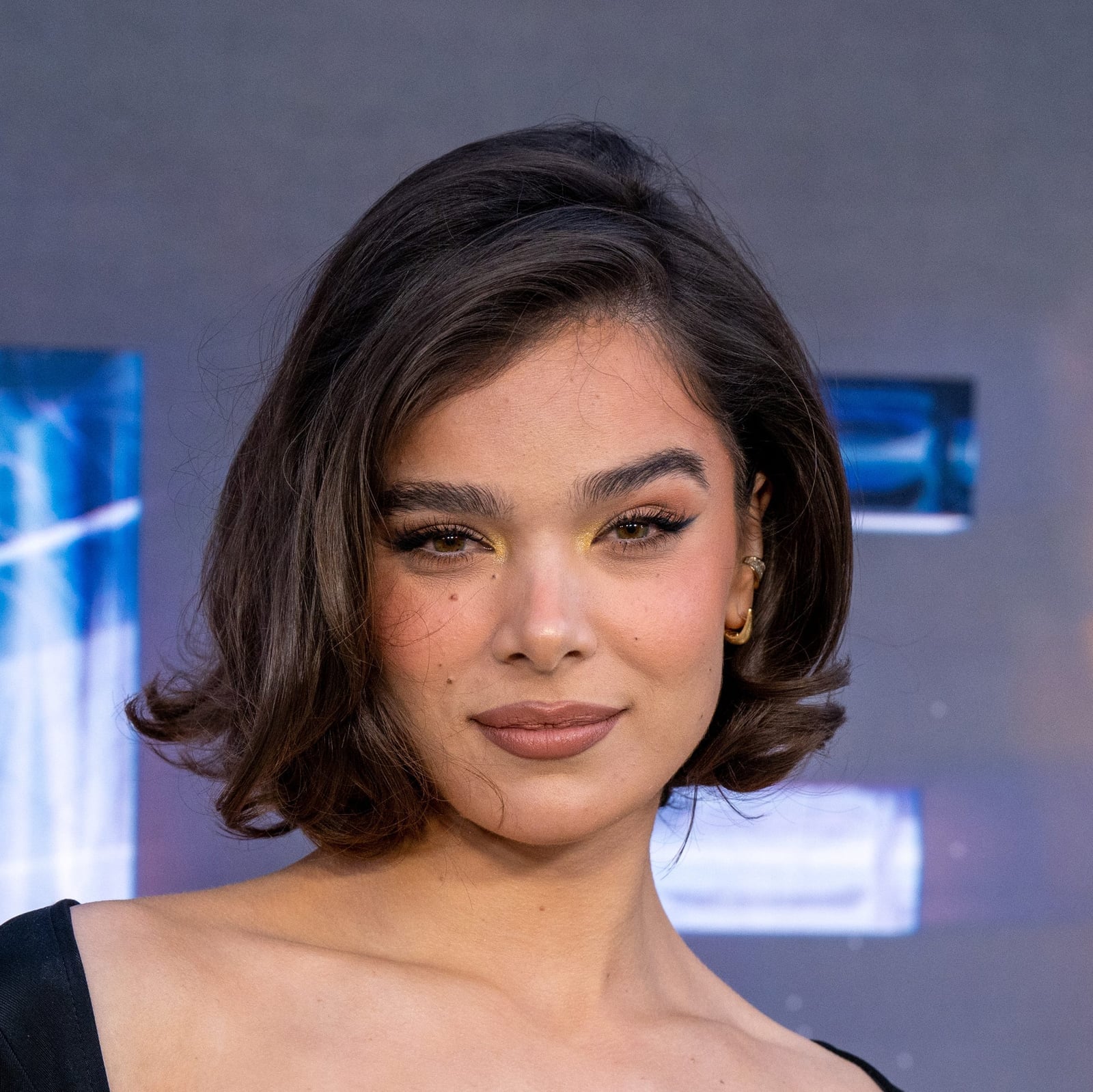
A pixie cut on thick, straight hair relies on crown volume for shape. The dark brown base keeps it grounded while the side-swept bangs give it an asymmetrical edge. Thick hair at ear length benefits from the sculpted shape, which reduces bulk without losing density. Ask your stylist for: short pixie, volume on top, textured side-swept bangs. A texturizing paste or spray applied to the bangs and crown creates that swept-aside finish.
Bixie With Wispy Bangs
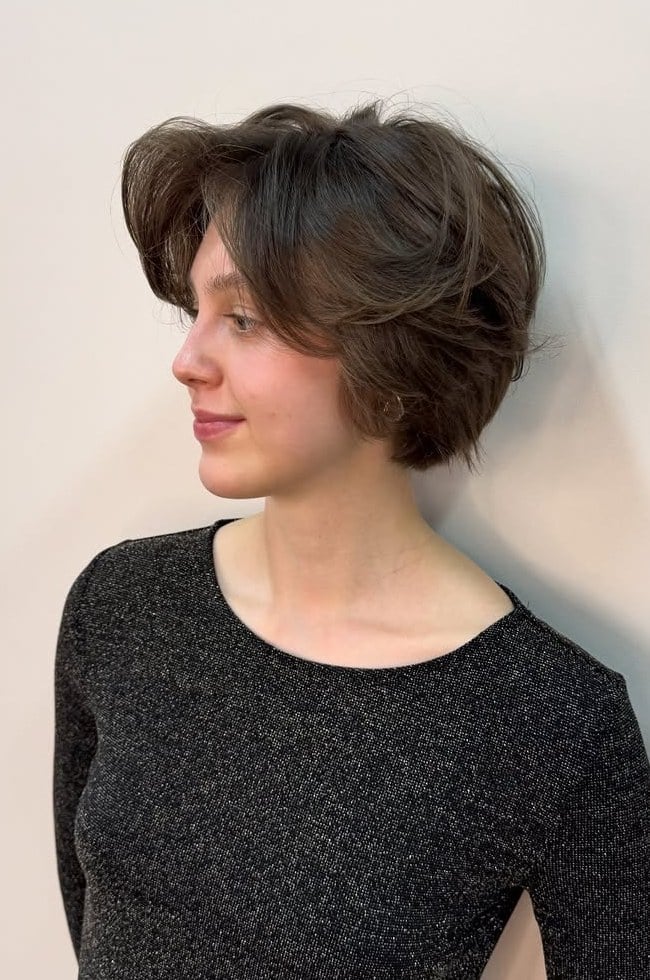
Can a cut be both a pixie and a bob? The bixie answers with a yes that lands somewhere in between, blending a short back with enough length at the front to keep the bob identity. On thick, wavy hair the layered volume adds lift, and the soft wispy bangs soften angular face shapes without demanding constant trims. Ask your stylist for: short bixie, soft wispy bangs. Thick hair that tends to widen at the sides will find the internal layering actually removes weight instead of adding more. A texturizing cream encourages the natural wave pattern, and a trim every six to eight weeks keeps the hybrid shape intact.
Collarbone Layers With Curtain Bangs

The collarbone landing zone is the Goldilocks of hair lengths: long enough to pull back, short enough to feel like a change. On thick hair, the key is the internal layering that carves out weight so the hair moves instead of sitting like a solid block.
Curtain bangs start at the cheekbones and blend into the face-framing layers, which means they grow out gracefully rather than announcing themselves every three weeks. Ask your stylist for: collarbone length with soft layers, curtain bangs. The blonde highlights against the dark brown base add a lived-in dimension that works for the office and transitions to an evening dinner without restyling. A round brush and a blow-dryer aimed forward at the bangs is all the daily effort this needs.
Collarbone Waves With Highlights
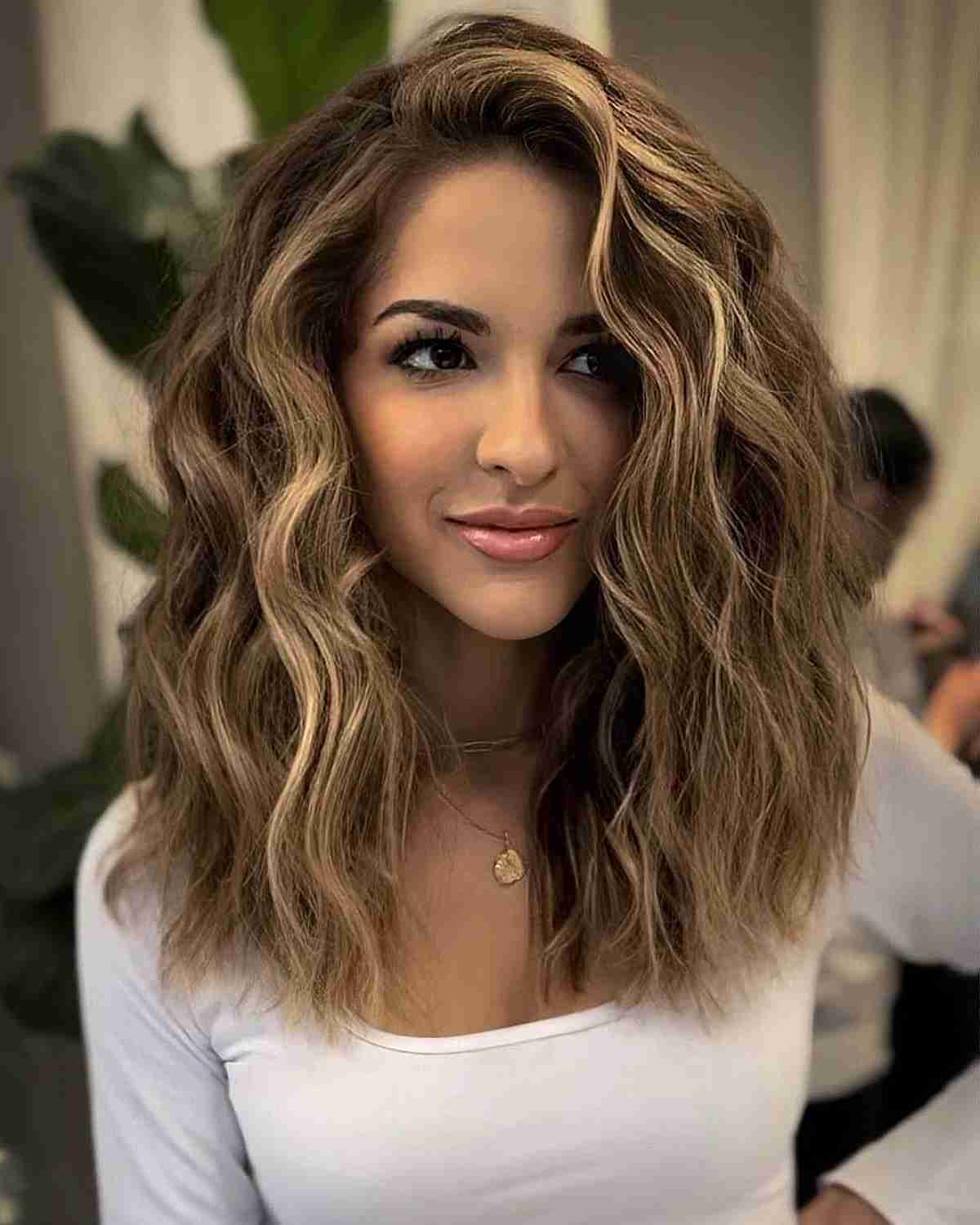
A lob with soft layers but no bangs is a different animal from its fringed cousin. The absence of bangs means the face-framing comes entirely from the layers, which on thick hair creates a gentle curtain effect that opens up the face. The dimensional highlights on the medium brown base do the work of adding movement where the cut leaves texture alone. Ask your stylist for: collarbone length layers, soft waves, dimensional highlights. The reality of this finish: a wave-enhancing product applied to damp hair and air-dried or diffused yields the same result as a full blowout, and a trim every eight weeks keeps the ends from feeling heavy.
Collarbone Lob With Balayage
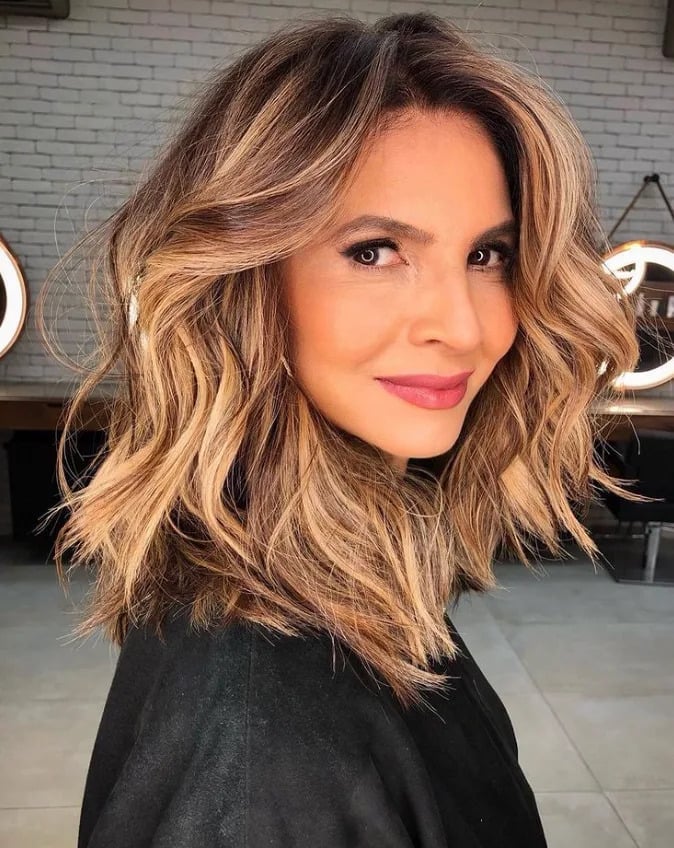
Wondering how to describe the exact lob you want without a photo pulled up on your phone? Start with the length: collarbone, not shoulder, because that one inch determines whether the hair flips or lies flat. Then specify subtle layers that remove weight from the interior without chopping the perimeter. The balayage on a brunette base should be blended, not striped, with the blonde concentrated around the face and ends. Ask your stylist for: collarbone lob with layers, loose waves, blonde balayage. To style, apply a texturizing spray to damp hair, scrunch, and let it air-dry or diffuse. The waves soften the line of the lob and give thick hair the illusion of movement rather than mass.
Layered Lob With Straight Fringe

A straight fringe sitting above loose waves is a study in contradiction: the bangs stay sharp and level while everything behind them moves. On a shoulder-length layered lob, face-framing layers carve weight out of thick, wavy hair so the cut swings instead of sitting wide, and a middle part keeps the fringe symmetrical. Ask your stylist for: shoulder-length layered lob, face-framing layers, straight fringe. Here is the trade-off. That fringe needs a blow-dry with a small brush most mornings to stay flat, and thick, wavy hair fights back in humidity. Bangs also grow out fast and need a trim every six to eight weeks to stay off the brows. If you will not commit to the upkeep, a longer curtain fringe is the easier route.
Shag With Curtain Bangs and Dark Brown With Balayage

A collarbone shag is essentially a layered cut that lets thick, wavy hair dry into its own shape instead of fighting it. Shaggy layers through the back and sides remove the bulk that makes a blunt cut sit wide, and curtain bangs split at the middle so the front has movement. Compare it with a smooth collarbone lob: the lob wants a round brush and a sleek finish, while this one looks better air-dried with a sea salt spray scrunched through the ends. Thick hair at collarbone length suits the shag best, since the texture gives the layers something to grab. Ask your stylist for: collarbone shag, textured layers, curtain bangs. Trim every eight to ten weeks to keep the shape from collapsing.
Platinum Shag With Voluminous Bangs

Can thick, wavy hair go platinum without turning into a cloud? Yes, if the cut carries the volume on purpose. A shoulder-length shag with layers and full curtain bangs turns all that texture into the point, and the platinum blonde makes every wave read clearly. Ask your stylist for: shoulder-length shag, voluminous curtain bangs. It suits high-density, wavy hair that holds shape well; fine or low-density hair will struggle to fill the fringe. The catch is color upkeep: platinum needs a root touch-up and toning every four to six weeks to keep brassiness out, and the lightening itself takes a long appointment. Worth it if you like a bold finish and can keep the schedule.
Chin Length Bob With Dimension
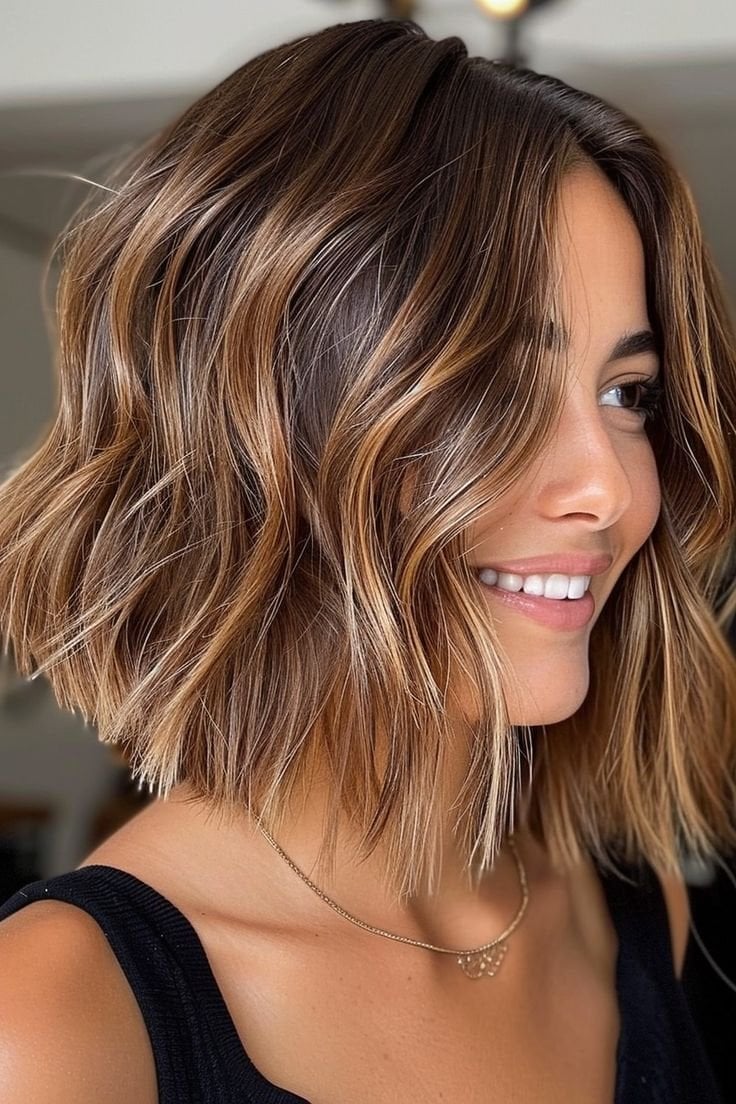
Dimension in a chin-length bob comes from placement, not from adding more hair. A side parting lifts volume on one side while the other stays flatter, and blonde highlights through a brunette base add depth where the waves turn, so the tousled texture reads as shape instead of a solid block. Ask your stylist for: chin-length wavy bob, side parting, dimensional highlights. Thick, wavy hair at chin length can turn helmet-like without help, so the technique matters: a stylist thins the interior and leaves the surface wavy so the cut keeps its weight line. Scrunch in a texturizing cream on damp hair and let it dry, then trim every six to eight weeks to hold the shape.
Mid-Back Layers With Curtain Bangs
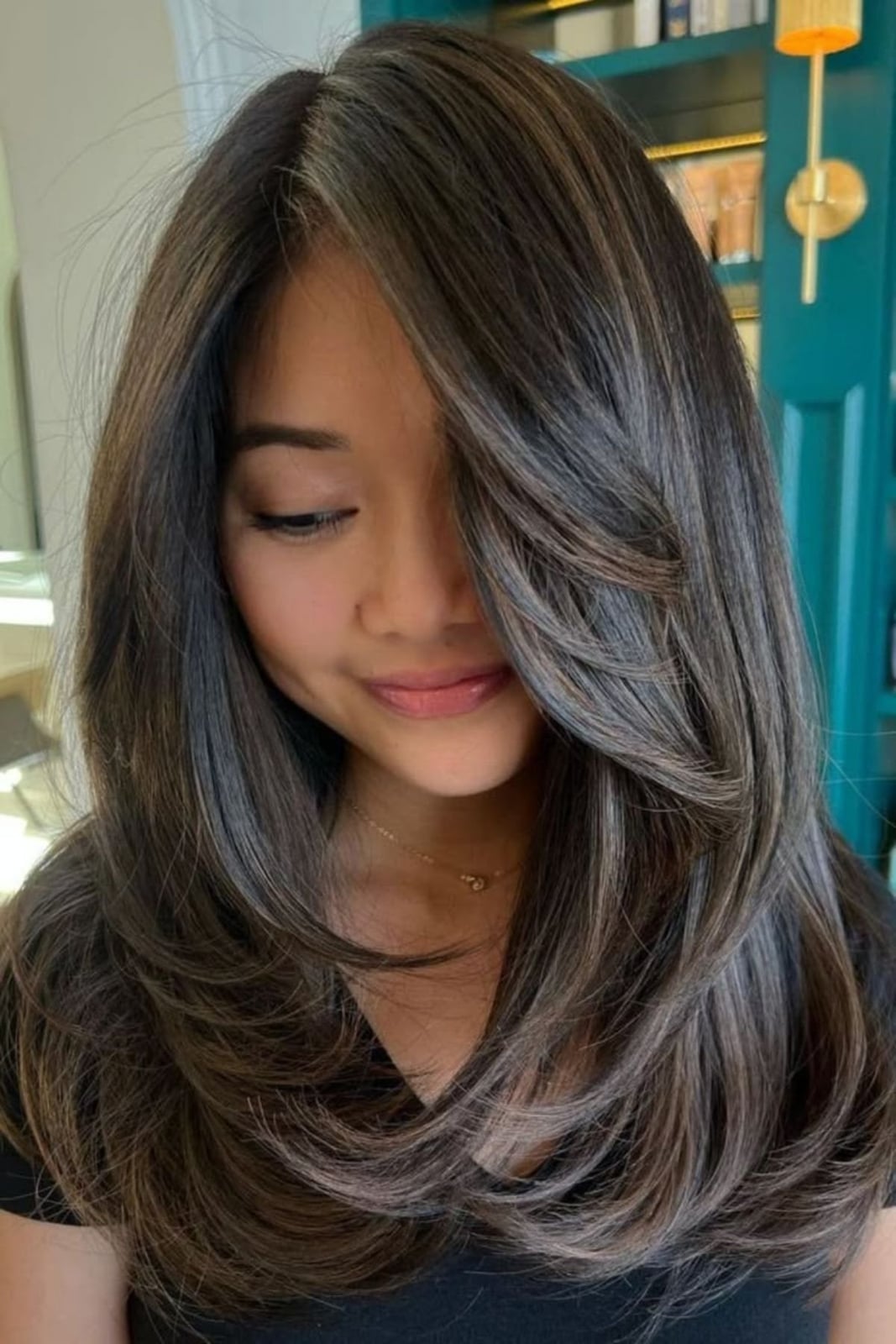
A blunt mid-back cut on thick, wavy hair is a single heavy curtain; long layers with curtain bangs are the same length with an escape route. The face-framing layers start around the cheekbone and sweep back, so the front of the hair has shape and the curtain bangs split at a side parting and blend into them. Ask your stylist for: mid-back length with long layers, curtain bangs. Ash blonde highlights through a dark brown base give the layers something to catch, which matters when the hair is this dense.
In practice, this is a blowout cut. Without heat, thick, wavy mid-back hair dries wide and the face-framing layers disappear into the mass; with a large round brush, they sit forward and the length falls smooth. Curtain bangs need a quick roll with that same brush, or they hang flat against the forehead. Book a trim every eight to ten weeks to keep the layers from growing into one weight, and expect the blowout to take real time on wash days. The cut does less for you on a lazy morning than a shorter shape would.
Mid-Back Straight With Face-Framing Layers
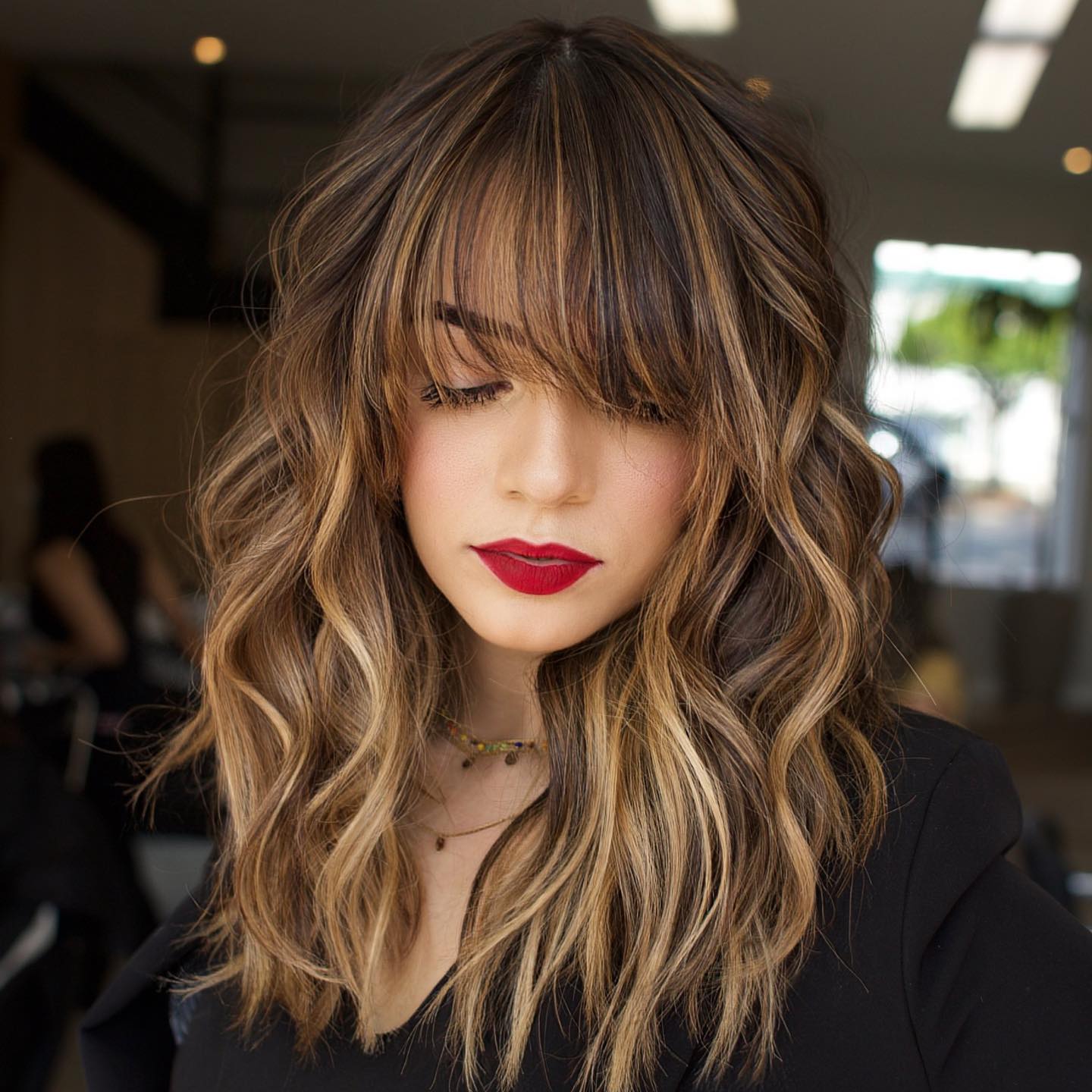
How many times have you asked for length and gotten a blunt triangle instead? The trick on thick straight hair is face-framing layers that start around the jaw and graduate down, keeping the mid-back length intact while removing the weight at the sides. The subtle highlights here add depth without looking stripey, which helps the layers read as deliberate.
This cut works best on hair that is already mid-back or longer, since the layers rely on the contrast between the shorter front pieces and the long back. Ask your stylist for: mid-back length, face-framing layers. The blowout you see is the default state of this shape: a round brush and a heat protectant, and you are done in twenty minutes. Plan a trim every eight weeks to keep the face-framing pieces from sliding into your ends.
Long Layers With Honey Highlights

Curtain bangs on long, thick wavy hair are a design that works on paper and then sometimes forgets to cooperate. The weight of the hair pulls the bangs apart by lunch, and what started as soft curtain pieces can end up as two sad wisps. The honey highlights here provide the necessary separation: lighter pieces break up the mass so the bangs actually swing instead of sitting there.
The honest take is that this shape needs a stylist who understands tension. Too much layering and the ends get stringy; too little and it is a shelf of hair. Thick waves at mid-back length are the ideal canvas, but the curtain bangs will require a trim every six weeks to hold their shape. If you air-dry and rarely touch a round brush, this may not be your cut.
Butterfly Cut With Dramatic Blowout
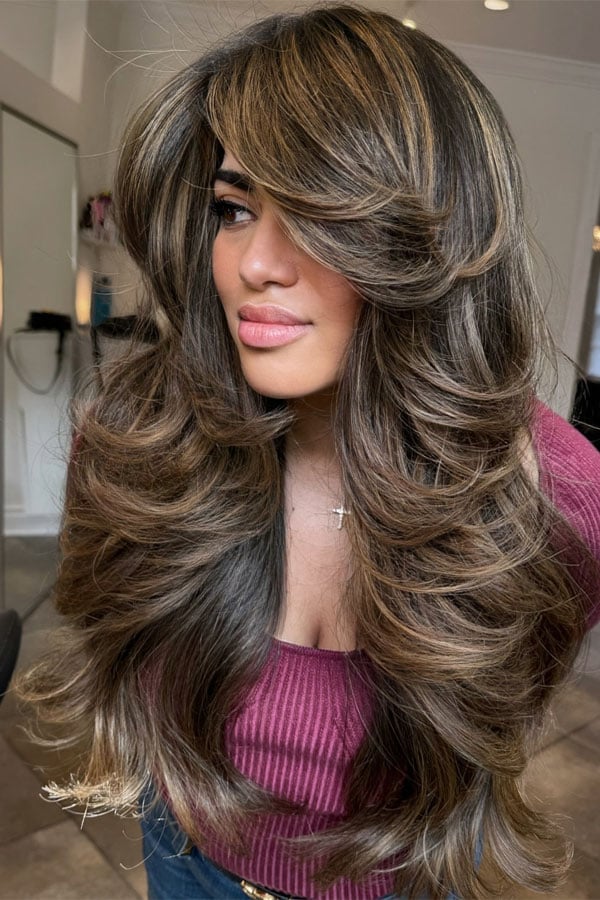
A butterfly cut is essentially a layered cut where the top sections are shorter than the bottom, creating a V-shape that stacks volume at the crown. On thick wavy hair, the internal layers remove enough bulk that a dramatic blowout with side-swept bangs becomes a realistic evening look in under three hours. The side-swept bangs here are cut to graze the brow, and the lighter brown highlights through the mid-lengths prevent the volume from reading as a block of dark hair.
Half Updo With Braided Accent
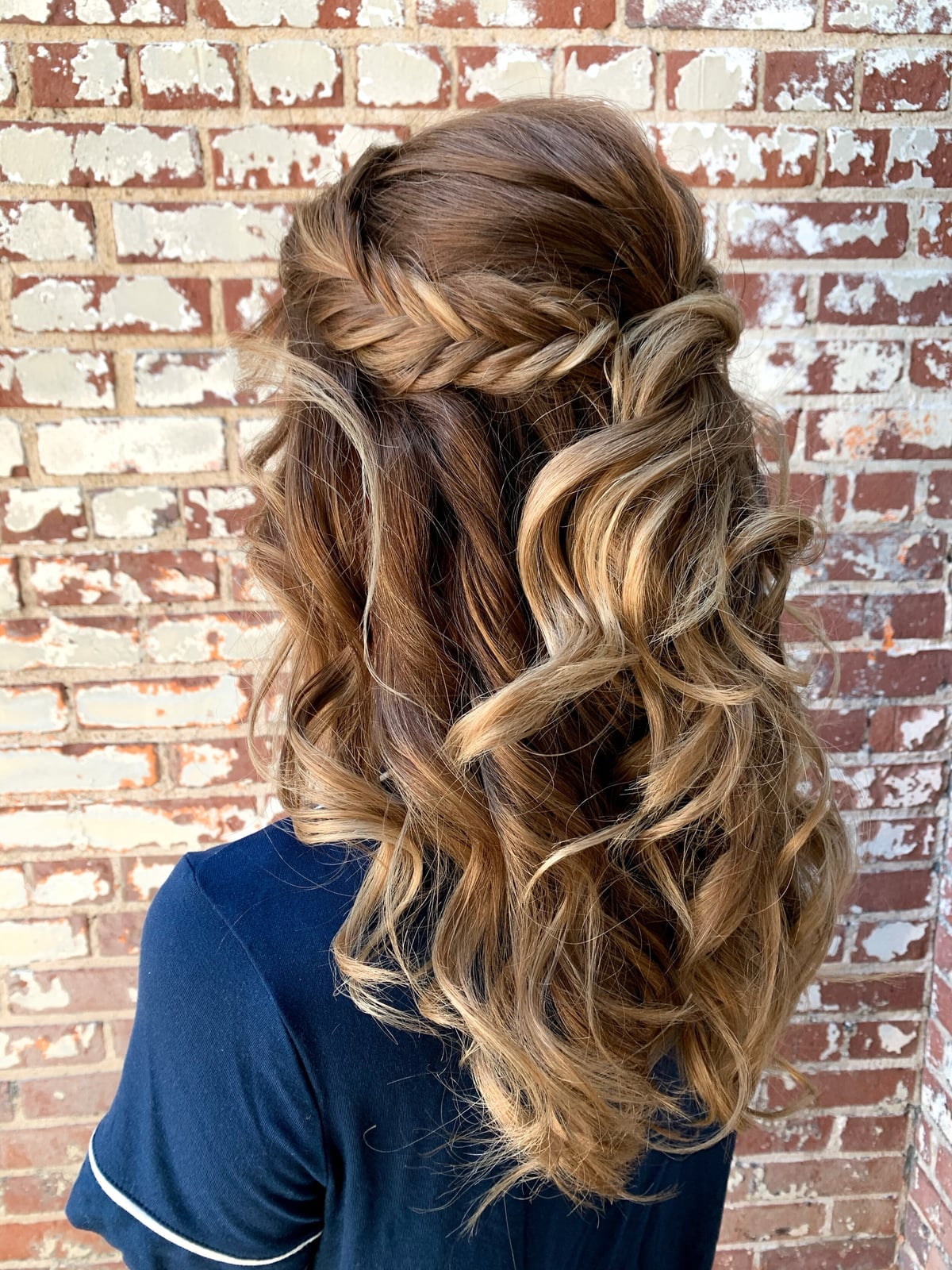
A full updo on thick hair takes pins, patience, and usually a second person. The half-updo with a braided accent across the crown is the version you can do yourself. The braid pulls the front sections back without fighting the thickness at the nape, and the remaining hair falls in loose curls that show off the blonde highlights.
The DIY version takes about fifteen minutes with a sectioning clip and a few bobby pins. The salon version adds a smoother finish and a tighter braid, but the braid still acts as a built-in headband that stays put on wavy texture. Mid-back length is the minimum here, since the loose curls need enough length to bounce below the braid. A texturizing spray before braiding keeps the accent piece from slipping.
Mid-Back Waves With Balayage
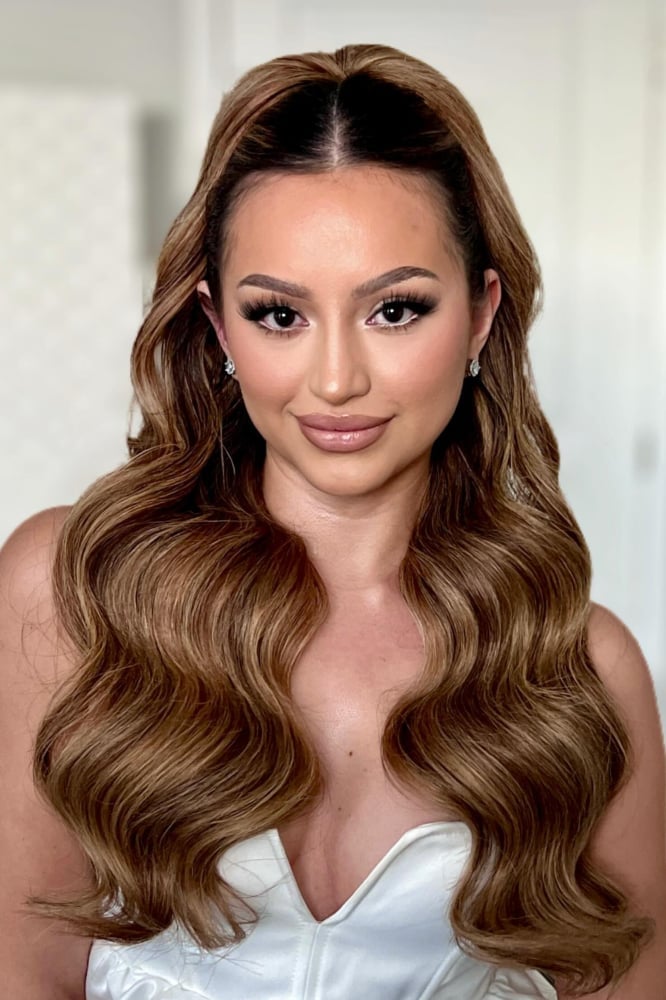
Mid-back waves with balayage is a low-maintenance style, provided you have the texture to back it up. The blonde balayage here starts a few inches from the roots and deepens toward the ends, so the grow-out line is a gentle fade and not a stripe. On thick wavy hair, the balayage lightens the visual weight of the bottom half, so the waves look airy instead of heavy.
This suits thick hair at mid-back length or longer. The one group that should pass: those who want a sharp, uniform shape. The loose waves and the balayage create a soft, lived-in effect that looks casual, not precise. A texturizing spray and a scrunch are all the styling this needs, and a trim every ten weeks keeps the ends healthy without altering the shape.
Final Thoughts
For thick hair, the decision is simple: if you want a strong shape with no fuss, keep the line blunt and go shorter. If you prefer movement and texture, ask for internal layers that remove weight without sacrificing length. Either way, regular maintenance keeps the shape honest.
- Schedule trims every 6 to 10 weeks to maintain shape and prevent heaviness.
- Use texturizing or volumizing products on dry hair to enhance styling.
- Consider deep conditioning treatments weekly to keep thick hair hydrated.
- Allow air-drying or use a diffuser attachment on your blow dryer to control volume.
Manage your thick hair with confidence and style.

