
Wash-and-go styling is now the baseline for natural hair, not a special occasion choice. Fewer people are reaching for gel, and more are letting their texture speak for itself, which makes a low-manipulation routine both practical and current.
This collection of 20 Easy Natural Hair Hairstyles covers everything from a five-minute puff to a salon-worthy braided updo. You will find options for fine, thick, coily and wavy textures, plus lengths from a short pixie to mid-back. If your go-to style falls flat by midday or you need a protective look that actually lasts, these ideas skip the fuss and get to the point.
Short Coily Cut With Side Part
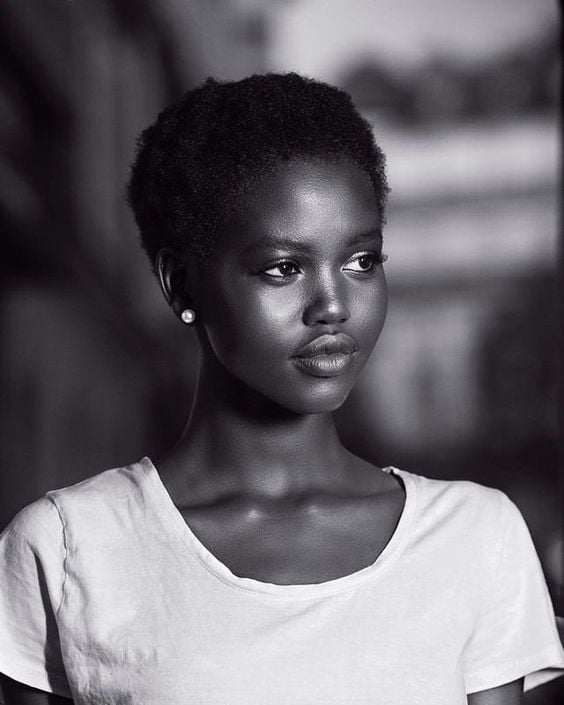
A side part on a short, ear-length cut isn’t decorative; it’s structural, lifting fine coily hair away from the scalp so the shape reads clearly. This style works best on hair that is genuinely fine and coily, starting at ear length or shorter, because the close cut relies on texture rather than bulk for volume. Ask your stylist for a short coily cut with a side part and short bangs. Air dry and gently fluff with fingertips, then plan a trim every four to six weeks to keep the silhouette sharp.
Voluminous Curly Pixie With Air-Dried Texture
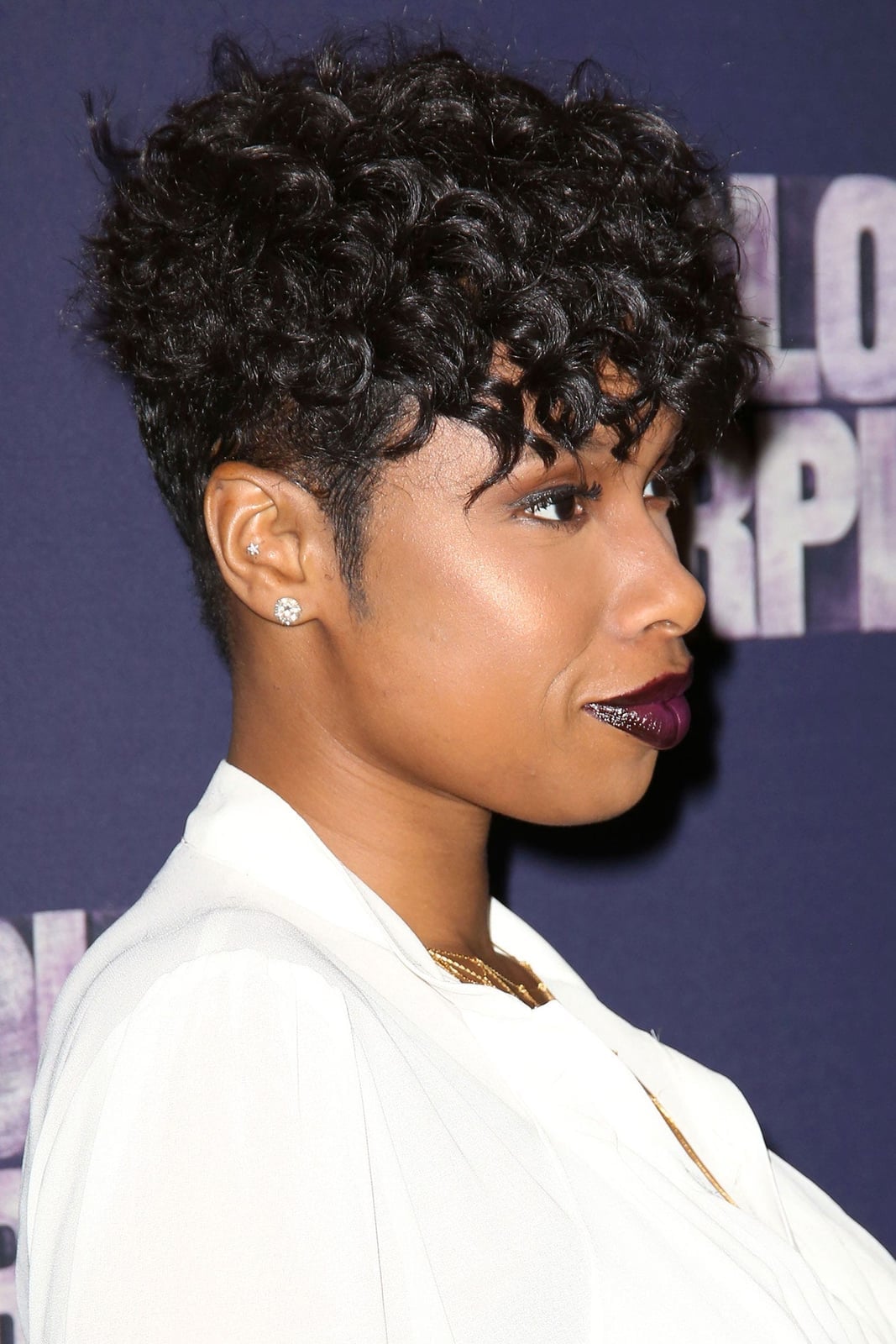
How do you get a pixie to look full without heat? Start with dense, curly hair at ear length and let gravity do the work. A middle part on a pixie is a risk with straight textures, but curly hair uses it to distribute volume evenly across both sides. Ask your stylist for a voluminous curly pixie cut with airy styling. Apply a light curl cream to damp hair and air dry, or use a diffuser on low speed if you want a bit more lift without touching the cuticle.
Chin Length Twist Out With Face-Framing Bangs
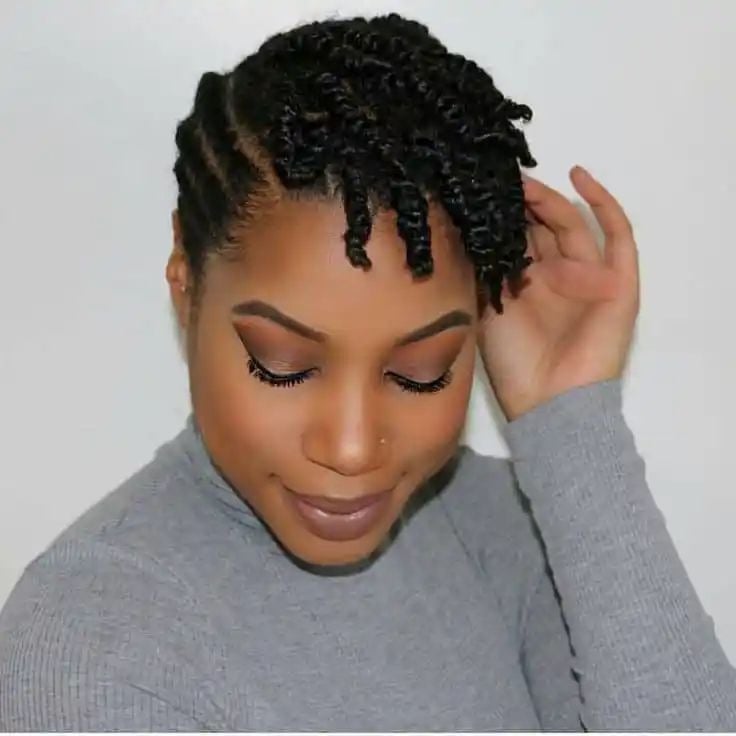
A twist out at chin length depends on precise sectioning: each twisted coil needs to be uniform in size and direction to create that consistent, defined pattern. The short bangs here are cut separately, not pulled from the sides, which gives them a distinct frame around the face. Ask your stylist for a chin length twist out with short face-framing bangs. You want the twists to start at the root and continue to the ends, and the bangs to remain short enough to sit above the brow.
Double High Puffs With Natural Texture
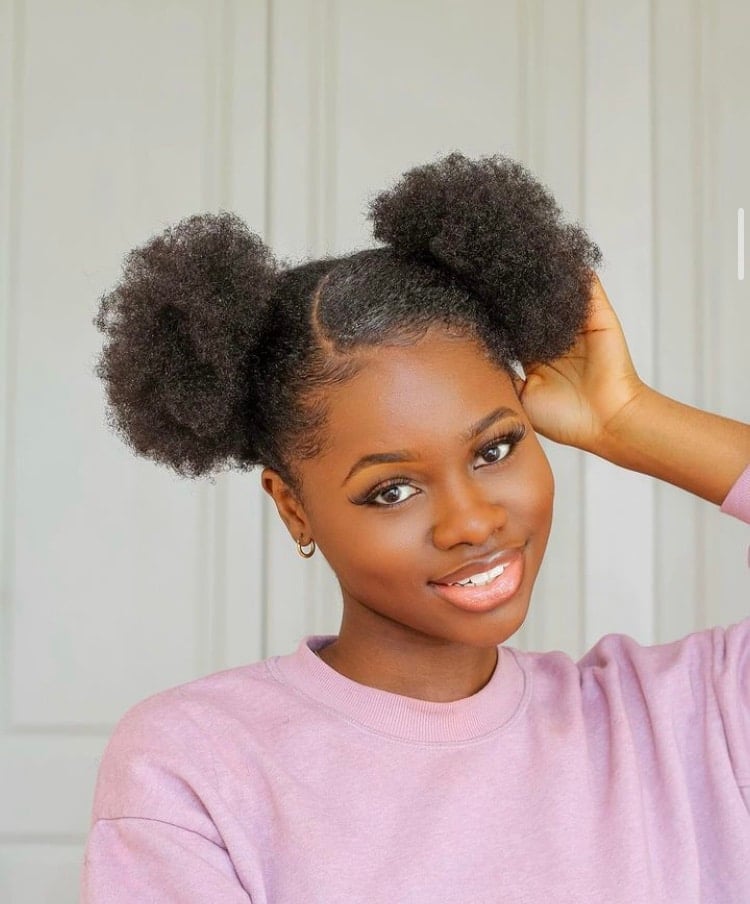
Two high puffs read as playful, but they also serve a practical purpose: they keep thick, coily hair off the neck and face while preserving the natural curl pattern. A middle part is critical here, as it creates the symmetry that makes the style look deliberate rather than thrown together. Ask your stylist for double high puffs with a middle part. Use a soft brush to smooth edges before securing with strong hair ties, then let the puffs air dry. The hold is solid for a full day, though you may need to fluff the puffs lightly the next morning.
Shoulder Length Geometric Twists
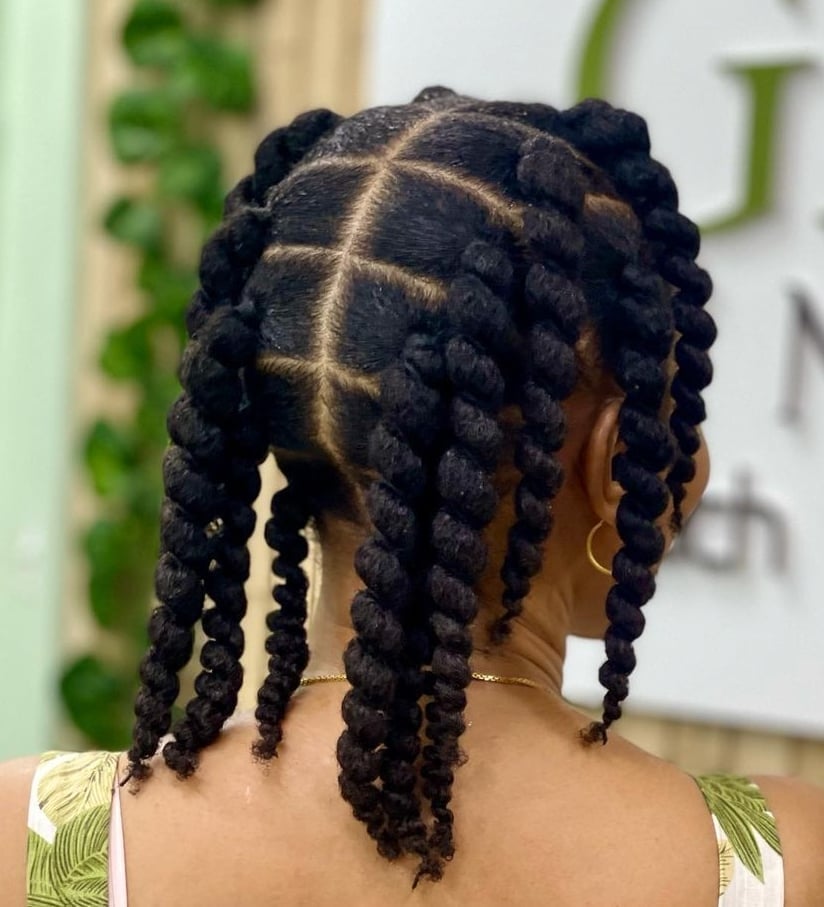
Geometric twists are less about the twist itself and more about the parting. The sections here are mapped out in precise, square panels from the back view, each one a discrete canvas for a large, defined twist. This is not a style you can eyeball at the bathroom mirror; the symmetry requires a steady hand and a comb with a fine tail. Ask your stylist for shoulder length geometric twists. A salon appointment will take about two to three hours depending on density. This protective style stays intact for weeks with only occasional oiling on the ends.
Voluminous Shoulder Length Afro
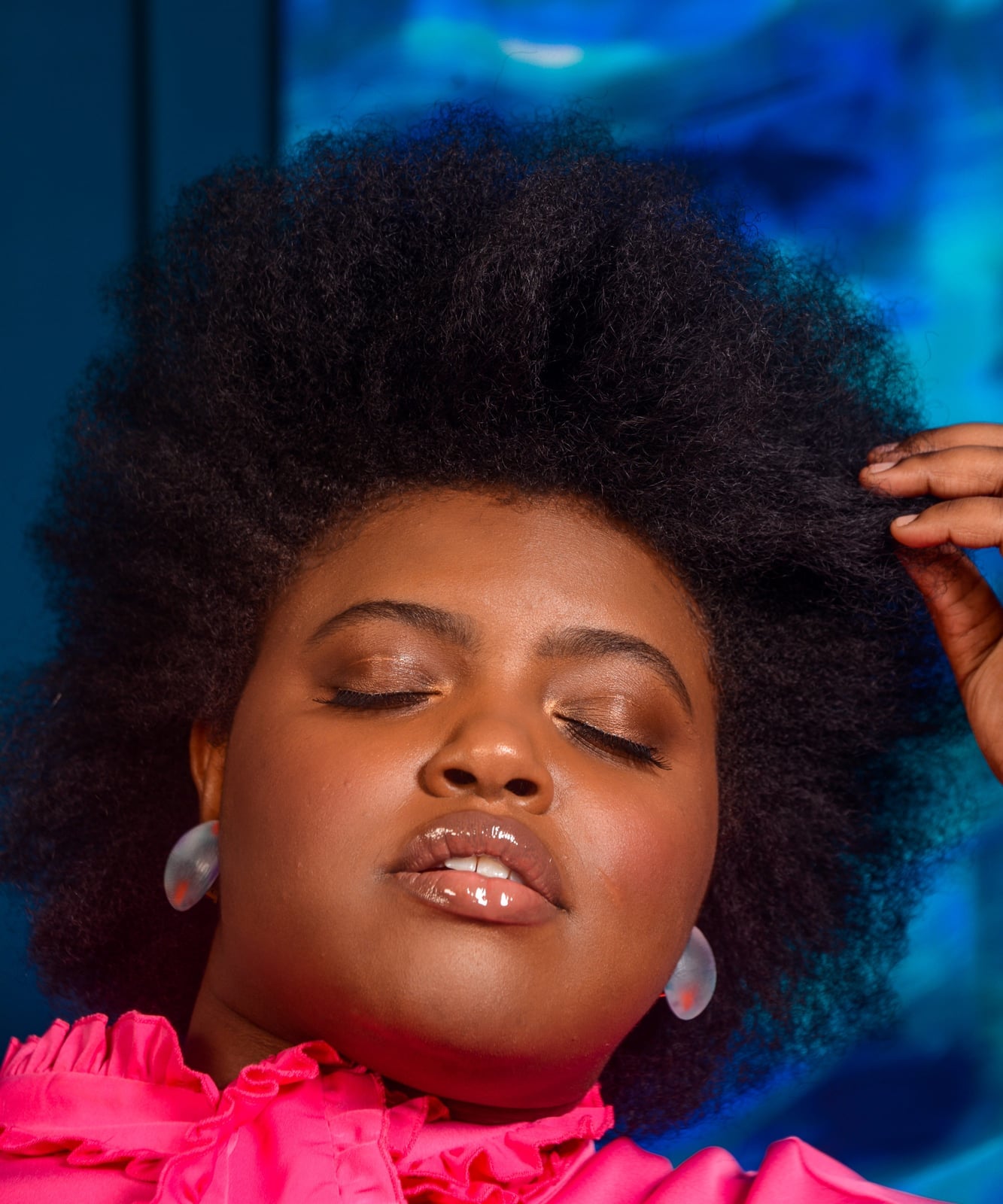
What exactly makes a shoulder-length afro look so deliberately full and rounded? The answer is cut and density. This style works best for those with thick, coily hair already at shoulder length, because the natural volume does the shaping for you. Ask your stylist for: a voluminous, rounded afro. Use a wide-tooth comb to fluff the shape outward each morning, and a decorative clip adds a focal point without disrupting the silhouette. A trim every eight weeks keeps the roundness intact.
Layered Afro With Outward Volume
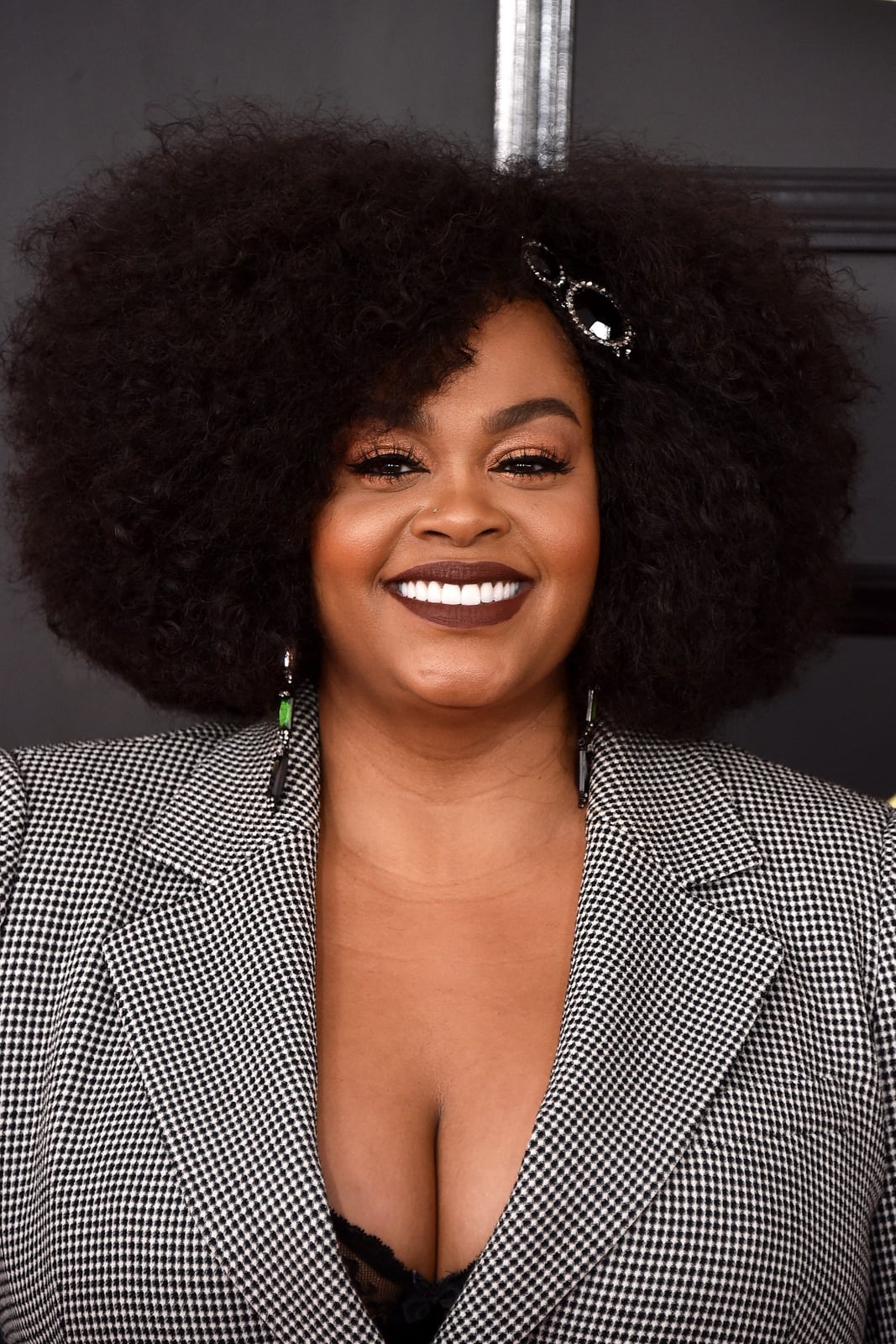
A layered afro is a design choice, not an accident of shrinkage. The layers are cut into the shape to push volume outward instead of up, which gives the hair that rounded, expansive silhouette. Ask your stylist for: a layered, voluminous afro. The layers need precise cutting every six to eight weeks; without a trim, the shape collapses into a vague triangle. Regular fluffing and a moisturizing spray keep the coils defined and the volume even.
Shoulder Length Cornrow Braids
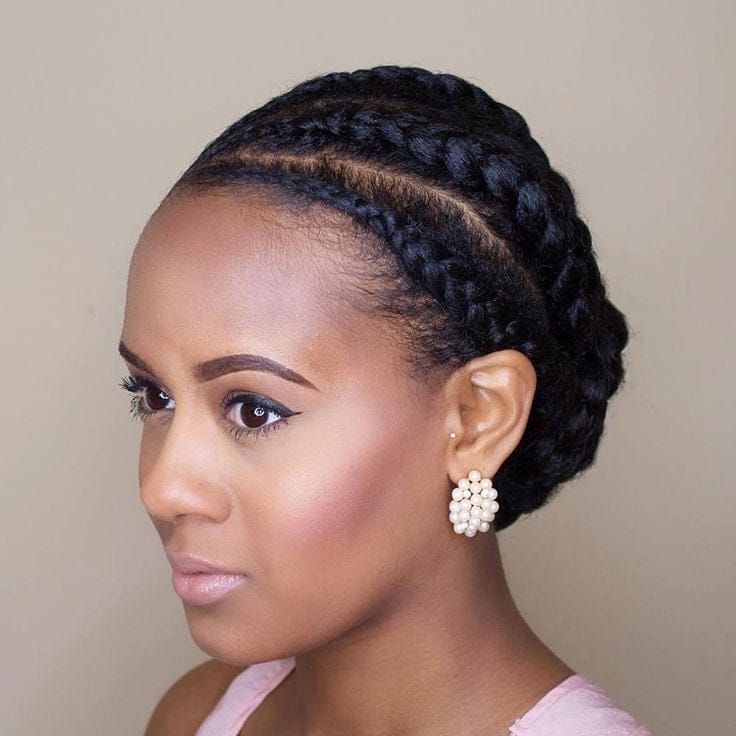
Cornrow braids at shoulder length sit in a useful middle ground between a short protective style and a longer one that takes all day to install. The neat, uniform braids transition into larger braids at the back, which changes the weight distribution and makes the style feel lighter than it looks. Ask your stylist for: shoulder length cornrow braids with a middle part. A scalp serum applied every two days prevents dryness along the part line. Unlike individual braids, cornrows lie flat against the scalp, so the hold is secure for up to six weeks before take-down.
The comparison worth making is between cornrows and box braids. Cornrows follow the scalp in straight lines, which suits a middle part and a sleek finish. Box braids, by contrast, are sectioned into squares and hang freely, so they work better for those who want movement and a looser feel at the ends. If your goal is a clean, low-manipulation style that keeps the hair tucked away, cornrows are the more efficient choice.
Collarbone Waves With Soft Blowout
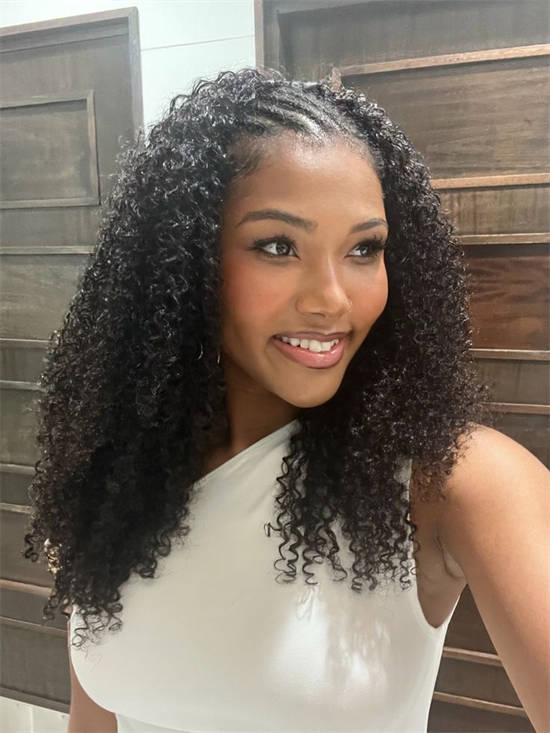
A soft blowout on collarbone-length wavy hair is built in two passes. The first pass uses a large round brush to smooth the roots and create bend through the mid-lengths. The second pass curls the ends under with a large barrel curling iron, which gives the wave a uniform shape. Ask your stylist for: collarbone length loose waves with a soft blowout. The thick, natural wave pattern takes heat easily, so the wave holds for two to three days with minimal touch-up. A texturizing spray applied after styling separates the strands and keeps the volume from falling flat.
The middle part is the anchor of this style. It divides the volume evenly, which prevents the hair from leaning to one side and losing the rounded silhouette. For those with angular jawlines, the collarbone length softens the line of the face without needing bangs. The blowout adds shine and definition that air-drying alone cannot achieve, making this a reliable option for work or an evening out.
Collarbone Curls With Curtain Bangs
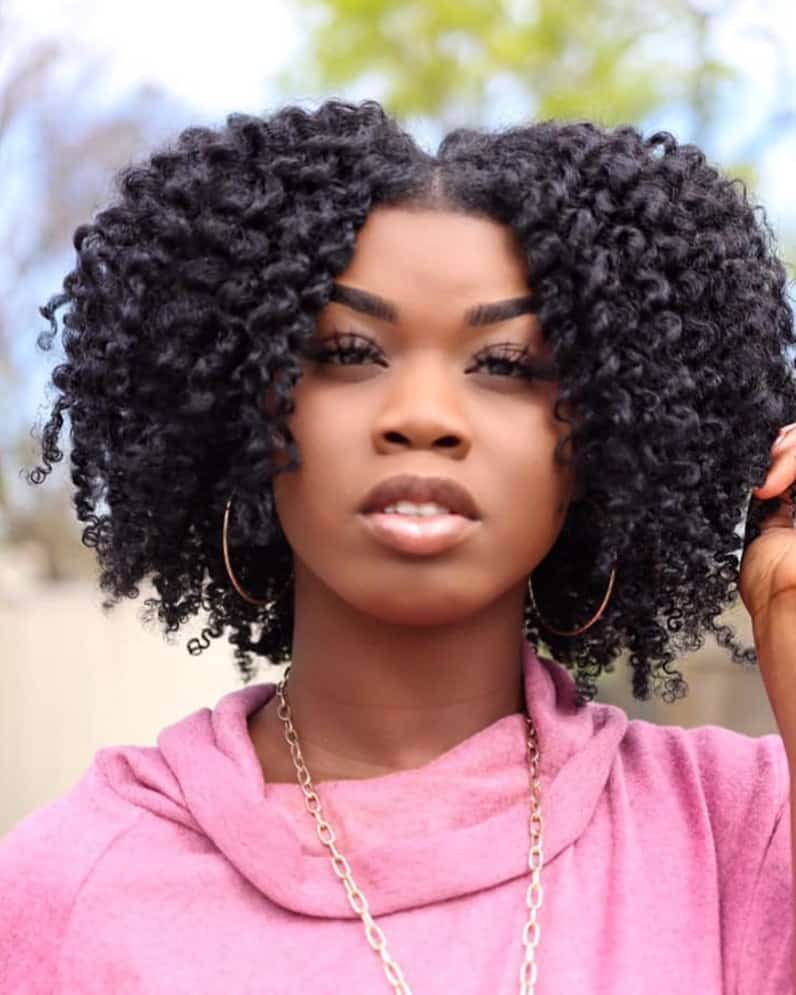
Can you ask for curtain bangs without looking like you just walked out of 2018? Yes, if the bangs are cut to graze the cheekbones and the curls are loose, not tight. The key is the length: shoulder-length hair with curtain bangs needs the bangs to hit at the right angle so they follow the curl pattern. Ask your stylist for: collarbone length curls with curtain bangs. The subtle highlights add dimension without a harsh grow-out line, so toning is needed every ten to twelve weeks. A curl-defining cream applied to damp hair, followed by a diffuser or air-drying, sets the shape. The middle part keeps the bangs balanced on both sides, and the loose curls hold for a full day without re-wetting.
Collarbone Curls With Side-Swept Bangs
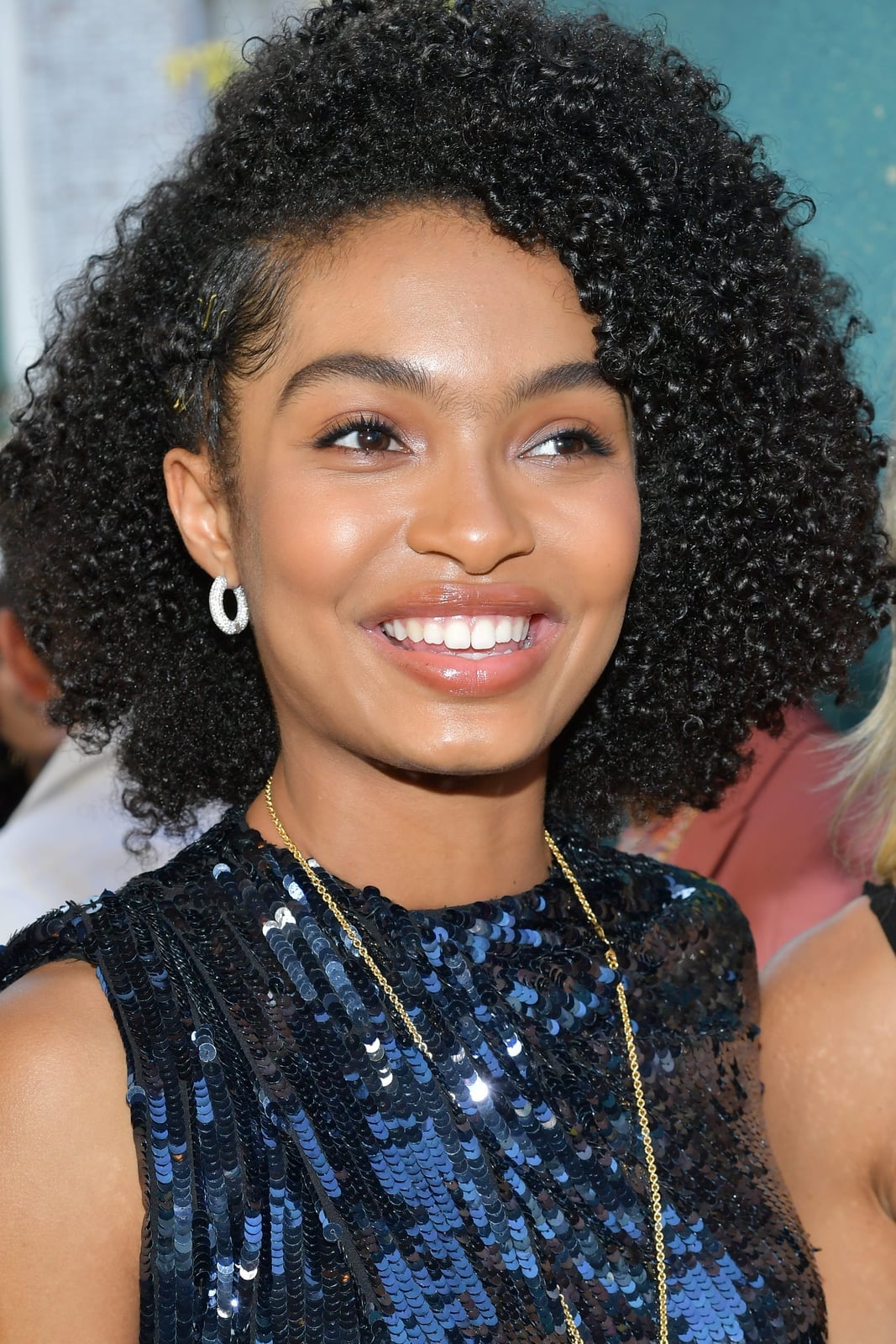
Side-swept bangs angle across the forehead, and the hair falls in defined, bouncy curls that graze the collarbone. The side parting adds volume at the root without teasing. This shape works well for round or oval faces, since the diagonal line of the bangs breaks up the symmetry. Ask your stylist for: collarbone length natural curls with side-swept bangs.
Daily styling is a wash-and-go affair. Apply a curl-enhancing cream to soaking wet hair, scrunch upward, and let it air dry. Resist the urge to touch it while it dries, because that is how frizz creeps in. To refresh on day two, spritz with water and scrunch again. The bangs may need a quick re-wet and a finger coil to sit properly. A trim every eight weeks keeps the collarbone length from drifting into something shaggier than you asked for.
Collarbone Natural Curls With Side Part
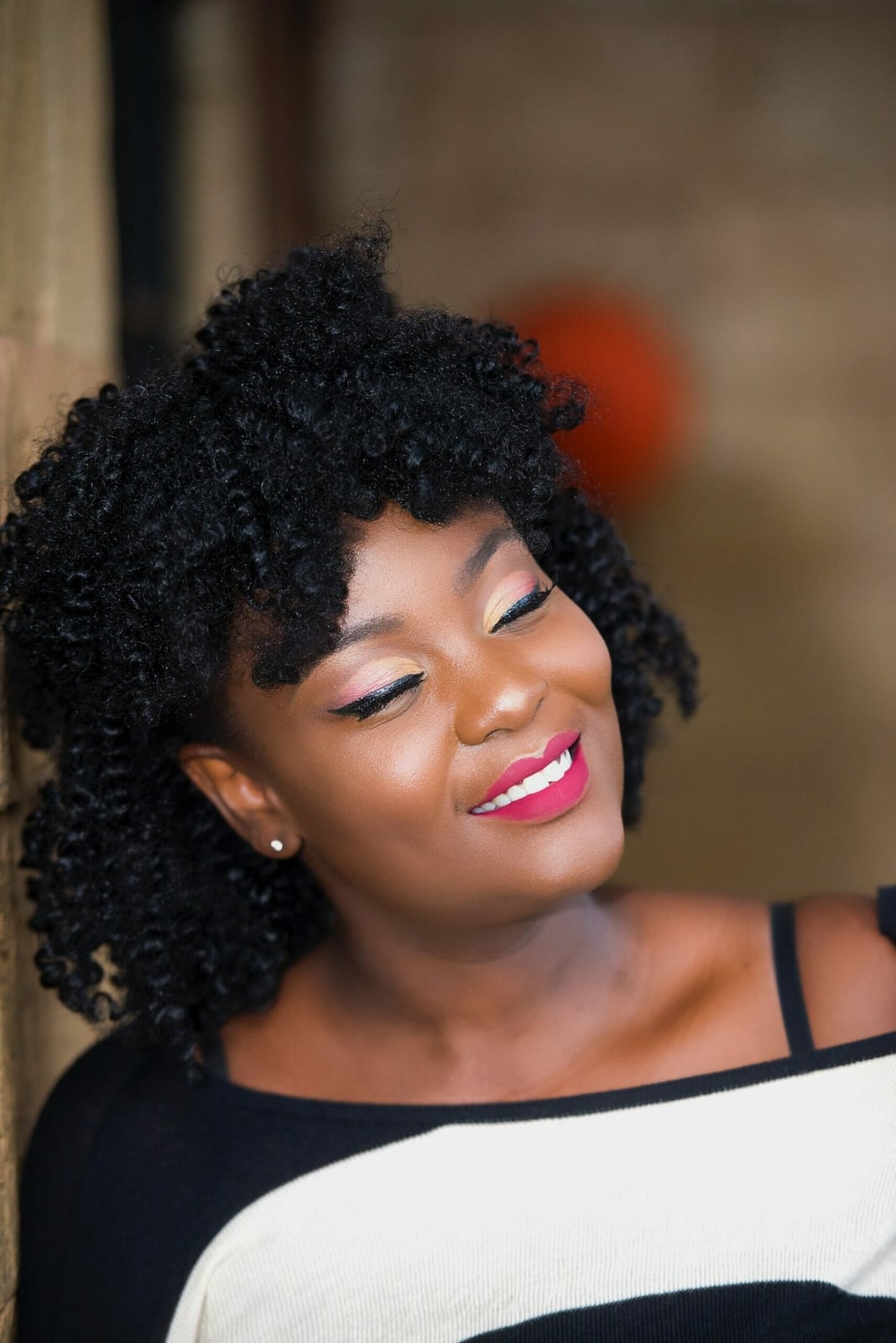
A deep side part changes the entire geometry of collarbone length curls, sweeping the volume to one side and letting the other side fall closer to the face. With no bangs in the way, the defined natural curls take center stage, each one separated and springy. This is a forgiving style that suits most face shapes, though the asymmetry particularly helps balance a long face by adding width at the cheekbone. Ask your stylist for: collarbone length defined natural curls with a side part.
If your hair is on the finer side, the side part can fall flat by midday. A volumizing mousse at the roots, applied before diffusing, gives the lift some staying power. For thicker textures, a lightweight curl cream and a wide-tooth comb are enough to keep the curls clumped. Air drying works, but a diffuser on low heat speeds things up without sacrificing definition.
Mid-Back High Bun With Face-Framing Tendrils
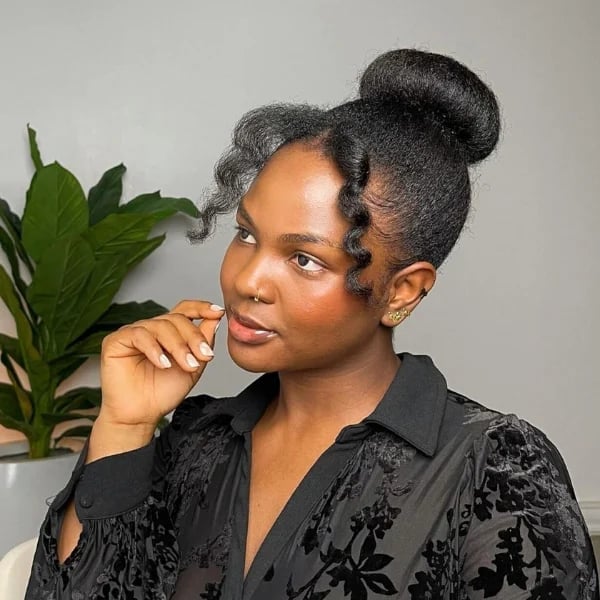
Ever wondered how a bun can look both polished and undone at the same time? The trick is the loose tendrils left out around the face, which soften the whole silhouette. Start by gathering the mid-back length into a high ponytail at the crown, then twist the hair into a bun and secure it with pins. Pull a few coils free at the temples and let them air dry slightly damp so they hold their shape. A middle parting keeps the front clean without looking severe. Ask your stylist for: a high bun with loose face-framing tendrils. This is a genuinely DIY-friendly style, no salon appointment required, and it works best on thick, coily hair that grips pins easily.
Mid-Back Loose Curls With Side Braids
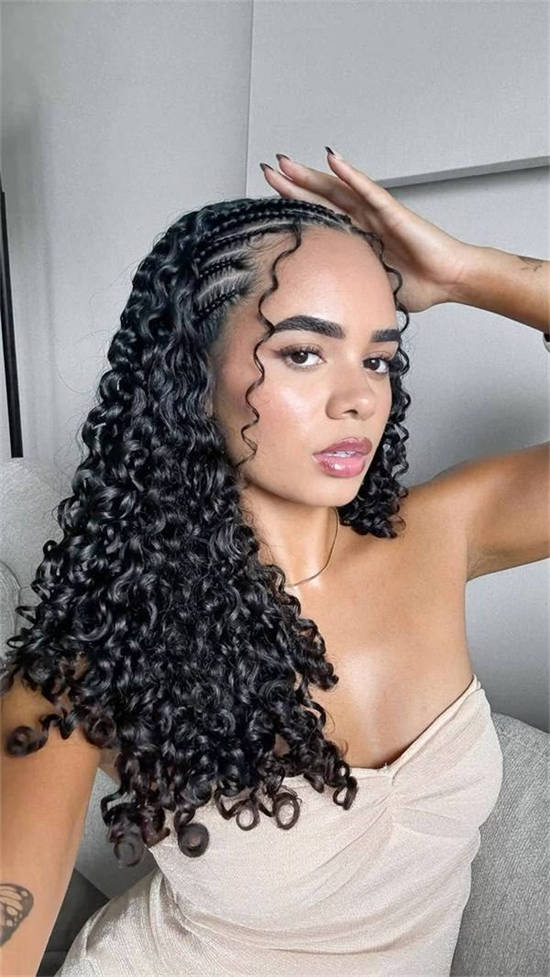
Small braids along the hairline are the architectural detail here, drawing the eye from the temples back into a cascade of loose, voluminous curls that reach mid-back. The side parting keeps the braids from reading as a separate accessory, they are built into the shape. This is a style for events where you want your hair to do the talking, a wedding, a dinner, a night out. Ask your stylist for: mid-back loose curls with side braids along the hairline.
The technique is straightforward: section off the front edges, braid them tightly against the scalp, then leave the rest of the hair to fall in its natural curl pattern. Because the braids are small, they blend seamlessly with the curls once the hair is styled. This is a salon-level look, since getting the braid tension even takes practice. This finish typically holds its shape for the entire event, no touch-ups required.
Mid-Back High Braided Bun
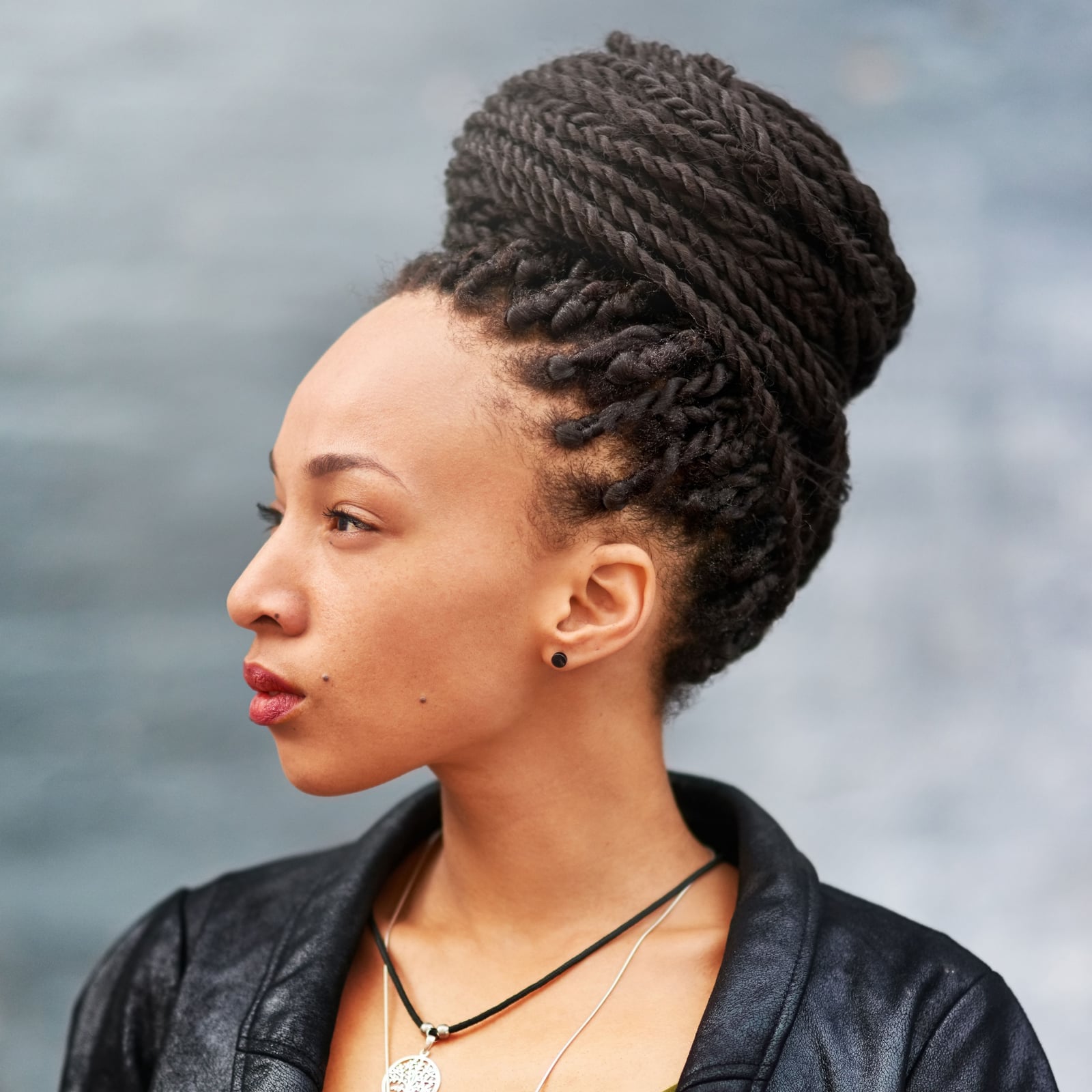
A high braided bun is a commitment, there is no way around it. The mid-back length has to be braided into a sculptural knot on top of the head, and that takes time, skill, and a fair amount of patience. The result is a sleek, protective style that keeps the hair out of your face for weeks. Ask your stylist for: a high braided bun.
The honest trade-off is the time in the chair. This is not a quick style, it is a salon appointment that can stretch for hours, depending on how intricate the braiding gets. The upside is that the hold is exceptional. With the braids secured tightly, the bun stays put through workouts, rain, and everything in between. The drawback is the take-down, which is a careful, oil-and-patience process to avoid breakage. If you are not prepared for that, a simpler bun might be the better call.
Mid-Back Beaded Braids
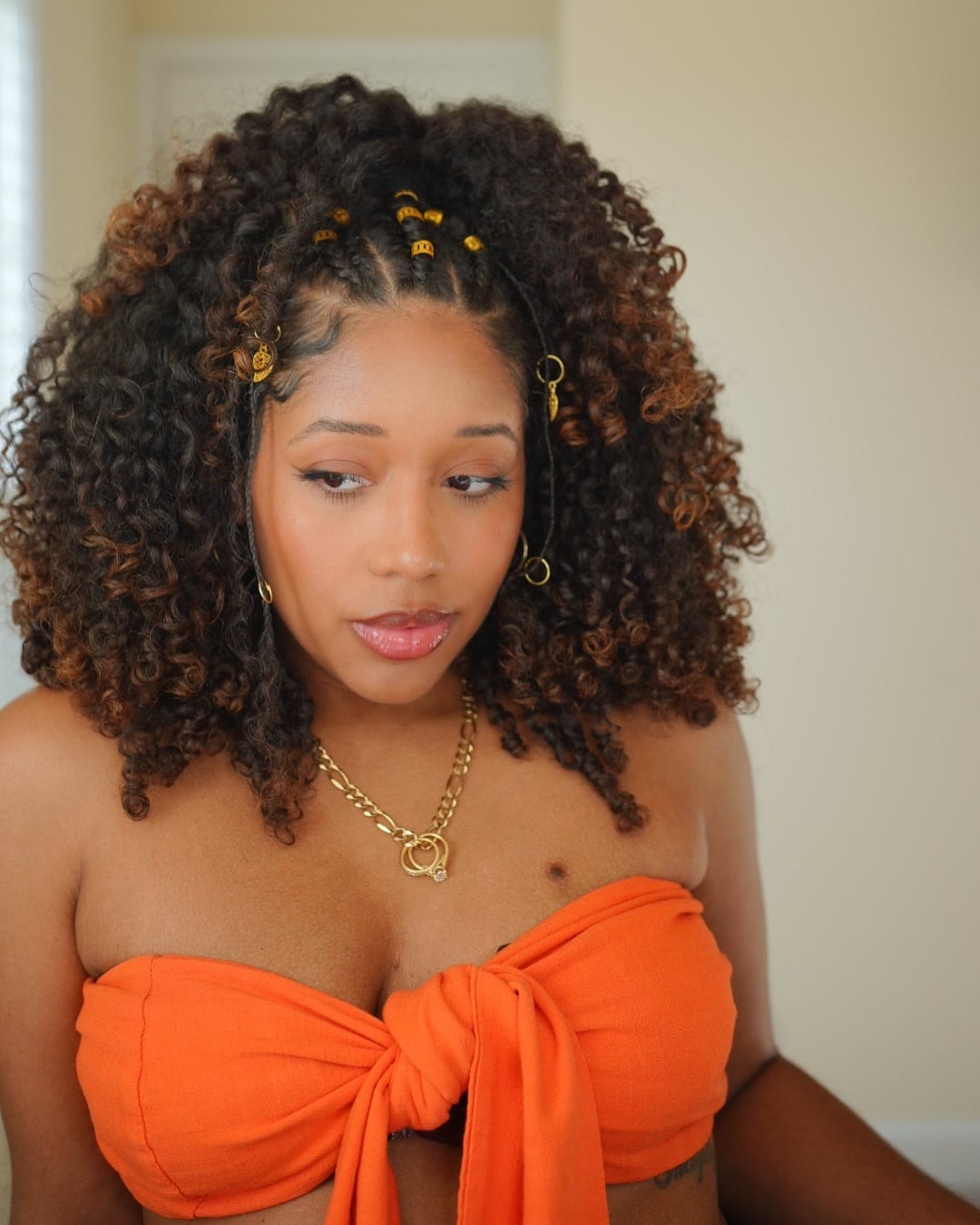
A plain braid does the job, but beaded braids carry the conversation. On thick, curly hair reaching mid-back, small golden beads and rings add shine against a dark brown base with subtle auburn highlights. The decoration turns a protective style into a statement, and it suits anyone with the length and density to hold the braids without pulling. Ask your stylist for: mid-back braids with gold beads and rings. The beads need to sit snug so they don’t slip; a regular scalp moisturizing routine keeps the braids fresh until take-down around six to eight weeks.
Mid-Back Braids Into Two Low Buns
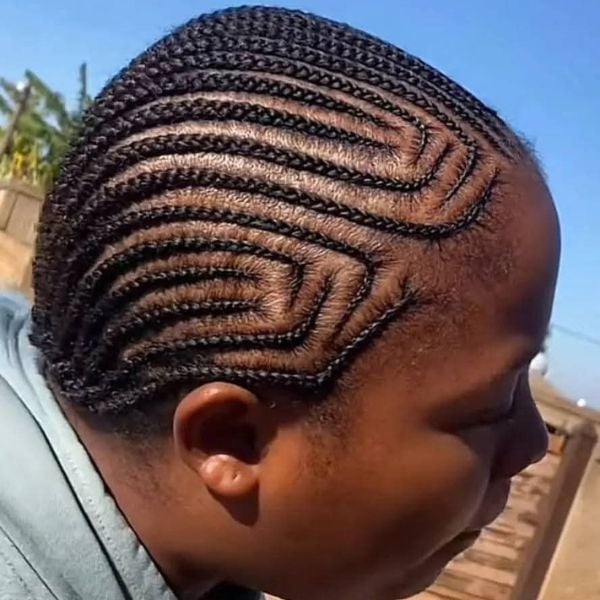
Those braids aren’t random, they follow a geometric pattern that leads the eye straight to the finish. Thick, coily hair of mid-back length is braided in neat sections, then gathered into two low buns at the nape. The contrast between the flat braided crown and the dense buns gives the style its structure. Ask your stylist for: geometric braids into two low buns. The buns need to be pinned securely, and a silk wrap at night will keep the edges and the braids from frizzing. Plan on about three hours in the chair, and a take-down after six to eight weeks keeps the style from getting heavy.
Chin Length Braided Crown Updo
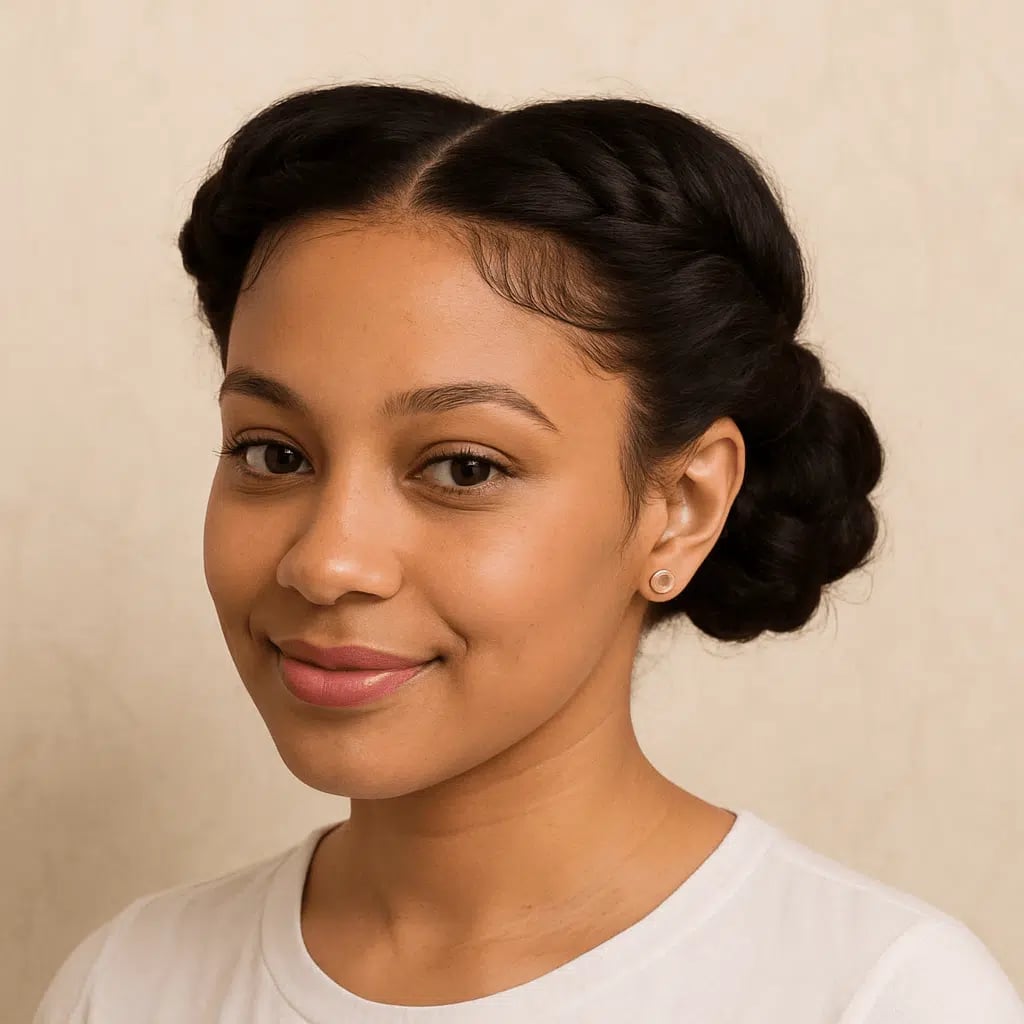
How do you make a short updo feel formal without a single bobby pin showing? A braided crown solves it. On thick, straight hair of chin length, a braid wraps around the head from a middle parting, with the hair smoothed into a low bun at the nape. The braid adds texture without stiffness. Ask your stylist for: a braided crown updo with a low bun. A light hold hairspray will tame any flyaways, and though the braid can last a couple of weeks, you will want to redo the style once the edges start to soften.
Chin Length Updo With Braided Tendrils, Black
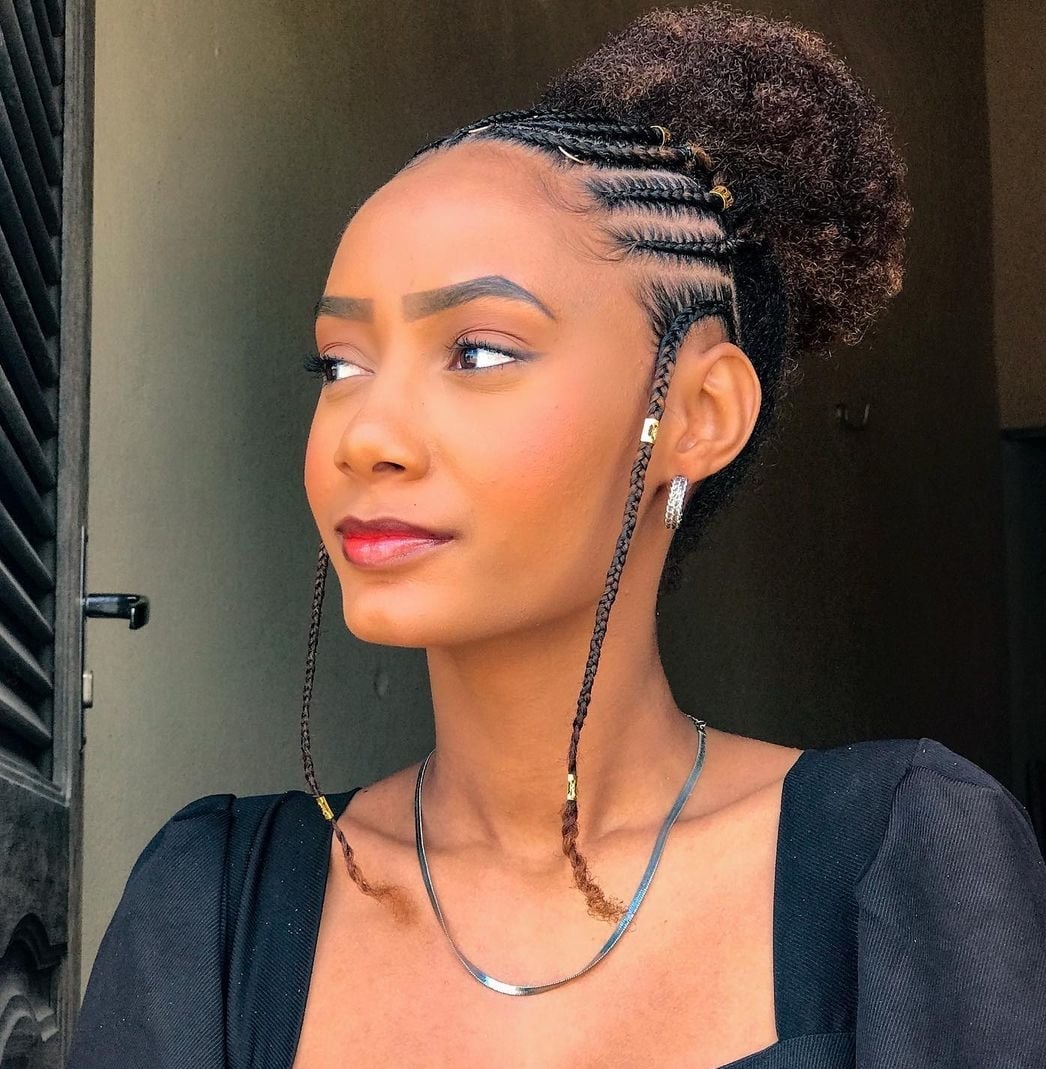
This is the hairstyle equivalent of a tailored suit: intricate braids along the hairline, a high bun, and loose braided tendrils framing the face. On black, thick, coily hair of chin length, the updo gathers everything neatly while the tendrils keep it from feeling severe. Doing this at home is possible but slow; the braids along the hairline demand patience and a steady hand, so a salon is the realistic route for most. Ask your stylist for: a chin length updo with intricate braids and face-framing tendrils. The tendrils can be pinned if they get in the way, and the style holds its shape for four to six weeks.
Long Box Braids With Middle Part
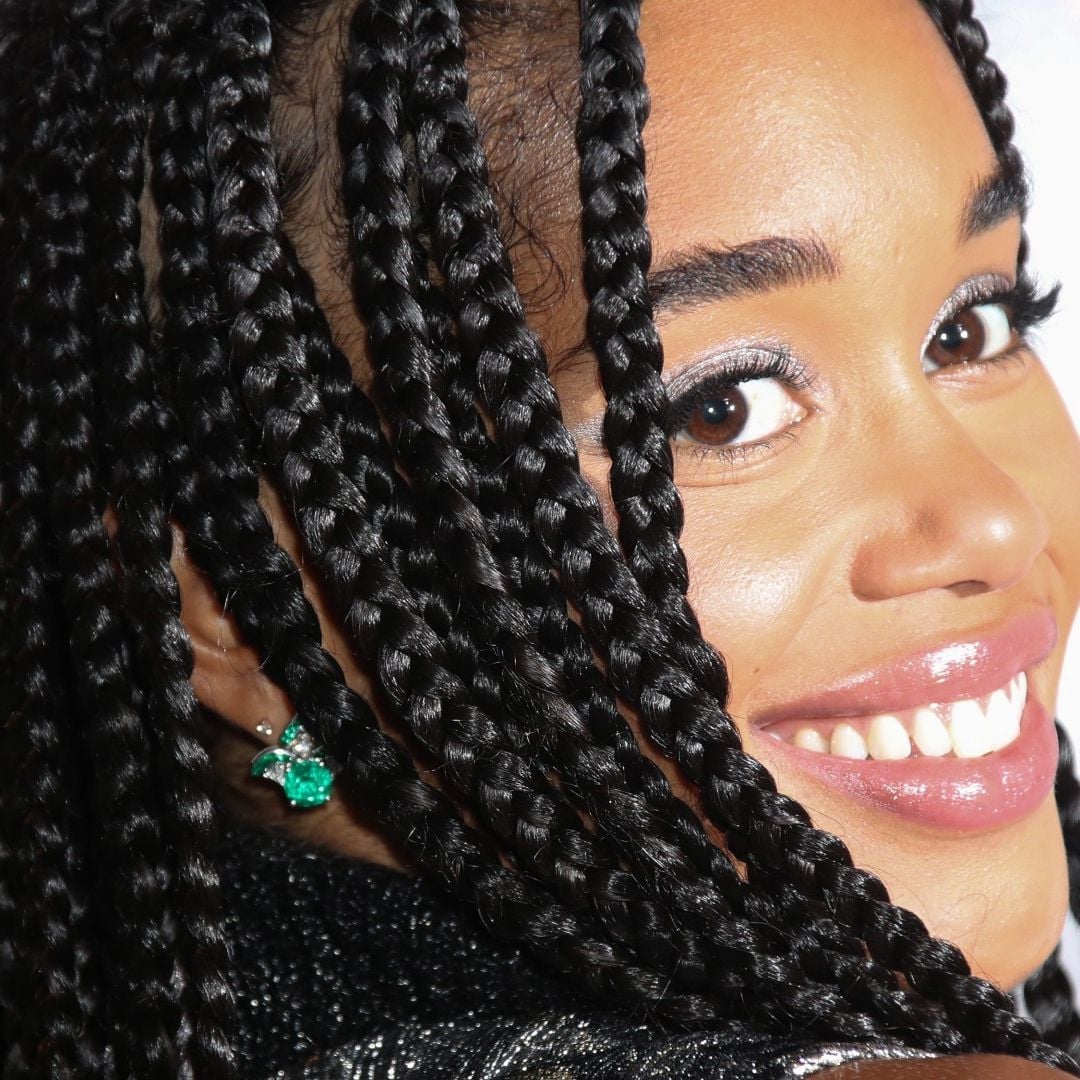
The middle part gives long box braids a clean, symmetrical line that frames the face. Thick black hair is braided to fall past the shoulders, each braid smooth and straight within its section. The style suits anyone with enough length to braid, and the neatness of the part sets the tone for the whole look. Ask your stylist for: long box braids with a middle part. The ends should be sealed with a heated tool to stop fraying, and a scalp moisturizer keeps the braids comfortable. Expect to refresh the style every eight to ten weeks, since the braids hold their shape well but the roots will tell the truth eventually.
Final Thoughts
For a low-maintenance approach, prioritize styles that embrace your natural texture with minimal manipulation, such as air-dried curls or simple twist-outs. If you prefer protective styles, opt for braids or twists that can be styled in various ways throughout their wear.
- Trim protective styles like braids and twists every 8 to 12 weeks to maintain shape.
- Deep condition natural curls weekly to maintain moisture and elasticity.
- Refresh air-dried styles with a light leave-in or curl refresher as needed.
- For braided updos, tie hair down with a silk scarf at night to preserve the style.
- Moisturize scalp regularly, especially with protective styles, using lightweight oils.
Embrace your natural texture with confidence and ease.

