
Dark brown hair is a versatile base for highlights, offering depth and dimension without the commitment of a full bleach. This season, lived-in color and soft face-framing layers take center stage, moving away from chunky streaks toward a more natural, glossy finish.
This collection of 15 dark highlight ideas spans every length and tone, from subtle ash to warm copper. It is for anyone with fine hair that falls flat, a visible grow-out line, or a fringe that will not sit. Each look balances upkeep with impact, so you can choose the level of maintenance that fits your routine.
Collarbone Lob With Blonde Highlights
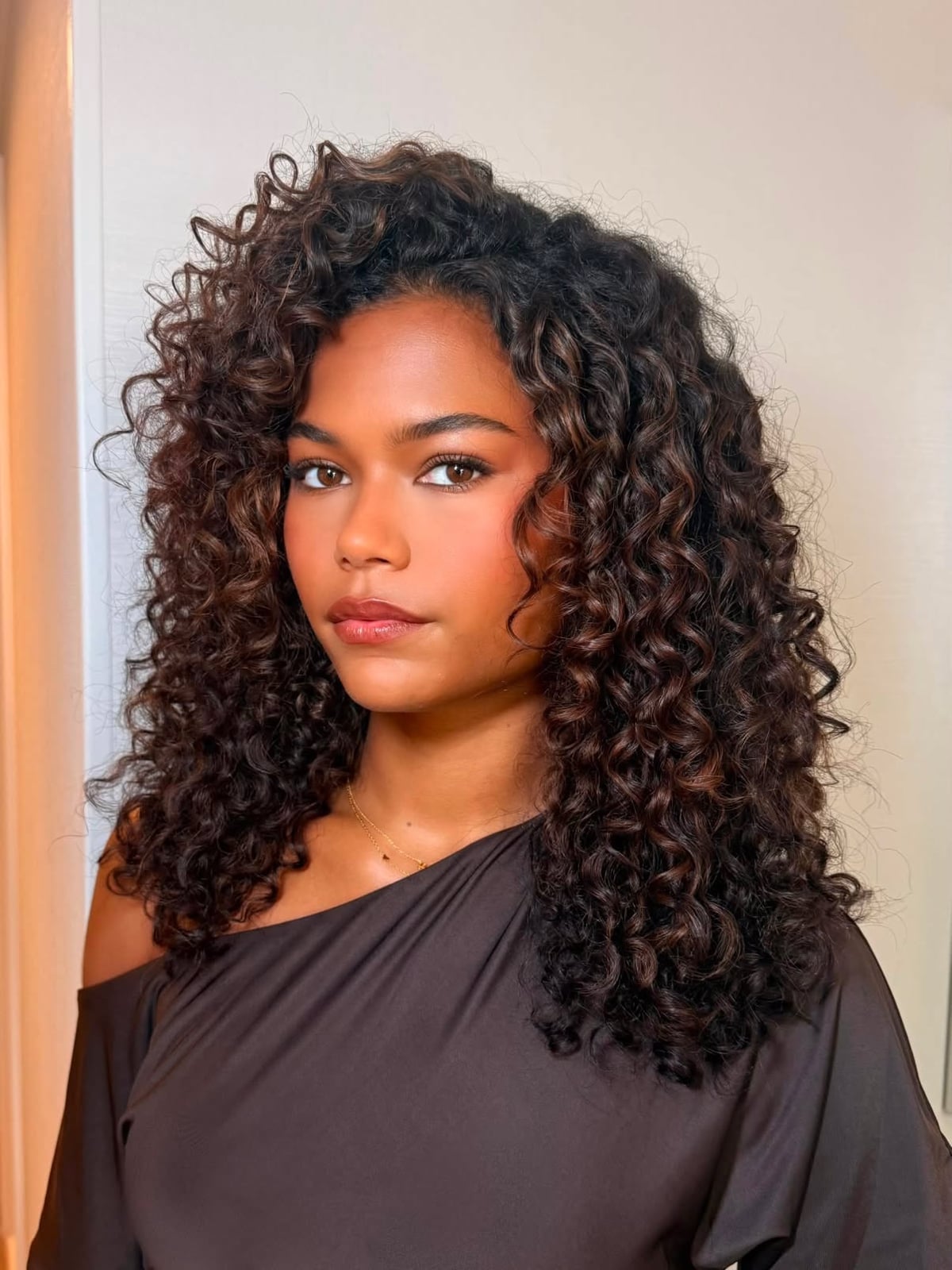
The cut is a collarbone lob with long layers, and the layers do the real work here: they let thick, wavy hair move instead of sitting in one heavy block. A side parting lifts the root on one side, which softens a square or round face without carving anything sharp. The dark brown base keeps the blonde highlights from reading as a full lightening job, so you get contrast at the collarbone line instead of a solid block of color. Ask your stylist for: collarbone lob, long layers, blonde highlights. If your hair is fine instead of thick, expect the waves to fall flatter and ask for fewer layers. Use a round brush for soft movement, and book a trim every six to eight weeks to keep the ends from turning wispy.
Collarbone Lob With Ash Blonde Highlights and Face-Framing Layers
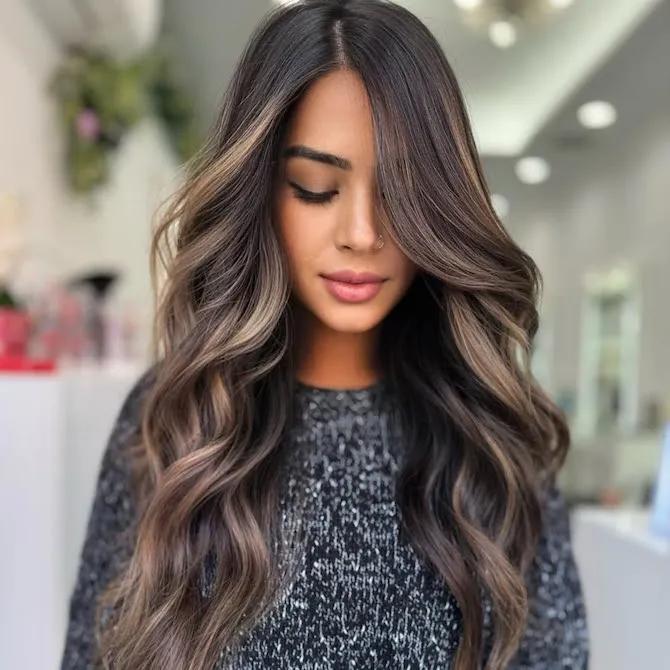
What separates ash blonde from the warmer blondes in this list? The tone sits cool, with no gold in it, which is why it reads as a shadow against a dark brown base instead of a bright stripe. The placement matters as much as the shade: face-framing layers around the collarbone lob carry the ash blonde first, and the middle part lets those pieces fall on both sides. Thick, wavy hair holds the shape; fine hair can take the same cut but will need more styling to keep the volume. Ask your colorist for: ash blonde face-framing highlights on a dark brown base. Ask your stylist for: collarbone lob, face-framing layers, middle part. A heat protectant before waves is the one step worth keeping.
Mid-Back Length Layers With Golden Highlights
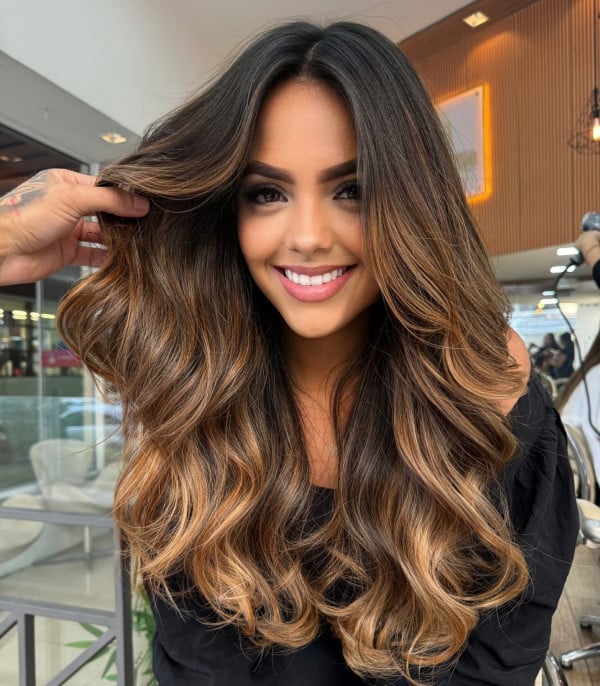
Golden highlights on a dark brown base look glossy when the lightener is woven fine and the tone is controlled after. This mid-back length is built in two stages: lift the pieces, then gloss them to a warm gold that sits close to the base. The layers and curtain bangs give the blowout somewhere to go, so the shine falls in panels instead of one flat sheet. Thick, wavy hair at mid-back length carries the weight; the middle part keeps the curtain bangs symmetrical.
Ask your colorist for: golden highlights, glossed after lightening. Ask your stylist for: mid-back layers, curtain bangs, middle part. At home, a round brush and a blow-dryer handle the styling, and a gloss or toner refresh every six to eight weeks keeps the gold from drifting brassy. Layers need a trim every eight to ten weeks, and the curtain bangs need a small tidy closer to four.
Mid-Back Layers With Lighter Brown Highlights
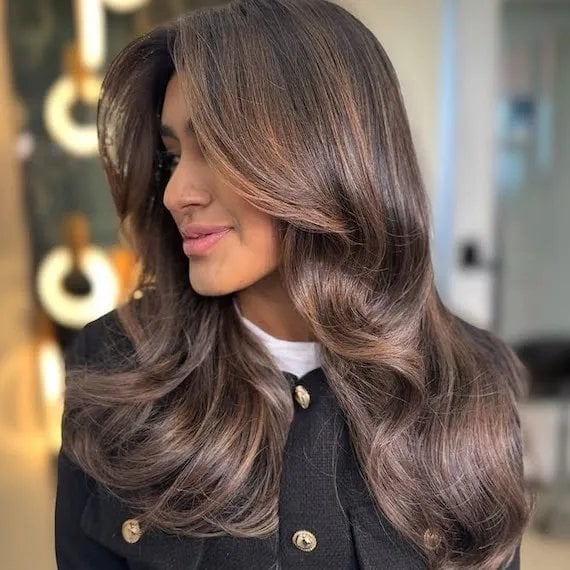
Lighter brown highlights lift the dark brown base by a shade or two, so the grow-out line never announces itself the way a platinum root does. The face-framing layers and curtain bangs carry the color forward, and the side parting gives the voluminous blowout a direction. Thick, wavy hair at mid-back length suits it best, since the layers need density to sit properly.
Ask your colorist for: lighter brown highlights on a dark brown base. Ask your stylist for: mid-back layers, curtain bangs, side part. This version works for a work week and a wedding in the same month, because the tone stays quiet enough for the office and the dimension still shows under event lighting. A volumizing spray at the roots before blow-drying keeps the shape, and a baseline trim every six to eight weeks holds the ends.
Mid-Back Waves With Side-Swept Bangs
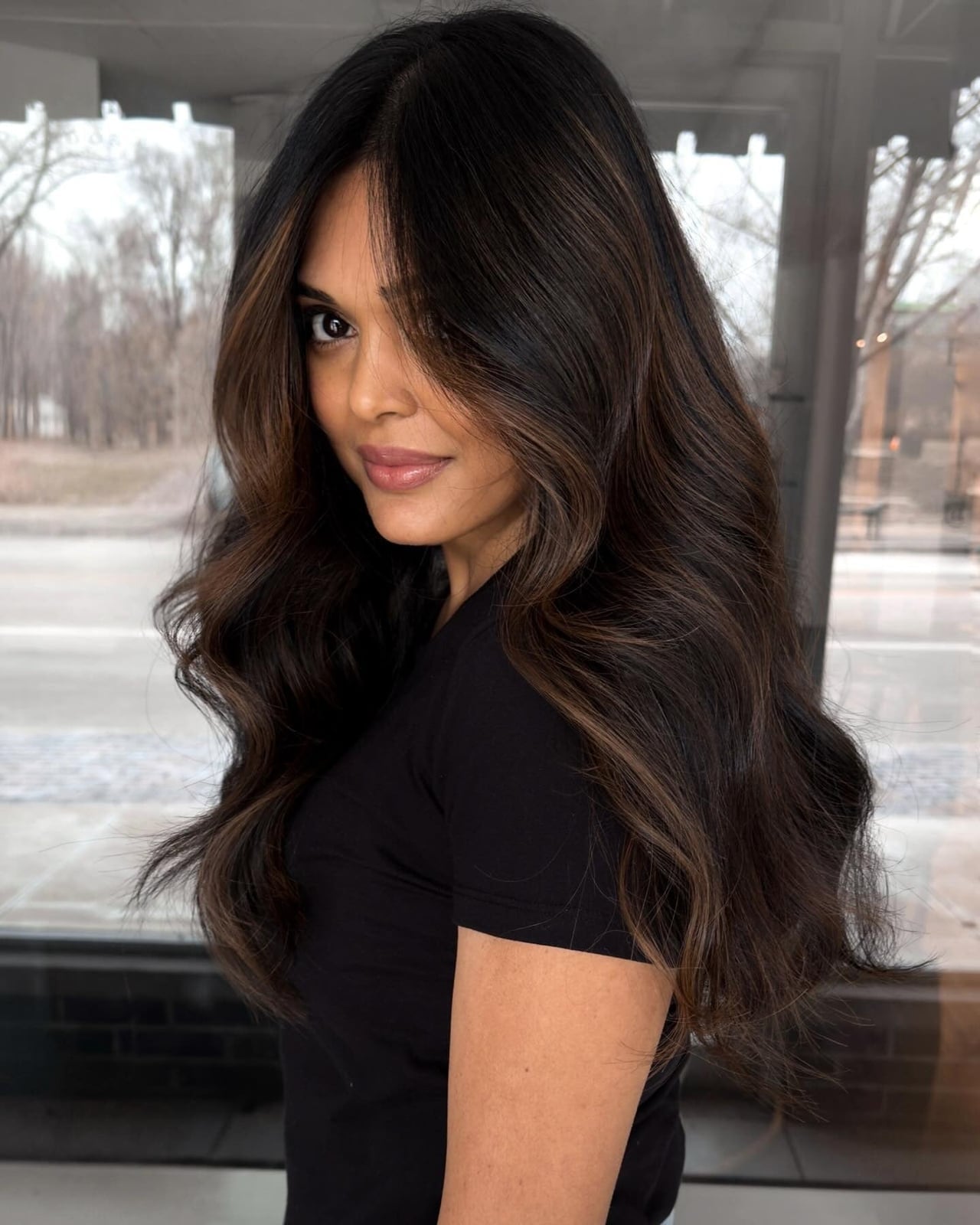
Subtle lighter brown highlights are the low-commitment end of the dark highlights spectrum, and this mid-back length shows why: the dimension sits close to the base, so regrowth blends instead of forming a line, and the side-swept bangs soften an angular face without a heavy fringe. Thick, wavy hair wears the loose waves well, and the side parting keeps the bangs from falling into the eyes.
Ask your colorist for: subtle lighter brown highlights on a dark brown base. Ask your stylist for: mid-back layers, side-swept bangs, side part. Day to day, a texturizing spray through damp mid-lengths and a quick scrunch give the lived-in wave, with no round brush required. Side-swept bangs grow out fast, so plan a small trim every four to six weeks, and take the baseline in every eight to ten. A toner refresh around the same eight-week mark keeps the lighter pieces from going warm.
Mid-Back Waves With Ash Blonde Highlights
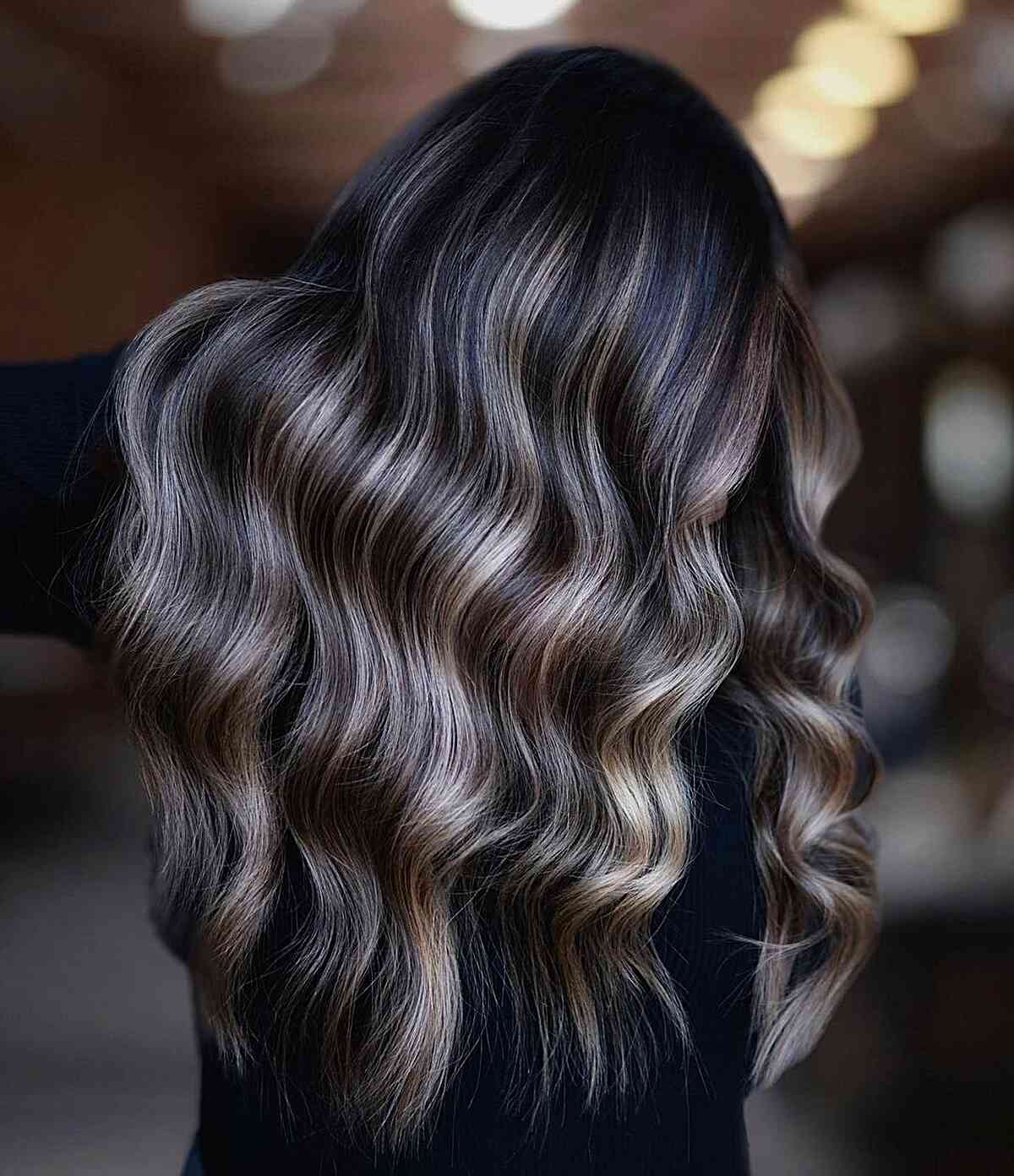
Ash blonde highlights on a dark brown base are a commitment, not a one-visit favor. Getting that cool contrast from deep brown to ash blonde at mid-back length takes a long session in the chair, and thick wavy hair adds time to every foil. The tone is the fragile part: ash drifts warm within weeks, so plan a toner every six to eight weeks to keep it cool. Skip this if you want a color you can leave alone for months. Ask your colorist for: mid-back loose waves with ash blonde highlights.
Mid-Back Layers With Lighter Brown Dimension, Close-Up Take
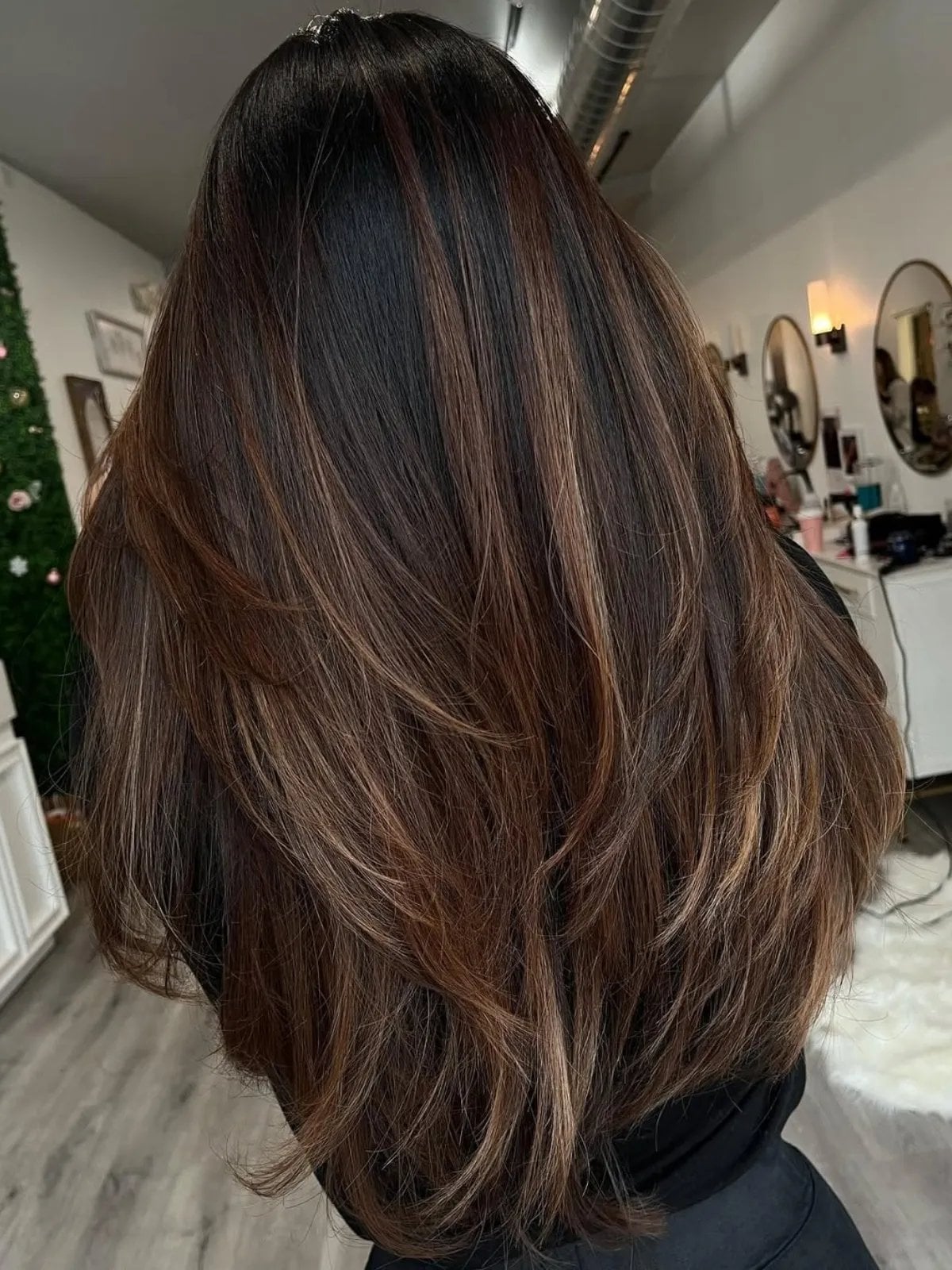
Layers and highlights work together when the cut is planned first. The mistake with lighter brown dimension on a dark base is asking for layers and color in the same breath without deciding which one leads. Cut choppy layers into thick, wavy hair and the ends splinter, the highlights land at random, and the blowout you wanted turns into a shape that needs smoothing every morning.
Ask your stylist for: mid-back layers with lighter brown highlights and a blowout. The cut should follow the wave pattern, with layers long enough to move instead of chop. Highlights woven through those layers read as one dimensional color, not stripes. The drawback: all that layering means a trim every eight to ten weeks, or the shape collapses into a heavy hem. Worth it for the movement, as long as the calendar has room.
Mid-Back Waves With Curtain Bangs
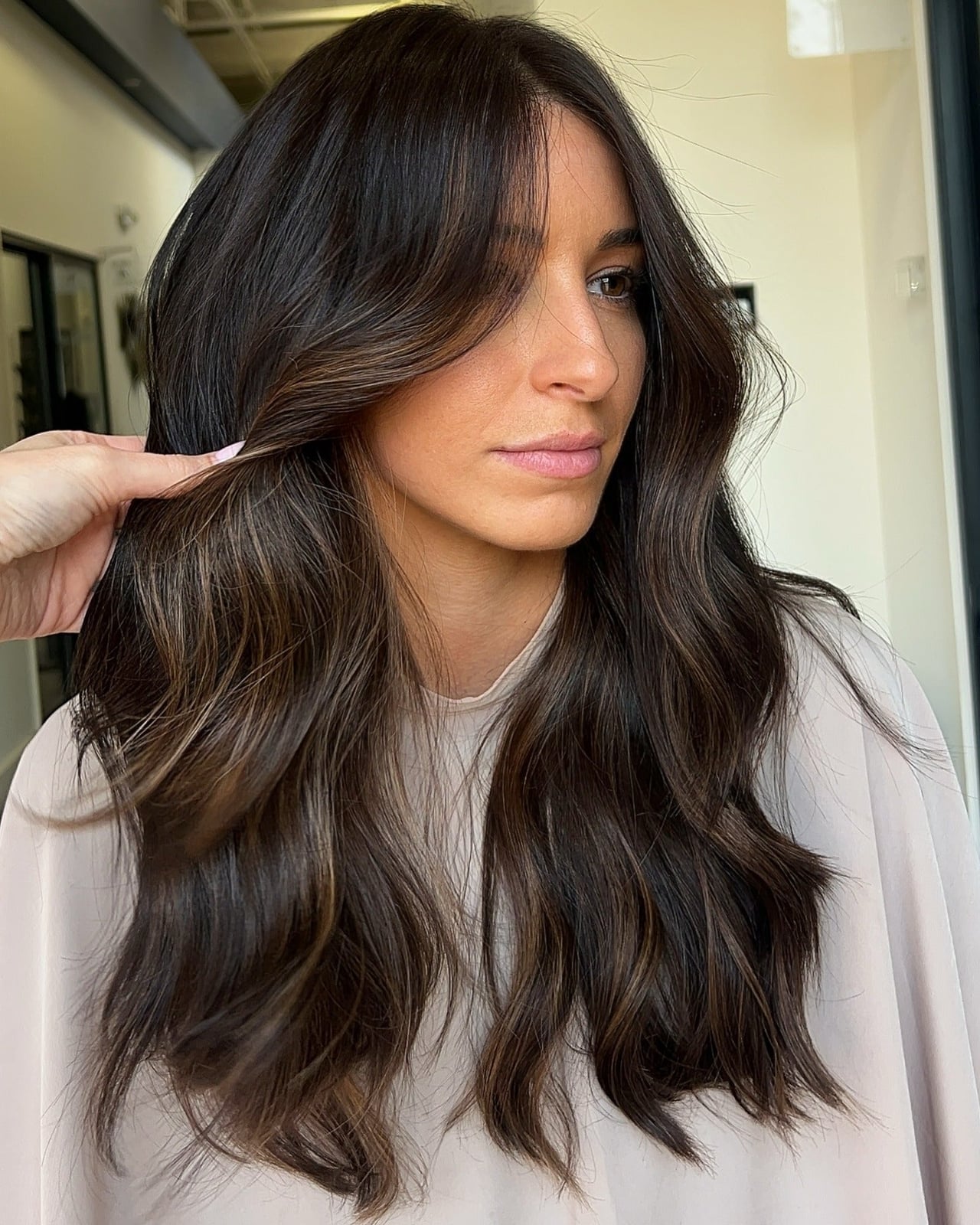
What makes curtain bangs worth the trim schedule? They grow out gracefully, which matters more than most people admit. On mid-back waves with a middle part, soft curtain bangs split around the face and blend into the layers behind them. Lighter brown highlights on a dark brown base pick up the shape of the fringe, so the front is part of the whole cut instead of an add-on.
This is a fall look that survives summer. In cooler months the wavy blowout holds its shape with product on the ends; in humidity, the same cut keeps the bangs off the forehead and the waves off the neck. Thick, wavy textures carry the volume that curtain bangs need. Round and square faces get a softer line, since the fringe breaks up the width at the cheekbones. Ask your stylist for: mid-back waves with curtain bangs and lighter brown highlights. Book fringe trims every four to six weeks, and the cut can wait longer.
Mid-Back Layers With Warm Brown and Blonde Highlights
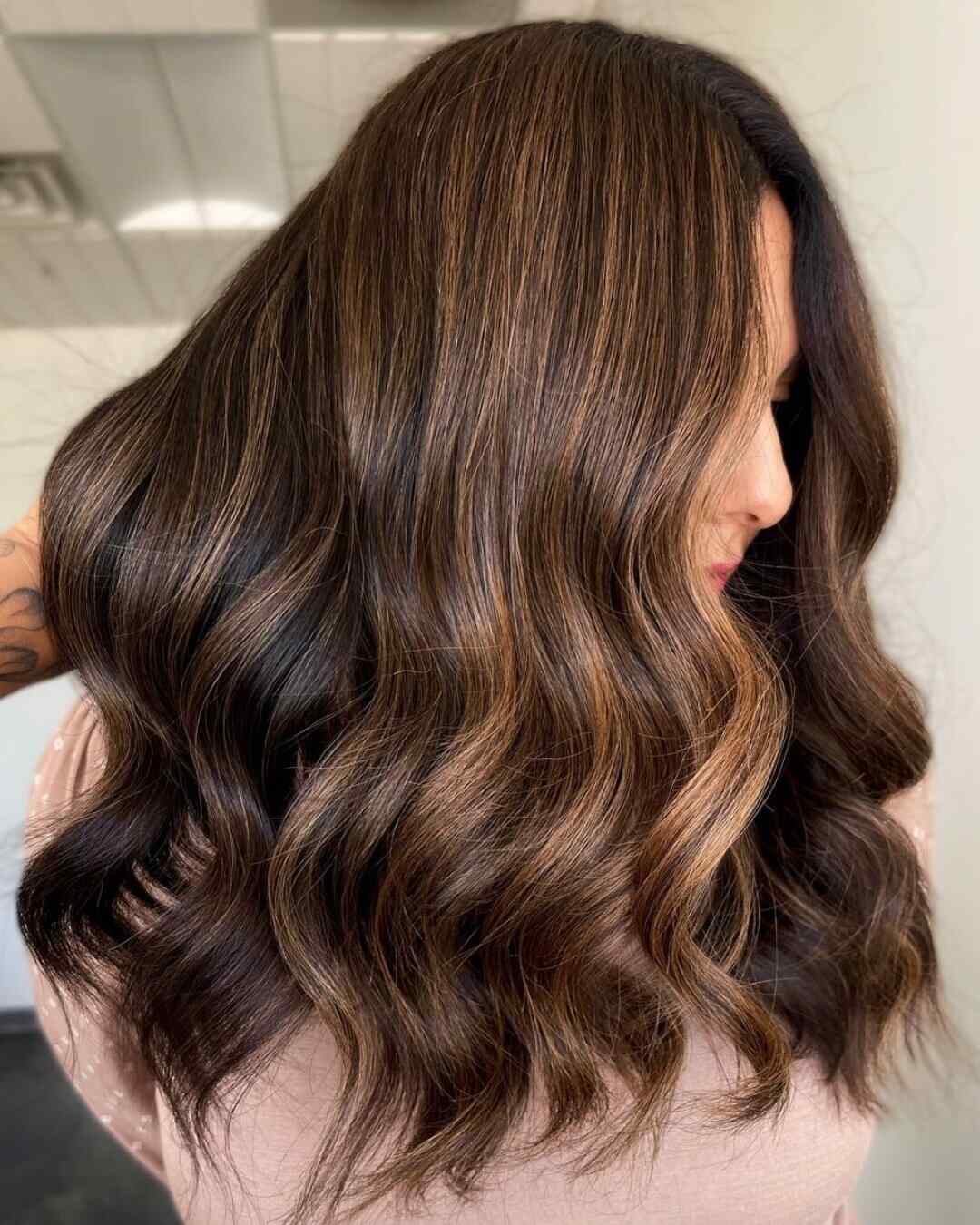
A dark brown base layered with warm brown and blonde highlights is a three-tone job, which means chair time. Expect a long appointment, and a second visit if the blonde has to be built gradually. Thick, wavy mid-back hair takes longer to foil and to process. Upkeep runs on two clocks: a toner every six to eight weeks to keep the warm brown from turning brassy, and a trim every eight to ten weeks to keep the layers from dragging the shape down. Ask your colorist for: mid-back layers with warm brown and blonde highlights.
Mid-Back Waves With Face-Framing Blonde Highlights
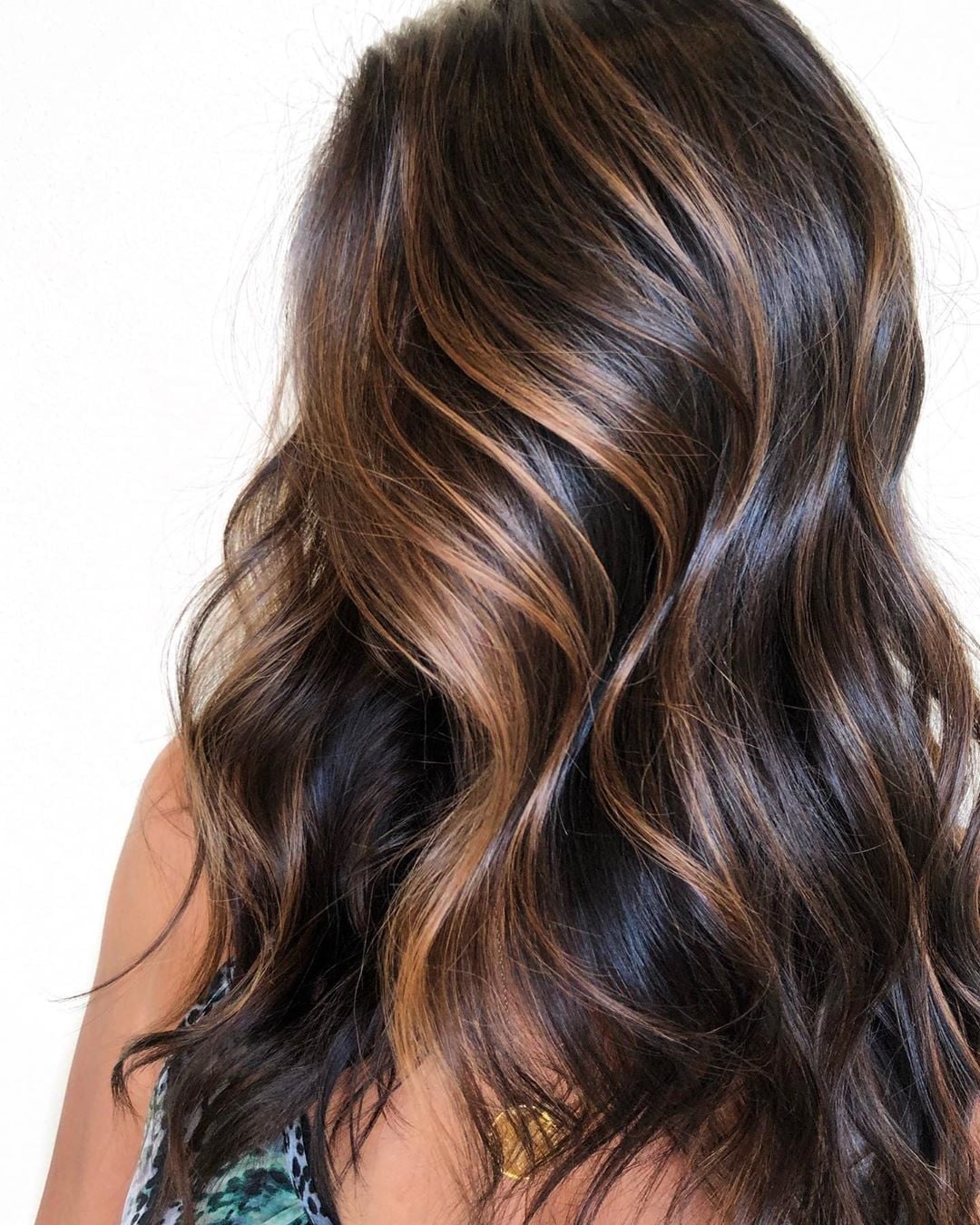
Concentrating blonde highlights around the face on a dark brown base does the work of a much lighter color without lifting the whole head. On mid-back waves, the contrast lands right where the hair moves, so the front of the cut reads brighter than the back. That placement is the point: it draws the eye to the face and leaves the length deep and low-maintenance.
Who should pass? Anyone with fine, low-density hair should be careful, because pale blonde against a dark base can look sparse at the front if the sections are too wide. Ask your colorist for: mid-back loose waves with face-framing blonde highlights, and keep the pieces fine. Thick, wavy hair handles the contrast best. For face shape, this placement is standard advice: it highlights the cheekbones and jaw, so oval and heart shapes wear it easily, while a long face may want the highlights kept below the chin. Square faces get a softer edge with a few pieces starting at the jaw. Book a toner every six to eight weeks to keep the blonde from pulling yellow.
Mid-Back Layers With Dimensional Lighter Brown, Everyday Version
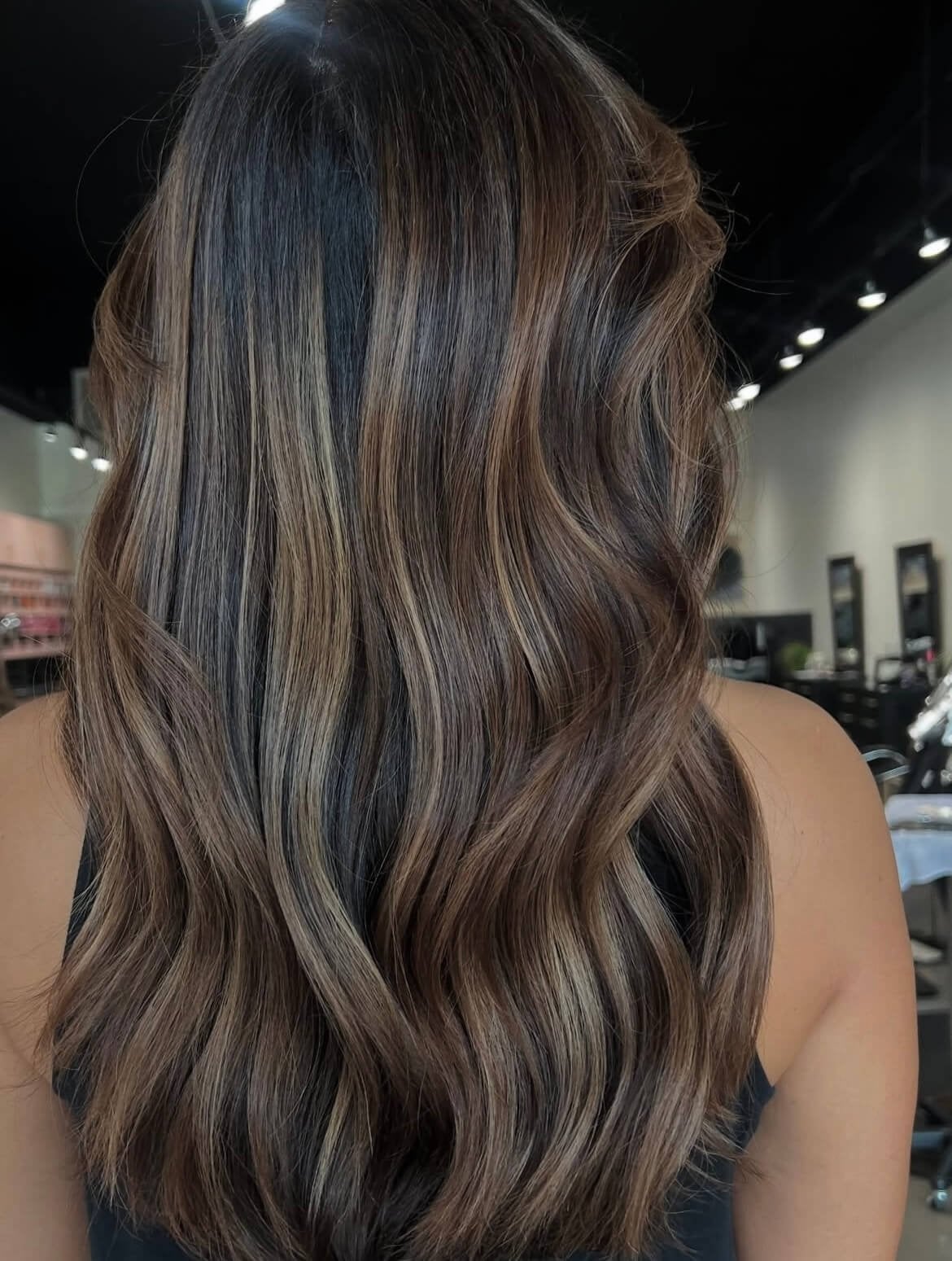
The real test of dimensional lighter brown highlights is what happens on a Tuesday, not at the salon. On a dark brown base, lighter brown pieces sit close enough to the base shade that roots grow in without a visible line, and the layers cut through mid-back length do the blending work. Thick, wavy hair holds the contrast best, because the wave breaks up each highlight instead of letting it band. Ask your colorist for: mid-back layers with dimensional lighter brown highlights. Lighter brown is the forgiving option, and that forgiveness is the entire point.
Styling is where the everyday version earns its keep. Rough-dry with your head tipped over, then run a shine serum through the ends for the glossy finish the cut is built around. Most of the dimension shows up without a round brush. Between appointments, expect the tone to soften gradually, and a trim every eight to ten weeks keeps the layers from collapsing into one heavy curtain.
Collarbone Layers With Reddish-Orange Highlights
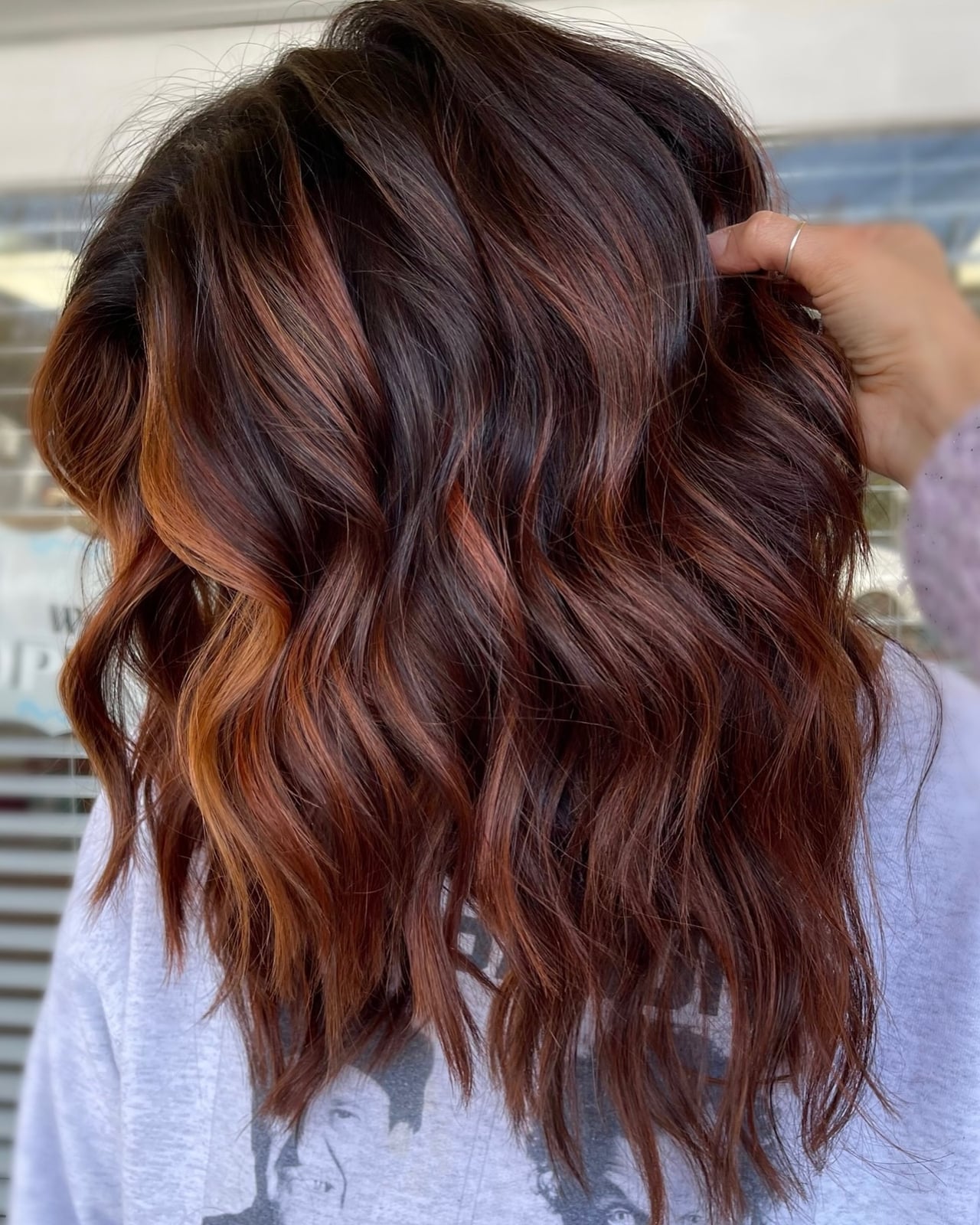
Reddish-orange highlights on a dark brown base are a two-step job: the hair has to be lifted enough to accept warmth, then the tone is laid over the top, so this belongs in a salon. Ask your colorist for: collarbone layered waves with reddish-orange highlights. The placement matters as much as the shade. Pieces woven through collarbone layers catch light at different heights, so the warmth shows up as dimension instead of one flat stripe. Medium wavy texture holds the tone well, but copper-leaning shades fade faster than browns, and a color-depositing conditioner between visits is the difference between warm and brassy.
Collarbone Lob With Caramel Highlights
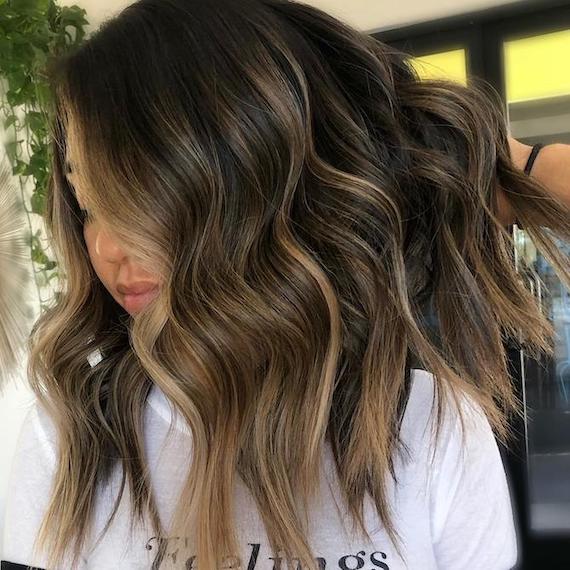
What do you actually say at the salon to get this? Start with the cut and work outward, because the caramel only reads correctly on the right shape. Ask your colorist for: collarbone lob with curtain bangs and caramel highlights. Then be specific about placement:
- Caramel pieces two to three shades lighter than the dark brown base, not blonde.
- Highlights starting a couple of inches below the root on a middle parting.
- Soft curtain bangs left mostly solid so they frame without competing.
Thick wavy hair carries the lob and the warmth without going shapeless. Book this for fall or a season change, when warm tones feel less like a commitment and more like a mood.
Mid-Back Layers With Copper Highlights
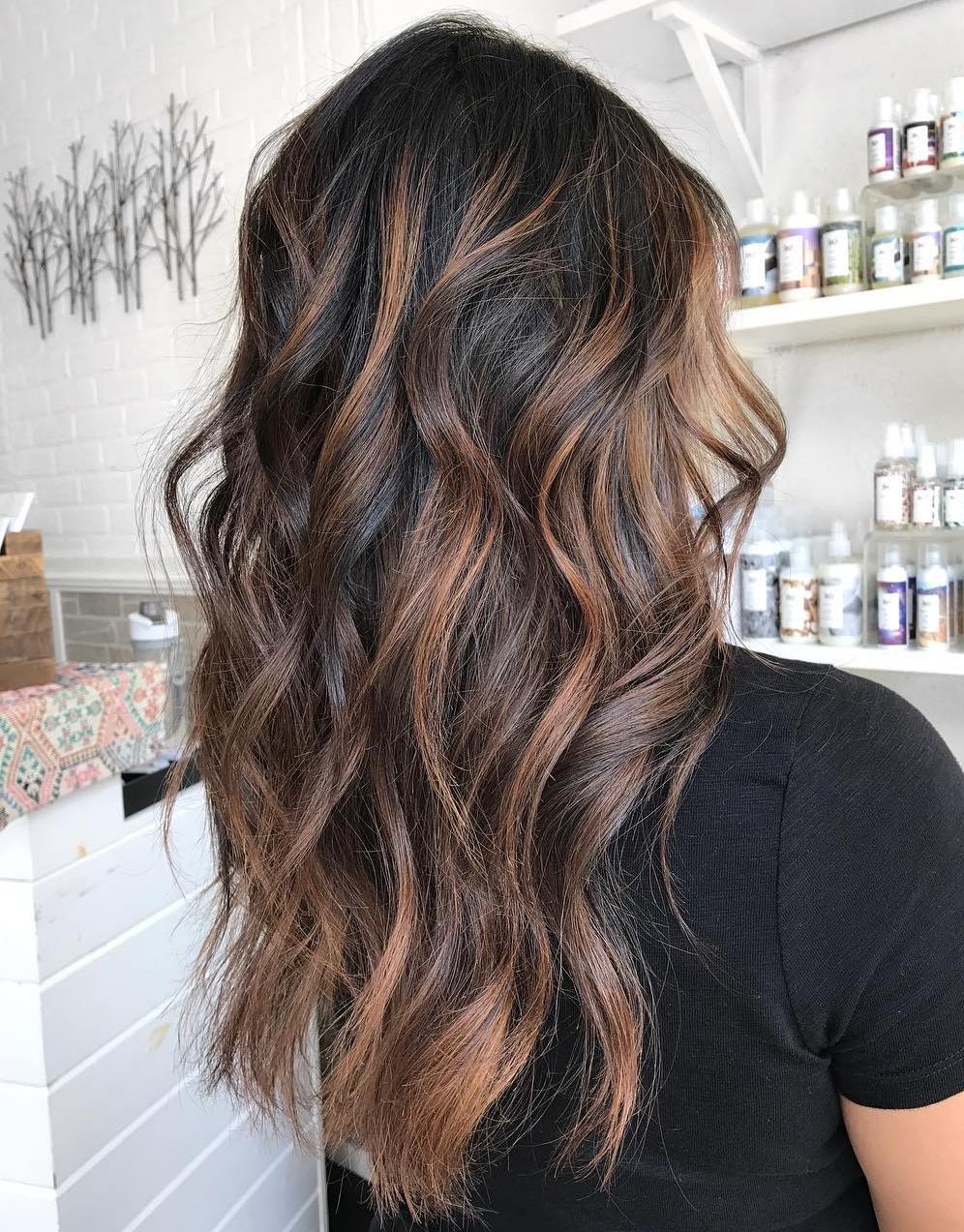
Do not ask for copper on a dark brown base and expect one round in the chair. The mistake is over-lifting: bleach pushed too far turns copper into a loud orange that sits on top of the base instead of in it, and no amount of toner talks it down. Ask your colorist for: mid-back layers with copper highlights and loose waves. A good formula lifts just enough, then deposits the copper so it reads warm against the dark brown, and the layers through mid-back length give the tone somewhere to move. Thick wavy hair can carry a copper this saturated; fine hair cannot, and will look like a single flat sheet of orange.
The drawback is honesty time: copper is the fastest-fading tone on this list, and hot water and sun speed up the exit. It also needs a color-safe wash routine to stay rich instead of rusty. Plan on a gloss every six to eight weeks, plus a trim every eight to ten to keep the ends from dulling the whole effect.
Collarbone Lob With Subtle Ash Highlights
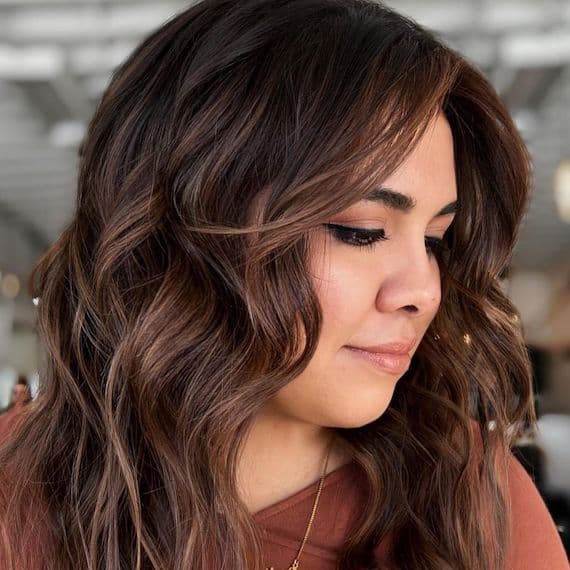
Subtle ash highlights are the quietest option on this list, and that is the sell. On a dark brown base they lift dimension without contrast, which suits thick wavy hair cut to a collarbone lob better than a bold streak would. Ask your colorist for: collarbone lob with subtle ash highlights and loose waves. Do this in a salon, not at home: ash over dark brown is unforgiving, and a box kit tips cool fast. If you want visible lightness, go warmer. If you want depth that reads as natural, stay here.
Final Thoughts
When choosing your highlight shade, keep this rule in mind: for a natural, low-maintenance result, stick to tones only two or three shades lighter than your base. If you want more contrast and are ready for a bit more upkeep, go for ash or copper blonde.
- Deep condition weekly to maintain glossiness and health.
- Use color-safe shampoos and conditioners to preserve highlight tone.
- Toning glosses can refresh highlights every 6-8 weeks.
- Trim split ends every 8-10 weeks to maintain shape and health.
Rich highlights add dimension to dark brown hair.

