
Dance hairstyles need to survive a run of pirouettes and still look intentional when the lights come up. The latest shift moves away from poker-straight finishes toward glossy natural texture and lived-in color, which actually hold better under stage lights.
This collection of 20 styles covers the full spectrum, from five-minute sleek ponytails to intricate braided updos that take a steady hand. There is something here for fine hair that loses volume mid-performance, for curly textures that need security without flattening, and for anyone whose curtain bangs refuse to stay put through a high kick.
Voluminous High Ponytail With Loose Waves
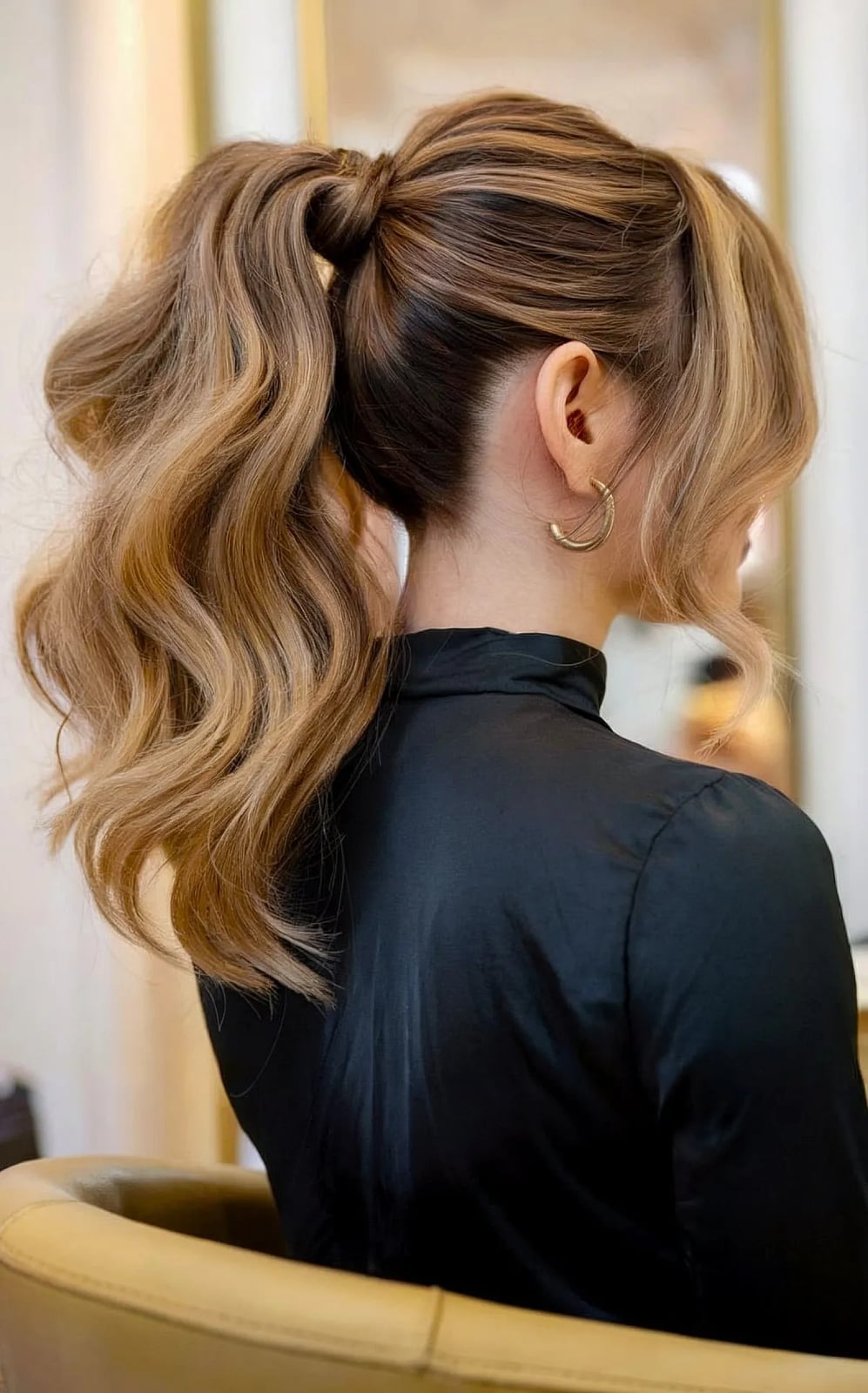
There is a reason the high ponytail opens every dance recital: it puts all the movement on display while keeping the hair out of the way. This version, with its dark blonde base and lighter highlights, leans into texture, with loose waves that add movement as you turn. The mid-back length gives it weight, and the middle part does double duty, elongating a round face while the face-framing tendrils soften the whole setup. Ask your stylist for: high voluminous ponytail with loose waves, face-framing tendrils. Wrap a section of hair around the elastic to hide it, then apply a texturizing product so the volume lasts through the final bow.
Braids And Ponytail With Curly Extensions
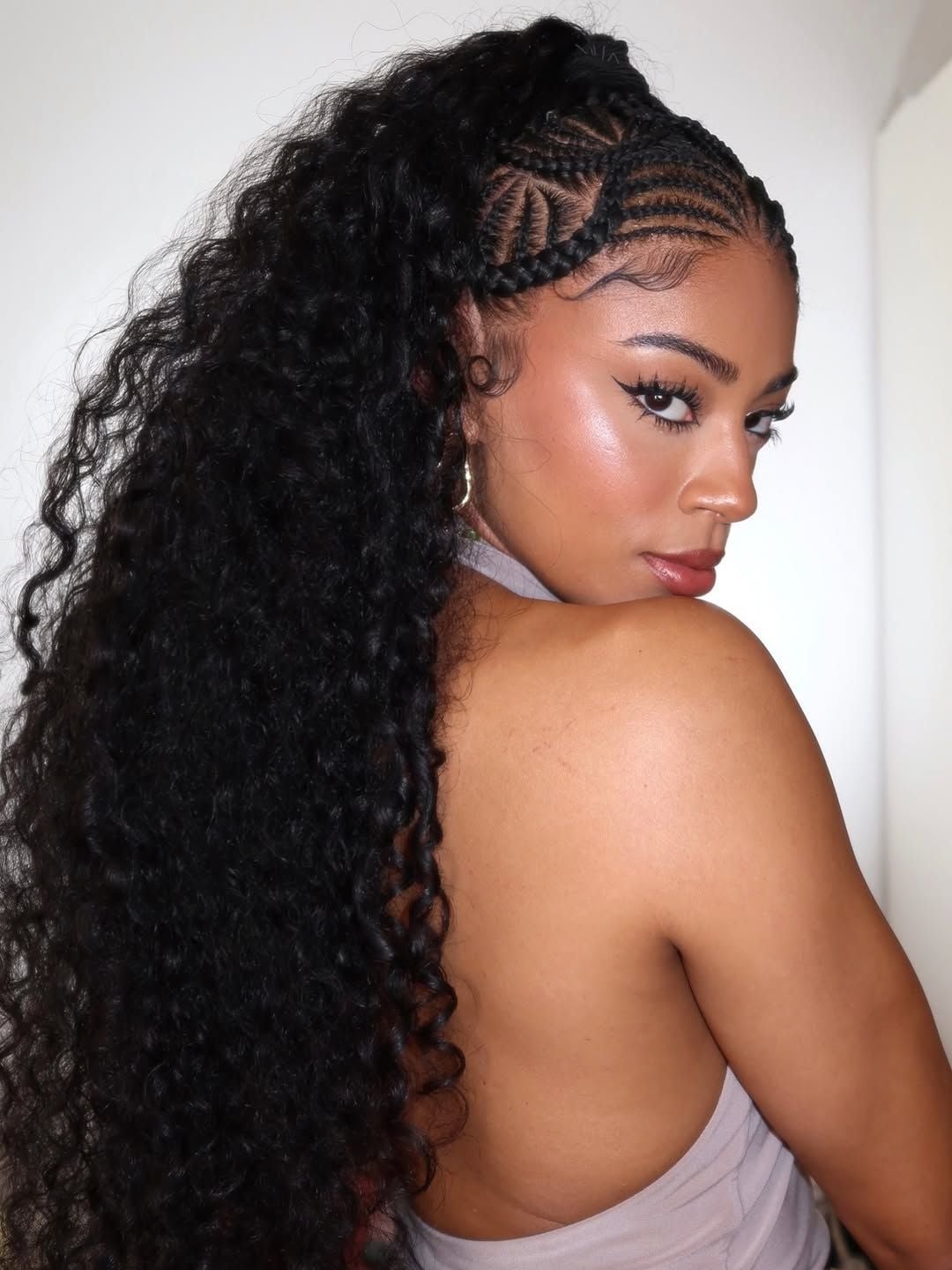
It gives coily textures a dramatic length boost without weighing down the roots. The black base with subtle blonde highlights woven through the curls adds dimension that reads from the back row. Ask your stylist for: high ponytail with front cornrows and long curly extensions. A light pomade smoothed along the braid edges keeps flyaways in check, and the extensions can be refreshed with low heat so the curls hold their bounce.
Ash Blonde Dutch Braid With Face-Framing Tendrils
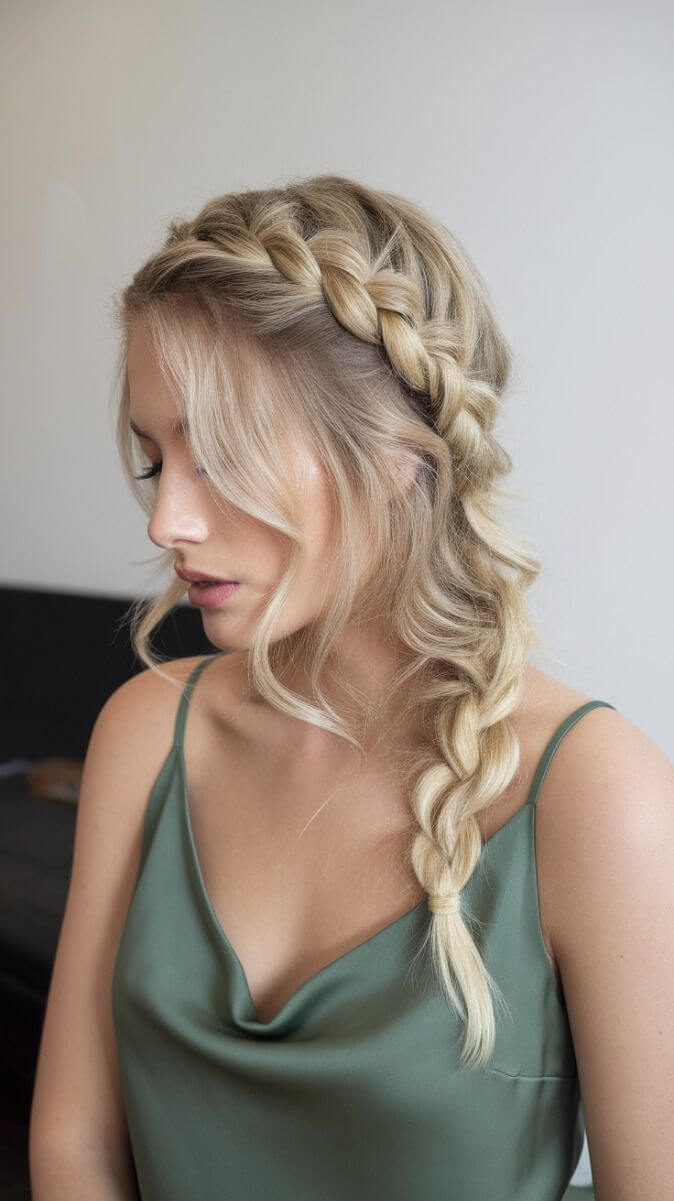
The ash blonde base with lighter highlights keeps the braid from reading flat, and the wavy tendrils soften a square jaw. Ask your stylist for: side dutch braid with loose tail, soft curtain bangs. The middle part keeps it grounded, while the braid does the work of holding everything in place for a long rehearsal.
Medium Brown Fishtail Braid With Wispy Bangs
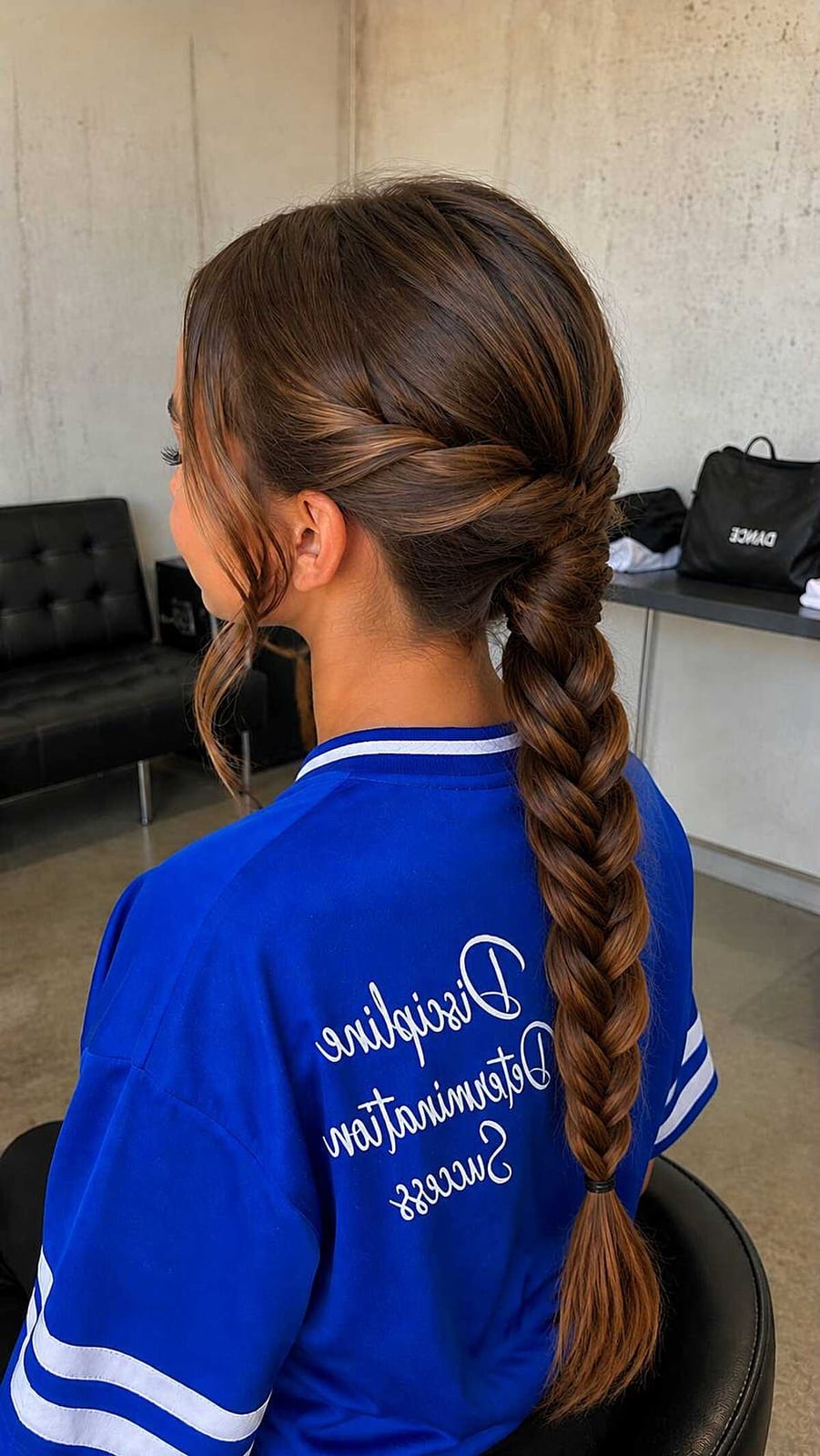
Compared to a standard three-strand braid, a fishtail has more surface texture, which means it holds its shape longer under movement. This thick version, in medium brown with subtle highlights, is twisted intricately down to mid-back, and the wispy bangs keep it from feeling too severe. It is a solid choice for a performance where you need the hair off your face but want something with a bit more visual interest than a plain ponytail. Ask your stylist for: thick fishtail braid with twists, wispy bangs. Spritz a texturizing spray through the lengths before braiding so the sections grip, and pin the ends in place for extra security.
Sleek High Braided Ponytail
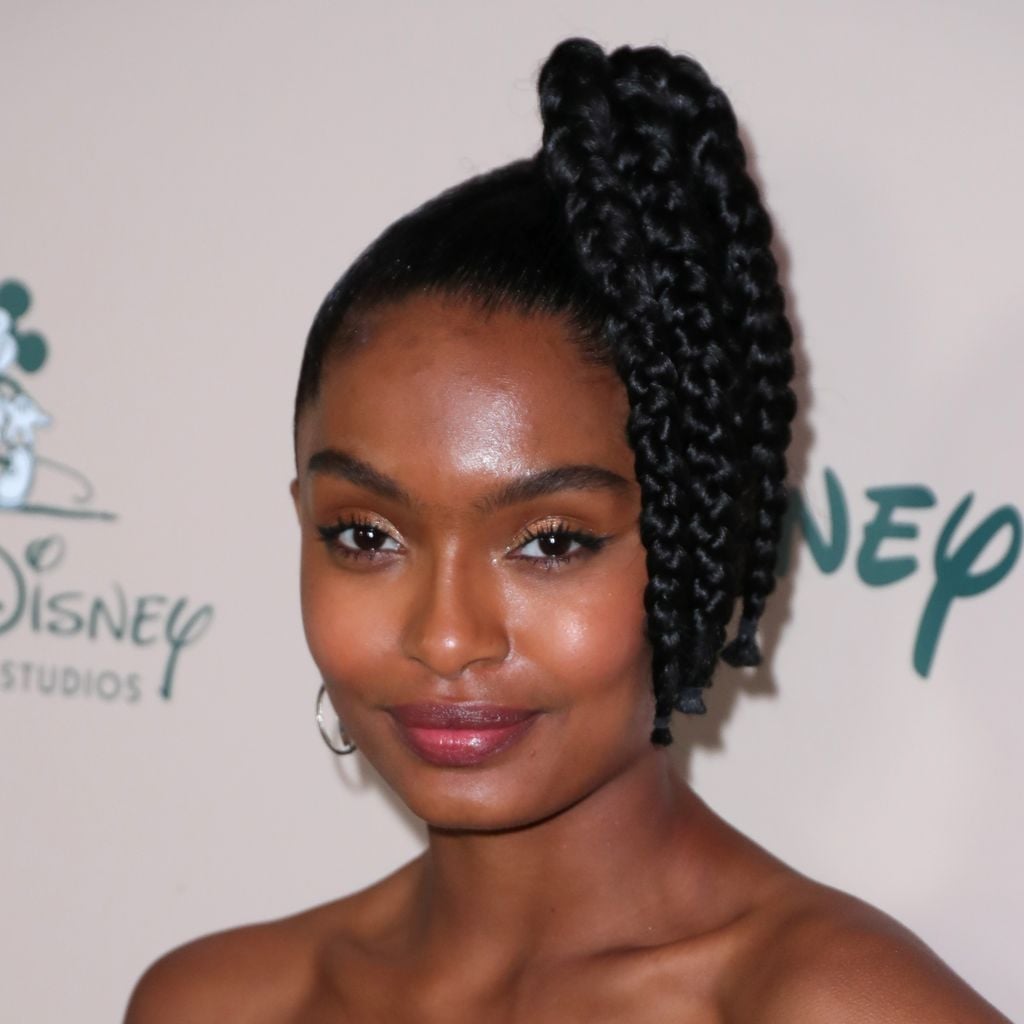
Ask your stylist for: high, sleek braided ponytail. This is one you can attempt at home with practice, but getting the hairline perfectly smooth is easier with a second pair of hands, so a salon visit is worth it before a big show. A smoothing serum along the hairline before you gather the ponytail makes the polished finish last.
Blonde Bubble Ponytail
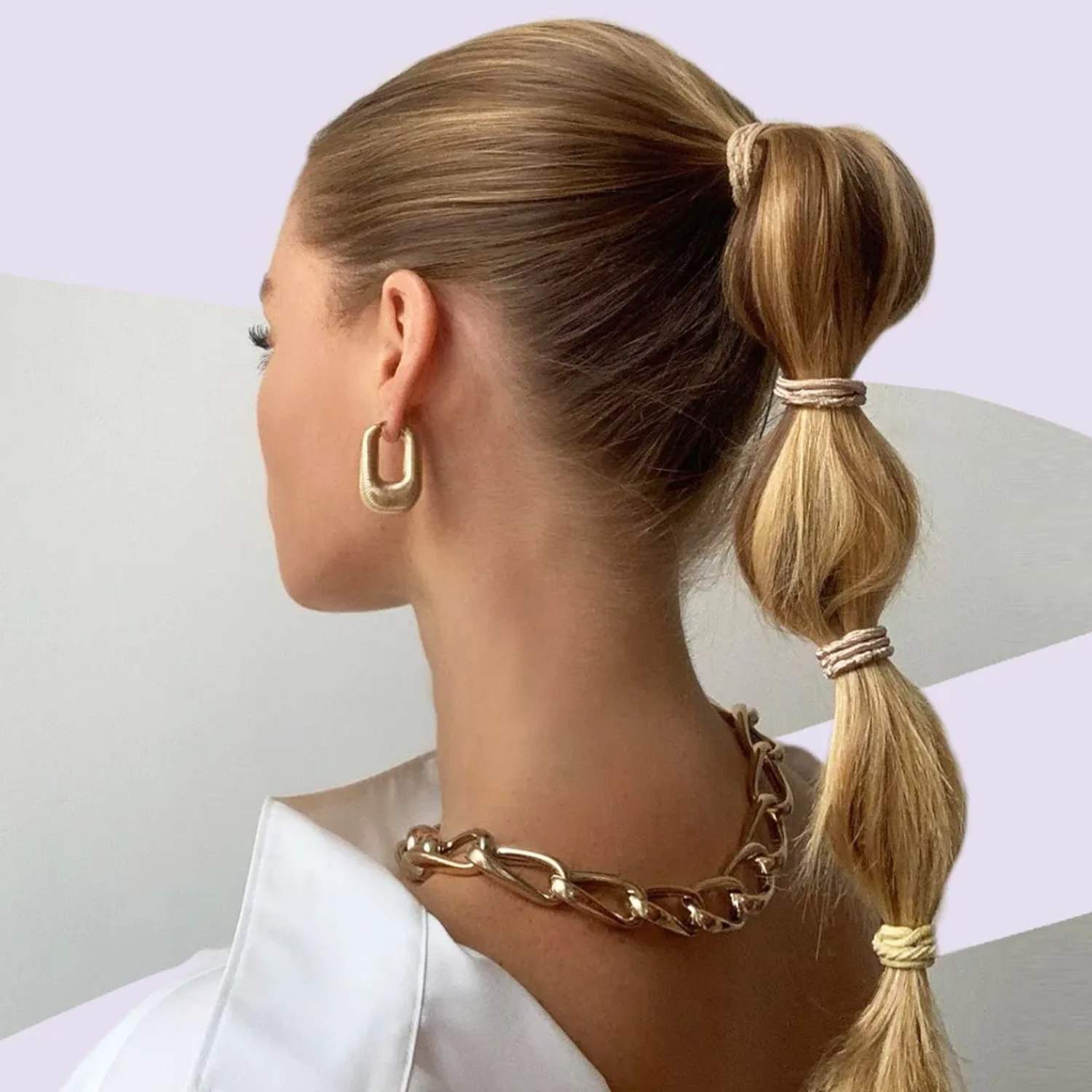
A bubble ponytail works by sectioning the length with elastics at intervals, then puffing each segment for a stacked, balloon-like effect. It suits fine, straight hair of mid-back length; the middle part helps elongate a round face. Ask your stylist for: high bubble ponytail. Use clear elastics so the segment lines stay invisible, then gently pull each section apart to build volume. Fine hair can deflate after an hour of movement, so pack extra elastics for mid-performance touch-ups.
Low Ponytail With Soft Waves
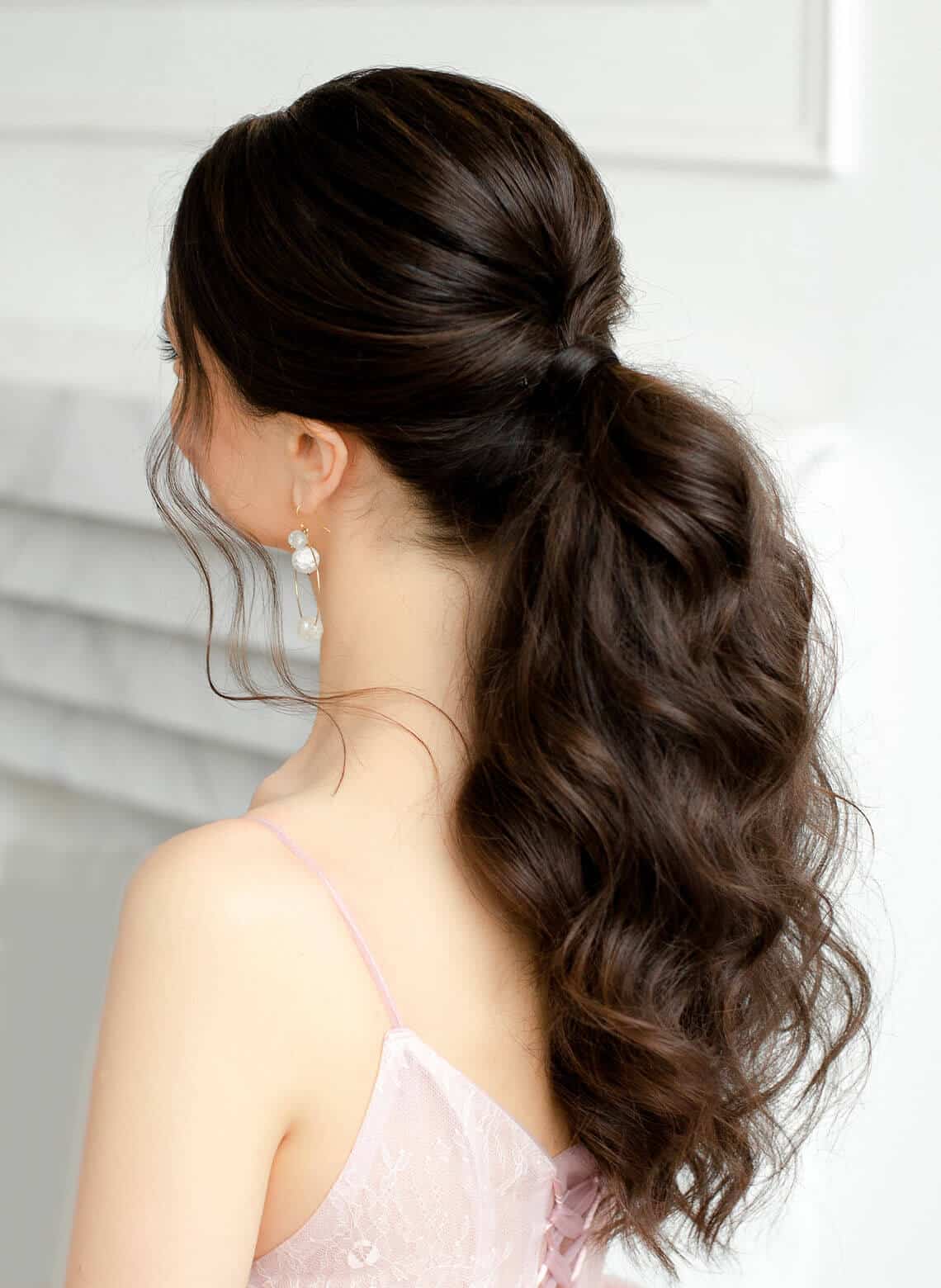
This low ponytail relies on voluminous, pre-curled waves to create a full silhouette that stays elegant through a whole performance. The side part adds height on top, making it a good choice for long faces, while the soft texture balances stronger jawlines. Ask your stylist for: low ponytail with soft, voluminous waves. Curl the hair in one-inch sections before gathering it at the nape, then lock the waves in place with a strong-hold hairspray. A trim every eight weeks keeps the ends from splitting mid-wave.
Sleek High Ponytail With Wispy Bangs
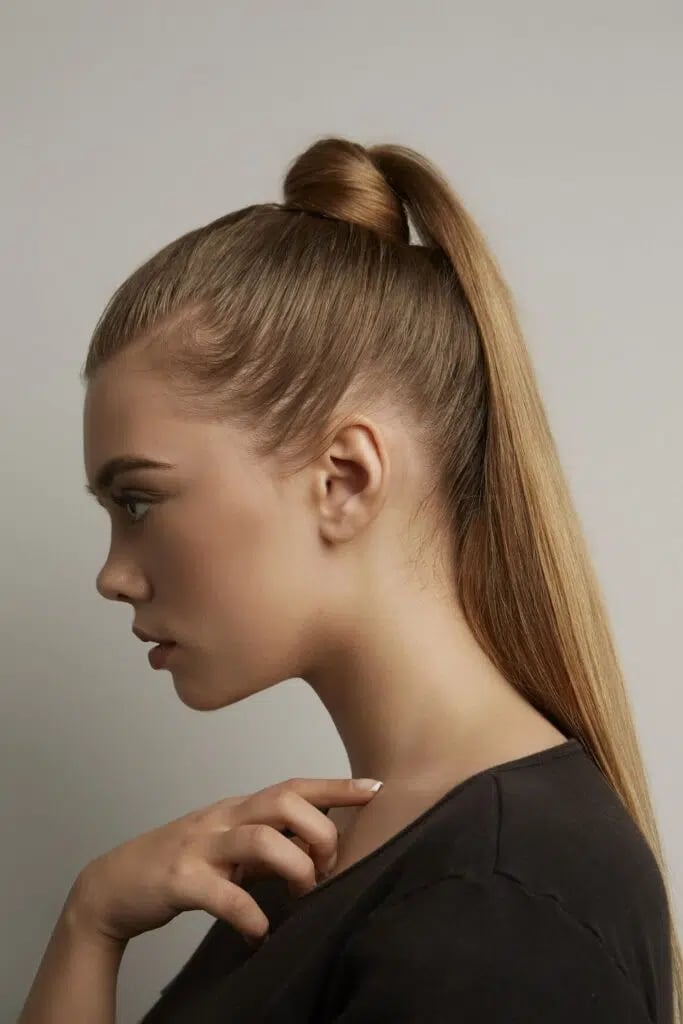
Can a high ponytail survive a dance routine without turning into a frizzy mess? This one tries its best. The middle part and wispy bangs soften round faces, while the ash blonde color stays uniform and glossy. Ask your stylist for: sleek high ponytail with wispy bangs. Fine hair shows every flyaway after a few jumps, so a flat iron and a generous layer of shine spray are necessary. Touch-ups on the bangs every three weeks keep them from growing past wispy into curtain territory.
High Ponytail With Large Side Braid
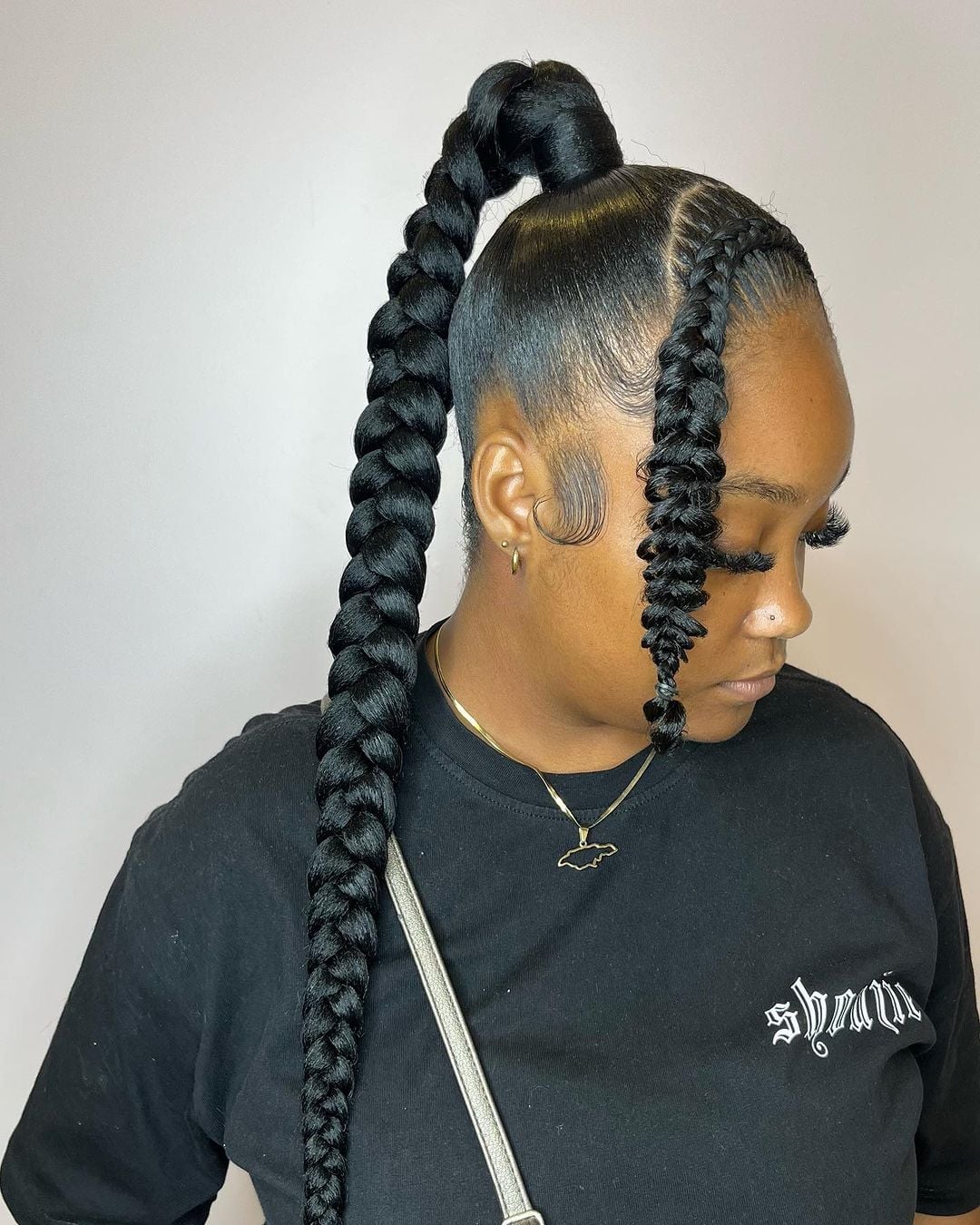
The construction here is straightforward: pull the hair into a sleek high ponytail, then braid the bulk of it into one thick, continuous plait. Two smaller braids frame the face, anchored behind the ears with bobby pins. The side-swept bangs soften a square jawline, and the black color keeps the braid definition sharp. Ask your stylist for: high ponytail with large side braid and face-framing braids.
Because the hair is thick and straight, the braid holds its shape without product. Wispy tendrils at the temples prevent the style from reading as severe, a useful trick for dancers who want security without a helmet effect.
Half-Up Half-Down With Braided Accents
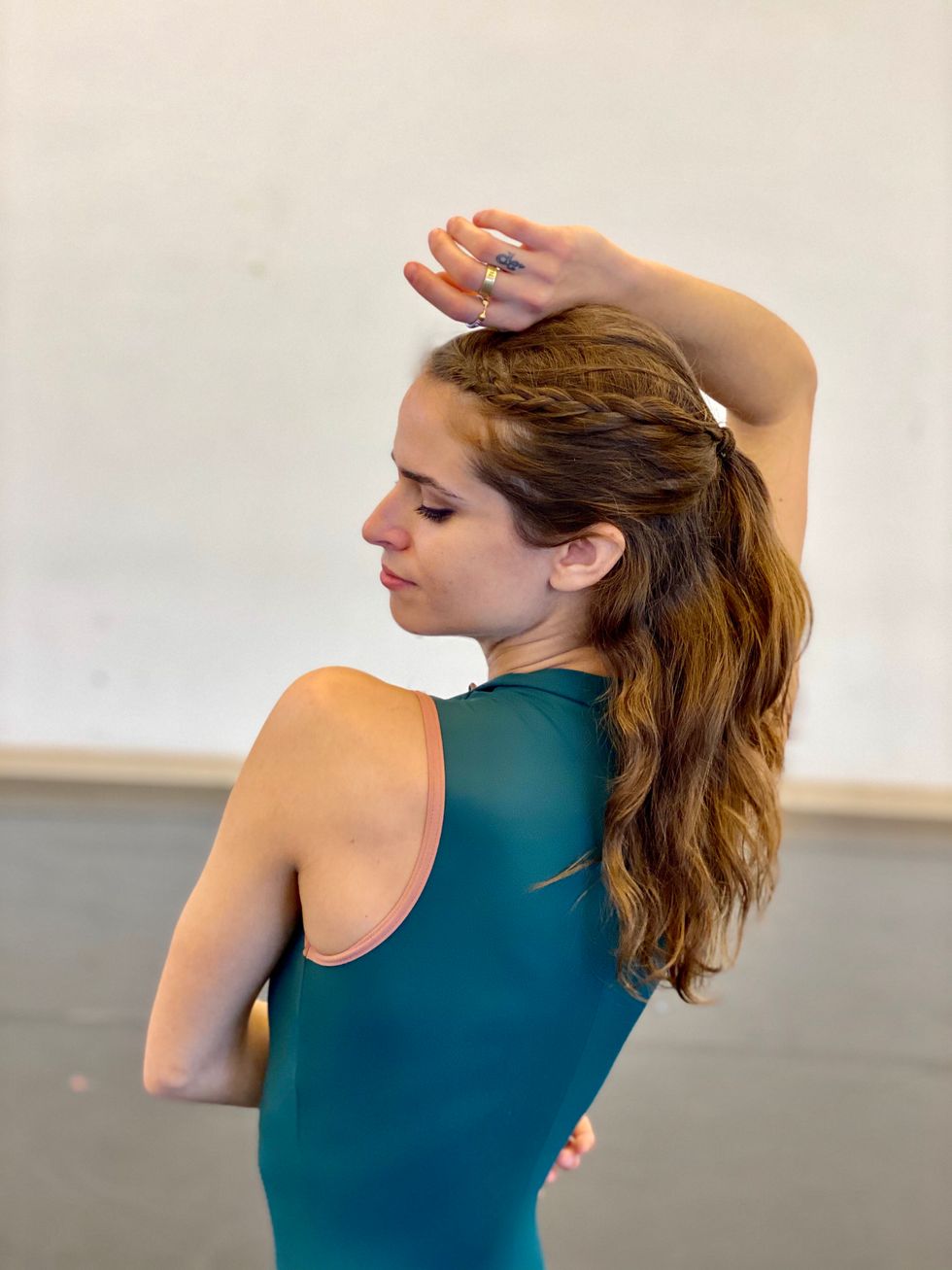
How do you ask for a style that looks elaborate but stays put through a rehearsal? Say exactly this: half-up half-down with face-framing braids into a ponytail. Two braids start at the temples and meet at the crown, where the hair is pulled back into a small ponytail. The middle part gives the face symmetry, and the medium brown with subtle highlights adds dimension to the wavy texture. Thick hair makes the braids visible, not swallowed.
Ask your tech for: tight braids on each side section secured with clear elastics, then crown hair gathered into a ponytail. Leave a few tendrils loose around the ears for a softer finish.
Dark Brown Half-Up With Waterfall Braid
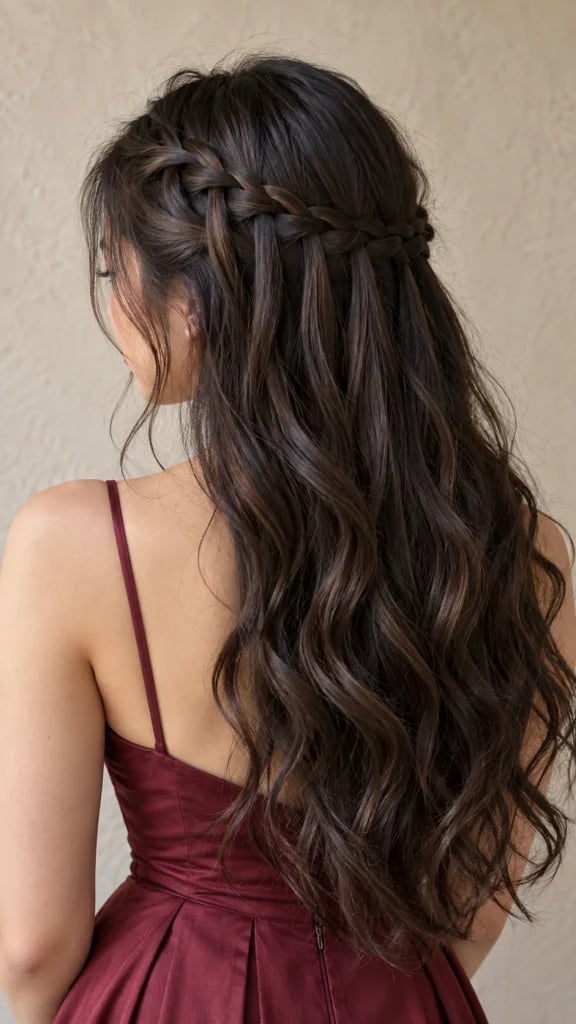
A waterfall braid looks delicate, but that chain of dropped strands relies on tension to stay intact. On thick, wavy dark brown hair at mid-back length, the braid runs across the back while the rest falls loose in soft waves. A middle part keeps the sectioning clean, and the braid itself needs tight, even weaving to survive a fast routine. Ask your stylist for: a half-up with a waterfall braid and loose waves.
Thick texture gives the braid enough weight to hold its shape without constant pinning. Fine hair can slip out of the open loops, so sections need firm securing. A finishing spray brushed through the braid before the show buys you a few extra rounds of security. The loose waves below are decorative, not structural, so a touch of spray there keeps them from falling flat mid-performance.
Blonde Half-Up With Flower Pins
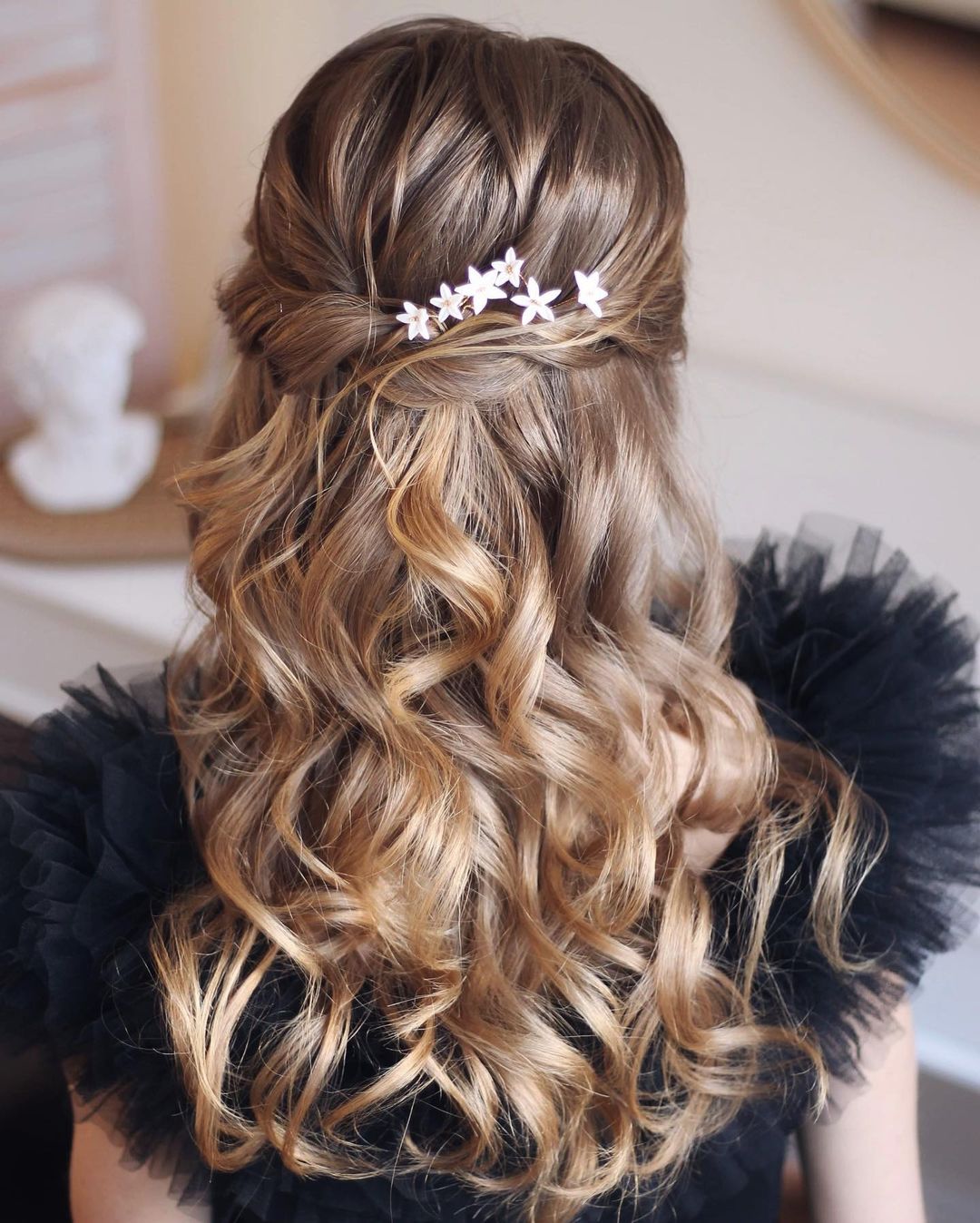
A twisted half-up half-down style relies on tension from the twists and the pins that anchor them. On long, wavy blonde hair with lighter highlights, two sections twist back from the temples and meet at the crown, where small flower pins do the holding. A middle part keeps the front balanced. Ask your stylist for: a twisted half-up half-down with flower pins. The pins work best when the twists are clean and the hair has enough grip to stay put, making this a natural fit for spring performances or outdoor events where a full updo is too heavy. A shine serum on the cascading waves adds polish without weighing down the curls.
Blonde With Woven Crown Braid
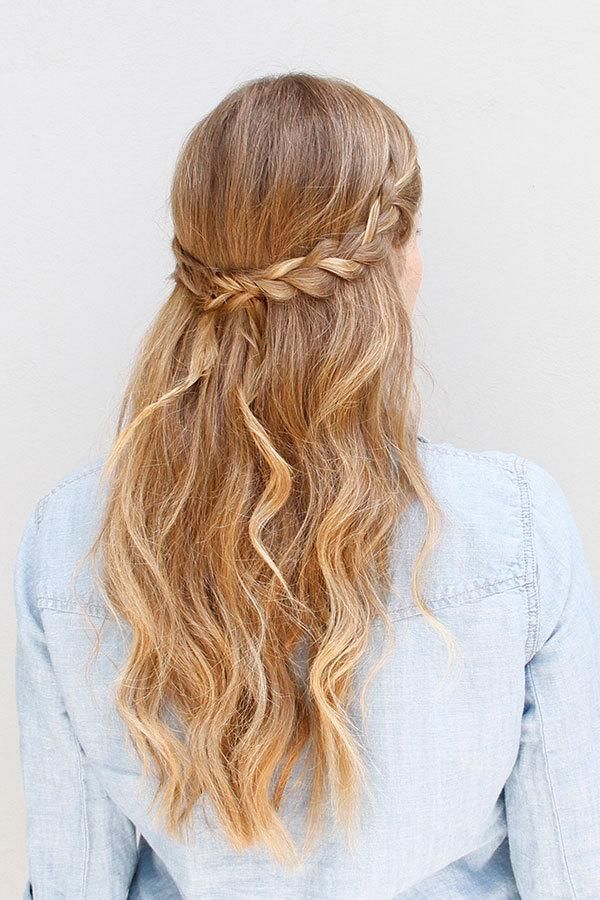
The crown braid is built by weaving a section of hair from behind the ear across the top of the head, then tucking the end into the opposite side. On mid-back length blonde hair with subtle highlights, the braid sits above a field of soft waves, with curtain bangs softening the front. A middle part divides the hair evenly before the weave begins. Ask your stylist for: a woven crown braid with loose waves and curtain bangs.
The braid itself is the structural anchor, so it must be tight enough to stay above the hairline through turns and jumps. The loose waves below are decorative, not load-bearing, but they still benefit from a flexible hold spray. Curtain bangs frame the face without obscuring it, a practical detail for stage visibility. Thick, wavy texture gives the braid enough bulk to read clearly from the audience.
Blonde Braided Bun With Intricate Braids
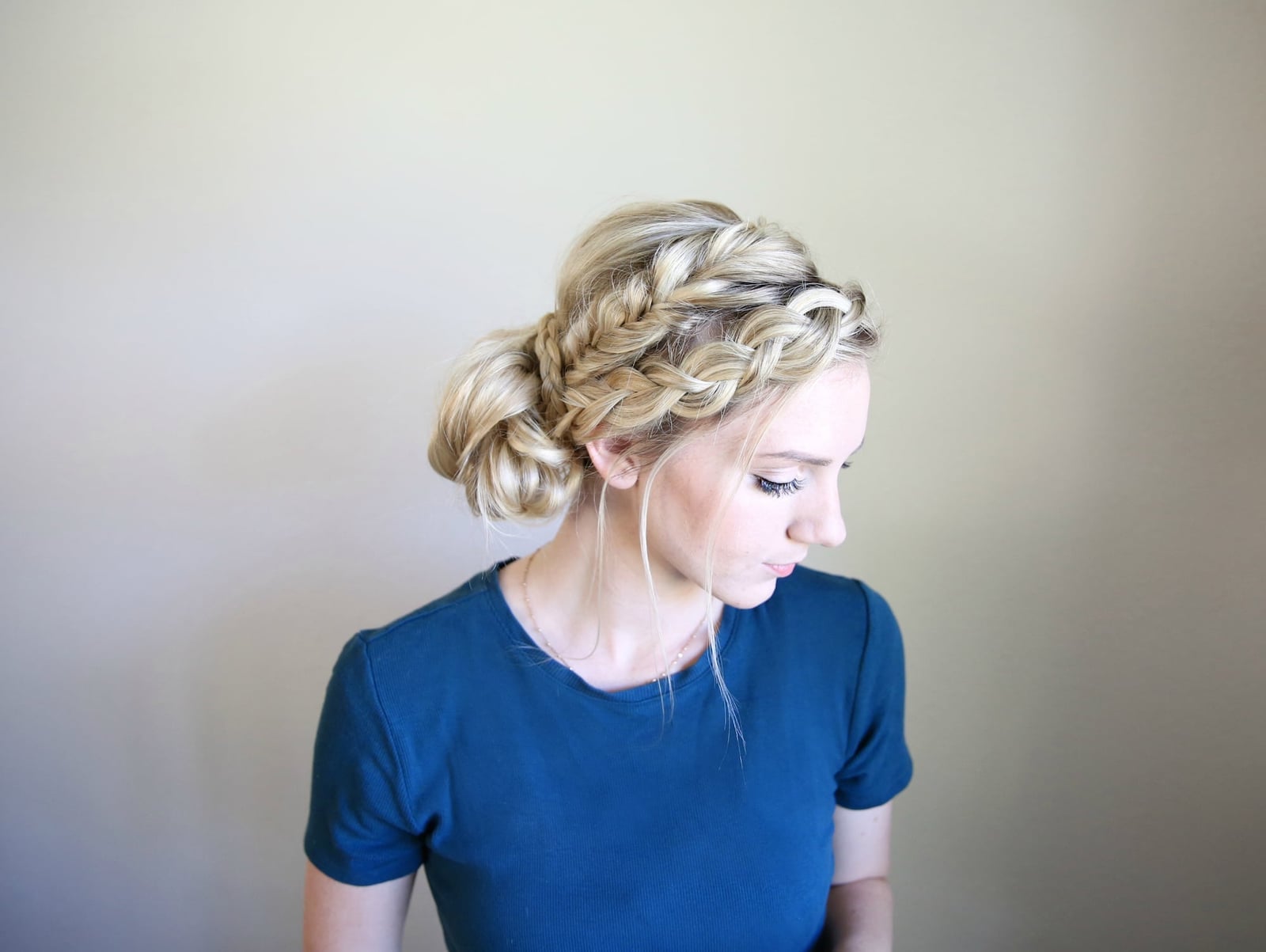
Does your hair density often make buns look flat? Thick, wavy hair has the opposite problem: too much bulk for a simple twist, which is where multiple braids come in. On mid-back length blonde hair with highlights, a series of intricate braids wrap into a neat bun at the nape, with a middle part dividing the front. Ask your stylist for: a braided bun with intricate braids. The braids distribute the weight evenly, so the bun sits firm without pulling at the scalp. Extra pins and a strong-hold spray are non-negotiable for a performance that runs longer than thirty minutes. Thick texture gives the braids definition, but the same density means the bun can loosen gradually under movement, so pinning every loop is worth the extra few minutes before curtain.
Dark Brown Intricate Braided Updo
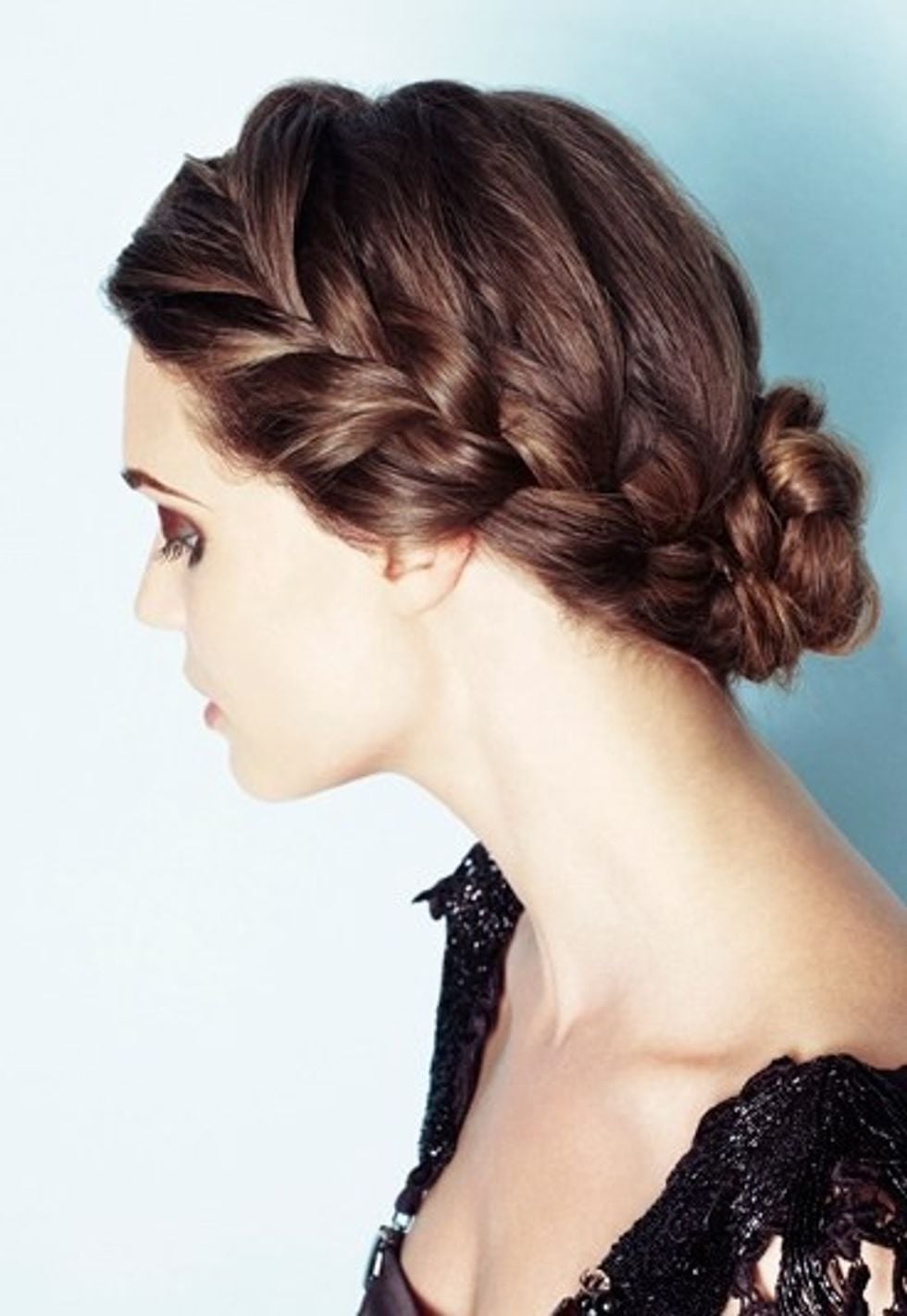
A complex braid that wraps into a low bun is a salon build, not a DIY fifteen-minute project. On dark brown, wavy, thick hair at mid-back length, the intricate braid runs from a middle part down the back before coiling into a bun, with a few loose tendrils left out to frame the face. Ask your stylist for: an intricate braided updo with loose tendrils. The braid itself holds the bun in place, which reduces the need for pinning every edge. For a dance performance, the tendrils are a deliberate softener that should be tucked or secured if they risk falling into the eyes. The updo stays intact for hours, but removing it requires patience with the pins and braid sections.
Dark Brown Low Bun With Floral Accessory
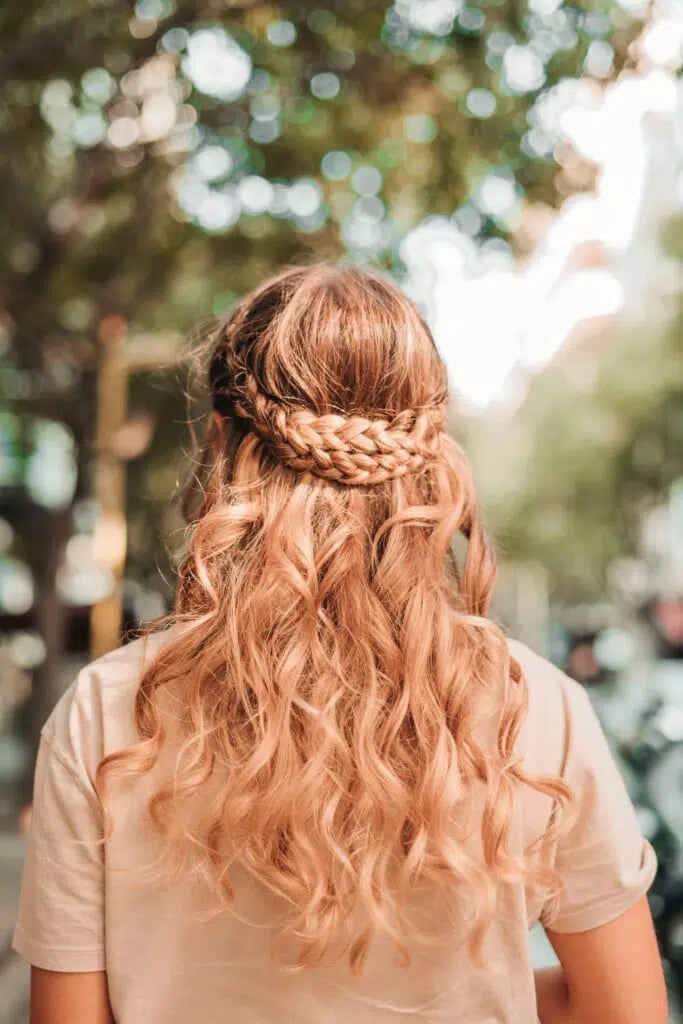
A low bun at the nape is a reliable dance style, but the floral accessory keeps it from looking like a basic rehearsal look. Thick, straight dark brown hair pulls back smoothly for a clean finish that stays put through turns and lifts. Ask your stylist for: low bun with braided detail and floral accessory. A flower pinned into the bun can work itself loose during a routine, so test the security before you step onstage. U-pins are your friend here, and the accessory should feel as solid as the bun itself.
Collarbone Length Intricate Braided Bun
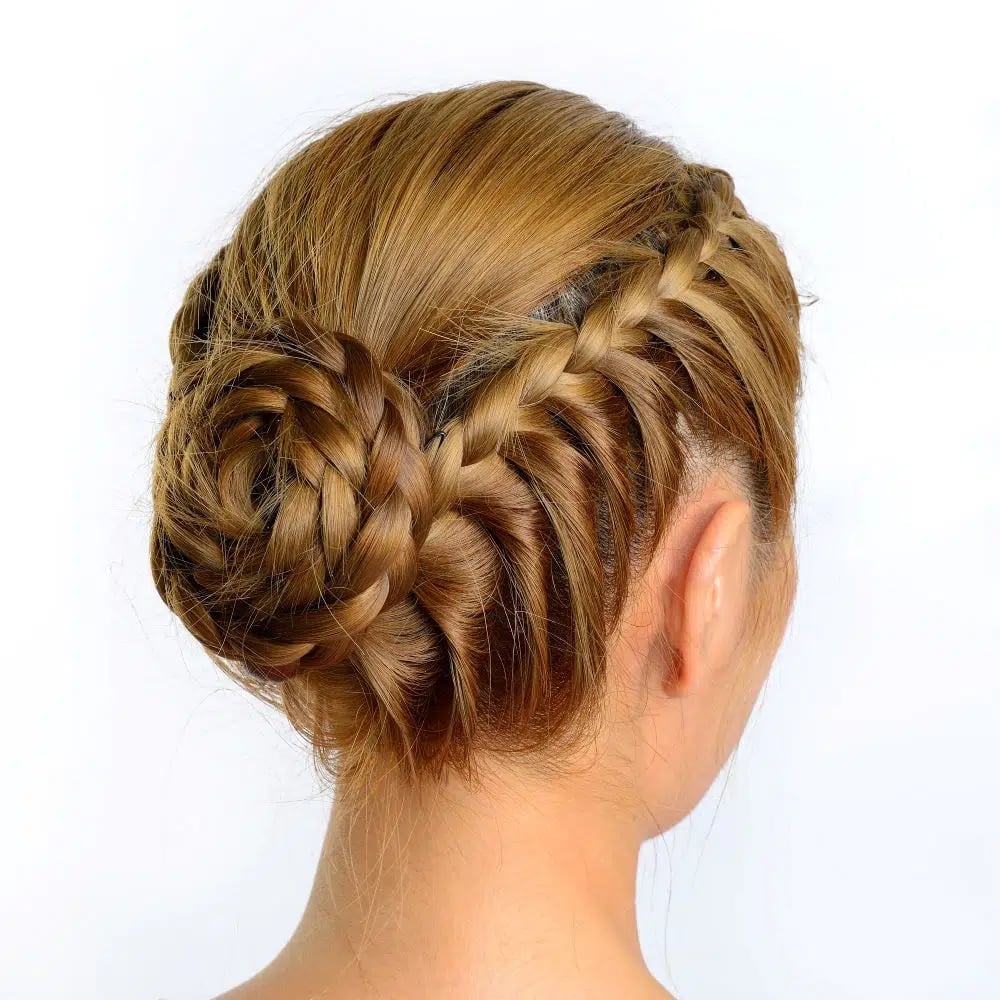
Collarbone length is the sweet spot for a braided bun that has actual substance, not just a wisp of hair twisted into a knot. Thick, straight light brown hair with a middle parting provides enough weight for the complex weaving to read clearly from the audience. Ask your stylist for: intricate braided bun. The technique takes about an hour in the chair, with the stylist working small sections into overlapping braids that form the bun. A strong-hold gel or wax keeps each strand smooth and prevents flyaways mid-performance.
Collarbone Length Vintage-Inspired Updo
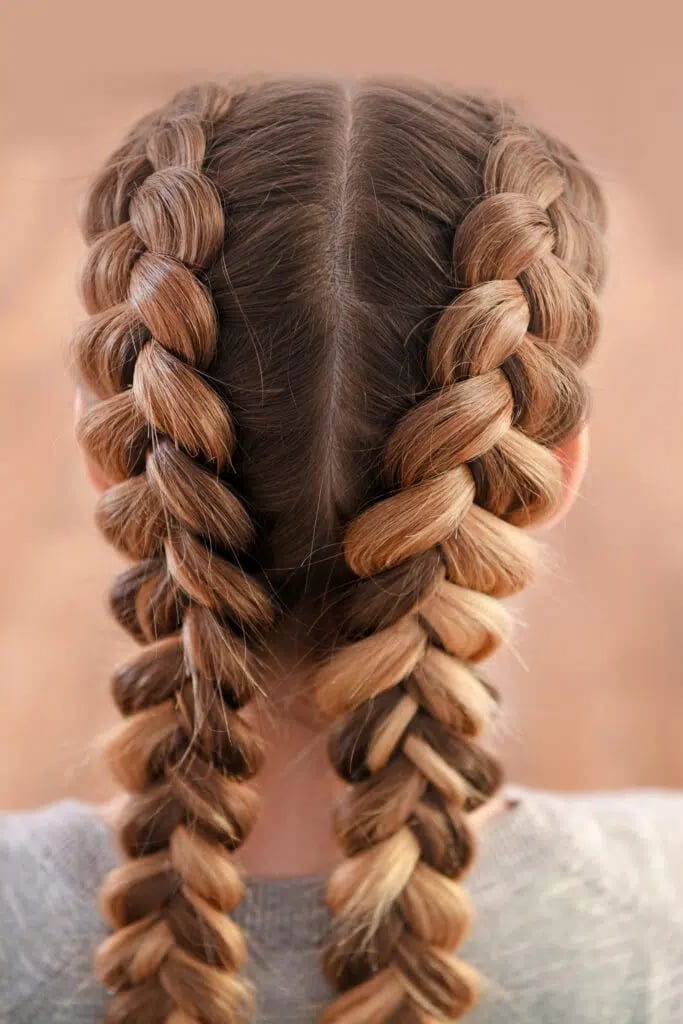
How do you describe that sculpted, rolled updo to a stylist without sounding like you want a 1940s film extra? Fine, wavy light brown hair at collarbone length is ideal for smooth, rolled sections that create volume at the front and a smooth finish at the back. Ask your stylist for: sculpted vintage-inspired updo with side part. The side part adds height for long faces, and the rolled sections stay secure with bobby pins and a firm-hold hairspray. A teasing brush at the crown gives the shape lift that lasts through a full number.
Glossy Collarbone Layers With Soft Waves
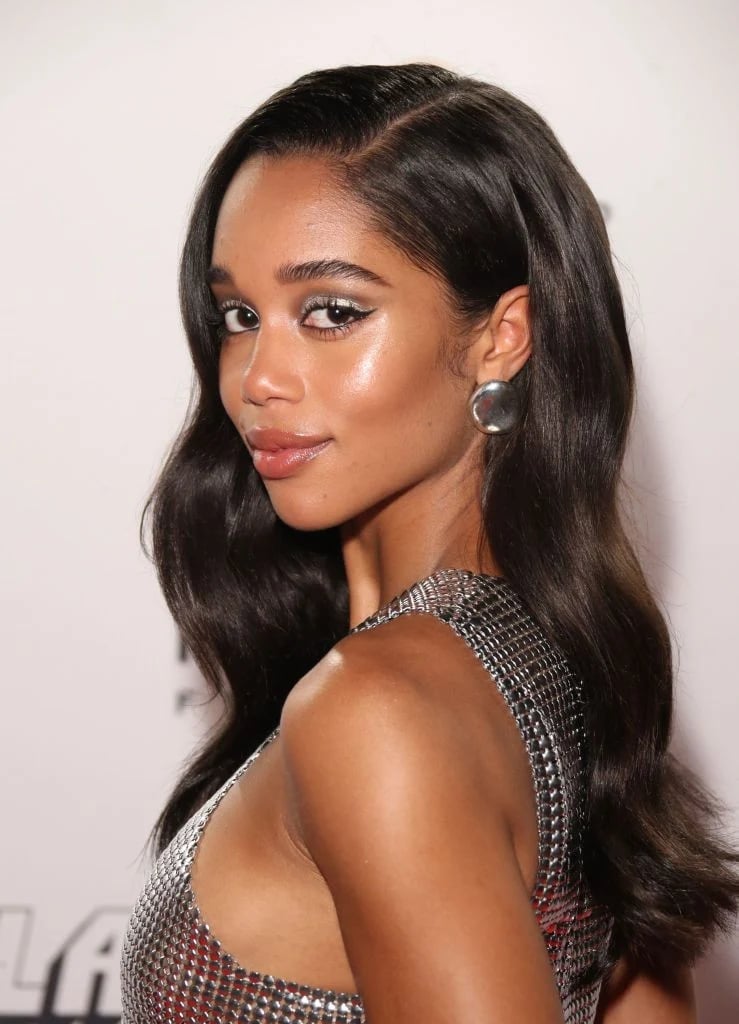
Glossy collarbone layers with soft waves work for less formal dance settings. Thick, dark brown hair gets a healthy shine from a round brush blowout, and the soft waves move without tangling by the second act. Ask your stylist for: collarbone layers with a glossy blowout and soft waves. The upkeep is a trim every eight weeks to keep the layers sharp, plus a shine serum before each wear. This style suits lyrical or contemporary pieces rather than high impact spinning.
Hair Accessories For Dance
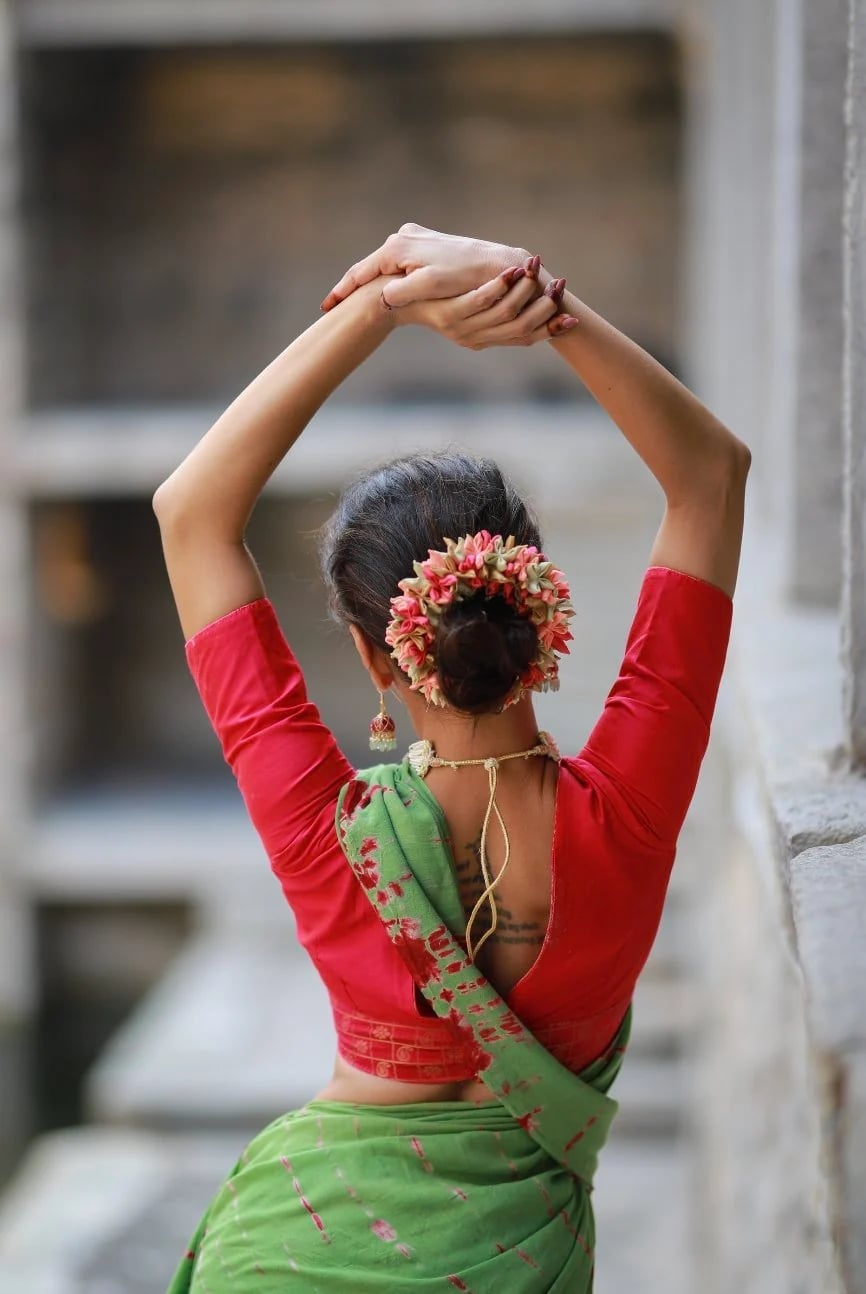
A low bun updo of straight, thick dark brown hair slicked back to mid-back length is the blank canvas for dance hair accessories. The floral accessory pinned at the back adds a focal point that reads from the stage without requiring salon-level braiding.
To get close to this at home, start with a low ponytail at the nape, then twist the length into a bun and secure with U-pins. Choose a floral accessory with a sturdy clip or pin backing, test it with a few head rolls, and adjust until nothing shifts. The DIY time is under ten minutes, and the accessory swaps easily between performances.
Final Thoughts
For high-impact routines, tight braids and sleek updos offer the most reliable hold. When your choreography allows for looser movement, secure soft waves with extra-strong spray and call it done.
- Trim split ends every 6-8 weeks to maintain sleekness.
- Use a strong-hold hairspray to keep styles in place during performances.
- Incorporate weekly deep conditioning treatments for hair that’s frequently styled.
- Avoid excessive heat styling; let braids and buns do the work.
Find the perfect dance hairstyle that moves with you.

