
Cornrows are a protective style that starts at the scalp and travels the length of the hair in raised, continuous braids. In 2027, the look is moving toward cleaner partings and more intentional placement, whether you keep the braids uniform or use them to map out a pattern.
These 20 Cornrows Braids for Black Women cover the range: mid-back lengths for maximum hold, shoulder-length versions for less weight, and a few with color transitions or decorative beads for a deliberate finish. You will find options for fine hair that needs density, for hair that tangles into a single braid by day three, and for anyone who wants a style that stays intact for a full work week.
Classic Mid-Back Length Cornrows
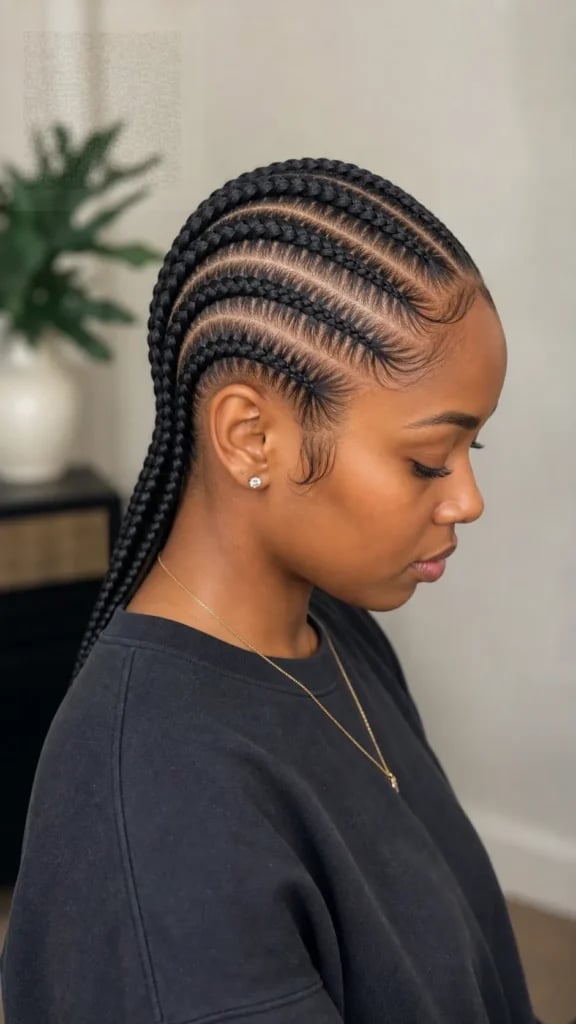
A clean middle part splits thick, straight cornrows that run flat to the mid-back in deep black. The rows are the point: each one sits parallel to its neighbor with no wandering, and the braid itself stays fat from the hairline to the tail. This is a tension job, so the neatness comes from the braider’s hands, not from product.
Ask your stylist for: classic mid-back length cornrows, middle part. It suits medium to long hair that can take the tension, and thick texture gives the rows their weight. Straight or pressed hair braids up just as neatly. Styling is close to nothing: a light scalp oil and a satin scarf at night keep the pattern sharp. Upkeep is a takedown and redo every six to eight weeks, and a wash in between only if the scalp needs it. That is the whole routine. The braids do the rest.
Symmetrical Mid-Back Cornrows
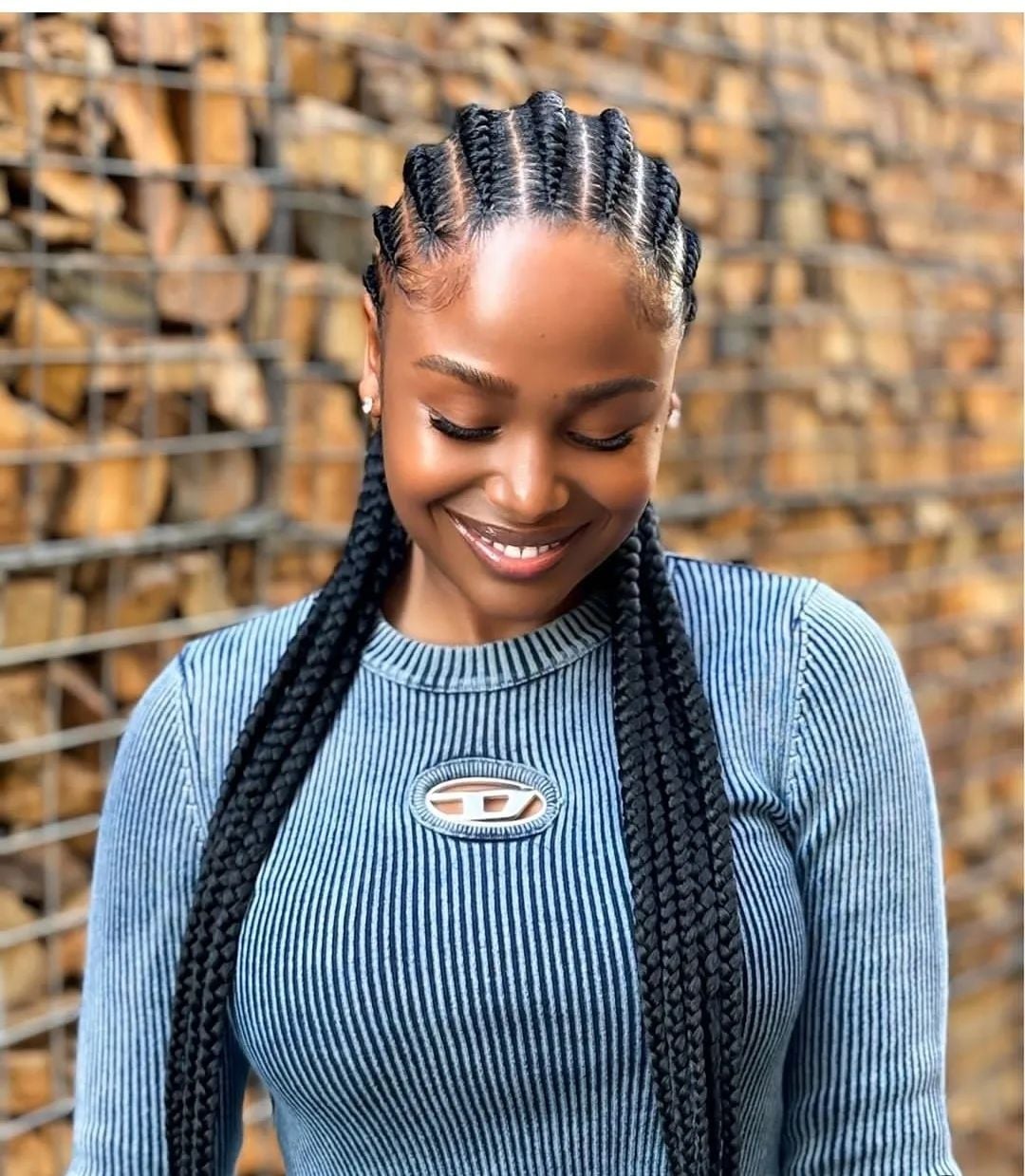
Symmetry is the difference between these and a looser, freer set of cornrows. Where a casual braid-up lets the rows drift, this version mirrors each side of the middle part so the pattern reads as a matched pair from the front view, all the way down the back in deep black.
Ask your stylist for: symmetrical mid-back length cornrows, middle part. Pick symmetry if you want a polished finish for events or everyday wear and you have thick, straight texture that holds a clean line. Pick the looser version if your braider works faster freehand or you want a softer, less formal result. Either way, even tension matters more than speed: uneven pulling shows up first at the hairline and strains the scalp. A trim every eight weeks keeps the ends from thinning out beneath the braids, and a light edge control keeps the part crisp between washes.
Large Curved Mid-Back Cornrows
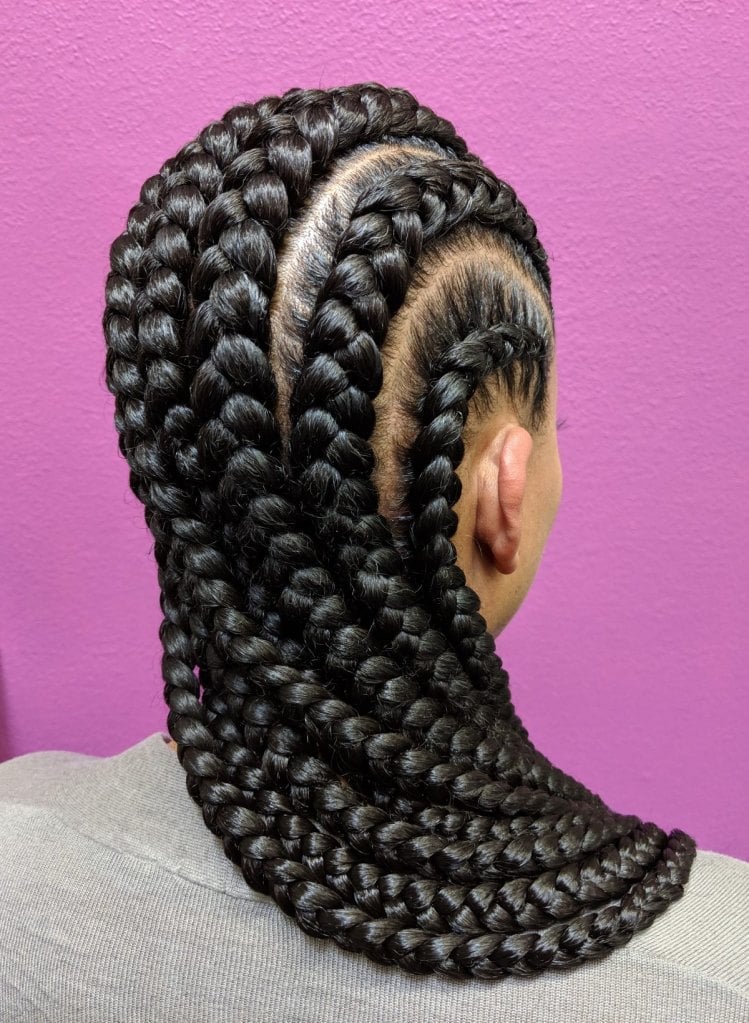
Wondering whether big braids will overwhelm your head? These large curved rows run from the hairline to the middle of the back, and the scale is the whole design. Dense, natural texture fills the braid so it stays substantial; fine hair can wear the same pattern, but the rows will sit narrower and less sculptural. Ask your stylist for: large curved cornrows to mid-back, middle part. If your hair is thick and you want presence without micro-precision, these work. If you prefer a tighter, more graphic grid, pass and go smaller.
Mid-Back Cornrows With Beads and Rings
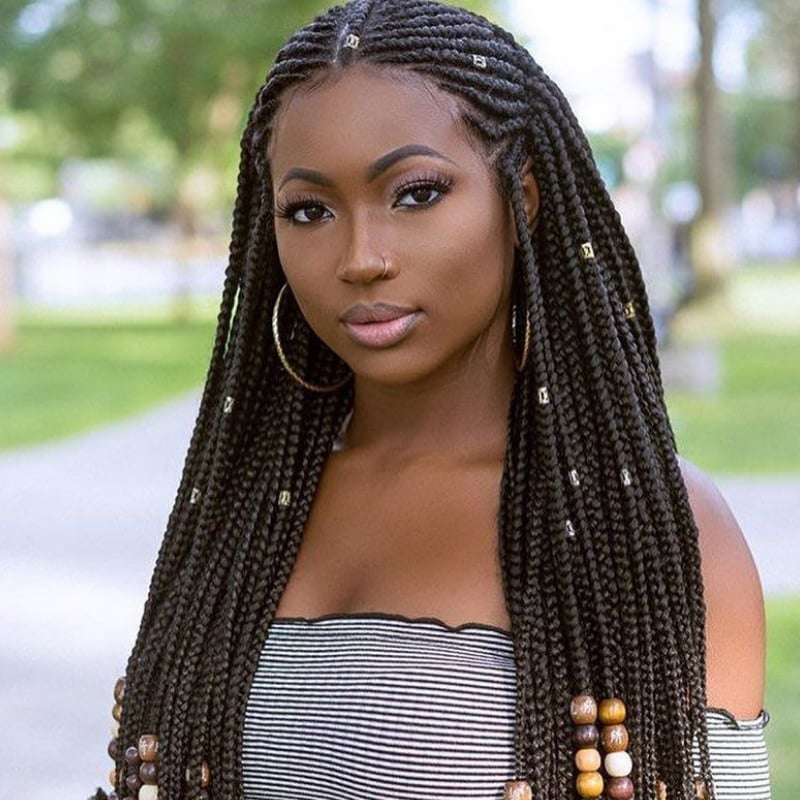
- rings spaced evenly down the braid, not clustered at the ends
- beads secured so they sit flat against the braid
- a mix of rings and beads, or one finish throughout
These suit festival season, parties and any day that needs a little more than plain rows, and they work on thick, straight texture that holds a firm braid. Ask for smooth-edged beads: rough ones snag on collars and scarves. The braiding itself takes a salon session, and the bead placement adds time, so plan the appointment around a free afternoon.
Beaded Mid-Back Cornrows

Clear and light blue beads run down straight black cornrows, a small hit of color against the dark braid and the clean middle part. The beads are the detail you notice first and the one you feel last, because they change how the style wears.
Ask your stylist for: mid-back cornrows with clear and blue beads, middle part. Straight texture holds the braid tight enough that the beads stay put, and mid-back length gives them room to travel. Upkeep is where beads earn their keep or cost you sleep: tie the braids back or wrap them in a scarf at night so the beads do not press into your scalp or clink against a pillow. Choose smooth beads to avoid snagging on clothing. Expect a redo every six to eight weeks, and check the bead tie-offs every couple of weeks so nothing slips loose.
Two Large Defined Mid-Back Braids
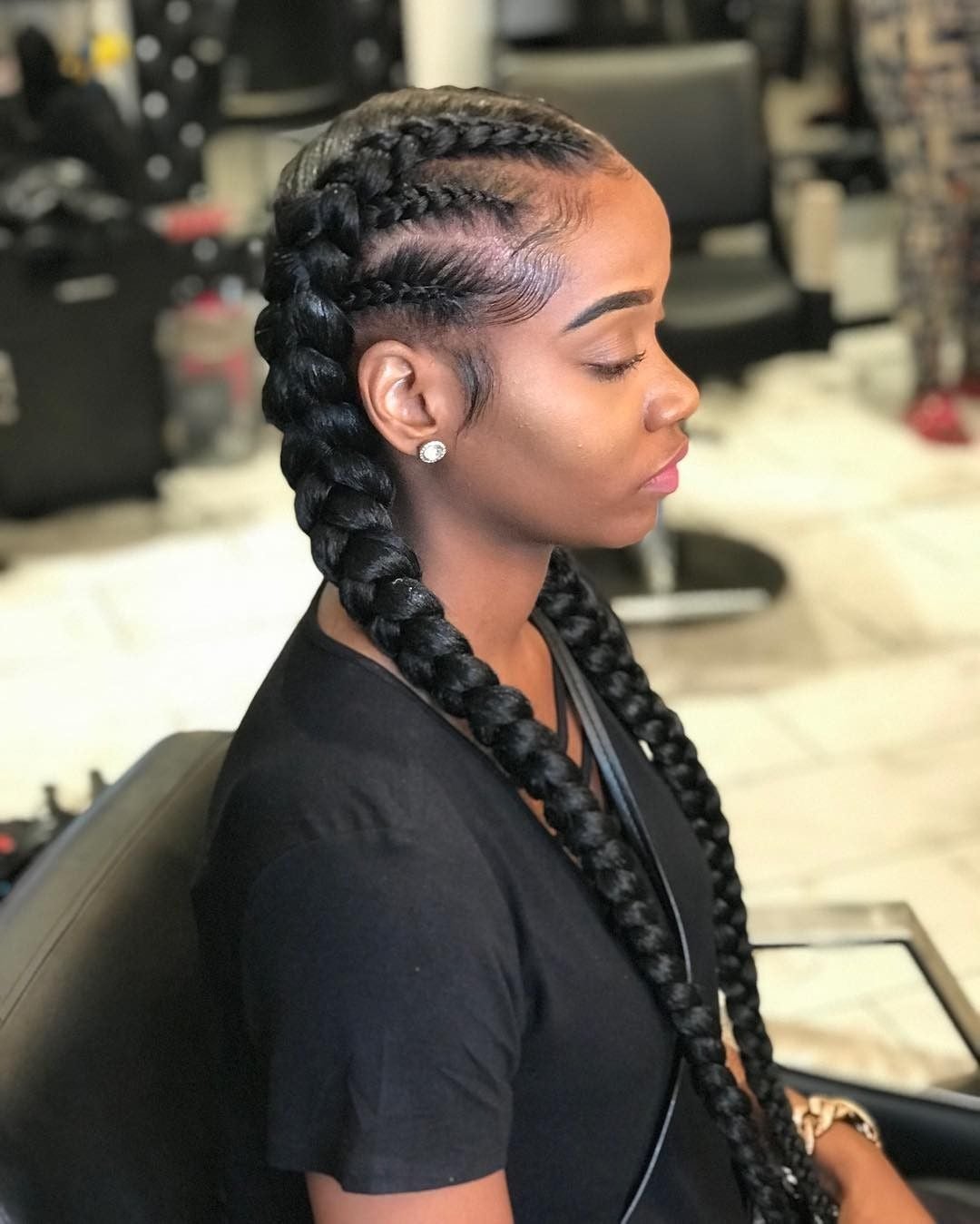
Two large, thick braids are a commitment, plain and simple. They suit Black women who want a bold, low-maintenance style with serious presence, but be honest about the weight, those two braids carry a lot of hair. Ask your stylist for: two large mid-back braids, middle part. The base of each braid must be tightly secured at the crown to keep the shape from loosening within a week. This is a salon-only job, and the drawback is the tension: expect some scalp soreness the first few days, especially if you are not used to heavy braids.
Cornrows Transitioning to Wavy Box Braids
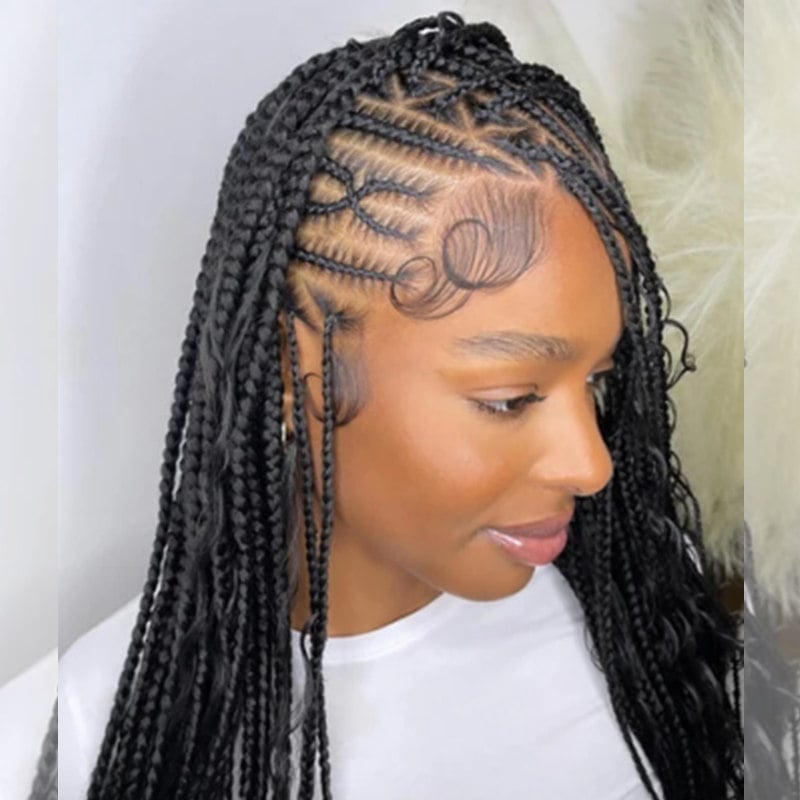
The design works in two distinct stages: tight cornrows at the front transition into thick, wavy box braids that fall past the shoulders. The decorative swirls along the hairline and the middle part are the markers of skilled hands, not a rushed job. Ask your stylist for: cornrows to wavy box braids, decorative swirls. The wavy sections need a light serum applied to the ends to keep the wave pattern defined and reduce frizz between washes. This is a salon-only style. The cornrow-to-box-braid transition requires precise knot work that is difficult to replicate on yourself.
The black color stays crisp with a sulfate-free shampoo every two weeks. The wavy texture holds its shape best when you sleep with a satin scarf or bonnet to avoid compression. Plan for a full day in the chair; the detailing alone takes several hours.
Avant-Garde Mohawk With Extensions
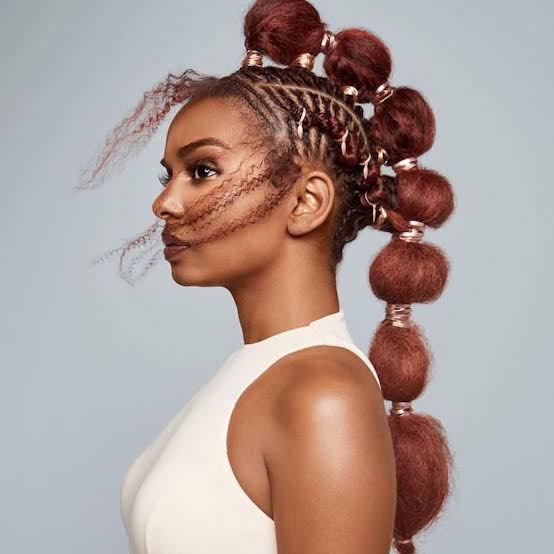
How do you get the bubble effect without the whole thing falling apart by lunch? Start with clean, stretched cornrows as your base, then feed in the extensions section by section. The reddish-brown extensions add a warm contrast against black hair, while the wispy face-framing strands soften the dramatic mohawk silhouette. Ask your stylist for: avant-garde braided mohawk with extensions and face-framing tendrils.
Secure the extensions at the root with a tight knot, then create the bubble shape by spacing small bands evenly down each braid and gently pulling the hair between them. The styling steps are: part the hair into a mohawk section, cornrow the sides flat, attach the extensions to the center section, and add the bands for the bubble effect. A light hold spray on a soft brush keeps the tendrils in place without stiffness. This style requires a salon visit because the tension and extension placement need professional hands.
Thick Cornrows With Laid Baby Hairs
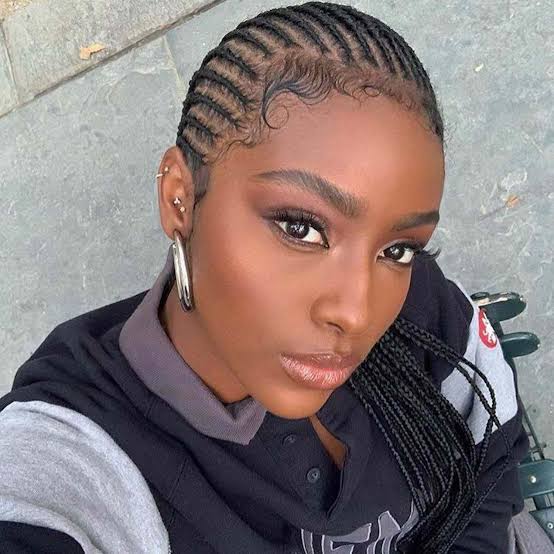
This is the style that says you had time to sit down and get it right. Thick, dark black cornrows extend back from the hairline with a clean middle part, while the baby hairs are shaped into neat, laid-down swoops around the forehead. Ask your stylist for: thick cornrows, neatly laid baby hairs. The baby hairs are what make this look suitable for professional settings or formal occasions. They frame the face without any loose strands breaking the line. Use a soft-bristled brush and a light-hold gel to shape them each morning, and refresh the edges with a dab of water on a toothbrush every other day.
Neatly Parted Cornrows to Mid-Back
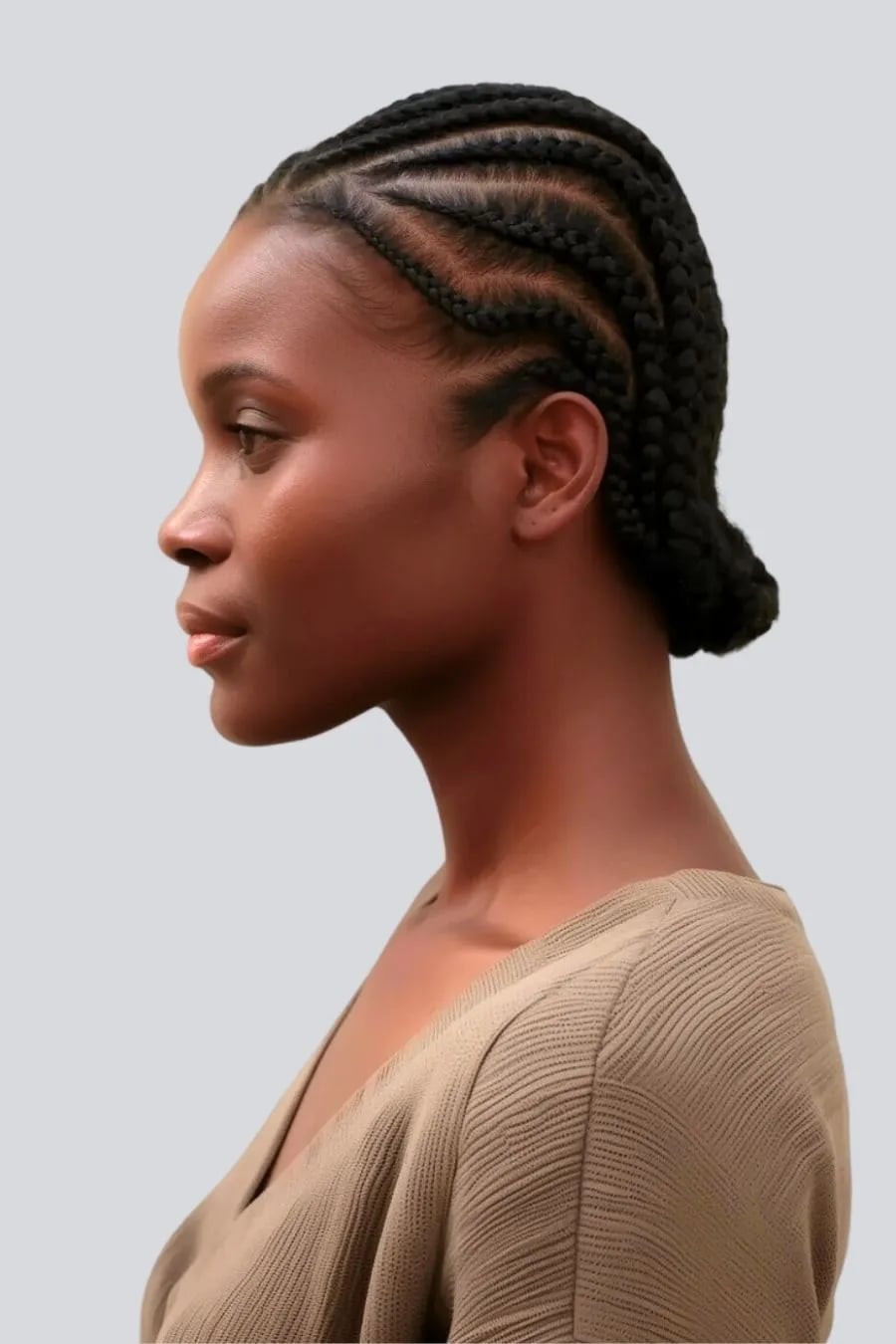
The most common mistake with neat cornrows is imprecise parting that makes the braids look uneven by week two. This version avoids that by keeping the parts straight, narrow, and consistent from the forehead to the nape. Ask your stylist for: neatly parted cornrows to mid-back. The uniform partings create a clean, structured base that holds its shape for weeks, but the drawback is the scalp exposure: dry, flaky skin becomes very visible between those precise lines. Keep a light oil or scalp spray handy and apply it directly to the parts every few days to prevent itching and flaking.
Sleek Mid-Back Cornrows
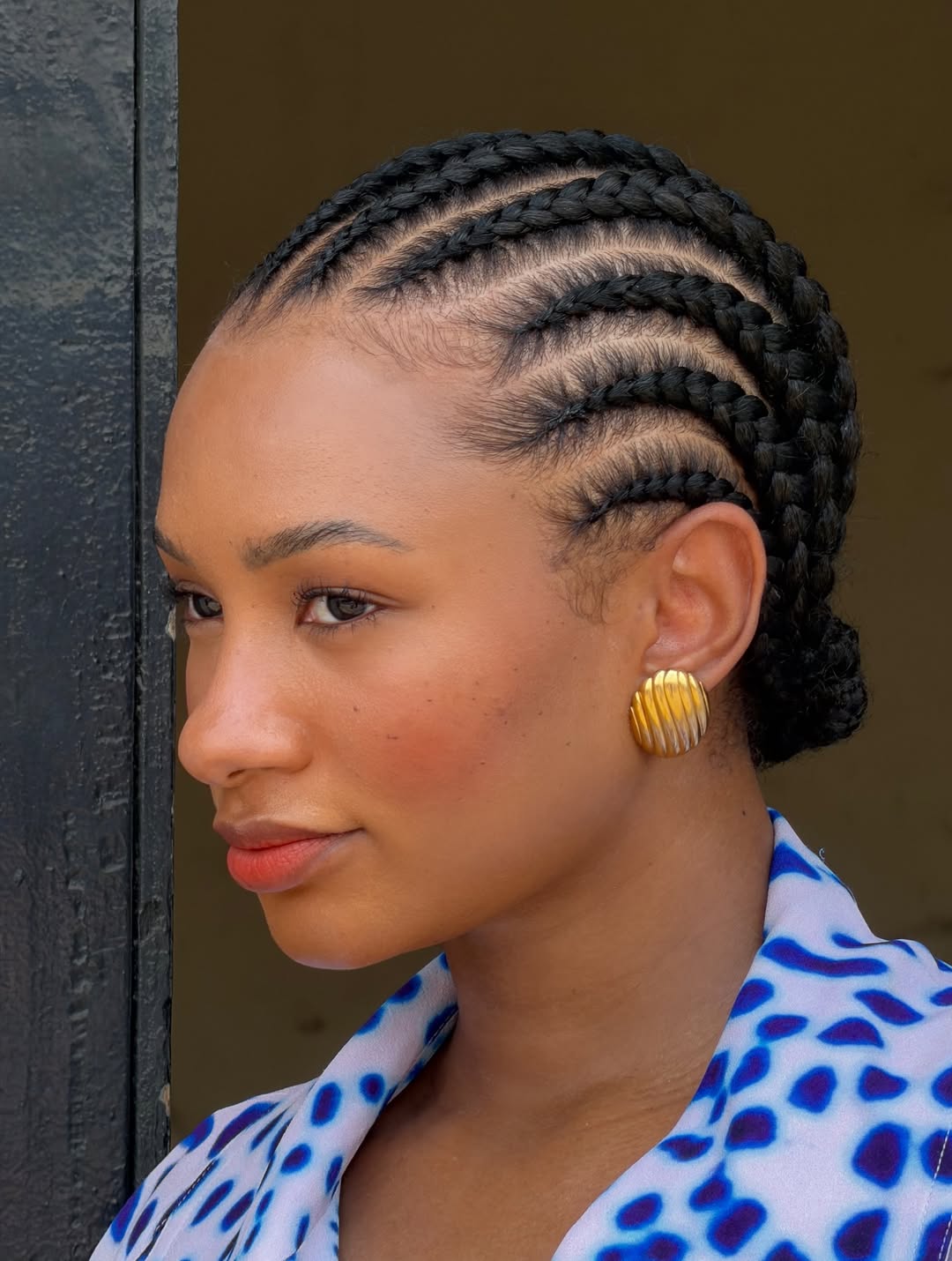
Thick, uniform cornrows running from the forehead to the nape hit mid-back length with a clean hairline and smooth edges. This is the style for Black women who want a polished finish that stays put for weeks. Ask your stylist for: sleek cornrows to mid-back with smooth edges. A small dab of edge control keeps the hairline defined between appointments, and a satin scarf at night preserves the sleekness longer. A trim every six to eight weeks is never required, but a scalp refresh with a dry cleanser keeps buildup away.
Because the braids are uniform and the finish is smooth, this style works for formal events and everyday wear. The middle part and mid-back length elongate a round face, while the sleek edges draw the eye upward. The hold is excellent: expect this to last three to four weeks with minimal fuss, as long as you keep the hairline smooth.
Micro Braids With Subtle Highlights
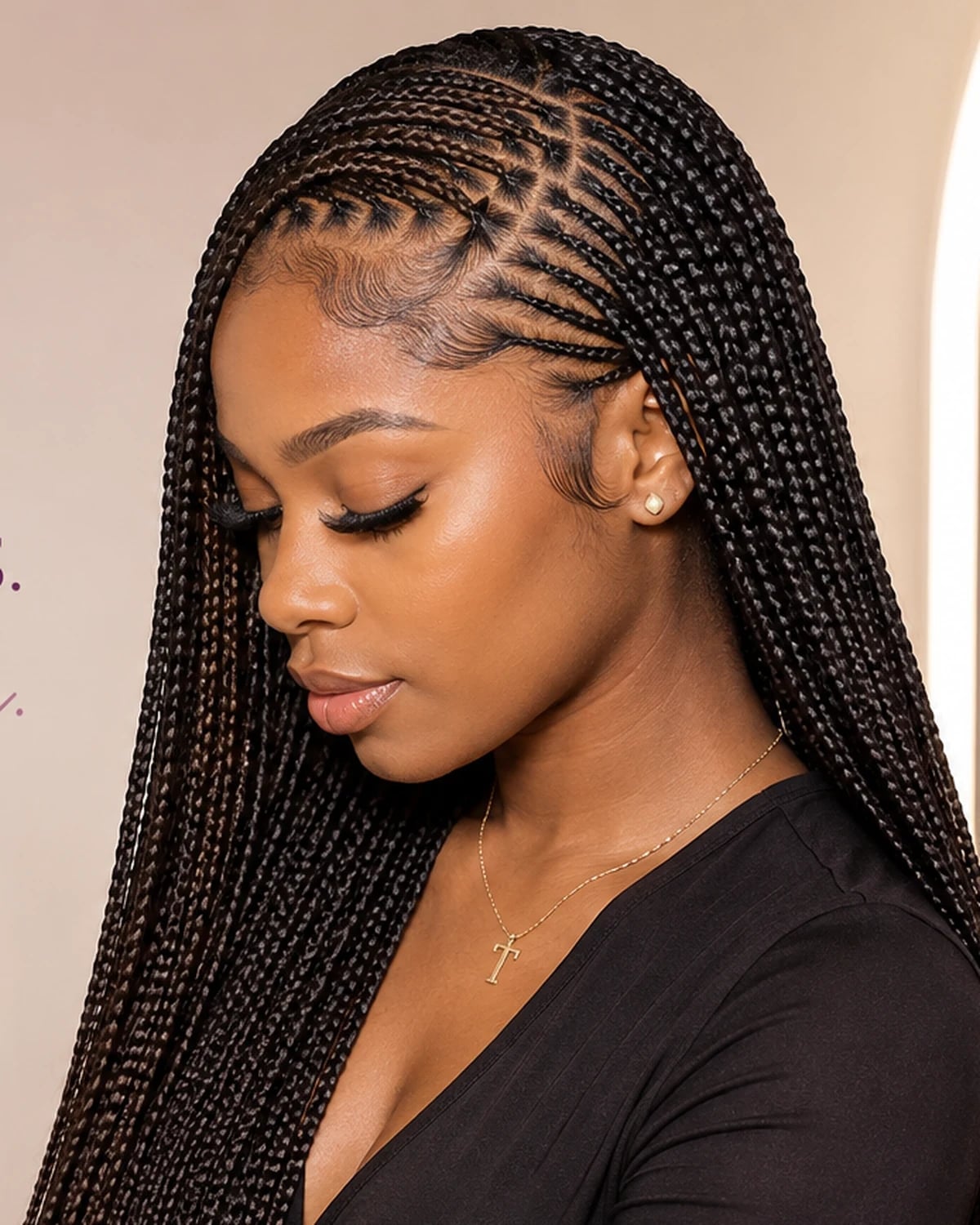
Wondering how to get that intricate geometric pattern at the hairline with dimension woven in? These mid-back micro braids deliver a precise middle parting and subtle brown highlights against a black base. Ask your stylist for: mid-back micro braids, intricate hairline pattern, subtle brown highlights. The geometric design at the hairline requires a stylist with steady hands, but the payoff is a clean, detailed finish that looks like delicate jewelry against the scalp. The highlights read as natural rather than heavy, so the braids stay versatile for everyday wear.
Feed-In Braids With Curly Ends
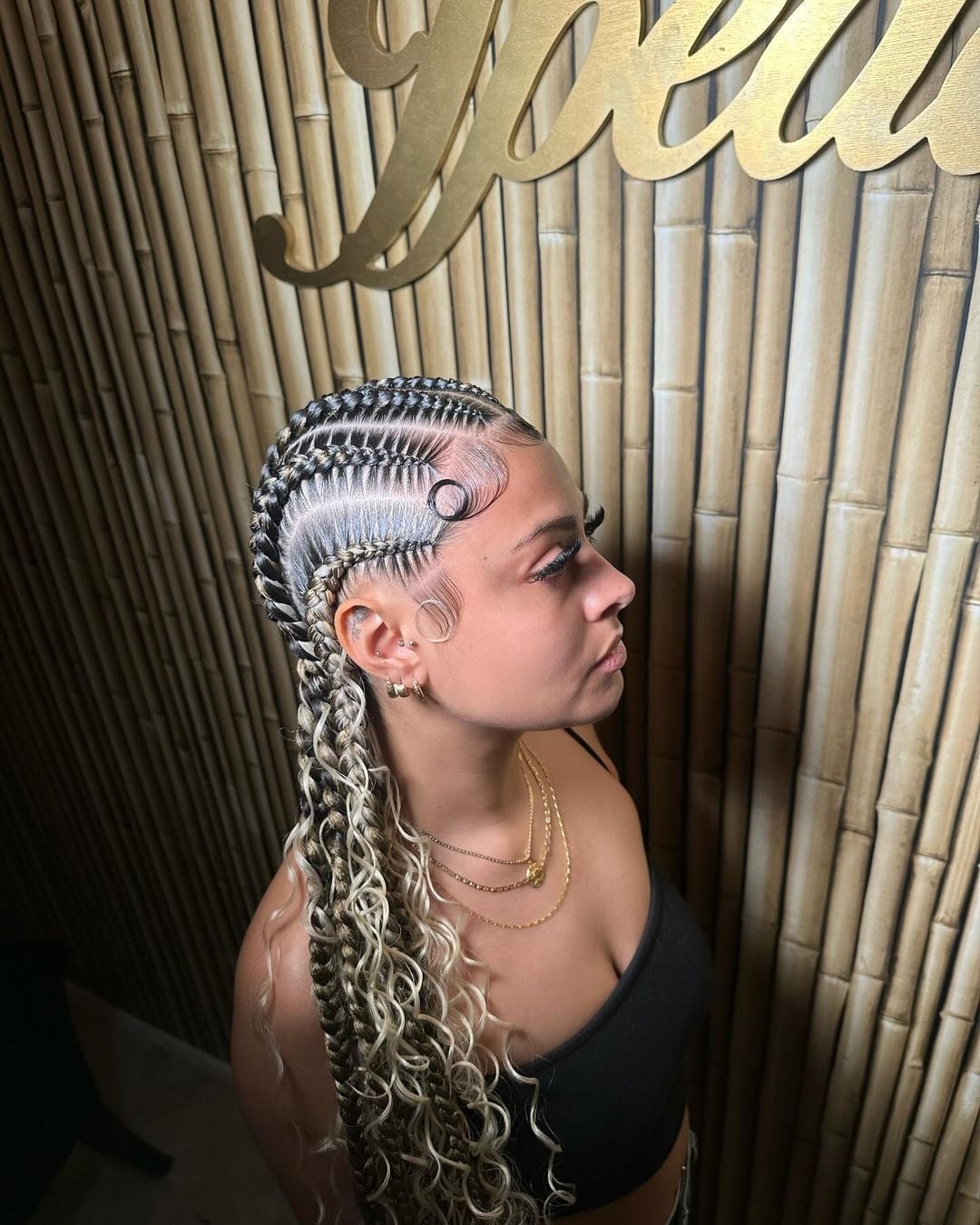
Decorative rings add a metallic accent along the way, and baby hairs frame the face. This style requires a salon visit; the feed-in method and curly ends need a skilled hand to blend the colors and attach the curls securely. Ask your stylist for: feed-in braids with black and blonde hues, decorative rings, curly ends. The curly ends soften the overall silhouette, making this a good choice for summer or when you want movement at the bottom.
Cornrows With Color Transition and Beads
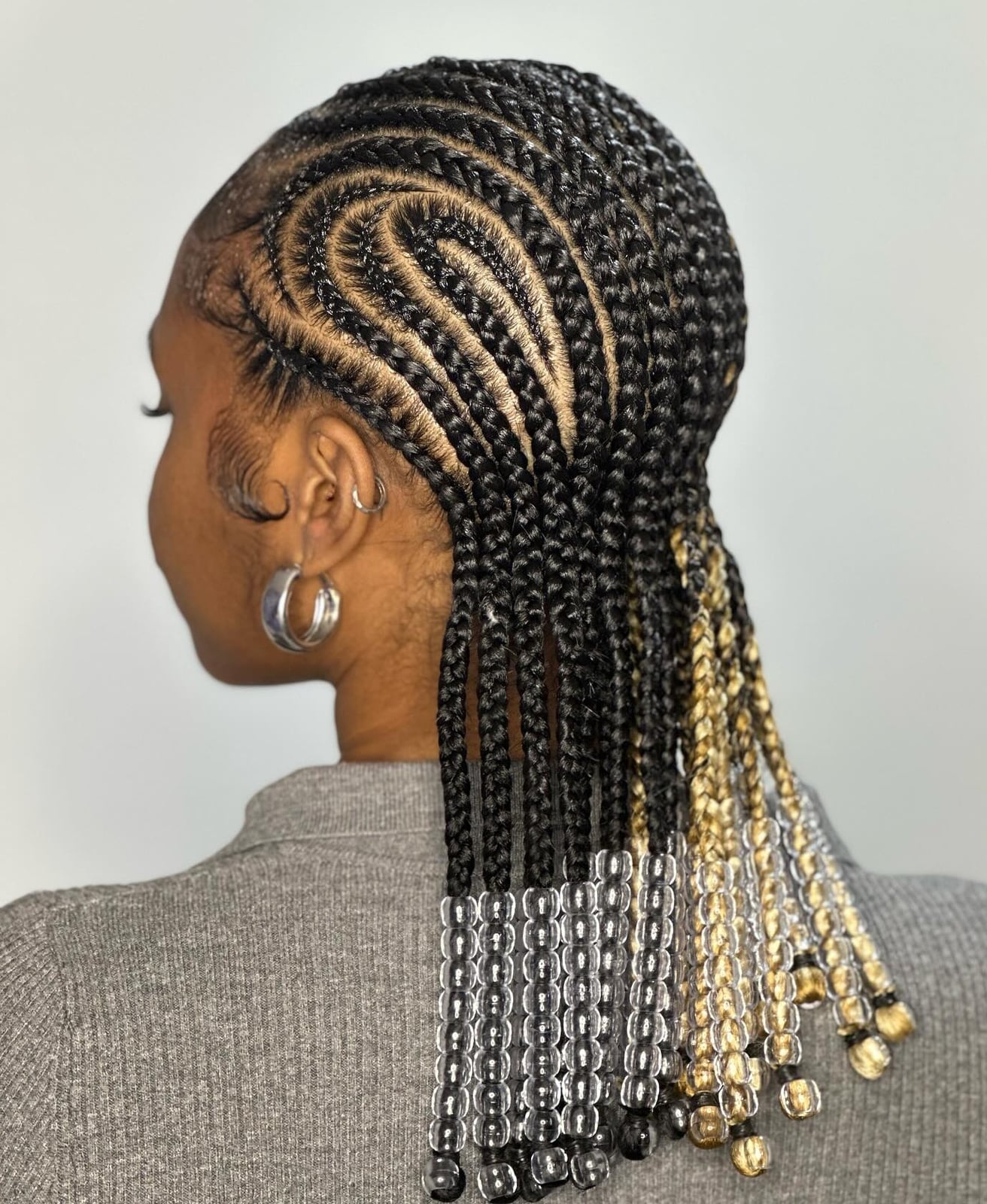
Solid black cornrows are a classic, but the black-to-blonde color transition with clear and gold beads at the ends gives this shoulder-length style a festival-ready edge. The intricate scalp pattern adds visual texture even before the beads swing. Ask your stylist for: cornrows with black to blonde transition, clear and gold beads. Where plain black cornrows stay low-key, this version demands attention and works best for parties or outdoor events where the beads shine. The blonde section needs a color-safe shampoo to prevent brassiness, and the beads should be secured tightly to avoid slipping.
Fine Cornrows With Beaded Ends
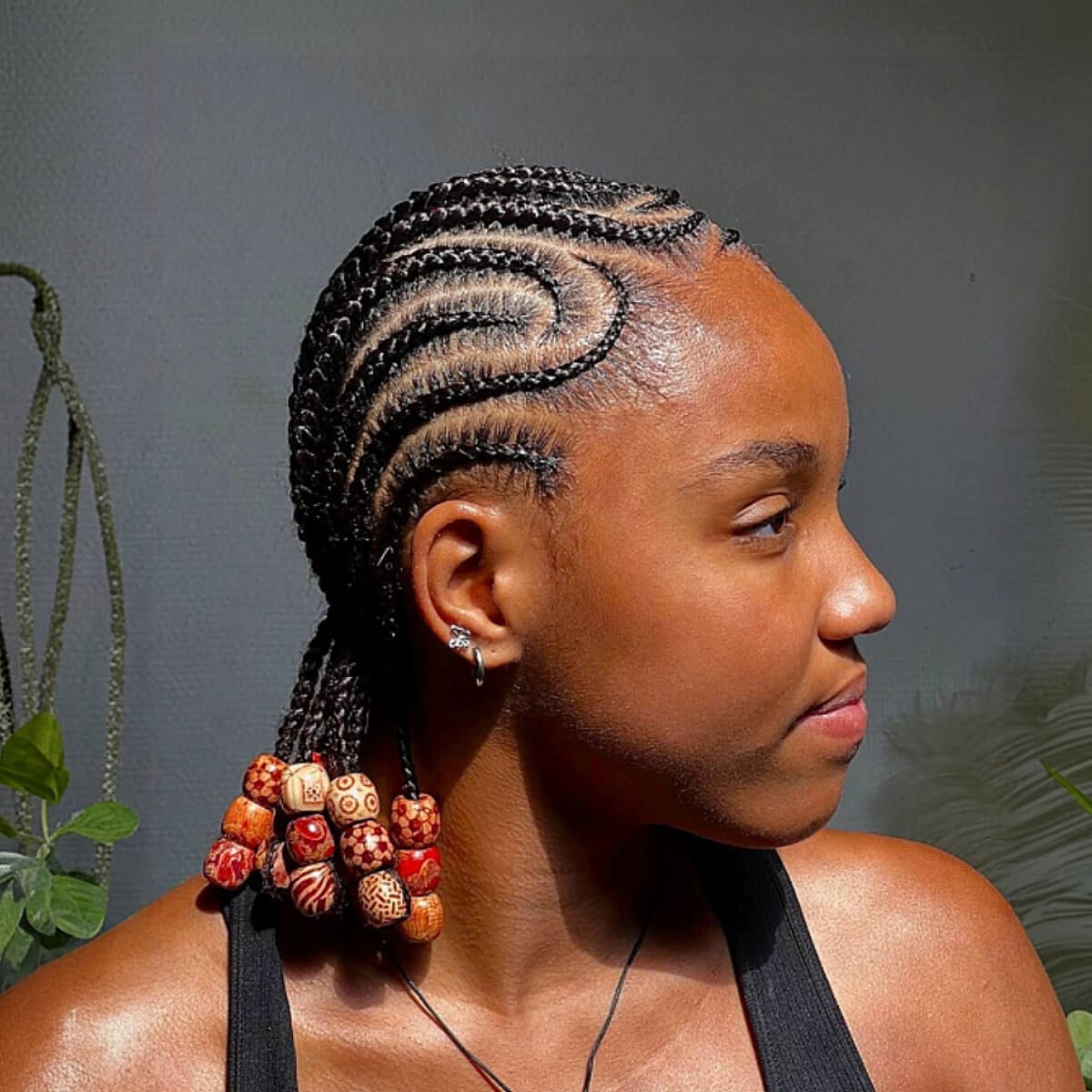
Fine black cornrows trace a curved pattern from the front hairline to shoulder length, with colorful wooden beads at the ends. This is a delicate style that flatters fine hair because the thin braids create density without weight. Ask your stylist for: fine cornrows to shoulders with colorful beads. The drawback is that fine braids can loosen faster than thicker ones, especially with beads pulling at the ends. A weekly check on bead security and a light braid spray keep everything in place. The curved pattern at the hairline softens the forehead, and the beads add a playful note that works for casual outings.
Precise Shoulder-Length Cornrows
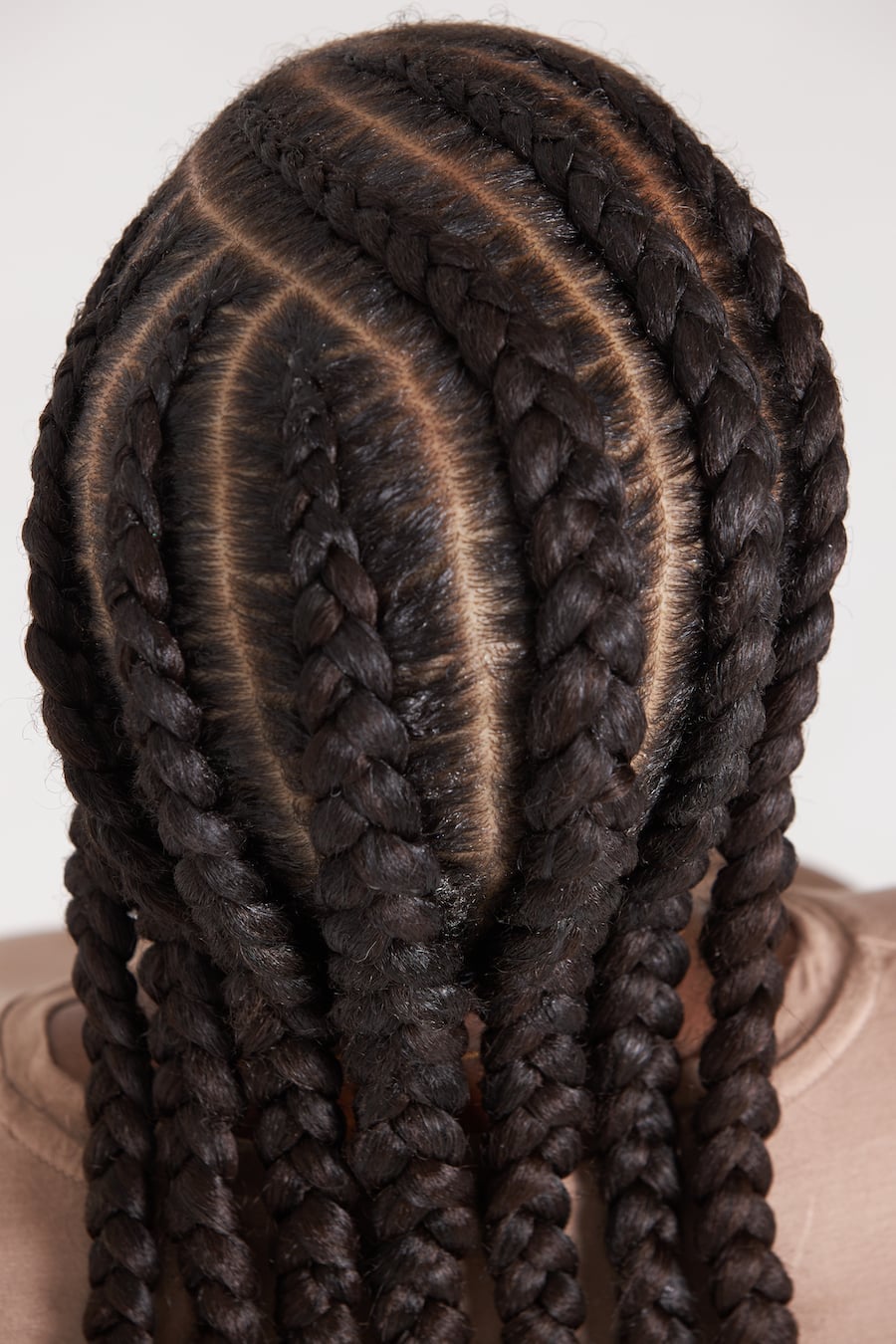
A precise cornrow parting is the difference between braids that look planned and braids that look improvised. Thick, uniform rows in black run from a clean middle part down to shoulder length on Afro-textured hair, and the symmetry is the point: every line has to agree with the one beside it. Ask your stylist for: precise shoulder-length cornrows. The sharper the parting, the longer the style holds its shape before frizz creeps in along the scalp, so plan on a touch-up every four to six weeks. Keep the scalp clean and moisturized and those clean lines stay clean.
Neat Shoulder-Length Cornrows
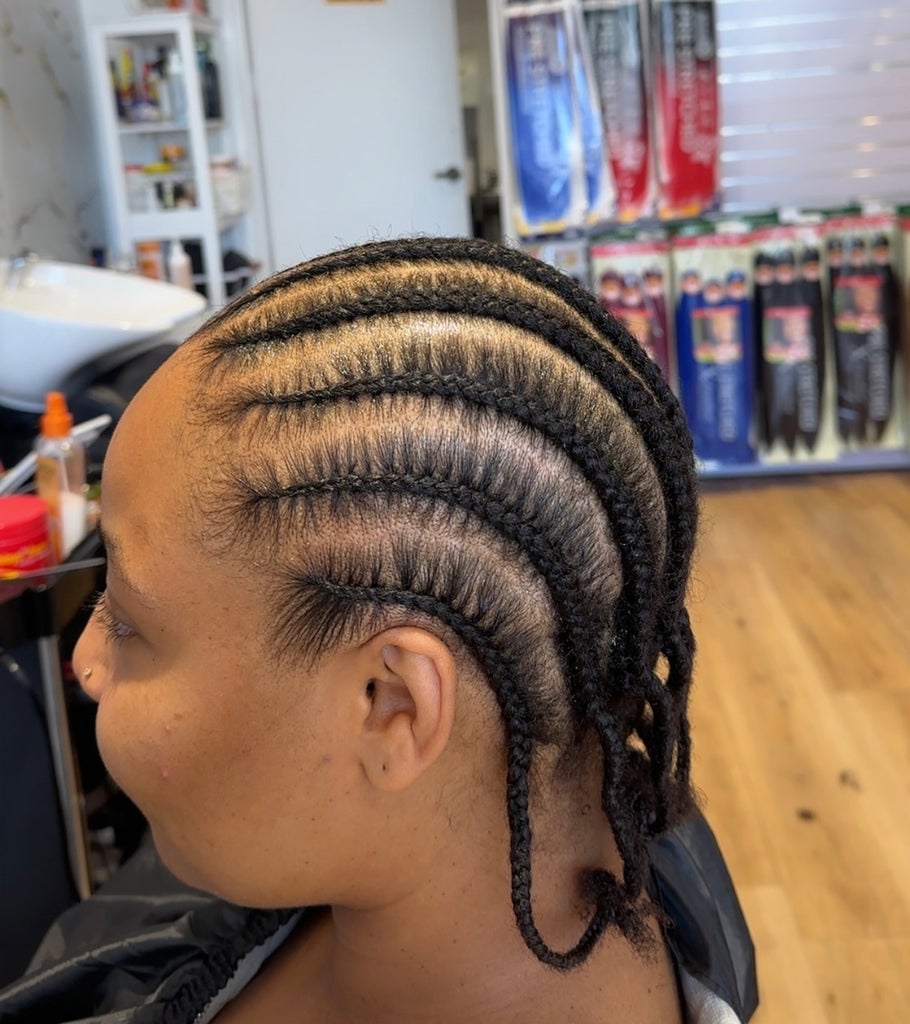
Neat cornrows live or die on the parting, and a clear middle part with thick, straight rows to the shoulder is about as tidy as braids get. The pattern reads uniform from the crown down, which is exactly what makes it work for a workweek and exactly what makes it unforgiving. Ask your stylist for: neat shoulder-length cornrows, middle part.
That precision takes time, often three to four hours in the salon, and a home attempt rarely matches it: the rows wander, the tension goes uneven, and the middle part drifts off center. If you want the neat black cornrows finish without the salon appointment, practice on a friend’s head first. The real drawback is upkeep. New growth blurs the parting within two to three weeks, and stray hairs at the ends need a trim to keep the silhouette clean. Skip this if you want a style you can install in an hour and forget.
Shoulder-Length Cornrows With Blue Braids
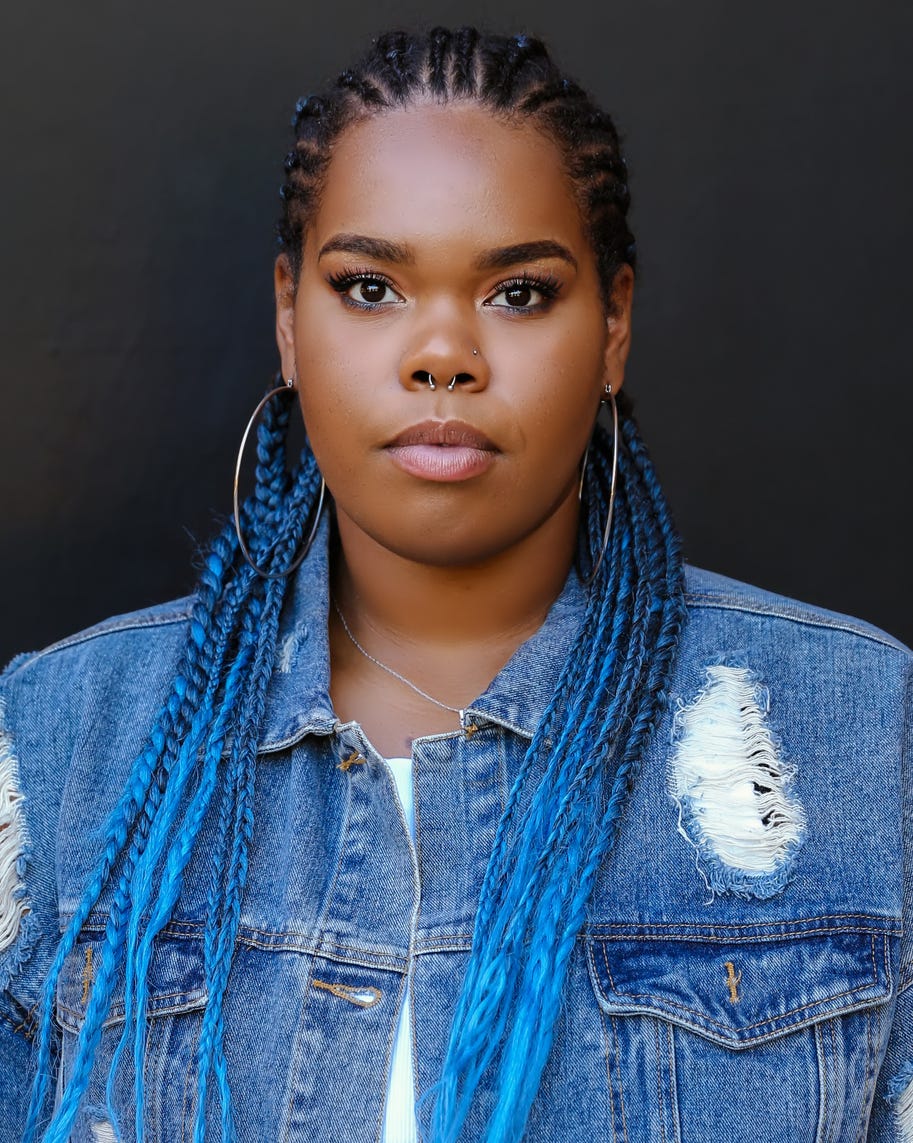
When does a color change earn its keep? When the black base holds the scalp and the blue does the talking from the ears down. Thick, evenly spaced cornrows run to the shoulder, then shift into vibrant blue braids, and the contrast is the whole story. Ask your stylist for: shoulder-length cornrows with vibrant blue braids. It lands hardest in summer and festival season, when a bold color signals a mood rather than a mistake. A color-depositing conditioner keeps the blue from fading to gray between salon visits.
Side Part Cornrows With Wavy Ends
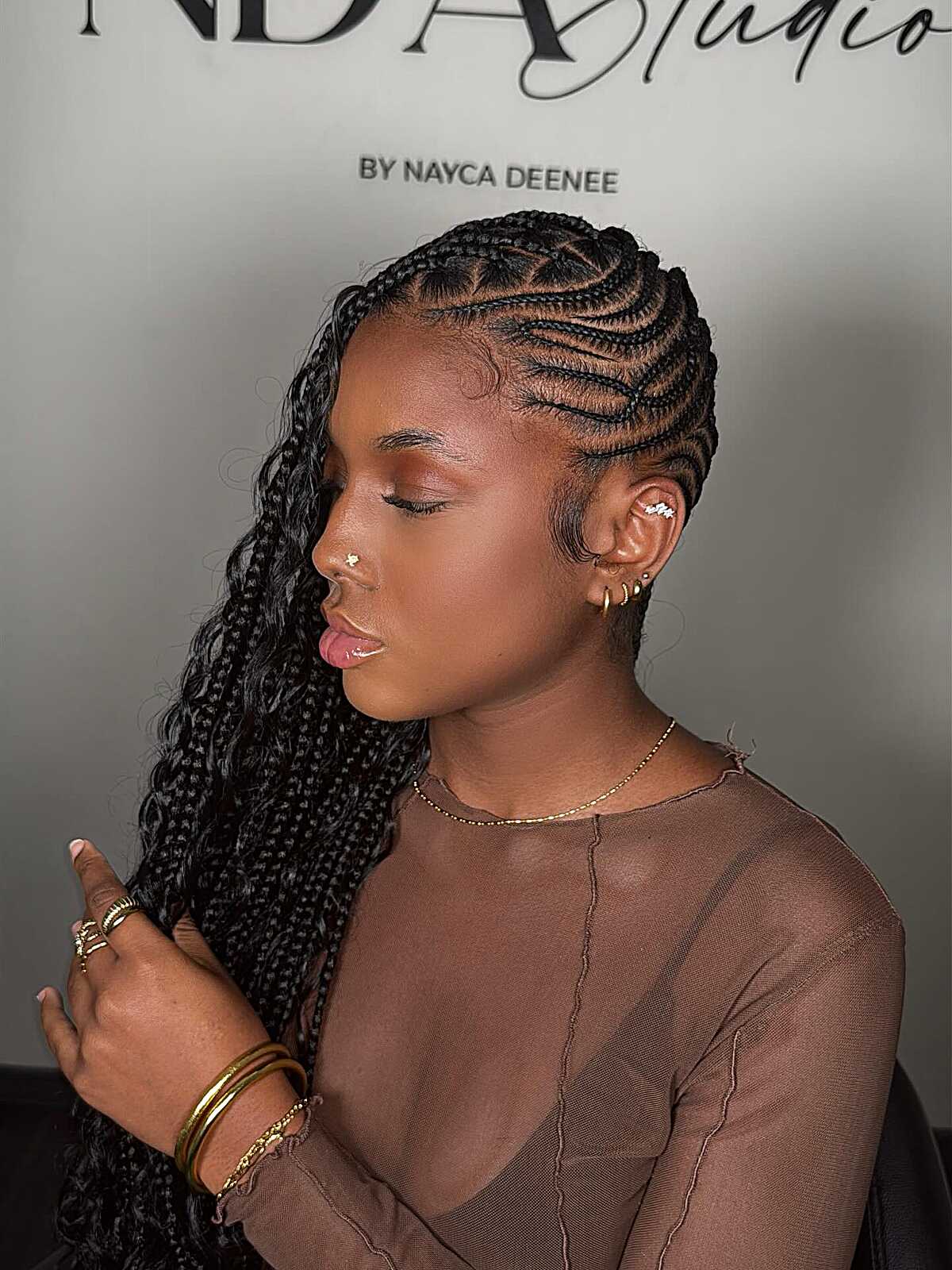
A side parting changes the geometry of a cornrow set: the scalp pattern sweeps to one side, a fringe falls with it, and the braids finish in loose waves at the shoulder. Ask your stylist for: side part cornrows with wavy ends and side swept bangs. The waves at the ends are the part you can manage at home. Set the last few inches on damp hair with a light foam, wrap them around a small rod or finger, and let them dry fully before you touch them. Skip the heat and the wave holds its shape without frizzing out.
Heart Pattern Crown Cornrows
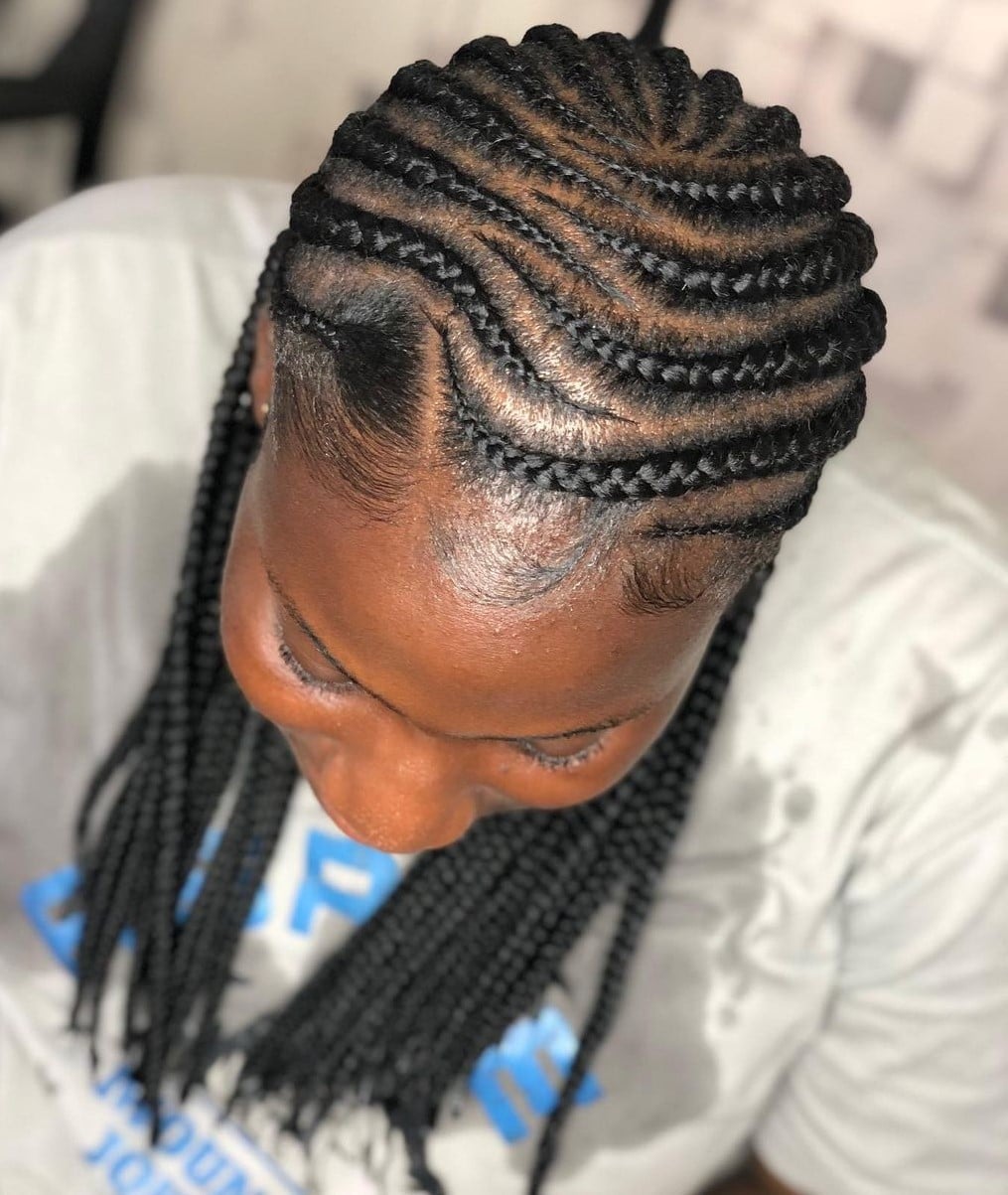
Building a heart into the crown of a cornrow set is a routing problem before it is a braiding one. The braider maps the shape at the front hairline first, then feeds each row around the curve so the heart closes cleanly at the top and the remaining braids continue down to mid-back. Thick black rows keep the outline legible; fine braids would blur it. Ask your stylist for: cornrows with a heart pattern at the crown.
The technique is feed-in work with tight control at the curves, where the braid changes direction and the tension has to stay even or the heart goes lopsided. The process takes several hours and is not a home project. The pattern sits at the crown, so it survives the first two weeks better than the hairline does, but new growth will soften the outline by week three. Keep the crown moisturized and the shape stays readable for a special event or a romantic occasion.
Final Thoughts
For intricate cornrow patterns, prioritize professional salon application to ensure neatness and longevity. For styles with extensions or significant color, regular moisturizing and careful handling are key to preventing damage.
- Moisturize the scalp daily using a lightweight oil or spray.
- Protect braids with a silk or satin scarf or bonnet at night.
- Avoid excessive pulling or tension on the hairline to prevent breakage.
- Refrain from washing braids too frequently to maintain their structure.
- Consider touch-ups every 4-6 weeks for a consistently neat appearance.
Cornrows offer a canvas for creativity, blending tradition with modern flair.

