
Color Locs are a canvas for every shade and technique, from subtle brown highlights to bold teal and rainbow ombres. Lived-in color and soft face-framing layers are the current shift, making dimensional color feel more natural and low-maintenance.
This collection of 19 ideas spans short to long locs, low-upkeep single-process colors to high-impact ombres, and salon-only techniques like balayage to more DIY-friendly tonal glosses. Whether you need a solution for fine hair that lacks volume or a grow-out line that stays blurred, each look pairs a specific technique with a realistic upkeep rhythm.
Thick Braided Locs With Subtle Brown Undertones
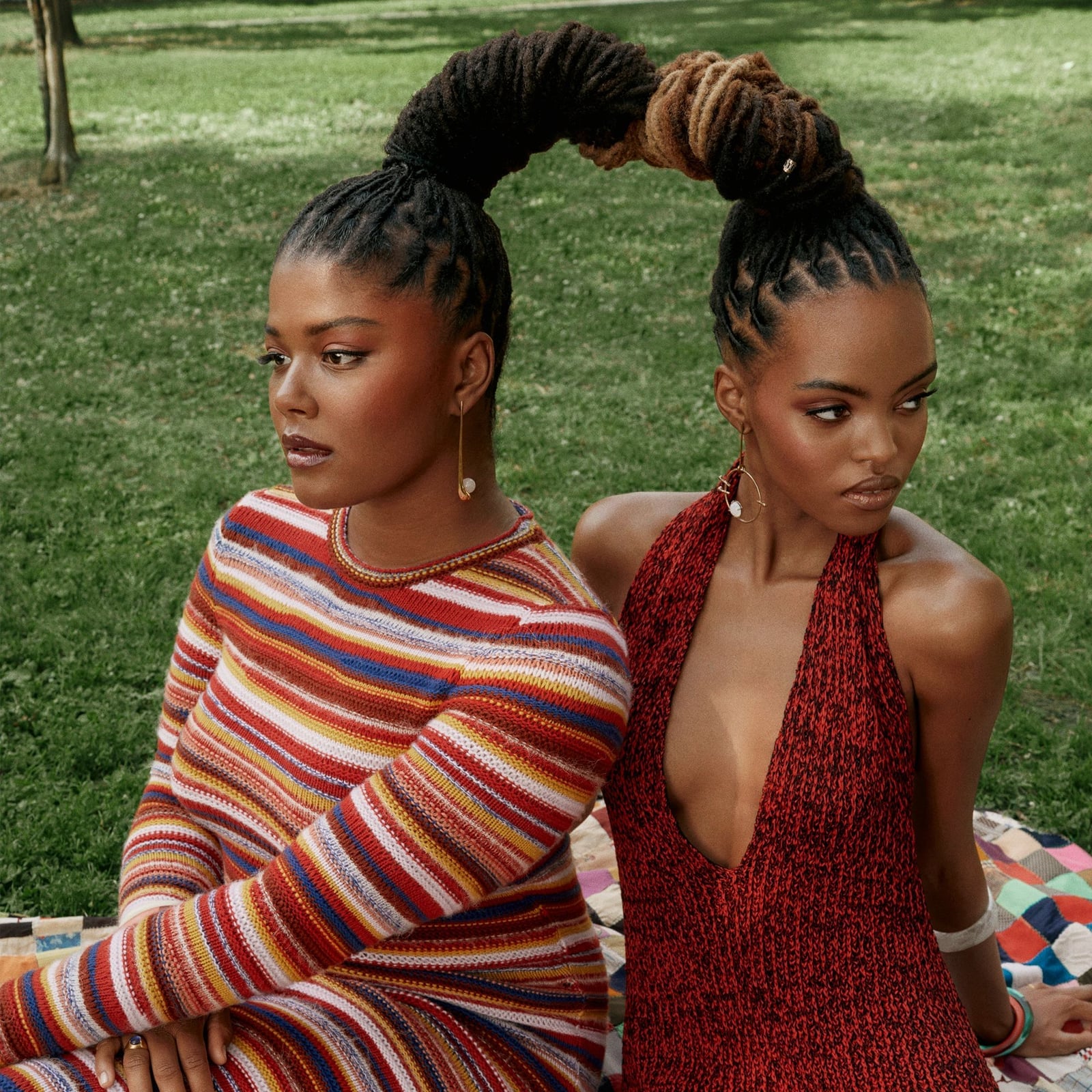
A side view makes the braid work legible: thick locs pulled tight into a braided pattern that runs the full mid-back length without losing density. The base is black, and the brown undertones are the point. They sit low in the shade, so indoors the hair reads almost solid, then a shift toward daylight pulls a warmer cast out of the braid ridges. That is the whole trick of braided locs with brown undertones: the tone changes with the light instead of announcing itself. The middle parting keeps the braid lines symmetrical, which matters more than it sounds once the locs are this thick. Ask your stylist for: mid-back braided locs with subtle brown undertones. Dense, thick locs carry the pattern best, and the length needs to be mid-back or longer before the braid has room to show.
Mid-Back Faux Locs With Blonde Highlights
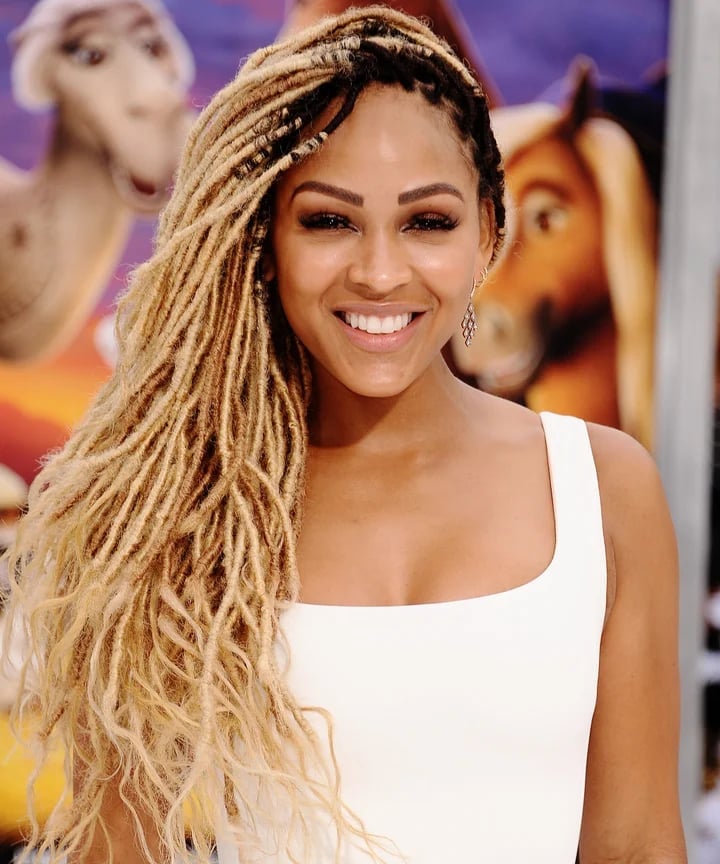
Will blonde highlights on a dark base wash you out? Not if the base stays dark and the blonde is placed as dimension instead of a full lift. Here the dark base does the grounding, and the blonde pieces sit against it in a loose, wavy set parted down the middle. Wavy faux locs at mid-back length suit most face shapes, since the length below the chin does the elongating work on a round face. Fine hair types can wear faux locs too; the density comes from the installation, not from your own strand count. Ask your stylist for: mid-back faux locs with blonde highlights. Skip it for a shade that never needs refreshing, because light pieces on a dark base show regrowth first.
Dark Brown Faux Locs With Auburn Highlights
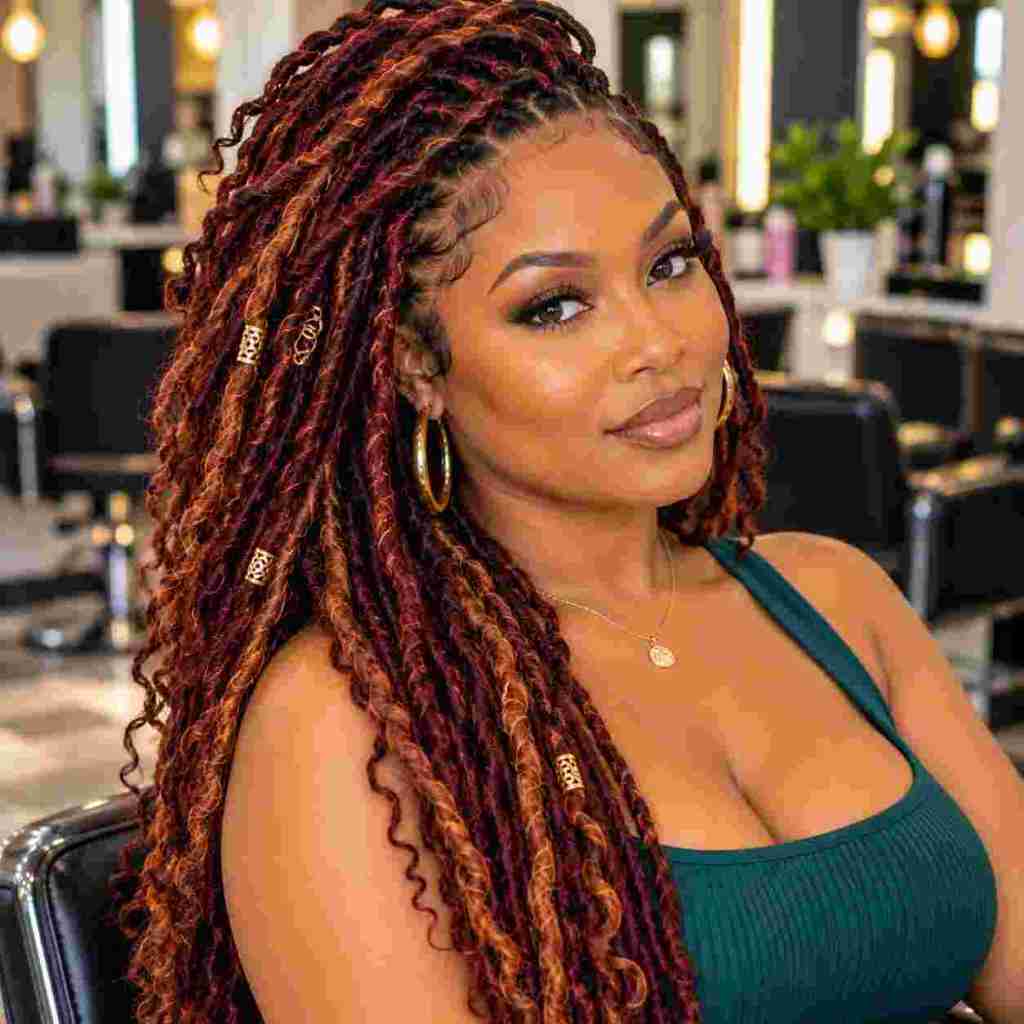
Auburn highlights sit warmer and redder than a copper overlay, and on a dark brown base they read deeper than cherry tones would. Thick, wavy faux locs at mid-back length give the auburn pieces room to move through the length instead of pooling at the ends. Ask your stylist for: a dark brown base with auburn highlights, mid-back wavy faux locs, and a middle parting. Choose auburn if you want warmth that stays in the brown family; go redder only if you want the color to lead. Ask for a short list in writing so the tone match is exact.
Thick Braided Locs With Lighter Brown Highlights
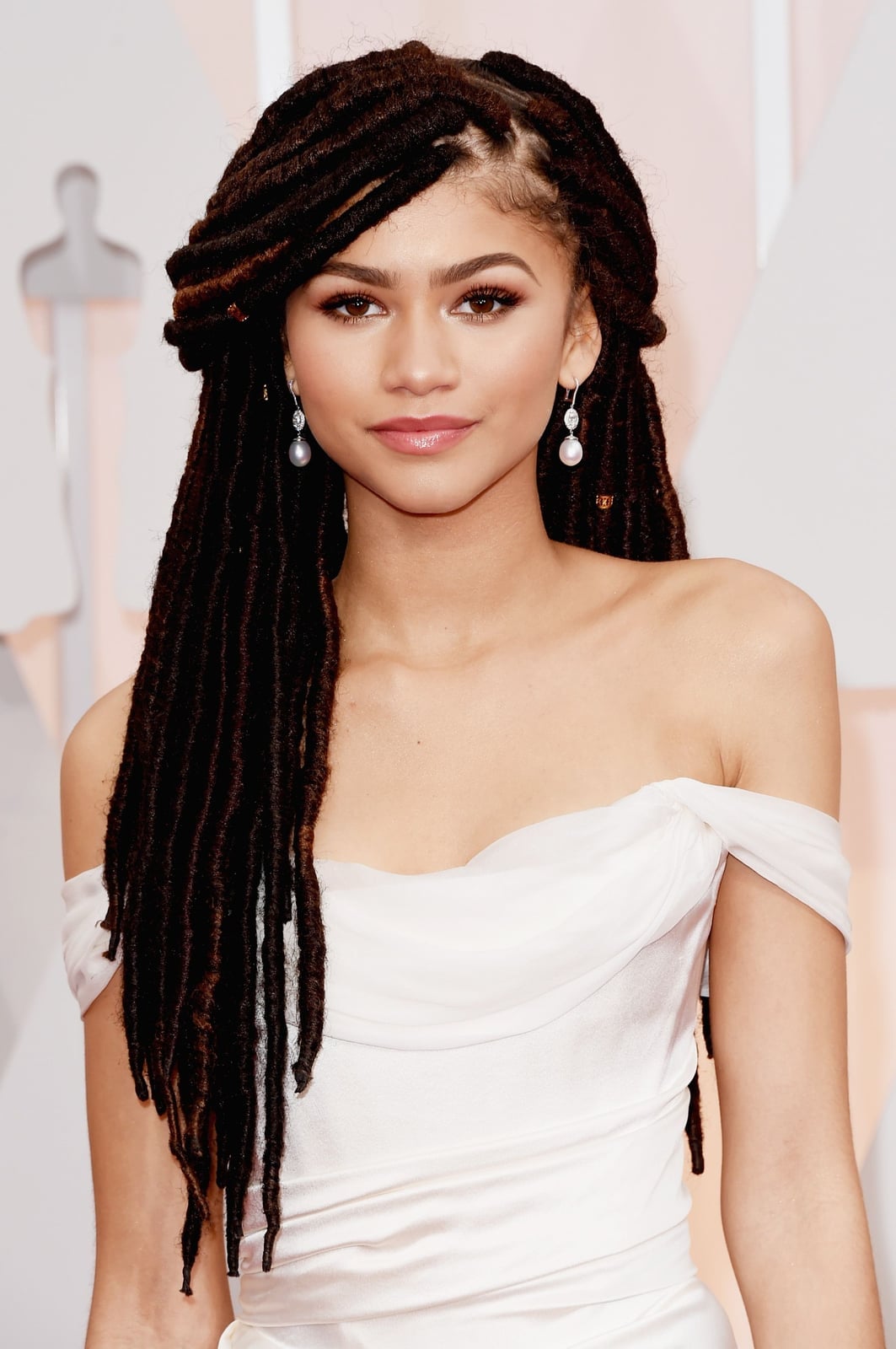
Two thick braids down the back split a long set of locs into clean sections, and the lighter brown highlights do their best work along those braid ridges. The base is dark brown, so the lift is gentle: a shade or two up, not a jump to blonde. That is also why the upkeep is manageable. Lighter pieces on a dark base tend to fade toward brass first, so a toning appointment every eight to ten weeks keeps them from going flat. Braids this size need re-braiding every four to six weeks before the new growth starts to blur the parting. Ask your stylist for: long braided locs with lighter brown highlights. Wavy, thick locs hold the braid shape without slipping, and a light oil spray keeps the length from drying out between appointments.
Soft Locs With Medium Brown And Blonde Highlights
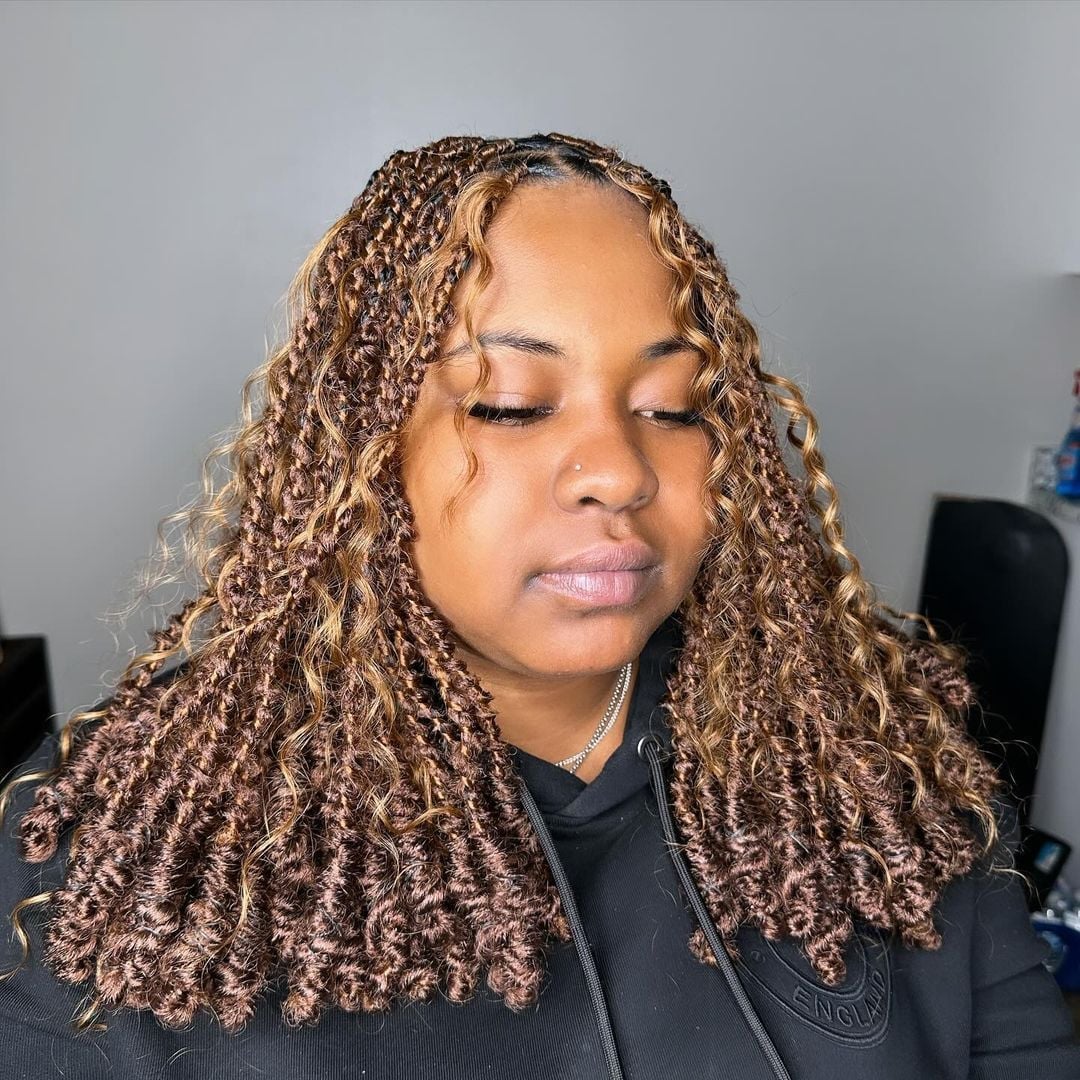
What do you actually say at the appointment to get this blend? Start with the base: a medium brown, not dark, because the blonde needs a mid-tone to sit against without going ashy. Then describe the placement, blonde highlights running through mid-back soft locs, with the length left in loose curls and a few sections braided for texture. The coily, thick density is what makes the highlights look woven in rather than painted on. Ask your colorist for: medium brown soft locs with blonde highlights, loose curls, middle parting. Bring the words in writing; medium brown covers a wide range, and two people can mean two different shades by it.
Collarbone Layers With Caramel Highlights
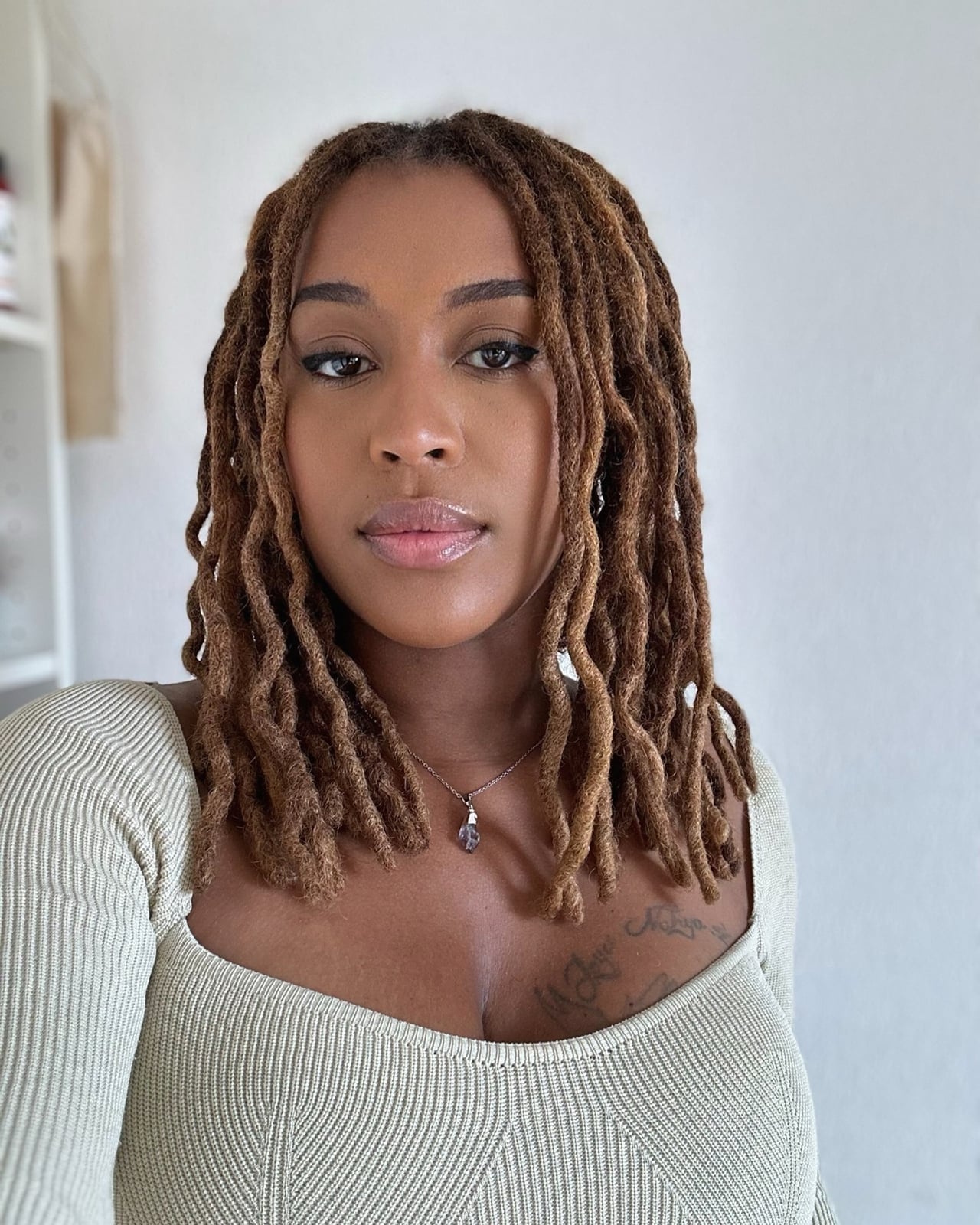
That placement is what keeps the grow-out soft: no hard line where the highlight starts, just a gradual lift that follows the wave of the hair. Wavy, thick hair holds that blend well because the bends break up the color at eye level. Ask your colorist for: collarbone layers with caramel highlights and blowout. The soft blowout finish is the tell that the cut was built for movement, not for a flat iron.
Long Butterfly Locs With Blonde Streaks
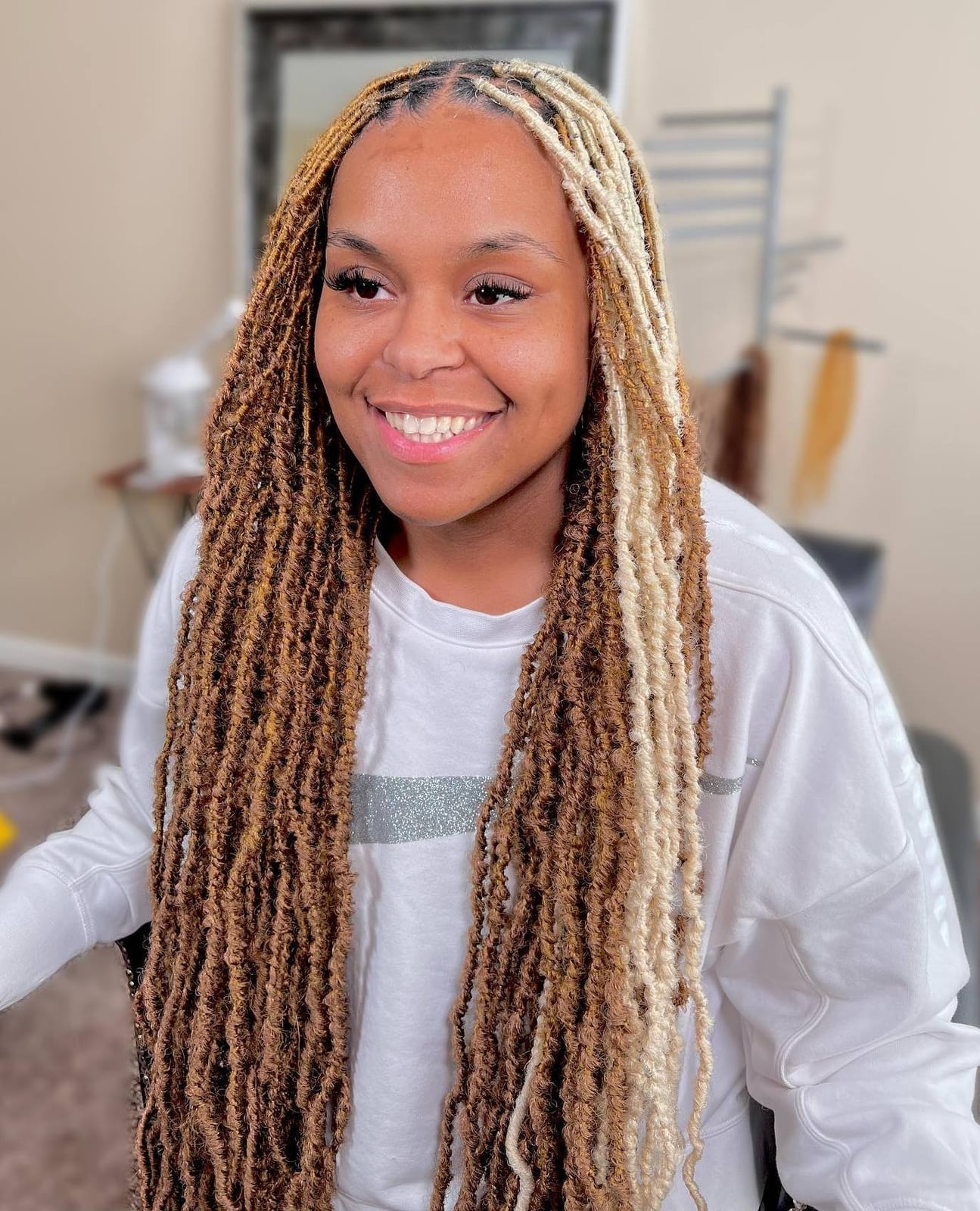
Blonde on locs is a commitment, not a one-and-done appointment. On long butterfly locs with a rich brown base, scattered blonde highlights sit close to the surface, which means they take the most wear and the most brass. Warmth creeps in within a few weeks, especially on mid-back length that rubs against collars and shoulders. A purple shampoo once a week keeps the tone cool between salon visits, and a color-safe leave-in stops the blonde from drying out faster than the brown. Ask your colorist for: long butterfly locs with blonde streaks. For a set you can leave alone for months, skip the blonde and stay brown: the upkeep is real, and it is not optional.
Shoulder Length Sister Locs Updo
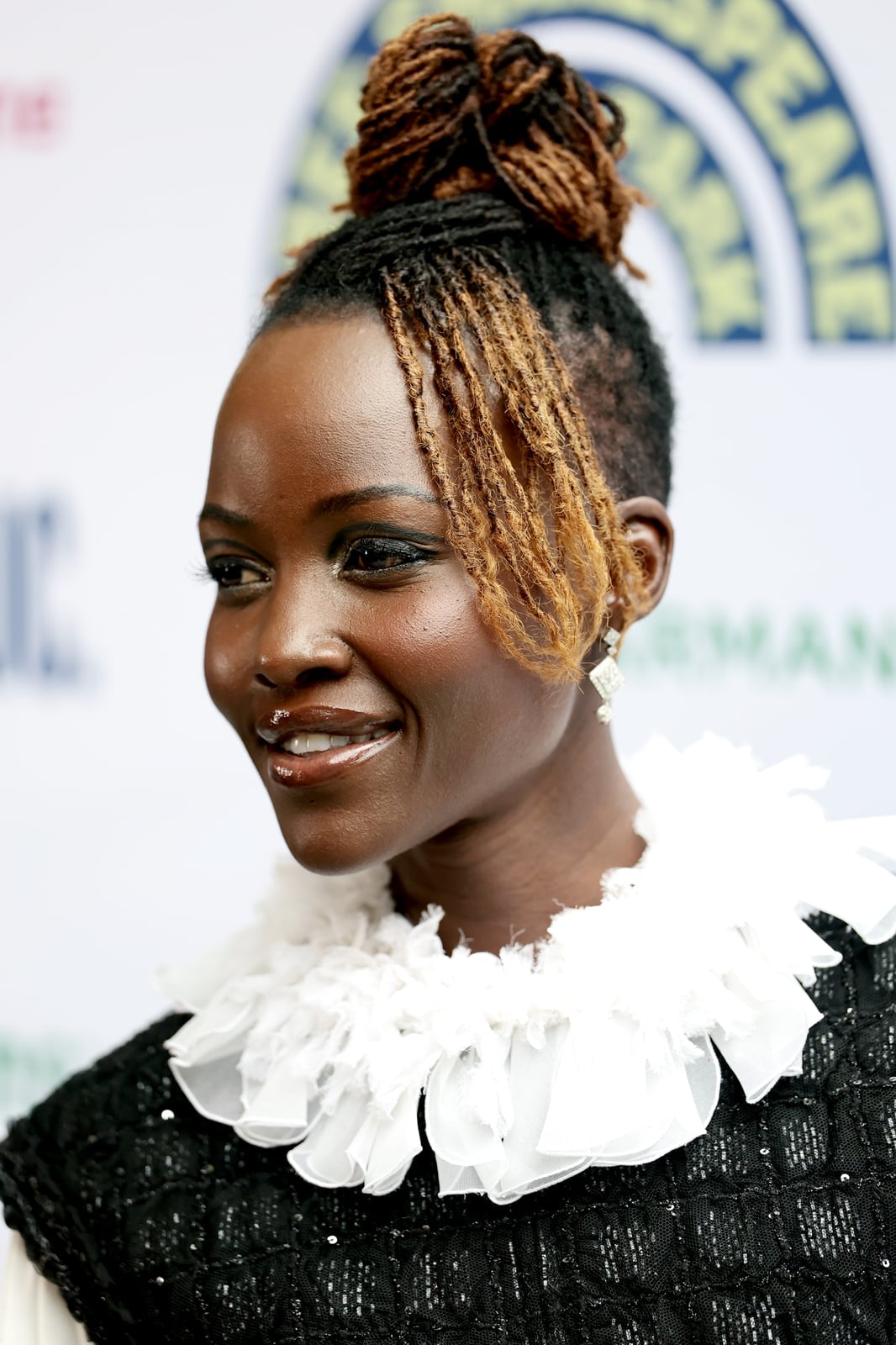
Does a dark brown base with honey blonde highlights actually work on fine sister locs? It does, and the contrast is the reason. Fine, wavy locs have less bulk to carry color, so a dark base with honey blonde highlights gives the updo visible depth without weighing the hair down. The face-framing pieces matter here: pull them forward and the color does the rest. Ask your stylist for: shoulder length sister locs updo with honey blonde. The look suits all face shapes, and a middle parting keeps it balanced. Shoulder length is the sweet spot; shorter locs lose the updo volume.
Mid-Back Faux Locs With Black to Blonde Ombre
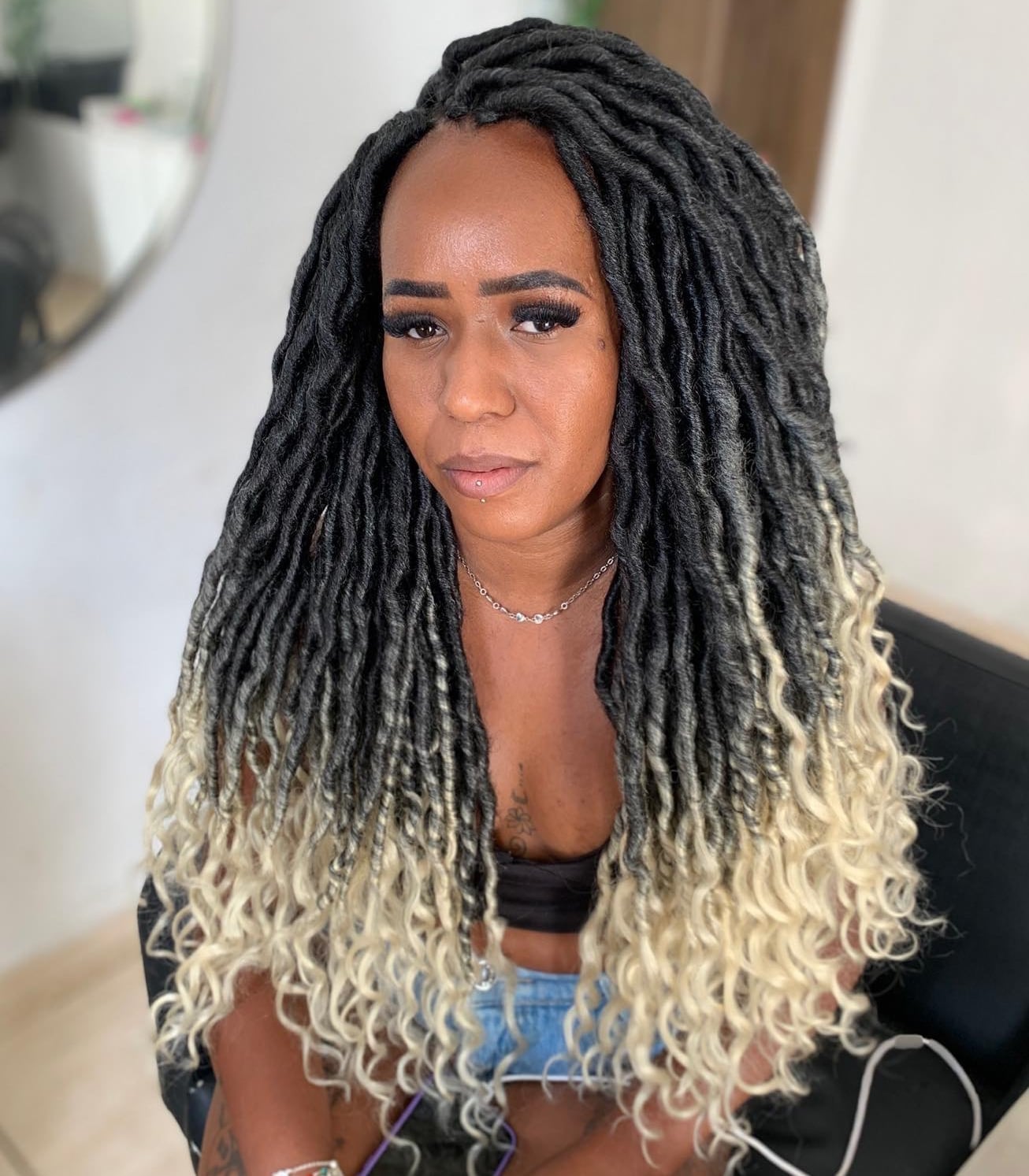
A black to blonde ombre on mid-back faux locs lives or dies by the root line. The transition is gradual, so the dark base holds for weeks while the blonde ends take the brunt of washing, friction and sun. Curly faux locs of this length tend to frizz at the ends first, and that is exactly where the blonde sits. Plan on a toning appointment every six to eight weeks to keep the blonde from turning yellow, and use a sulfate-free shampoo so the ombre does not fade unevenly. Ask your colorist for: mid-back faux locs with black to blonde ombre. Grow-out is forgiving here: the black base simply extends downward, and the ombre line drops with it.
Collarbone Locs Black to Warm Brown Ombre
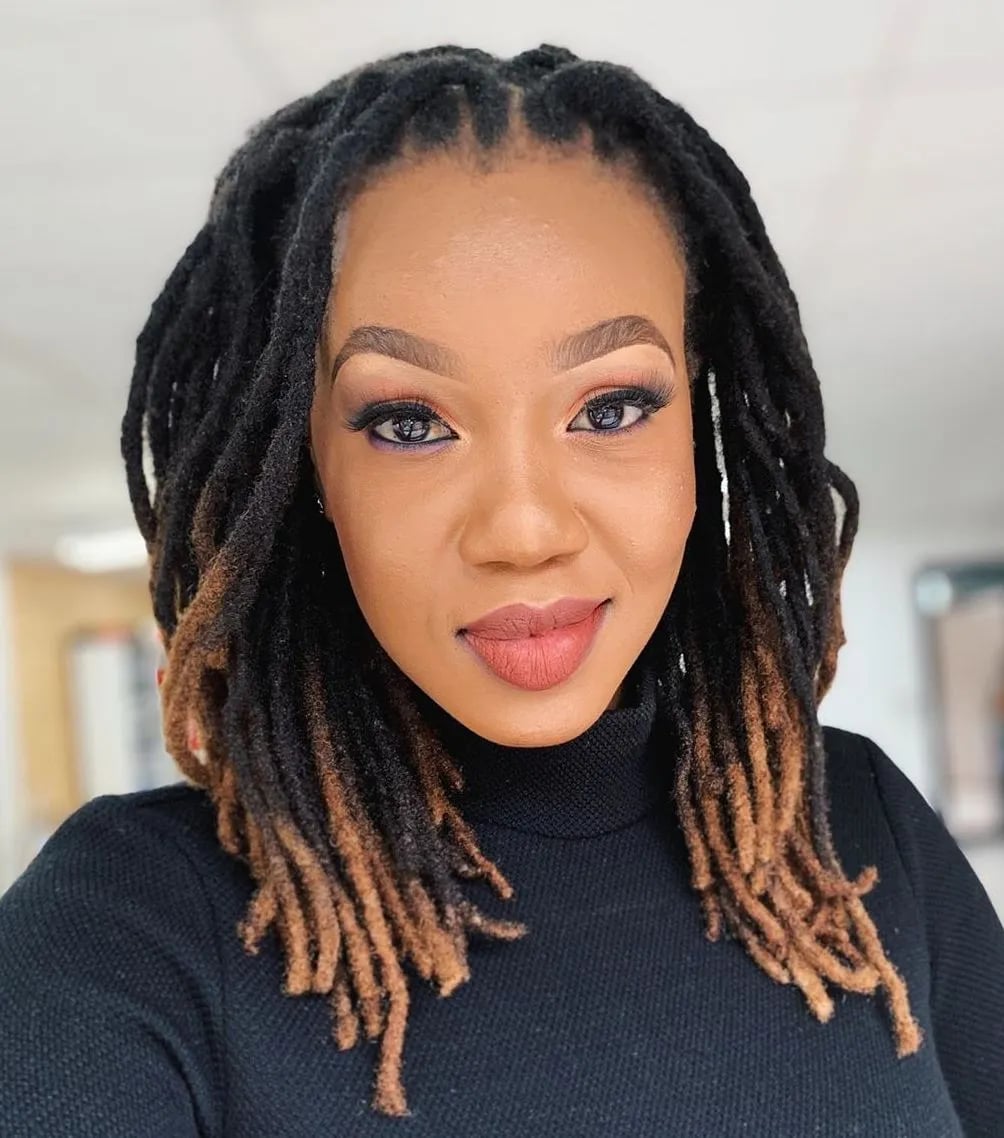
The ombre on these collarbone locs starts at the mid-shaft, not the root, which is what makes the transition read as warm rather than abrupt. Thick, coily locs take color in a gradient, so the colorist paints the warm brown in vertical bands and lets the natural black base carry the top third. Air-drying keeps the coil pattern intact and stops the brown from flattening into a solid block. Ask your colorist for: collarbone locs with black to warm brown ombre. A sulfate-free wash keeps the brown tone from stripping, and a refresh every ten to twelve weeks holds the gradient. Collarbone length means the brown sits at jaw level, where it shows.
Shoulder Length Locs With Reddish-Brown Undertones
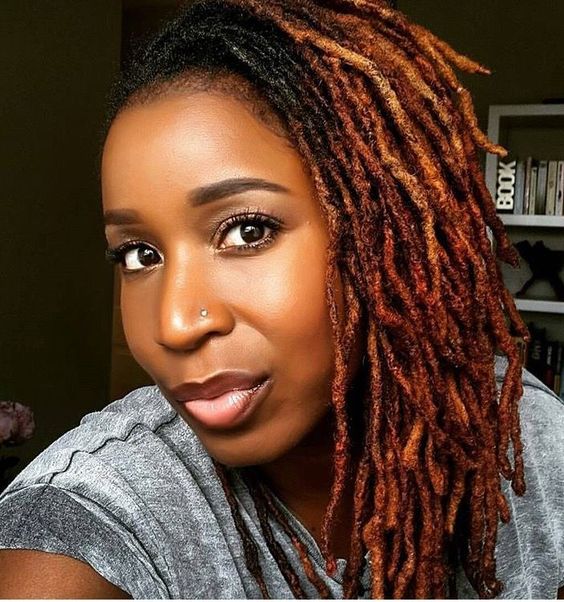
Reddish-brown undertones are not a true red, but they are also not a flat brown. The dark brown base carries a warm glow that reads as natural. Medium-density coily locs at shoulder length handle this depth well, and the middle part keeps things symmetrical. Ask your colorist for: shoulder length locs with reddish-brown undertones. Deep condition weekly to keep the moisture and the color from turning brassy, and trim ends every 12 weeks.
Mid-Back Waves With Pink Ombre and Curtain Bangs
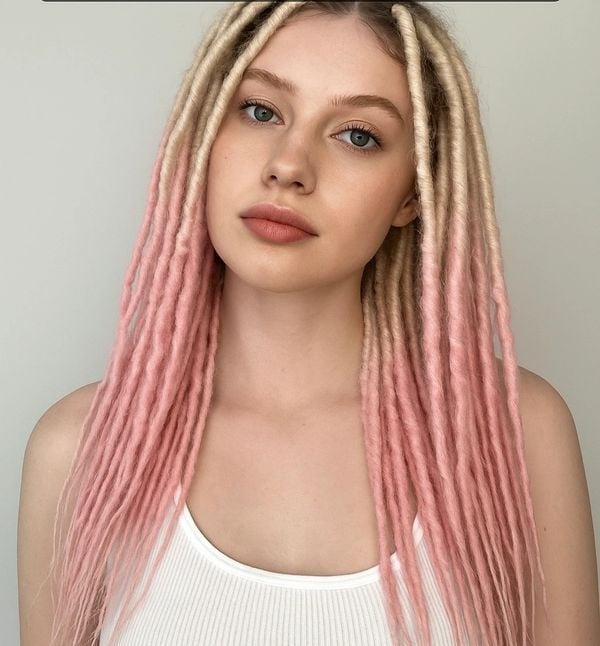
How do you ask for pink ombre without sounding like you want cotton candy? You name the pieces. The blonde base starts at the roots, and the pink gradually takes over toward the ends, so the grow-out is soft rather than harsh. Fine to medium wavy hair at mid-back length carries the fade, and curtain bangs frame round and heart faces without commitment. Ask your colorist for: mid-back waves with pink ombre and curtain bangs. A round brush on the fringe keeps the shape alive.
Shoulder Length Faux Locs With Red Ombre
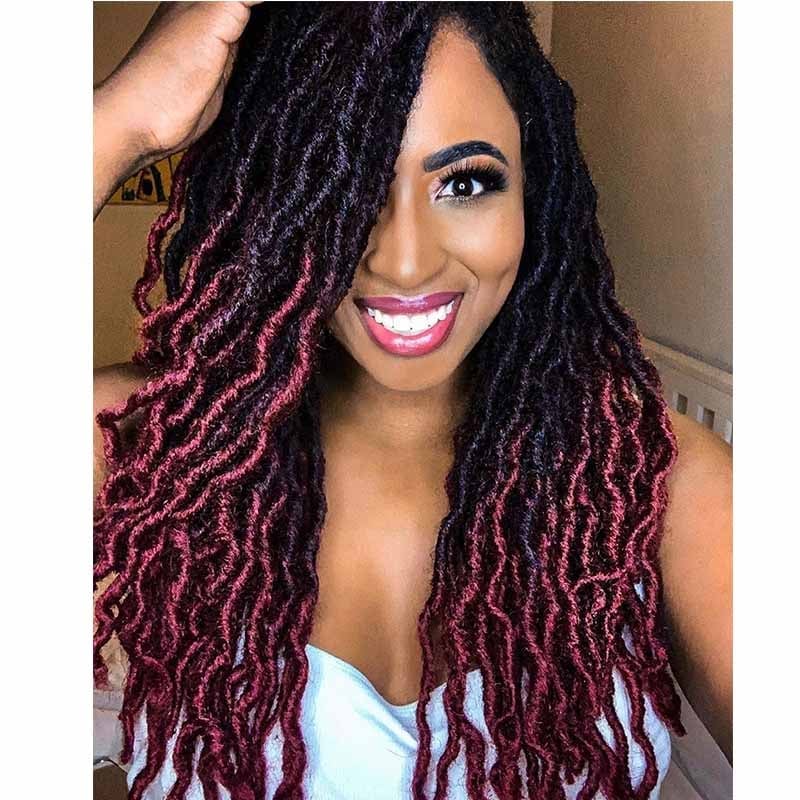
A black base fading into deep red ombre means the roots stay dark while the ends get the drama. The faux locs are shoulder length, loose and wavy, with side-swept bangs that break up the weight. Thick texture holds the wave pattern, and the side part adds asymmetry. Ask your colorist for: shoulder length faux locs with red ombre and side bangs. Use a heat protectant before styling, and refresh the red tone every 6 to 8 weeks to stop it from turning rusty.
Shoulder Locs With Greyish Tones Styled To Side
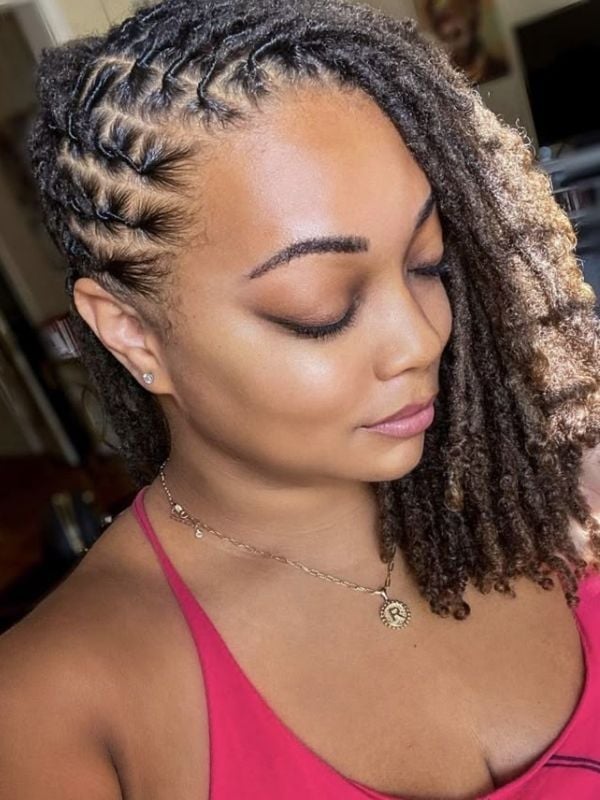
The technique here is all about the parting. Defined sections are slicked to one side, creating a clean line that emphasizes the subtle greyish tones woven into the dark brown base. Shoulder-length thick wavy locs hold the structure without falling flat. No bangs keeps the silhouette minimal. Ask your stylist for: shoulder length locs with greyish tones styled to the side. A strong hold gel sets the pattern, and a professional trim every 10 to 12 weeks maintains the edge.
Short Curly Locs With Dark Brown and Blonde Highlights
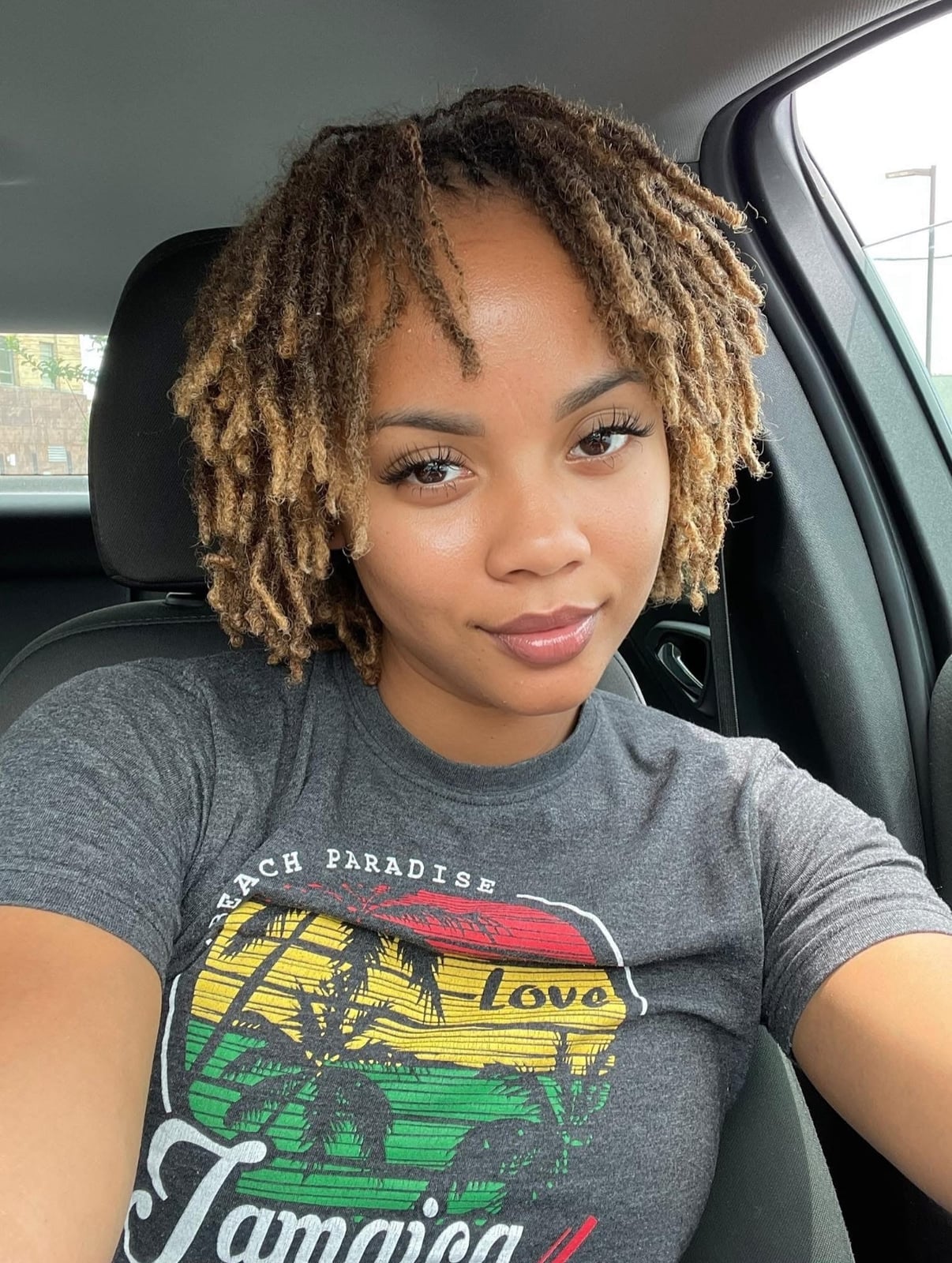
Who benefits most from short locs with blonde highlights? Anyone with thick, curly texture who wants dimension without the weight of longer hair. The dark brown base grounds the look, while the blonde highlights add lift around the face. Ear length keeps it low maintenance, and the side part breaks up the roundness. Ask your colorist for: short curly locs with blonde highlights. A light oil defines the curls, and a trim every 12 to 16 weeks keeps the shape from getting ragged.
Medium Locs Updo In Burnt Orange
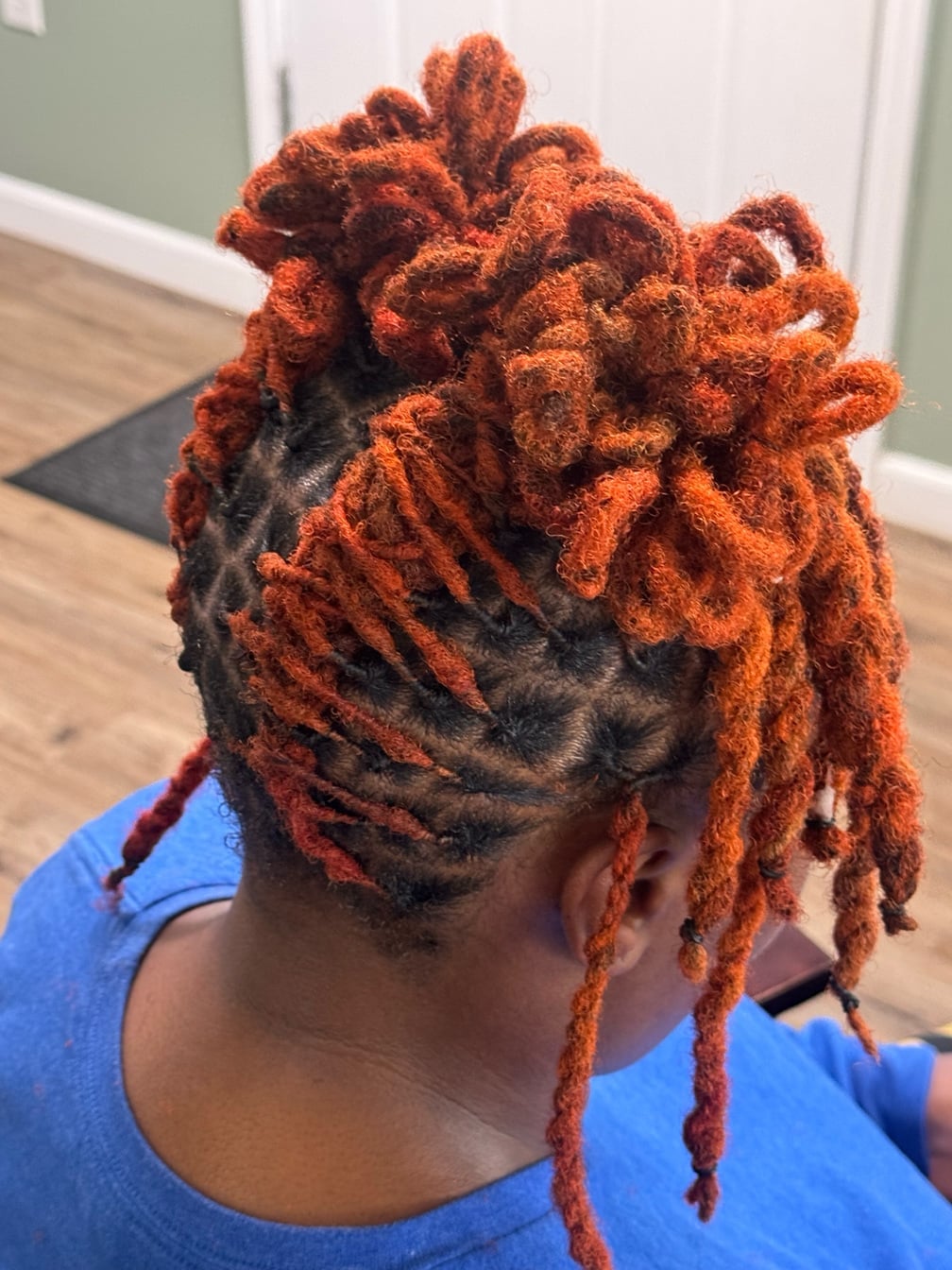
A burnt orange updo is basically autumn in hair form, and the back view here shows exactly why the color works so well on thick, collarbone-length locs. The uniform saturation means every twist looks deliberate and not faded, which matters when you are committing to a shade this specific. Ask your colorist for: medium locs updo in burnt orange. The style holds well for festivals or holiday parties, though you will want to refresh the color every six to eight weeks to keep it from turning muddy.
Shoulder Locs With Copper Base Color
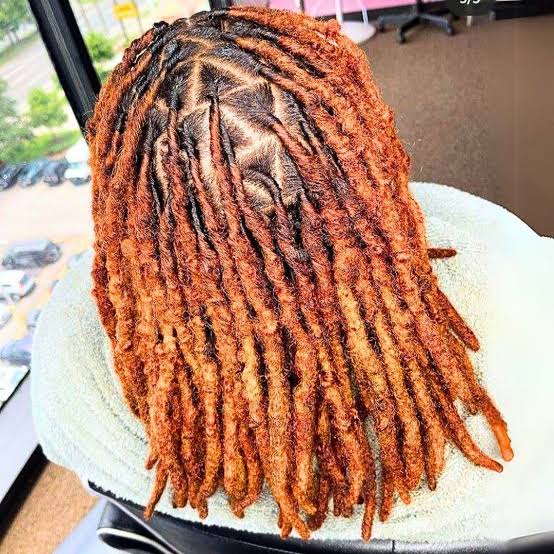
Copper is one of those shades where the difference between vibrant and brassy is a single bad at-home dye job. The shoulder-length locs here use a copper base with subtle darker undertones, which gives the color depth without looking flat, and the retwisted, wavy texture helps the light catch the variation. Ask your colorist for: shoulder length locs with copper base color. This is a salon-only situation, achieving that saturation on thick locs requires professional-grade color and a careful hand.
Mid-Back Locs Updo With Rainbow Ombre

A rainbow ombre that starts black at the roots and shifts through red, orange, yellow, green and blue takes commitment, and the gold beads woven into the locs are a nice touch that keeps the whole thing from feeling like a costume. The high bun with loose strands lets each color band show without tangling the full length into a single mass. Ask your colorist for: mid-back locs updo with rainbow ombre. The honest drawback is that those vibrant shades bleed and fade fast, so expect to refresh the ends every three to four weeks.
Mid-Back Locs In Vibrant Teal
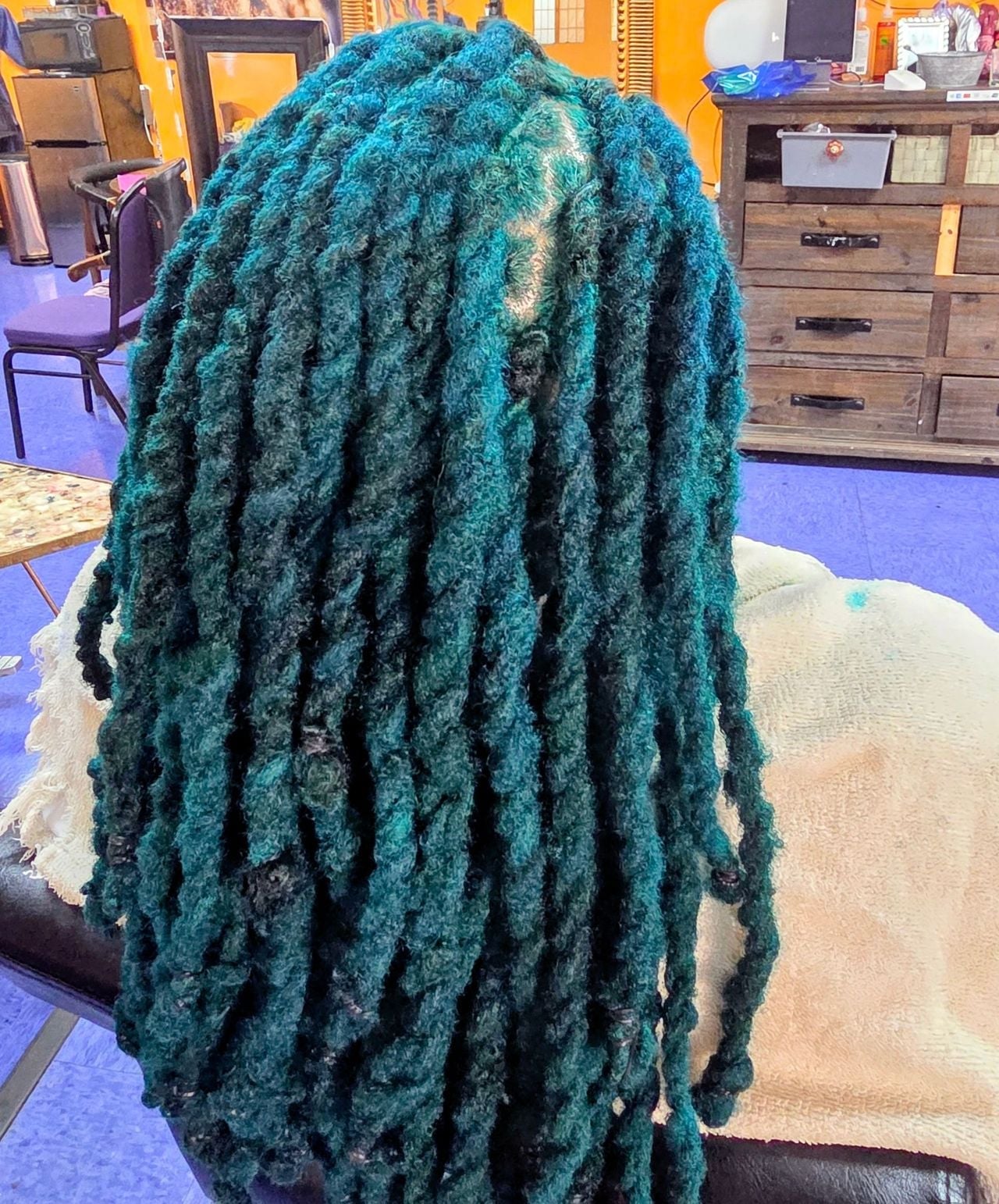
Can a single color be bold and grounding at the same time? Teal on thick, mid-back locs makes a strong argument for yes. The rich, saturated hue works because the locs are styled in twists, which lets the color appear dimensional. Ask your colorist for: mid-back locs in vibrant teal. To keep the teal from turning greenish or patchy, use a color-depositing conditioner every other wash, and plan for a refresh every four to six weeks.
Final Thoughts
For subtle dimension, opt for highlights or balayage on a dark base. For a bolder statement, choose a vibrant single-process color or a striking ombre.
- Deep condition locs every 2-3 weeks to maintain moisture.
- Use color-safe shampoos and conditioners to preserve vibrancy.
- Avoid excessive heat styling to prevent color fade and damage.
- Schedule salon touch-ups for highlights or ombres every 6-10 weeks.
Embrace the color that speaks to your style.

