
Braided hairstyles for natural hair are built on sectioned, tensioned plaits that start at the scalp and hold their pattern for weeks. The current shift is toward lived-in color and glossy natural texture, so braid work now leans on soft face-framing layers and a finish that looks broken in, not brand new.
These 19 Braided Hairstyles Natural Hair Ideas run from intricate scalp patterns to loose mid-back lengths, with a range of density and curl needs. If your fine hair falls flat by day three or your braid pattern frizzes at the hairline, the answer is usually section size and a set that respects your texture. Pick by length first, then by how much time you want to spend styling.
Heart-Shaped Braid With High Curly Ponytail
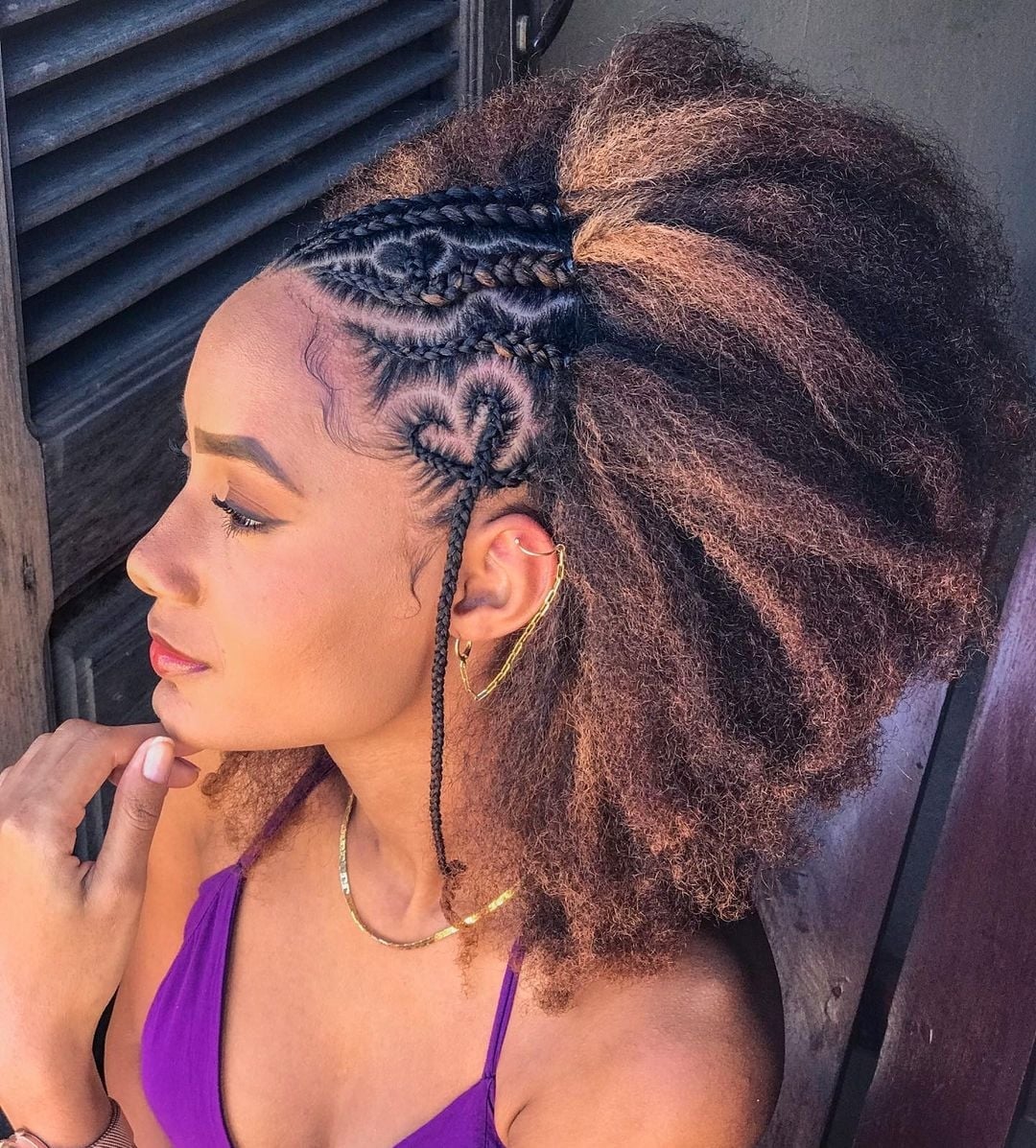
A heart-shaped braid carved into the side of the head is the kind of design detail that makes a high curly ponytail feel intentional rather than thrown together. The brown and black mix keeps it from reading as a single flat color, and the middle parting grounds the geometry. Ask your stylist for: heart-shaped side braid with a high curly ponytail. Thick, curly hair at mid-back length is the starting point here, anything finer and the heart loses its definition. A light pomade on the braided section keeps the edges clean, while a quick water mist on the ponytail brings the curl pattern back to life between wears.
Mid-Back Length Two Thick Box Braids
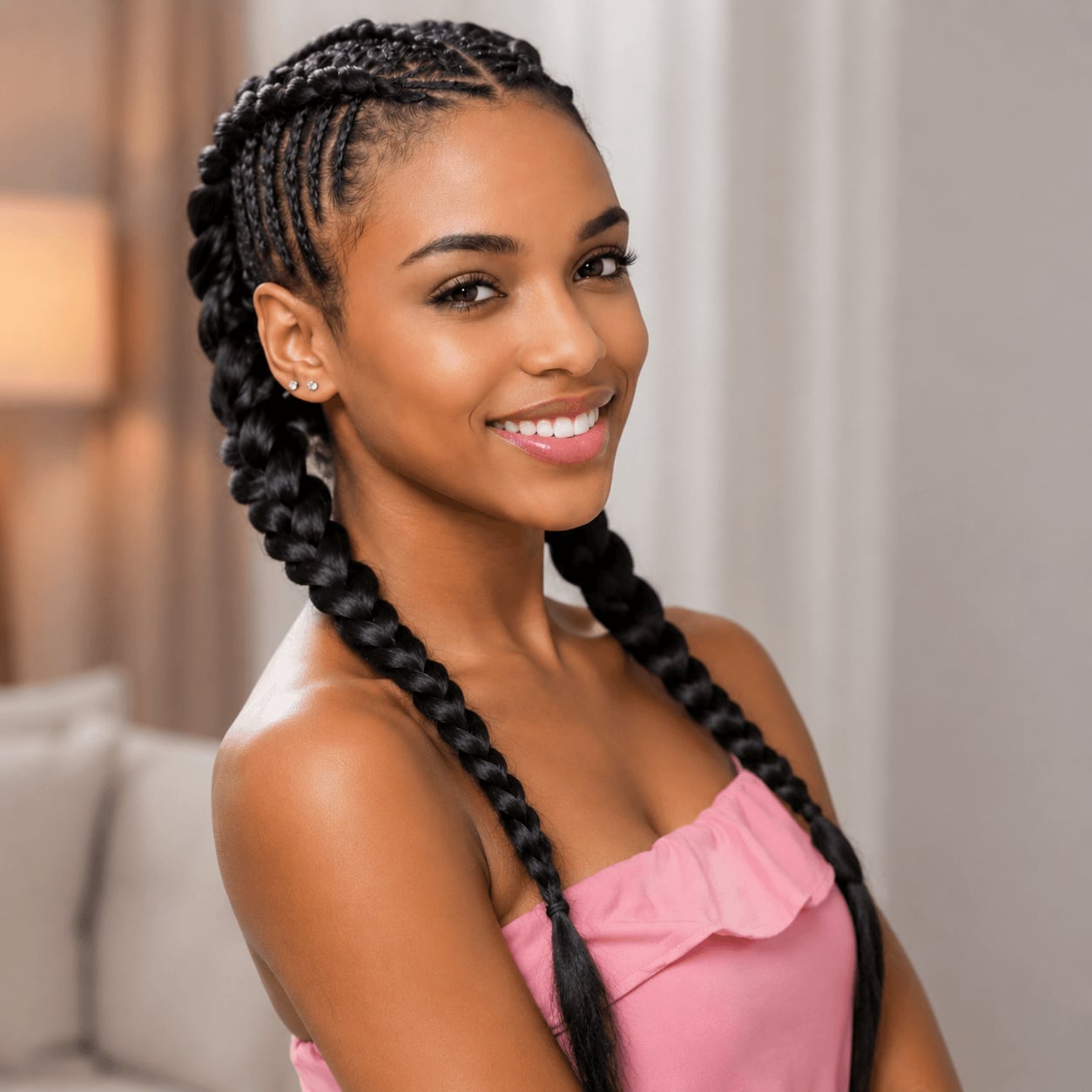
A middle parting keeps the symmetry clean, and the black color lets the braid structure itself do the talking. Ask your stylist for: two long, thick box braids to mid-back. This works best on hair with enough density to fill a braid of this width, thin hair can look sparse rather than substantial. Sleeping on a silk scarf reduces friction, and trimming any stray hairs once a week keeps the ends looking deliberate.
Mid-Back Cornrows With Intricate Scalp Detail
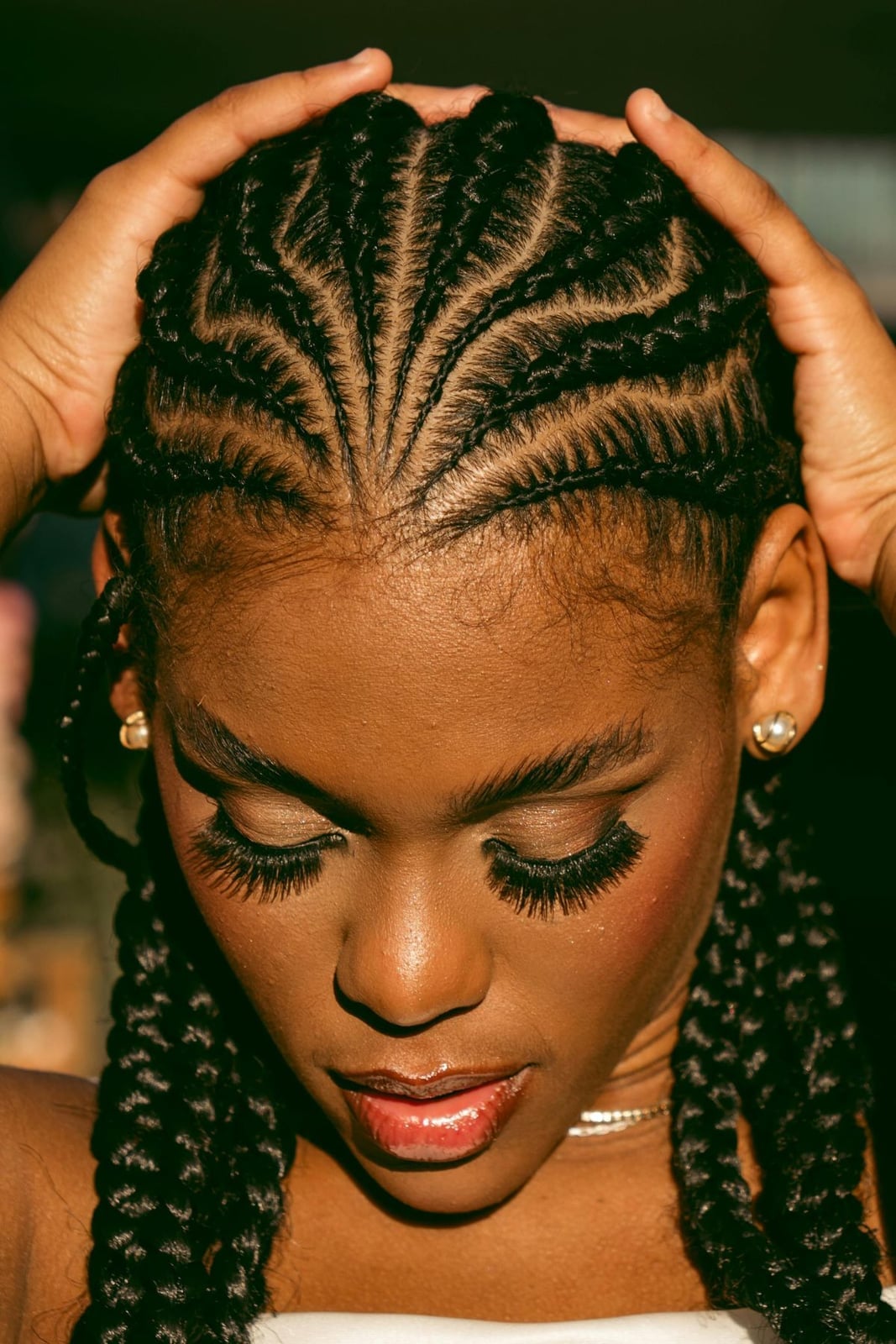
A cornrow pattern does not need to be complicated to look polished, but the geometric scalp detail here sets it apart from a standard row. The braids start tight at the forehead and extend into long, thick sections that reach mid-back, with a coily texture that gives the whole thing grip. Ask your stylist for: mid-back cornrows with intricate scalp detail. A scalp serum applied to the parts twice a week prevents the dryness that shows up as white flakes, and keeping tension moderate when the braids are fresh avoids the soreness that follows.
Sleek Cornrows Into Long Braided Ponytail
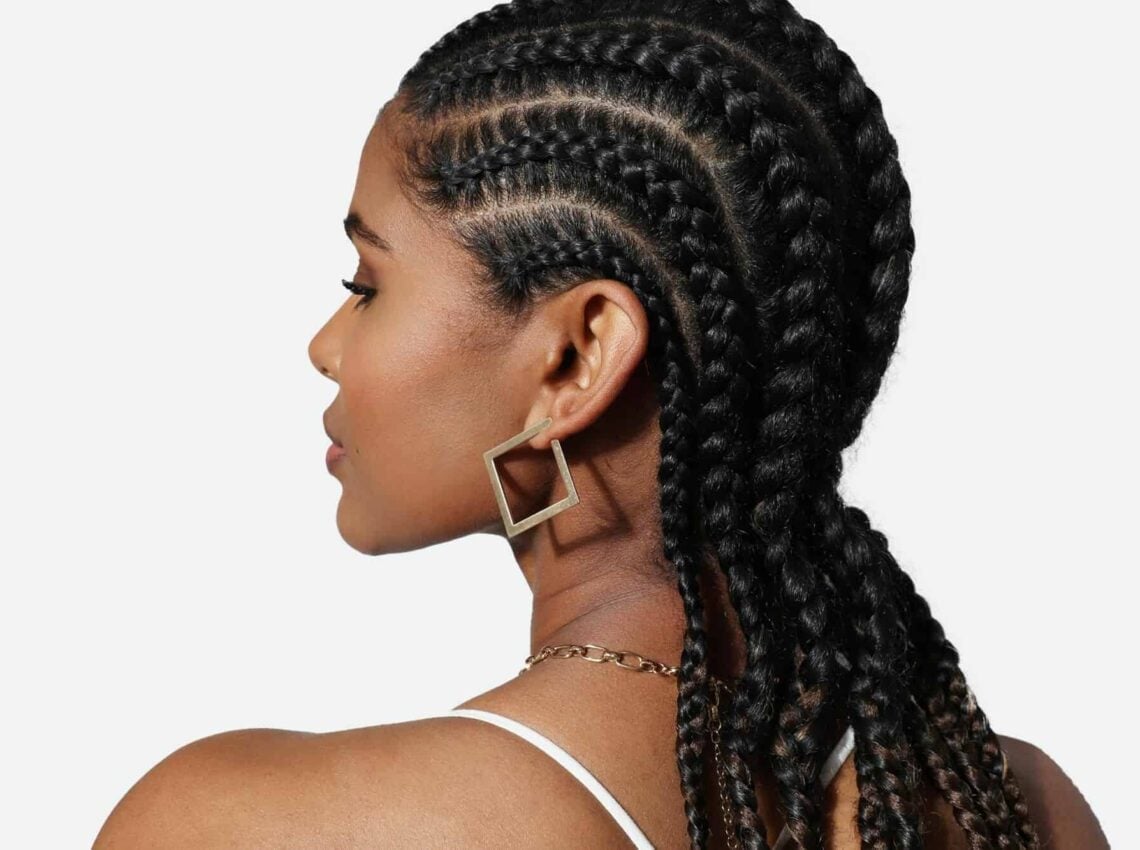
Cornrows that feed directly into a long braided ponytail sit between a full-head install and a single braid. You get the scalp detail without committing to braids all the way down. The thick, wavy texture gives the ponytail body, and the black color keeps the transition from the cornrows to the ponytail seamless. Ask your stylist for: cornrows into a long, sleek braided ponytail. A smoothing balm on the ponytail section prevents flyaways from breaking the clean line, and a braid refresher spray on the cornrows extends the time between salon visits.
Numerous Long Box Braids Cascading Down
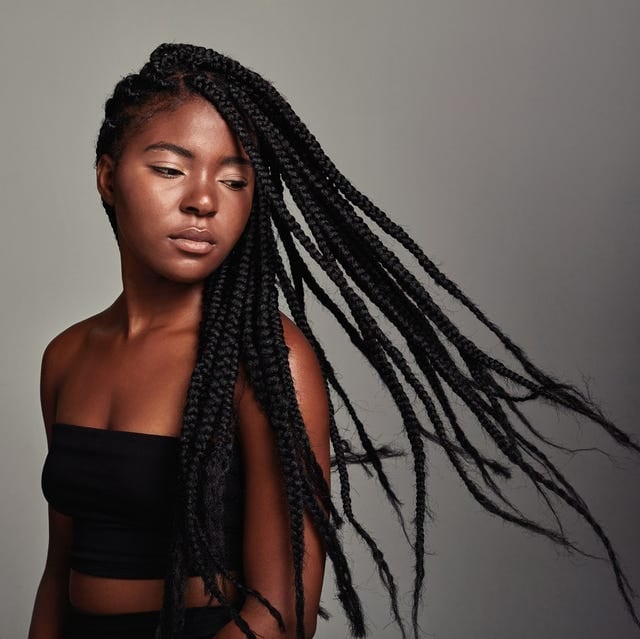
Numerous long box braids that cascade down past the shoulders have a movement that single braids cannot replicate. They shift and separate with each turn of the head. The coily, thick texture holds the braid structure firmly, and the black color reads as a solid mass that lets the quantity of braids become the focal point. Ask your stylist for: long, flowing box braids that reach mid-back. This density of braids works best on thick hair; thin hair would show too much scalp between each part. A braid oil on the ends prevents the fraying that travels upward, and a satin bonnet at night keeps the friction from turning the edges fuzzy.
Braided Headband With Blonde Ombre Ponytail
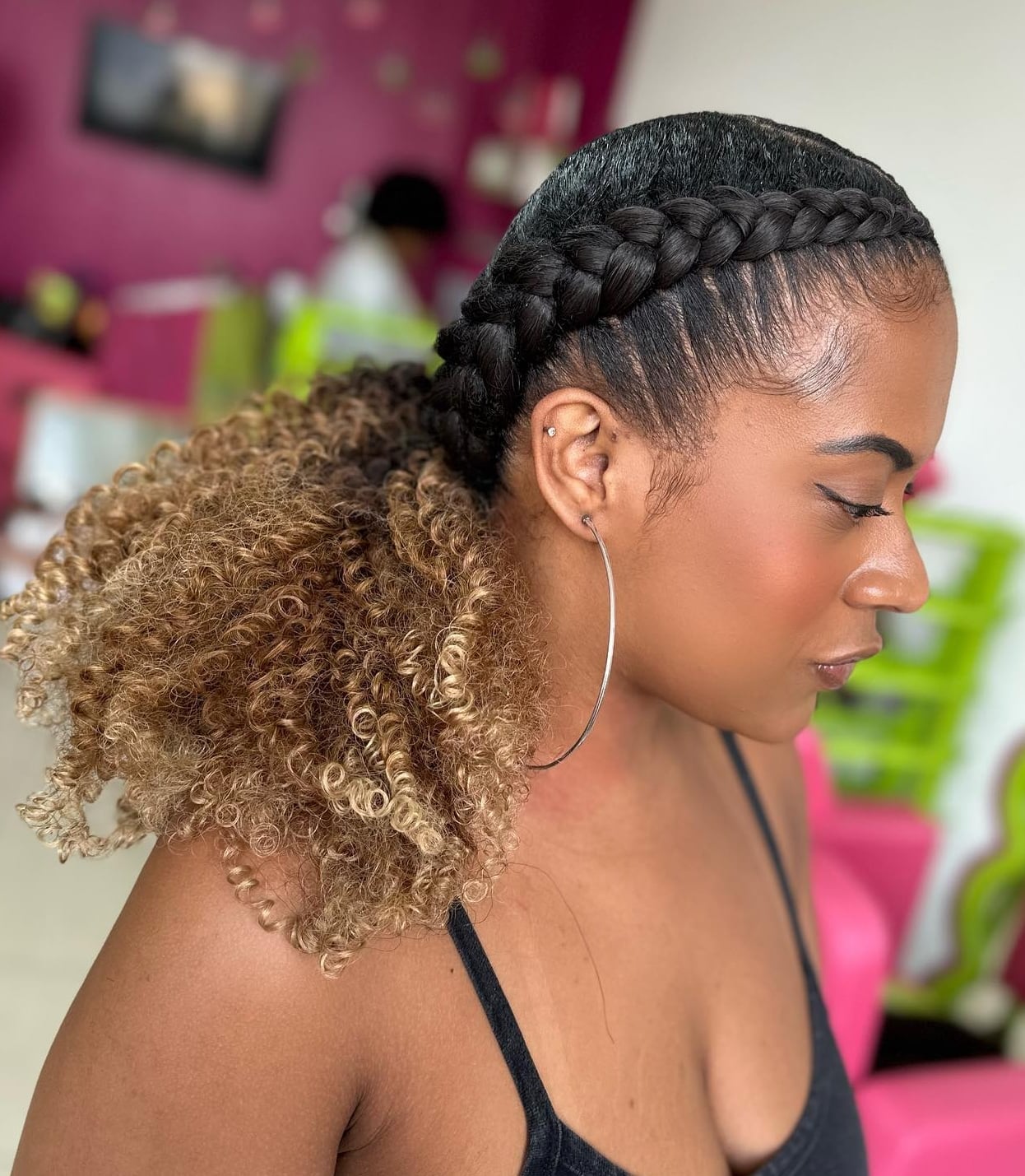
Sleek braids and high-volume curls do not share a head without a plan. Two black braids run across the crown as a headband, and the mid-back coily lengths are gathered into a ponytail whose blonde and brown ombre does the loud half of the job. Ask your stylist for: double braided headband with a blonde ombre curly ponytail. Thick, coily hair holds that crown braid flat; finer textures need a firmer braid at the root or the band lifts by lunch. Keep the headband tight and the ponytail loose, and spray the curls so the contrast stays sharp.
Side Parted Mid-Back Box Braids
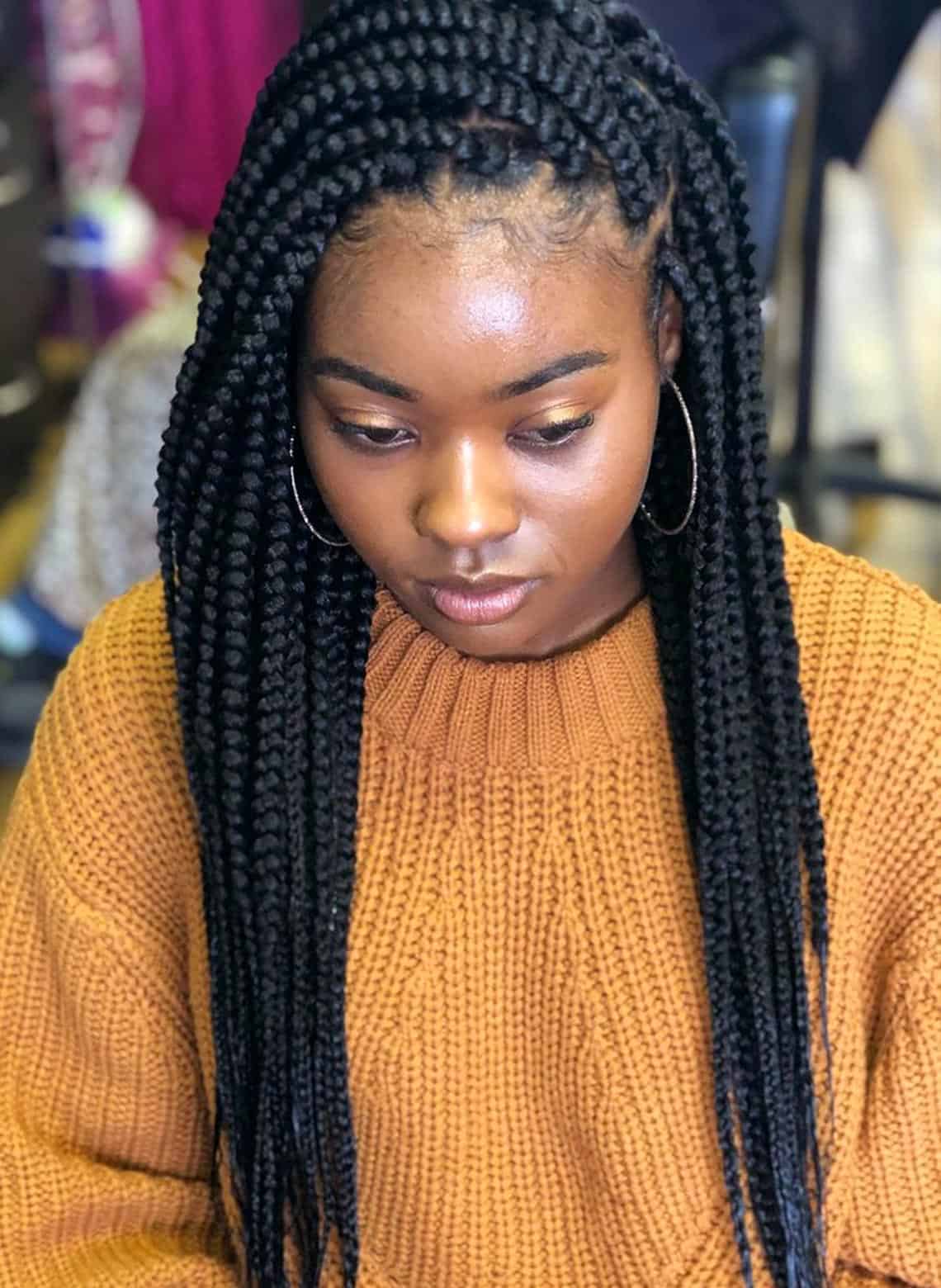
These are black, mid-back, densely packed, and the coily thick texture underneath gives each braid real weight. Ask your stylist for: long, neat box braids with a side part. Long layers keep the ends from looking blocky. Upkeep is where neat braids live or die: a braid balm worked into the roots and ends keeps the finish polished, and a satin bonnet at night protects the pattern. Book a refresh every six to eight weeks, before the new growth blurs the parting.
Cornrows Into Mid-Back Straight Braids
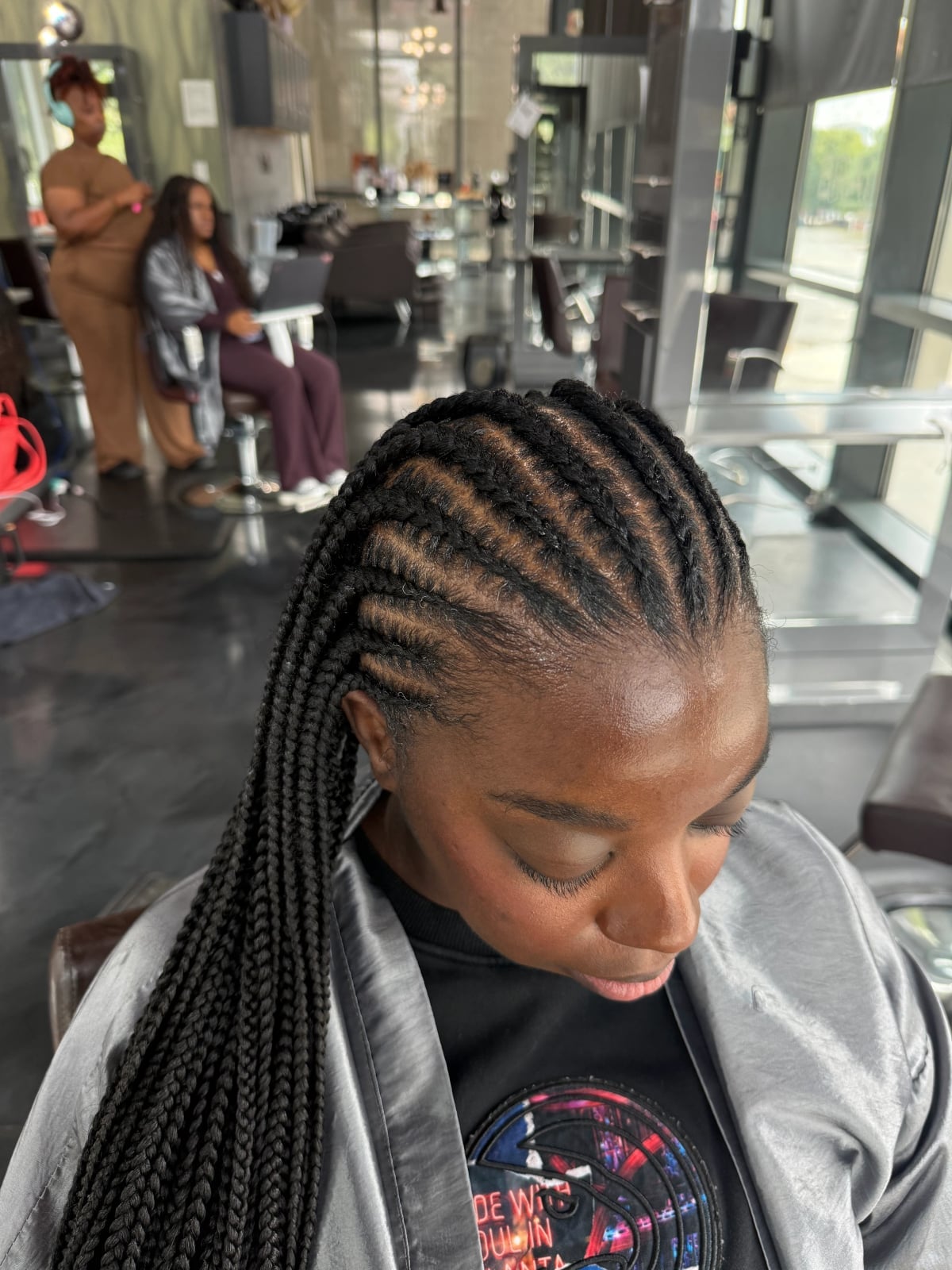
Compare this with a head of loose box braids and the difference is the parting: cornrows give a clean middle line at the scalp before the braids fall straight to mid-back. The braids are black, thick and straight, and the neat cornrow parting is what sells the whole thing. Ask your stylist for: cornrows into long, straight braids to mid-back. This is a salon job. At-home cornrows tend to wander at the hairline and loosen within days, while a stylist grids the pattern tight enough to hold its shape for weeks. A braid sheen spray keeps the length looking fresh between appointments.
Shoulder Length Cornrows With Grey Streaks
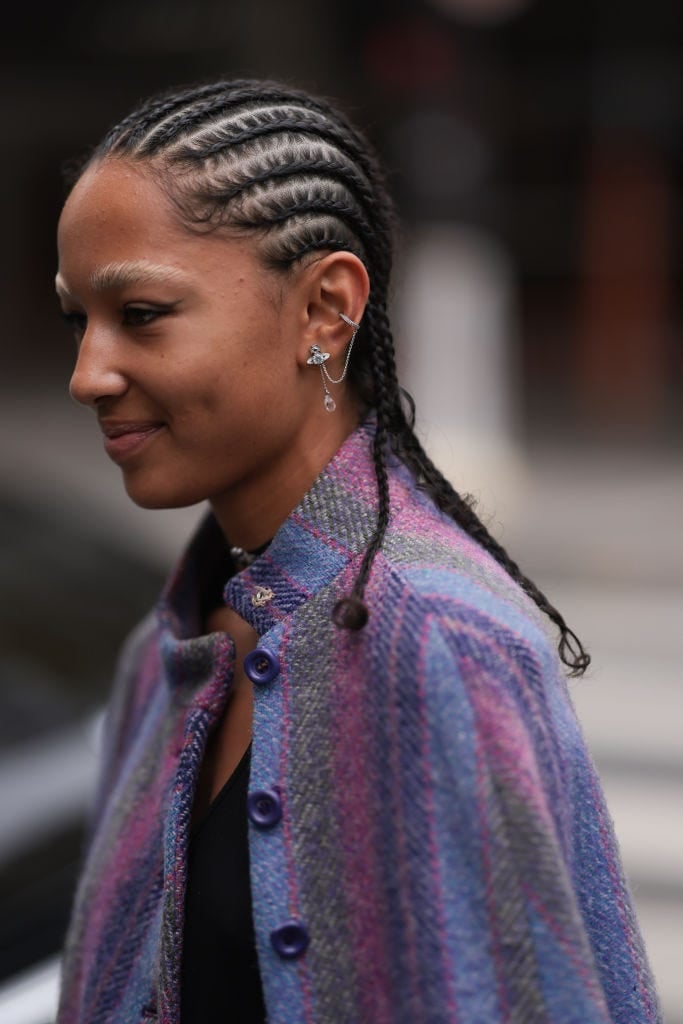
Wondering if grey streaks in cornrows look like a choice or an accident? Woven deliberately through black hair, they look like a choice. These cornrows run from the hairline toward the back and loosen into braids at the shoulder, with thick straight texture carrying the pattern. Ask your stylist for: cornrows with grey streaks transitioning to loose braids. It suits anyone after a color shift without a full dye job, and shoulder length keeps it wearable for work. A color-safe shampoo protects the grey, and the loose ends want moisture more than the cornrows do.
Collarbone Length Voluminous Passion Twists
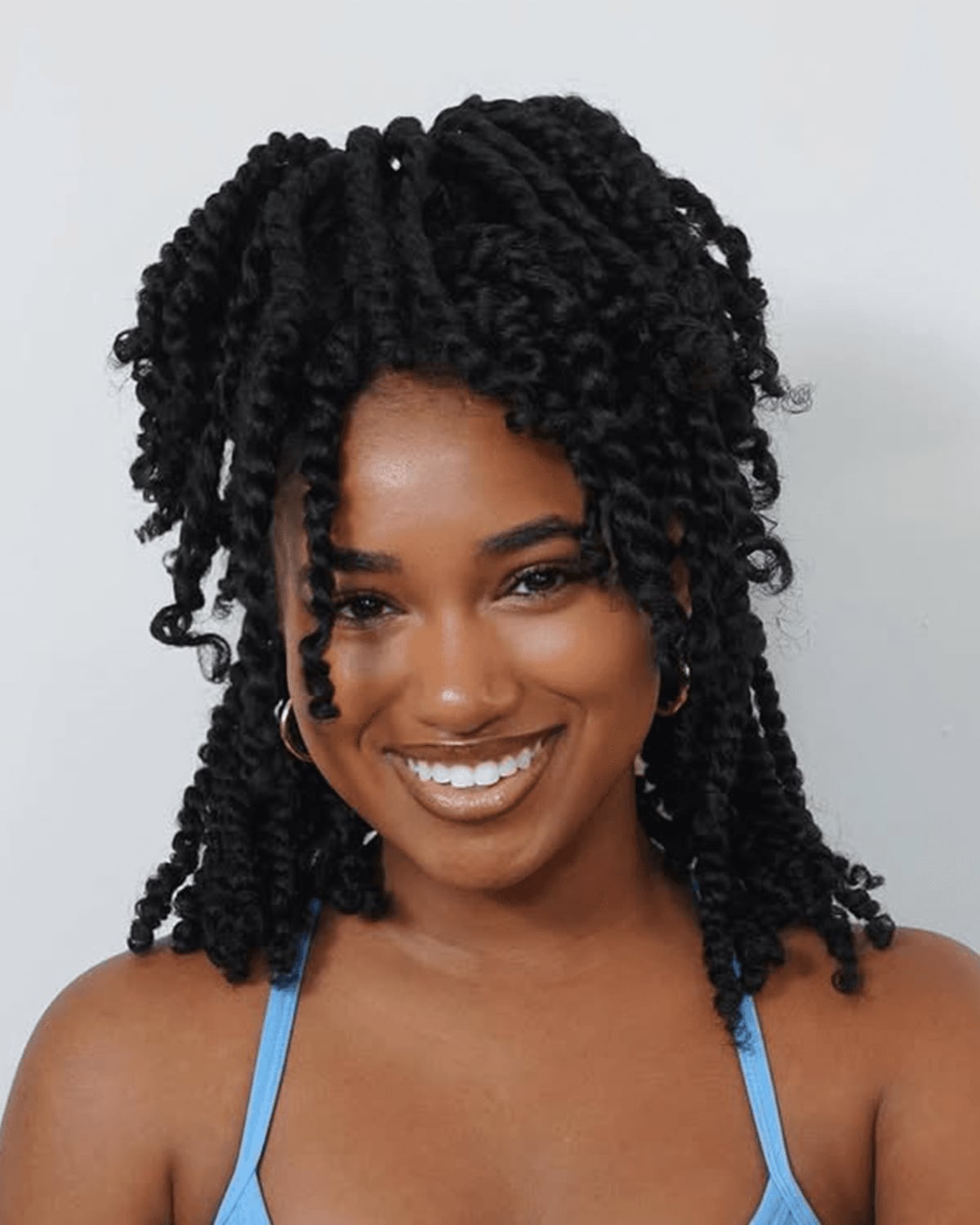
Volume is the point of passion twists, and these deliver it in full: defined, curly black twists at collarbone length, with loose face-framing pieces around the forehead. Ask your stylist for: voluminous passion twists with face-framing pieces. Curly, thick hair carries the weight; fine hair can find the same volume heavy at the root by the second week. A curl defining cream keeps the tendrils shaped, and a silk bonnet at night protects the twist pattern. Expect a root refresh around the six-week mark, when the twists start to sit wide.
Collarbone Box Braids With Blonde Highlights
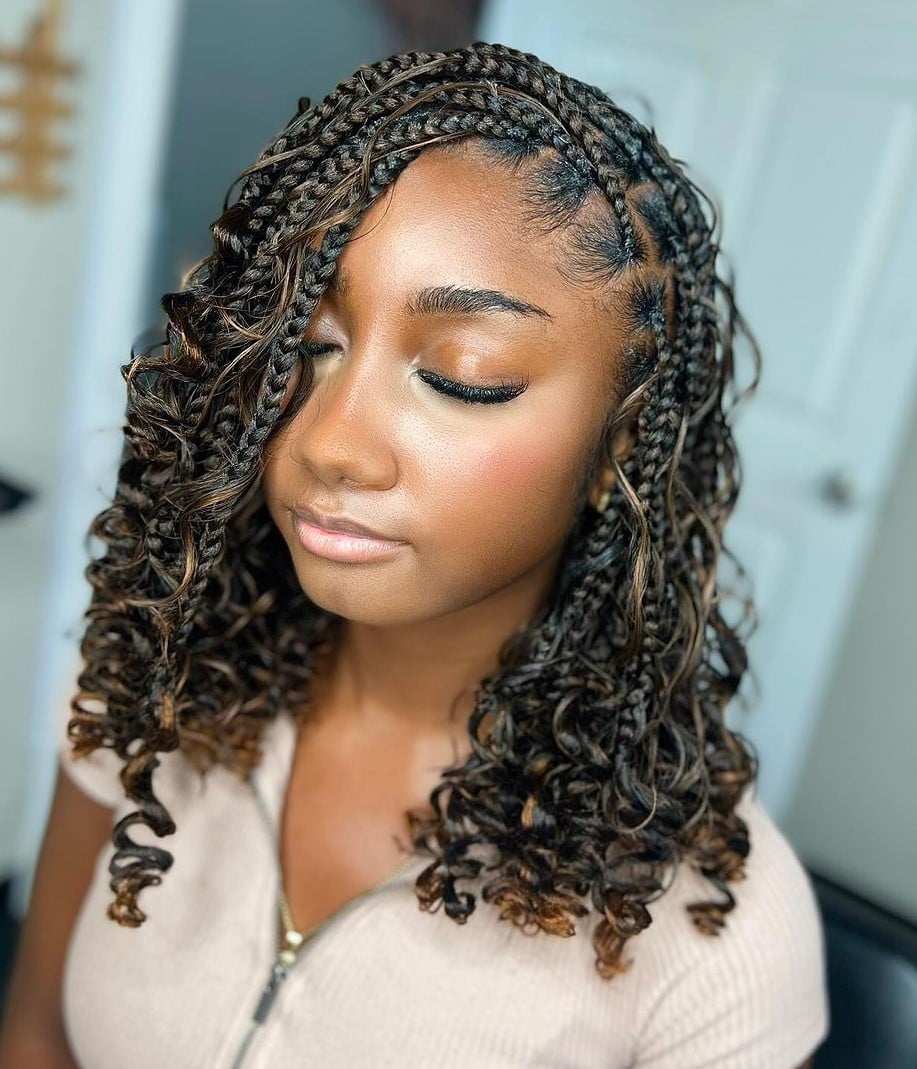
Collarbone length box braids get a dimensional lift from subtle blonde highlights woven through a brown base. This technique suits thick, wavy natural hair that can carry the braids without pulling at the roots. Ask your stylist for: collarbone length box braids with blonde highlights. A middle parting keeps the pattern balanced, while the loose ends add a relaxed finish that looks clean but not stiff.
The highlights are placed in thin sections throughout the braids, not just at the ends, so the dimension holds even as the style settles. A braid refresher spray helps maintain the contrast between the brown and blonde strands. Avoid heat styling directly on the braids to keep the synthetic or natural fiber from drying out. The whole installation takes a full salon visit, but the style requires only weekly upkeep and lasts about four to six weeks.
Asymmetrical Cornrows With Auburn Highlighted Curls
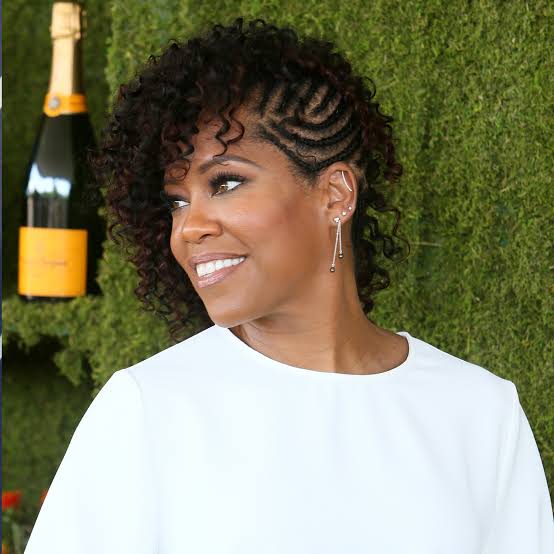
Can one side be braided while the other curls freely? Yes, and this shoulder-length style proves the point. Neat cornrows sit on one side, transitioning into loose, thick curls with warm auburn highlights and side-swept bangs. The combination works best for thick, curly natural hair that has enough density to hold the cornrows without thinning the looser side. Ask your stylist for: asymmetrical cornrows with auburn highlighted curls and side-swept bangs. The side view shows the contrast clearly, making this a strong choice for a night out or a fashion event where the asymmetry adds a deliberate edge.
Cornrow Updo With Single Decorative Braid
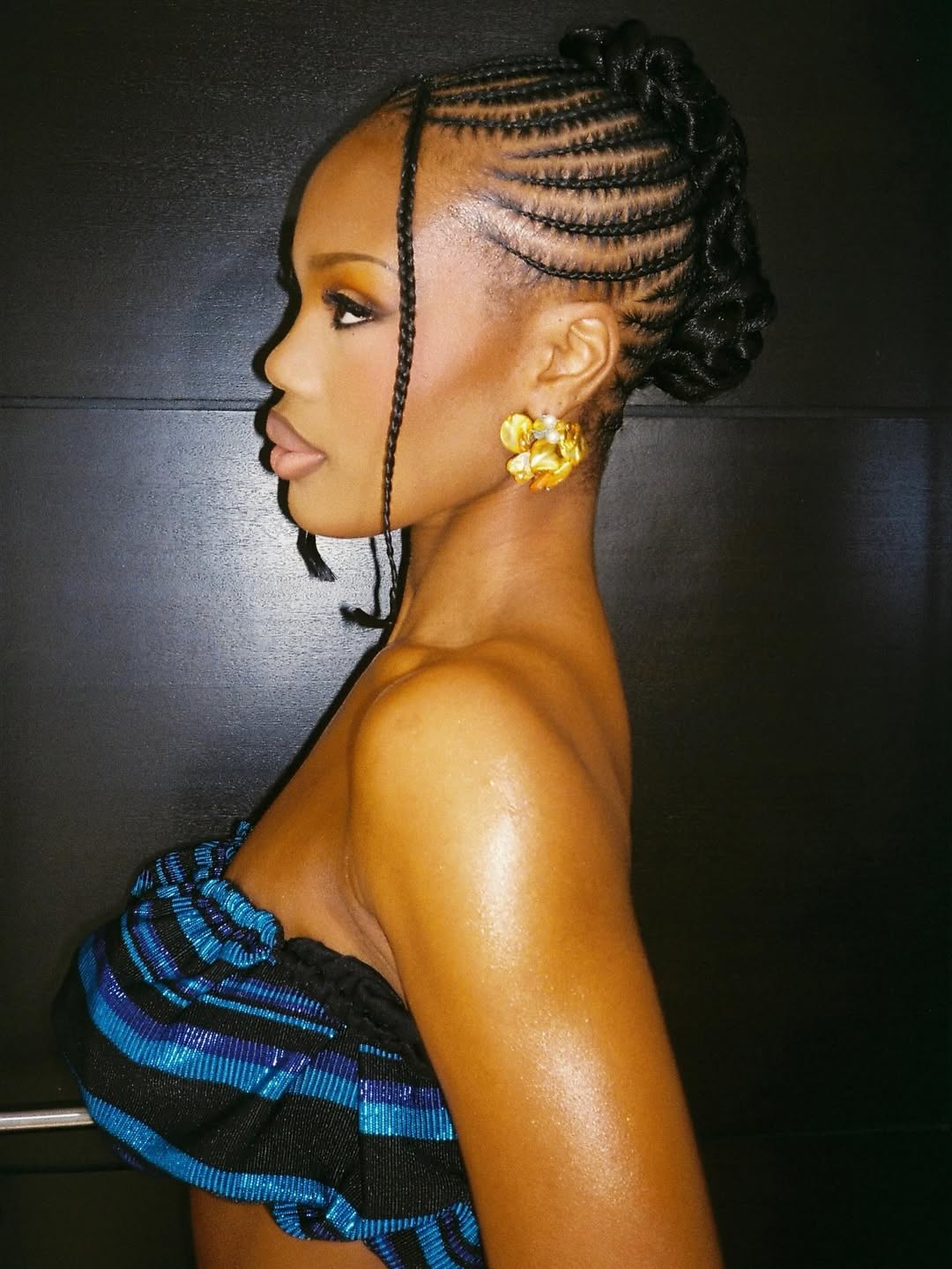
The side profile reveals sharp cornrow lines that sweep into an elegant updo at the back, with one thin braid falling forward as a decorative accent. The geometric hairline detail requires a skilled hand: the parting must be precise so the cornrows sit evenly before the updo is pinned. This design suits thick, coily natural hair of at least shoulder length, as shorter hair won’t have the weight to stay in the updo without slipping. Ask your stylist for: cornrow updo with a single decorative braid strand. The single braid is the focal point, so it should be sealed with a light hairspray and left untouched to keep its shape throughout the evening.
Braided Bun With Face-Framing Wavy Tendrils
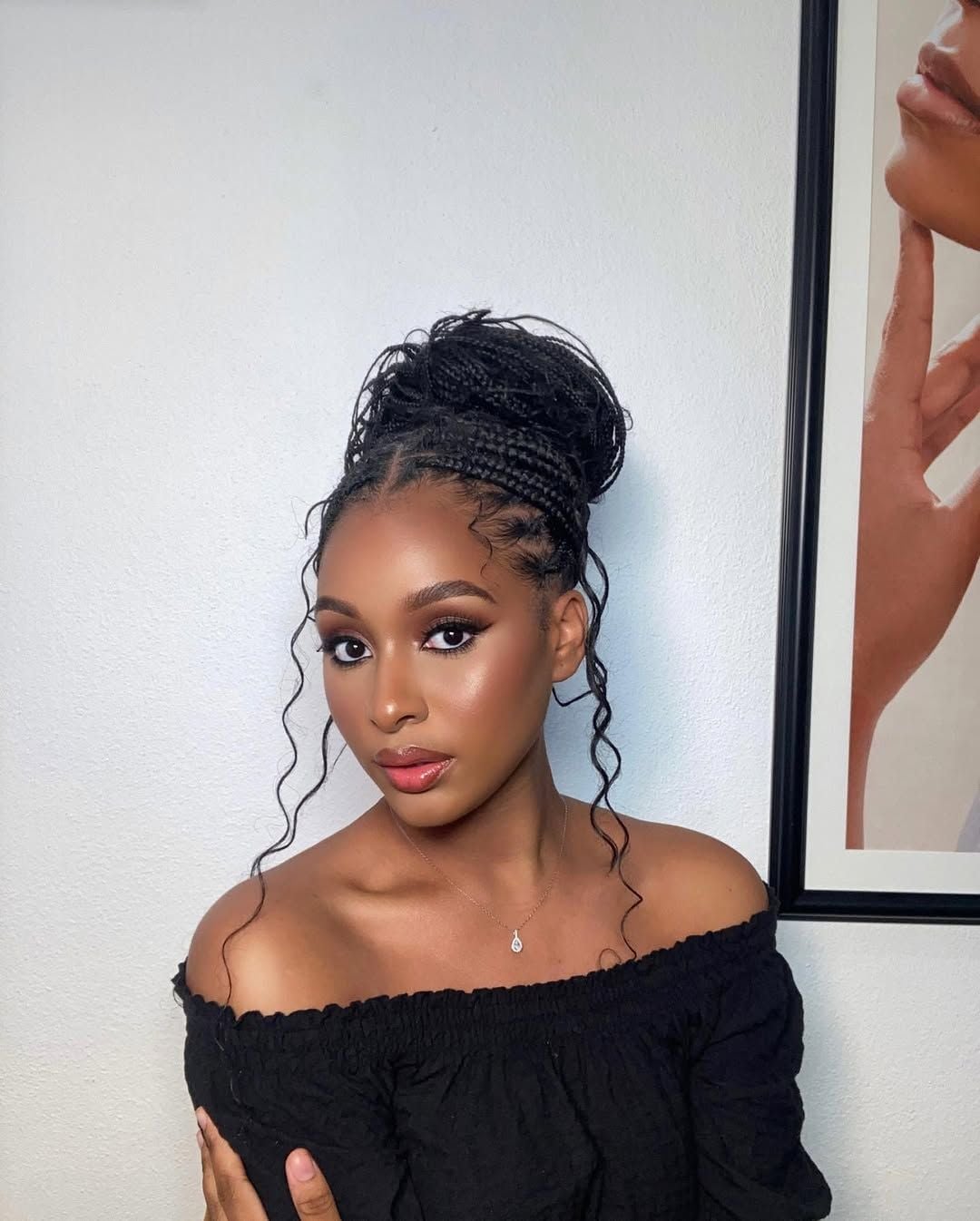
A braided bun at the crown looks polished, and the loose wavy tendrils around the face soften the whole structure. The front view shows a middle parting that grounds the style, while the thick, wavy texture of the bun holds its shape for a full evening. This works best on long, thick natural hair that can be wrapped into a bun without needing a donut or padding. Ask your stylist for: braided bun with loose wavy face-framing tendrils. The tendrils are the part that needs attention: they should be curled with a medium-barrel iron and set with a flexible hold spray so they move naturally. For a formal evening occasion, this style stays intact for about six to eight hours before the tendrils start to relax.
Braided Space Buns With Loose Tendrils
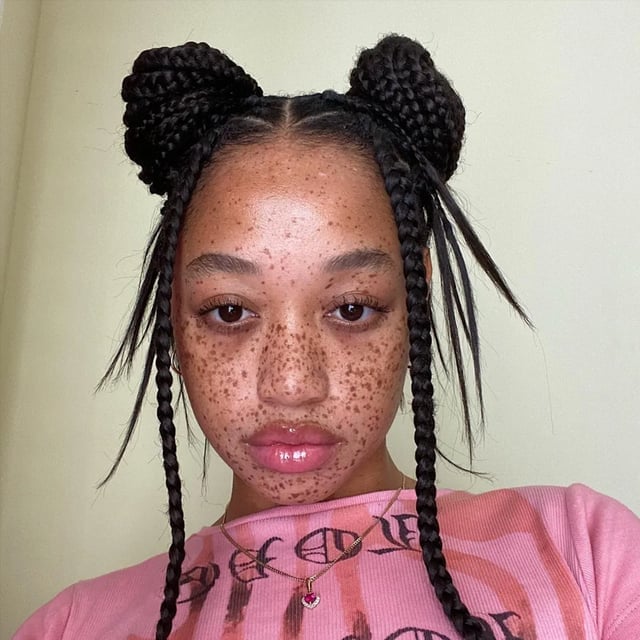
Two tightly braided space buns sit high on the head, with loose tendrils and baby hair framing the face and falling down past the shoulders. The coily, thick texture of the hair gives the buns volume without needing extra padding. This style genuinely flatters those with thick, coily natural hair of at least mid-back length, because shorter hair won’t reach the buns without tension. Ask your stylist for: braided space buns with loose tendrils and baby hairs. The real drawback: the loose tendrils need a smoothing serum each morning to stay neat, and the buns themselves require bobby pins for a secure hold that lasts through movement. For a street style or festival look, the trade-off is worth the playful silhouette.
Honey Blonde Cornrows Into Curly High Ponytail
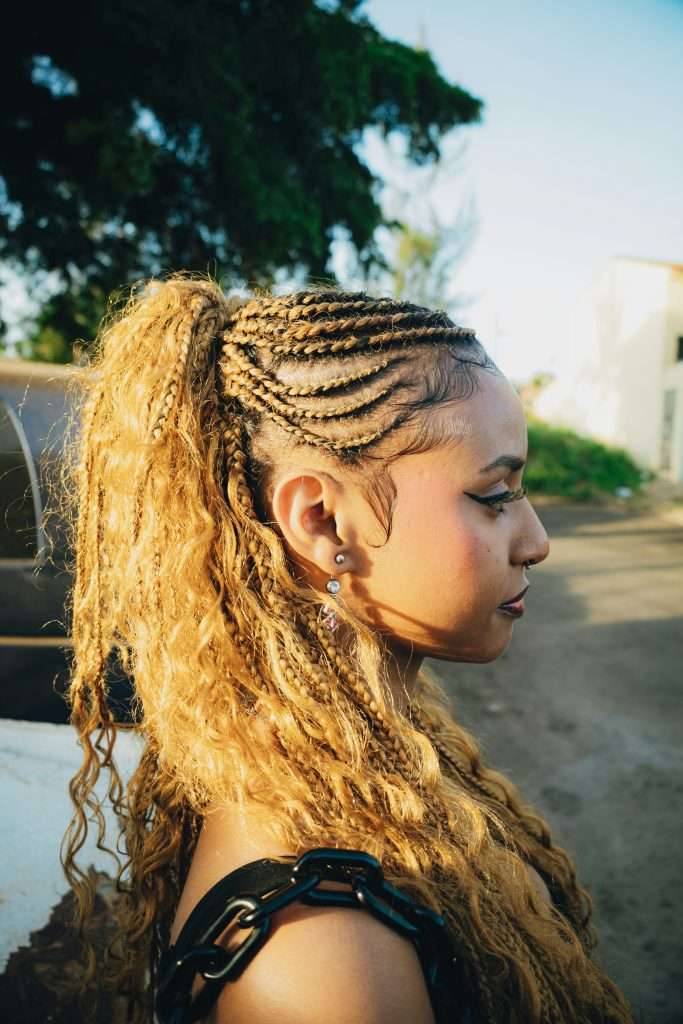
Want to combine intricate scalp work with voluminous movement? This style delivers: honey blonde cornrows start at the roots and feed into a high ponytail of loose, bouncy curls. The darker roots create a seamless grow-out, so regrowth blends gradually between salon visits. Thick, wavy and curly hair of mid-back length works well for this look. Ask your stylist for: honey blonde cornrows into a high curly ponytail. Use a curl refreshing spray on the ponytail and keep the braided section moisturized with a lightweight oil to maintain definition.
Twisted Sections With Voluminous Afro Puff
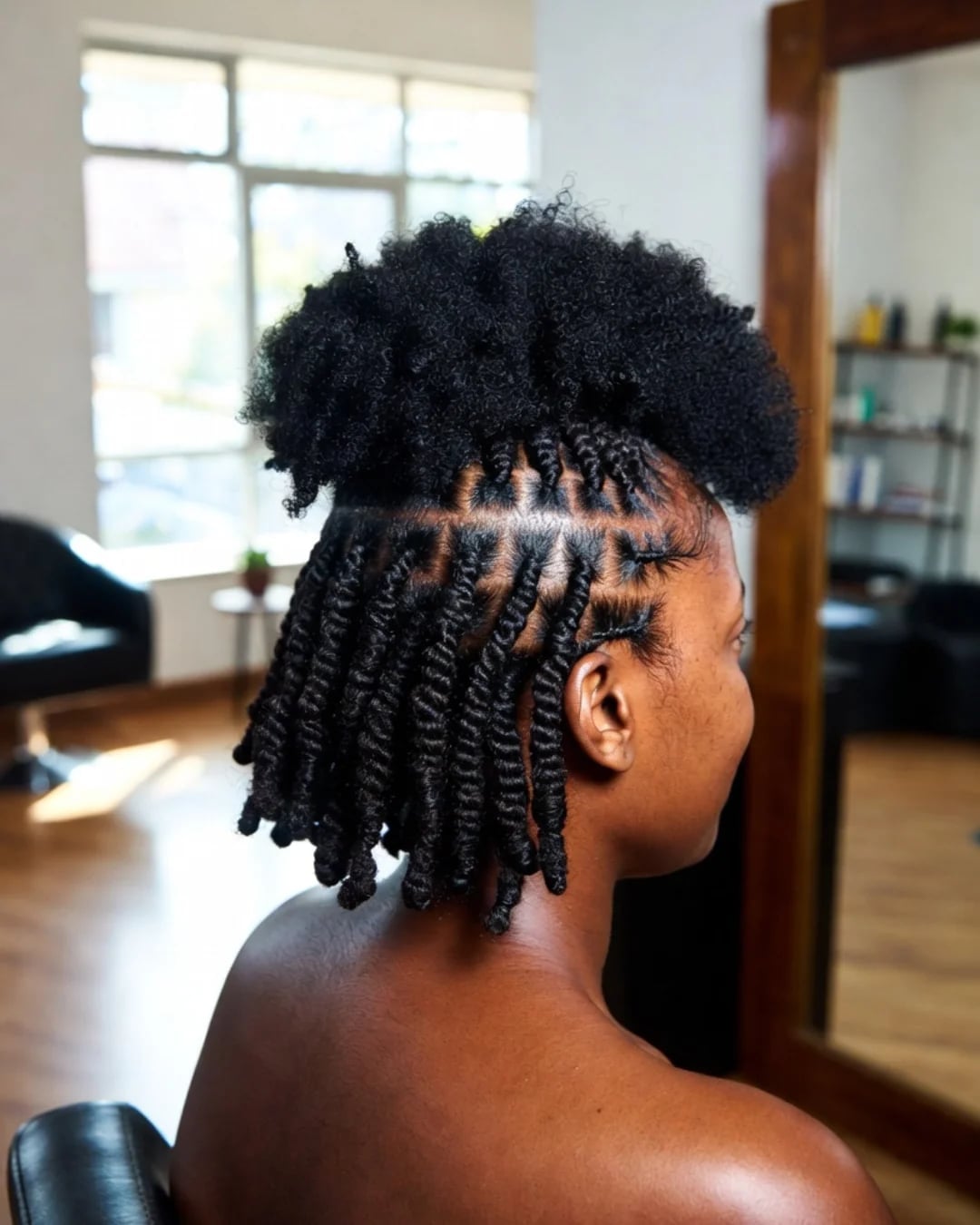
This design splits the difference between structured and free: defined twists cover the lower half while a voluminous afro puff sits on top. The contrast in textures and shapes creates a striking visual. Thick, coily hair of short length can support the puff without looking sparse. Ask your stylist for: defined twists with a voluminous afro puff. The afro puff needs decent hair density to hold its shape, so if your hair is on the finer side, this one may not deliver the volume you want.
Ear Length Sculpted Flat Twist Updo
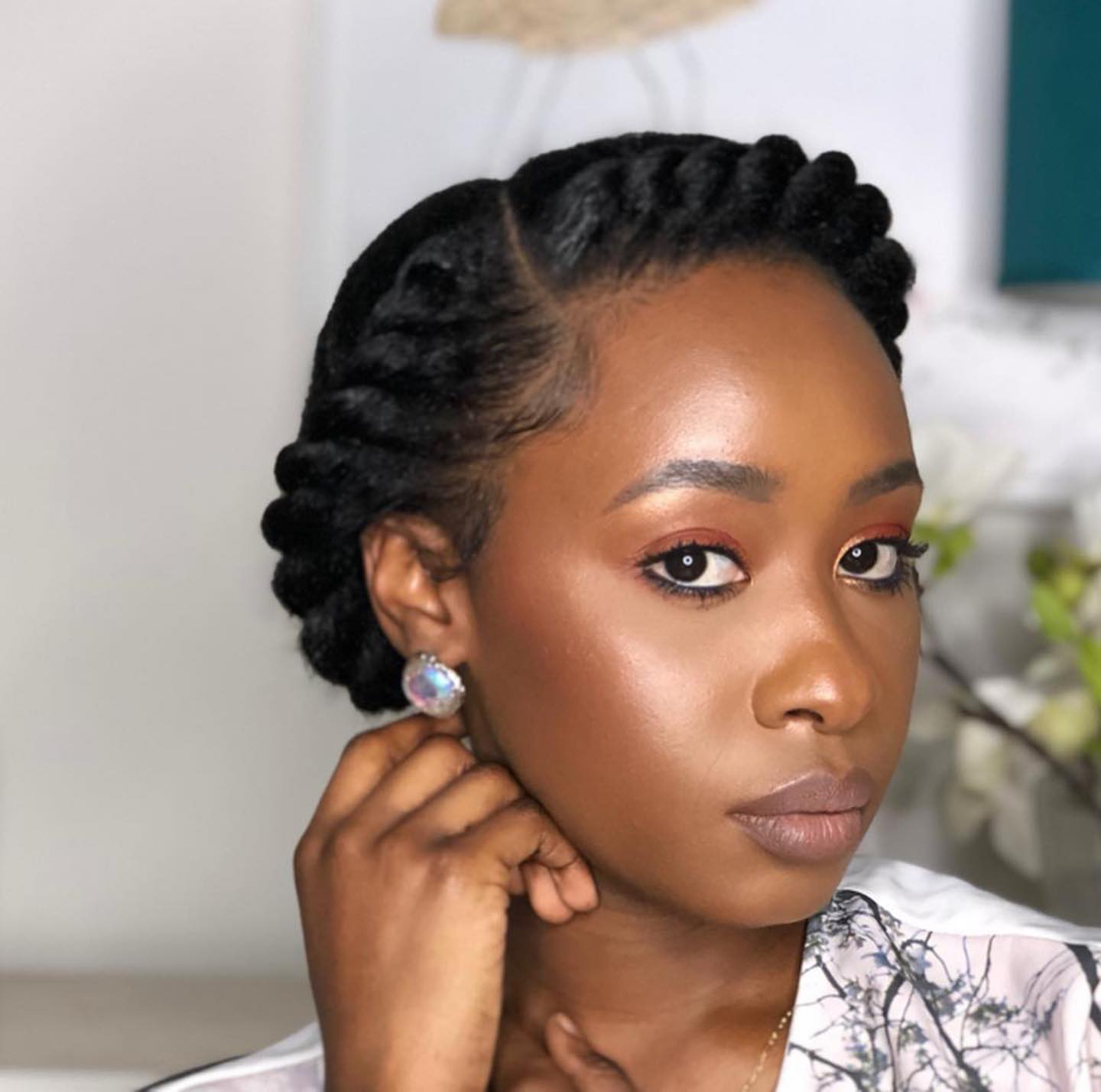
Flat twists arranged in a neat circular pattern create a smooth, sculpted updo that stops at ear length. The precision of the pattern is what makes it look finished rather than casual, and that precision requires a salon visit rather than a bathroom mirror. Thick, coily natural hair of ear length suits this style best. Ask your stylist for: ear length flat twist updo with a circular pattern. Sleep with a satin bonnet to keep the twists smooth, and touch up any loose ends with a light gel before you head out.
Geometric Cornrow Pattern With Short Braids
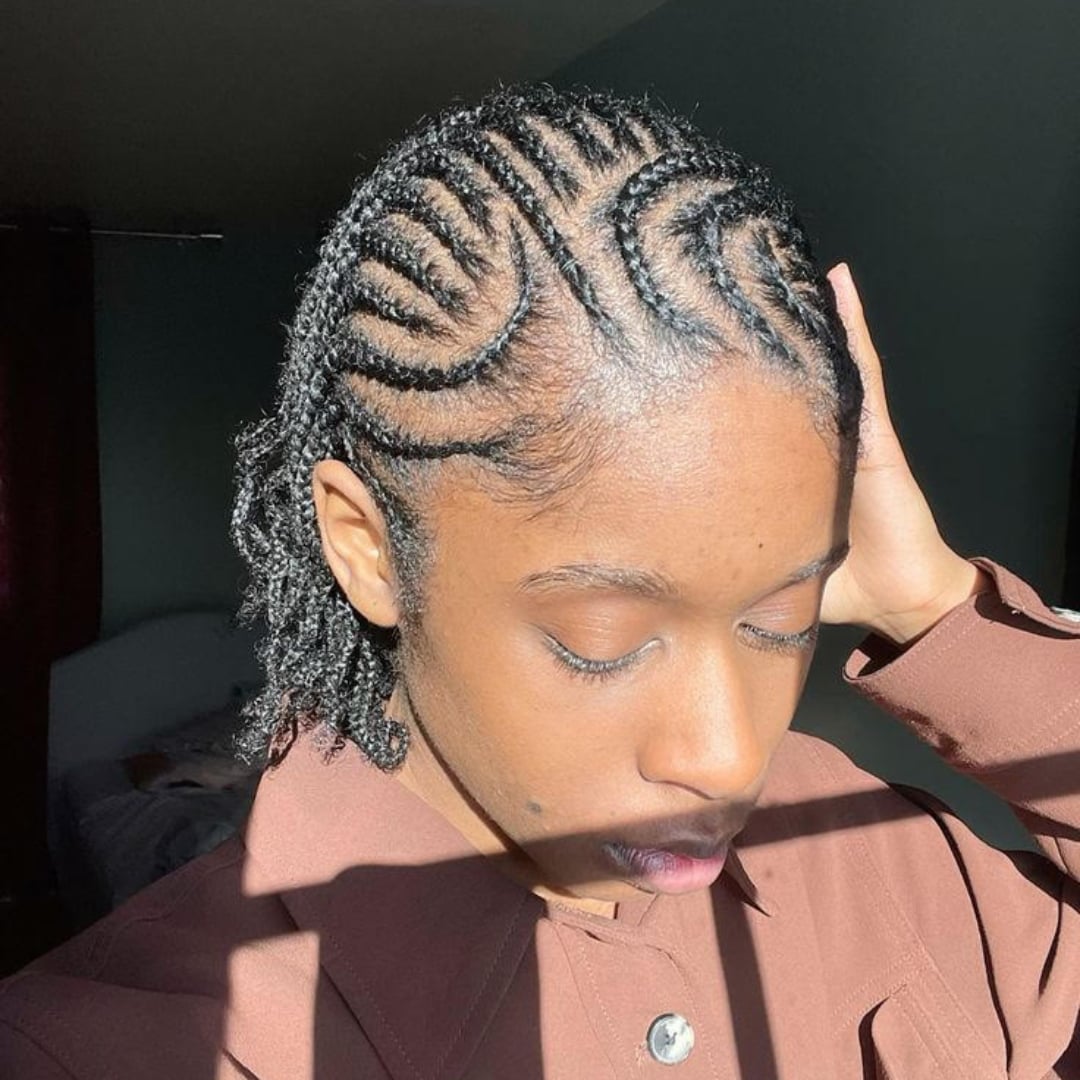
It’s not a standard cornrow pattern, it’s a geometric one: straight lines and angles built into the scalp, with short coily braids extending outward. The effect is architectural and low-maintenance, since the short braids don’t tangle or need daily fussing. Thick, coily natural hair of ear length gives the pattern the density it needs to read clearly. Ask your stylist for: geometric cornrow pattern with short coily braids. Apply a scalp oil to keep the skin underneath hydrated and a light pomade along the part lines to maintain the crisp edges.
Final Thoughts
For maximum impact and longevity, choose styles with clean scalp work and uniform braid tension. If your scalp is sensitive, say so before the first section is taken, and ask for a looser hold at the roots.
- Moisturize braids and scalp every few days with a lightweight oil.
- Wrap hair in a silk or satin scarf at night to reduce frizz.
- Skip daily restyling to keep the braid pattern crisp.
- Schedule a touch-up or re-braid every two to four weeks.
Braided styles offer endless creativity for natural hair.

