
Bantu knots are a protective style built by sectioning hair and twisting it into coiled knots that sit close to the scalp. The 2027 take leans toward soft face-framing layers and lived-in color, with knots that read polished instead of tight.
This collection of 18 Bantu Knots runs from short coily sets with baby hairs to shoulder length braids and bold purple, so there is a length and texture match for coily, wavy or straight hair. If your fine hair falls flat or your fringe will not sit, a few of these add hold without weight.
Short Coily Bantu Knots With Baby Hairs
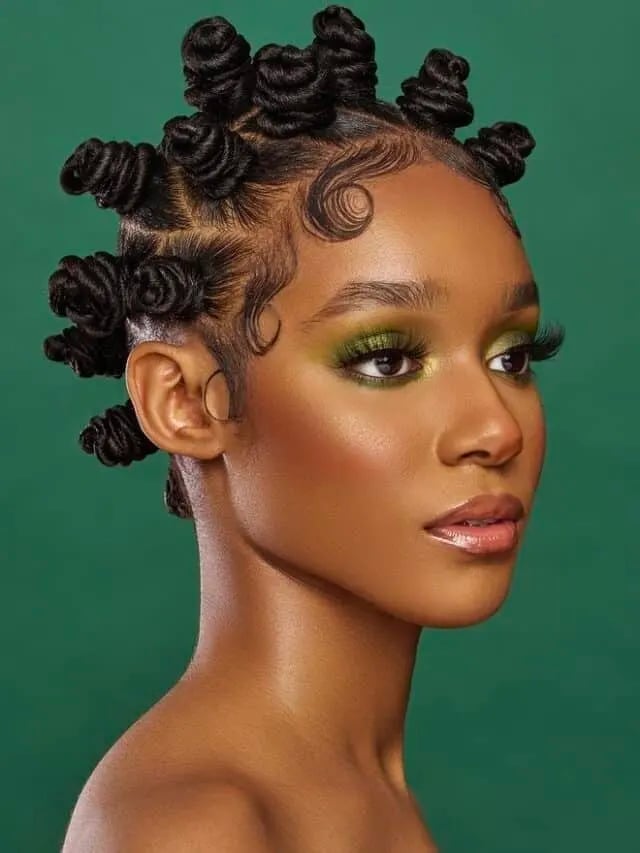
Bantu knots on short, thick coily black hair become a deliberate design when each knot is sectioned with a clean middle parting. The baby hairs along the hairline are shaped into precise curls and swoops, a detail that takes patience and a fine-tooth comb with styling gel. Ask your stylist for: short bantu knots with styled baby hairs. This approach softens the geometry of angular faces and gives a short length more presence without adding actual volume.
Shoulder Length Wavy Bantu Knots With Red Undertones
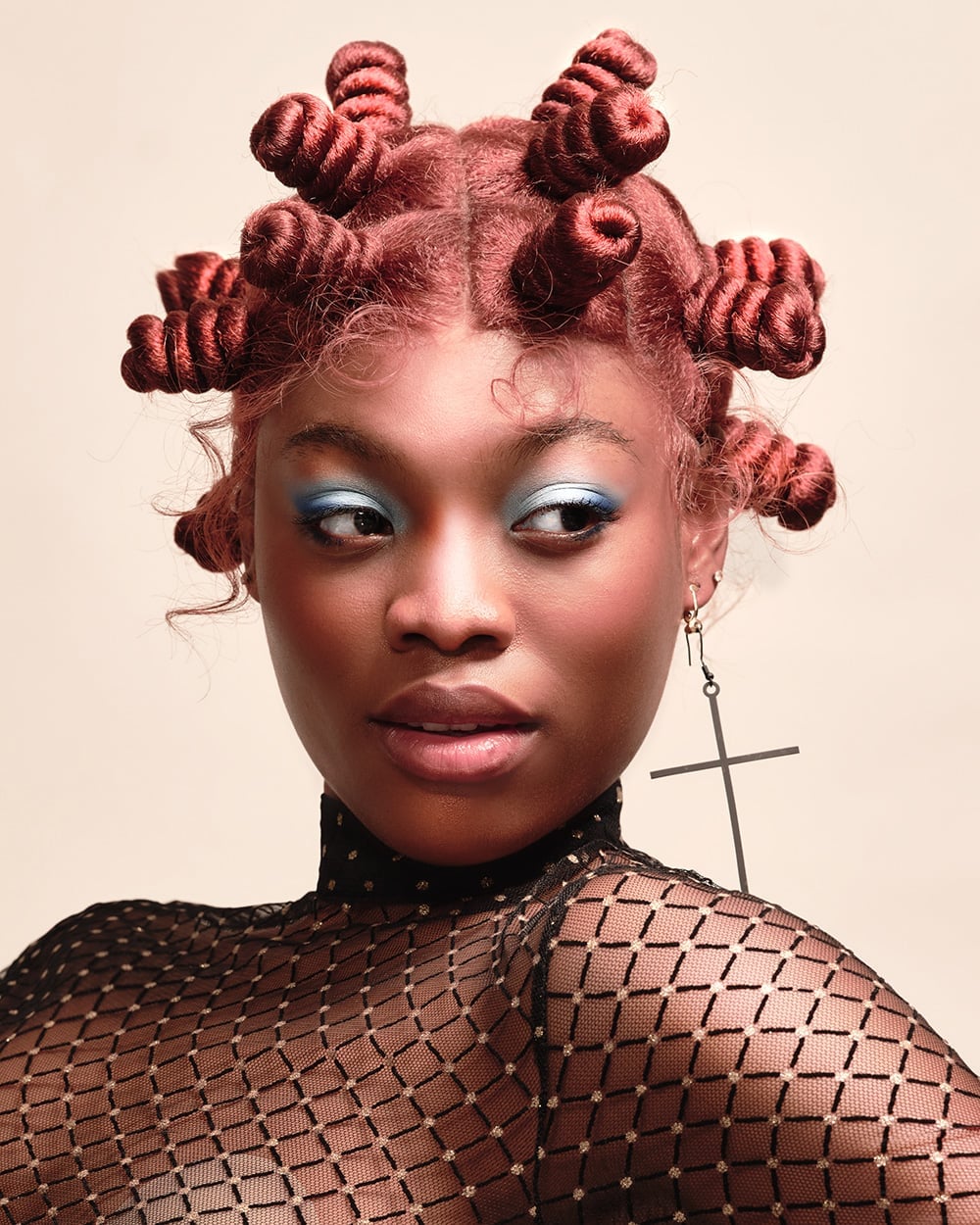
Can shoulder-length wavy hair handle the visual weight of bantu knots without looking crowded? It can, as long as the knots are spaced evenly and the texture has enough body to hold the shape. Thick wavy hair is the ideal candidate here, and a side parting keeps the proportions balanced for oval and square faces. Ask your colorist for: shoulder length bantu knots, vibrant red color, side part. The red with pink undertones looks vivid rather than faded, so ask for a semi-permanent formula to keep the tone bright longer.
Small Bantu Knots With Braids to Shoulders
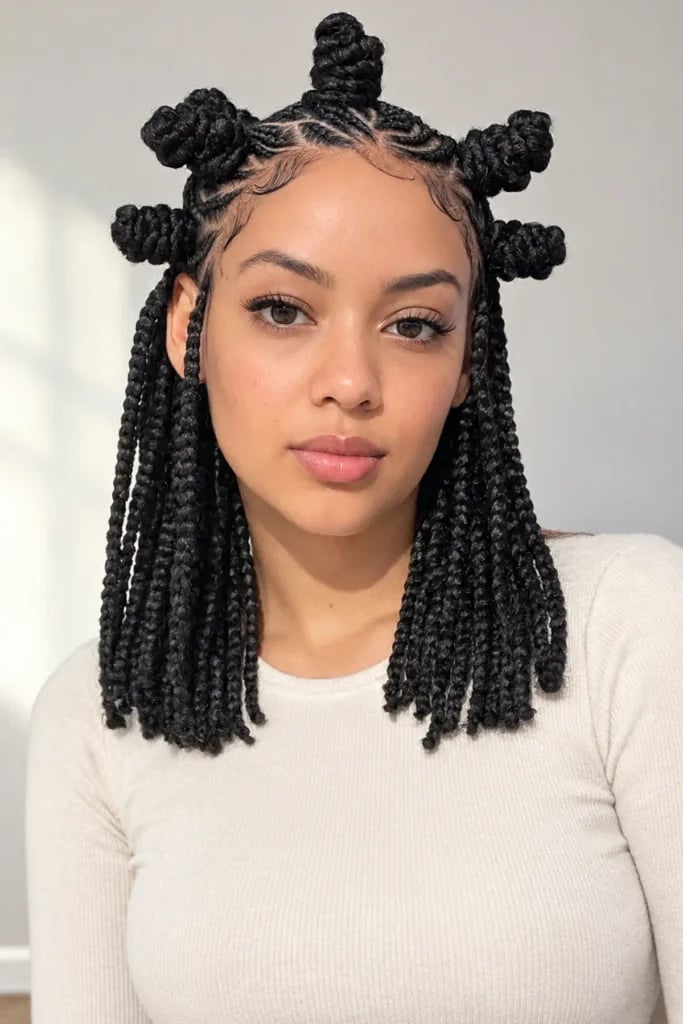
Small bantu knots on the crown paired with braids that reach the shoulders offer a hybrid between a protective style and a long silhouette. The knots sit close to the scalp, while the braids handle the length. It is not the same as a full-head knot style: the braids make the overall shape read as longer and more fluid. Ask your stylist for: small bantu knots on top with shoulder length braids.
Upkeep is straightforward. Apply a light oil to the braid ends every few days to stop fraying, and re-twist the knots around day ten when the edges start to soften. The middle parting keeps the look symmetrical.
Crown Bantu Knots With Mid-Back Braids and Baby Hairs
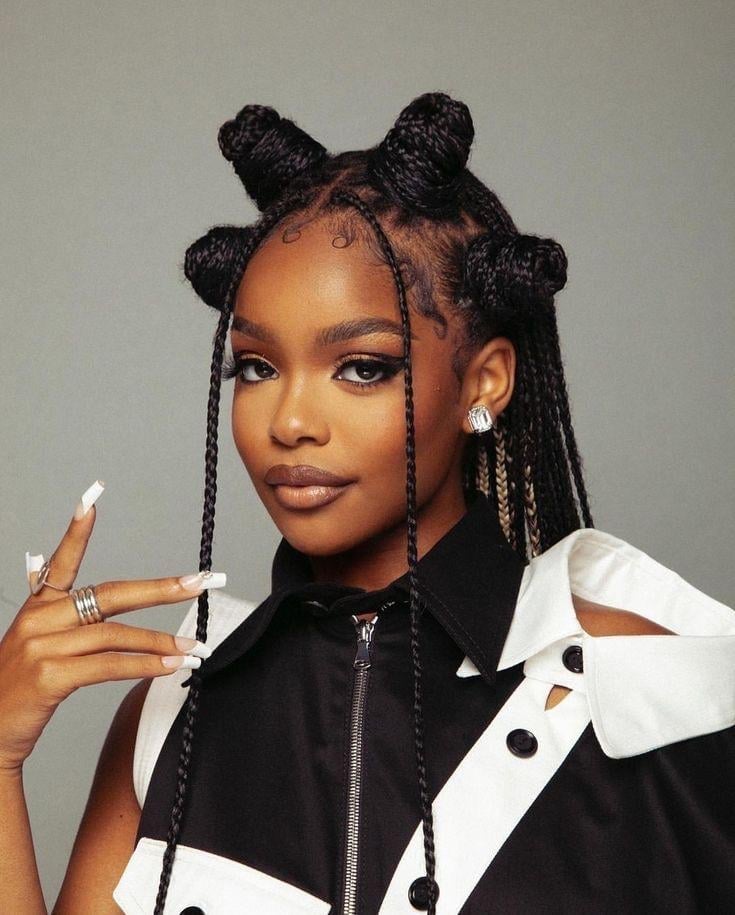
This version concentrates the bantu knots on the crown, leaving the rest of the length in loose braids that fall to mid-back. The baby hairs are styled along the hairline, adding a finished edge that keeps the look from feeling top-heavy. Ask your stylist for: bantu knots on crown with mid-back braids and baby hairs. Be specific about the knot placement: you want them clustered from the crown forward, not scattered across the whole head.
What to mention at the appointment: multiple bantu knots on the crown, loose braids, and baby hairs shaped with gel. A middle parting keeps the sections even. The braids should be installed without tension at the root to avoid strain on the hairline.
Geometric Bantu Knots on Short Straight Black Hair
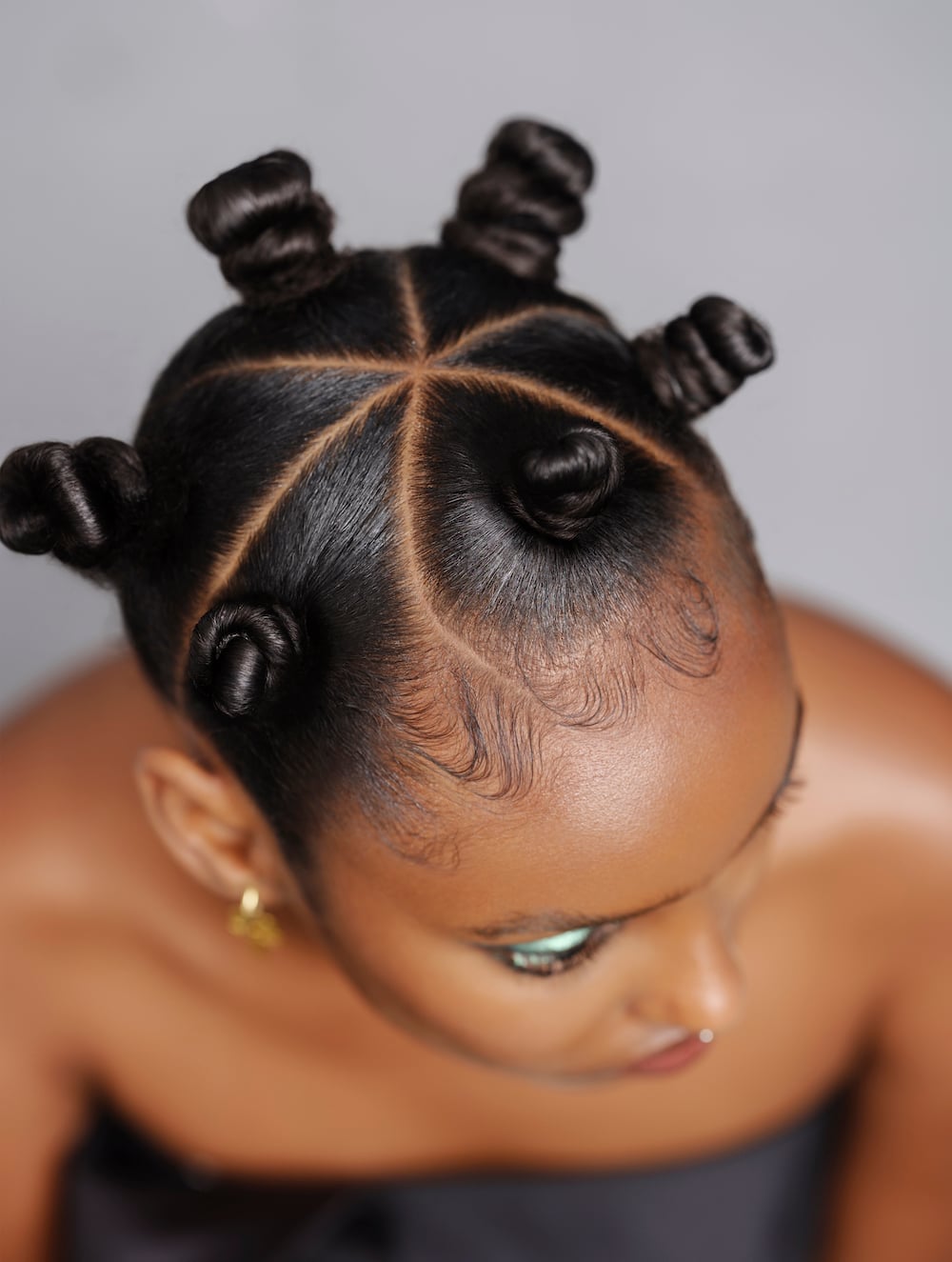
Straight thick black hair cut short provides a clean canvas for bantu knots arranged in a geometric pattern. The sharp middle parting carves each section into a precise square or diamond, giving the style a structural feel that coily textures do not always produce as visibly. Ask your stylist for: short bantu knots with geometric sections. Those crisp partings will blur after a few days, so plan this look around a single event. A rat-tail comb and light-hold hairspray can extend the sharpness by a day or two.
Neat Bantu Knots With Shoulder Length Braids
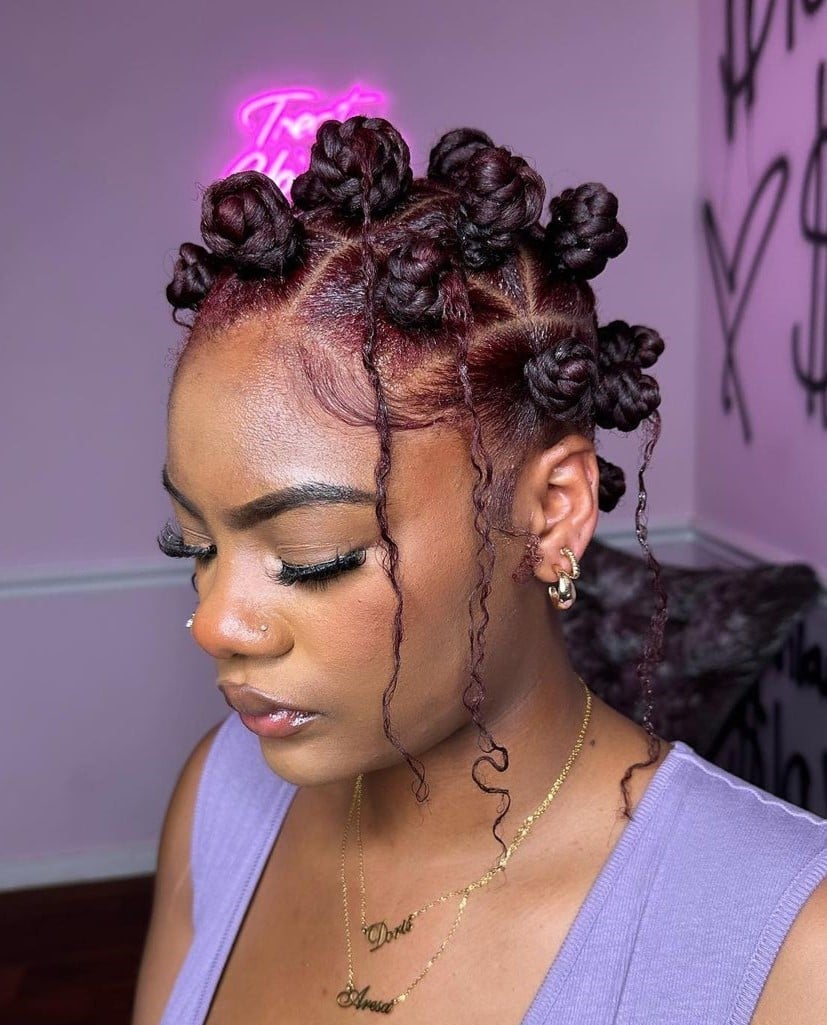
Can a protective style also handle summer humidity without a fight? These neat bantu knots on the crown let the shoulder-length braids do the rest of the work. Ask your stylist for: neat bantu knots on crown with shoulder length braids. The coily texture and middle parting keep everything symmetrical, and the braids cut down on daily manipulation. Thick, coily hair of short to medium length handles the weight best. Keep the braid ends moisturized with a serum and re-twist the knots every 7 to 10 days. It is a warm-weather style that actually holds its shape.
Braided Bantu Knots With Structured Parting
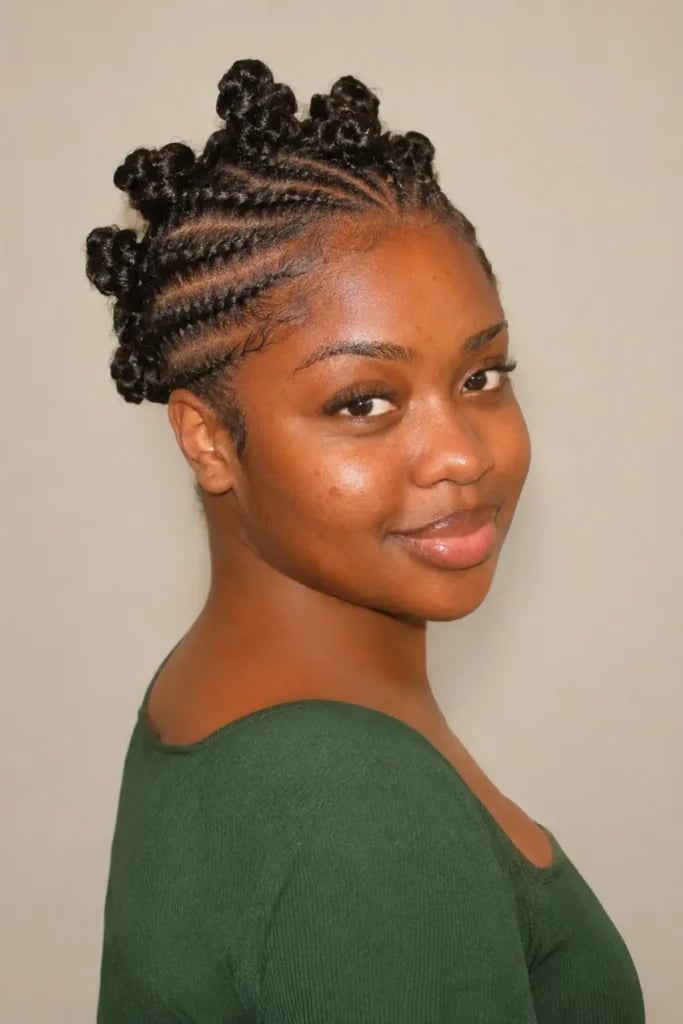
Each knot here starts as a braid from the root, which gives the shape more grip. The structured parting divides the scalp into neat rows, so the final layout looks planned. Ask your stylist for: braided bantu knots with structured parting. Thick, coily hair takes the braiding best; finer textures may not hold the knot as firmly. Apply a braid balm to the roots for definition, and plan for a salon visit to re-braid and re-knot every two weeks. This is not a fast DIY, but the clean lines are worth the chair time.
Neat Bantu Knots on Chin Length Straightened Hair
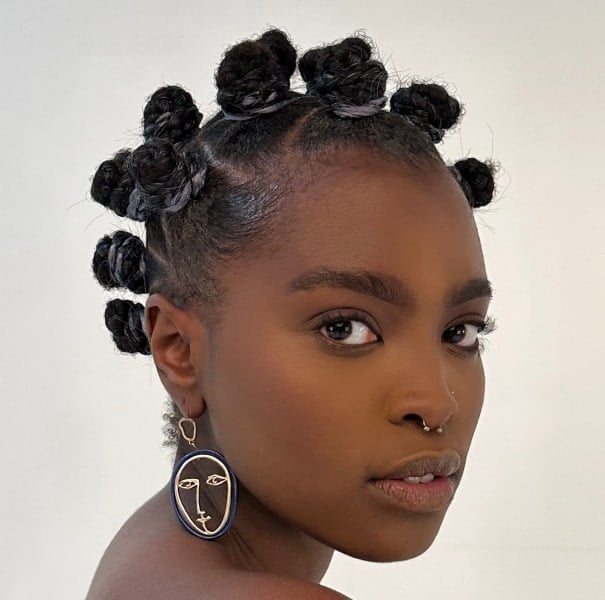
A smooth, straightened base gives these chin-length bantu knots a polished finish that suits formal settings. Ask your stylist for: chin length bantu knots, straightened texture, side part. The side part breaks up the symmetry of oval and heart faces, while the uniform knot placement keeps the silhouette tidy. Use a heat protectant before straightening and a light finishing spray to hold the knots. Thick, straight hair at chin length is the sweet spot: long enough to knot, short enough to keep the weight manageable.
Defined Short Coily Bantu Knots
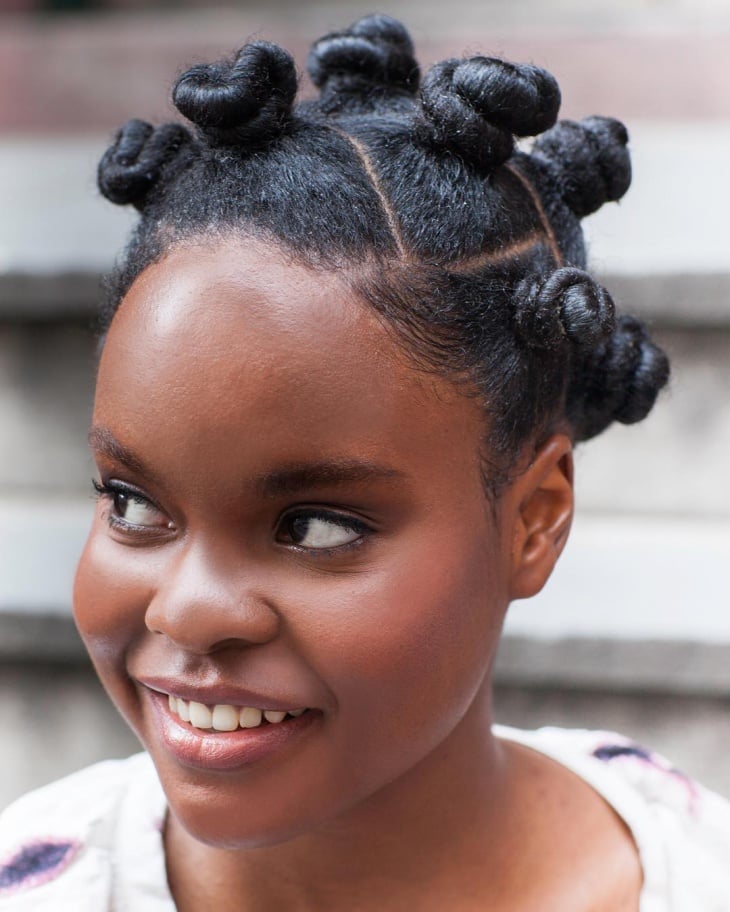
Short, coily hair can look this crisp, but the definition comes from a careful start. Ask your stylist for: short, defined bantu knots. The middle parting and even sectioning create the uniformity, while the natural coil holds each knot tight. The honest trade-off is the setup time: getting that level of definition on short hair takes patience and a steady hand. Apply a curl-defining cream to damp hair before knotting, then refresh with a spray bottle between wears. The result is a protective style that shows off your natural texture.
Mid-Back Bantu Knots With Vibrant Purple Color
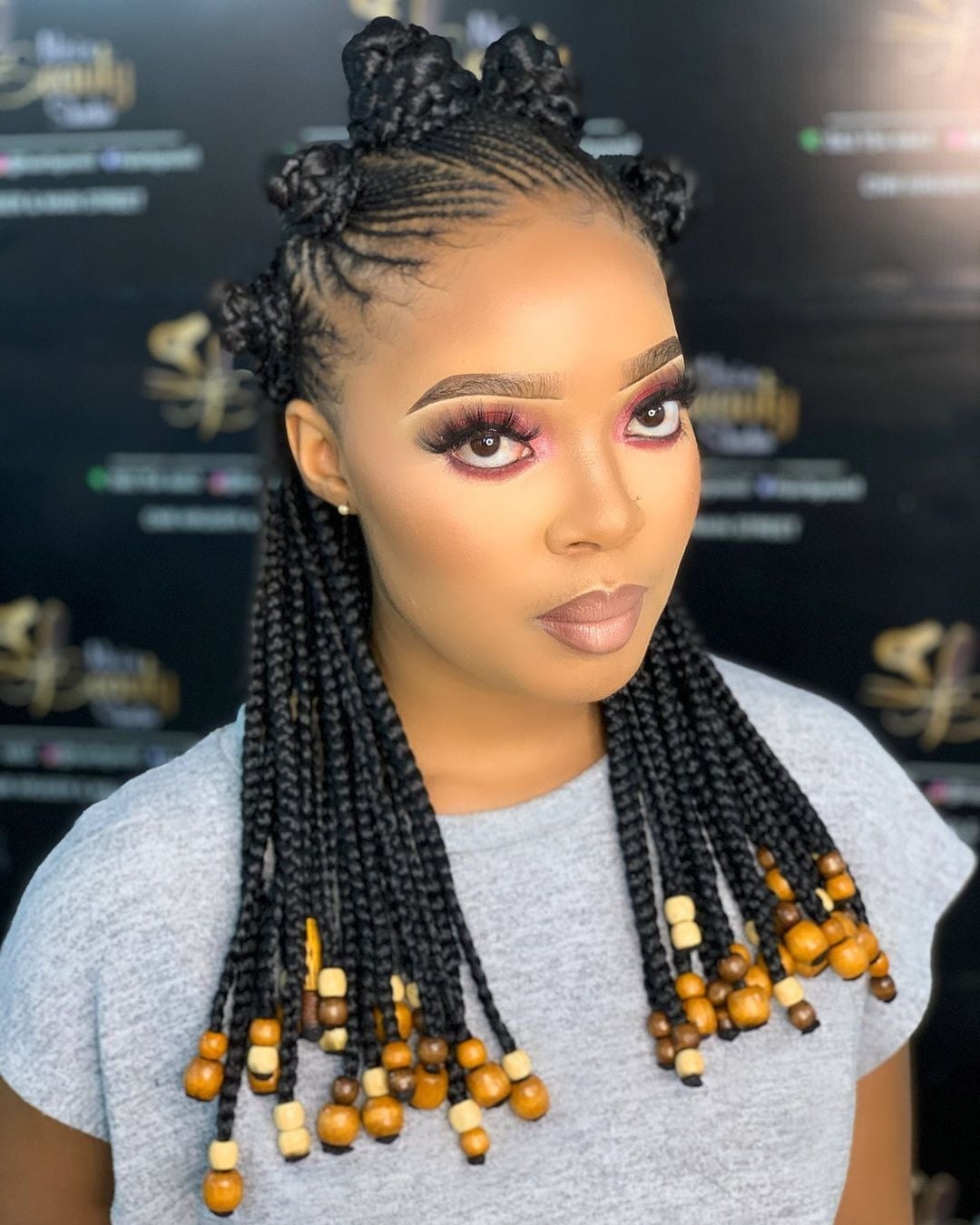
A bold purple with black undertones versus a more subtle wine or burgundy: the difference is upkeep. Ask your colorist for: mid-back bantu knots, vibrant purple color. The black undertones mean the roots stay less obvious than a solid neon, but purple still fades faster than brown. Use a color-depositing conditioner every few washes and avoid excessive heat to keep the tone from turning muddy. The wavy, thick texture at mid-back length carries the color well, and the middle parting lets the knots fan out evenly. This is a statement length, so commit to the toning rhythm.
Glossy Short Bantu Knots With Defined Curls
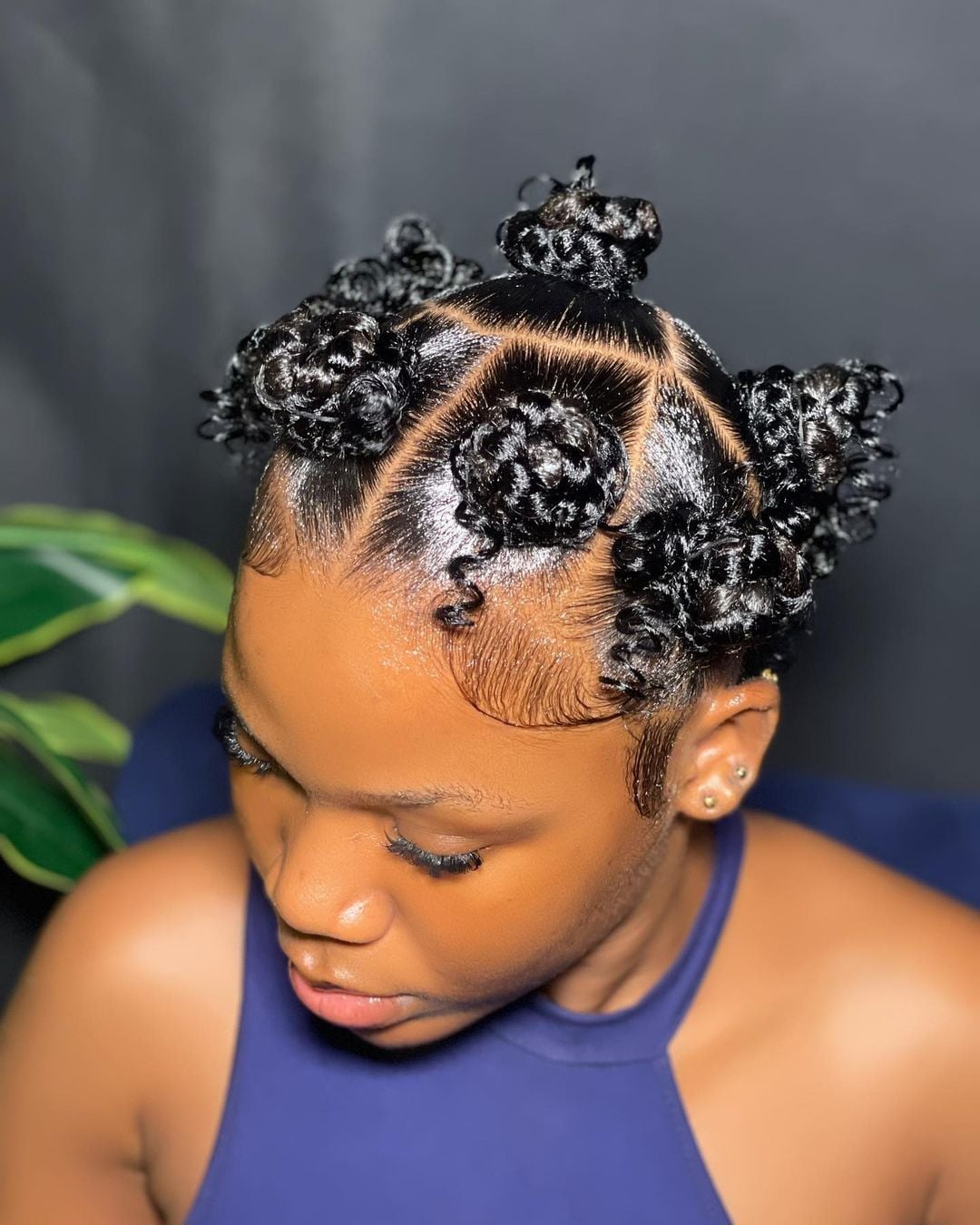
Shine on short bantu knots comes from the twist itself, not a product poured on at the end. Thick, curly hair holds a tight coil, so each knot forms a small sculpted dome with defined curls left loose around the hairline. No bangs, middle parting, short length: the geometry does most of the work. Ask your stylist for: short, glossy bantu knots with face-framing curls. A shine serum pressed into the finished knots keeps the surface reflective, and a water-based spray revives the loose curls each morning. Thick textures hold this finish longest; finer hair loses the definition within a few days.
Numerous Small Bantu Knots on Short Coily Hair
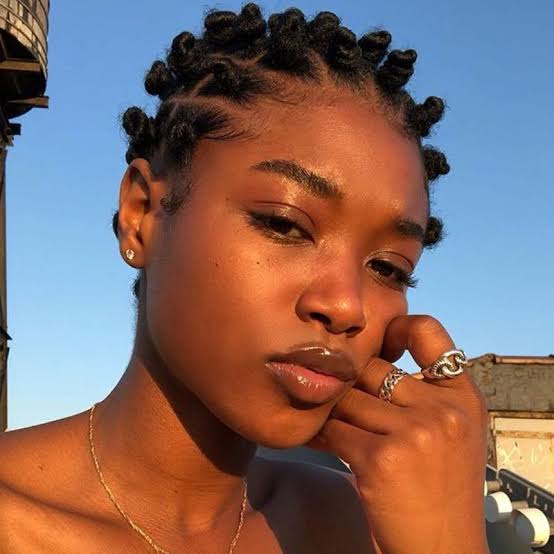
Does a head full of tiny knots actually suit you, or is it a density gamble? Thick, coily hair carries small, numerous bantu knots because each section has enough body to hold its shape without collapsing. Short length keeps the whole thing compact, and a middle parting splits the pattern cleanly. If density runs low, the scalp shows between knots and the look thins out fast. Ask your stylist for: short bantu knots, small and numerous. Tension matters more than size here: each knot should sit secure without pulling at the root, and daily moisturizing keeps the coily texture from drying out underneath.
Geometric Parting Bantu Knots on Shoulder Length Coils
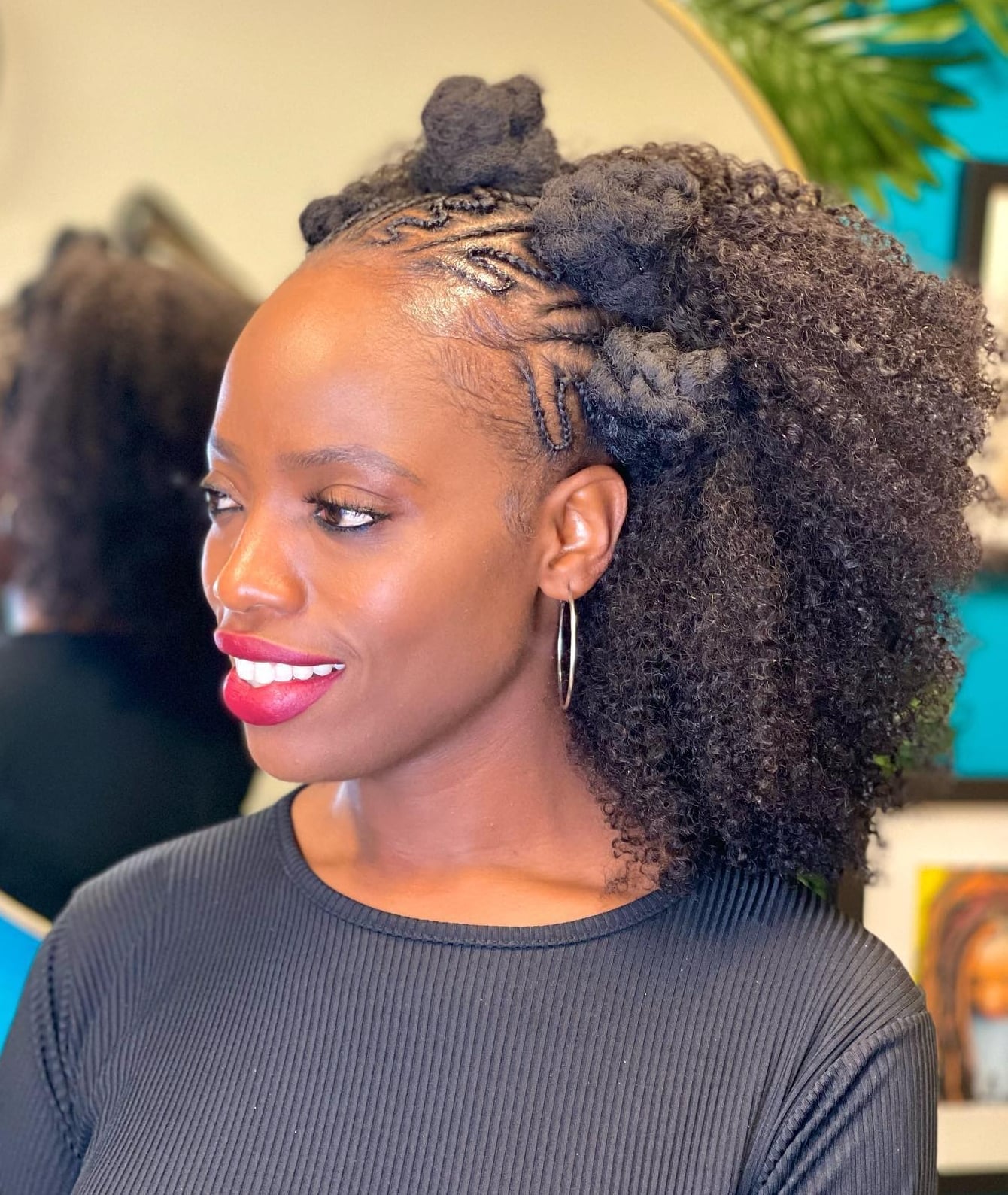
A geometric parting turns bantu knots into a grid, and a grid demands clean lines to work. On shoulder length, thick, coily hair the pattern has room to repeat, with a middle parting anchoring the whole layout. Ask your stylist for: shoulder length bantu knots with geometric parting. The wear reality is maintenance: sharp sections blur as the hair shifts, so a rat-tail comb and a light-hold gel become part of the routine, and the partings need redrawing every few days. Shoulder length also means more weight at the root, which can loosen the sections faster than a short set would. The precision is the point, and the precision is also the labor.
Multiple Small Bantu Knots on Shoulder Length Coils
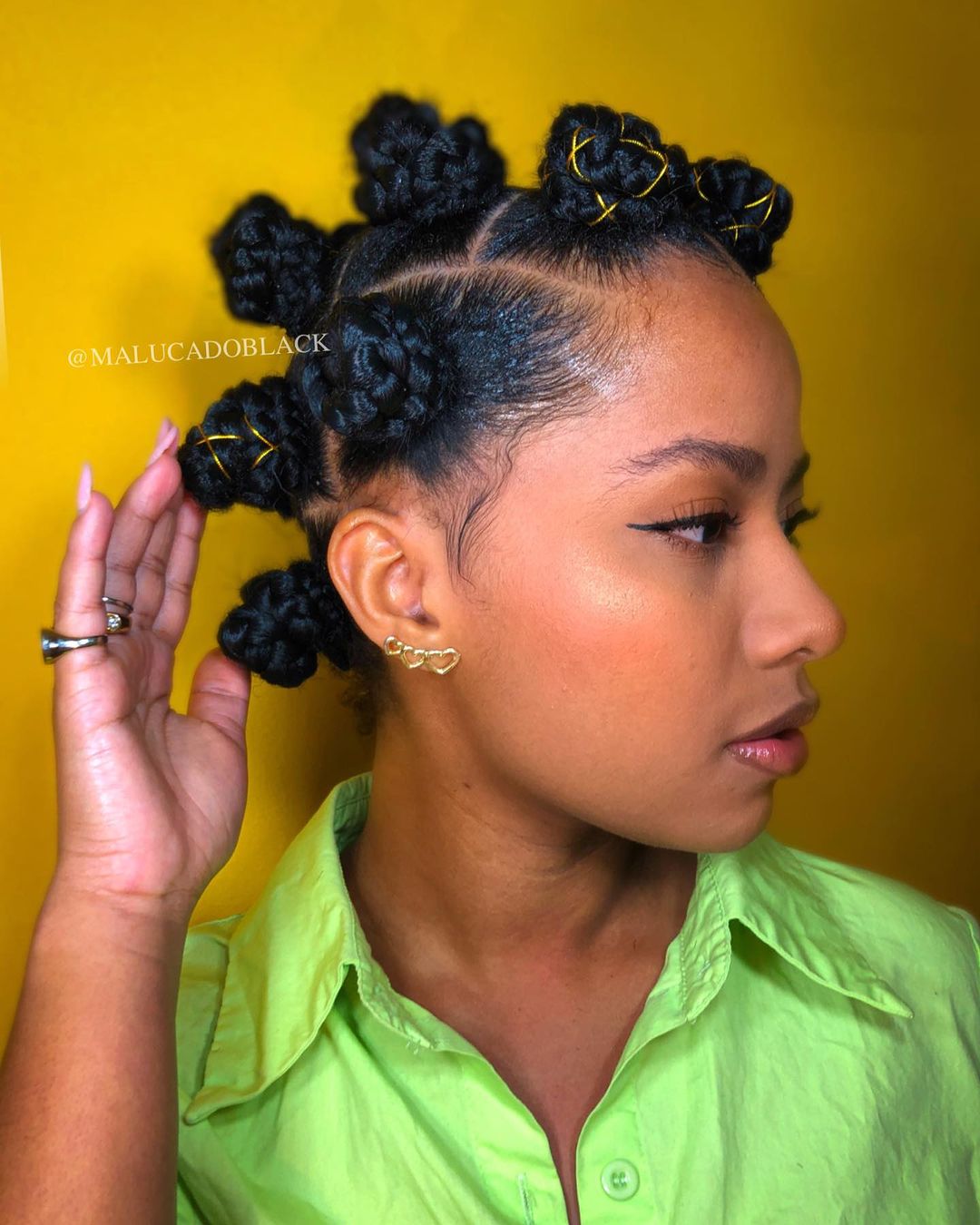
- Apply a moisturizing product through damp sections before twisting.
- Twist each section clockwise and coil it flat against the scalp.
- Re-twist loosened knots weekly to keep the definition.
Coily texture holds the coil; straight hair would slide out of it by day two.
Neatly Formed Short Bantu Knots on Straight Hair
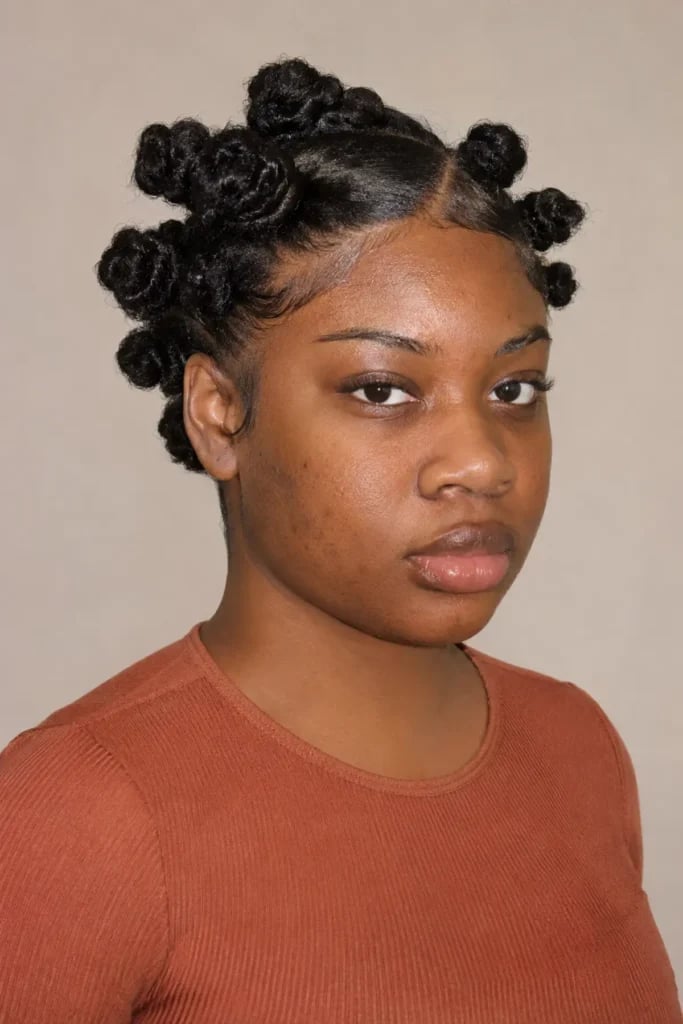
Can straight hair actually hold a bantu knot, or does it slide apart by lunch? Thick, straight hair has the density for it, and a clean central parting keeps the short set looking orderly. Neatly formed knots on straight texture read polished rather than sculptural, which makes this a strong pick for a work week or a formal event where a looser style would look unfinished. Ask your stylist for: short bantu knots, neat and polished. A smoothing serum before twisting and a light hairspray after keep the shape crisp. Straight hair shows every stray end, so the finish rewards a careful hand.
Short Coily Bantu Knots With Intricate Baby Hairs, Black
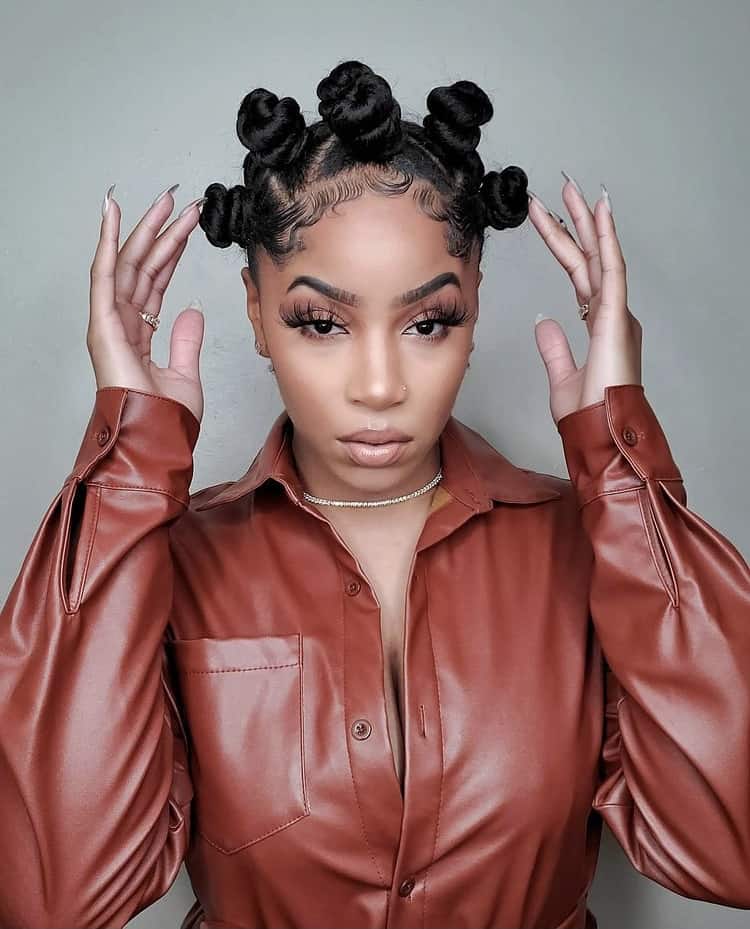
A set of evenly spaced bantu knots sits across the crown, but the real work is in the hairline. The baby hairs are traced into precise swirls and points, a detail that turns a protective style into a deliberate design. Ask your stylist for: short bantu knots with intricate baby hairs. This is a salon-only project: the knots require sectioning skill, and the baby hairs need a steady hand with edge control and a fine-tooth comb. Expect to sit for a couple of hours. The payoff is a polished finish that holds for days with a satin scarf at night.
Shoulder Length Bantu Knots With Heart Parting
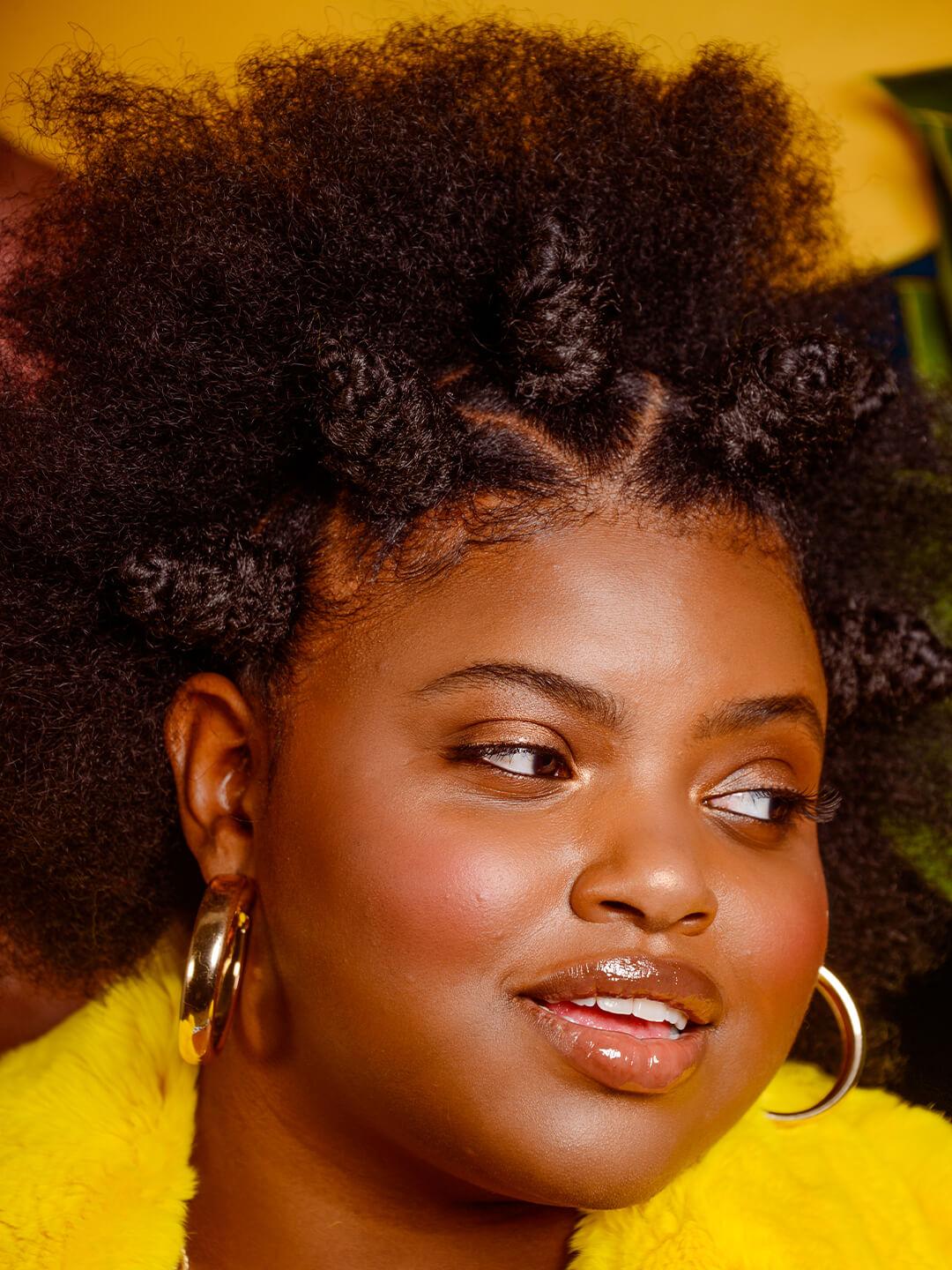
This design carves a heart-shaped part into the scalp before a single knot is twisted. The result is a clear motif at the crown, but the shape is unforgiving. Ask your stylist for: shoulder length bantu knots with a heart part. One crooked section and the heart turns lopsided, so this is not a style for a shaky mirror or a rushed hand. The knots themselves are straightforward: shoulder-length coils sectioned and twisted from the center outward. If symmetry matters to you, book a stylist who has done geometric parts before.
Shoulder Length Bantu Knots With Gold Accents
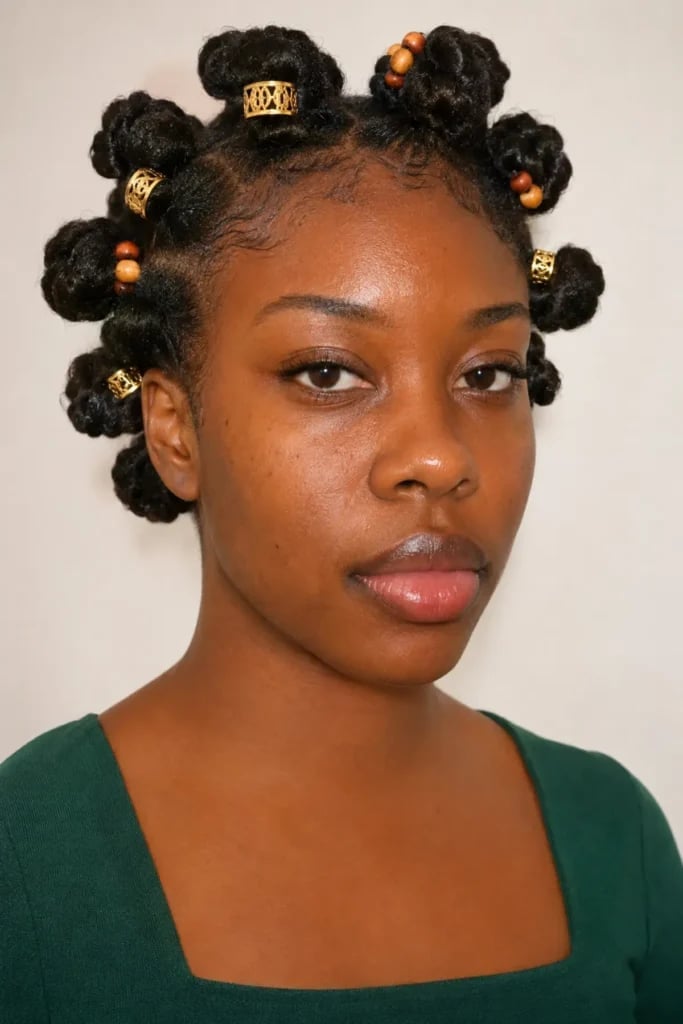
Bantu knots with gold accents sit on the decorative side of the spectrum, closer to an event style than a weekly go-to. The knots are standard: shoulder-length coils twisted and secured, with a middle part running front to back. What sets them apart is the metal pieces placed at the base of each knot or threaded through the coil. Ask your stylist for: shoulder length bantu knots with gold accents. Compared to a plain set, the accents add weight and require care during removal to avoid pulling on the hair. Save this one for occasions that call for a little shine.
Final Thoughts
For coily hair, the priority is moisture and definition, so keep your leave-in and a light oil on hand. For straight or wavy hair, a strong-hold product is what stops the knots from slipping loose before the week is out.
- Refresh knots daily with water and leave-in conditioner.
- Sleep on a satin or silk pillowcase to cut friction.
- Unravel gently after one to two weeks, conditioning as you go.
- Re-twist sections before forming new knots for longevity.
Mastering Bantu knots is a journey in precision and creativity.

