
Balayage means hand-painted color, not foiled. That difference gives you a softer root line and a more natural blend, even as the hair grows. Right now, lived-in color with soft face-framing layers and curtain bangs is replacing the flat, one-tone blonde of a few years ago.
This collection of 20 Balayage Hair Blonde Ideas runs the gamut from low-upkeep ash tones to bolder platinum ends, on lengths from chin to mid-back. It is for fine hair that tends to fall flat, for anyone tired of a visible grow-out line, and for those who want a fringe that actually sits. Each entry tells you what to ask for and how to keep it looking intentional.
Long Wavy Ash Blonde Balayage With Curtain Bangs
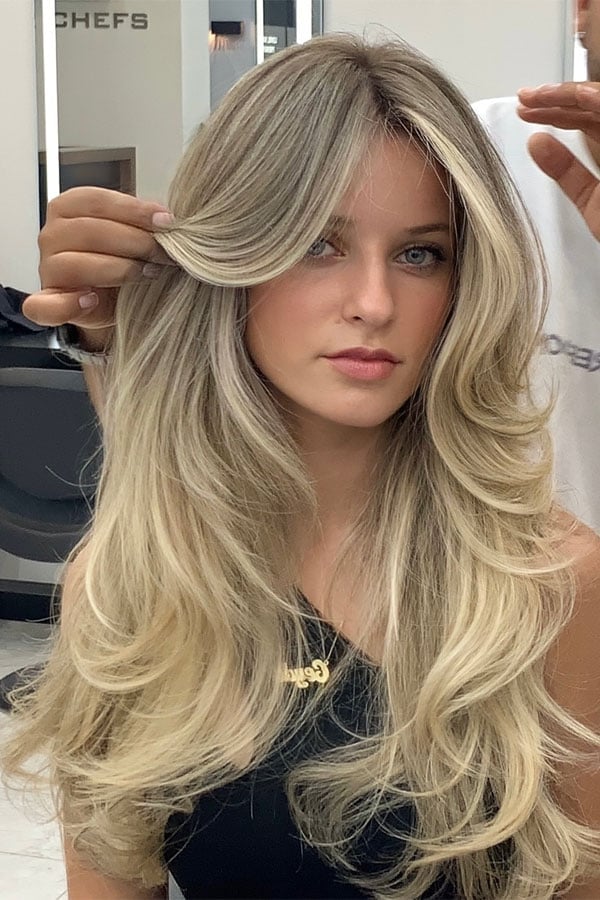
Those curtain bangs do more than frame the face; they also let the ash blonde balayage walk the line between intentional and grown-in. Long, thick waves keep the look from reading as too precious, while the cool-toned blonde on a lighter base skips the yellow cast that makes ash blonde look muddy.
Thick, wavy hair that already reaches mid-back or longer works well since balayage needs length to show its gradient. Ask your colorist for: long ash blonde balayage with curtain bangs. A blowout and a large barrel iron give you those soft waves, and the bangs will need a trim every four to six weeks to stay out of your eyes.
Mid-Back Ash Blonde Balayage With Darker Roots
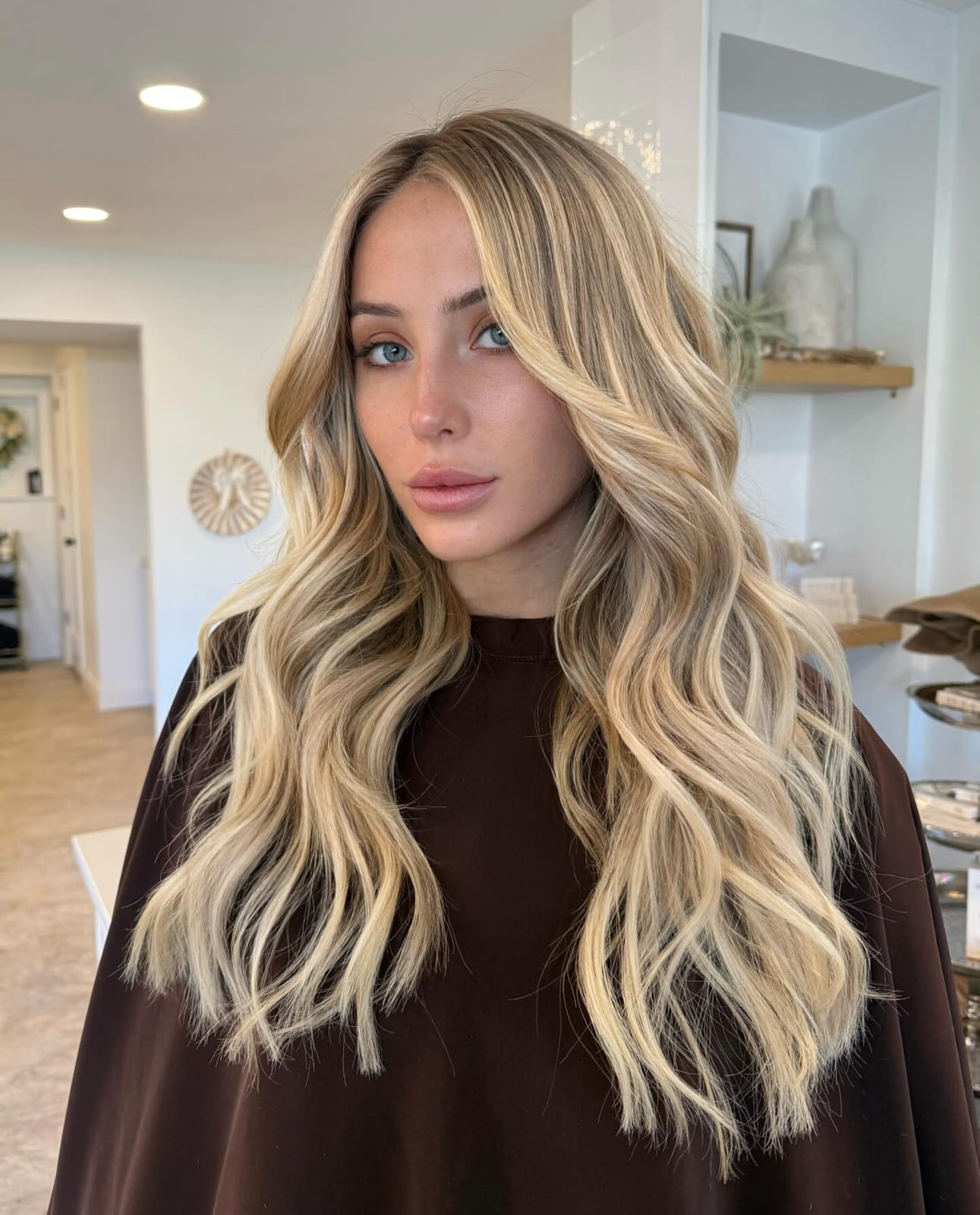
The darker root creates depth that keeps ash blonde from washing out thick, wavy hair. Balayage is painted freehand onto sections, so the mid-lengths are lighter than the root, and the ends stay lighter still. That vertical shift is what makes the colour look dimensional rather than flat.
Ask your colorist for: mid-back ash blonde balayage with dark roots and curtain bangs. A blowout enhances the wave pattern, and the root shadow buys you about six weeks before a tonal refresh is needed. Trim every eight to ten weeks to keep the shape.
Collarbone Ash Blonde Balayage With Root Shadow
Yes, if the root shadow is dark enough to anchor the lighter ends. On thick, wavy hair, curtain bangs pull the eye up and outward, which balances a heart or oval face without adding bulk at the jaw. The honest downside: ash tones pull greenish on porous hair, so a purple shampoo is a weekly necessity, not an optional gesture. Ask your colorist for: collarbone ash blonde balayage with root shadow and curtain bangs.
Mid-Back Ash Blonde Balayage With Face-Framing Layers
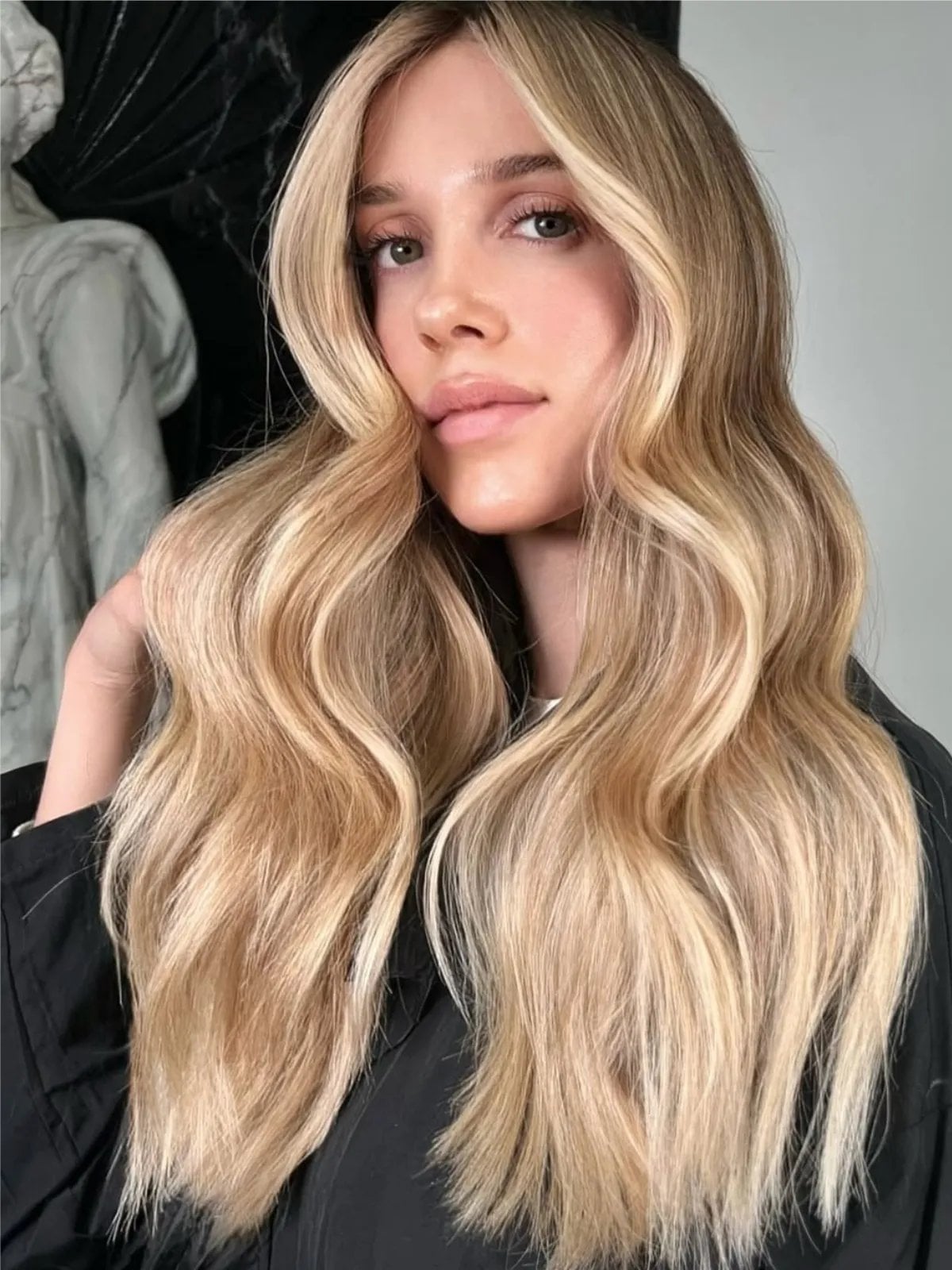
Warm blonde balayage gets all the attention, but ash blonde does something honey cannot: it stays cool without turning silver. On mid-back, thick wavy hair, soft face-framing layers break the colour into ribbons that catch light from different angles, so the dimension reads even when the hair is pulled back. Curtain bangs complete the frame, but they need a trim every four weeks or the whole shape drifts.
Ask your colorist for: mid-back ash blonde balayage with face-framing layers and curtain bangs. A blowout is the fastest way to see the layers move; air-drying flattens the effect.
Shoulder Length Ash Blonde Balayage With Voluminous Blowout
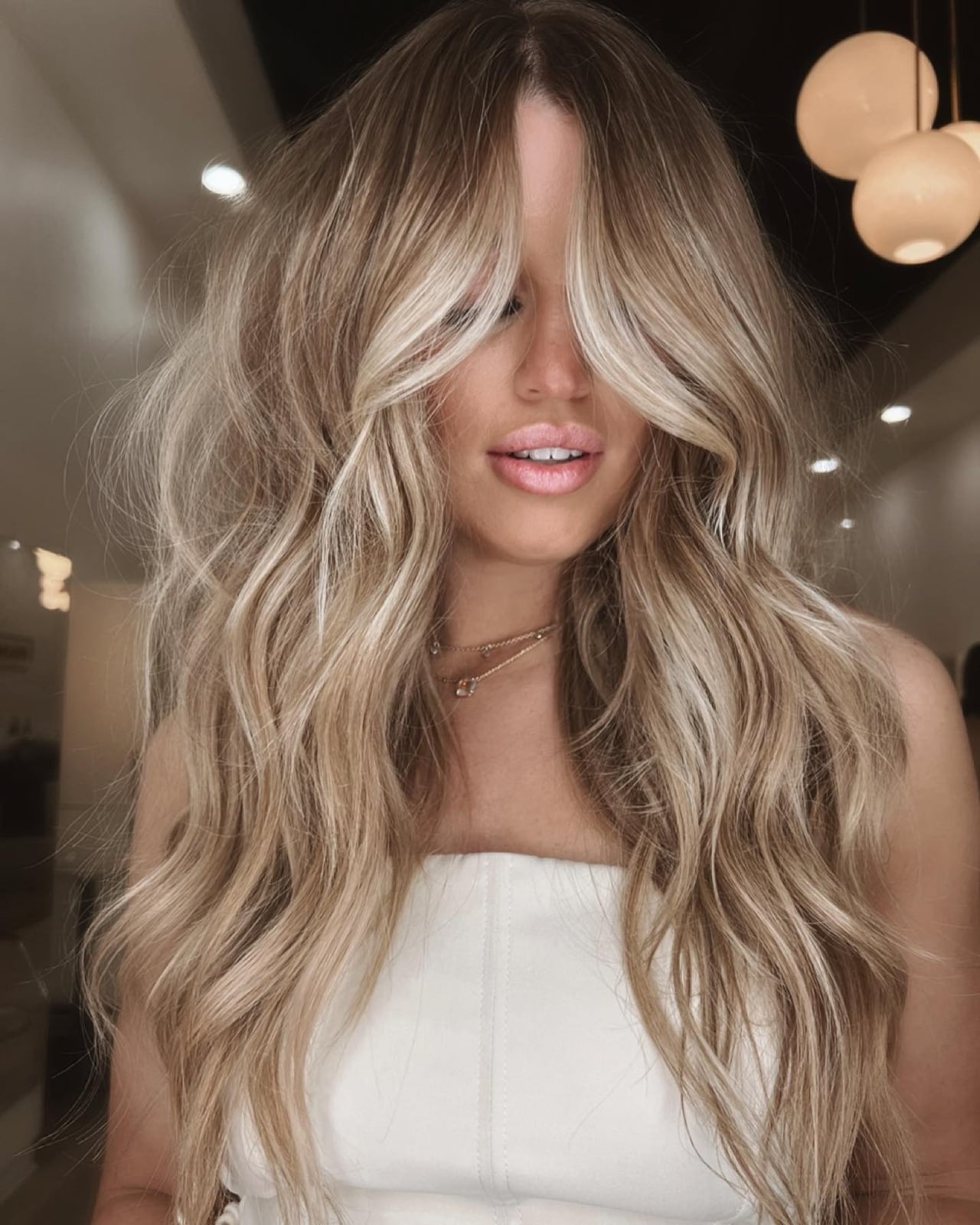
A voluminous blowout on shoulder-length hair is a test of skill: too much lift and the curtain bangs look disconnected, too little and the ash blonde balayage blends into a single beige note. The trick is asking for what you see. Tell the stylist you want the root a shade darker than the ends, the bangs grazing the cheekbone, and the volume concentrated at the crown. Ask your colorist for: shoulder length ash blonde balayage with curtain bangs and a voluminous blowout. A round brush and a nozzle attachment do the work at home.
Collarbone Honey Blonde Balayage With Side Part
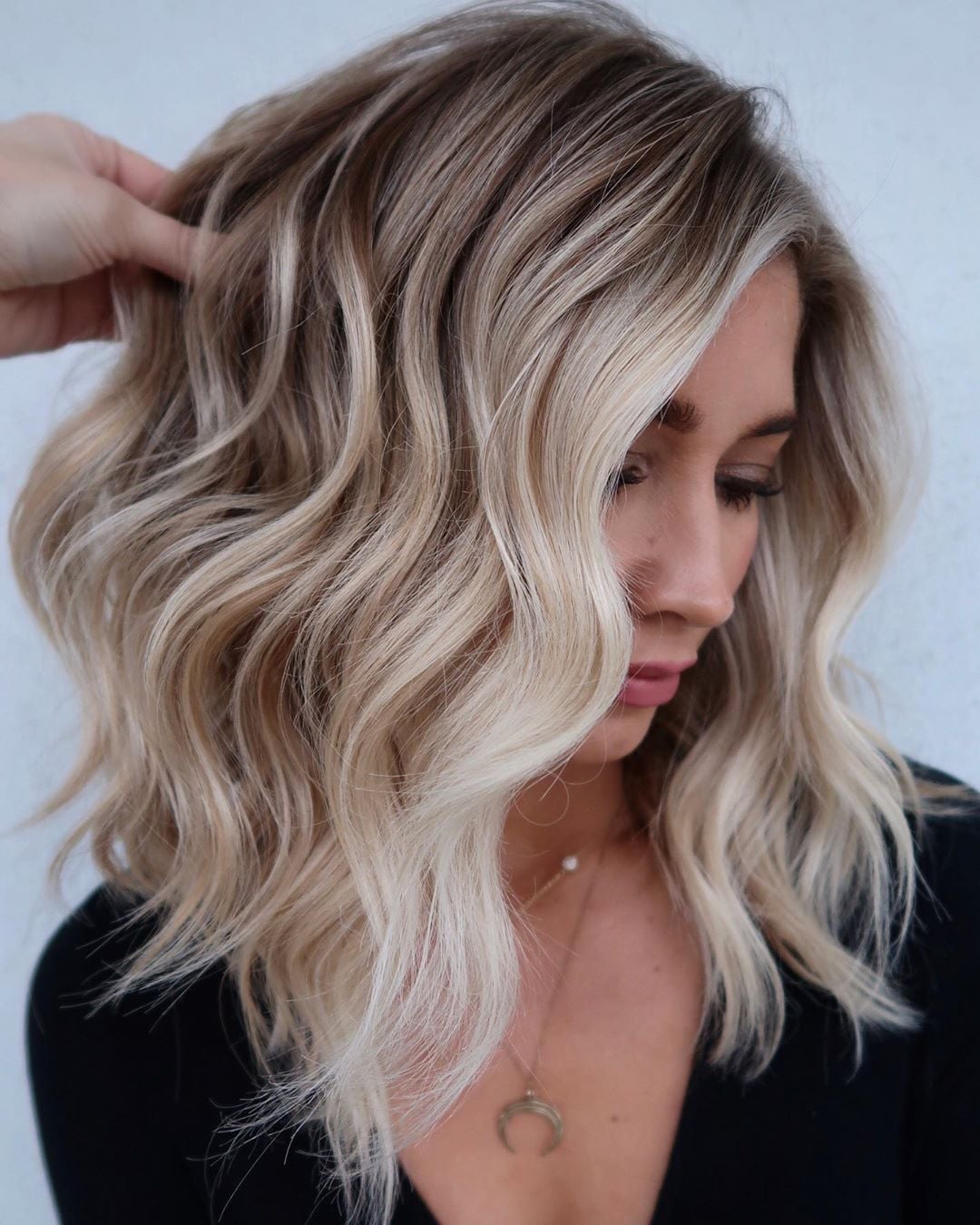
A side part on a collarbone-length cut does more than shift the hair: it adds lift at the root, which is welcome on medium-density wavy textures that can fall flat. The honey blonde balayage starts a few inches from the part, so the grow-out is gradual. Ask your colorist for: collarbone honey blonde balayage with a side part. Blow-dry with a round brush to keep the wave smooth and the part defined. A trim every six to eight weeks keeps the collarbone length crisp.
Mid-Back Dark Brown With Caramel Blonde Balayage
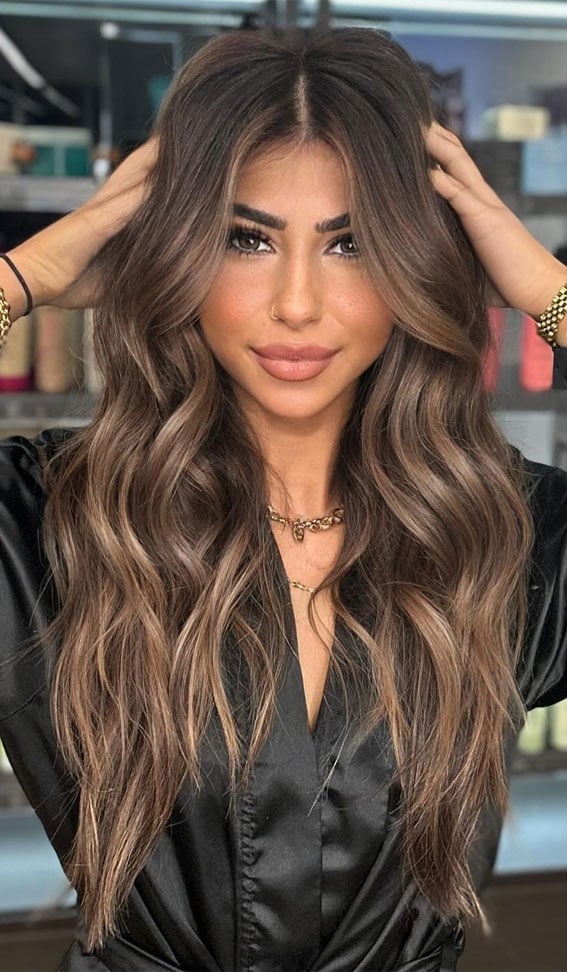
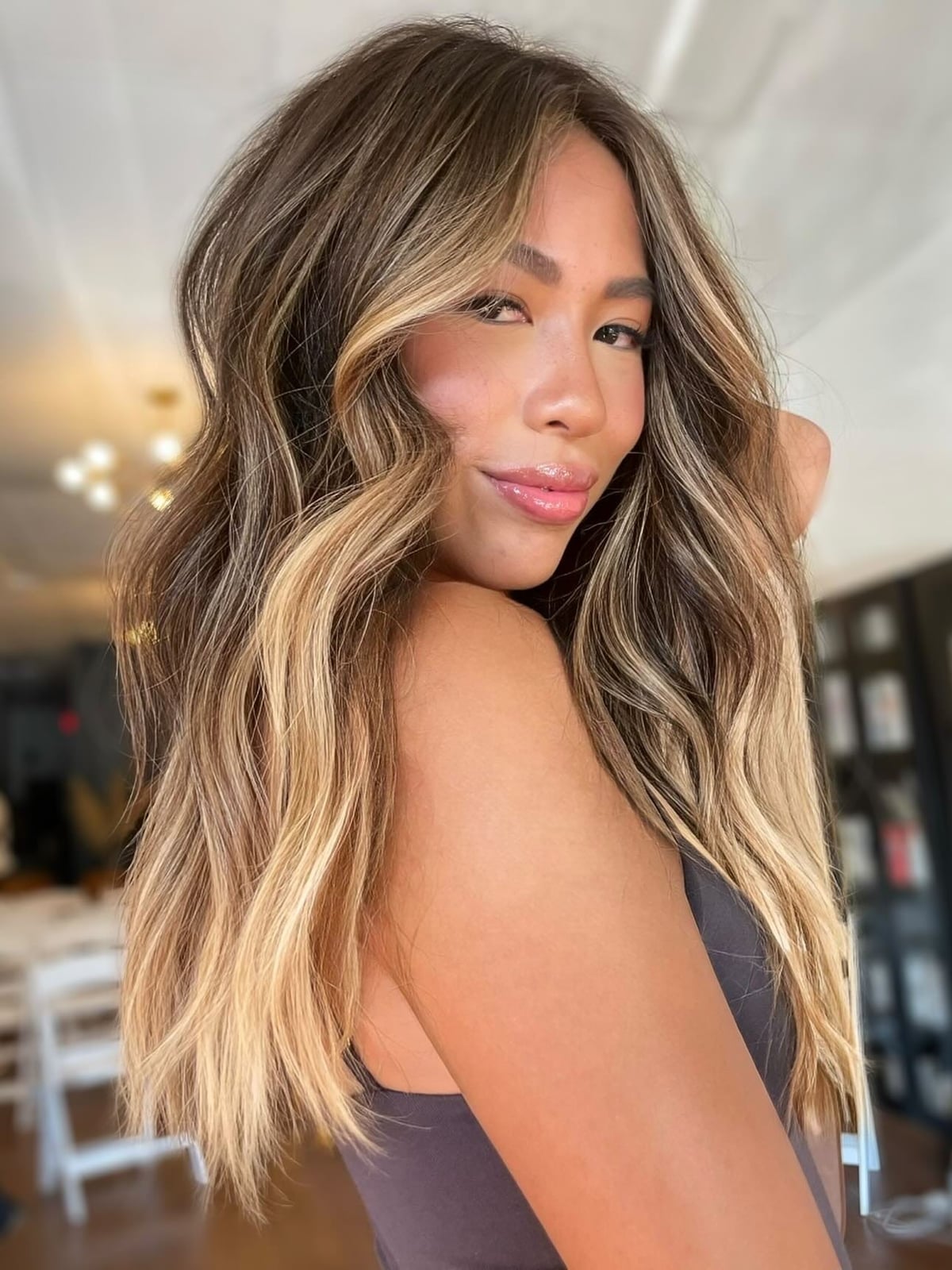
This is a study in contrast without the hard line. The dark brown base sits close to the root, and the caramel blonde balayage begins lower, wrapping around the face with curtain bangs that soften the transition. The middle part lets the color fall symmetrically, which works on thick, wavy hair that has enough weight to hold a blowout.
What makes it work is the tone: caramel reads warm against the dark brown, not brassy. Ask your colorist for: mid-back dark brown with caramel blonde balayage and curtain bangs. The layers keep the thickness from turning into a triangle, and the waves break up the color so it looks lived-in from day one.
Mid-Back Platinum Blonde With Root Shadow
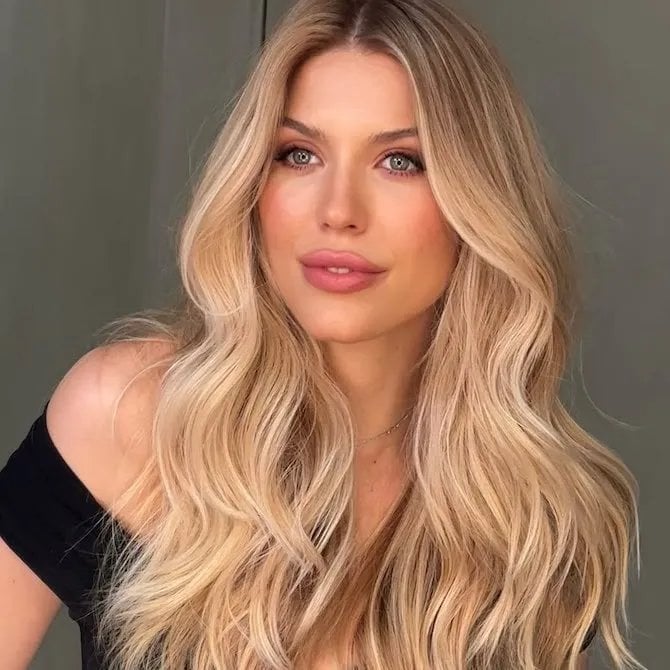
Is platinum still a commitment? Yes. But a root shadow takes the edge off the grow-out. This version pairs a bright platinum blonde with a slightly darker root that fades into the length, and the curtain bangs keep the look soft rather than severe.
On thick, wavy hair the platinum catches light in a way that straight hair does not, so the wave pattern actually earns its keep. Ask your colorist for: mid-back platinum blonde balayage with root shadow and curtain bangs. This is a salon-only request: the root shadow needs a precise tone so it blends upward, not outward. Summer is the natural season for platinum, but the root shadow lets it slide into fall without an emergency toning appointment.
Mid-Back Dark Brown With Blonde Balayage Highlights, Wavy
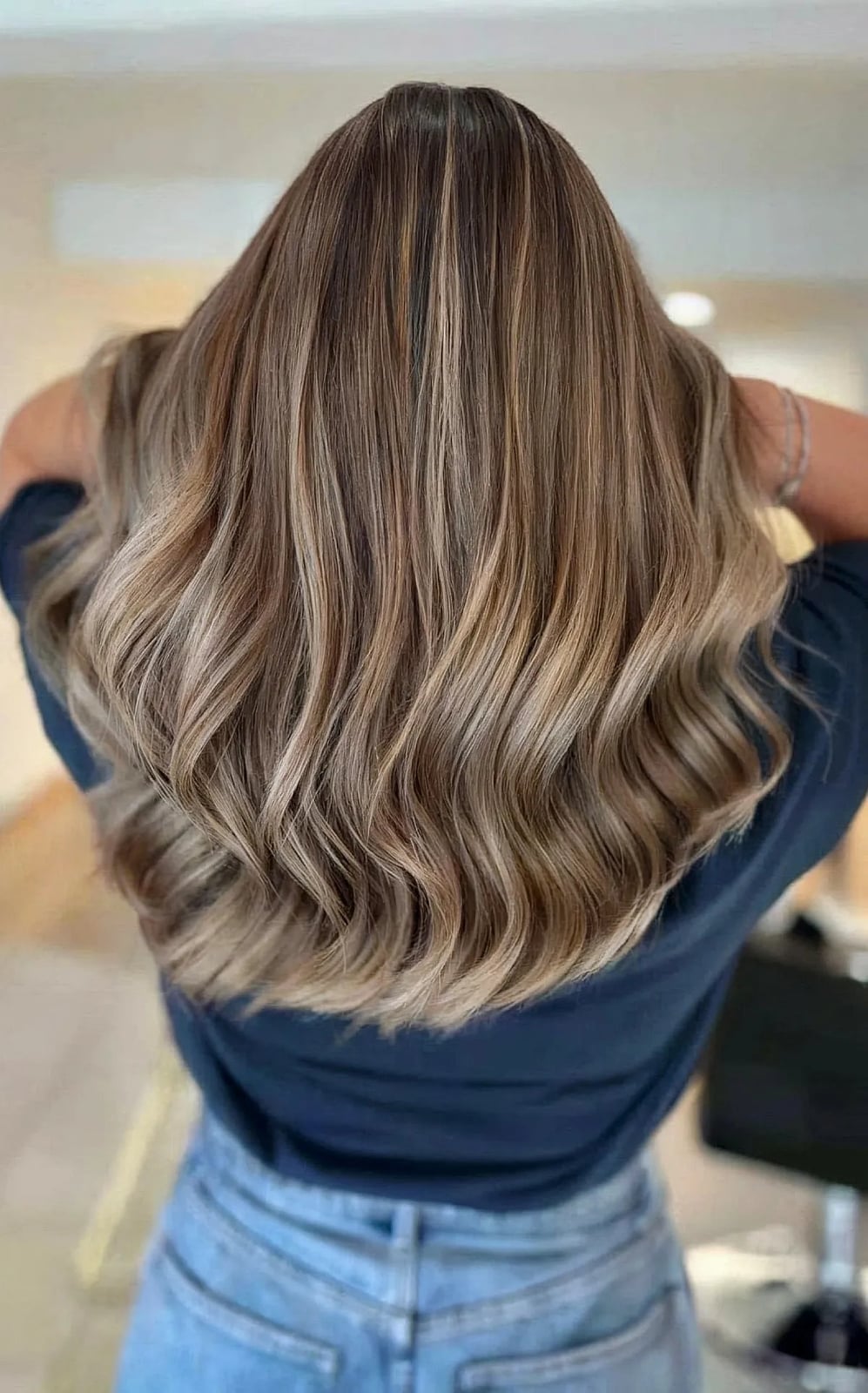
A seamless dark-to-blonde transition relies on the stylist painting thin sections through the mid-lengths and ends, leaving the root untouched. This back view shows the blonde balayage highlights spaced close enough to read as a unified lift, not scattered streaks. Ask your colorist for: mid-back dark brown with blonde balayage highlights and layers. The visible layers add movement so the color shifts as the hair moves. This is strictly salon work: a DIY bleach application at home would miss the depth that makes the transition look intentional.
Chin Length Bob With Blonde Balayage And Curtain Bangs
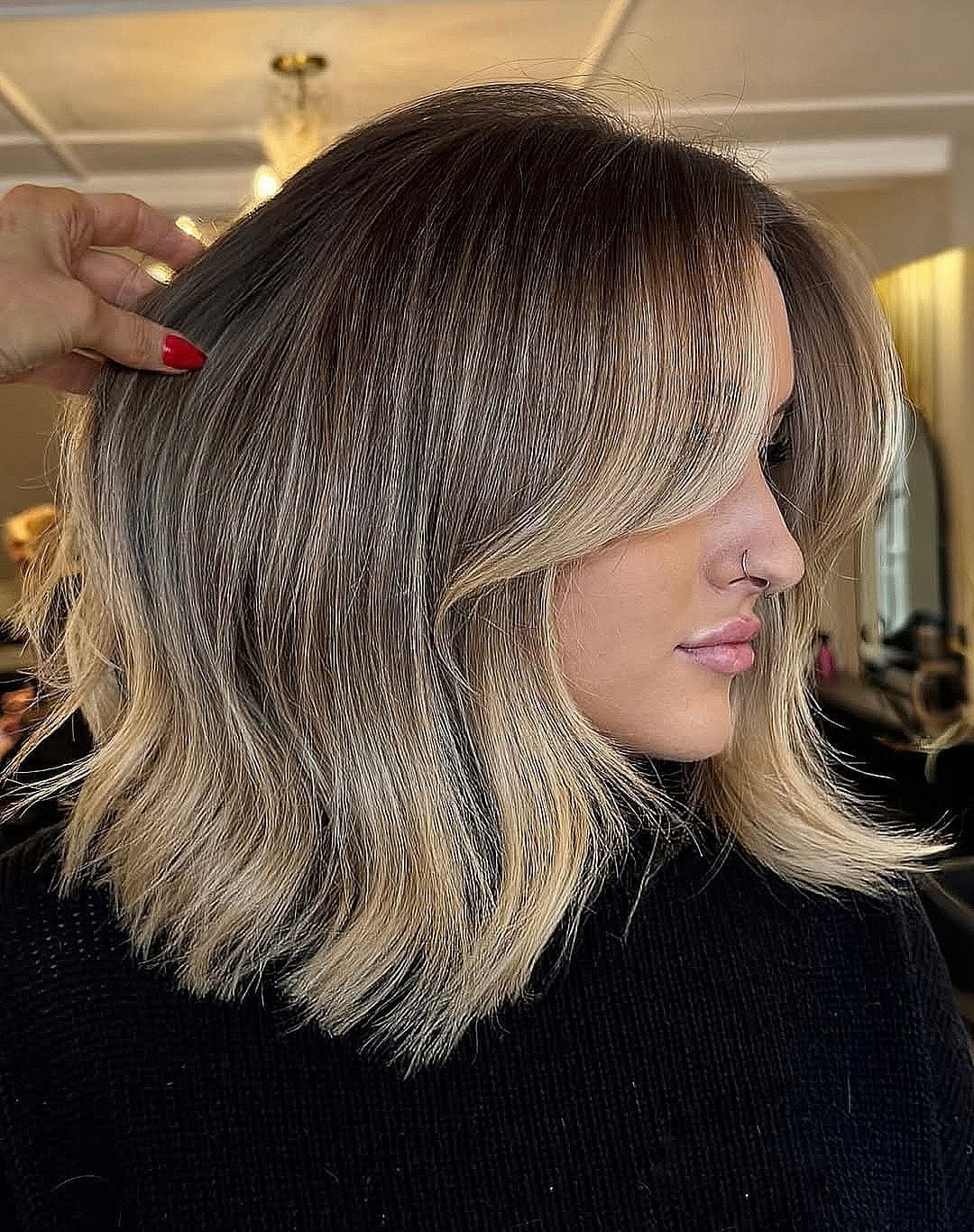
A chin-length bob can read severe, but curtain bangs and a side part change the geometry. The blonde balayage here starts with visible darker roots, so the bob does not look like one solid block of color. Ask your colorist for: chin length bob with blonde balayage, dark roots, and curtain bangs. On medium-density wavy hair, the soft waves break up the color and keep the bob from looking too blunt. The side part adds lift at the front, and the curtain bangs soften the jawline. A trim every six to eight weeks keeps the bob from turning into a shag.
Chin Length Platinum Blonde Balayage Bob
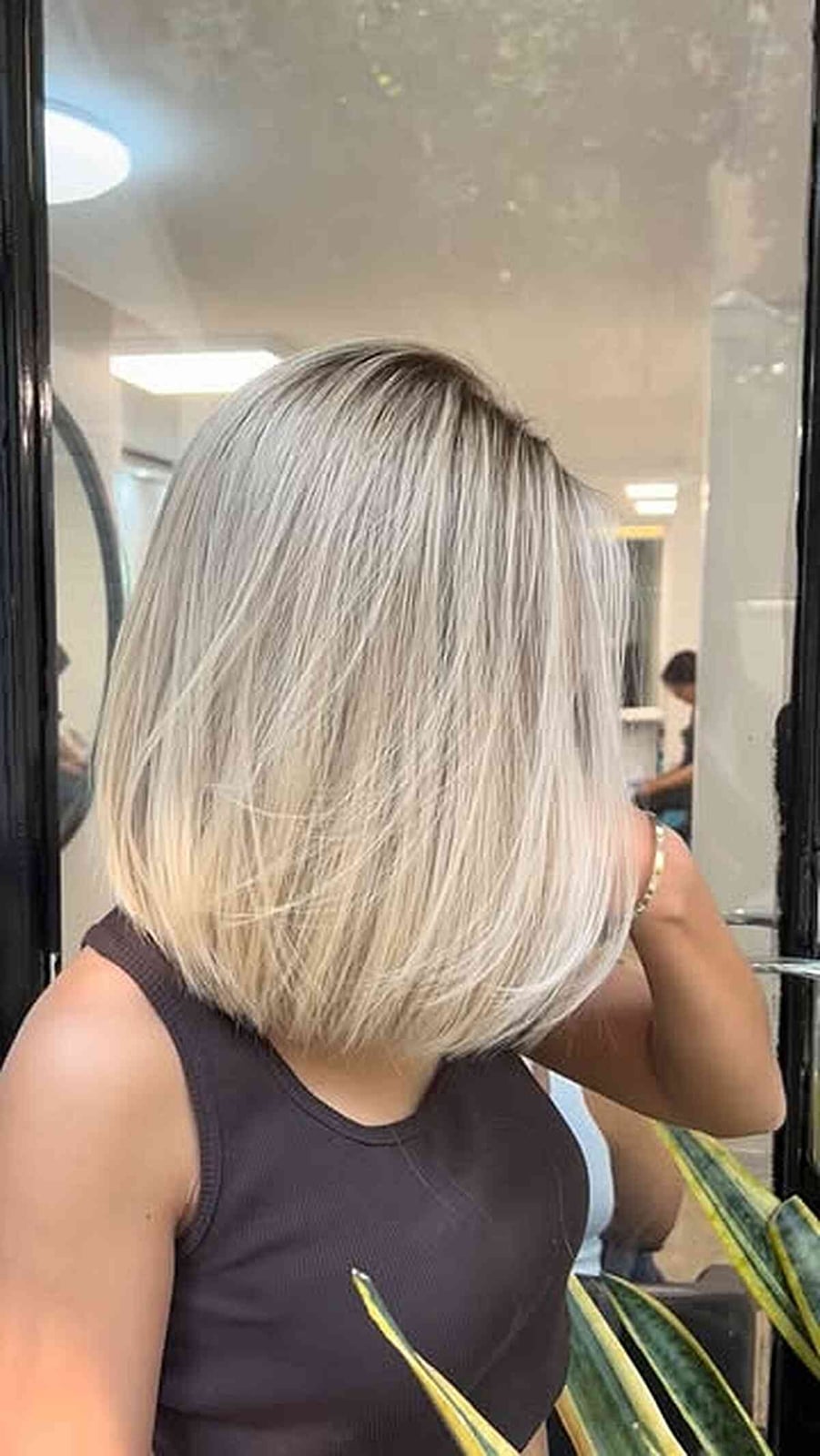
Platinum blonde balayage on a chin-length bob is a precise science: the lighter tones are painted through the mid-lengths and ends while the root line stays deeper, so the grow-out isn’t a harsh line. The straight, fine texture with subtle layers keeps the shape sleek, and the glossy finish adds shine. This style suits fine, straight hair that holds a blunt line without puffing up. Ask your colorist for: chin length platinum blonde balayage bob, styled straight.
Here’s the trade-off: true platinum is high-maintenance. The tone can pull brassy within a few weeks, so plan on a toning appointment every four weeks to keep it cool and silver instead of yellow. The bob itself needs a trim every six weeks to hold its shape, and a heat protectant is essential before any straightening. It’s a committed look, but the result is a sharp, modern blonde that stays vibrant.
Mid-Back Butter Blonde Balayage With Soft Waves
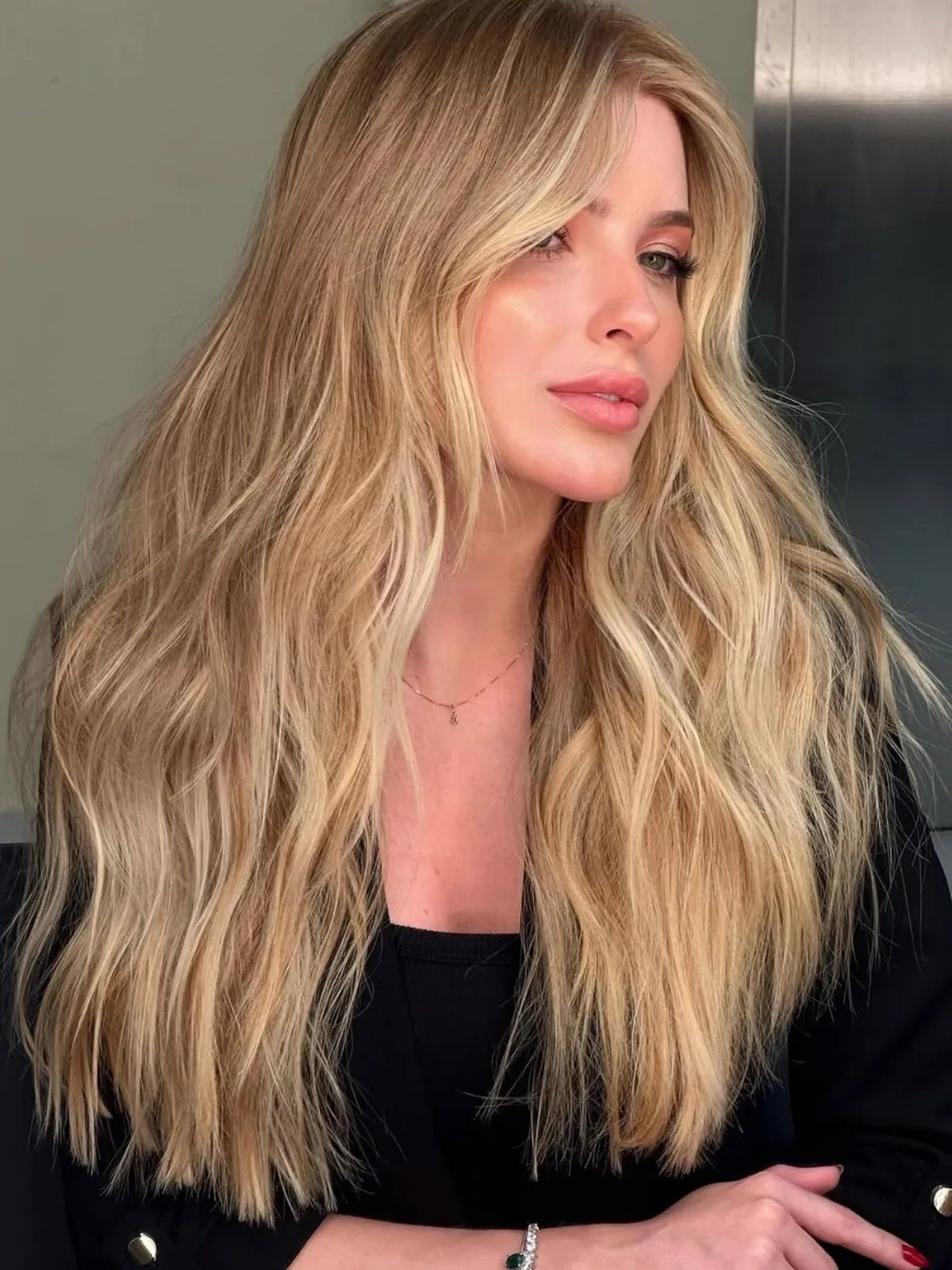
Butter blonde balayage is built by sweeping creamy highlights through the mid-lengths and ends, leaving the golden blonde base intact at the root for a sun-kissed blend that grows out naturally. The mid-back length with subtle layers gives the thick, wavy texture room to move, and the soft waves show off the dimension. Butter blonde suits warm complexions best, so if your undertone runs pink, you might want to ask for a cooler ash instead. Ask your colorist for: mid-back butter blonde balayage with soft waves.
To keep the waves looking lived-in, scrunch a texturizing spray through damp hair and let it air dry, or use a diffuser for more volume. The balayage grows out without a harsh line, so you can stretch trims to every eight to ten weeks and still keep a soft grow-out.
Mid-Back Medium Brown With Blonde Balayage
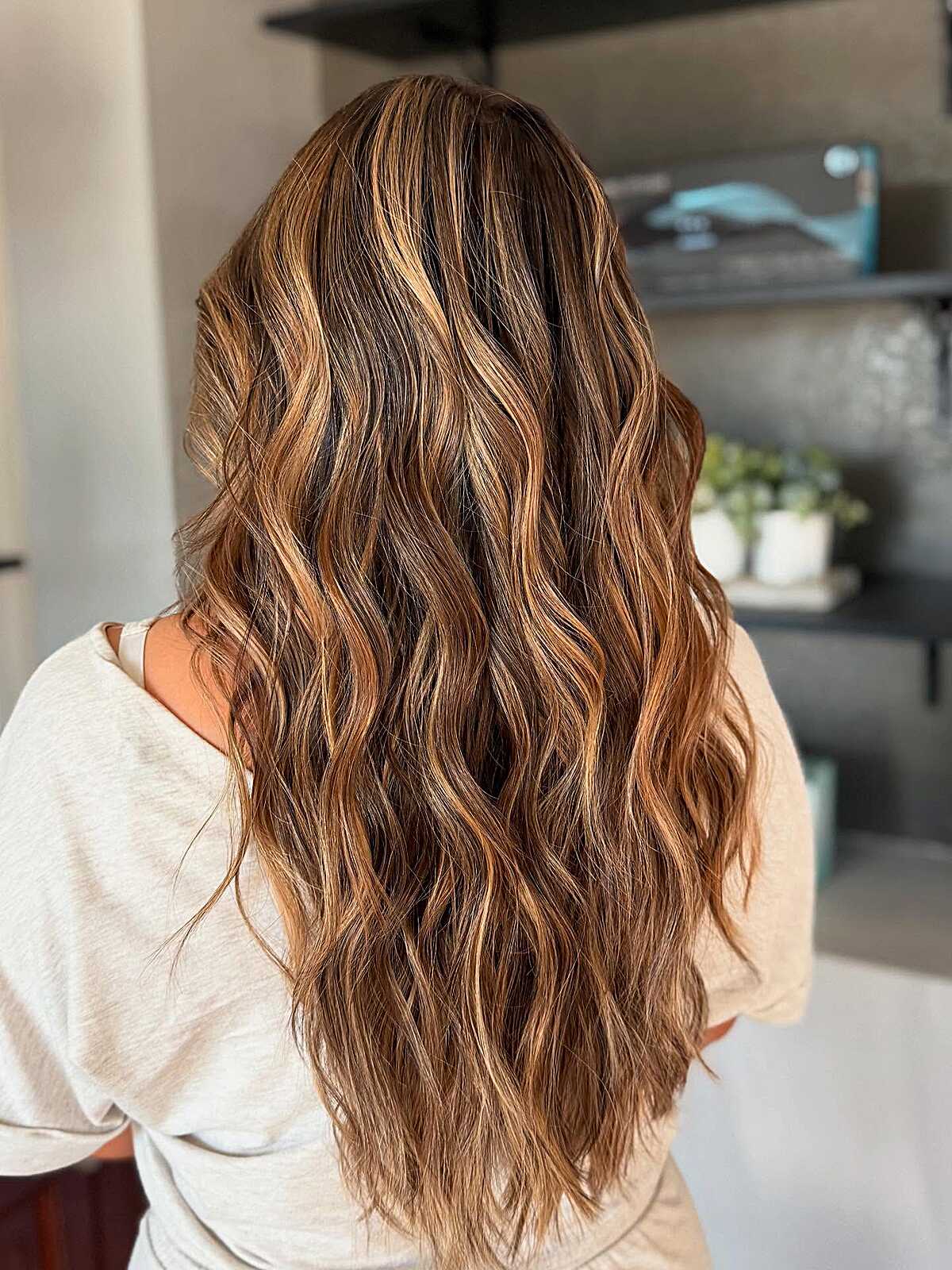
Wondering if you can get balayage without going fully blonde? This medium brown base with blonde balayage highlights is the answer. The back view shows long, thick wavy hair with visible layers that add movement through the length. The blonde is painted in soft ribbons, so the grow-out is natural and low-maintenance, which is why this works for most hair densities and complexions. Ask your colorist for: mid-back medium brown with blonde balayage highlights and layers.
The loose waves are easy to maintain, and the balayage means you can go eight to ten weeks between trims without the color looking off.
Collarbone Honey Blonde Balayage With Bouncy Waves
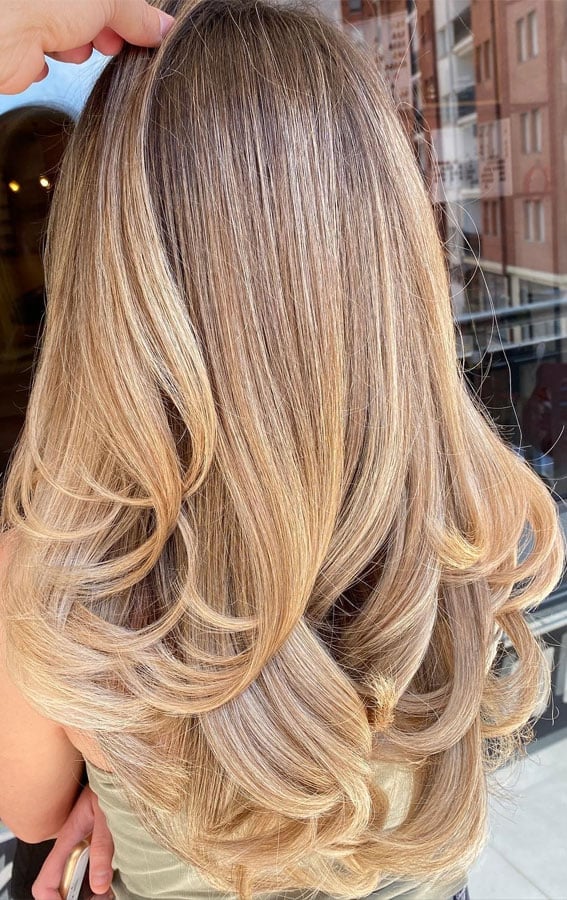
The bouncy waves are the real story here, and they work because the honey blonde balayage threads lighter pieces through a warmer base, so every bend in the wave catches a different shade. The collarbone length with layers gives the thick, wavy texture enough weight to bounce without falling flat. A side part adds volume at the root, which suits most face shapes. Ask your colorist for: collarbone honey blonde balayage with bouncy waves.
To recreate the bounce, use a round brush and a volumizing spray at the roots while blow-drying, then set the waves with a large-barrel iron. Trims every six to eight weeks keep the ends from splitting and the shape from losing its spring.
Mid-Back Platinum Blonde Balayage With Concentrated Ends
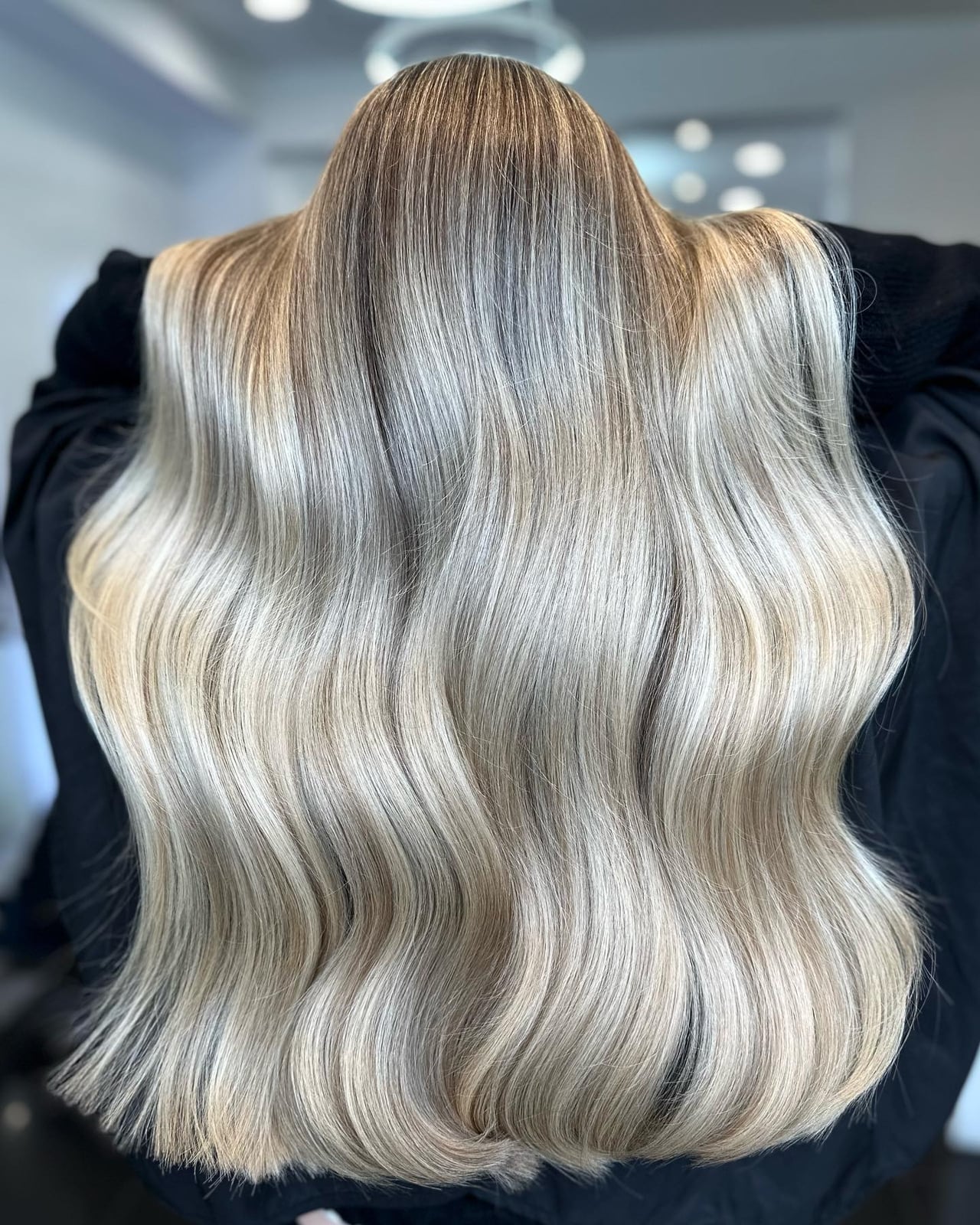
Platinum blonde balayage with the lightest tones concentrated at the ends is a deliberate fade: the root stays deeper, then the color builds to a bright platinum at the tips. The mid-back length with layers gives the thick, wavy texture shape, and the uniform waves show off the gradient from darker to light. This is a high-impact look that reads as glamorous, but it wears fast. The ends are the most porous part of the hair, so they’ll hold the platinum well but also show brassiness first. Ask your colorist for: mid-back platinum blonde balayage with lighter ends.
Plan on a toning appointment every four weeks to keep the ends cool and silver, and use a heat protectant before any styling to keep the lighter lengths from snapping. Trims every six to eight weeks keep the ends looking intentional rather than fried, which is the real maintenance trade-off for this finish.
Mid-Back Ash Blonde Balayage With Natural Waves
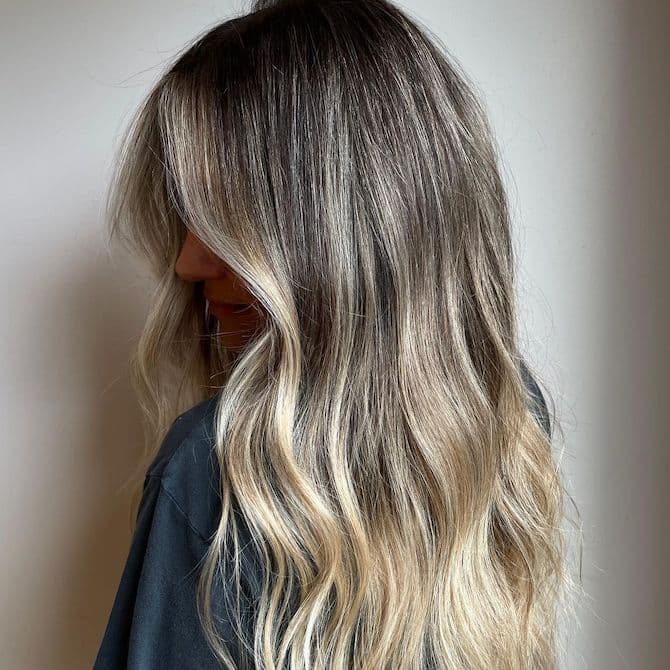
If you are torn between a sleek blowout and letting your hair do its own thing, this ash blonde balayage makes a case for the latter. The mid-back length falls in loose waves that move naturally, with the color gradient doing the work: darker roots melt into bright blonde ends without a hard line. Thick, wavy hair is the ideal canvas here, since the texture helps the balayage blend look like it happened in the sun.
Ask your colorist for: mid-back ash blonde balayage with natural waves. A middle part keeps the waves symmetrical, and the lack of bangs means you can pull it back without disrupting the color story. To keep the waves from falling flat, scrunch in a sea salt spray while it is damp, then let it air dry. Expect a trim every eight to ten weeks to keep the ends looking polished.
Mid-Back Dark Brown To Blonde Balayage, Styled Straight
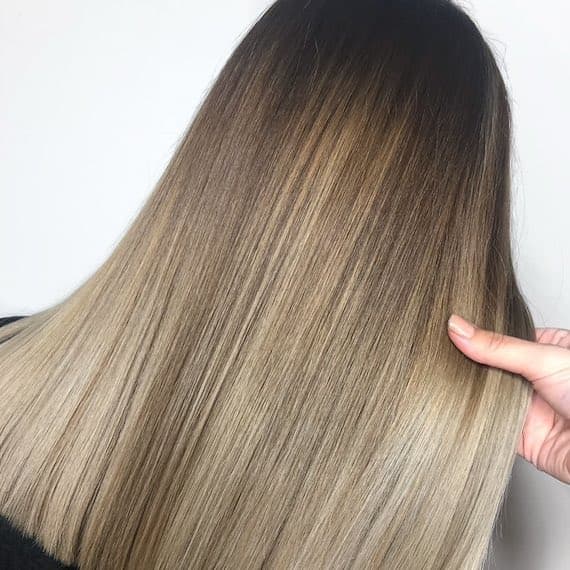
Dark brown at the roots, blonde at the ends, and nothing in between that looks like a line. On fine, straight hair at mid-back length, the smooth gradient shows clearly because there is no wave to hide any unevenness. This color rewards patience, since the lightening is placed low enough that you will not need a touch-up every month.
Ask your colorist for: a smooth dark brown to blonde balayage, styled straight. The layers are subtle, so the color becomes the focal point and the cut stays quiet. To keep it sleek, run a flat iron over heat-protected hair, and book a trim every eight to ten weeks to keep the ends from splitting. The color grows out without a harsh root line, so upkeep stays simple.
Mid-Back Golden Blonde With Lighter Balayage Highlights
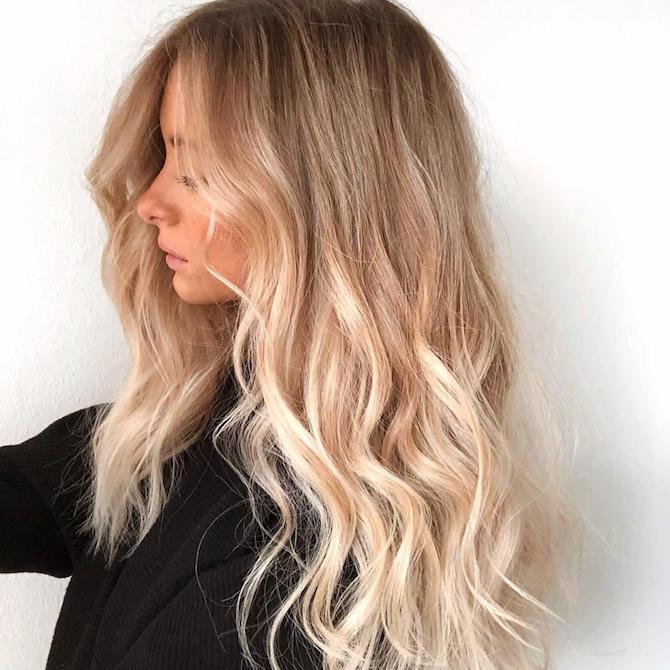
The golden blonde base here gets a sun-kissed lift from lighter balayage highlights that start mid-length and concentrate at the ends. On medium-density wavy hair at mid-back length, the soft waves catch the lighter pieces, so the color looks dimensional. A middle part lets the highlights frame the face evenly. The absence of bangs keeps the focus on the color flow. Ask your colorist for: mid-back golden blonde with lighter balayage highlights. This shade works for a season when you want warmth without going full copper.
Collarbone Honey Blonde Balayage Bob
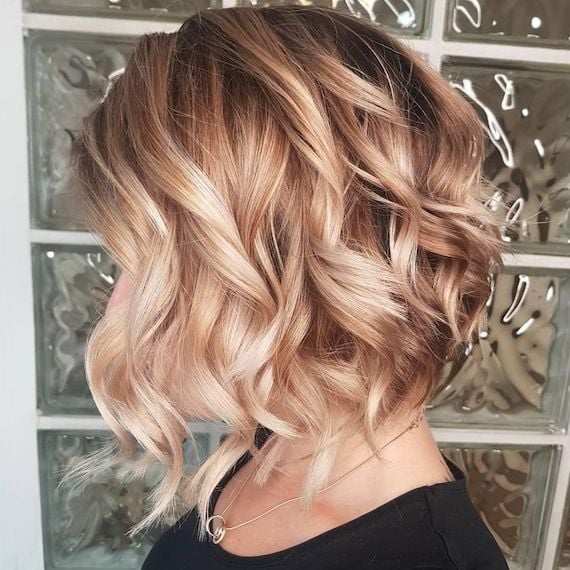
A bob at collarbone length is already a statement, but the honey blonde balayage makes it feel lived-in. The technique here uses blended highlights and lowlights, so the color shifts subtly from root to end. On medium wavy texture, the loose waves catch the lighter pieces, giving the cut movement. Ask your colorist for: a collarbone honey blonde balayage bob with loose waves. The middle part keeps it modern, and the lack of bangs means you can tuck it behind your ears without losing the color story. A bob this shape needs a trim every six to eight weeks, and the honey tone benefits from a gloss to maintain warmth between color appointments.
Mid-Back Ash Blonde Balayage With Visible Layers
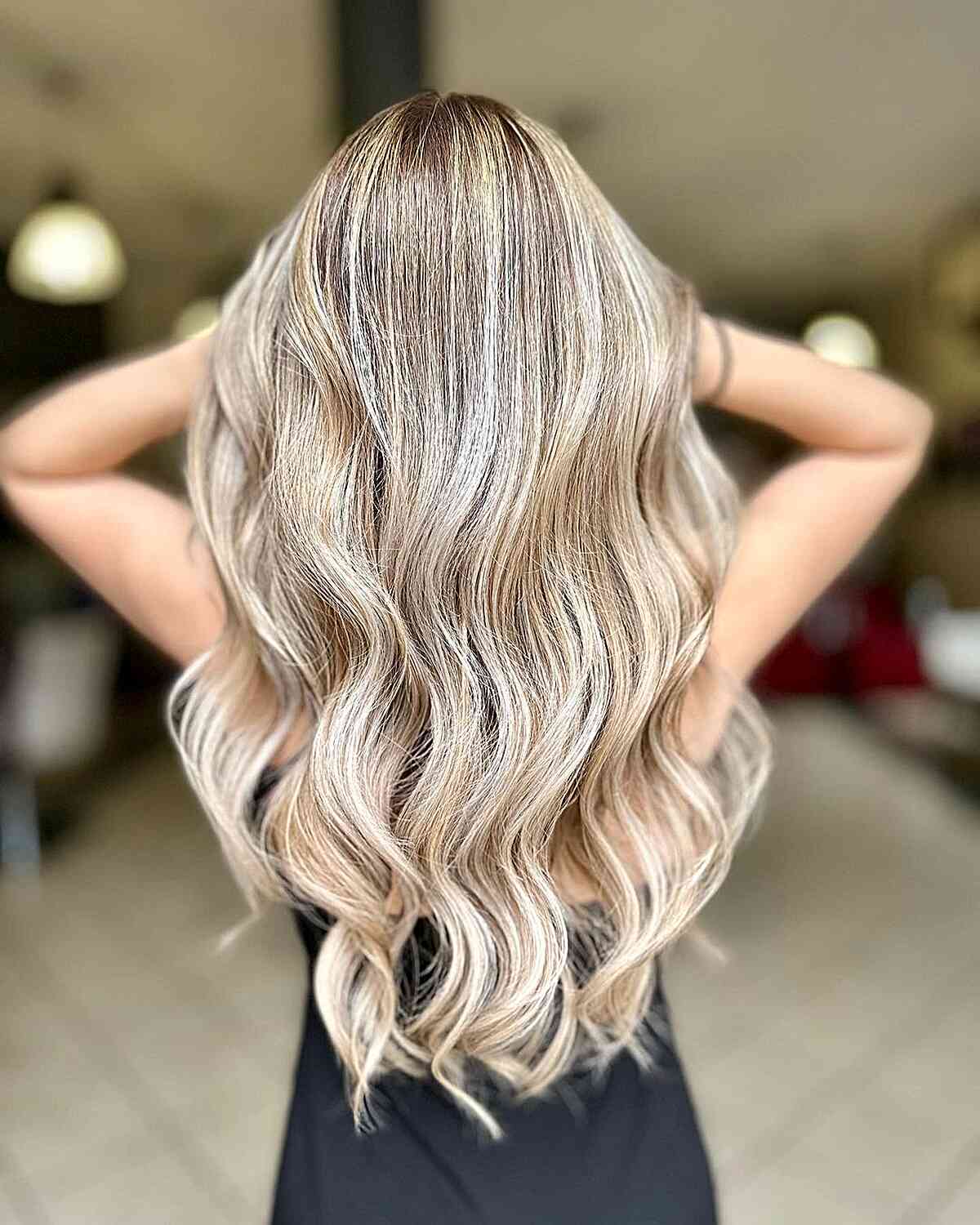
Wondering if ash blonde balayage will work on your thick hair? The answer is yes, but only if the layers do their part. Here, visible layers cut through the mid-back length, so the ash blonde balayage has somewhere to land: the lighter pieces catch on each layer, creating dimension that a one-length cut simply can’t. Thick, wavy texture is the ideal partner, since the waves give the layers something to grip. Ask your colorist for: mid-back ash blonde balayage with visible layers. The middle part keeps the face-framing pieces even, and no bangs means you can wear it down or pull it back. The one real drawback is that ash tones can turn brassy faster than warmer blondes, so a toning appointment around the six-week mark keeps the color cool. Trim every eight to ten weeks to keep the layers from blending into one shapeless mass.
Final Thoughts
For a low-maintenance balayage, start with a darker base and keep the blonde blended rather than concentrated at the ends. Skip heavy bangs if you want to stretch time between trims.
- Refresh balayage tones every 8-12 weeks to maintain vibrancy.
- Use color-safe shampoo and conditioner to preserve pigment.
- Incorporate a deep conditioning treatment weekly for hydration.
- Limit heat styling and always use a heat protectant spray.
- Avoid washing hair daily to prevent color stripping.
Find your perfect blonde balayage.

