
Old money blonde is a blended, lived-in shade built from highlights and balayage that sit a step or two lighter than the base, with a tone somewhere between honey and beige. The shift this season is toward soft face-framing layers and curtain bangs, and away from chunky, high-contrast pieces.
These 18 Aesthetic Old Money Blonde ideas run from mid-back lengths with subtle highlights to ear-length pearl bobs, so there is a version for fine hair that falls flat, thick hair that fights a fringe, and anyone hiding a grow-out line. It is for round, square, and long faces, low to high upkeep, and the reader whose curtain bangs will not sit.
Mid-Back Honey Blonde With Subtle Highlights
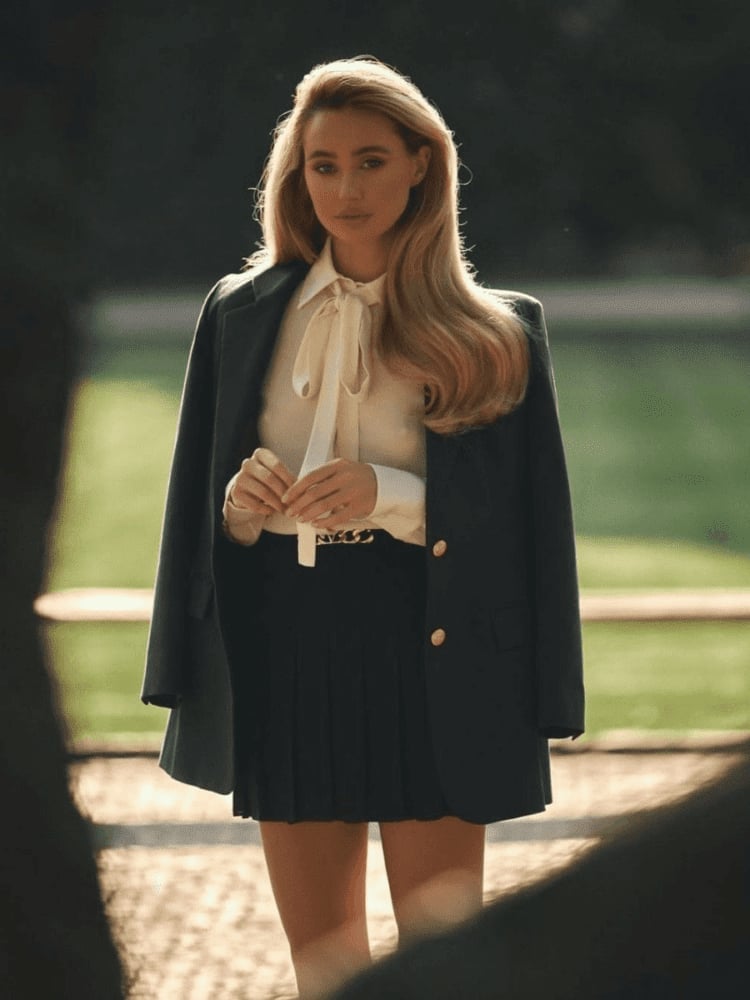
Honey blonde at this length reads as sunlit rather than brassy, which is the whole trick of the old money blonde spectrum. The base shade is warm but not golden, and the subtle highlights are fine ribbons woven through the mid-lengths and ends, never chunky. That glossy finish on thick, wavy hair is what makes it work, the polish signals intentional care, not a quick toner.
This length and texture work best on medium to thick wavy hair starting at shoulder length or longer; the weight helps the waves hold their shape. Ask your colorist for: mid-back honey blonde with subtle highlights, soft polished waves. A glossing serum applied on damp hair before blow-drying enhances the shine for about three days. Plan a trim every eight to ten weeks to keep the ends healthy and the shape recognizable.
Mid-Back Beige Blonde With Curtain Bangs
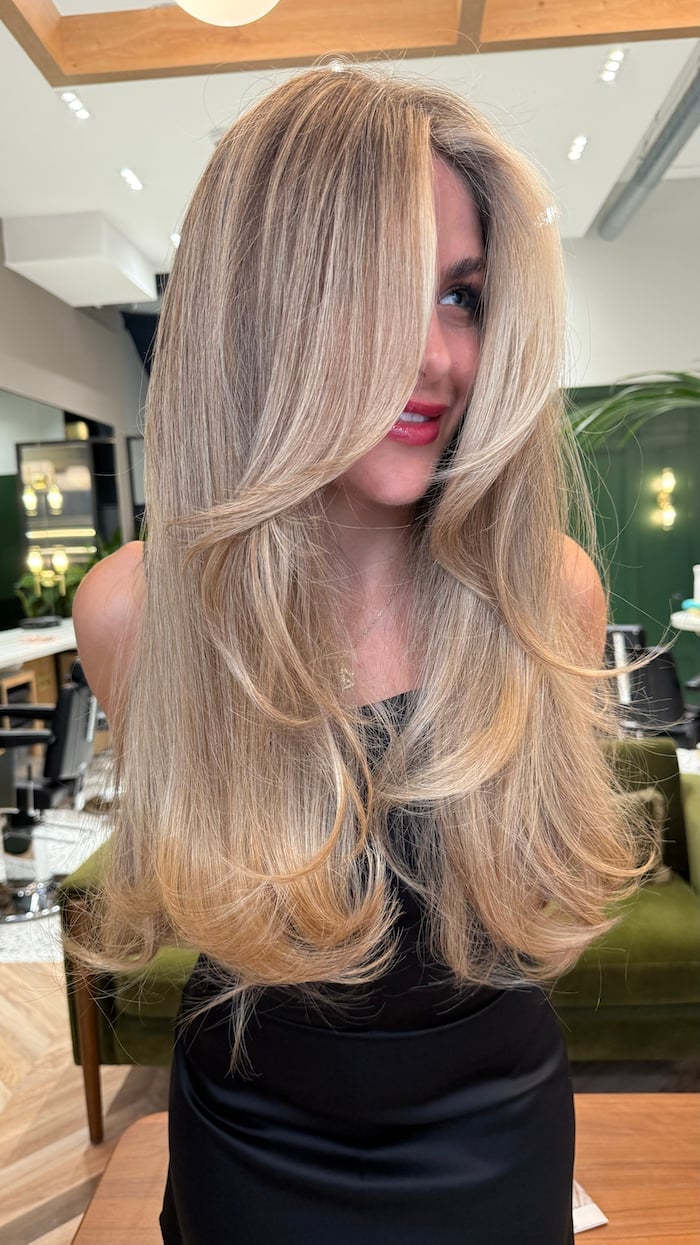
How do you ask for a blonde that is neither warm nor icy but lands somewhere in the middle? Beige blonde is the answer, a muted, creamy base that reads as neutral. The subtle lighter highlights here are barely a shade off the base, so the dimension is there but never shouts. Curtain bangs make the whole thing feel lived-in, which is the point.
Ask your colorist for: mid-back beige blonde, soft curtain bangs, loose waves. The bangs are the trickiest part: request them cut dry and texturized so they sweep rather than sit. A middle parting keeps the balance. Medium wavy hair at mid-back length carries this shade without looking washed out, and curtain bangs do soften square and round faces.
Collarbone Honey Blonde Lob With Curtain Bangs
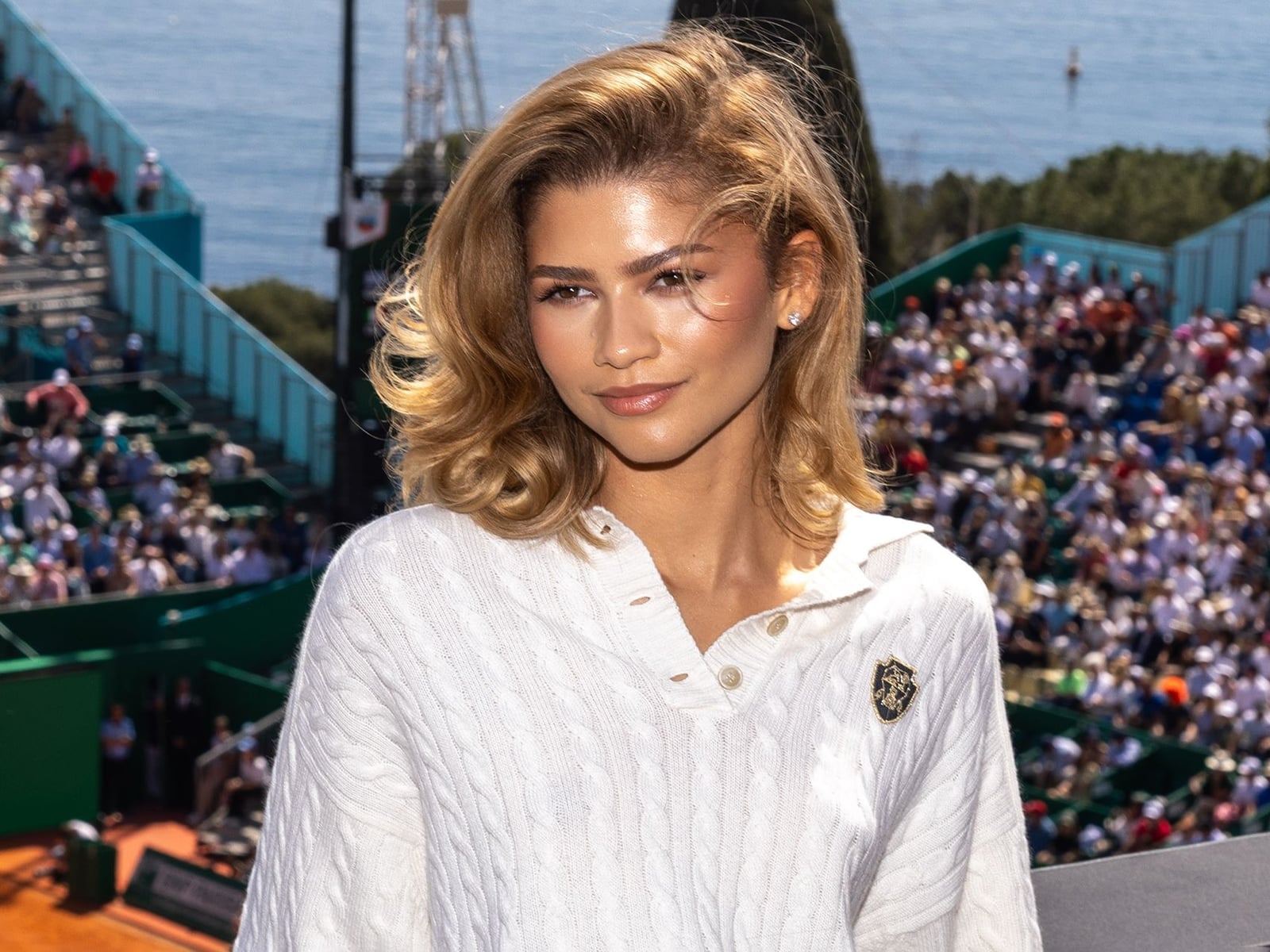
A lob at collarbone length sits just where the shoulder starts, which makes it short enough to feel deliberate but long enough to still pull into a low ponytail. The honey blonde base here is warm, and the highlights sit around the face, so the color frames the cut. Curtain bangs blend into the layers instead of ending abruptly. Ask your colorist for: collarbone honey blonde lob, curtain bangs, soft waves. A round brush and a medium heat setting give this shape its polished finish. Trim the lob every six to eight weeks, or the ends start to flip unpredictably.
Shoulder Golden Blonde Blowout With Side Part
This is not a heavy, blocky highlight placement. The subtle highlights here are painted onto the golden blonde base in fine, irregular sections, so the color shifts when the hair moves. The side part changes the weight distribution, creating more volume on the shorter side. A voluminous blowout with soft waves makes the most of the dimension. Ask your colorist for: shoulder length golden blonde, voluminous blowout, side part. Thick wavy hair at this length holds the shape for two days with dry shampoo at the roots. A side part also creates lift at the crown for fine hair.
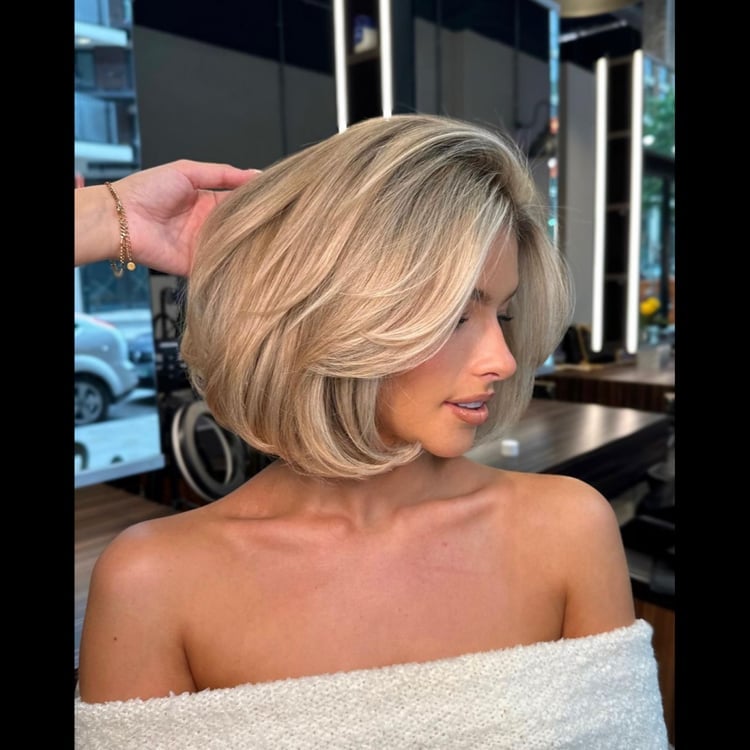
Chin Length Creamy Blonde Bob With Face-Framing Highlights
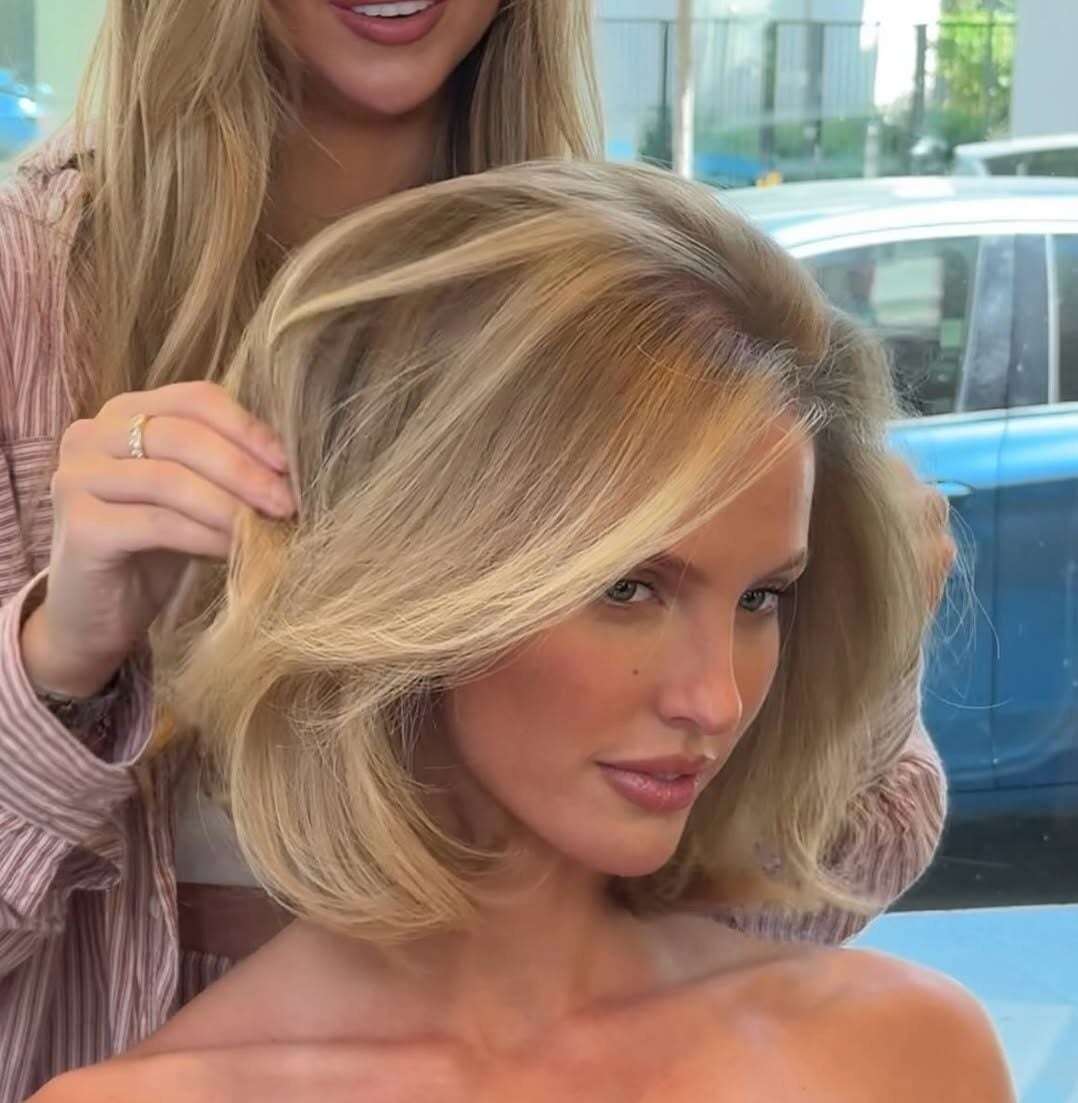
The blunt bob at chin length is a precise shape, and the creamy blonde base keeps it from reading severe. Face-framing highlights are the standout. They start at the cheekbone and lighten toward the ends, so the color draws attention forward. Curtain bangs continue that framing line. Ask your colorist for: chin length blunt bob, creamy blonde, face-framing highlights, curtain bangs. This is a salon-only proposition: the highlights need a foil or balayage technique to stay soft, and the blunt cut requires a straight razor for the clean line. Medium wavy hair carries the volume well.
Collarbone Beige Blonde With Blended Highlights
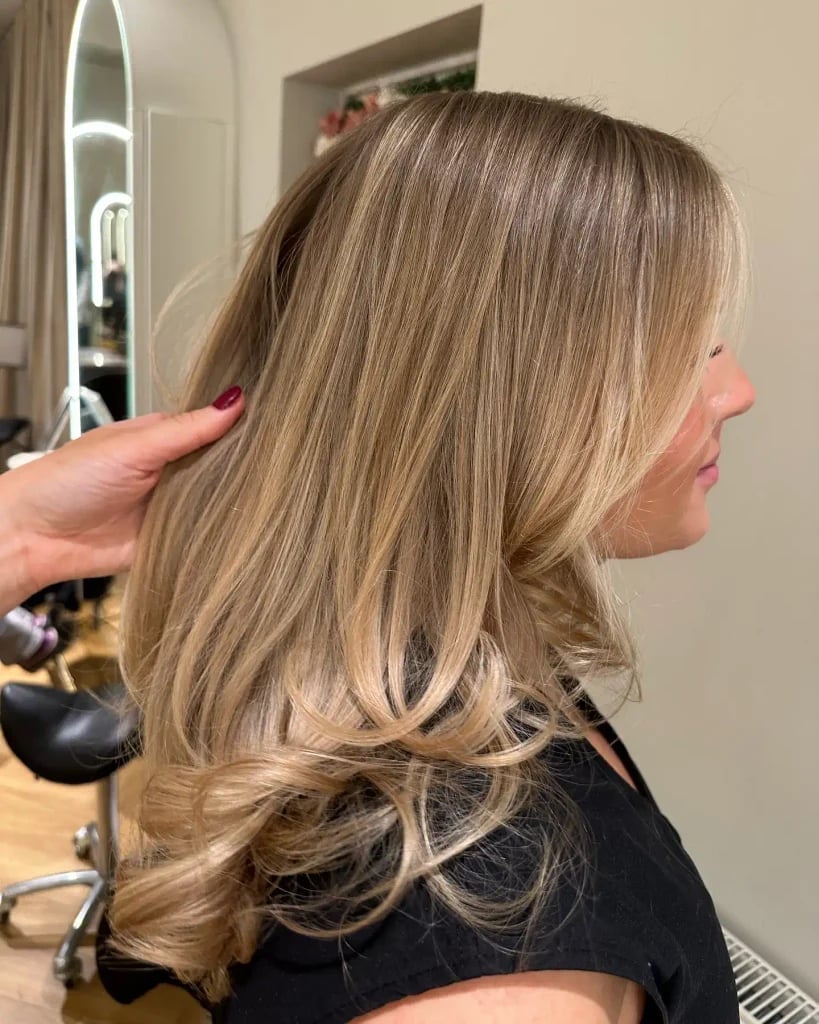
Blended highlights work best when they blend into the base color. This collarbone-length cut uses soft layers and a center part with a beige blonde base, and the highlights are finely dispersed, so the overall effect is one dimensional shade with no visible stripes. The medium wavy texture holds a blowout well, and the length suits most face shapes. Ask your colorist for: collarbone beige blonde, soft layers, blended highlights. Keeping this seamless blend requires a toning appointment every six to eight weeks; skip one, and the beige drifts warmer than intended.
Mid-Back Beige Blonde With Natural Balayage
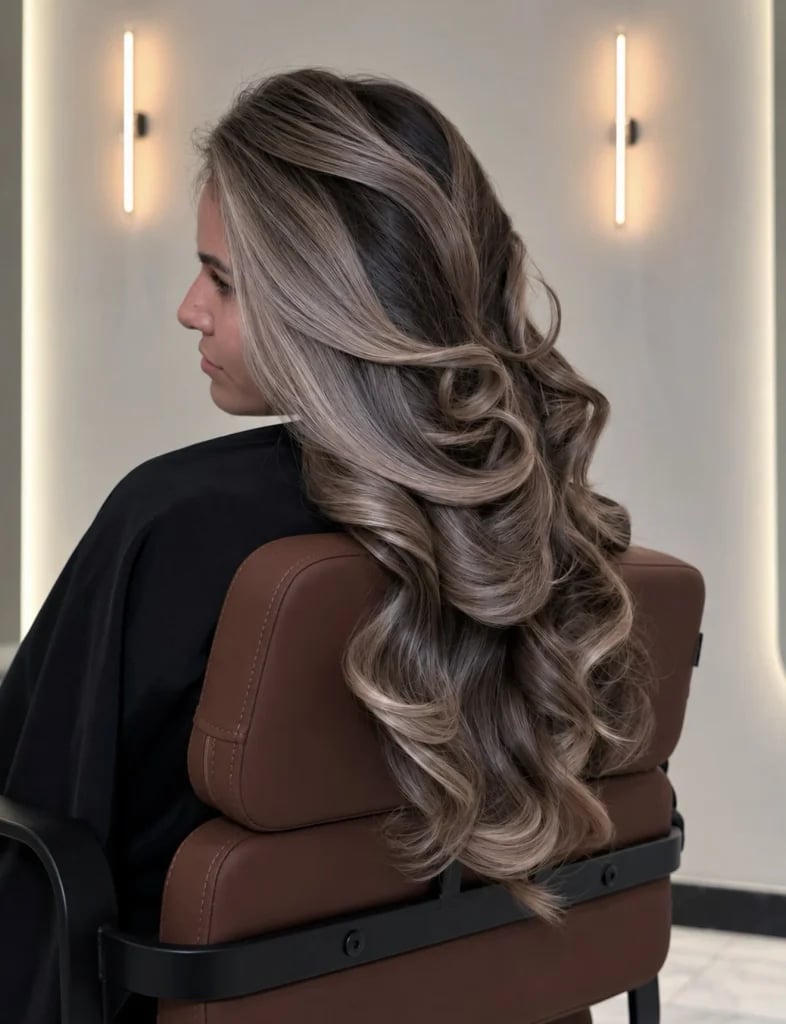
Can a color technique make you look like you just walked off a sailboat in August? A natural balayage on a beige blonde base comes close. Here the mid-back length is cut with long layers and shown from the back, with the balayage sweeping through the thick wavy texture in a way that mimics a week of sun exposure. The middle part and air-dried waves reinforce the casual finish.
This is a color for the warmer months, when you want your hair to look lighter without announcing that it was painted on. Ask your colorist for: mid-back beige blonde, natural balayage, air-dried waves. The grow-out is gentle, so you can stretch touch-ups to every ten to twelve weeks. A sea salt spray helps recreate that air-dried wave pattern without heat.
Mid-Back Honey Blonde With Balayage And Curtain Bangs
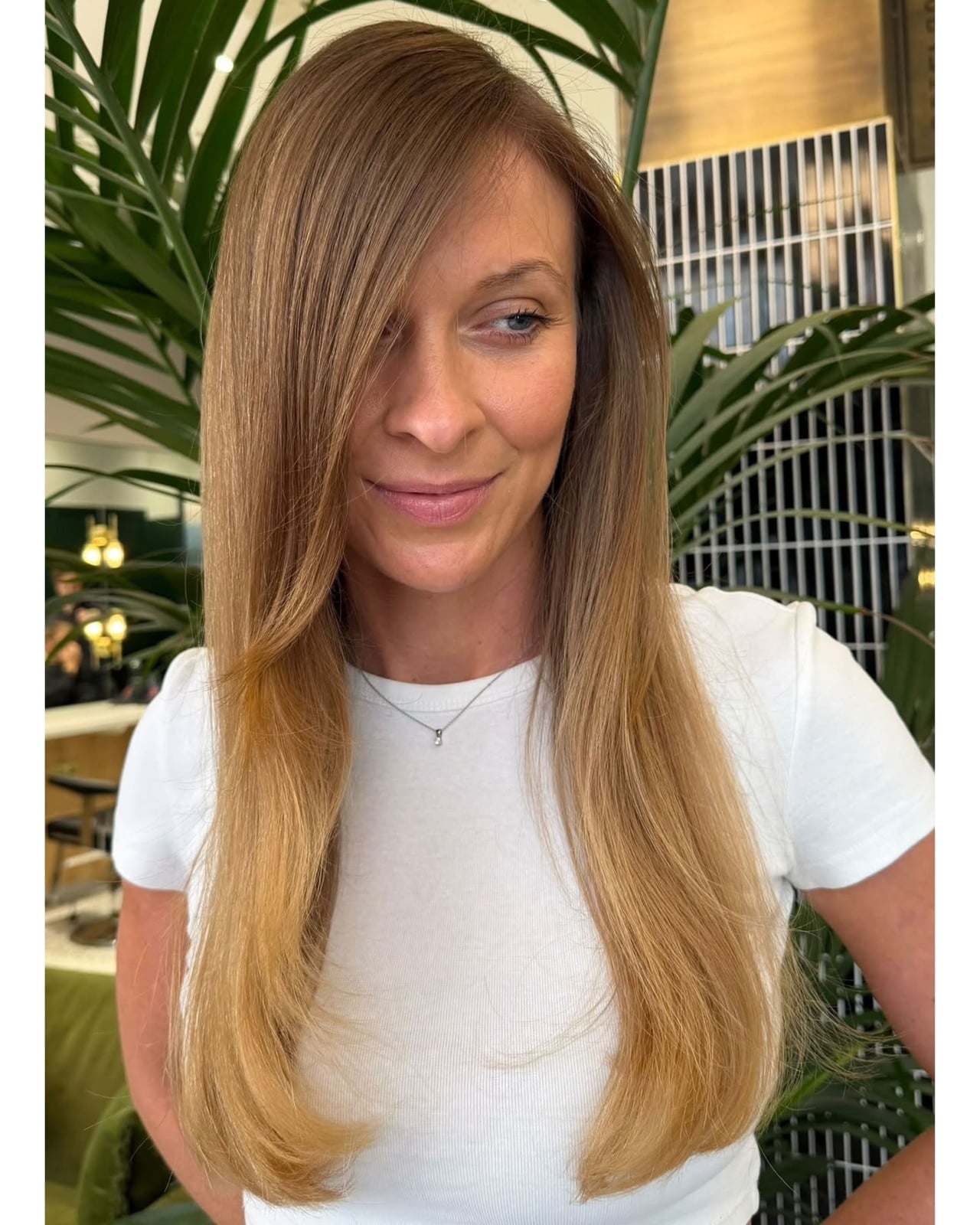
Curtain bangs do two things at once: they soften the perimeter of a cut and give a grown-out fringe a clear shape. Here they are paired with a mid-back length, face-framing layers, and a warm honey blonde base with subtle balayage that lands where the light hits. The thick wavy texture and middle part keep the whole look relaxed.
Ask your colorist for: mid-back honey blonde, balayage, curtain bangs, soft waves. The bangs require a trim every four to six weeks, and a texturizing spray is the easiest way to maintain the loose wave pattern between washes. This combination works particularly well for square and oval face shapes, where the curtain shape softens the jaw or forehead line.
Mid-Back Ash Blonde With Babylights And Curtain Bangs
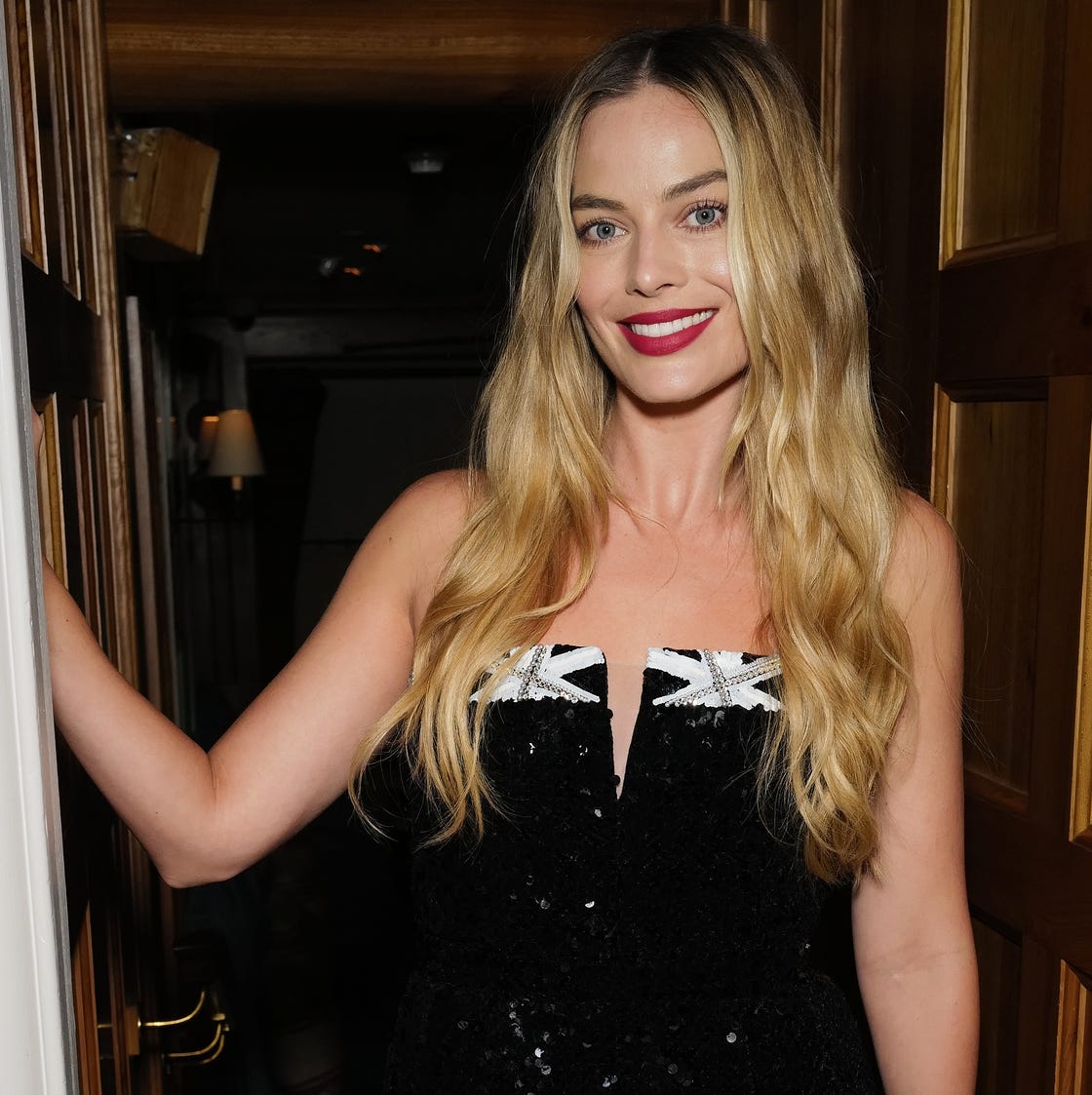
The babylights technique uses sections as fine as a strand of spaghetti, which means the lighter pieces are barely wider than the natural hair around them. On this mid-back ash blonde base, those fine babylights create a subtle lift and avoid a stripe effect. The curtain bangs frame the face without competing with the color. The thick wavy texture and glossy blowout finish keep the ash tone from looking flat. Ask your colorist for: mid-back ash blonde, fine babylights, curtain bangs, wavy blowout. A smoothing serum controls any frizz in the blowout, and a trim every eight to ten weeks keeps the long layers from looking straggly.
Mid-Back Honey Blonde With Babylights
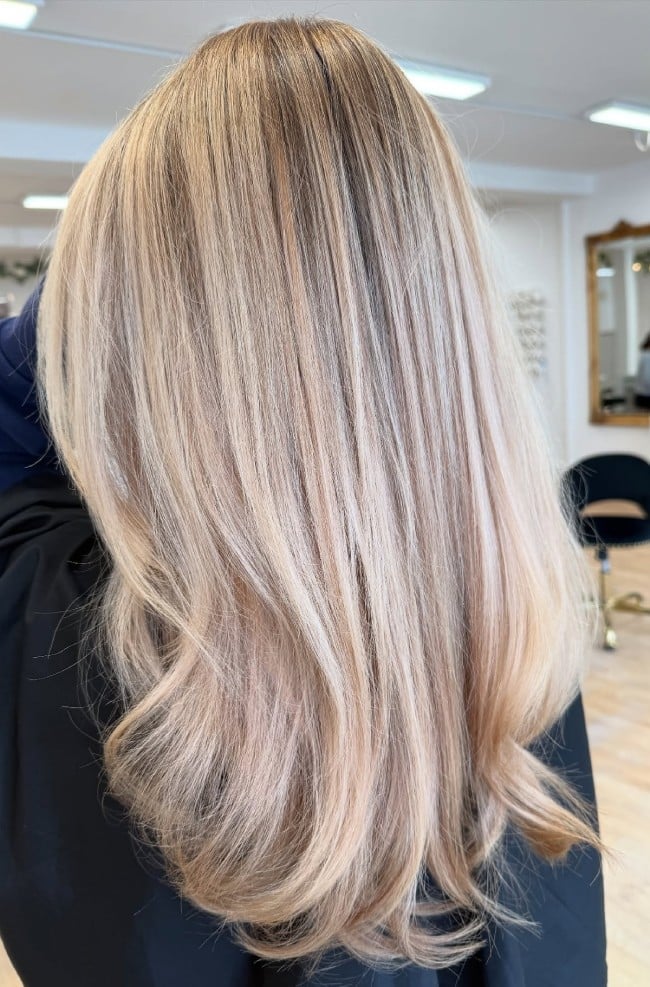
Babylights on a honey blonde base sit between a highlight and a gloss. They are fine enough that the grow-out is subtle, but dense enough that the hair is visibly lighter overall. This mid-back length is cut with long layers and shown from the back, with loose curls that show the dimensional effect from every angle. The thick wavy texture gives the babylights something to play against.
Ask your colorist for: mid-back honey blonde, fine babylights, loose curls. The honey tone warms the babylights so the grow-out is softer than it would be with a cooler base. A curling iron or wand is the quickest way to replicate these uniform curls, and a toning gloss every six to eight weeks keeps the honey from pulling brassy.
Mid-Back Bright Ash Blonde With Heavy Highlights
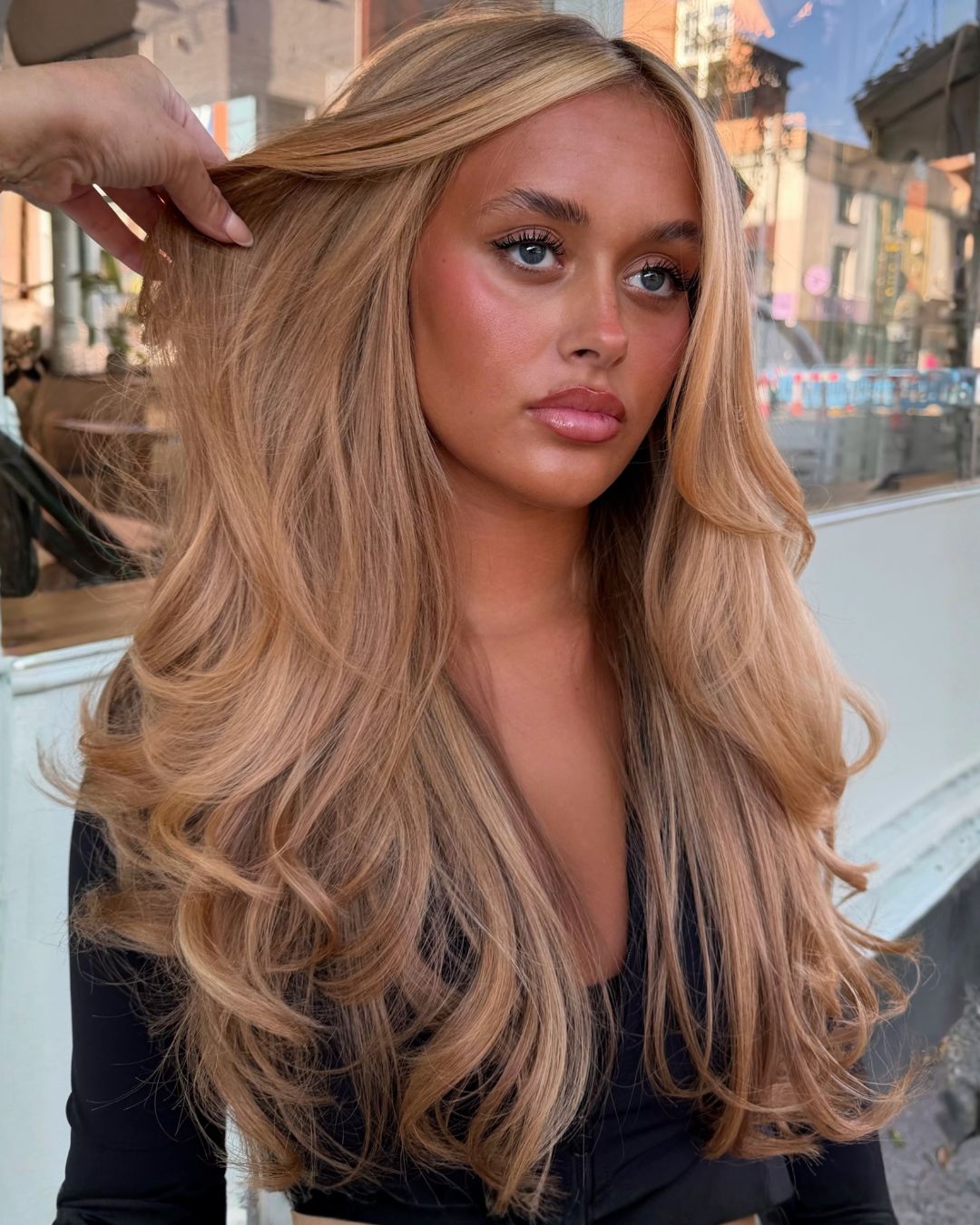
How do you take a bright ash blonde and make it look deliberate? More highlights than you think. This mid-back length uses a thick wavy base with long layers and curtain bangs, then stacks heavy lighter ribbons throughout so the whole head is one cool-toned blonde. Ask your colorist for: mid-back bright ash blonde, heavy blonde highlights, voluminous style. Heavy highlights mean a stricter toning schedule, every four to six weeks, to keep the ash from turning brassy.
Collarbone Beige Blonde With Balayage And Curtain Bangs
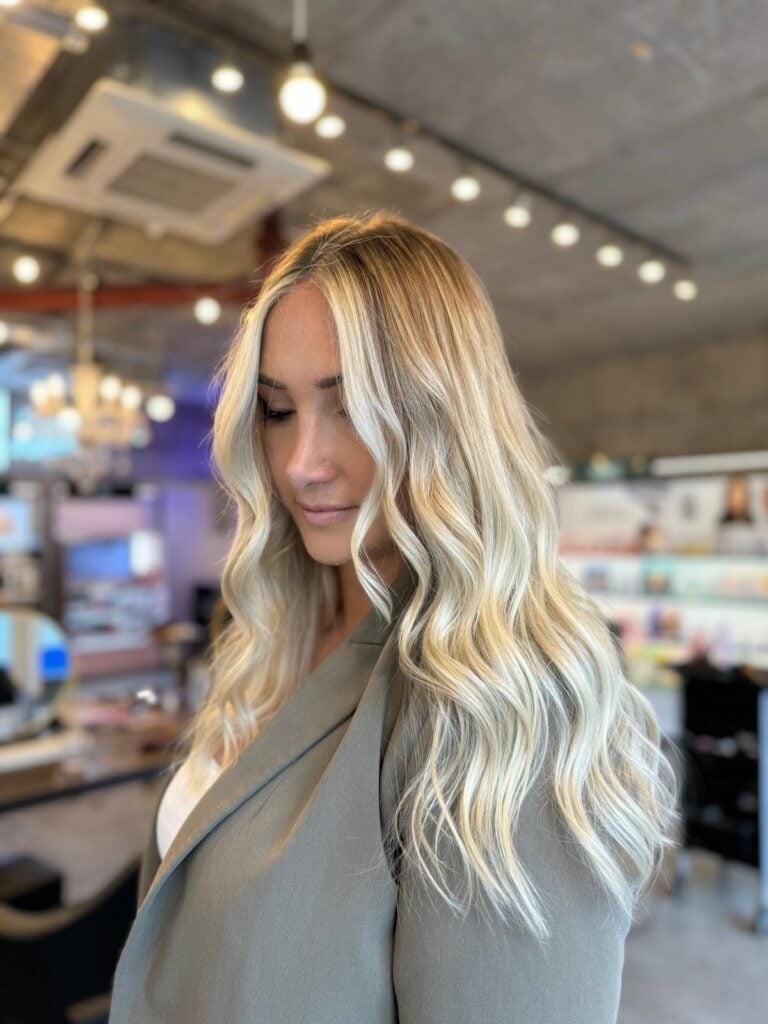
A beige blonde balayage starts darker at the root than a full highlight, then feathers into a softer blonde through the ends. That matters at collarbone length because the grow-out is gentler, about three months before you need a refresh. A full highlight on this same cut would demand a salon visit every six weeks. The loose waves and curtain bangs keep the overall look lived-in. Ask your colorist for: collarbone beige blonde, subtle balayage, curtain bangs, loose waves. This one you could attempt with a balayage kit at home, but the soft root blend is easier to trust to a pro.
Shoulder Length Root Shadow Blonde With Balayage
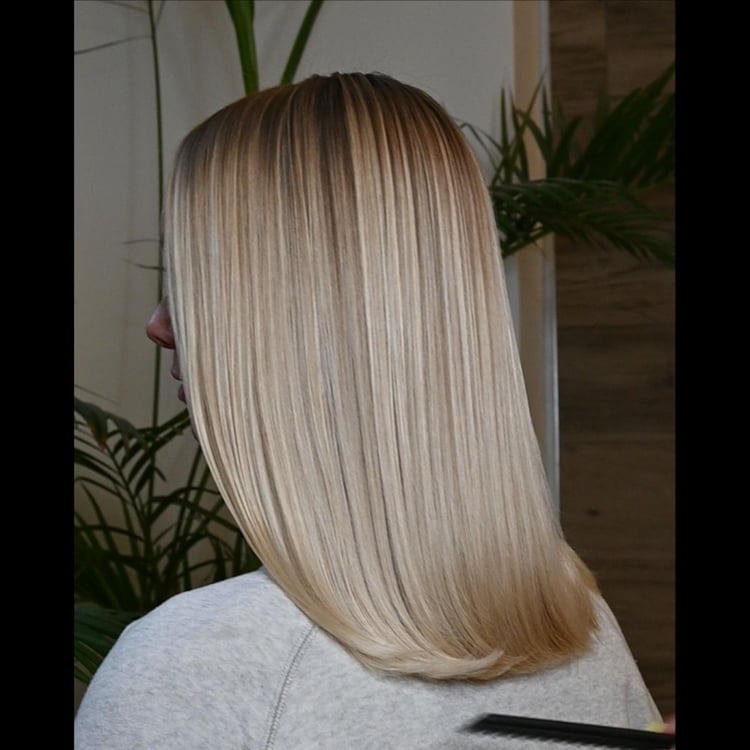
A blunt cut at shoulder length works best when the color adds its own structure. Fine straight hair can look flat in a single-process blonde, but a root shadow at the base with a soft balayage through the ends creates the depth that a blunt line needs. Ask your colorist for: shoulder length blunt cut, root shadow blonde, balayage. The shadowed root can feel heavy if your hair is very light at the ends. It relies on enough contrast to look like a planned effect rather than grown out. On fine texture, that contrast is exactly what gives the cut its weight.
Chin Length Champagne Blonde Bob With Root Shadow
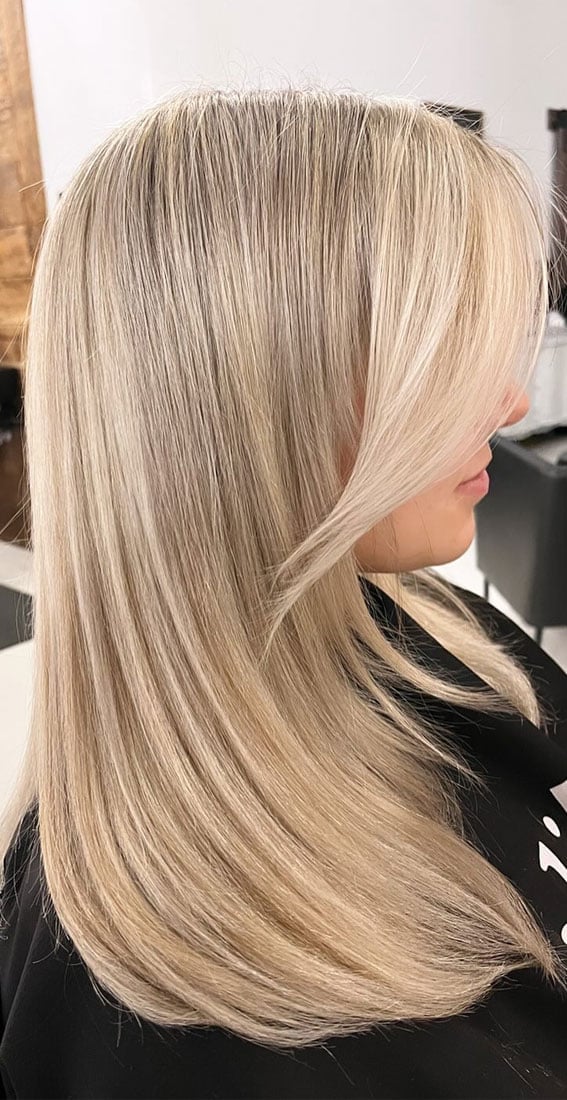
Champagne blonde reads warmer than beige but cooler than honey, so the tone stays polished and non-brassy in winter months. This chin-length blunt bob uses a subtle root shadow at the base, giving the lighter champagne shade a grounded start. Ask your colorist for: chin length blunt bob, champagne blonde, subtle root shadow, sleek blowout. The side part and glossy finish suit holiday events or a structured work week, when you want the hair to look polished and controlled.
Chin Length Beige Blonde Bob Soft Waves
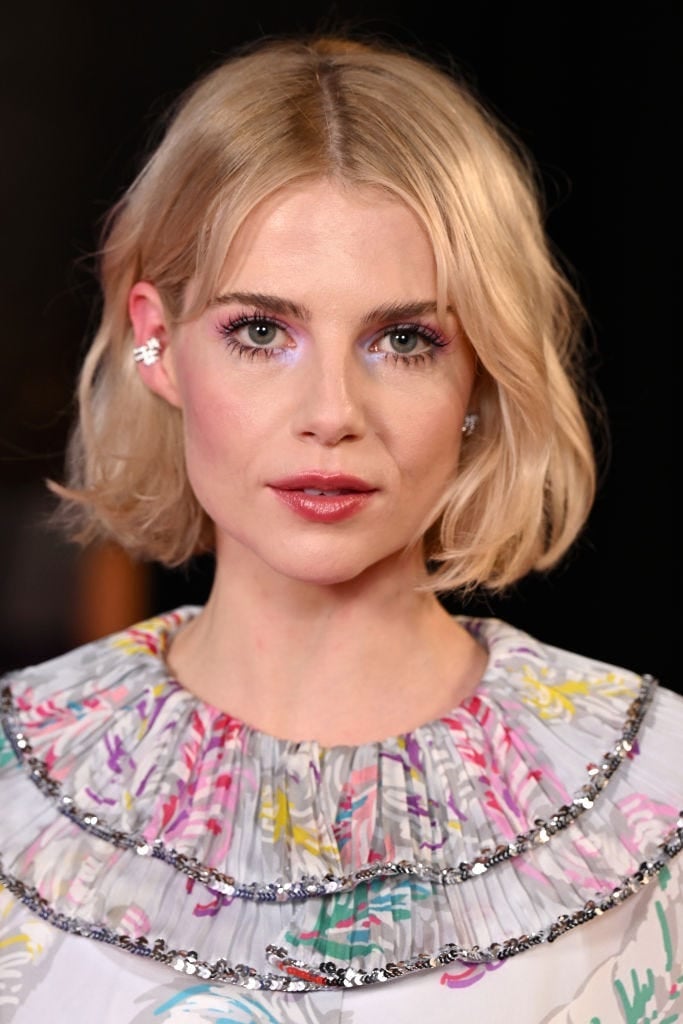
A chin-length bob on fine wavy hair needs a color that adds depth without weighing the texture down. Beige blonde sits in that middle ground, not as warm as caramel, not as cool as ash, just a soft neutral that lets the wave pattern do the work. Ask your colorist for: chin length beige blonde bob, soft waves, side part. The soft waves hold better on fine texture when you work a texturizing spray into damp hair and let it air-dry with a few scrunches. A trim every six to eight weeks keeps the bob shape from drifting into mullet territory.
Ear Length Pearl Blonde Bob With Smooth Blowout
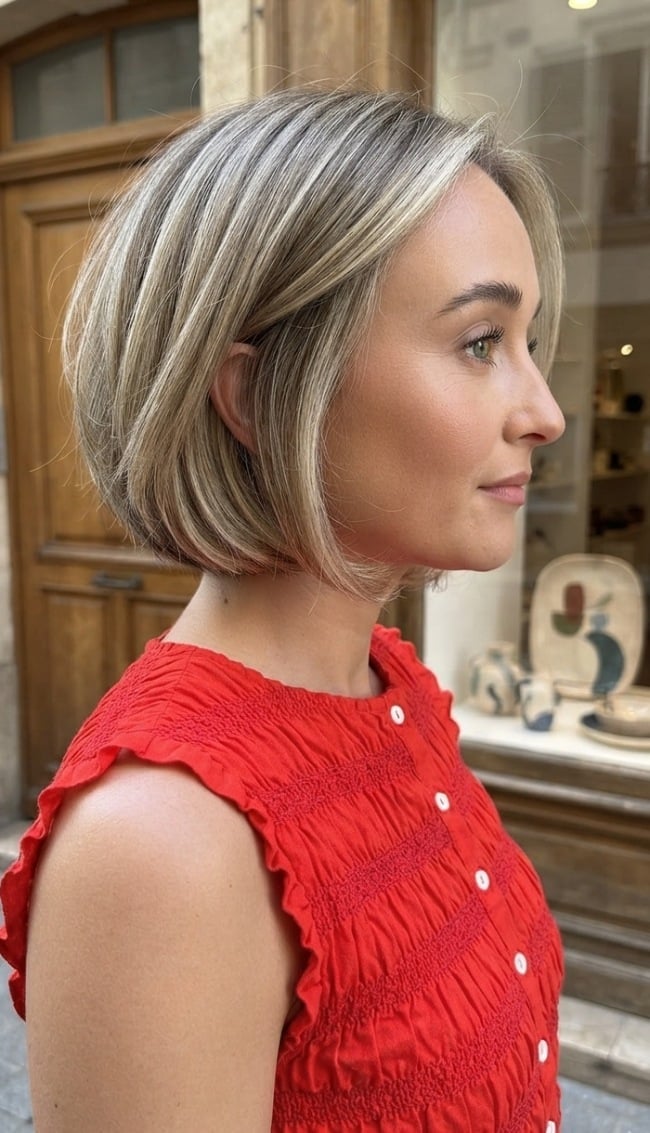
How does a pearl blonde bob avoid looking like a helmet? With a stacked cut and subtle highlights woven through the interior. The ear-length shape lifts at the crown, so fine straight hair keeps its movement rather than falling flat. Ask your colorist for an ear length pearl blonde bob with subtle highlights and a smooth blowout. A smoothing serum and a small round brush are your main tools here; a trim every six to eight weeks preserves the precision.
Chin Length Platinum Blonde Blunt Bob
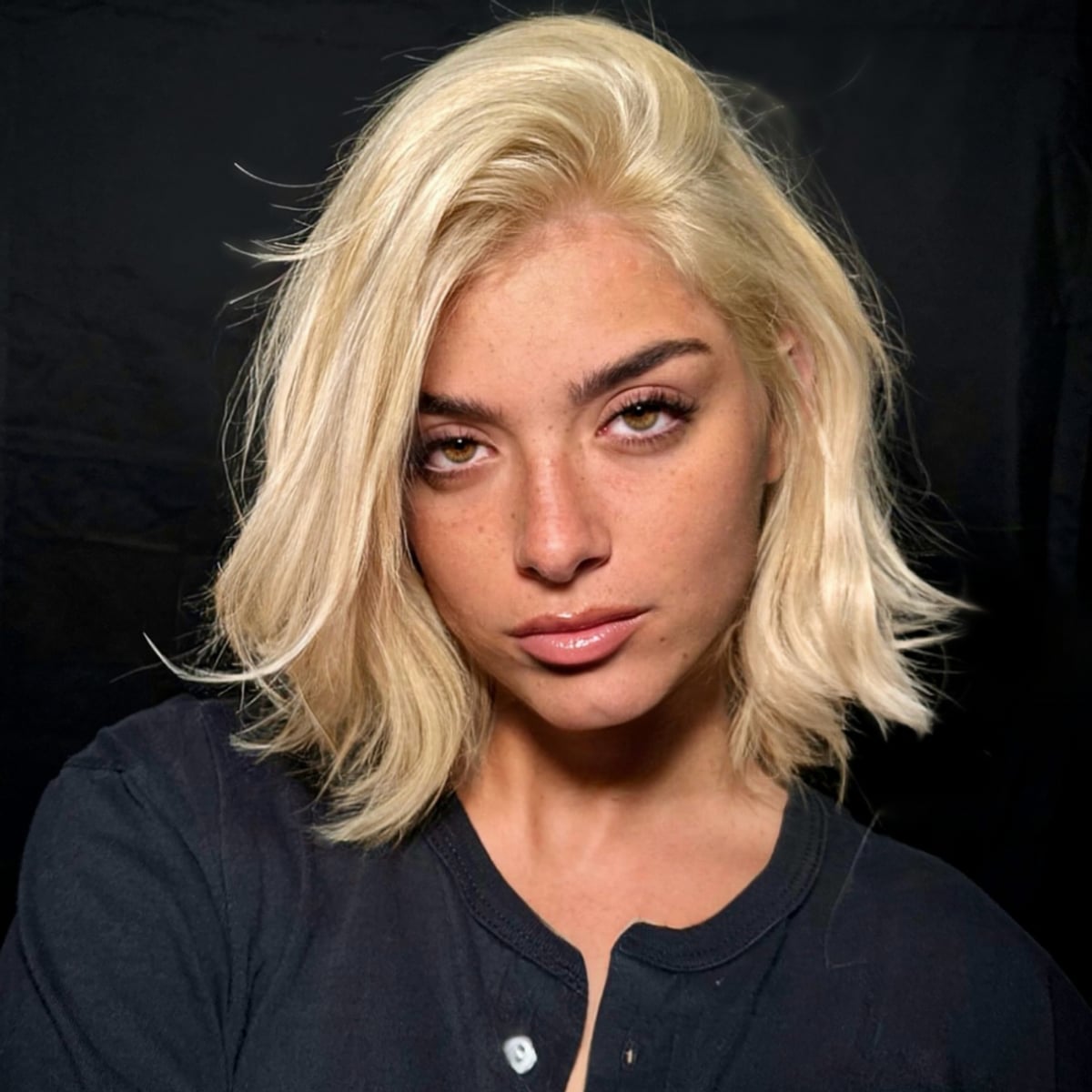
A blunt bob this sharp relies on its single clean line. The platinum shade and middle parting make the cut the only event in the room, which is the point. Ask your colorist for a chin length platinum blonde blunt bob with a sleek style. A flat iron seals the finish, and platinum demands a toning appointment every three to four weeks to stay bright rather than brassy. A trim every six weeks keeps the edge from softening.
Collarbone Platinum Blonde Bob With Root Shadow
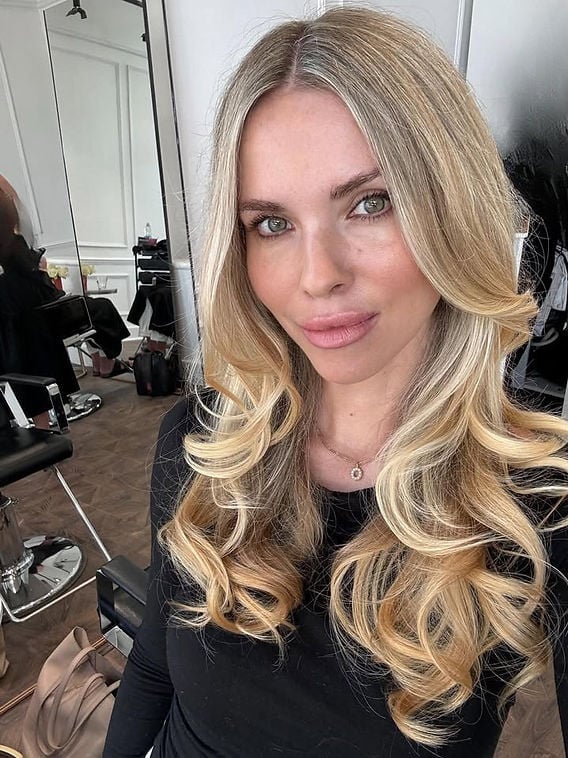
A platinum base with a visible root shadow lets you have the brightness without the weekly grow-out panic. The collarbone length works with fine wavy texture because the root shadow adds depth near the scalp, and the side-swept bangs break up the horizontal line. Ask your colorist for a collarbone platinum blonde bob with a root shadow and side-swept bangs. This is a salon color: the root shadow takes about an hour to apply, and the platinum requires a separate lightening session.
Final Thoughts
For an old money blonde, prioritize blended highlights, subtle root shadows, and natural-looking balayage over high-contrast or chunky pieces.
- Tone with purple shampoo or a toning conditioner once a week to fight brassiness.
- Book a gloss or toner every six to eight weeks to refresh the shade.
- Spray heat protectant before any hot tool to preserve color and condition.
- Trim every six to ten weeks to keep the shape sharp.
Understated blonde sophistication.

